While stuck mournfully under a slow-moving low pressure system, there were still birds out there to brighten up an otherwise dull week. Among these were two at opposite ends of the spectrum: a settled, singing male Wood Warbler throughout the period and, by contrast, a fleeting visit by Britain’s rarest breeding raptor – if it can still be called that …
We can, however, afford to gloss over the well out of season appearance of a Pink-footed Goose at Stanford Res on 28th and move swiftly on to the discovery on 25th of a smart drake Garganey at Lilbourne Meadows NR, where it remained throughout the week. Another – or perhaps the same individual on an awayday – visited Stanford, only 5.5 km distant as the duck flies, on 30th.

Meanwhile, Earls Barton GP’s long-staying drake Red-crested Pochard remained at the site’s New Workings (North) on 25th.
In stark contrast to the previous one, this week was left wanting, though, when it came to waders. It was down solely to just two Sanderlings at Ditchford GP’s Irthlingborough Lakes & Meadows NR (IL&M) on 30th to prop up the group over the period.
Continuing to prove difficult to catch up with so far this year, another fly-through Sandwich Tern – the third for 2024 – cruised south over Hollowell Res without stopping on 26th, while late in to Stanford on 31st was a first-summer Arctic Tern.
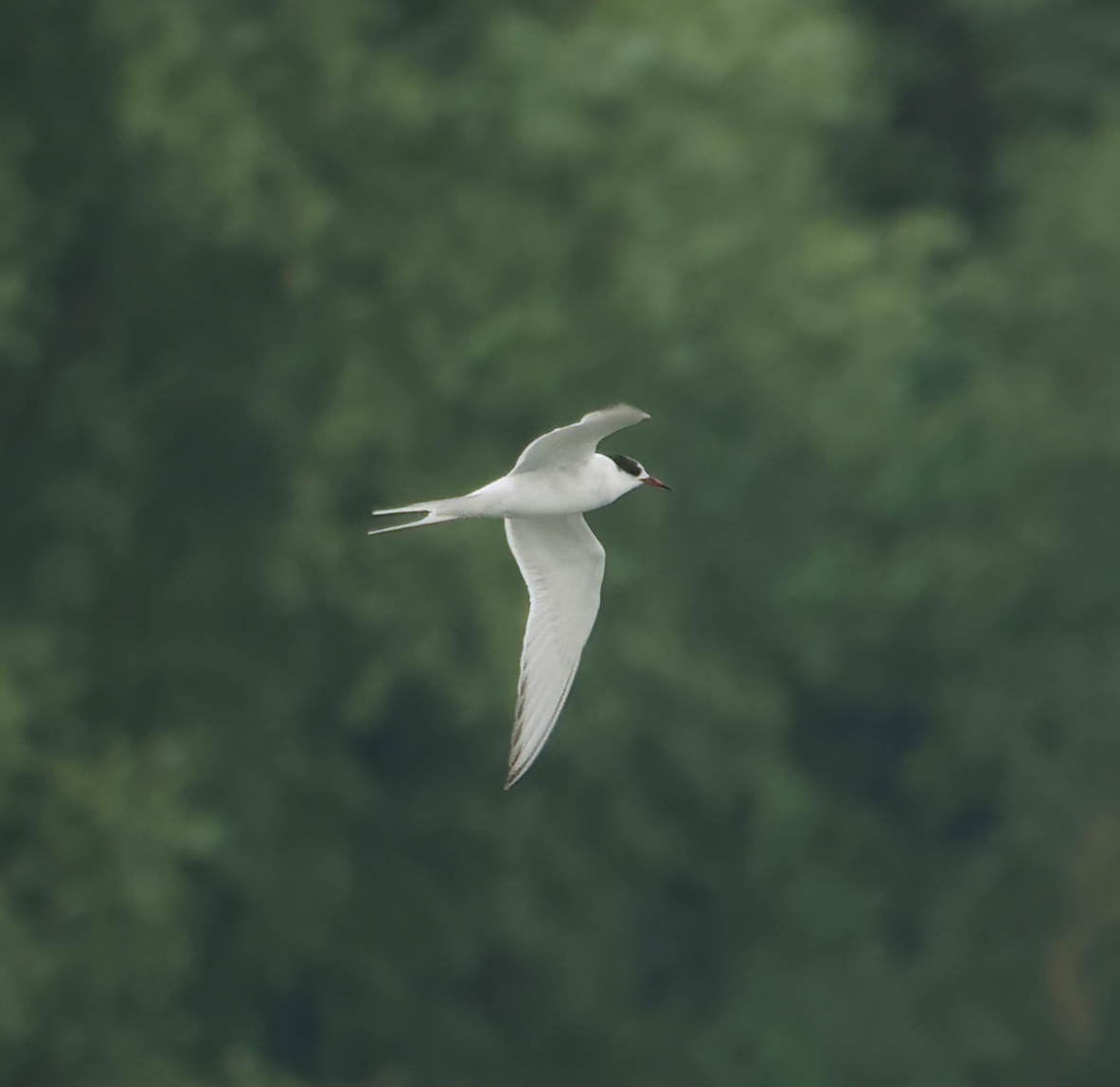
Characteristically more obliging, however, were two Black Terns – one at Summer Leys LNR on 30th and the other at IL&M on 30th-31st.

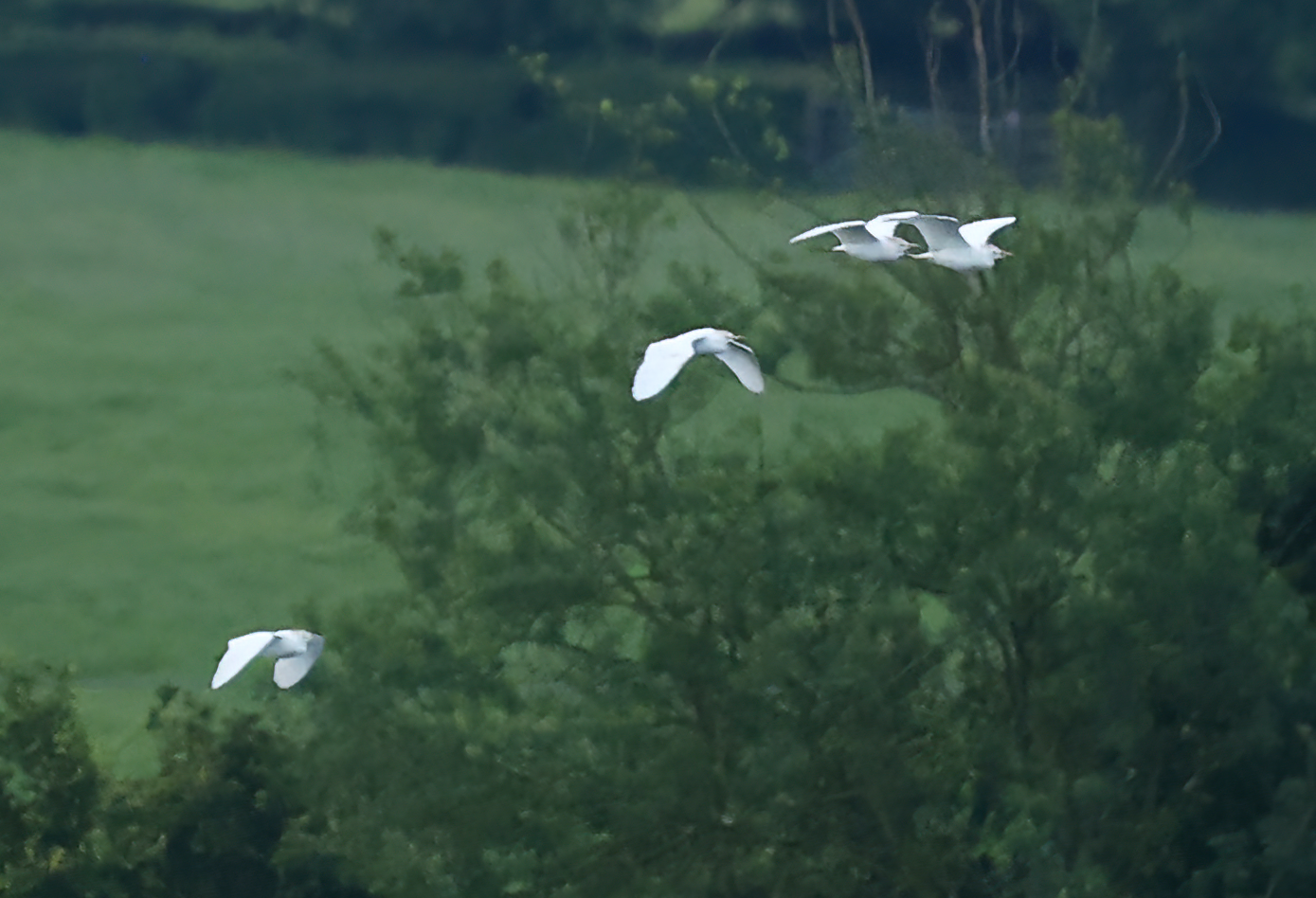
While Bitterns were again at two localities during the week, Cattle Egrets put in appearances at four, which included singles at Stanwick GP, Summer Leys and Thrapston GP’s Titchmarsh LNR – all on 27th, four over Clifford Hill GP on 29th and two again at Summer Leys on 30th. Breeding seems likely to be on the cards … somewhere.
Now becoming fashionably late, Short-eared Owls maintained their unseasonally high profile as they continued to linger into the final days of spring. One was up and about at Harrington AF on 25th and 28th, another put in daily appearances at Summer Leys between 27th and 30th and a third bird was seen at Blueberry Farm, Maidwell on 28th.

And this week’s raptors were thin on the ground or, more precisely, in the air. But what was missing in quantity was made up for handsomely by quality. A Marsh Harrier was an unusual site visitor to Hollowell Res on 30th.

While this species may seem somewhat run-of-the-mill these days, a significant turn-up for the books this week emerged in the form of a nifty Montagu’s Harrier winging its way over farmland, just east of Bozeat, on the evening of 26th. Caught on camera by just one lucky observer, it was not seen again, despite subsequent visits to the area.
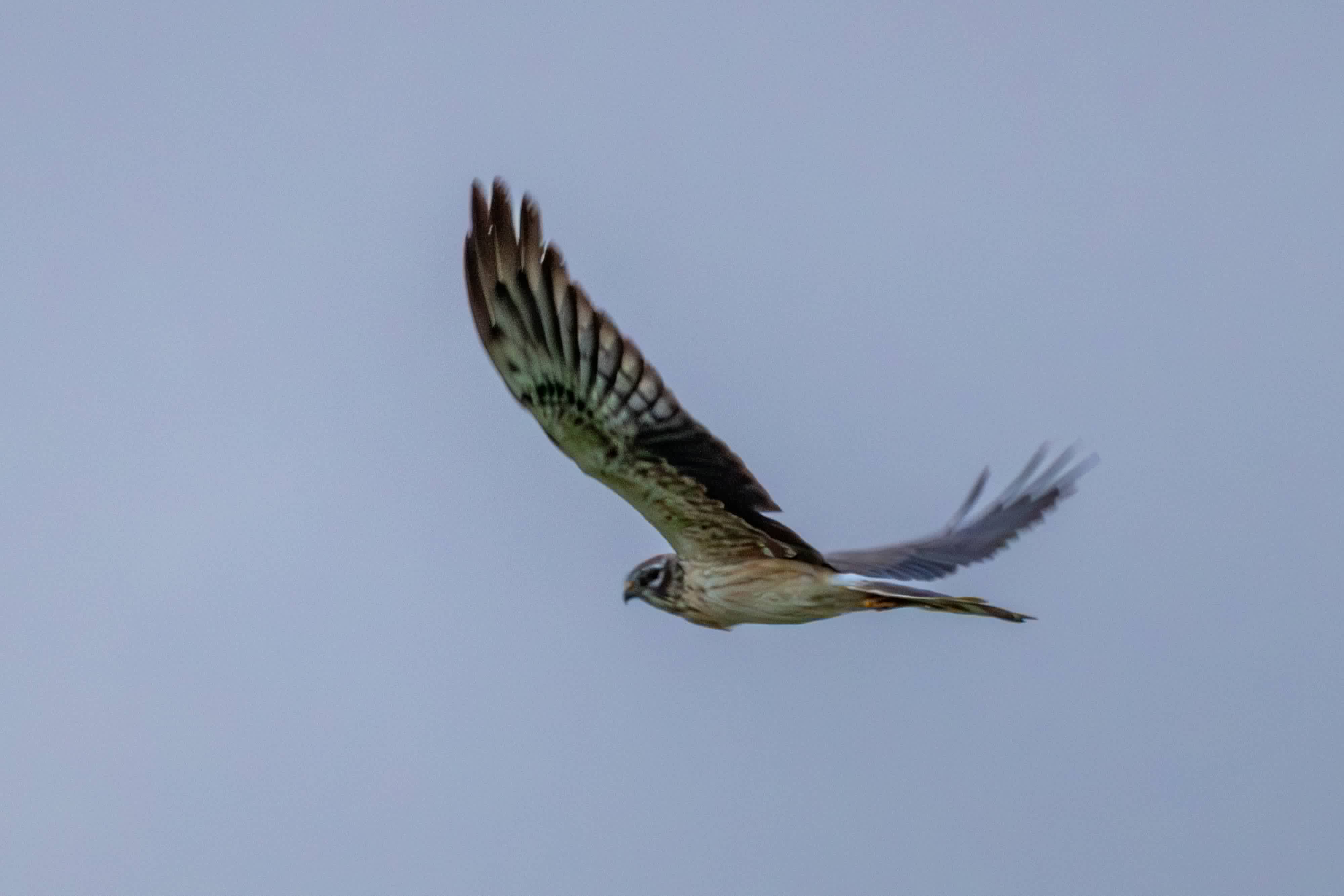
This bird, only the eighteenth record for Northamptonshire, ties in nicely with a number of reports of others seen in the UK this year from late April and throughout May.

The overwhelming majority of previous county records have fallen into the same fly-by category but local birders of a certain vintage will no doubt have vivid recollections and fond memories of the bird which stuck around in the vicinity of Harrington AF for a week during May 1994. The presence of a male just over the border at Juniper Hill, Oxfordshire was hushed up during its stay in 2008 but it was seen in Northants on at least 4 dates in May of that year. Montagu’s Harrier is now Britain’s rarest ‘breeding’ raptor although, despite significant conservation efforts, it has not bred in the UK since 2019.
Unlike the above species, however, the bird of the week in terms of sheer popularity was a singing male Wood Warbler, on show to all comers at Harry’s Park Wood throughout the period.
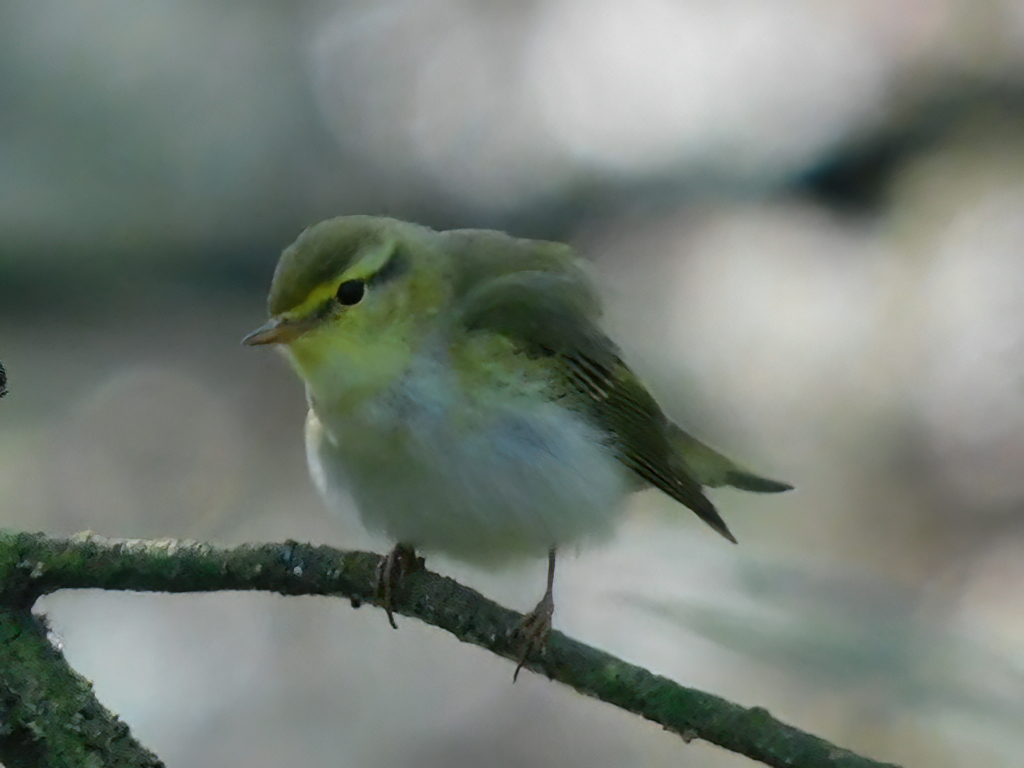
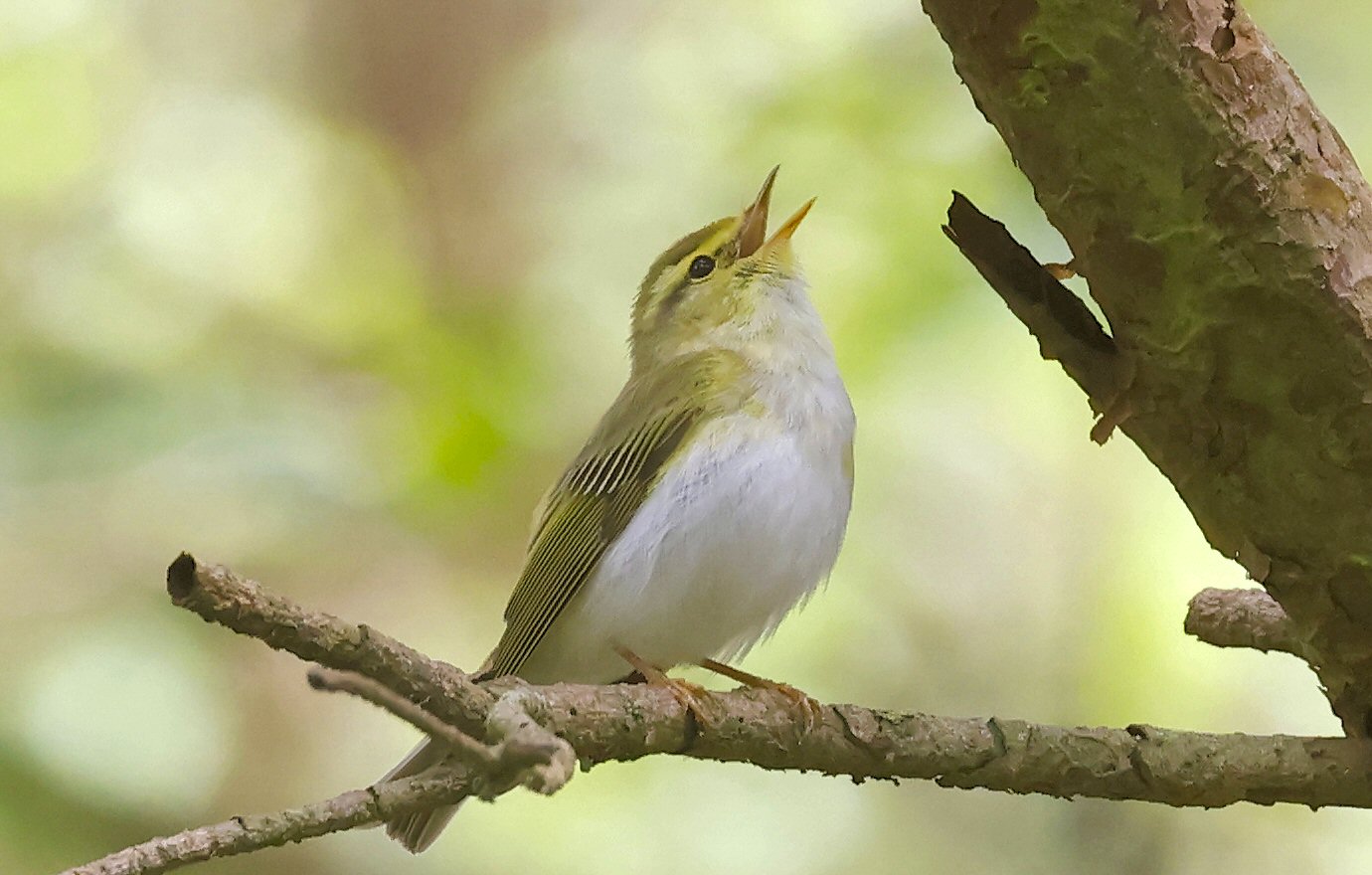


Having bred locally on occasions in the past, records over the last quarter century throw up a pattern of occurrence depicting a bird of consistent rarity, averaging less than two per year in the county.

Furthermore, the outlook for this species is bleak. The national Breeding Birds Survey shows a considerable and continuing decline, with a 76% decrease in the UK breeding population between 1995 and 2020 and declines also evident across northern and western Europe since 1980. It is now red-listed in the UK (BTO).

 Northants birds