The Week in Focus 16th to 22nd January 2016

The mini cold snap, which delivered some snow locally on 17th, proved to be short-lived and it was back to the influence of an Atlantic airstream and unseasonally mild temperatures by the week’s end. One or two new birds were discovered during the period, while the same long-staying scarcities stayed put.

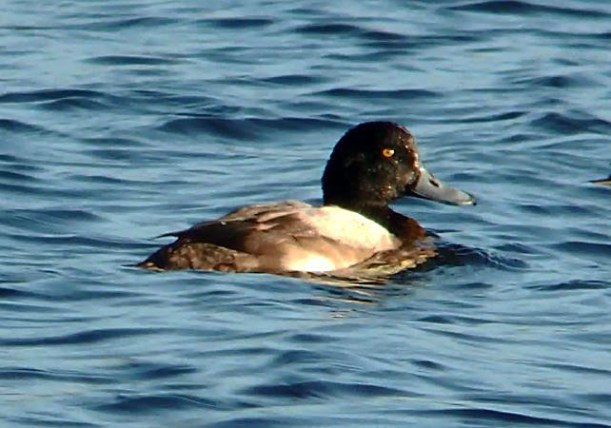
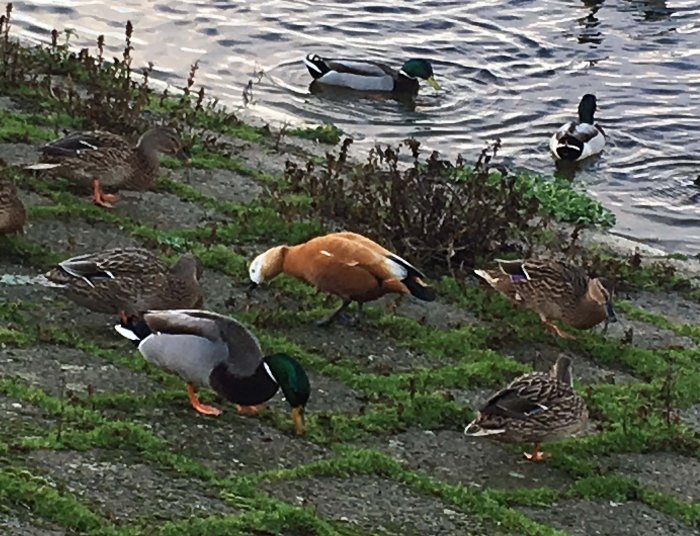
New in – and on the ground for once – single Pink-footed Geese joined local Greylags at Weston Mill/Clifford Hill GP from 19th to 22nd and Deene Lake on 20th, the first of these two sites continuing to host a solitary Barnacle Goose throughout. The Pitsford Ruddy Shelduck was still present there on 18th and up to three Pintails were at Ravensthorpe Res mid-week, while the first-winter drake Scaup paid one of its occasional visits to Stortons GP on 19th and it, or another, visited Clifford Hill GP on 22nd. Coinciding with the snowfall on the 17th, three Common Scoters arrived at the latter locality but had similarly melted away by the following day.

Common Scoters, Clifford Hill GP, 17th January 2016 (Bob Bullock)

Smew remained sporadic in their appearances with a ‘redhead’ and a drake at Ravensthorpe Res on 18th – the drake still present on 20th – and another drake was close to the causeway at Pitsford Res the following day. The 16th saw a ‘redhead’ Red-breasted Merganser come in to roost with Goosanders on the main lake at Stanwick GP, although it has not been seen since, despite searching by the locals.
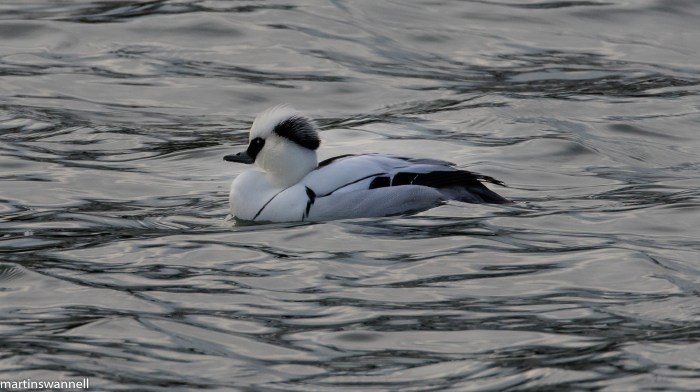
Smew, Pitsford Res, 21st January 2016 (Martin Swannell)

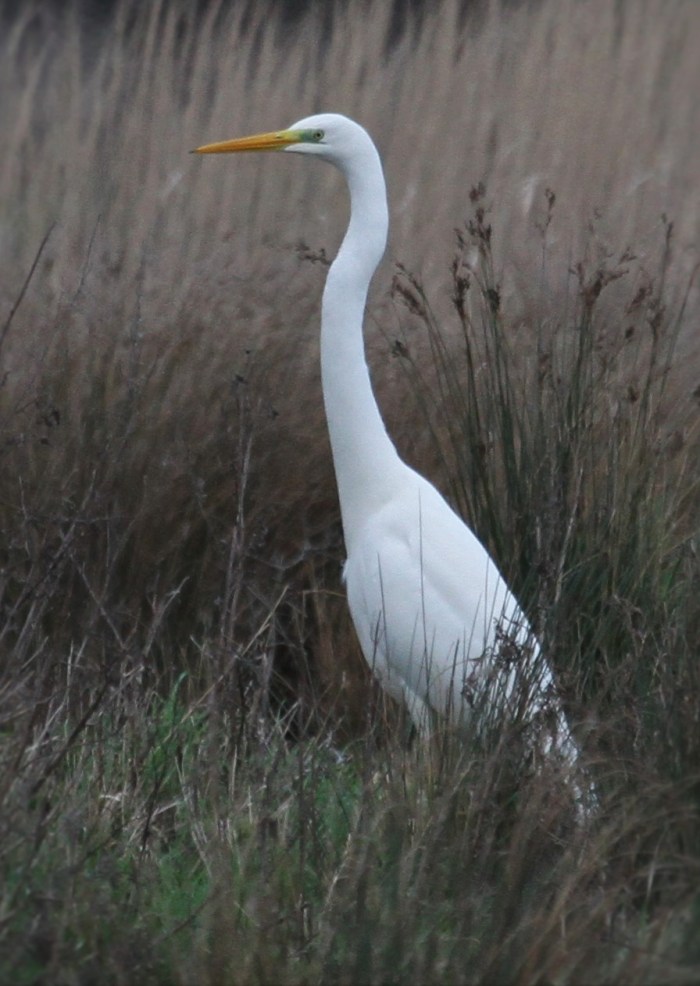
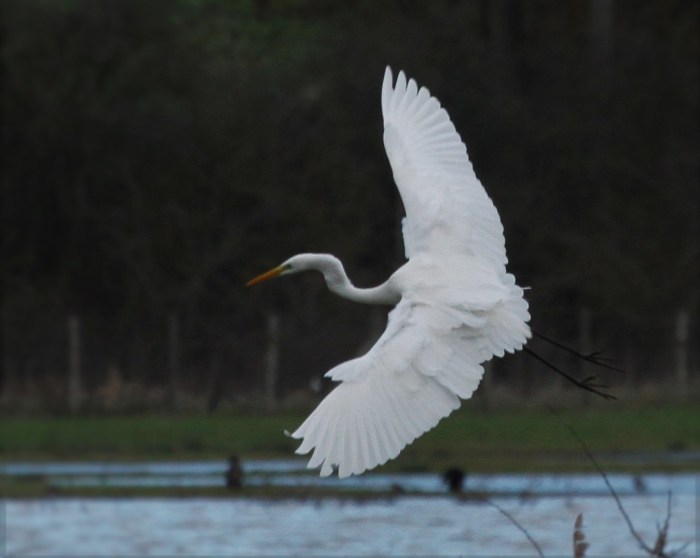
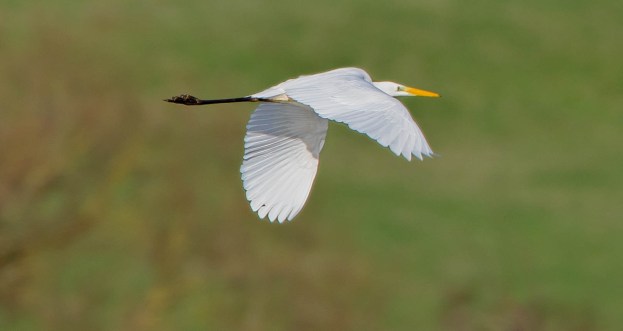
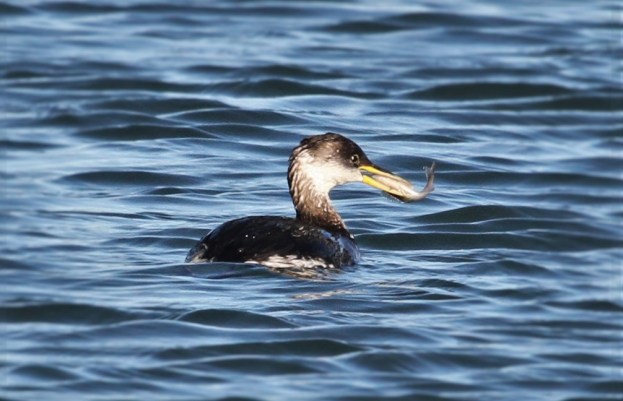
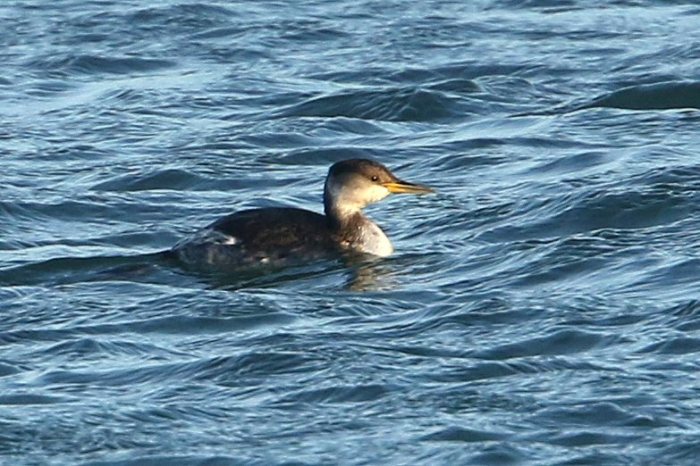
The juvenile Great Northern Diver remained on the watersports pit at Ditchford GP until at least 16th and the same site hosted two Great White Egrets mobile about the complex between Viaduct Pit and Wilson’s Pit until at least 18th. More Great Whites included the Ravensthorpe Res individual all week, singles at Thrapston GP until 17th and Summer Leys LNR until 21st, while two were reported from Clifford Hill GP, along with a Slavonian Grebe on 19th. Pitsford Res hung on to its long-staying Red-necked Grebe off the dam until at least 19th.

On the rather flaccid raptor front single Peregrines were at Stanwick GP on 17th, Stortons GP on 19th and Higham Ferrers the following day and the only Merlin was a female/immature at Charwelton on 20th.

Wader numbers were similarly poor with Golden Plovers reported from Clifford Hill GP, Daventry CP, Harrington AF and Stanford Res with a rather low maximum of approximately one hundred and eighty at the latter site on 16th. The only Redshanks were five at Stanwick GP and one at Summer Leys on 17th, a Jack Snipe was found at Hollowell Res on 20th and Common Snipe were seen at Daventry CP, Ditchford GP, Harrington AF, Hollowell Res, Stanford Res, Stanwick GP and Summer Leys with a maximum of only six at Stanwick GP on 17th.

Looking for larids proved hard work for roost-watchers with a first-winter Mediterranean Gull at Boddington Res on 16th followed by an adult there on 22nd. On the first of these dates a first-winter Caspian Gull was at Stanford Res, while single adults were at Stanwick GP and Pitsford Res the following day. An adult Yellow-legged Gull was at Stortons GP on 18th and two more visited Hollowell Res on 20th but an adult Glaucous Gull on Stanwick’s main lake at dusk on 16th did not hang around for a repeat performance on subsequent evenings.

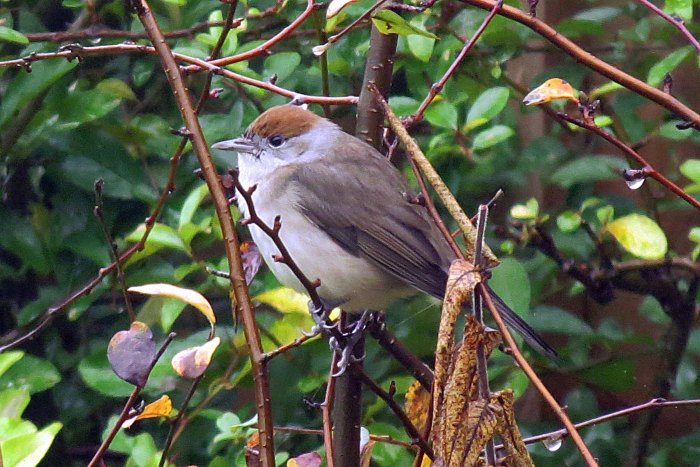
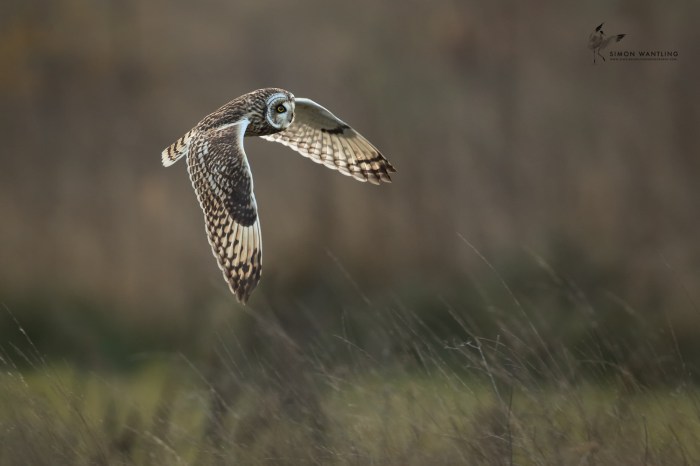
Back on the birding menu this week was Short-eared Owl with one at Harrington AF on 16th; surely there are more to be found in suitable habitats across the county. Considering they are on the up, only two reports of Central European Blackcaps were received including a male in a garden in Scaldwell on 16th and a male and female in a Barton Seagrave garden all week.
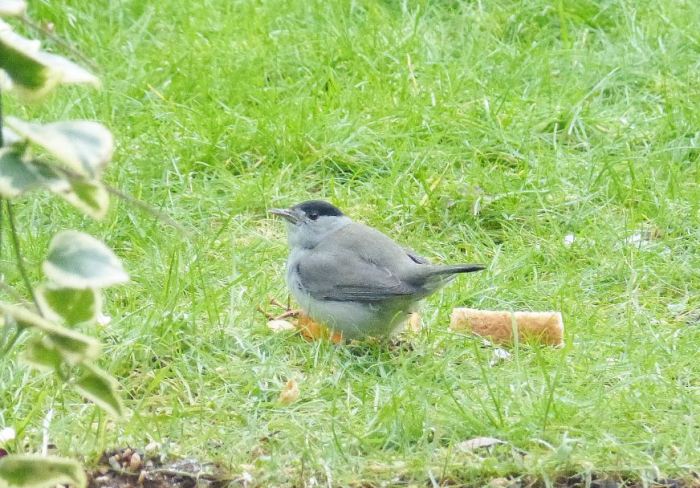
Central European Blackcap, Barton Seagrave, 20th January 2016 (Geof Douglas)

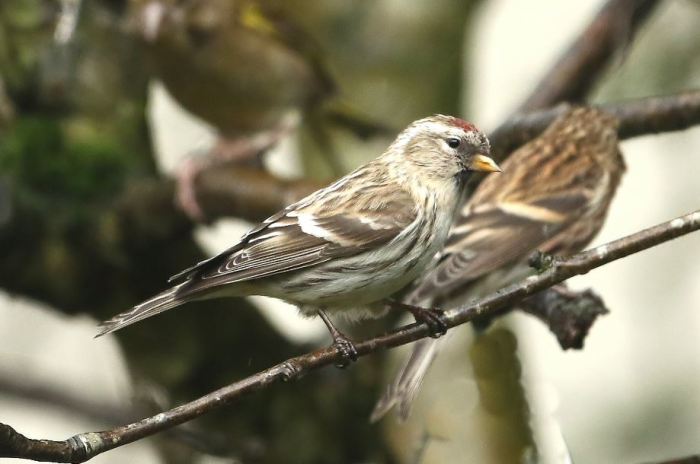
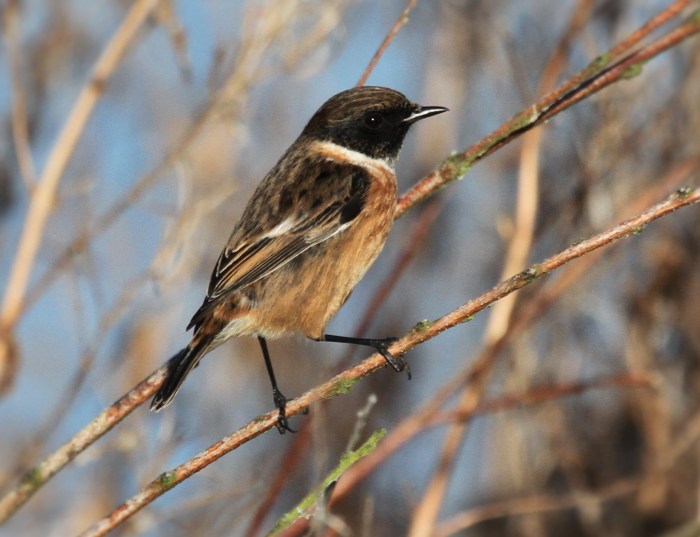
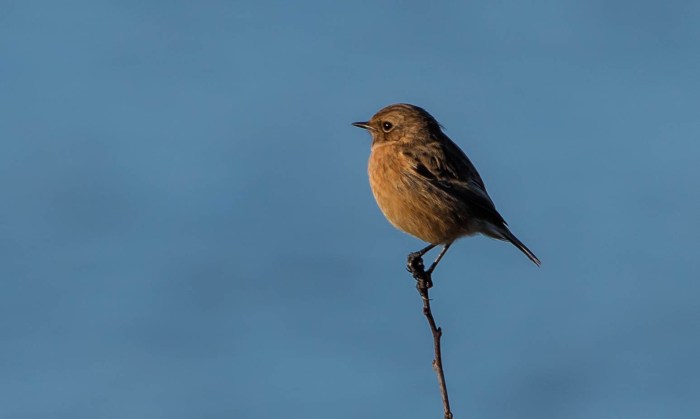
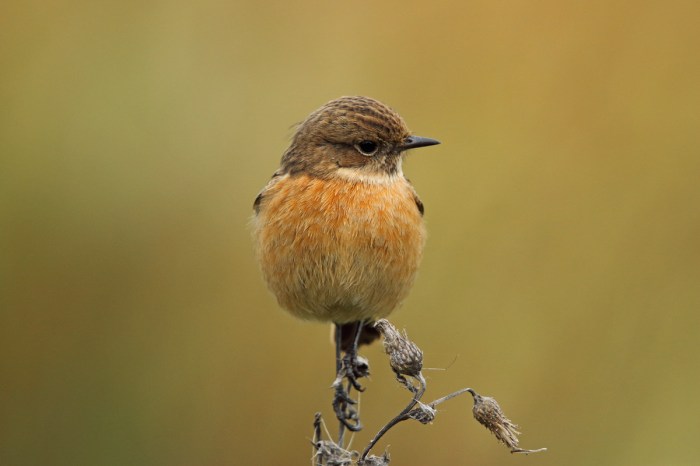
The usual Stonechats continued to occupy winter territories at Brampton Valley, Clifford Hill GP, Summer Leys LNR and Hollowell Res, with new birds at Thrapston GP and Barnes Meadow (Northampton) and a maximum of seven at Hollowell Res on 18th. The Mealy Redpoll at East Hunsbury (Northampton) was seen only once this week, on 16th, and another appeared on a garden feeder in Byfield on 21st. This week’s Bramblings were singles at Stanford Res on 16th and Hanging Houghton on 17th-18th, up to ten between Badby and Upper Catesby between 19th and 22nd and 3 visiting a garden feeder in Warmington on 22nd, while two Corn Buntings were with the Bramblings between Badby and Upper Catesby on 19th.

Two Weeks in Focus 1st to 15th January 2016

This summary covers the first two weeks of the New Year, a period which saw much of the same unusually mild and wet weather conditions prevail until the middle of the second week when the winds swung northerly, allowing an airstream with a more Arctic element to cover the UK, delivering much lower temperatures more akin to the seasonal norm. Can we at last look forward to some fresh arrivals from north-east Europe?

Still present from the end of last year was the Barnacle Goose at Clifford Hill GP with the Greylags and Canadas there during the first week and the Pitsford Ruddy Shelduck was still mobile around the reservoir until at least 9th. The first day of the New Year produced two Red-crested Pochards at Ringstead GP and, on 15th, the first-winter drake Scaup from the last day of 2015 reappeared at Stortons GP.

Red-crested Pochard, Ringstead GP, 1st January 2015 (Alan Francis)
Red-crested Pochard, Ringstead GP, 1st January 2016 (Alan Francis)

Smew continued to remain scarce with up to two drakes at Pitsford Res until 3rd and one at Ravensthorpe Res on 6th and one – possibly two – ‘redheads’ were at Pitsford until at least 13th.

Smew, Pitsford Res, 7th January 2016 (Alan Francis)
Smew, Pitsford Res, 10th January 2016 (Simon Hales)

The juvenile Great Northern Diver remained on the watersports pit at Ditchford GP until at least 10th but it was not seen during a one-hour search there on 14th, although it has been known to give observers the slip from time to time. Birders visiting the site are requested not to enter the grounds of the watersports pit as it is private and the landowner has made it unequivocally clear that trespassers will be dealt with harshly. View only from the north bank of the River Nene or more distantly from the pull-in by the gate at the top of Ditchford Lane, just off the slip road from the A45. You have been warned!

Always elusive and typically seen only in flight, two Bitterns were glimpsed during the first week – one at Stanwick GP on 4th and the other at Summer Leys LNR two days later. The opposite is true of Great White Egrets, of course. This sore thumb former rarity now occurs anywhere and everywhere in Northants during winter, with rising water levels at some localities no doubt responsible for local movements between sites. In summary, then, Ravensthorpe Res hung on to its long-stayer throughout, two were at Pitsford Res on 5th with one there the following day and singles were at Stanwick GP on 1st, Ditchford GP on 1st, 10th and 14th, Summer Leys on 3rd-4th, 10th and 14th, Clifford Hill GP on 4th, Stanford Res on 9th and Thrapston GP on 10th-11th. The long-staying Red-necked Grebe remained at Pitsford Res, off the dam or in Moulton Grange Bay, until at least 13th.

Great White Egret, Summer Leys LNR, 10th January 2016 (Alan Coles)

Raptors were again scarce – the two week period producing a monster local rare in the form of a Goshawk west of Welford on 9th, while single Peregrines were at Blueberry Farm (Maidwell) on 1st, 3rd and 8th, Kelmarsh and Stortons GP on 1st, Trafford Marsh and Summer Leys on 3rd, at Guilsborough on 4th and Northampton on 15th. The only Merlin was at Harrington AF on 7th.

Golden Plovers were reported from Brixworth, Chacombe, Clifford Hill GP, Harrington AF, Summer Leys and Stanwick GP with a maximum count of approximately eight hundred at the latter site on 6th. A lone Dunlin at Stanwick GP on 6th was the only one during the period, Green Sandpipers were limited to singles at Pitsford Res on 2nd and 9th and Ravensthorpe Res on 4th and the only Redshanks reported were four at Stanwick GP on 1st and nine there on 6th. For those intrepid enough to brave the bogs of Barnes Meadow (Northampton) the rewards came in the form of twelve Jack Snipe on 7th – the highest single site count in recent years – at least two still being present there on 10th.   The highest count of forty-six Common Snipe was also made at this site on 7th with eighteen there on 10th, while up to twelve were at Trafford Marsh on 3rd and one was at Pitsford Res on 13th.

In line with a national sprinkling, an adult Little Gull appeared at Fawsley Park Lake on 2nd, quickly followed by seven at Pitsford Res on 4th, three of which remained in the gull roost. Two Mediterranean Gulls were found during the period comprising an adult at Daventry CP on 5th and a second-winter at Hardingstone GP on 14th, while the adult

Second-winter Mediterranean Gull, Hardingstone GP, 14th January 2015 (Mike Alibone)
Second-winter Mediterranean Gull, Hardingstone GP, 14th January 2016 (Mike Alibone)

Caspian Gull continued to visit the gull roost at Pitsford Res, where it was seen on 1st, 4th, 8th and 9th and another adult visited Daventry CP on 6th. An adult Yellow-legged Gull was at Clifford Hill GP on 2nd while, on 4th, singles visited Pitsford Res and Daventry CP and two were at Hollowell Res.

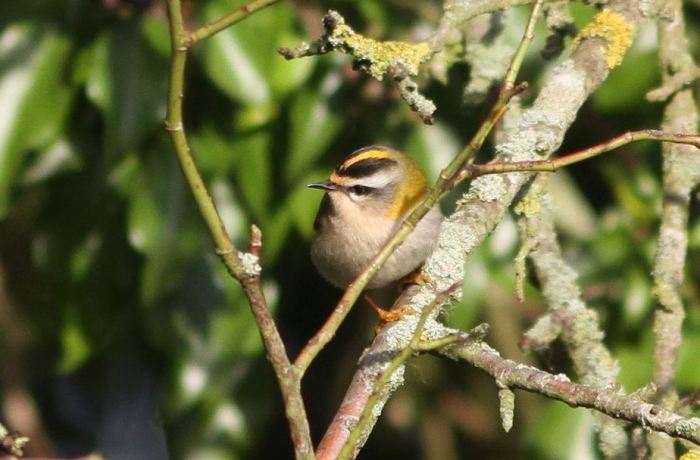
On the passerine front the county experienced a ‘glut’ of Firecrests, with one trapped and ringed at Brixworth STW on 6th remaining there until 8th, another at nearby Hanging Houghton also on 8th, one at Rushden between Washbrook Road Bridge and Waitrose on 9th and another at nearby Ditchford GP the following day. In addition to those four, a ‘probable’ was reported along the entrance track to Ravensthorpe STW on 8th.

Firecrest, Brixworth, 8th January 2016 (Bob Bullock)

Just four Central European Blackcaps were seen in gardens at Wellingborough on 4th, Overstone on 6th, Barton Seagrave on 8th and Woodford Halse on 10th. Stonechats, enjoying a good winter, were reported from Blueberry Farm (Maidwell) and the wider Brampton Valley, Clifford Hill GP, Ditchford GP, Pitsford Res, Summer Leys LNR and Hollowell Res, with a maximum of five at the latter site on 4th. The Mealy Redpoll present in December 2015 continued to make irregular visits to feeders in an East Hunsbury (Northampton) garden where it was seen on 6th, 7th, 12th and 14th,

 Mealy Redpoll, East Hunsbury, Northampton, 7th January 2016 (Bob Bullock)
Mealy Redpoll, East Hunsbury, Northampton, 7th January 2016 (Bob Bullock)

while Bramblings were found at four localities with one at Fawsley Park on 2nd, up to twelve nearby along the minor road between Badby and Upper Catesby on 2nd and 13th, one at Trafford Marsh on 3rd and two at Sywell CP on 4th. Staying in the west of the county, two Crossbills were at Staverton on 3rd and a Corn Bunting – now sadly a local rarity – was with the Bramblings between Badby and Upper Catesby on 2nd and 13th.

The Week in Focus: 25th to 31st December 2015

Sunshine, showers, heavy rain and gale-force winds, still from the south-west, were the hallmarks of the last week of the year.

Barnacle Goose at Clifford Hill GP on 27th and two with the Greylags at Cransley Res the following day failed to make up for the lack of any truly wild geese during the period, while the Ruddy Shelduck returned from Sywell CP to Pitsford Res, where it was

Ruddy Shelduck, Pitsford Res, 30th December 2015 (Alan Francis)

present again from 26th. The striking-looking drake Chiloe x Eurasian Wigeon hybrid was again at Summer Leys LNR on 29th. The only other ducks of note were a first-winter drake Scaup at Stortons GP on 31st and three drake Smew at Pitsford Res on 27th, two

First-winter drake Scaup, Stortons GP, 31st December 2015 (Bob Bullock)
First-winter drake Scaup, Stortons GP, 31st December 2015 (Mike Alibone)

of which had relocated to Ravensthorpe Res two days later, remaining there until 31st. One drake remained at Pitsford and a ‘redhead’ was also there on 28th.

Juvenile Great Northern Diver, Ditchford GP, 29th December 2015 (Mike Alibone)

The juvenile Great Northern Diver remained throughout on the watersports pit at Ditchford GP as did a Great White Egret on Viaduct Pit until at least 29th. Three Great Whites were present at Pitsford on 26th with one until 29th and four on 31st, while one at

Great White Egret, Summer Leys LNR, 29th December 2015 (Martin Swannell)

Summer Leys LNR on 28th was joined by a second individual the following day. The Red-necked Grebe remained off the dam at Pitsford Res all week, although it roamed as far east as ‘The Holly Tree’, beyond Moulton Grange Bay on 29th.

Red-necked Grebe, Pitsford Res, 29th December 2015 (Alan Coles)

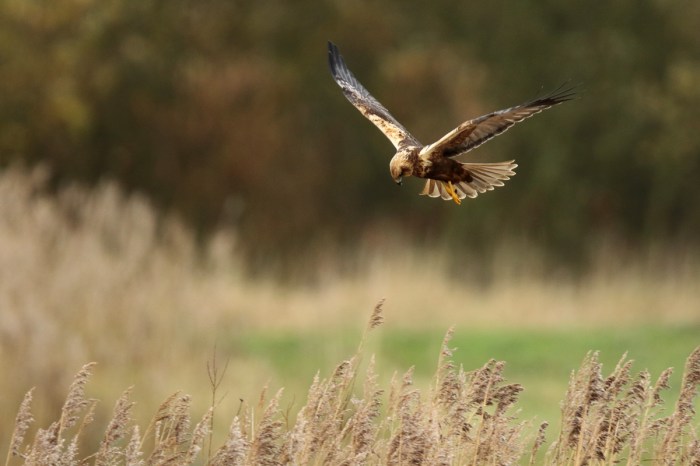
Raptors this week were few and far between with, for the first time in three months, the long-staying second calendar year male Marsh Harrier not being reported from Summer Leys, while single Peregrines were in the Brampton Valley on 29th and at Pineham, Northampton on 31st and a male Merlin was seen at Stanford Res on the first of these two dates.

This week’s Golden Plovers counts included two hundred at Ditchford GP and at least two hundred and fifty at Clifford Hill GP on 27th, two hundred near Chipping Warden on 29th and fifty-six at Pineham, Northampton on 31st. The only Redshanks were four at Ditchford GP on 27th and the one at Pitsford Res the following day, while the only Green Sandpiper reported was one Ravensthorpe Res on 29th – the same day that the week’s only Common Snipe was seen at Hollowell Res.

Scarce gulls were limited to single adult Caspian Gulls at Hollowell Res on 29th and at Pitsford Res in the gull roost the following evening, while the latter site produced an adult and a first-winter Yellow-legged Gull on 26th and Hollowell held two adult Yellow-leggeds on 29th.

Two Short-eared Owls were again at Stanford Res on 29th; the rough ground east of the feeder stream and visible from the minor road is still paying dividends.

Stonechat, Pitsford Res, 29th December 2015 (Alan Coles)
Stonechat, Summer Leys LNR, 29th December 2015 (Martin Swannell)

The only Stonechats this week were two at Clifford Hill GP on 28th and, on the following day, two were at Hollowell Res and singles at Pitsford Res and Summer Leys. The week’s

Mealy Redpoll, East Hunsbury, Northampton, 27th December 2015 (Mike Alibone)

only Brambling was at Hanging Houghton on 29th and the East Hunsbury, Northampton Mealy Redpoll again visited a garden feeder with Lesser Redpolls on 26th-27th.

Short Week in Focus: 19th to 24th December 2015

The period saw a slight drop in temperature accompanying largely wet and blustery conditions, still backed by a south-westerly Atlantic airstream, still effectively blocking arrivals of numbers of wildfowl – and other potentially interesting species – from the east.No longer site faithful, the Pitsford Ruddy Shelduck went on vacation to Sywell CP

Ruddy Shelduck, Sywell CP, 20th December 2015 (Charlie Bridgeford)

on 20th, leaving behind the drake and ‘redhead’ Smew in Holcot Bay until at least 23rd, while another drake Smew was discovered at Stanford Res on 21st and another at Earls Barton GP on 24th. Meanwhile, the juvenile Great Northern Diver remained throughout on the watersports pit at Ditchford GP

Caption GND Videoand last week’s Great White Egret was also still there on Viaduct Pit on 20th. Other long-staying Great White Egrets were one at Ravensthorpe Res and up to two still at Pitsford Res during the period. This week also saw the discovery of another Bittern – this time at Stanwick GP on 20th. The Red-necked Grebe remained off the dam at Pitsford Res until at least 20th, although it’s still likely to be present there. Is anyone looking?

Red-necked Grebe, Pitsford Res, 20th December 2015 (Martin Swannell)

Caption RNG VideoThis week’s raptors included the long-staying second calendar year male Marsh Harrier at Summer Leys LNR on 19th and an unidentified harrier species south of Broughton the following day, while single Peregrines were at Buckby Wharf on 19th and Blueberry Farm, Maidwell on 21st, the latter site producing a Merlin on the same date and another Merlin was seen at Ditchford GP on 23rd.

Just two reports of Golden Plovers this week included ‘many’ at Summer Leys on 19th and in excess of one thousand between Yardley Gobion and Potterspury on 21st, the latter having been present in the area for the last six weeks. The only Redshanks were again the one at Pitsford Res on 19th and another at Wicksteed Park Lake on 22nd, while single Green Sandpipers were at both Daventry CP and Ravensthorpe Res on 19th and Pitsford Res from 20th to 23rd, with two there on 21st.

Winter gulling has not really got underway this year and the closure of Sidegate Landfill last January will no doubt have a severe impact on gulls visiting previously favoured roost sites in the Nene valley. Nevertheless, the Pitsford Res roost produced an adult Mediterranean Gull on 21st, while earlier in the day the same site produced a third-winter Caspian Gull and a first-winter Caspian visited Stanford Res on the same date.

Third-winter Caspian Gull, Pitsford Res, 21st December 2015 (Jacob Spinks)

North of Pitsford, a Short-eared Owl was again at Harrington AF on 21st, while the bird in the set-aside area, east of the feeder stream at Stanford Res, was still present on 23rd. On the passerine front there were single Stonechats at Summer Leys on 19th and

Caption Mealy VideoDitchford GP the following day, while the usual handful of Central European Blackcaps lingered in some of the county’s favoured gardens, with a new male visiting an East Hunsbury (Northampton) garden on 20th – the same garden also producing what appears to be the county’s only 2015 Mealy Redpoll from 19th to 24th.
Stanford Ringing Group Appeal

Ringing. It’s not everyone’s cup of tea – indeed it’s regarded as a controversial practice in some quarters – but let’s be clear on the benefits: ringing generates important information on the survival, productivity and movements of birds, helping to understand why populations are changing and providing knowledge which can be used effectively in conservation initiatives. These may range from population monitoring at local constant effort sites to tracking globally endangered species, such as Spoon-billed Sandpipers after they have left their breeding grounds in order to establish secure sites for wintering and migration stop-overs.

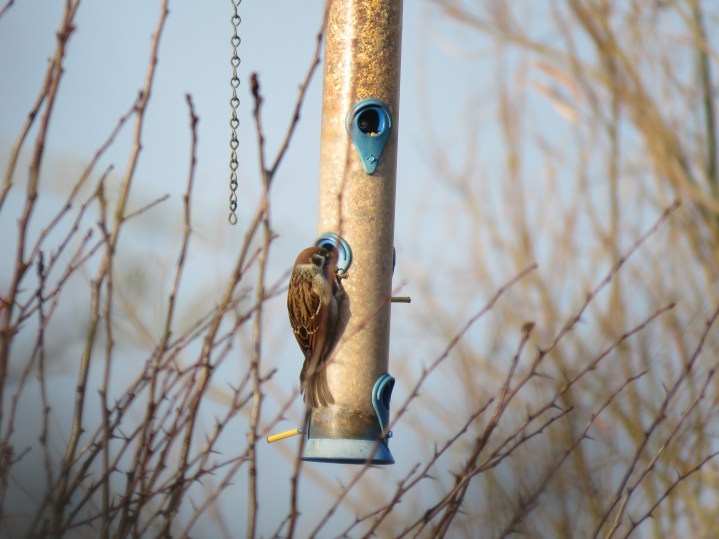
There are a number of active ringing groups in Northants of which the Stanford Ringing Group (SRG) is one. Ringing takes place at Stanford Reservoir several days a week, weather conditions permitting, with volunteers from the group actively involved in habitat management and providing a constant supply of food for the feeding station. The feeding station has been a great success, particularly with Tree Sparrows. About 700 individuals a year are now handled from the low point of none being caught or seen at the reservoir just a few years ago. This is all down to SRG’s efforts to create the perfect habitat and to feed them with the right food.

Tree Sparrow (Mick Townsend)

The feeding station therefore plays an important role. Recent ringing recoveries include a Tree Sparrow initially ringed at Stanford on 10th September this year which was then retrapped at Pitsford Reservoir less than a month later, on 3rd October. This is one of a number of Tree Sparrows over the years that have moved between the dedicated feeding stations at both reservoirs.

Feeding Station (Mick Townsend)

The feeders are filled regularly throughout the year, regardless of the area which is being used for ringing. The idea of the feeders originally was to increase the numbers of both birds and species that use the reservoir throughout the year, and to increase the enjoyment for the people walking around the reservoir, especially during the winter months and early spring, when natural food supplies are at their lowest. As well as the feeders there is also a hopper there which has enough food in it to last all week if the weather prevents volunteers from visiting during the week to top up the rest of the feeders.

Feeders (Mick Townsend)

SRG is currently processing in excess of 10,000 birds per year, of which 7,500+ are being ringed with the remainder being retraps. This year the group managed to ring just over 4,000 warblers of which 1800 were Blackcaps and 960 Chiffchaffs. It’s almost unbelievable how these two species have flourished over the last few years and it was only in 2003 that SRG ringed, for the first time, 100 of each and now they are processing these fantastic numbers.

Stanford really has become a mecca for warblers and a very important site within the county. This is shown by the increased numbers being caught and increasing breeding populations which are believed to be as a direct result of SRG’s on site habitat management.

Over the last few years SRG have also trapped an enviable range of scarce passerines, including Icterine Warbler, Yellow-browed Warbler, Siberian Chiffchaff, Siberian Lesser Whitethroat and Northern Willow Warbler to name but a few. What else is likely to be a surprise find in the nets in future is anyone’s guess …

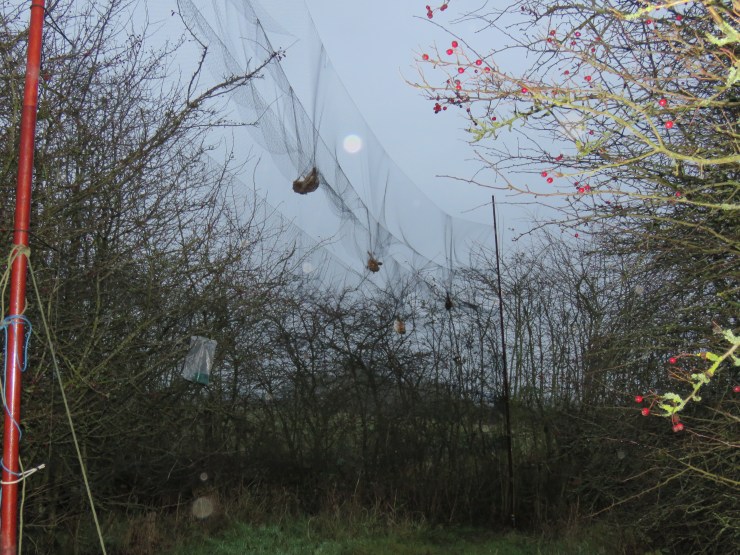
Early morning netting (Mick Townsend)

Of course, all of the above requires funding and SRG is trying to raise money in order to continue at its present level of activity and to continue to feed the birds at Stanford. Currently the feeding station is costing about £400 per year with the rings a further £2000.

Current ring costs are high with, for example, those used for Wrens and Chiffchaffs costing 20p each (£200/1000), Blue Tit, Whitethroat and Chaffinch 24p each (£240/1000), Dunnock and Greenfinch 28p each (£282/1000), Blackbird 20.5p each (205/1000) and Mute Swan £3 each. On top of this there are periodic costs for new nets, which range from £105 for a 12-metre net to £54 for one of 6 metres.

Any donations to maintain the current level of activity during 2016 would be gratefully welcomed by the group and should be sent to Mick Towsend at 87, Dunton Road, Broughton Astley, Leicestershire  LE9  6NA, with cheques made payable to Stanford Ringing Group.

Thank you!

Note: SRG would be available to any individual or group to do a ringing demonstration, preferably any time from June onwards and if anybody is interested in helping with the habitat management then they would welcome the help; this activity takes place every Saturday morning between
08.00 and 12.00, January to March, weather permitting. In both instances please contact Mick, above at denandmick@talktalk.net

The Week in Focus: 12th to 18th December 2015

Bolstered by winds from the south-west and again largely dry, the unseasonally mild weather continued throughout the week, with this month on course to enter the record books as the mildest December for seventy years, if not the mildest ever.

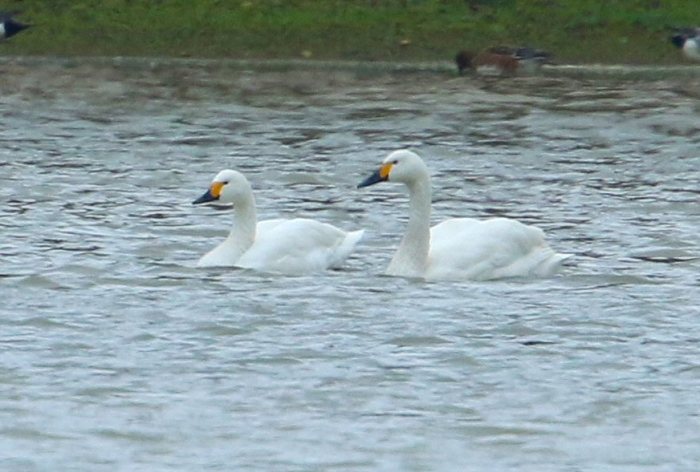
Three Bewick’s Swans flew west over Blueberry Farm, Maidwell on 12th and two – which appeared to be a pair – arrived in Scaldwell Bay at Pitsford Res, four days later, on 16th. In decline, it is now a rare visitor to the county, with wintering flocks regularly exceeding sixty at this site in the 1970s now sadly consigned to history. An exciting new conservation initiative for this species will be announced by the Wildfowl & Wetlands Trust next week.

Bewick's Swans, Pitsford Res, 16th December 2015 (Bob Bullock)
Bewick’s Swans, Pitsford Res, 16th December 2015 (Bob Bullock)

The Pitsford Ruddy Shelduck was still present on 16th and same site held six Pintails on the same date. Stanford Res again produced the week’s only Red-crested Pochard – a male on 13th, with the first-winter Scaup still present on the same date, and Pitsford Res’s drake Smew still on site on 14th.

After two uncharacteristically short-stayers, it would have been surprising if the larger part of the winter had passed by diverless so the discovery of another juvenile Great Northern at Ditchford GP on 13th was welcomed, if not entirely unexpected, as it remained throughout the week.

Juvenile Great Northern Diver, Ditchford GP, 14th December 2015 (Bob Bullock)

Also remaining were up to two Great White Egrets at Pitsford Res, one at Ravensthorpe Res and another in the mid-Nene Valley, which visited Wellingborough on 14th, Ditchford GP on 17th and Summer Leys LNR the following day. By comparison, Bittern is a ‘rarity’, with only one being seen at the regular wintering site of Stortons GP on 16th. The Red-necked Grebe, discovered at Pitsford Res at the end of last week, appeared settled, remaining just off the dam, by the overflow, throughout. However, it has a long way to go to equal the length of stay of the second calendar year male Marsh Harrier which was still in the Summer Leys area at the end of the week. The only other raptors on the radar during the period were Peregrines at Ditchford GP on 13th, Daventry CP on 14th (two) and Higham Ferrers on 18th.

Golden Plovers counts this week were restricted to approximately five hundred between Pitsford Res and Sywell Airfield on 16th and the same number at Summer Leys two days later. The only Redshank was again one at Pitsford Res on 12th with three Green Sandpipers there on 16th and up to two at Ravensthorpe Res on 14th-18th. Two Common Snipes were also at Ravensthorpe Res on 15th and 18th and a Curlew visited Pitsford Res the following day.

This week’s rare larids were represented by adult Caspian Gulls at Stanford Res on 13th and Pitsford Res on 14th with a first-winter at Daventry CP the following day and the only Yellow-legged Gulls were single adults at Daventry CP and Ravensthorpe Res on 14th and 15th respectively.

Female Central European Blackcap, Sywell, 15th December 2015 (Jim Dunkley)

Two Short-eared Owls remained into the week at Blueberry Farm, Maidwell while the bird in the set-aside area, east of the feeder stream at Stanford Res, continued to be reported almost daily and was joined by another there on 16th. Feeding on halved apples and fatballs, Central European Blackcaps visited gardens in Barton Seagrave, Corby, Sywell and Wellingborough, while a Siberian Chiffchaff was found with Chiffchaffs along the outfall stream at Ecton SF on 14th and the only Stonechats reported were two at Ditchford GP on 13th and one at Thrapston GP on 18th.

The Week in Focus: 5th to 11th December 2015

Strong south-westerly winds dominated the first two days of the period as ‘Storm Desmond’ dumped significant rain on northern Britain, leaving the Midlands relatively unscathed. The following five days saw sporadic rain and continuing above average temperatures, albeit lower than those of the previous week.

Three Pink-footed Geese flew east over Blueberry Farm, Maidwell on 5th; none has yet been found on the ground so far this winter. The Pitsford Ruddy Shelduck was seen twice – on 9th and 11th and the same site hosted up to four Pintails on 6th, while two were seen flying over Burton Latimer on 11th. Stanford Res produced the week’s only Red-crested Pochard – a female on 5th, along with last week’s first-winter Scaup, still present on the same date, and Pitsford Res’s drake Smew reappeared on 6th and was later joined by a ‘redhead’ from 9th.

Smew, Pitsford Res, 9th December 2015 (Clive Bowley)

Pitsford also continued to hold up to two – possibly three – mobile Great White Egrets throughout the period, while singles remained at Summer Leys LNR until at least 7th and at Ravensthorpe Res until 8th. The first in the county this year, a Red-necked Grebe just off the dam at Pitsford was a nice end of week find on 11th and will hopefully remain for birders to catch up with over the weekend.

Red-necked Grebe, Pitsford Res, 11th December 2015 (Bob Bullock)

Showing no signs of departing any time soon, the second calendar year male Marsh Harrier remained in the Summer Leys area until at least 9th but no other scarce raptors were reported during the week.

Second calendar year male Marsh Harrier, Summer Leys LNR, 9th December 2015 (Clive Bowley)

Approximately one thousand Golden Plovers at Ditchford GP’s Irthlingborough Lakes & Meadows LNR on 6th represents the best count for this species so far this autumn, while the only other record for the week was eleven at Pitsford Res. The only Redshanks were one at Pitsford Res on 6th and six at Stanwick GP on 8th, while up to two Green Sandpipers were Daventry CP on 5th, singles were at Ravensthorpe Res on 5th and 8th and two were at Pitsford Res on 6th. Twenty-one Common Snipe were counted at Pitsford Res on 6th and two were at Ravensthorpe Res on 8th.

Scarce gulls were few and far between this week and included a first-winter Mediterranean Gull at Daventry CP on 5th, adult Caspian Gulls again it the gull roost at Pitsford Res on 5th and 9th and another adult at Daventry CP on 10th and a Yellow-legged Gull at Stanwick GP on 8th.

Four localities produced this week’s Short-eared Owls which comprised singles at Stanford Res, Harrington AF and in the Brampton Valley on 7th plus one at Stanwick GP the following day. Central European Blackcaps visited gardens in Maidwell on 6th, Wellingborough on 7th (two) and Duston, Northampton on 8th but of more interest was a Lesser Whitethroat – possibly of eastern origin – in a garden at Adstone on 11th. Two Stonechats remained at Blueberry Farm, two were nearby in the Brampton Valley and one was at Summer Leys on 8th-9th, while the only Bramblings reported were three at

Stonechat, Summer Leys LNR, 9th December 2015 (Bob Bullock)

Stanford Res on 5th and singles at Pitsford Res and Guilsborough on 6th and 10th respectively. Between seven and ten Crossbills were seen near the dam at Pitsford Res on 7th.

The Week in Focus: 28th November to 4th December 2015

This week saw the official commencement of winter – at least in meteorological terms – although temperatures here and in northern Europe remained well above the seasonal norm, effectively delaying any new arrivals of wildfowl from the continent.

Ducking and diving, the Pitsford Ruddy Shelduck reappeared in field south of the causeway on 2nd; it has not been easy to keep track of this autumn.

Ruddy Shelduck, Pitsford Res, 2nd December 2015 (John Nicholls)

The only Pintails were three at Earls Barton GP on 28th and the same date saw three Red-crested Pochards at Stanford Res, dropping to one by 3rd and four were at Pitsford Res on 30th with five there on 4th, while last week’s first-winter Scaup remained at Ravensthorpe Res until 28th, before moving to Stanford Res on 4th.

The following day produced a Bittern at Stanford Res and the count of Great White Egrets at Pitsford Res fell to just one between 28th and 30th although two were there on 4th, while singles remained throughout the week at Ravensthorpe Res and Summer Leys LNR.

Great White Egret, Summer Leys LNR, 28th November 2015 (Mark Hill)

At the latter site the second calendar year male Marsh Harrier made it into December, still being present there on 3rd but the only Peregrine reported was one at Blueberry Farm, Maidwell on 2nd and a Merlin flew west at Stanwick GP on 4th.

Second calendar year male Marsh Harrier, Summer Leys LNR, 28th November 2015 (Mark Tyrrell)

Golden Plover numbers were up on last week’s, however, with records from Clifford Hill GP, Daventry CP, Harrington AF, Milton Malsor, Summer Leys LNR and Stanwick GP with the latter site producing the maximum count of six hundred on 30th, 3rd and 4th. The only Redshanks were one at Pitsford Res and three at Stanwick GP on 30th and five at the latter locality on the following day, while four Green Sandpipers were at Broadholme STW (Ditchford GP) on 28th, with singles at Ecton SF and Ravensthorpe Res on the same date and at Pitsford Res on 30th, with two again at Ravensthorpe Res on 1st and 4th, where a Common Snipe was present on the same dates and one was at Hollowell Res on 4th.

Scarce gulls were more in evidence this week with a second-winter Mediterranean Gull at Daventry CP on 30th followed by an adult (complete with green ring on left leg) there on 2nd and an adult Caspian Gull was present it the gull roost at Pitsford Res on 28th-29th, another adult was at Stanford Res on 4th, while a second-winter visited Stanwick GP on 1st-3rd and a first-winter was there on 2nd. Up to two Yellow-legged Gulls were reported from Daventry CP, Hollowell Res, Stanford Res and Stanwick GP with the latter locality producing an adult Glaucous Gull on the Visitor Centre Pit on 3rd, while a fly-over adult ‘white-winged’ gull there the following evening was almost certainly the same individual.

One or two Short-eared Owls were discovered in fields immediately north of the church at Long Buckby on 1st and one remained around the southernmost field of the Blueberry Farm complex until at least 2nd.  Wintering Central European Blackcaps visited gardens in Barton Seagrave on 28th and Scaldwell on 1st and another Siberian Chiffchaff was discovered – this time at Stanwick GP – on 30th, being seen there again on 1st.

Stonechat, Summer Leys LNR, 28th November 2015 (Mark Tyrrell)

Four Stonechats remained at Blueberry Farm until at least 2nd, the same  number was at Hollowell Res on 1st and one remained at Summer Leys all week, while the only Bramblings reported were four at Hanging Houghton on 30th and one over Harrington AF on 2nd.

The Week in Focus: 21st to 27th November 2015

Largely dry conditions prevailed although a strong, northerly airstream was in place on 21st, temporarily displacing the hitherto mild autumn weather and delivering the first local frost of the autumn on 22nd.

A herd of fourteen Whooper Swans flying north over Warmington on 21st was perhaps unsurprising as this village is close to the border with Cambridgeshire where this species regularly winters. At least two Pintails were still at Earls Barton GP on 25th and the same number of Red-crested Pochards at Pitsford Res on 22nd, when there was also a female Scaup there, followed by a first-winter Scaup at Ravensthorpe Res on 24th.

Pintails, Earls Barton GP, 25th November 2015 (Bob Bullock)

Back at Pitsford, the first Smew of the winter – a drake – was found north of the causeway on 23rd, the same site also continuing to host up to four Great White Egrets. Single Great Whites remained at Ravensthorpe Res until at least 25th and at Summer Leys LNR all week.

The second calendar year male Marsh Harrier continued its regular visits to the latter site until 25th, while other scarce raptors included single Merlins at Blueberry Farm, Maidwell on 22nd and Ravensthorpe Res on 24th and two – possibly three – Peregrines visited Fawsley Park on 25th, attracted to the large Starling roost which is currently building there.

Waders were thin on the ground this week with Golden Plovers reported only from Harrington AF, where there were approximately twenty-five on 21st and sixty-three on 25th while the only Dunlins were singles at Pitsford Res on 22nd and Daventry CP the following day. Pitsford produced the only Redshank, one on 22nd, and one of two Green Sandpipers on the same date, while the other was at Ravensthorpe Res on 25th.  The only Common Snipe were seven at Daventry CP on 23rd and three at Pitsford Res on the same date.

Hot on the heels of the two at Stanford Res last week, a first-winter Kittiwake appeared at Earls Barton GP during the northerly gales of 21st and an adult Mediterranean Gull visited Daventry CP on 23rd. Single Yellow-legged Gulls at Stanford Res on 21st and Daventry CP on 23rd represented the lowest number reported in a long time.

Up to two Short-eared Owls remained at Blueberry Farm until at least 22nd and another was near Little Harrowden on the same date but it is not (yet) looking good for a big shortie winter.

Short-eared Owl, Blueberry Farm, Maidwell, 22nd November 2015 (Simon Wantling)

Although there have been several around during late autumn, it would now surely be safe to say that single males visiting gardens in Greens Norton on 23rd and Northampton on 25th are Central European Blackcaps which are set to overwinter. How long will it be before they are granted full subspecific status? Another warbler still climbing the ladder to specific rank is Siberian Chiffchaff, two of which were identified this week – one at Ravensthorpe Res on 24th and the other at Pitsford Res the following day, the latter individual likely to have been present since 20th.

Siberian Chiffchaff, Pitsford Res, 25th November 2015 (Bob Bullock)

Up to ten Stonechats remained at Blueberry Farm and two further singles were at Ditchford GP on 22nd and Summer Leys from 24th to 27th. The only Brambling reported was one at Kelmarsh on 22nd.

Siberian Chiffchaffs

It’s still there! After Doug McFarlane had brief views, and managed a long range shot, of a greyish ‘Chiffchaff’ in the willows between the yacht club and the dam at Pitsford last Friday, I decided to have a look at the weekend – unfortunately to no avail.

Doug’s image, posted on Twitter the same day, did look pretty good for Siberian Chiffchaff, though. Fortunately, Bob Bullock rediscovered it in the same place only yesterday afternoon. This time it offered more prolonged views and allowed a closer approach, enabling some rather more detailed images to be taken. It still has yet to be heard calling, though …

Siberian Chiffchaff, Pitsford Res, 25th November 2015 (Bob Bullock)

One was also found by Gary Pullan in willows by the causeway at Ravensthorpe Reservoir on Tuesday (24th).  This race is still a rare visitor to Northants but it appears to be being seen with increasing frequency, with Ecton Sewage Farm a hot favourite for harbouring them among numerous Common Chiffchaffs in mid-winter. At this time the sewage farm outfall to the River Nene provides a slightly warmer micro-climate favourable to insects on which they feed. More about this, along with further images from Bob, here.