Significant Threat to Wildlife in Fineshade Wood

by Barrie Galpin

Many of you will know Fineshade Wood, even though it is at the far north of Northants. It is a large area of Forestry Commission Woodland, and part of the historic Rockingham Forest.
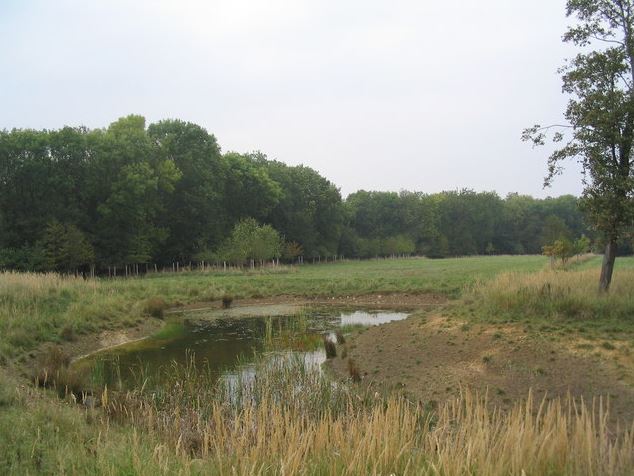
View from the wildlife hide, Fineshade Wood (Tim Heaton, Wikimedia Commons). Views expressed in the accompanying text are not necessarily those of the photographer.

There is a proposal by Forest Holidays to build a 70-cabin holiday park on 96 acres of this part of the Public Forest Estate – a proposal that will devastate a very important wildlife-rich area.  Fineshade has been developed as a walking and cycling destination in recent years with a network of forest trails and the former RSPB Visitor Centre. There are still important undisturbed areas where human access is difficult – which is what makes it great for birds and reptiles in particular.  In one of these areas of semi-natural woodland, north east of the visitor centre Forest Holidays plan to build a network of 2 miles of new forest tracks leading to 70 cabins, a central leisure block, maintenance site and 189 parking spaces. There will be year-round accommodation for 352 people within the depths of the wood. 352 people having a normal holiday experience i.e. making noise, having barbecues, walking dogs, starting and driving cars, switching on lights, playing music etc..

Such a devastating development would normally require an Environmental Impact Assesment but the planning application now before East Northants Council is accompanied by only a “Preliminary Ecological Report”. There has been a partial survey of reptiles and amphibians, no survey of breeding birds (they rely  BTO and county records) , no bat survey, no survey of dormice, a partial plant survey. They do not even appear to have considered Butterflies, Moths and other invertebrates.

The Wildlife Trust together with local and national wildlife groups will be making their comments to the Council but we really need a huge swell of supporting objections from individual birders and naturalists. Please can you help? You can do so simply by sending an email now. Details are below.

The threat to birds

The following birds are listed in the FH report

“Red list species that have been recorded include: Song Thrush, Tree Pipit, Yellow Hammer, Marsh Tit, Grasshopper Warbler, Nightjar, Willow Tit, Skylark and Cuckoo. Amber list species that have been recorded include: Dunnock, Garden Warbler, Red Kite, Redstart, Willow Warbler, Whitethroat, Green Woodpecker, Bullfinch and Mistle Thrush.”

To that I can add Long-eared Owls and roding Woodcock this year.

They conclude “therefore the site is of at least county importance for birds”. They reach a similar conclusion for reptiles, particularly adders.

Suggested “Mitigation and Enhancement” amounts to don’t clear the vegetation during the nesting season, try to create some good habitat elsewhere and stick up some bird boxes!

The planning application

The full application is online here, where objections can also be lodged

www.east-northamptonshire.gov.uk/planningapplications

The reference number for the application is 14/01156/FUL.
The deadline for objections is 23 July but please do it now

How to object:

You can object by email to:   planning@east-northamptonshire.gov.uk
or online or by letter to
Planning comments,  East Northants Council, Cedar Drive, Thrapston  NN14 4LZ

You must give your name and address  and include the reference number 14/01156/FUL and use the word objection very clearly.

More reasons to object?

Please email Fineshade.wood@zen.co.uk for more details, particularly about unsuitable vehicle access.

PLEASE OBJECT NOW
The Week in Focus: 5th to 11th July 2014

The early part of the week saw the UK sandwiched between two areas of low pressure which brought intermittent showers, some of them heavy, to the county although dry weather ultimately prevailed.

A Cackling Goose – presumably an escape – at Daventry CP on 11th has apparently been present two weeks and the two Ruddy Shelducks, ensconced by the dam at Pitsford Res all week, are clearly in it for the long haul, while a Garganey remained at Stanwick GP and two eclipse drake Red-crested Pochards dropped in there on 7th. Maidwell’s Blueberry Farm produced this week’s star raptors – an Osprey on 7th and a ‘cream-crown’ Marsh Harrier on 7th and 10th, while an adult Peregrine was at Blatherwycke Lake on 11th, but Stanwick GP stole the show with its superb run of waders this week. While Hollowell Res produced a Ringed Plover and three Little Ringed Plovers on 11th, nine Little Ringed Plovers was the top count at Stanwick on 9th, a Dunlin visited on 8th followed by a Common Snipe next day. Another Common Snipe was at Summer Leys LNR on 7th and, having attracted a Whimbrel and 4 Black-tailed Godwits on 6th, twenty-two of the latter species were there the following day; ten also turned up at Stanwick GP on 8th and one remained there between 7th and 10th, being joined by a Bar-tailed Godwit on the last of these dates.  Stanwick’s mid-summer puple patch continued with two Spotted Redshanks on 8th, with three there briefly the following day, while a Greenshank was there on 9th followed by three on 10th, two visited Hollowell Res on 11th while up to 6 Green Sandpipers remained at Stanwick all week and singles visited both Daventry CP and Hollowell Res on 11th. Common Sandpipers continued to trickle through with four at Hollowell Res on 11th, up to three at both Stanwick and Summer Leys and one at Daventry CP on 11th. The number of Yellow-legged Gulls continued to build at Stanwick, climbing to twenty-one on 10th, while two adults visited Pitsford Res on 8th and singles were at both Hollowell Res and Clifford Hill GP on 11th. Turtle Doves were still in short supply with just the regular duo remaining on site at Harrington AF on 7th, while nearby a male Black Redstart was around farm buildings at Blueberry Farm on 7th-8th, a Common Redstart was in the wider Brampton Valley on 10th and the singing male Grasshopper Warbler remained there on 7th. Three more of the latter species comprised singles Lady Wood on 6th, Fermyn Wood CP on 8th and Earls Barton GP on 6th and 10th, while eight Crossbills flew over Blueberry Farm on 7th.

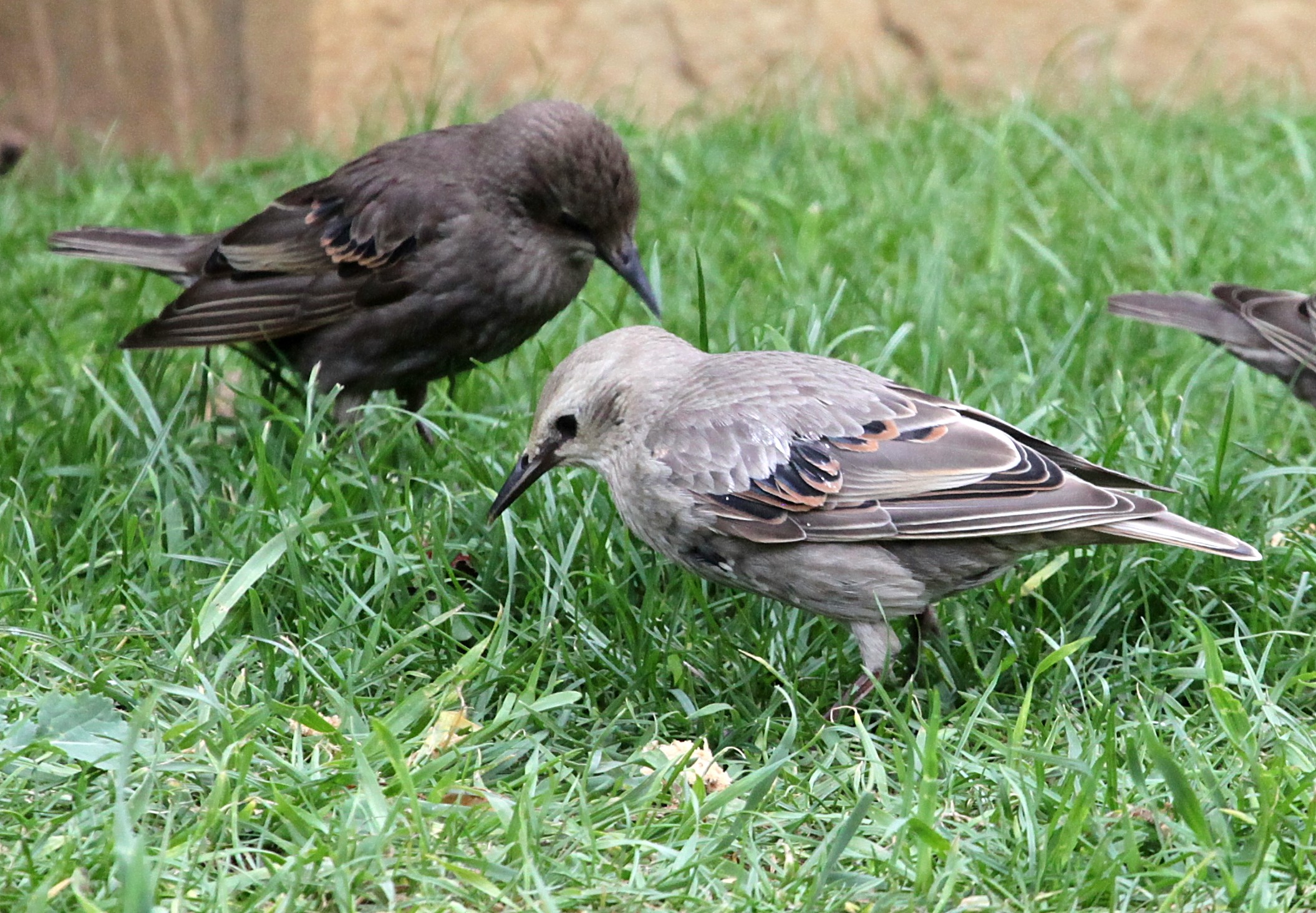
Leucistic juvenile Starling

Phil Jackman forwarded these images of a leucistic juvenile Starling present in his Kettering garden this weekend. While generally uncommon, leucism (really a lower concentration of melanin) in juvenile Starlings has been recorded on numerous occasions and invites confusion with juvenile Rose-coloured Starling which, however, has a largely yellow bill (especially at the base) and pale lores.

Leucistic juvenile Starling, Kettering, 5th July 2014 (Phil Jackman)

Also, this individual has already begun its post-juvenile moult, which commences with the wing feathers – in this case all the juvenile greater coverts, except the outer two, have been replaced.

Leucistic juvenile Starling, Kettering, 5th July 2014 (Phil Jackman)

This feather tract is again different to the equivalent plainer feathers of Rose-coloured. It’s interesting that these first-winter feathers are apparently normal, suggesting the bird’s leucism (lack of melanin) is age-related.

Many thanks to Phil for the images of this interesting bird.

The Week in Focus: 28th June to 4th July 2014

Warm and dry with variable light winds gave way to south-westerlies and rain at the very end of the period. A largely quiet week, it was marked only by the appearance of more southerly-heading passage waders.

Last week’s two Ruddy Shelducks at Pitsford Res had commenced body moult and the male, at least, had become flightless as a result. Clearly they will be there for the foreseeable future.

Ruddy Shelducks, Pitsford Res, 3rd July 2014 (Clive Bowley)
Ruddy Shelducks, Pitsford Res, 4th July 2014 (Alan Coles)

An early (or more likely mobile, summering) Wigeon was at Stanwick GP on 1st, along with last week’s female Garganey all week and the same site hosted up to eight Little Ringed Plovers while up to six, including young, were present at Summer Leys LNR. Black-tailed Godwits made their autumn debut this week with one at Pitsford Res, and seven dropping in briefly at Summer Leys, on 29th, followed by three at the latter site the following day and five at Stanwick GP on 1st. Those at Summer Leys were of the race islandica and it is more than likely the others were also Icelandic in origin. A maximum of seven Green Sandpipers was also recorded at Stanwick GP on three dates and one remained at Summer Leys from 28th to 30th, while both localities notched up a single Common Sandpiper. The number of Yellow-legged Gulls at Stanwick GP climbed to nine – up four onlast week’s total, a male Black Redstart was near Rocking ham Speedway (Corby) on 1st, the singing male Grasshopper Warbler remained at Fermyn Wood CP on 29th – the same site hosting two Crossbills on 3rd, while another Crossbill was at Denton Wood on 30th.

Ruddy Shelducks: Northamptonshire and the European Perspective

It has been less than a year since I summarised the Northamptonshire status of Ruddy Shelduck and speculated on the possible origins of birds visiting the county. There is an annual pattern of late summer/early autumn occurrences which ties in nicely with the now well established post-breeding, summer moult migration to The Netherlands. It would appear that birds occur locally as a result of dispersal from The Netherlands after they have completed their full body moult, which leaves them flightless for about four weeks.

There are currently two – a male and female – at the southern end of Pitsford Reservoir, which were first discovered on 24th June – a somewhat earlier arrival date than would normally have been expected.

Ruddy Shelducks, Pitsford Res, 30th June 2014 (Mike Alibone)

The date coincides with the arrival of others in the UK: two in Gloucestershire on 19th and singles in Staffordshire on 25th and Cheshire on 28th, while the build-up in The Netherlands has also begun with two hundred or so at Vreugderijkerwaard, west of Zwolle (remember the Hawk Owl? 🙂 ) on 27 June. A flock of ten had also reached the west coast island of Texel by 25th June where, according to René Pop, they are very unusual; from here it is just a short hop to East Anglia …

The Pitsford birds are in active moult and the drake at least is flightless, having shed all its primaries and secondaries. This, then, begs the question, are we now getting some of the ‘Dutch’ birds before they moult?

Flightless drake Ruddy Shelduck, Pitsford Res, 30th June 2014 (Mike Alibone)
Flightless drake Ruddy Shelduck, Pitsford Res, 30th June 2014 (Mike Alibone). Note total absence of primaries and secondaries.

The origin of the ‘Dutch’ birds is still not fully resolved but we are now more than half-way to understanding where they come from. In an attempt to discover the source of the summer moulting population a Ruddy Shelduck Work Study Group was set up and, in 2013, it launched an investigation into the origin of the large numbers (eight hundred or so) summering at the Eemmeer as well as those elsewhere in The Netherlands. Forty-eight were trapped and fitted with individually numbered yellow neck-collars and seven were fitted with GPS transmitters.

As a result of this we now know that many – if not all – of these birds are from feral populations in Germany  and Switzerland, and it has been established that birds from the German lower Rhine and the Swiss birds are connected to each other. However, there are still a number of individuals with collars which have not been seen after having left the Eemmeer in August 2013. The Dutch are still hoping that these may be from the ‘wild’ population in south-east Europe. It’s nice to dream …

Back to the feral birds. The German and Swiss populations are said to be growing, particularly around Lake Constance, at the tri-point of Switzerland, Germany and Austria, where approximately six hundred and forty were counted in February 2014. There is some concern in the region that they may successfully compete with other hole-nesting species and this has conservation implications. For this reason, along with the fact that this is a European ‘C’ list species and, therefore, potentially worthy of admission to the British list, shouldn’t we be taking Ruddy Shelducks a Tad more seriously?

The Week in Focus: 21st to 27th June 2014

Officially the sixth warmest June on record delivered a largely dry week with temperatures above the seasonal average, tempered by light winds predominantly from the west and north. After last week’s whiff of autumn came further evidence that more species were already on the move.

Another breeding record of Egyptian Goose came from the River Nene at Barnwell this week, where a well grown juvenile and two adults were seen on 21st. That the population of this species is on the up in the UK is reflected by breeding records no longer being considered by the British Birds Rare Breeding Birds Panel. More questionable fare in the shape of two Ruddy Shelducks was on offer at Pitsford Res on 25th. Their true origin has yet to be fully established but the Dutch are currently in the process of unravelling the string, so to speak. Other wildfowl this week included a female Garganey at Stanwick GP on 26th-27th and the summering drake Goldeneye at Thrapston GP on 24th. Continuing this year’s run of Spoonbills, another was seen flying south over Wellingborough on 25th, while the only notable raptors were an Osprey over Duston on 24th and a Peregrine at Hardingstone GP on 23rd.

Little Ringed Plovers were reported only from Stanwick GP, where five were present on 26th, the same site hosting all of this week’s other waders on the same date, including the autumn’s first Common Snipe and Greenshank and five Green Sandpipers. Two Sandwich Terns were present there at the same time, along with up to five

Sandwich Terns, Stanwick GP, 26th June 2014 (Steve Fisher)

Yellow-legged Gulls – quite a haul for late June at a site which receives considerably less coverage than its not too distant neighbour, Summer Leys. A Black Tern visited Pitsford Res on 22nd. Continuing the theme of recent weeks, a Ring-necked Parakeet was again close to the aviaries in Northampton’s Abington Park on 21st and another adorned a street light in nearby Bewick Road on 23rd.

Male Ring-necked Parakeet, Abington Park, Northampton, 21st June 2014 (Keith J Smith)

More Grasshopper Warblers came out of the woodwork this week with reeling males at Fermyn Wood CP on 26th and at Stortons GP on the same date.

2012 Northamptonshire Bird Report now out!

Northants Birds

NBR 2012The latest Northamptonshire Bird Report, with records for 2012, is now available. Contents include full Systematic List compiled using records from more than 230 local observers, sections on Escapes and Ferals and Corrections and Additions from previous years, as well as many photos and illustrations. There is also an account detailing the occurrence of Northamptonshire’s first Bonaparte’s Gull, the East Midlands Red Kite Report, Barn Owl Project Report, Nightingale Survey and ringing data from the Storton’s Pits Ringing Group as well as the full list of species ever recorded in Northants, tables of arrival and departure dates for summer and winter visitors and a County site map.


Copies and back issues from:

R W Bullock, 81 Cavendish Drive, Northampton NN3 3HL

Price £7.00 + £1.20 p&p

Cheques payable to ‘Northamptonshire Bird Report’

The 2013 Report will soon be completed and is expected to be available later this year.

The Week in Focus: 14th to 20th June 2014

While remaining generally warm throughout, the week kicked off with isolated thunderstorms and showers, followed by alternating periods of cloud and sunshine. A high pressure system remained in place over the country, skewed to the west in the latter half, producing a gentle northerly wind. Some signs of autumn were in the air …

The summer slump kicked in big time this week, leaving local birders to contemplate jet-washing their patios or heading south to see the amazingly obliging, second British Short-toed Eagle in East Sussex – or both.  The closest we came in lookalike terms was an Osprey, which flew over Blueberry Farm, Maidwell – carrying a fish instead of a snake – on 14th. Apart from Hobbies reported from four localities, the only other raptors of note were two Peregrines cruising over Northampton town centre on 15th.

Little Ringed Plovers continued to be reported from Summer Leys LNR, where six were present on 14th and a pair was proven to have bred just outside Northampton on 15th. A male Ruff visited Stanwick GP on 19th and the same locality hosted the first of the autumn’s Green Sandpipers from 16th to 18th with three there on 19th, while up to seven Yellow-legged Gulls were there on the same dates.

Two Turtle Doves were still at Harrington AF on 18th and a Ring-necked Parakeet was dangerously close to the aviaries in Northampton’s Abington Park on 15th. Grasshopper Warblers continued to remain scarce with up to two singing males at Blueberry Farm between 16th and 19th being the only ones reported this week.


Two Weeks in Focus: 31st May to 13th June 2014

After some sporadic showers during the first week, summer finally arrived and the remnants of spring migration melted away as temperatures reached the mid-twenties during the second part of the review period.

Of feral origin but still locally scarce, two Barnacle Geese arrived at Earls Barton GP on 3rd, frequenting the sheep fields at Hardwater Crossing until 5th and a drake Garganey was at nearby Summer Leys LNR on 3rd and 4th, being joined there by a pair on 5th.

Drake Garganey, Summer Leys LNR, 4th June 2014 (Bob Bullock)

The only other wildfowl of note were a pair of Red-crested Pochards briefly on Earls Barton GP’s Mary’s Lake on 2nd, along with the summering female Goldeneye there on 4th and the drake still at Thrapston GP on 10th. A Quail sang briefly at Harrington AF on 1st and, back on Mary’s Lake, a fine summer-plumaged Red-necked Grebe appeared on 31st but decided not to linger.

Red-necked Grebe, Earls Barton GP, 31st May 2014 (Alan Coles)

A Great White Egret flying west at Stanwick GP on 10th was by today’s standards unseasonal, bucking the trend of winter occurrences. An Osprey flew over Brixworth on 1st and 6th and a Marsh Harrier was again at Harrington AF on 1st and 2nd with another over Daventry on 5th.

Little Ringed Plovers continued to be reported from Summer Leys with four on 5th being joined there briefly by a Little Stint on the same date.  The only other passage wader recorded was a Whimbrel flying over Hanging Houghton on 1st, while a second-summer Yellow-legged Gull visited Stanwick GP on 10th.

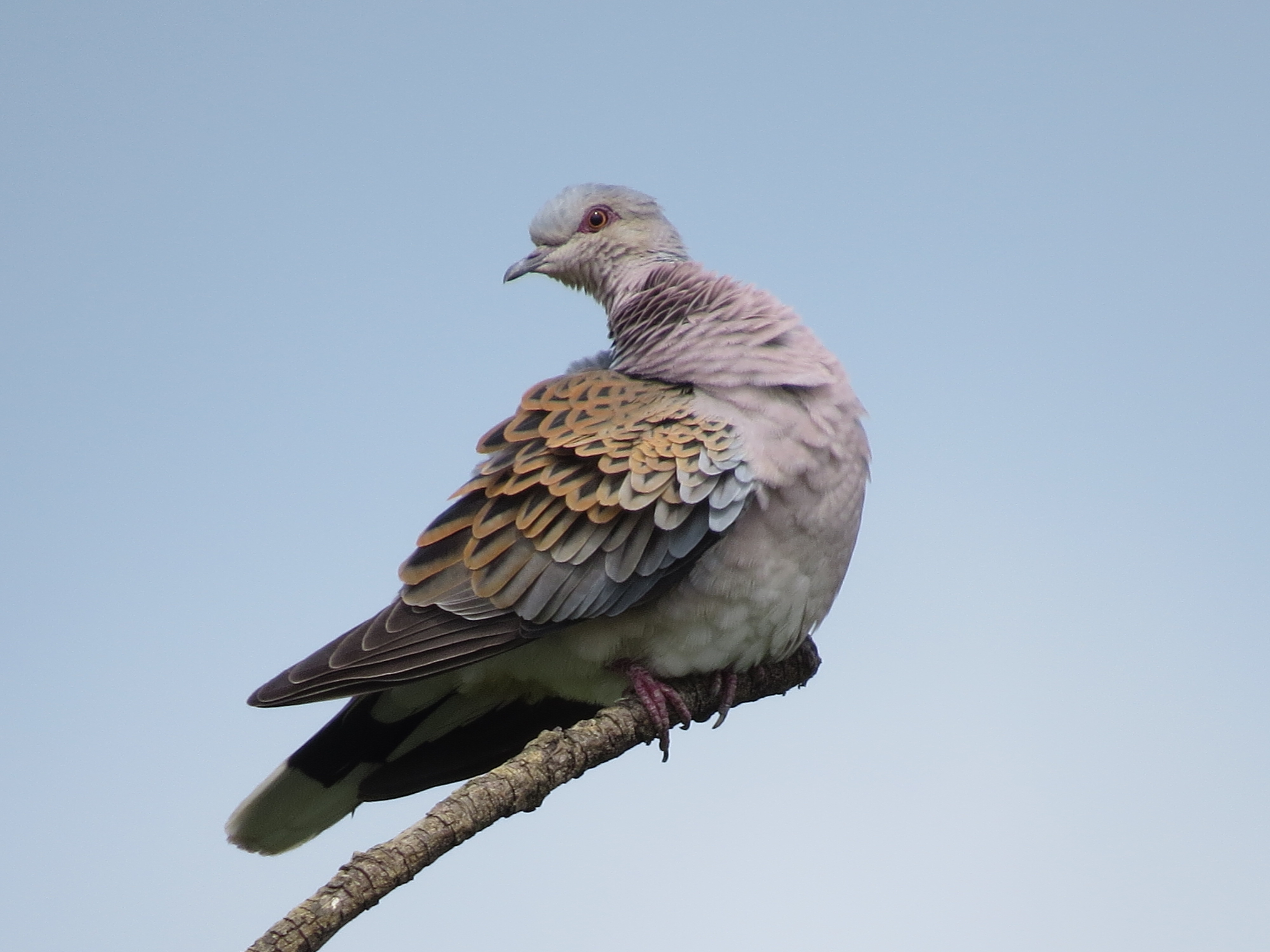
Just four localities have produced Turtle Doves this year with perhaps the most frequently encountered pair being at Harrington AF throughout the period, while up to three were also present at Ashton Wold/Polebrook Airfield and one was purring in Sywell Wood on 13th.

Turtle Dove, Harrington AF, 1st June 2014 (Simon Hales)

A Ring-necked Parakeet was in suburban Northampton on 13th. The future looks bleak for Grasshopper Warblers this year with the only reports in the period restricted to singing males at Harrington AF on 1st and Blueberry Farm, Maidwell also on 1st and again on 10th. It’s now generally accepted that we have lost Tree Pipit as a local breeding species so one flying over Northampton on 1st was noteworthy, as was a singing male Corn Bunting in west Northants on 5th and 9th – the only one reported in the county so far this year.

The Week in Focus: 24th to 30th May 2014

The first half of the week remained unsettled with showers from the continent initially moving north across the country before winds from the east took over in the latter half. Migration slowed considerably with few new birds being found.

Two Egyptian Geese visited Summer Leys LNR on 25th but the only other wildfowl of note were lingering Goldeneyes comprising a female still at Earls Barton GP and a drake still at Thrapston GP all week. A Quail was singing at Boddington Res on 24th and yet another Spoonbill – this time a second-summer – put in a brief appearance at Summer Leys on 29th. This is the third to visit this site this spring, being readily distinguished from last week’s individual by the amount of black present in the primaries.

Second-summer Spoonbill, Summer Leys LNR, 29th May 2014 (Alan Coles). Black tips to primaries restricted to P9 and P10.
Second-summer Spoonbill, Summer Leys LNR, 29th May 2014 (Alan Coles). Small black tips to restricted to outer two primaries.

The only Osprey reported this week was one at Pitsford Res on 26th, a Marsh Harrier visited Harrington AF on 25th and a Peregrine was near Stortons GP on 27th-28th.

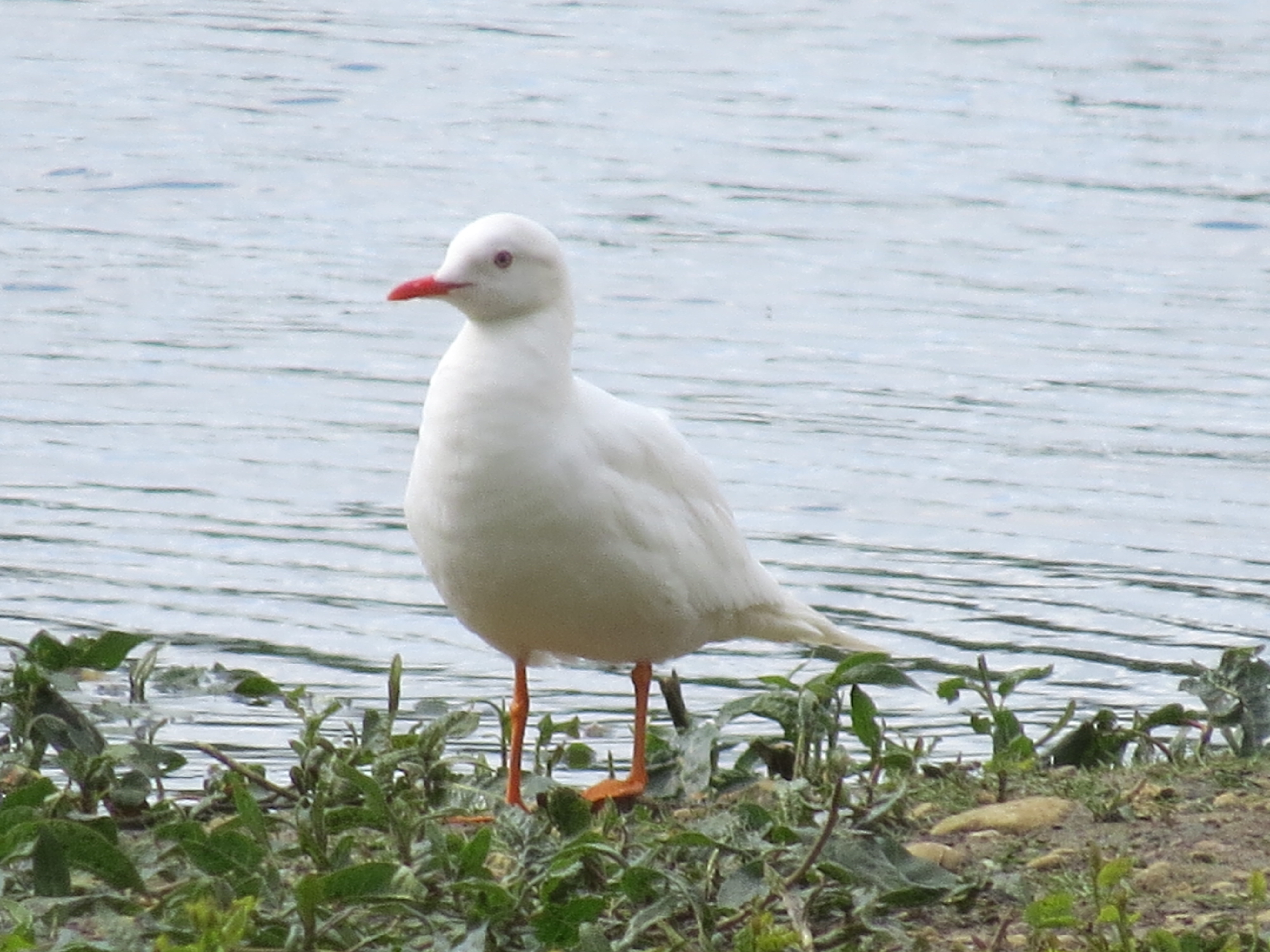
Little Ringed Plovers continued to be reported from Summer Leys and Clifford Hill GP, while 2 Ringed Plovers were at the first of these two sites on 25th and one was at the latter on 26th. Both sites also held single Dunlins – Clifford Hill GP on 24th and Summer Leys on 30th, while the only other migrant waders this week were a Wood Sandpiper and a Common Sandpiper – both being at Stanwick GP on 24th. A second-summer Yellow-legged Gull visited Clifford Hill GP on 26th but arguably more interesting was the leucistic Black-headed Gull,doing its best to look like a Slender-billed Gull but falling well short of the mark, at Summer Leys the day before.

Leucistic Black-headed Gull, Summer Leys LNR, 25th May 2014 (Simon Hales). Note obvious pale iris.
Leucistic Black-headed Gull, Summer Leys LNR, 25th May 2014 (Simon Hales). Note obvious pale iris as well as reduced pigmentation in bare parts.
Leucistic Black-headed Gull, Summer Leys LNR, 25th May 2014 (Simon Hales).

A small flurry of Arctic Terns comprised sixteen at Daventry CP on 27th and one at Boddington Res on 29th. Single fly-over Ring-necked Parakeets were seen at Ditchford GP on 28th and at Roade on 30th.