Floodwater Fallout

The unseasonally inclement weather this weekend paid dividends to those who ventured out to brave it. Strong north to north-easterly headwinds and sustained heavy rain from Friday onwards put paid to the progress of many northbound migrants resulting in large numbers of birds being grounded across southern Britain.

Notable among these locally were record numbers of Northern Wheatears (minimum counts of 80 at Clifford Hill GP and 71 at Borough Hill including many Greenlanders) and sizeable flocks of Black-tailed Godwits with 30 on floodwater at Irthlingborough, 26 at Summer Leys and 9 at Clifford Hill. Flooded pools at the latter locality also attracted a Turnstone and at least 21 Yellow Wagtails, including a female presumed ‘Channel Wagtail’ (Yellow x Blue-headed hybrid). Two more Ring Ouzels at Borough Hill and one at Summer Leys completed a remarkable run of records for this species this spring. With three hours between them, two Kittiwakes also went through at Summer Leys on Saturday and a Slavonian Grebe (not from Stewartby, Bedfordshire) was found at Thrapston Gravel Pits on Titchmarsh reserve. I caught up with this soggy-looking summer-plumaged individual early this morning while it was feeding on North Lake, seemingly oblivious to the choppy water, high winds and lashing rain.

Later this morning the Black-tailed Godwits were performing well, down to just a few metres, in front of the Screen Hide at Summer Leys. Fantastic-looking summer-plumaged Icelandic race birds, I was frustrated by the lack of camera (having smashed it yesterday when the wind blew my tripod over at Clifford Hill!). Neil Hasdell came to the rescue, however, and kindly sent me the photos below, which are no doubt better than anything I would have achieved by digiscoping :-).

Icelandic Black-tailed Godwits, Summer Leys LNR, 29th April 2012 (Neil Hasdell)

The shorter-legged, shorter-billed and considerably more extensively rufous-patterned islandica race is the one most frequently encountered in Northants, with nominate limosa, ‘Continental’ Black-tailed Godwit, being considerably rarer, even though it breeds no further away than East Anglia.
Arctics on the Move

Today has seen a big overland movement of Arctic Terns, with impressive counts at a number of inland localities. While some chose to linger at certain sites, many pushed straight through as they headed north toward their breeding grounds. Significant totals were logged at Rutland Water and Cropston Reservoir (both Leicestershire) with 70 and 60+ respectively, Buckden Gravel Pits, Cambridgeshire, where 61 were counted moving along the Ouse valley and 39 visited Paxton Pits (also Cambridgeshire) while Broom, Bedfordshire logged 57 and Wilstone Reservoir, Hertfordshire 30+.

The largest flock, however, was in our own county and recorded by Dave Holden at Thrapston Gravel Pits’ Town Lake, where he estimated 115 to have been present at 11 o’clock this morning. Smaller numbers locally were approximately 30 at Pitsford Reservoir at 8 o’clock with (a further?) 12 there early afternoon and 44 there late afternoon, 26 through east at Summer Leys early morning with a further 33 roosting on the island in nearby Mary’s Lake early afternoon, 25 at Daventry Country Park this morning, 5 at Hollowell Reservoir also this morning with 36 there at 6 o’clock this evening, 16 at Stanwick GP and 3 at Clifford Hill Gravel Pits this evening.

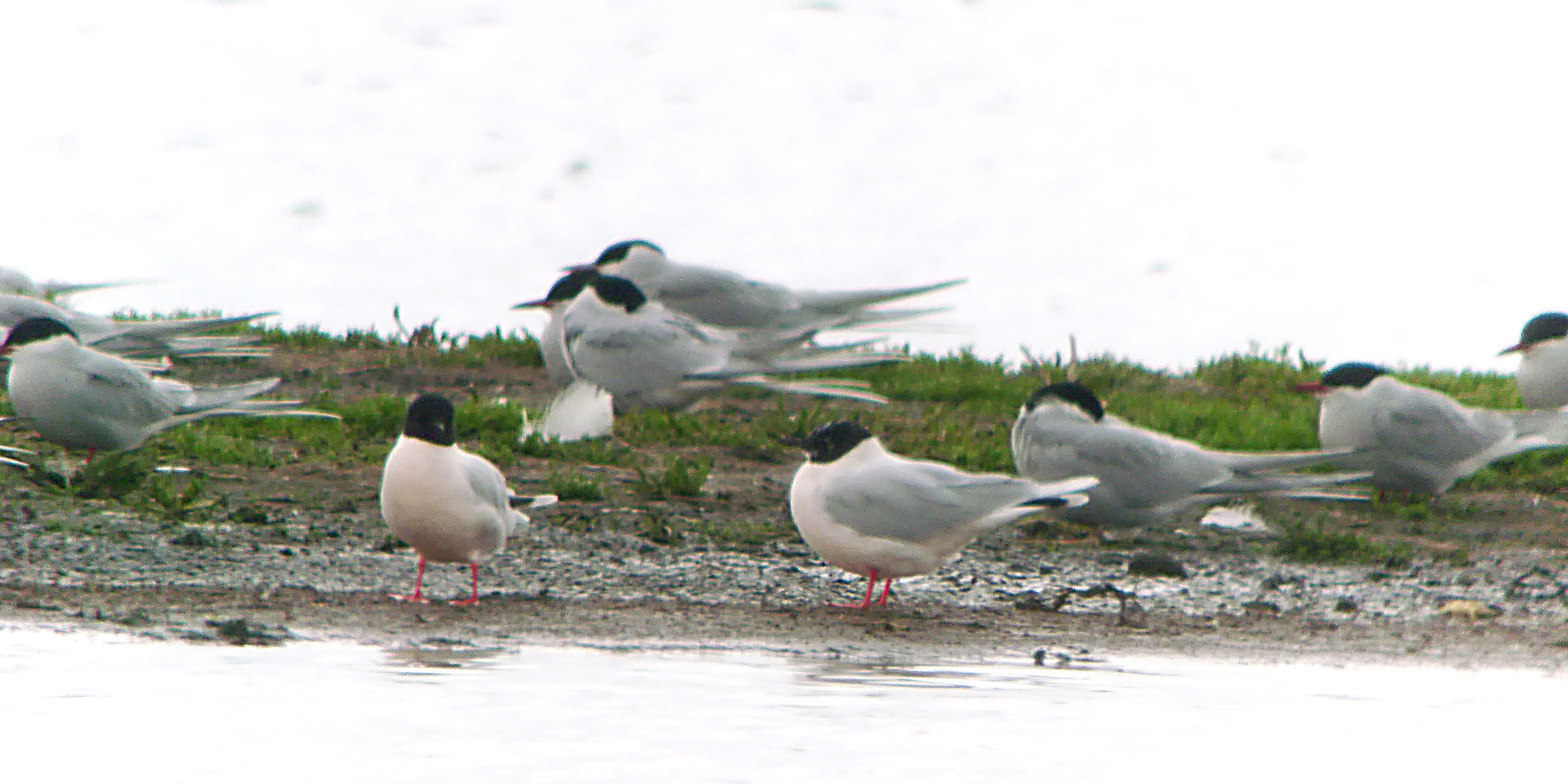
Little Gulls against a backdrop of 33 Arctic Terns and one Common Tern, Earls Barton GP, 24th April 2012 (Mike Alibone)

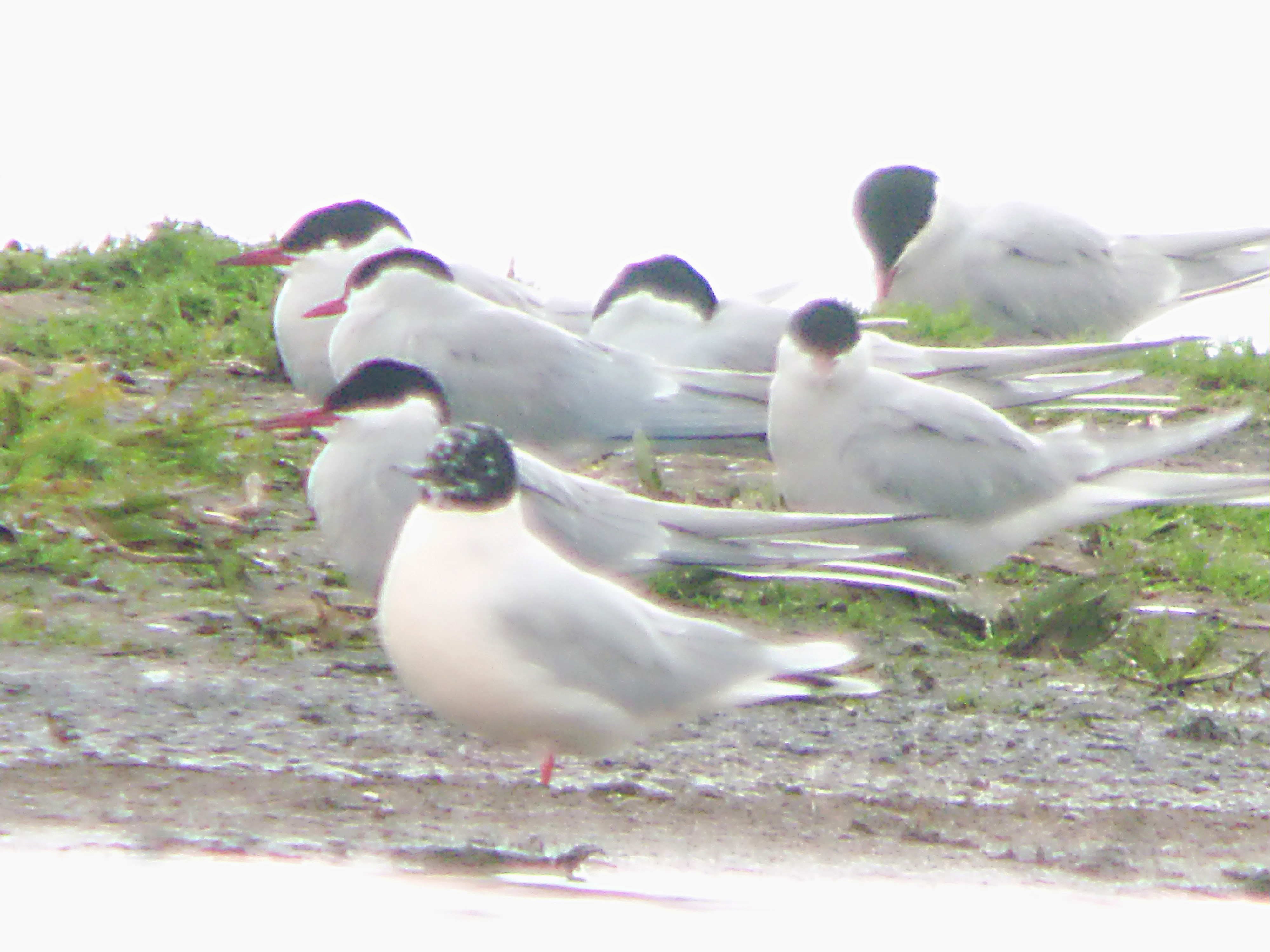
Those on the island in Mary’s Lake were accompanied by 2 smart adult Little Gulls, both of which showed a nice pink flush to their underparts – a feature often shown by this species.

Little Gull and Arctic Terns, Earls Barton GP, 24th April 2012 (Mike Alibone)

Pied Flycatcher at Daventry Country Park

The Daventry area was again the focus of attention today with a male Pied Flycatcher attracting a steady stream of admirers to the country park, while nearby Borough Hill played host to a female (or first-summer male) Black Redstart.

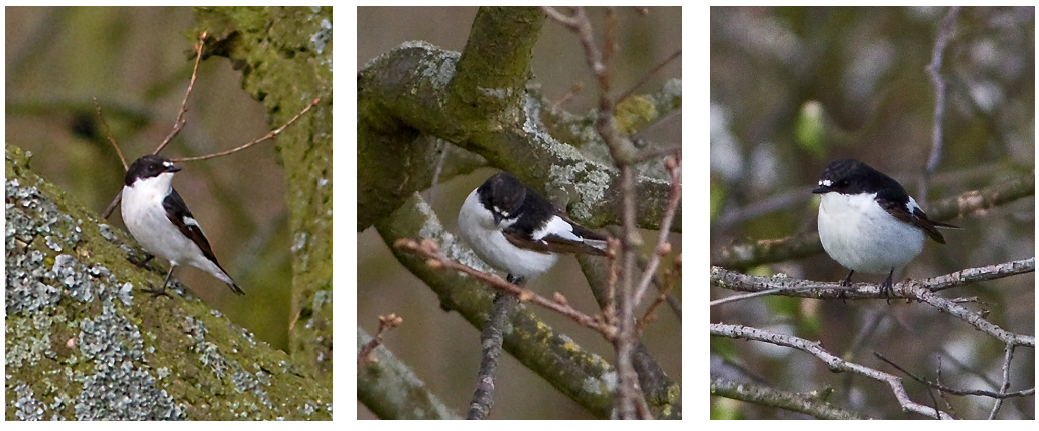
Both were found during the morning and they were still present this evening, with the flycatcher favouring an oak tree (with an obvious nest-box) on the edge a large clump of Blackthorn scrub below the dam, about 80 metres east of the visitor centre. It was very active in this area and it was also heard singing at one point during late afternoon. Neil Hasdell kindly provided the images below.

First-summer male Pied Flycatcher, Daventry CP, 19th April 2012 (Neil Hasdell)

The brownish primaries and coverts, along with the rather small white forehead indicate it is a first-summer.

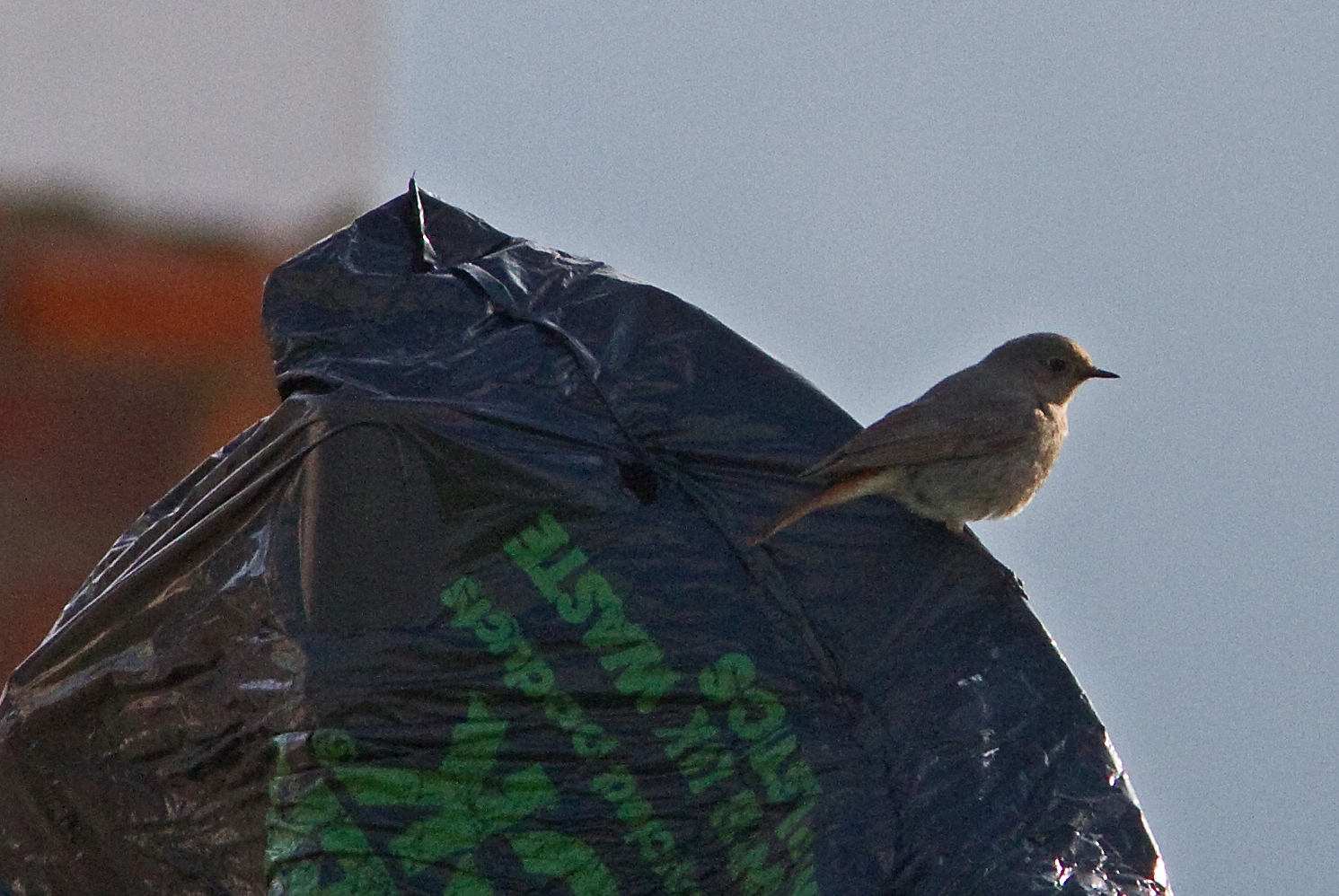
Overlooking the park, nearby Borough Hill produced its second Black Redstart of the spring with this rather mobile individual commuting between the fence around the small compound by the car park and the fence on the northern side of the main compound.

Black Redstart, Borough Hill, 19th April 2012 (Neil Hasdell)

Thanks are again due to Neil for supplying this image, taken in weak early evening sunlight, of a rubbish bag supporting a not-so-rubbish bird!

Saturday Ring Ouzels at Borough Hill

The past few days have seen an arrival of Ring Ouzels en masse into the UK, with good numbers of migrants appearing in suitable habitats – mainly hillsides – in neighbouring counties. Buckinghamshire has had the lion’s share with at least eight at Ivinghoe Beacon, while seven were counted at Pegsdon Hills in Bedfordshire.

In Northants today, 14th April, two smart males were present throughout the morning at Borough Hill, feeding in open pasture on the summit some 300 metres north of the radio station compound. When disturbed they would take cover in a short, low stretch of bushes or in an isolated clump of hawthorns, where they could be surprisingly difficult to see. Thanks are due to Jonathan Philpot for supplying the below photo.

Male Ring Ouzel, Borough Hill 14th April 2012 (Jonathan Philpot)

While these two were being watched, two more flew northeast at 11.00 but they were not relocated. Other migrants on the hill were two Northern Wheatears, close to the area which held the Ring Ouzels, and a big, swarthy, orange-bellied male Greenland Wheatear on the southern slope above the industrial estate. Although this may seem an unusually early arrival date for this race, one was trapped at Portland Birds Obs on 8th April – see http://tinyurl.com/crgc3jy.

Kittiwake at Daventry Country Park

Gary Pullan was lucky enough to discover a first-winter Kittiwake at Daventry Country Park this morning. Although not particularly rare nationally, Kittiwakes can often be difficult to connect with in Northants as a result of the short stopovers at inland sites made by the few individuals which choose to migrate overland to reach their breeding sites anywhere between northern Britain and the high Arctic.

Apart from making a short flight around the reservoir while I was there, it spent most of its time loafing on the water, occasionally picking at surface insects, well out in the middle – hence the rather poor, heavily cropped digiscoped shot below.

First-winter Kittiwake, Daventry CP, 7th April 2012 (Mike Alibone)

With an average of four records per year over the last ten years, the overwhelming majority of Kittiwakes visiting the County in spring are adults so this individual is unusual insomuch as it is a first-year – apparently the first spring first-winter since 2001! At first sight it appears doubly unusual because it remained all day, allowing County year-listers ample time to catch up with it, although being immature is a likely explanation for it being in no hurry to reach any breeding grounds.

Mealy Redpolls in Northants

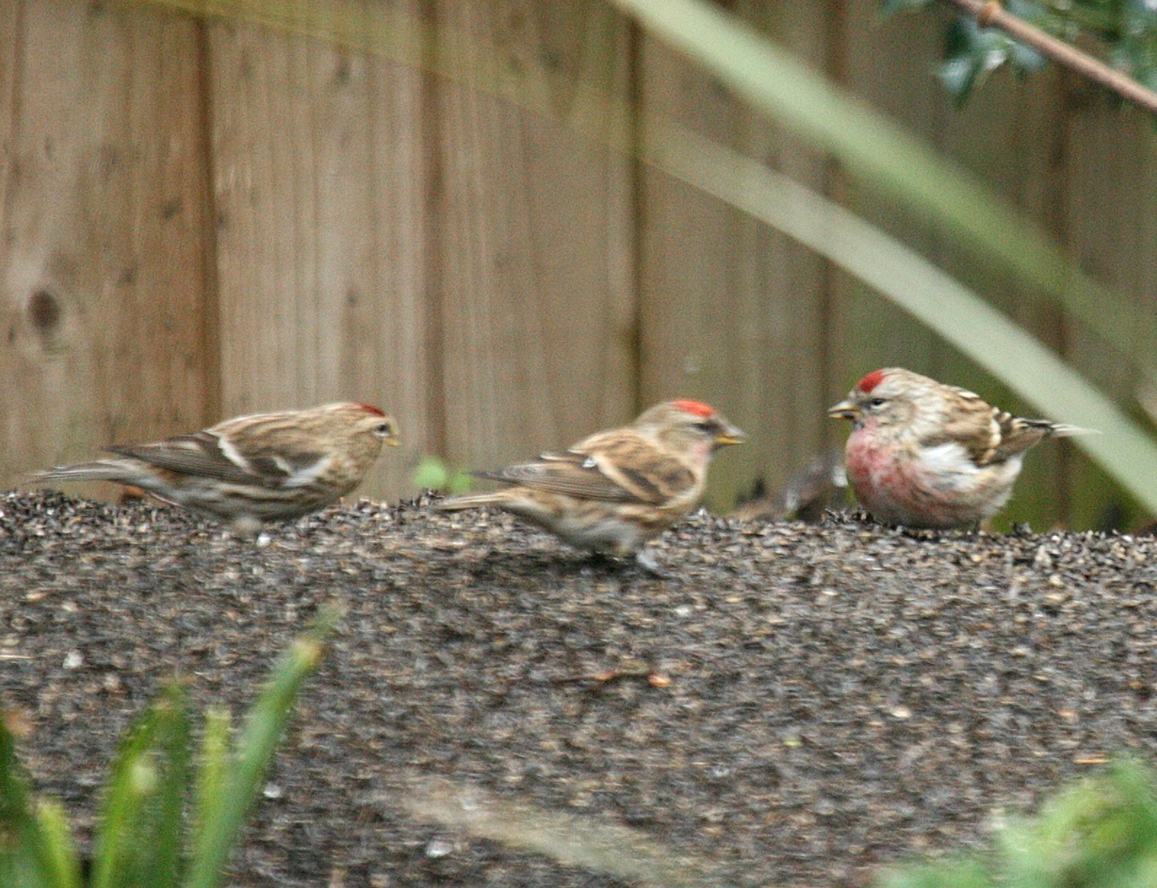
Ian Pretty has been fortunate in having this cracking male Mealy Redpoll pay frequent visits to his garden in Grange Park over the last ten days or so in company with around twenty Lesser Redpolls. Ian’s photos, below, provide a great opportunity to compare this bird with Lesser Redpoll, against which the differences in size, structure and plumage characteristics are obvious in this instance.

Male Mealy Redpoll (left), Grange Park, 22nd March 2012 (Ian Pretty)

This is not always the case, however, as Mealy Redpolls are highly variable in size, structure and plumage, with many females and first-winters resembling Lesser Redpoll which, when worn, can sometimes also resemble Mealy Redpoll.

Male Mealy Redpoll with two Lesser Redpolls, Grange Park, 22nd March 2012 (Ian Pretty)

This male, at the top end of the size range, is broad-shouldered, bull-necked and, as well as being generally cold-toned compared to Lesser Redpoll, shows the classic white ‘tramlines’ down the mantle. The rump is also notably whitish with dark streaks. These last two features can also be shown – to a lesser degree – by Lesser Redpoll. The pale, streaked ear coverts and white supercilium (both normally plain buffish on Lesser Redpoll) also show well here as they do on the first-winter male trapped at Stanford Reservoir on 18th November 2010 (below).

First-winter male Mealy Redpoll, Stanford Res, 18th November 2010 (John Cranfield)

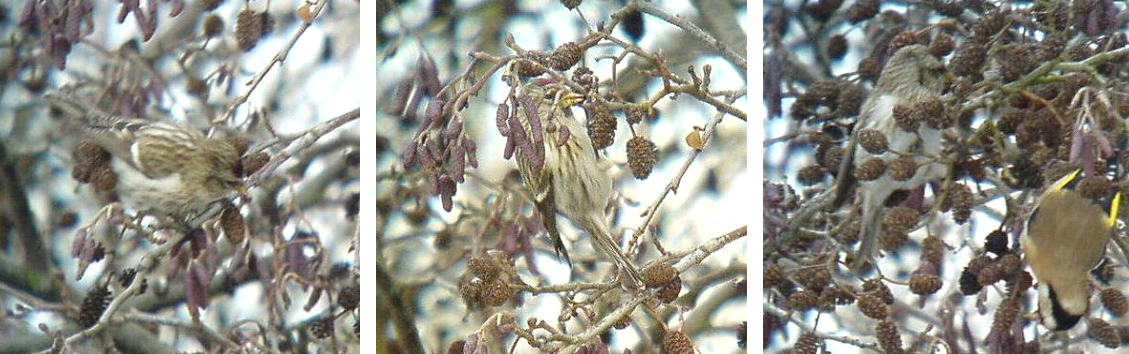
Compare these with the more subtle – probable first-winter female – Mealy (below) which was at Pitsford Reservoir in December 2005-January 2006. This bird could also be picked out in flight with Lesser Redpolls by its deeper call notes!

Mealy Redpoll, Pitsford Res, 28th December 2005 (Mike Alibone)

Click on photos for larger images. Mealy Redpolls are rare winter visitors to Northants, with up to 3 records per year in the ten years 2001-2010 (there was none in 2007 and 2009). They can turn up at almost any locality where there are birches and alders but a favoured locality appears to be Daventry Country Park. Visits to garden feeders by redpolls is by no means uncommon these days, with black niger seed being the food of choice.

Great White Imposter!

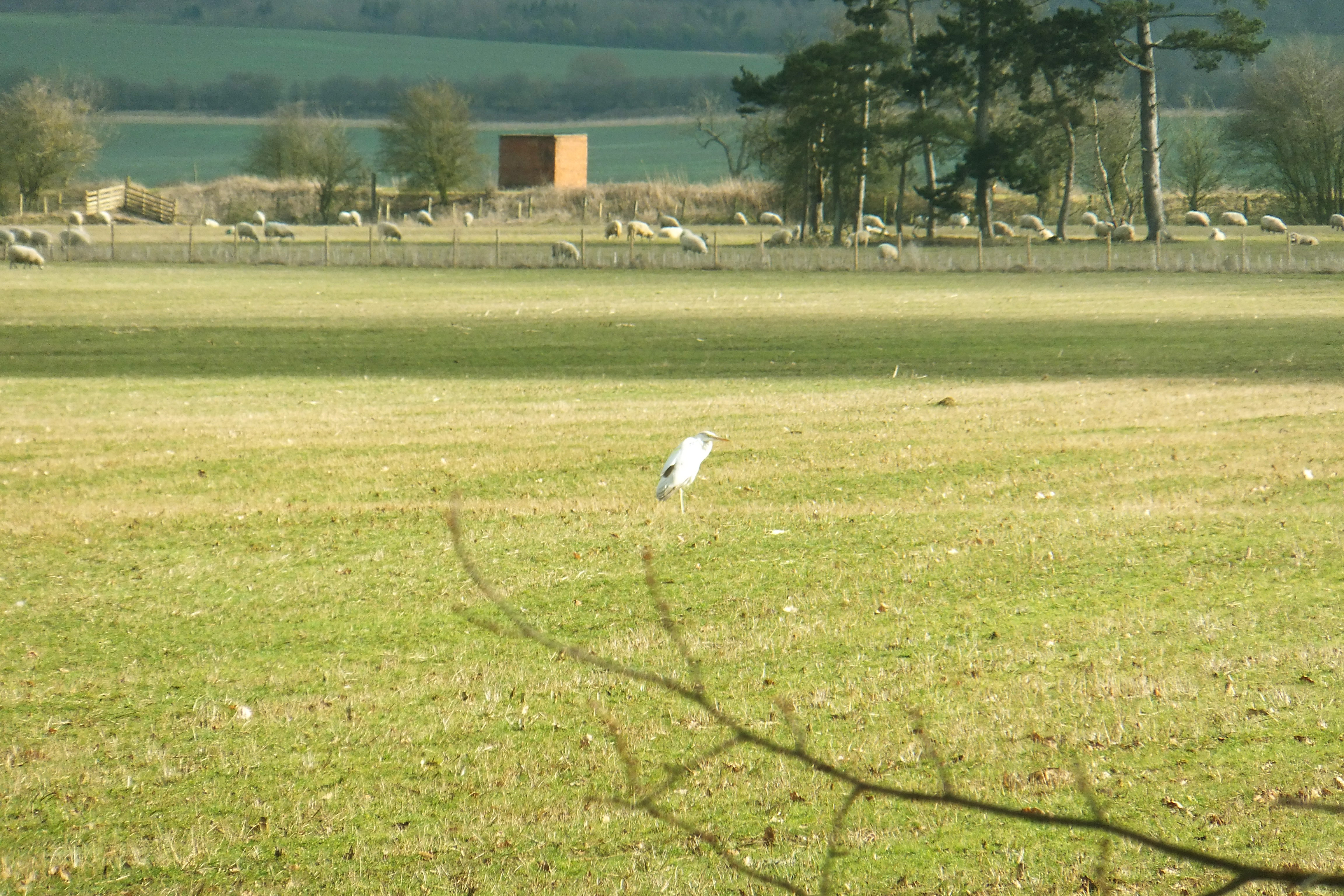
All that glitters is not gold, or so the old proverb says and nothing is more apt in the case of this leucistic Grey Heron, initially identified as a Great White Egret, near Stanford on 23rd February.

Leucistic Grey Heron, Stanford 23rd February 2012 (Mike Newhouse)

From a distance it looks interesting but upon closer examination – and before any structural differences become apparent – there are a number of plumage anomalies.

Leucistic Grey Heron, Stanford, 23rd February 2012 (Mike Newhouse)

Dark feathers are visible among the white, the most obvious of which are the grey tertials and the rest of the flight feathers on the closed wing. There is a ghost of Grey Heron’s black lateral crown stripe above, and behind, the eye and the legs are pale – much more in line with those of a Grey Heron. Bizarre that this bird should be discovered at the same time as a ‘real’ Great White Egret has put in an appearance in the Nene valley not so very far away …

An interesting large gull at Sidegate Landfill

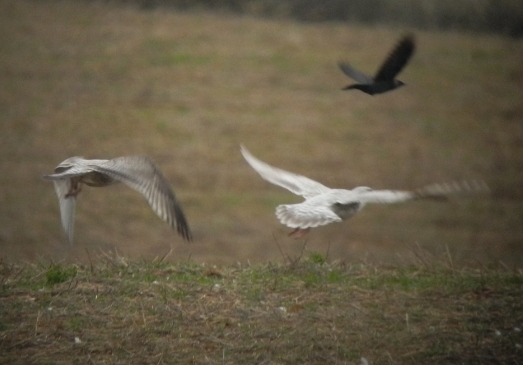
Mike Baron digiscoped this interesting-looking large gull at Sidegate Landfill yesterday.

Herring Gull or hybrid, Sidegate Landfill, 21st February 2012 (Mike Baron)

In flight over the tip it bore a strong resemblance to a first-winter Glaucous Gull but upon closer examination, however, it clearly shows features more closely associated with Herring Gull.

Herring Gull or hybrid, Sidegate Landfill 21st February 2012 (Mike Baron)

Although it may be a Glaucous Gull x Herring Gull hybrid I think it more likely to be a leucistic Herring Gull as its head shape does not seem to fit Glaucous, it doesn’t appear to have Glaucous’s beady eye and, as well as the ghosted subterminal tail band, it has an indistinct secondary bar. It is larger, however, than any of the Herring Gulls present!

Herring Gull or hybrid, Sidegate Landfill, 21st February 2012 (Mike Baron)

It does not show a typical striking Glaucous Gull x Herring Gull hybrid bill pattern, which is often virtually identical to first-winter Glaucous but it is not too far adrift from this. Compared with the Herring Gull in the photos, the primaries and tertials are much paler. A pitfall for the unwary Glaucous Gull seeker!

Great White Getaway

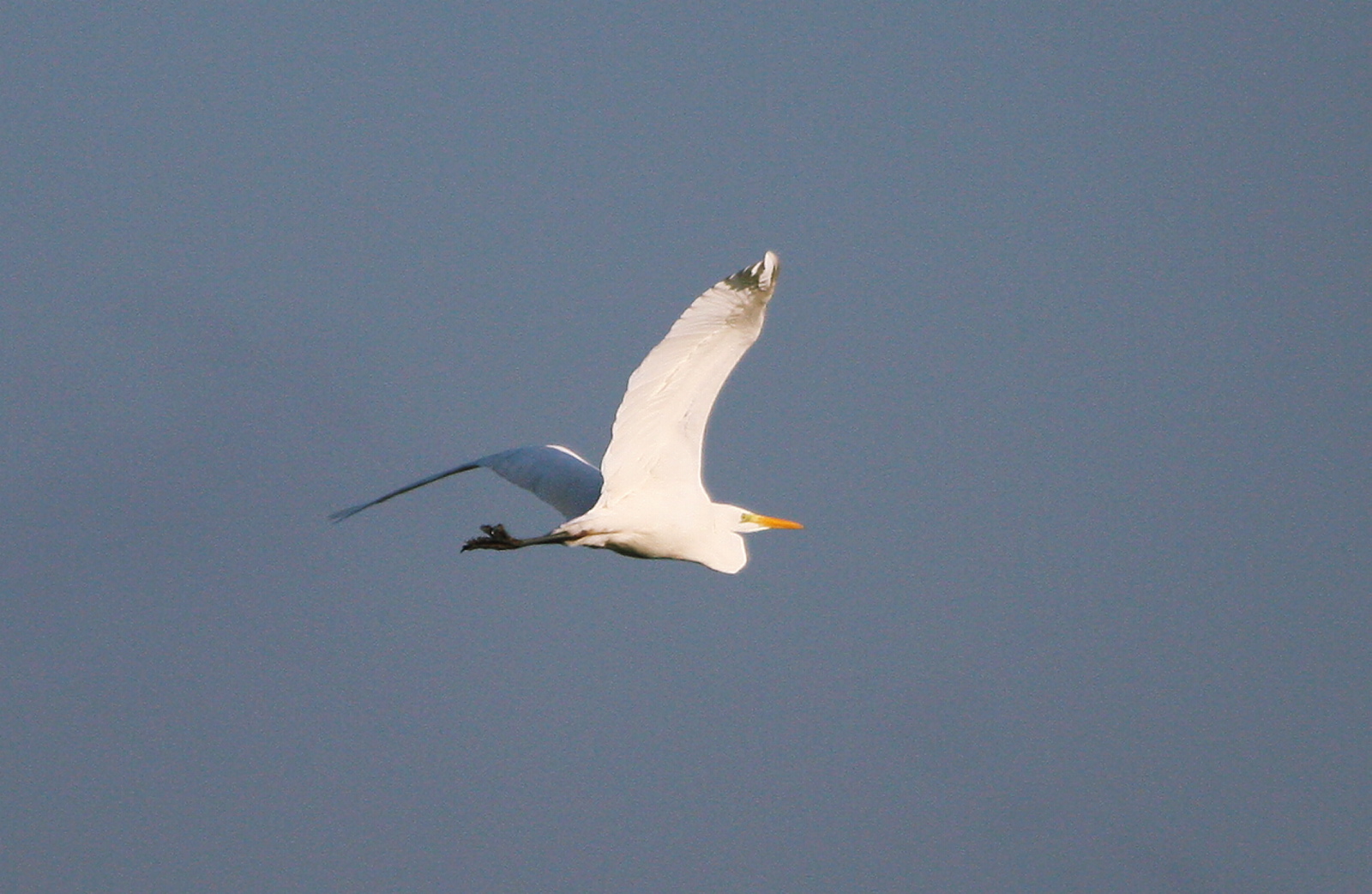
Great White Egrets are now almost annual visitors to the County, even staying to winter in recent years, but the last two or three have paid fleeting visits and they have been difficult to catch up with as a consequence. Conforming to this recent trend, the latest one to occur was found at Kislingbury Gravel Pits on 1st February by Colin Adams.

Great White Egret, Kislingbury GP, 1st February 2012 (Colin Adams)

It was present for only ten minutes after its discovery before being flushed by a dog-walker and flying off east.

Great White Egret, Kislingbury GP, 1st February 2012 (Colin Adams)

This bird no doubt accounted for the report five days later of one flying north-east over Denford. Where had it been during the intervening period?

More Ditchford gulls

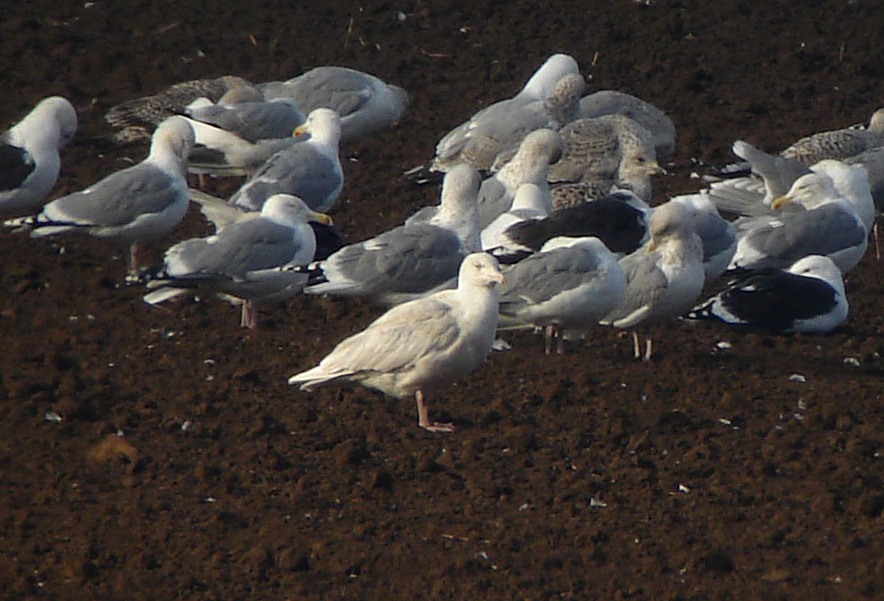
The first 10 days of February have seen additional scarce gulls arriving at Ditchford GP. In addition to those mentioned in the previous summary a new second-winter Iceland Gull was discovered on 3rd, an adult Mediterranean Gull put in an appearance on 7th and Caspian Gulls were also seen intermittently, with adults there on 1st and 7th, a second-winter on 4th and a different second-winter there on 8th.

Interestingly there might have been a new Glaucous Gull there, too. Dave Warner’s photo, below, taken at nearby Sidegate Landfill on 28th January, appears to show a third-winter with an apparent patchy grey mantle and the dark subterminal band on the bill much reduced in comparison to those of the two ‘regular’ second-winters which have been visiting the site. But maybe long distance, light and camera have conspired to distort reality …

Glaucous Gull, probable third-winter, Sidegate Landfill, 28 January 2012 (Dave Warner)

One of the Iceland Gulls was showing distantly on the ice when I was there on Wednesday. In this plumage it sticks out like a sore thumb among the many other large gulls and its small size and delicate proportions are obvious compared, for instance, to the nearby Herring Gull.

Second-winter Iceland Gull, Ditchford GP, 8 February 2012 (Mike Alibone)

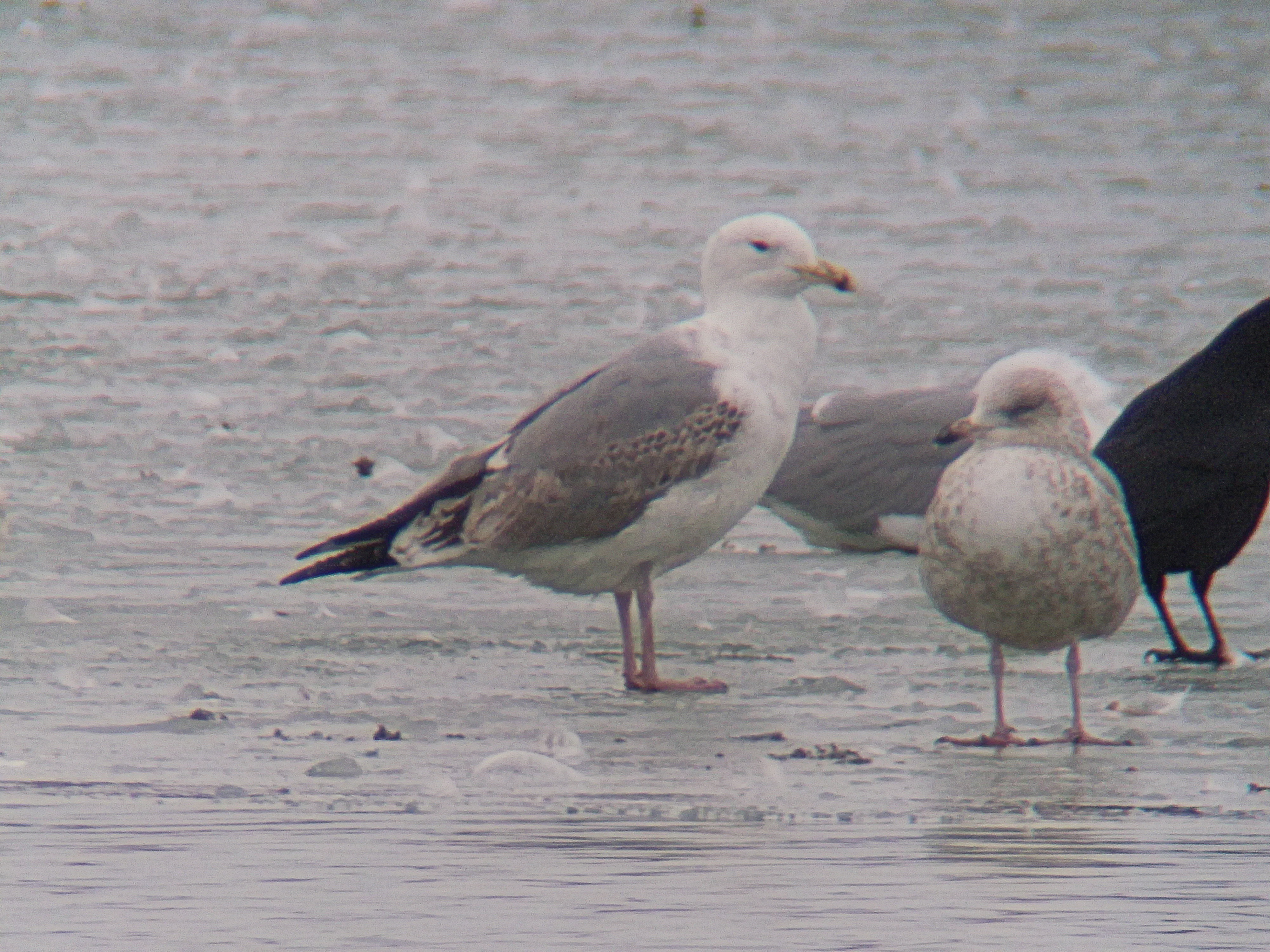
Also interesting was this advanced second-winter Caspian Gull, well on its way to second-summer with a reasonably bright bill and very clean neck and breast (just a few small spots at the base of the neck).

Second-winter Caspian Gull, Ditchford GP, 8 February 2012 (Mike Alibone)

This is a fairly typical individual with small head, dark iris, tapered, parallel-sided (though

Second-winter Caspian Gull, Ditchford GP, 8 February 2012 (Mike Alibone)

a little short) bill and a small white mirror on P10, the latter not present on Yellow-legged Gull or argenteus Herring Gull and only on some argentatus Herring Gulls of this age. Second-winter Caspian Gulls are highly variable, some closely resembling first-winters while others can appear much more adult-like.