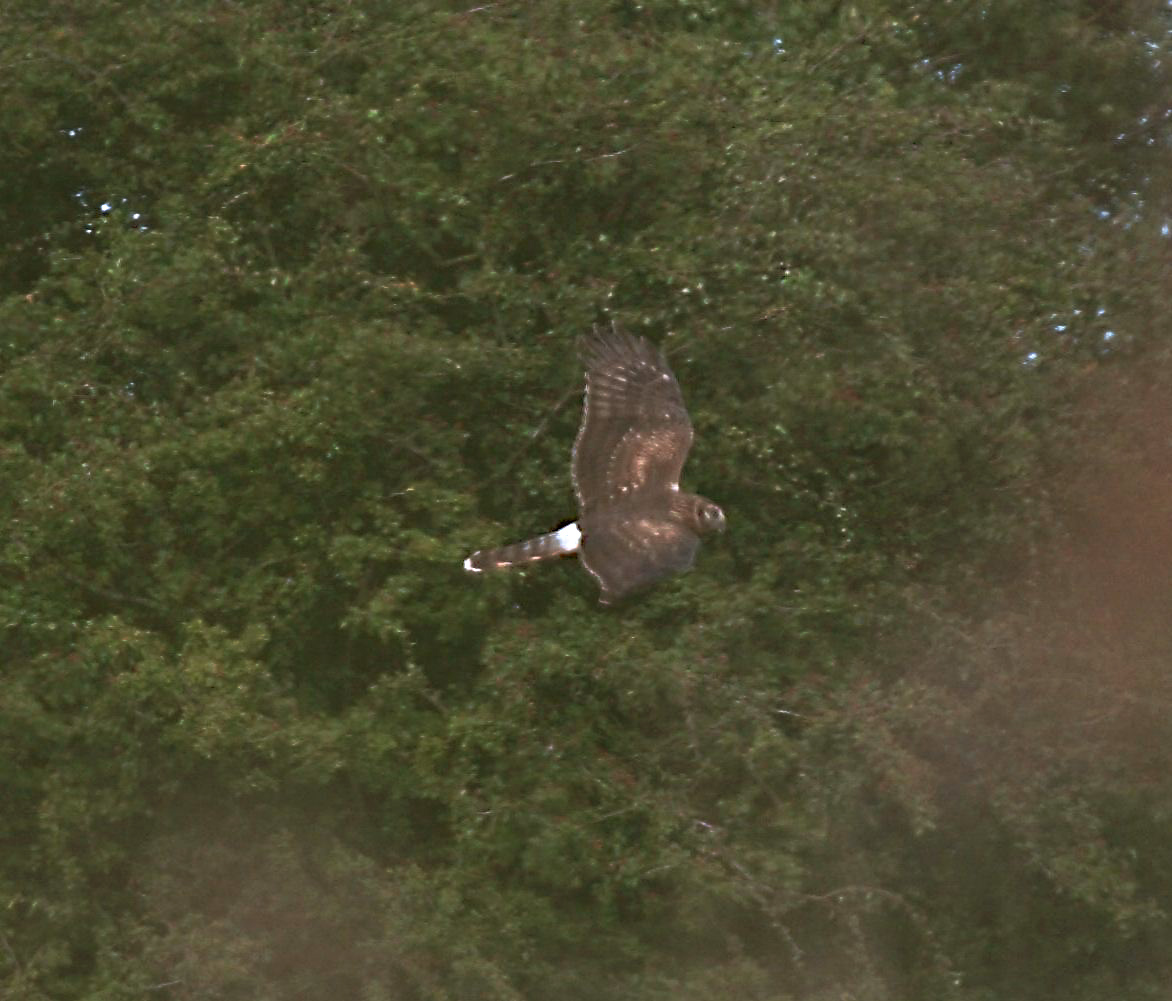
While some of us were sweltering under canvas at Birdfair others were out in the field, finding good birds. Harrington Airfield was clearly the place to be as, at 08.30, Neil Underwood had a Marsh Harrier between the concrete track and the conifer belt. We’ve now had several in the County this autumn and no doubt there will be more to come. Later in the day, at around 17.15, however, Jonathan Philpot was lucky enough to discover a ‘ringtail’ Hen Harrier hunting over the fields between the concrete track and the first bunker.
Hen Harrier, Harrington AF, 18th August 2012 (Jonathan Philpot)
Despite the rather pale underparts, lacking ochre tones, and the reasonably well-marked secondaries, I’m guessing it is probably a juvenile as its primaries are not strongly barred and, from above the secondaries are solidly dark, the primaries are paler but unbarred and there are pale fringes to the primary and secondary coverts.
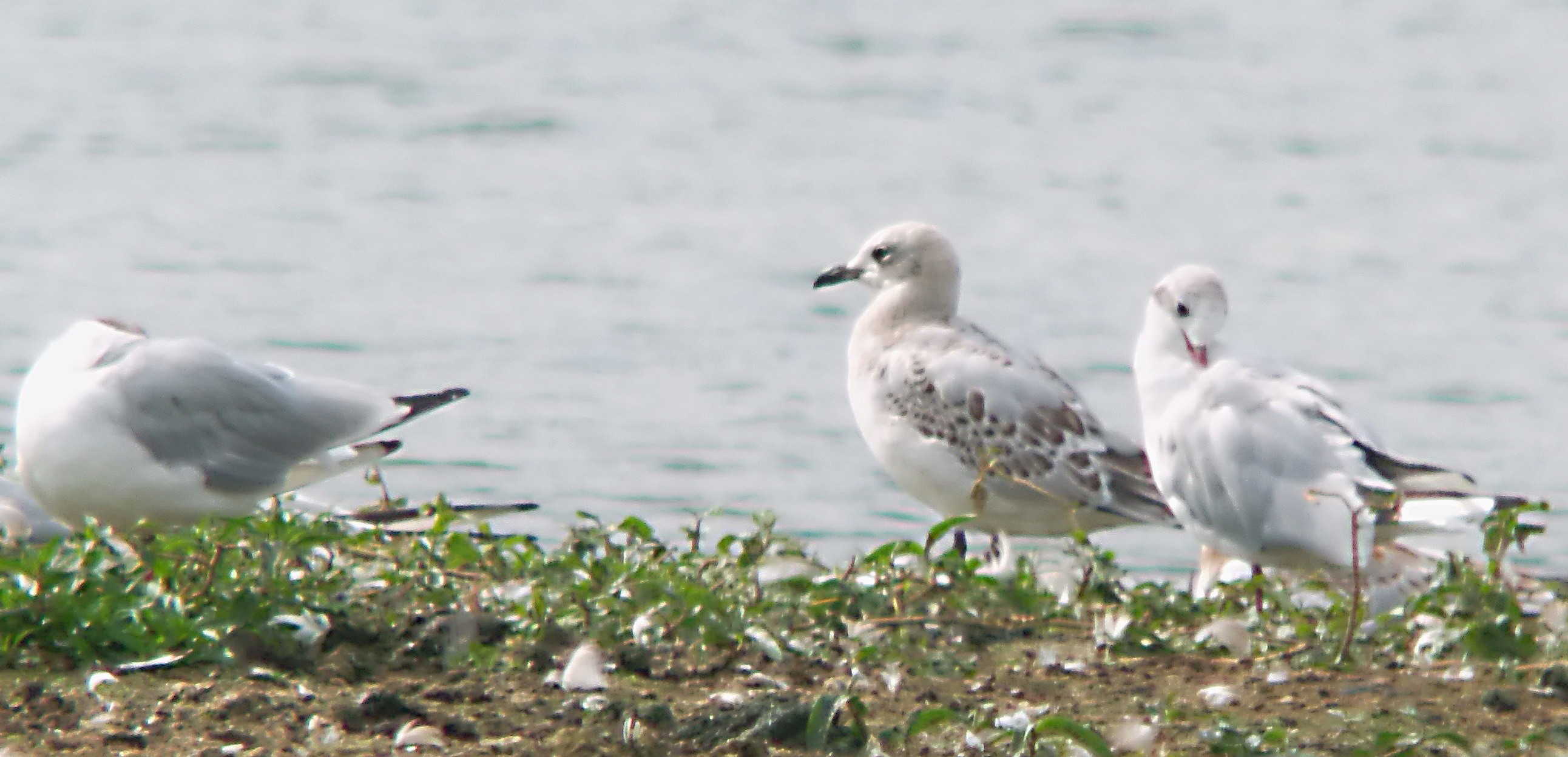
Hen Harrier, Harrington AF, 18th August 2012 (Jonathan Philpot)
It has already begun its moult to first-winter plumage with most of the scapulars and many mantle feathers now light grey but it has not yet developed the dark mask of a full first-winter. In this respect it’s a very distinctive bird compared to the accompanying Black-headed Gulls, lacking the latter’s well defined, isolated dark ear covert spot but already showing white ‘eye-lids’, a much heavier, dark, blunt-ended, slightly drooping bill and dark legs.
So far this autumn there have been two juveniles at Stanwick GP on 28th July, and singles at Pitsford Res on 1st, 2nd and 12th August. Hopefully we can look forward to more arriving over the next few weeks …
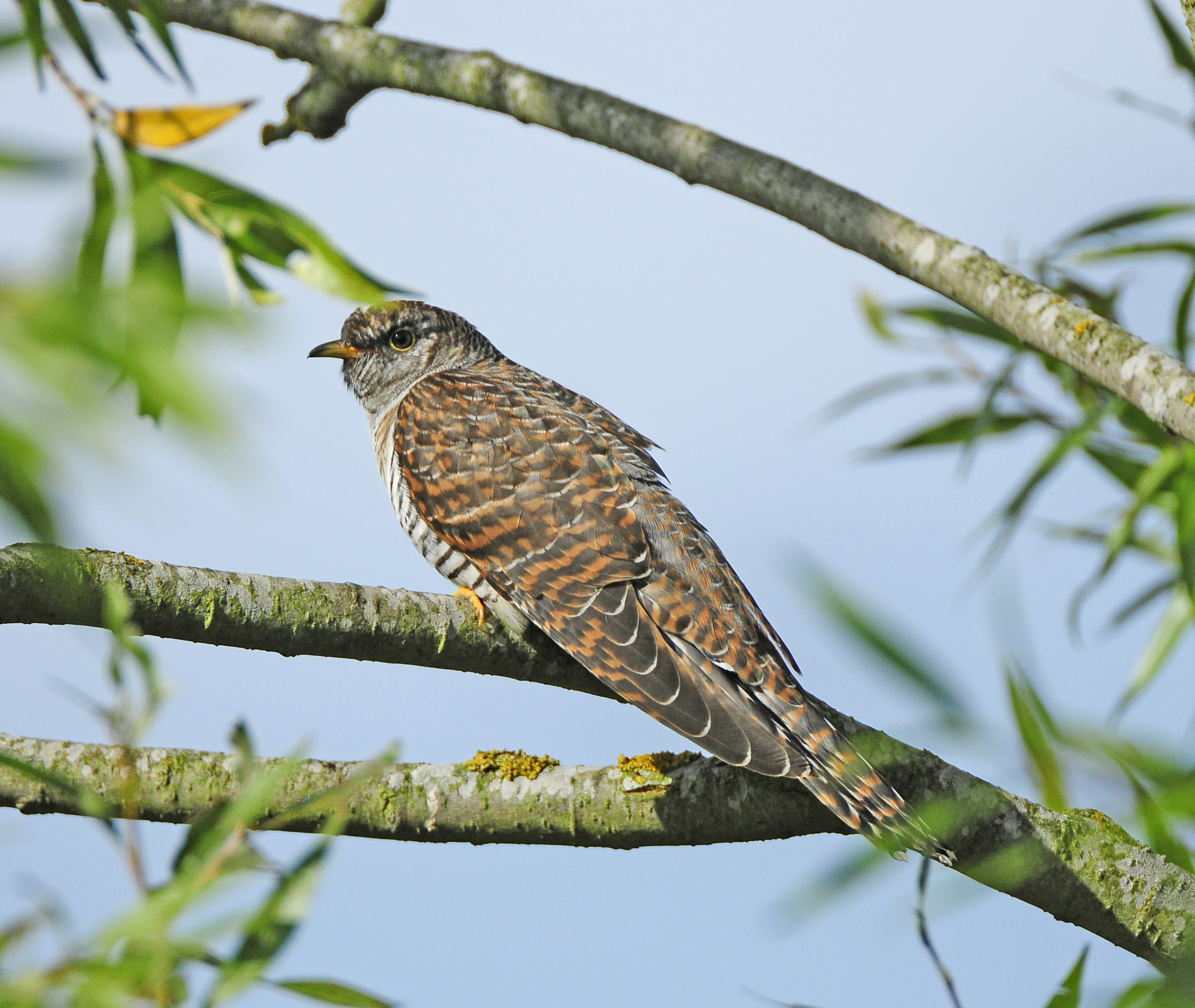
The last Cuckoo to be recorded in Northants in 2011 was on 26th August at Earls Barton GP – perhaps the individual below, which was photographed there on 14th August. Compare this rufous morph juvenile with yesterday’s grey morph at Crick. The white tips to the scapulars, wing coverts and tertials, along with the barred rump, rule out the rare ‘hepatic’ morph adult female.
Juvenile Cuckoo, Summer Leys LNR, 14th August 2011 (Clive Bowley)
This juvenile Cuckoo was present yesterday and again today at Foxholes Fisheries, near Crick, where it spent some time feeding from a fence post. It is a grey morph individual – many are also rufous, resembling the so called ‘hepatic’ form of adult females – and shows the white nape-spot characteristic of juveniles.
Juvenile Cuckoo, Crick, 10th August 2012 (Joan Chaplin)
According to the BTO, Cuckoos have declined by 63% in England over the past 25 years and the now famous BTO satellite-tracking project has revealed that adult Cuckoos can leave the UK as early as the first week in June and be back in Africa by July. Juveniles are obviously later leaving but you won’t see many around from now on. There is a wide variation in the dates for recording the last ones in Northamptonshire, year on year. The latest record during the history of the Northamptonshire Bird Report (since 1969) was of a very late individual at Kettering on 17th October 1972 in contrast to the last one in 2010, at Earls Barton GP, on 4th July! There appear to be few local photos of Cuckoos and thanks are due to Joan Chaplin for supplying the images above.
… except this! I was lucky enough to be at Clifford Hill Gravel Pits when this Scared Ibis dropped in at about 19.20 last night. Dave James, a few hundred metres away from me, picked it up first on the north bank of the main lake. It appeared unringed.
Adult Sacred Ibis, Clifford Hill GP, 8th August 2012 (Mike Alibone)
An escape or a wanderer from the French feral population, which numbers more than 600 pairs – a huge reduction from the several thousand birds present a few years ago. In France they are treated as a pest and a conservation concern as they are danger to other birds which are predated. There has been a culling program underway for the past few years.
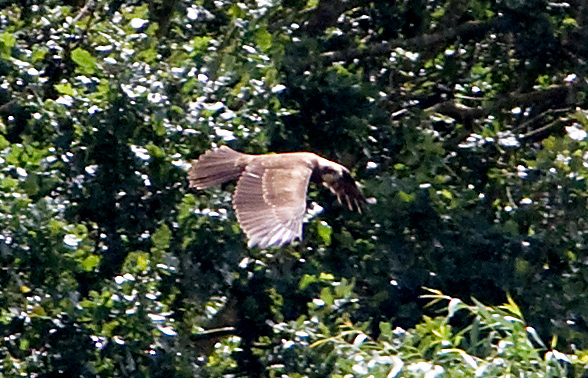
The continued presence of a Marsh Harrier at Pitsford Reservoir over the past few days has provided a good excuse for a snapshot of the status of this species in Northamptonshire. Seen only briefly in Walgrave Bay by Neil & Eleanor McMahon and Neil Hasdell on the morning of Saturday 28th, I caught up with it in the same spot equally briefly the following morning and, after being on view for only a couple of minutes, it promptly disappeared for the remainder of the day. Fortunately (for the yearlisters!) it was relocated the following morning when it was seen in, and between, both Scaldwell and Walgrave Bays around midday. It remains in the area this evening.
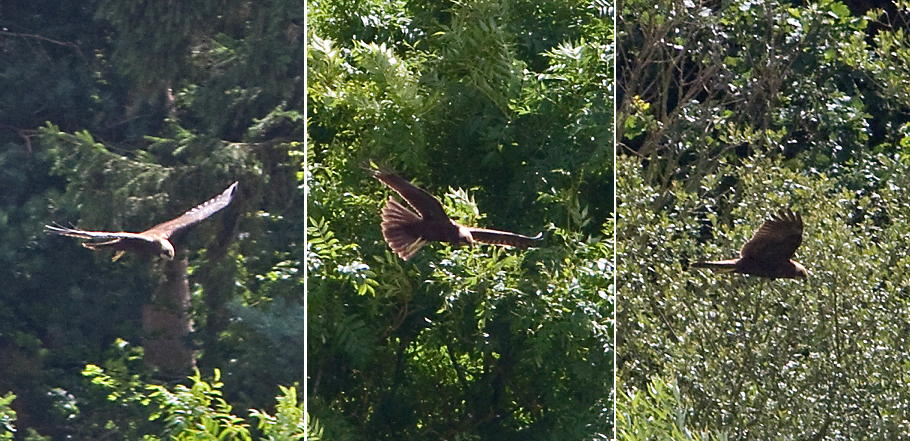
Juvenile Marsh Harrier, Pitsford Res, 30th July 2012 (Neil Hasdell)
Marsh Harrier is an uncommon, though regular, local passage migrant. Considering it breeds in some numbers in neighbouring Cambridgeshire shouldn’t we expect to see it more frequently in Northants? Especially in the east? Over the ten years 2000-2009 there was an average of 14 records per year, with a record 35 in 2010. The best time to catch up with one is in April-May or in August-September, although birds in spring tend not to linger. The best place is the Nene valley but the reservoirs have produced numerous records in autumn and, in theory, one could turn up almost anywhere. One wintered in the Nene valley between December 2001 and April 2002, being seen predominantly at Stanwick Gravel Pits. And the highest number together? Three juveniles at Pitsford Reservoir on 25th August 2002.
Juvenile Marsh Harrier, Pitsford Res, 30th July 2012 (Neil Hasdell)
There are few photos of Marsh Harriers in Northants so Neil Hasdell did well to get the long-distance shots of the Pitsford bird shown here. This individual is a typical juvenile, aged by the plain upper wing coverts with fresh, pale tips to the greater and primary coverts and all flight feathers, forming a neat, narrow band across the upperwing and a thin, pale trailing edge. Additionally there is a pale crescentic base to the primaries on the underwing, barely visible in the photographs. Some juveniles also show an extensive creamy area on the upper forewing like adult females, while others lack the pale tips to the coverts and flight feathers altogether and so appear virtually identical to adult females.
If this isn’t confusing enough, and to make matters worse, adult males can appear identical to adult females as revealed by Sternalski, Mougeot & Bretagnolle last year in recent studies on populations in south-west France, where 40% of adult males exhibited plumage identical to adult females. In further analysis, Bavoux, Burneleau and Bretagnolle found the only sure way of sexing these individuals is by weight (females weighing more than males) and bill length. Assuming equal numbers of each sex in the population, then, 70% of all adults will therefore exhibit adult female plumage and, when you throw the immatures into the mix, this explains why the overwhelming majority of Marsh Harriers we see are simply chocolate-brown, cream-crowned birds! Bottom line: with many individuals you cannot be certain you are watching an adult male, an adult female or a dark juvenile of either sex!
For local birders trying to catch up with Quail it’s proving to be a tough year so far. Normally by late June they have been heard at up to half a dozen or so sites … but not this year. The only ‘reliable site’ – and I use the term loosely – has been the Blueberry Farm complex near Maidwell, where up to four sporadically singing males have been heard. There they are decidedly elusive, calling only very infrequently during the early mornings and late evenings and it’s possible to spend hours there without hearing even a snatch of song. Perhaps this year’s lower than average temperatures and poor weather have conspired to dampen singing males’ ardour. But are they being overlooked?
It took me four trips to Maidwell before I managed to catch up with one – albeit very briefly. On Wednesday evening I paid a late visit to the site, arriving at the complex’s southernmost setaside field (SP731745) at 22.25. Despite being almost dark, there was still some lingering brightness in the sky but this was quickly extinguished by thickening cloud backed by a light breeze. A Grasshopper Warbler started to sing and continued almost incessantly throughout the time I was there and then, at 22.40, something happened. It was a call I had never heard before – a single “whip” followed by a rasping “yow-yow” and then another “yow-yow”. Initially perplexed I eventually dismissed it. But I was intrigued. I didn’t hear it again and I left the site at 23.00, contemplating my next visit and feeling somewhat deflated.
It was not until I decided to follow up this rasping “yow-yow” call that I discovered that there is more to the vocabulary of Common Quail than I – and I suspect many birders – had realised. While most texts major on the diagnostic “quick-quick-quick” or “wet-my-lips” song of the male, BWP refers in more detail to a ‘pre-song growl call, an abrupt and nasal metallic grinding “mau-wau” often repeated and usually preliminary to’ [the diagnostic song outlined above].
A quick (no pun intended!) listen to the selection of Quail songs and calls on Xeno-Canto confirms this. However, out of the thirty recordings of Quail on this site, only a small minority reflect this “yow-yow” call, most being of the “quick-quick-quick” song normally associated with the species. You can listen to the “yow-yow” call here by clicking on catalogue number XC100988. This recording consists entirely of the rasping “yow-yow” call, which raises the question: is this also used as a general contact call, which also brings me back to my original question, are they being overlooked … ?
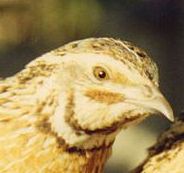
Common Quail header photo Dr. Raju Kasambe, Wikimedia Commons
The male Pied Flycatcher, which was present at Daventry Country Park on 19th and 20th April this year, was initially aged as a first-summer on the basis of its brown wings. It has recently come to light, however, that worn, brown wings are not a safe criterion upon which to age this species.
Male Pied Flycatcher, Daventry CP, 19th April 2012 (Neil Hasdell)
Writing on Martin Garner’s blog, here, Paul Baxter has demonstrated that, by retrapping a ringed male Pied Flycatcher of known age in Deeside, second-summers can also show this feature. The brown feathers are faded first adult type from the previous autumn obtained during its complete winter moult. There is then a partial summer moult producing newer, black feathers, which contrast with the older faded adult feathers, resulting in the contrast exhibited by this bird. So, the Daventry bird is best left unaged.
Escapes, ferals and hybrids. No group of birds epitomises this stigmatised category more than geese … although ducks come a close second. When encountered, examples from this embattled group customarily receive short shrift from birders, who are all too ready to write them off. Having said that, they can provide an interesting distraction during quieter birding moments, giving rise to debate and speculation on origins and parentage.
I’ve been collecting a few photos of ‘dodgy’ geese which have recently been at large here in Northants. Some are relatively straightforward in terms of identification, while others are not so … Here’s a nice easy one.
Hybrid Canada x Greylag Goose, Earls Barton GP, May 2012 (Doug McFarlane)
This is a Canada x Greylag hybrid showing, as expected, mixed features of both species. Hybrids between these two species are remarkably consistent in appearance, with the dark neck and pale cheek patch derived from Canada Goose and the predominantly pale bill and legs and largely grey-brown body from Greylag Goose. I am intrigued by the pale eye-ring since neither Canada nor Greylag has this feature!
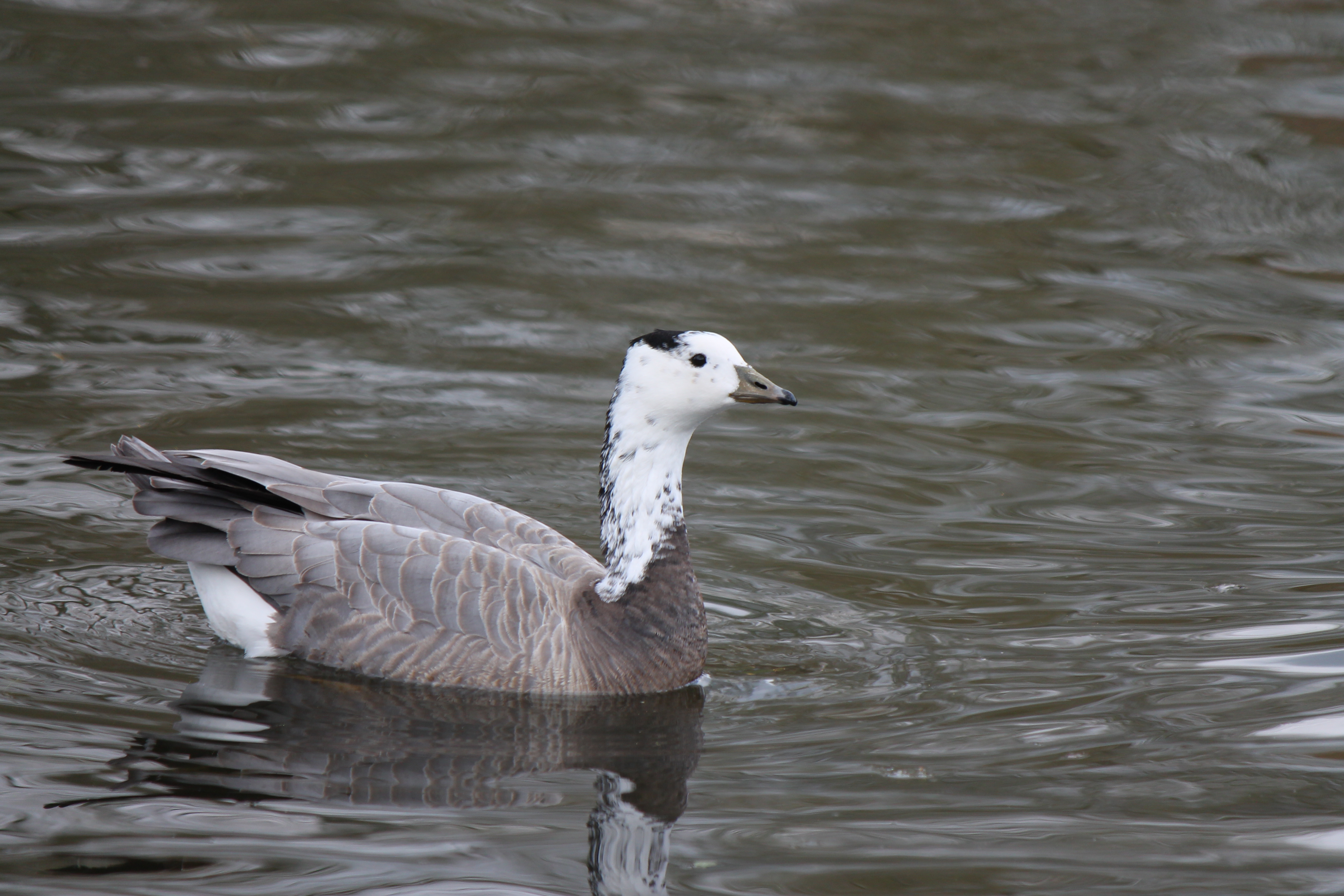
The next one is less easy. Although superficially resembling a blue morph Snow Goose there are obvious anomalies.
Hybrid blue morph Snow Goose x Canada Goose, Shelfley’s Lake, April 2012 (Danny O’Sullivan)
The bill shape and colour are clearly wrong for that species, there is a sharply demarcated dark breast and a paler, largely grey, body. The elongated, white-fringed, dark-centred tertials and greater coverts of blue morph Snow Goose are absent on this bird and the combination of visible features make this a Canada x Snow hybrid. Such hybrids appear to be uncommon this side of the Atlantic but have been recorded before.
Another Snow Goose hybrid, photographed at Pitsford Reservoir, is depicted below. This individual resembles an intermediate morph Snow Goose (blue morph x white morph)
Hybrid white morph Snow Goose x unknown, Pitsford Res, January 2012 (Clive Bowley)
but such birds normally show the tertials and coverts of blue goose as described above. They are partly elongated on this bird but they remain white. Although there is ‘a lot’ of Snow Goose here I wouldn’t mind betting that a few Greylag genes have crept in somewhere along the way.
Also photographed at Pitsford, this gigantic specimen heads the cast of the gruesome list.
Hybrid ‘Chinese’ Goose x Greylag Goose, Pitsford Res, February 2012 (Clive Bowley)
Straightaway, the long neck with a dark line running the length of its rear and the hint of a knob at the base of the bill point to its ‘Chinese’ Goose parentage. ‘Chinese’ Goose is the domesticated form of Swan Goose, which does not have a basal bill knob. This bird looks like a classic domestic Greylag x ‘Chinese’ Goose hybrid. It also looks horribly menacing!
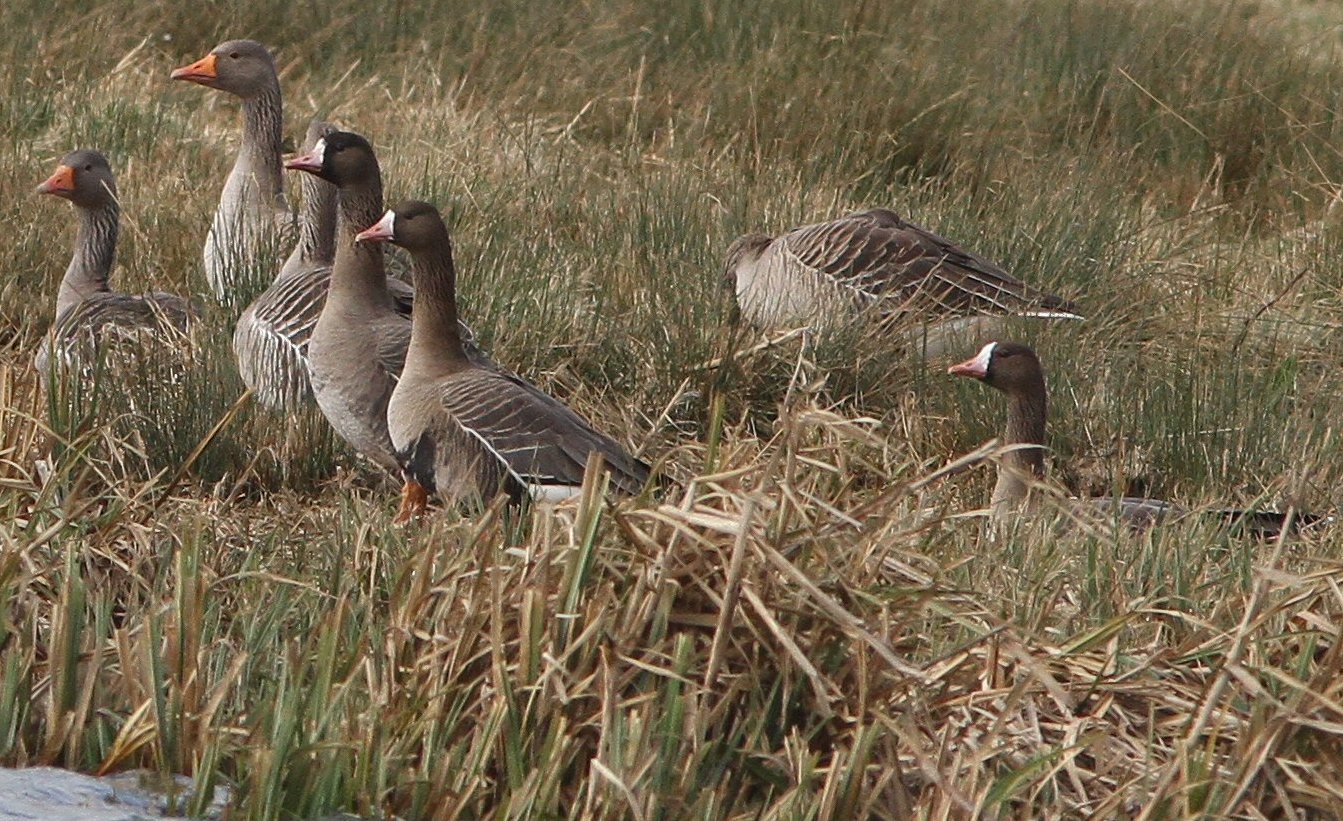
Although certainly not classified as ‘gruesome’ under the current definition, these three Eurasian White-fronted Geese appeared at Stanwick GP during March. One is unusual, however.
Eurasian White-fronted Geese, with Greylags, Stanwick GP, March 2012 (RW Bullock)
The bird on the right has rather large white blaze extending to the crown. This appears to be within the range of variation for Eurasian White-fronted Goose but it is rare and it is also a feature of Gambel’s White-fronted Goose, which breeds in northern Canada. That race, however, has a slightly longer bill as well as a thin yellowish-ochre eye-ring, neither of which is present on this individual.
Thanks are due to Clive Bowley, Bob Bullock, Doug McFarlane and Danny O’Sullivan for supplying the images.
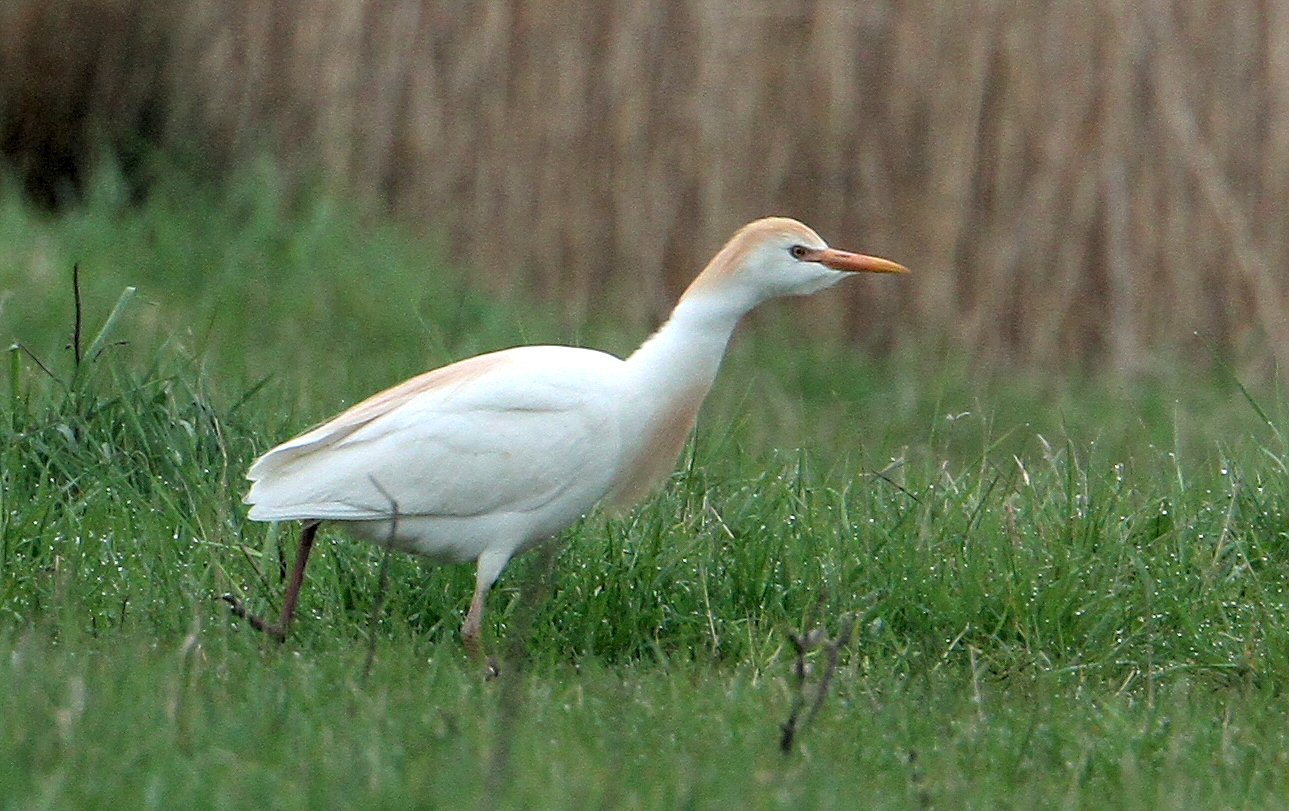
Northamptonshire’s fifth Cattle Egret was discovered in yesterday’s late evening gloom in the grassy surrounds of the RMC pit, just across the road from Summer Leys reserve. It did not remain there for any length of time, promptly vanishing before the arrival on site of a small number of would-be observers. Fortunately it was back again this morning – firstly in the partly flooded sheep fields opposite the mill at Hardwater Crossing, then on the north side of Hardwater Lake before returning to the area where it was initially discovered and seems to favour. The photos below – kindly supplied by Bob Bullock and Neil Hasdell – provide a nice comparison between this rather flashy bird with the somewhat plain Little Egret.
Cattle Egret, Earls Barton GP, 2nd May 2012 (RW Bullock)Cattle Egret with Little Egret, Earls Barton GP, 2nd May 2012 (RW Bullock)
Cattle Egret, Earls Barton GP, 2nd May 2012 (Neil Hasdell)
The four previous records have been of birds out of breeding plumage and three out of those have also been at Earls Barton GP/Summer Leys LNR. The previous records are: Earls Barton/Summer Leys 11th-13th August 2006, Fotheringhay 23rd February 2008, Earls Barton/Summer Leys 30th-31st July 2008 and again at the same locality on 27th-28th May 2009.










 Northants birds