More on ‘Goldpolls’

Following my further attempts to discover the origin of ‘Goldpolls’ Hein Van Grouw (Curator, Bird Group, Department of Zoology at The Natural History Museum, Tring) kindly commented on the Stanford individual as follows:

There is a genetic cause (mutation) known that ‘changes’ the colour tone
expression of carotenoids in the plumage from red into yellow.
I’ve seen that mutation in many species, including Redpolls, and in my
opinion the crown colour of this particular bird is also caused by that
mutation. It is of course possible that the relevant gene for ‘yellow carotenoid’
is widely spread amongst certain Redpoll populations. Perhaps all the
yellow-crowned birds seen so far in the UK belong to the same
geographical population and are therefore more or less genetically
related to each other. I’ve seen several museum specimens with this
aberration which were collected more than 100 years ago all over Europe
so the gene is not uncommon in the species.

In his detailed online redpoll identification paper Worcestershire Redpolls and a Guide to their Separation, Andy Warr states:

First-winters and female Lesser, Mealy and Arctic Redpolls generally show a crimson cap, with varying degrees of brightness, though it is not uncommon for some to show orange, copper, yellow, even brownish caps, or any combination of the aforementioned. These colour variations are exceptionally present on adult male Lesser and Mealy, though is reported as common in captive bred birds, but more regularly encountered in adult male Arctic.

The paper includes a range of photos to illustrate the variation in cap colour.

So, mystery solved? Maybe … In the meantime here’s a photo of one with a not so obvious yellow crown taken at Aylesbury in neighbouring Buckinghamshire by Mike Wallen in March 2006. The worn, buffy tips to the outer greater coverts point to it being a first-winter. It was in a flock of about 50 in an urban area.
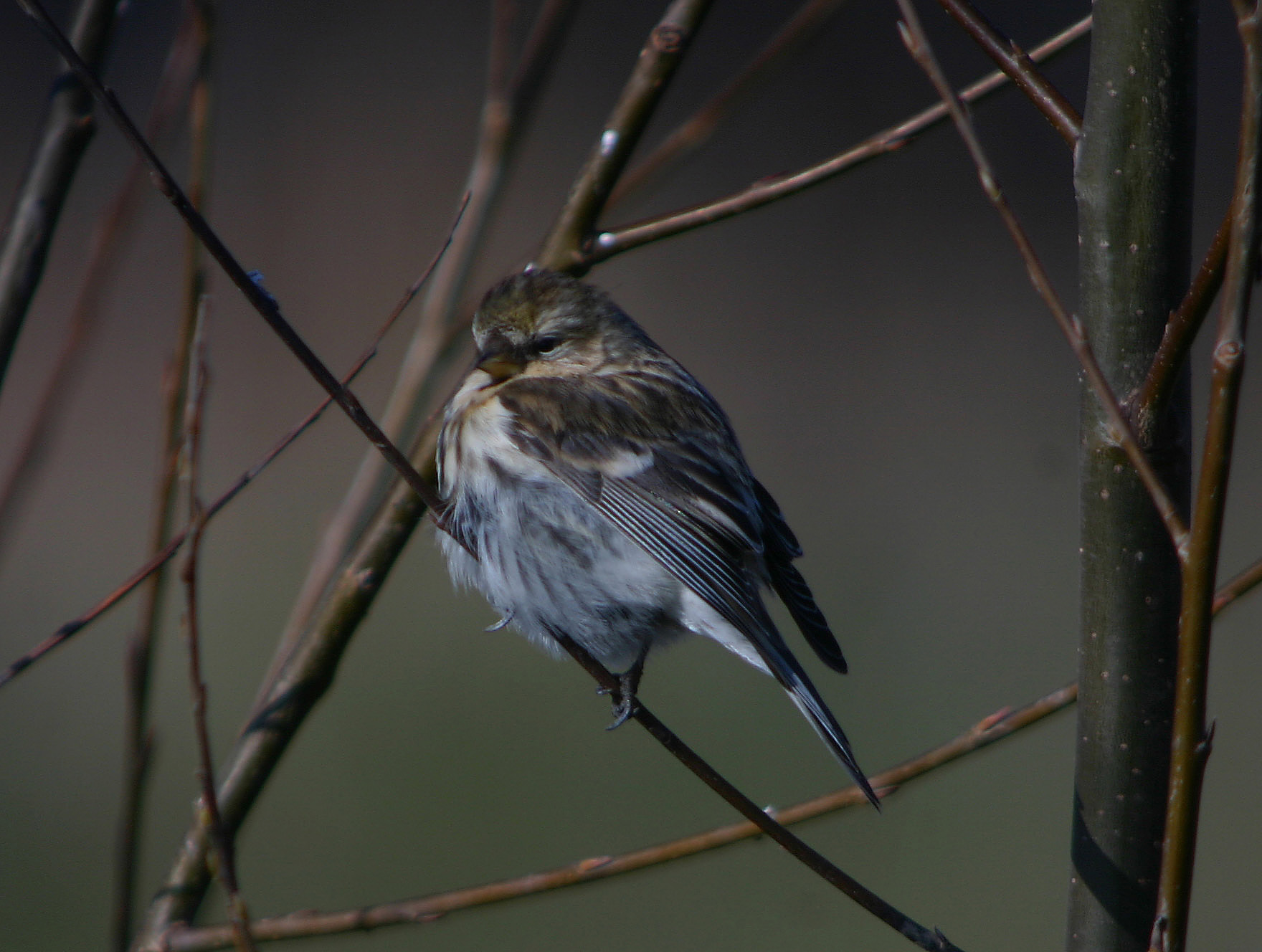
‘Goldpoll’: Lesser Redpoll with gold crown patch, Buckinghamshire, March 2006 (Mike Wallen)

An Interesting Redpoll at Stanford Reservoir

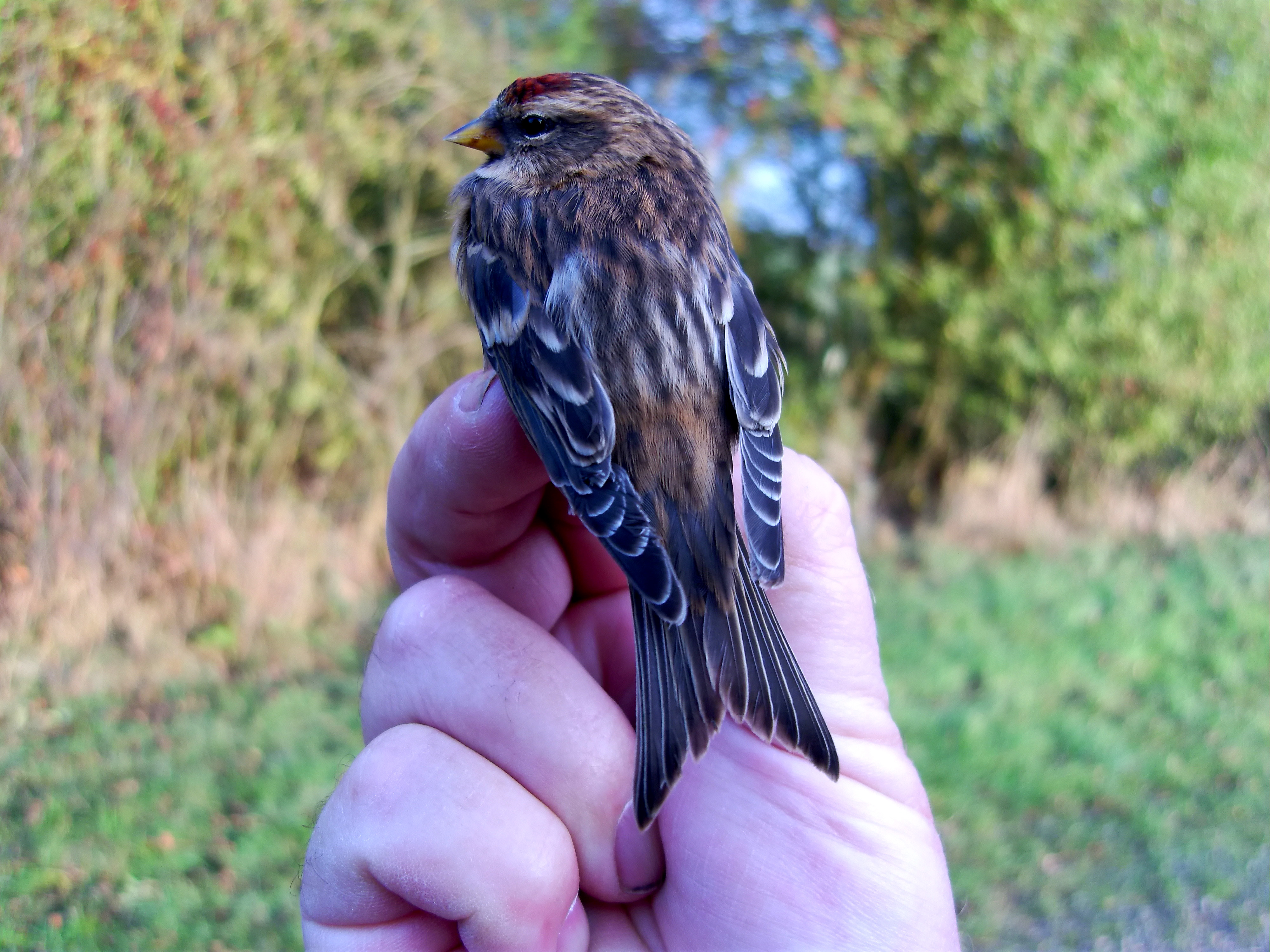
I spent this morning with the Stanford Ringing Group, which is currently enjoying a record year, having ringed more than 5000 birds since January! Ringing totals for most (not all) species have exceeded those of previous years making Stanford one of the top inland ringing sites in the UK. Among today’s list of trapped species were Redwing, Goldcrest, Blackcap, Reed Bunting, Linnet, Goldfinch and Greenfinch. During an apparent influx of migrants, double figures of the latter were trapped, each individual being 3-4 grams below the expected weight, indicating that they had burned off some of their fat reserves through migration. Of further interest, however, was the half a dozen Lesser Redpolls trapped, one of which was strikingly different to the others. This individual, a first-winter, had the red poll replaced by a gold one and this is the first time I have encountered a redpoll exhibiting this exceptional crown colour.

'Goldpoll': first-winter Lesser Redpoll with gold crown patch, Stanford Reservoir, 22 Oct 2011 (Mike Alibone)

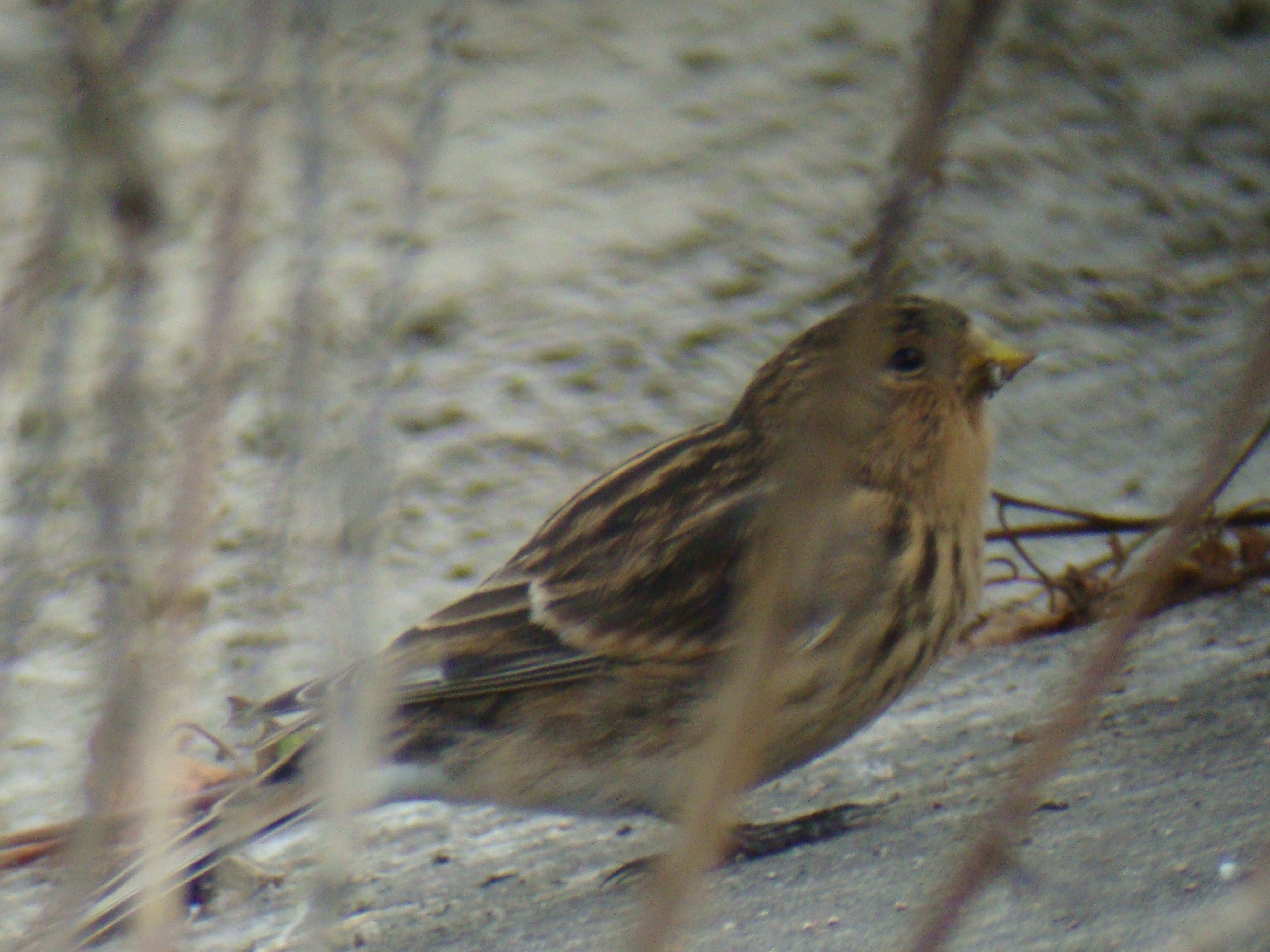
It is not without precedent, however, as two among 118 Lesser Redpolls trapped and photographed by Horsham Ringers during the first week of this month also showed this crown colour, as did an apparent Mealy Redpoll photographed in northern England in March 2010. For comparison, here is a ‘normal’ first-winter Lesser Redpoll.

First-winter Lesser Redpoll, Stanford Reservoir, 22 Oct 2011 (Mike Alibone)

It would be good to hear from anyone who can shed any light on what these ‘Goldpolls’ are or where they come from!

Twite delights!

Pitsford causeway provided the stage for a brief, early afternoon performance by a species not seen in Northants since October 2000! Twite – that unassuming upland counterpart of our more familiar Linnet, more uniformly coloured, less white in the wing, rich buff throat, a barely discernible pink rump and, the bit which gives it its scientific name, flavirostris, in winter, a yellow bill. Most of these features are nicely illustrated in finder Adrian Borley’s image below. In fact it doesn’t seem so very long ago that I was walking around Pitsford Reservoir counting them. Nowadays you’d be incredibly lucky to find one in Northants, although until the early 1990s they were recorded annually in small numbers as scarce winter visitors and the ‘big side’ at Pitsford was definitely the place to find them. Cycle-tracks, ice cream vans and gaudily-clad Joe Public were, of course, things of the future. ‘Progress’ not withstanding, where are they now and why don’t we get them any more?

Twite, Pitsford Reservoir, 16th October 2011 (Adrian Borley)

Traditionally, Twite has occurred in Northants in late autumn, with November being a prime month for arrivals and a build up to wintering. However, since the last few records of odd ones and twos in autumn, Twite in Northamptonshire has assumed vagrant status. I put the graph below together (for the Northamptonshire Bird Club Newsletter in 2003) to illustrate just how many were found in the early to mid-1970s, most of which were long-staying, wintering birds (figures from the Northamptonshire Bird Report 1969-2001). Indeed, it was possible to locate a wintering flock in excess of 40 individuals at Pitsford on some occasions. The UK Twite population has declined considerably with an estimate of only 9,950 pairs in 1999 (Langston et al) with around 100 of these in England. Here it is believed the decline has resulted from decreased breeding success associated with changes in feeding area habitat from hay meadows to silage production, resulting in less available food and fewer second broods (LBAP, 2001). 

Langston, R.H.W., Smith, T., Brown, A.F. & Gregory, R.D. The Status of Twite Carduelis flavirostris in theUK in 1999.

LBAP. 2001Lancashire’s Biodiversity Action Plan. www.lbap.org.uk/HTML/Species/Twite.htm

Spoonbill at Stanford Reservoir

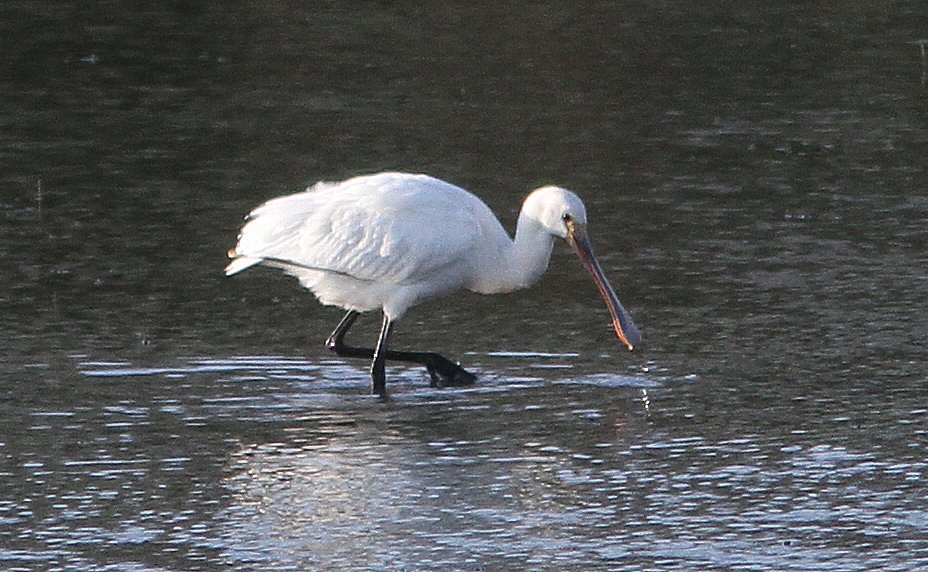
Although there have now been two this year, Spoonbill is a near annual visitor to Northants, with records this century in 2003, 2005, 2006, 2007, 2008 and one pending, the 27th County record, for 2010. It usually appears singly but eight were present at Pitsford Reservoir on 29th September 1984.

Juvenile Spoonbill, Stanford Reservoir, 16th October 2011 (R W Bullock)

A juvenile discovered at Stanford Reservoir on Saturday – and featured in Bob Bullock’s photo above – is still present today and is almost certainly the same individual which had previously been present at nearby Draycote Water in Warwickshire. Aged as juvenile because it has a flesh-coloured bill and black outer webs to outer primaries are just visible on the closed wing.

Grey Phalarope at Daventry CP

I managed to catch up with the Grey Phalarope at Daventry Country Park this evening, although it was along the western shoreline and therefore showing distantly from the dam. Low light conditions, coupled with too long a range, ensured digiscoping was not an option so I have included below an image by Bob Bullock, captured yesterday in the remnants of late afternoon sunlight.

First-winter Grey Phalarope, Daventry CP, 12th October 2011 (Bob Bullock)

This is the first in Northants since September 2007, when singles visited Thrapston GP and Clifford Hill GP and the record prior to those was in 2003. This is a first-winter, aged by dark crown feathers, dark tertials and all-dark bill. What a nice bird! Next one due in 2015, then …


Flava of the month: postscript

Martin Garner kindly commented as follows:

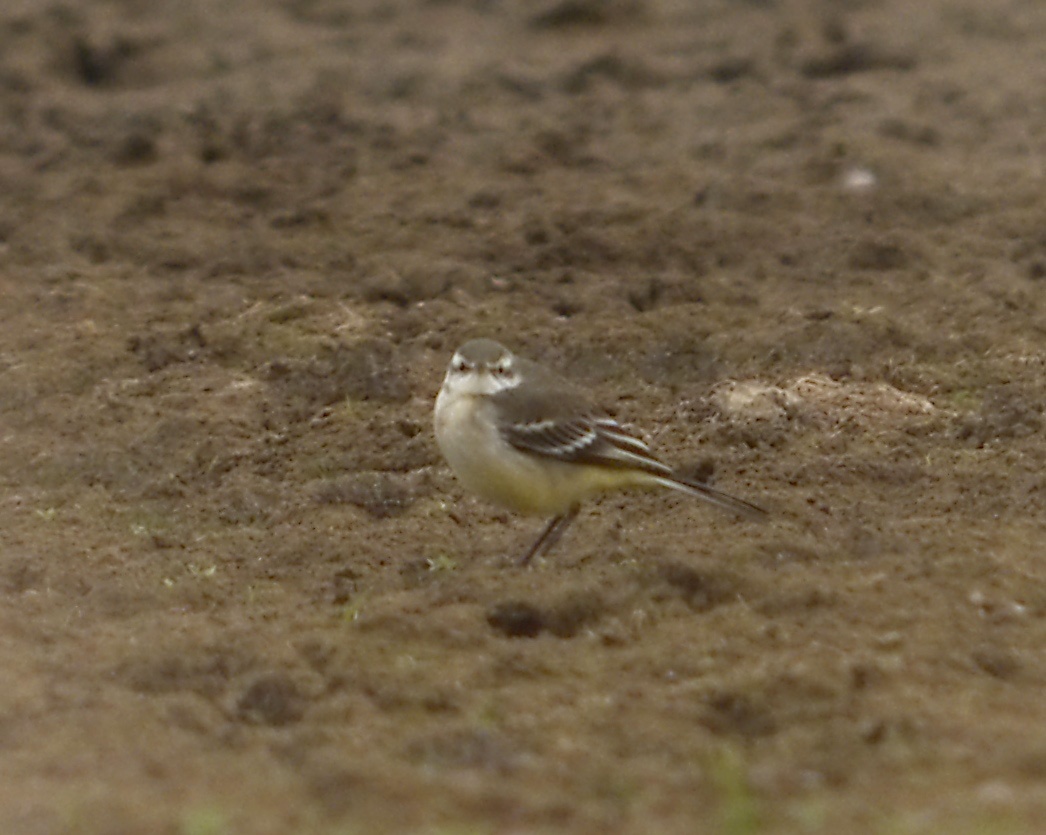
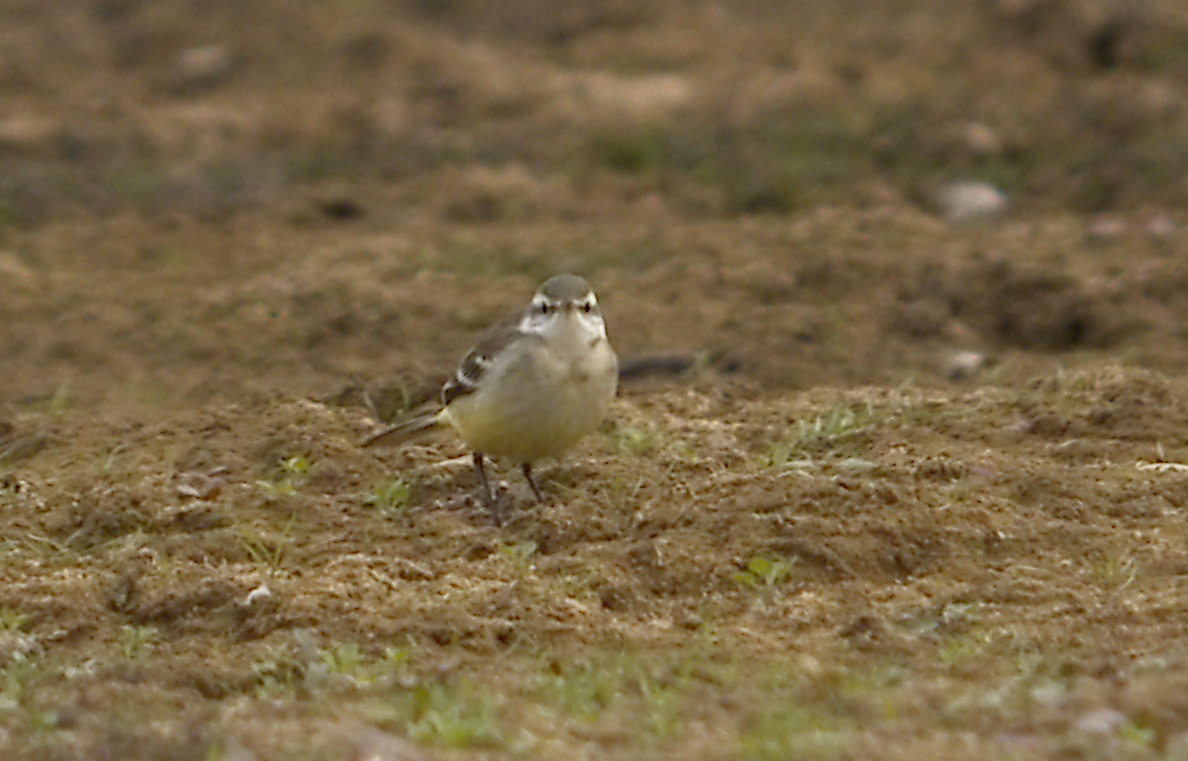
The issue of Blue-headed Wagtail in non adult male plumage is always tricky. I’ve had a go a number of times and I suppose if a bird shows very white supercilium and throat with a greyish tone to the head and ear covets then I think I probably have one but it’s very difficult to be certain. So in short I think you are right to point towards Blue-headed for your bird but I don’t think you can be certain.

Here is another image of the same bird, rear view, hinting at bluish tones to the nape. Compare the somewhat dowdy Yellow Wagtail below, taken at the same locality on the same date.

Northern and Greenland Wheatears

There has always been some debate as to whether Northern Wheatears of the nominate race oenanthe and the Greenland race leucorhoa are separable in the field. As there is some overlap in identification criteria of both, ‘showing characteristics of’ has always been the safest caveat to apply to birds which display a suite of characters associated with either race, i.e. larger size, longer legs, longer primary projection, broader black tail band and rufous underparts are normally associated with Greenland Wheatear.

This evening (4th October 2011) near Bozenham Mill I had short, though good, views of a very striking individual which appeared to be a Greenland Wheatear, based upon my perception of size – a ‘bulky’ individual – and colour of underparts, which were uniformly deep rufous-orange from throat to under tail coverts. So intense was the underpart colouring that when I first saw this bird head-on I thought, for a split second, I was looking at a Robin!

Based on these characters alone this identification to race is not fully conclusive but nominate Northern Wheatears rarely approach the intensity of colour of this individual (whereas Greenland Wheatears frequently do). However, the date further supports the identification as Greenland Wheatear as recent ringing activities in neighbouring Leicestershire suggest that the majority of Northern Wheatears occurring there after mid-September are of this race (Tim Collins and Neil Hagley in The Leicestershire & Rutland Annual Bird Report 2009).

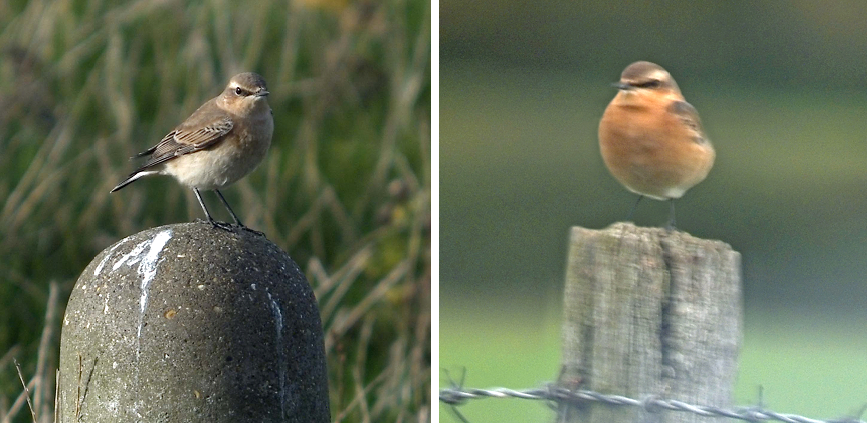
Below are two photographs I took of Northern Wheatears in Northants this autumn. The one on the left is an apparently typical nominate Northern Wheatear at Clifford Hill GP on 17th September and the other is today’s bird at Bozenham. There is a huge difference in underpart colouration. Both were taken using a Zeiss PhotoScope but today’s photo was taken hurriedly from the car, trying to balance the scope on the open window with one hand while attempting to operate the IR remote control with the other – this is why it is horribly blurred!

Flava of the month?

This autumn has been particularly good for Yellow Wagtail passage with double-figure counts from a number of localities, the best of which to date is a count by Simon Towers of 30+ on the old cricket pitch at Yelvertoft on 17th September. Good numbers have also been regularly present at Hollowell Reservoir and they are relatively easy to see on the recently mown, extensive grassy area and nearby shoreline around the Guilsborough Bay ‘point’. At least six were present today, including this rather striking first-winter, which was also present in the same area yesterday.


Unlike the others, which included a mix of adults and ‘diluted colour’ juveniles well into first-winter plumage and an apparently unmoulted ‘brown’ juvenile – the latter well late for this time of year), this individual was much more strongly coloured with a grey head, contrasting bright white throat and broad, flicked-up supercilium. The median coverts, greater coverts and tertials were all new post-juvenile first-winter feathers with clean, broad white fringes contrasting with dark centres. None of the other first-winters approached this rather boldly marked and contrasty individual, which was always easy to locate within the small group.

This bird is a good candidate for first-winter Blue-headed Wagtail (flava) but I believe its plumage probably falls within the range of that of British Yellow Wagtail (flavissima) – despite most of these normally being a rather ‘washed out’ grey with less obvious supercilia. And then there’s the problem of the occurrence of racial hybrids … Whether flava or flavissima it’s a nice bird to see and I would welcome thoughts and comments on its possible racial identity.

Reed Warbler defies the odds!

In the world of birds almost anything is possible, including the well nigh impossible. Chance and fate are frequently major players in the provision of a never ending stream of surprises when it comes to discovering birds in places where – and when – you would least expect them.
 
On Sunday 14th August John Woolett and his ringing group trapped and ringed a number of birds, including a Reed Warbler, at their regular ringing site, Stortons Gravel Pits, Northampton.
 

Nearly a month later, on 9th September, while ringing birds at St Andre, Portugal, John retrapped the very same Reed Warbler he had ringed at Stortons on 14th August. How amazing is that?! Same ringer, same bird, different country. What are the odds of this happening? I don’t know but I’ll be getting John to pick my lottery numbers from now on …

John Woolett with Reed Warbler (Lucy Ryan)


Secrets of a Peregrine’s Lair

In recent years Peregrines have habitually used the 418-foot National Lift Tower (formerly Express Lifts Tower) in Northampton to roost and to hunt from. Some 4-5 years ago a pair – which included an immature female – took up almost permanent residence and it seemed likely they would ultimately breed. However, around two years ago there was considerable prolonged disturbance at the top (the tower is now used for abseiling) and these birds now visit the tower only intermittently and they have been seen there far less frequently in the recent past. 

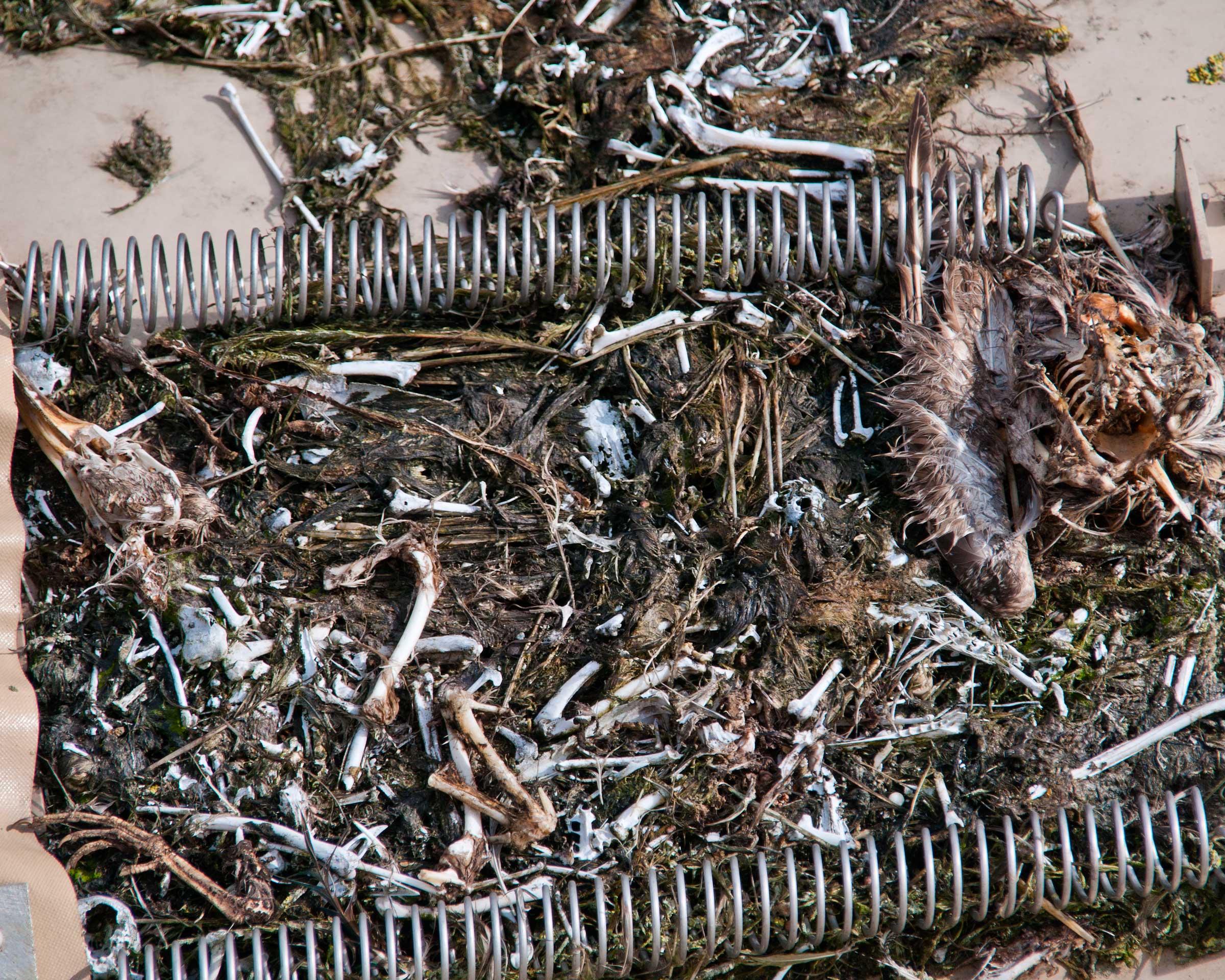
Earlier this month, John Boland visited the tower and found evidence of its recent use by Peregrines, as his photos below quite clearly show. All these carcasses are recent as the microwave antenna they use as a feeding platform gets cleaned on a regular basis.

Peregrine prey items (John Boland)

Visibly identifiable remains include a duck and Green Woodpecker but the identification of the remains of the other bird which, John says, is not quite pigeon-sized and is brown with a light-coloured bill, is unresolved. It is assumed that the good collection of small pebbles have come from the birds’ crops.

Peregrine prey ptems (John Boland)

The view from the top of the tower is quite impressive, with the Stortons Gravel Pits complex clearly visible in the foreground.

Stortons Gravel Pits from National Lift Tower (John Boland)

 All photos: John Boland