A freezing start to the week saw many bodies of water become icebound with limited resources for birds associated with wetland habitats. Fortunately, this was short-lived, temperatures having risen somewhat by the end of the period. And yes, a couple of new birds showed up to tease, if not to entertain …
After its short visit to Cogenhoe last week, the Pink-footed Goose was back with the mobile Greylag flock in its favoured locality of Clifford Hill GP from 13th to 16th.

The White-fronted Goose also remained in the Nene Valley, being seen in flight with Greylags over Earls Barton GP on 11th and again on the ground there on 17th, while the two at Ravensthorpe Res continued their stay until at least 12th.
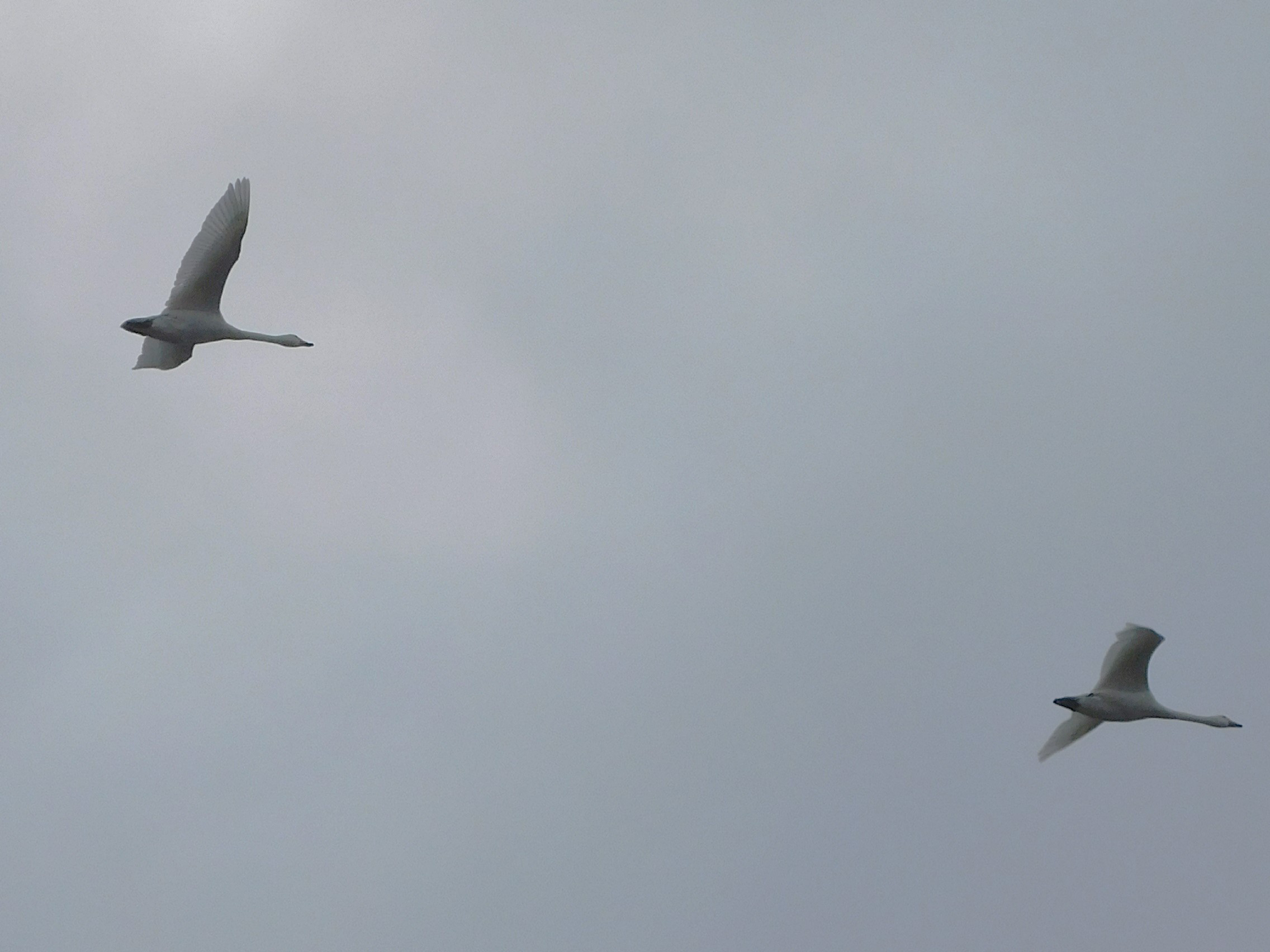
Meanwhile, also on 12th, mobile Whooper Swans included one flying east over Summer Leys LNR and two north-west over Deene Lake.
Daventry CP had the monopoly on Red-crested Pochards this week, its female still present until at least 16th and being joined by a drake on 12th-13th.
While we’re still in January the chances of stumbling across a first for the year remain suitably high and that was indeed the case at Ravensthorpe Res on 12th, when a drake Smew was discovered in the ice hole there. However, it turned out to be a disappointment for those who hotfooted it over to see it, having quickly vanished before their arrival. So far, it has not resurfaced elsewhere.
Single Jack Snipes were found at Pitsford Res on 11th and at Deene Lake the following day.
Whether you enjoy or endure them, scarce gulls were low in numbers this week, with what was presumably the same adult Caspian Gull in the roost at Stanford Res on 13th, 14th and 17th, out on the ice and displaying a yellow ring with the customary four black characters indicating a German origin on the middle of these three dates.

Three Yellow-legged Gulls were in the roost at Pitsford on 13th and an adult was present at Clifford Hill on the same date.
Pitsford again held on to its wintering juvenile Great Northern Diver, which remained there throughout the period, having now chalked up just shy of eight weeks on site.
Shunning Summer Leys for who knows where when the freezing conditions kicked in at the beginning of the week, the long-staying Glossy Ibis initially seemed to have vanished but it was back again in the nick of time to be included in the weekly round-up, reappearing there on the last day of the period. Cattle Egrets, too, remained elusive with just singles in the Nene Valley between Cogenhoe and Billing GP on 11th and at Ditchford GP’s Irthlingborough Lakes and Meadows NR two days later, on 13th.

And after an absence of sightings for seven weeks, Marsh Harrier made it back into the news when one was seen at Ecton SF on 11th.
Two Short-eared Owls remained in the vicinity of Blueberry Farm on 11th, with at least one still present on 13th, while one was seen not too far away at Harrington AF on 11th-12th.
In the same part of the county, one or two Merlins were present in the Brampton Valley, between Cottesbrooke and Hanging Houghton, daily between 13th and 15th.
The second ‘first’ for the year this week materialised in the form of a Black Redstart, found on the roof of the sizeable industrial complex that is Cummins Engine Plant in Daventry, on 13th. The location is not readily accessible and views from its periphery are limited, to say the least. It was not seen subsequently. While indeed an uncommon sight in January, it’s by no means the first to be seen in the winter months. Of those occurring most recently one was present at Borough Hill in December 2021, remaining there until 5th February 2022 and, later in that year, one was taken by a cat at Sywell CP on 7th December and another was discovered trapped inside Northampton General Hospital before being released on 12th December.
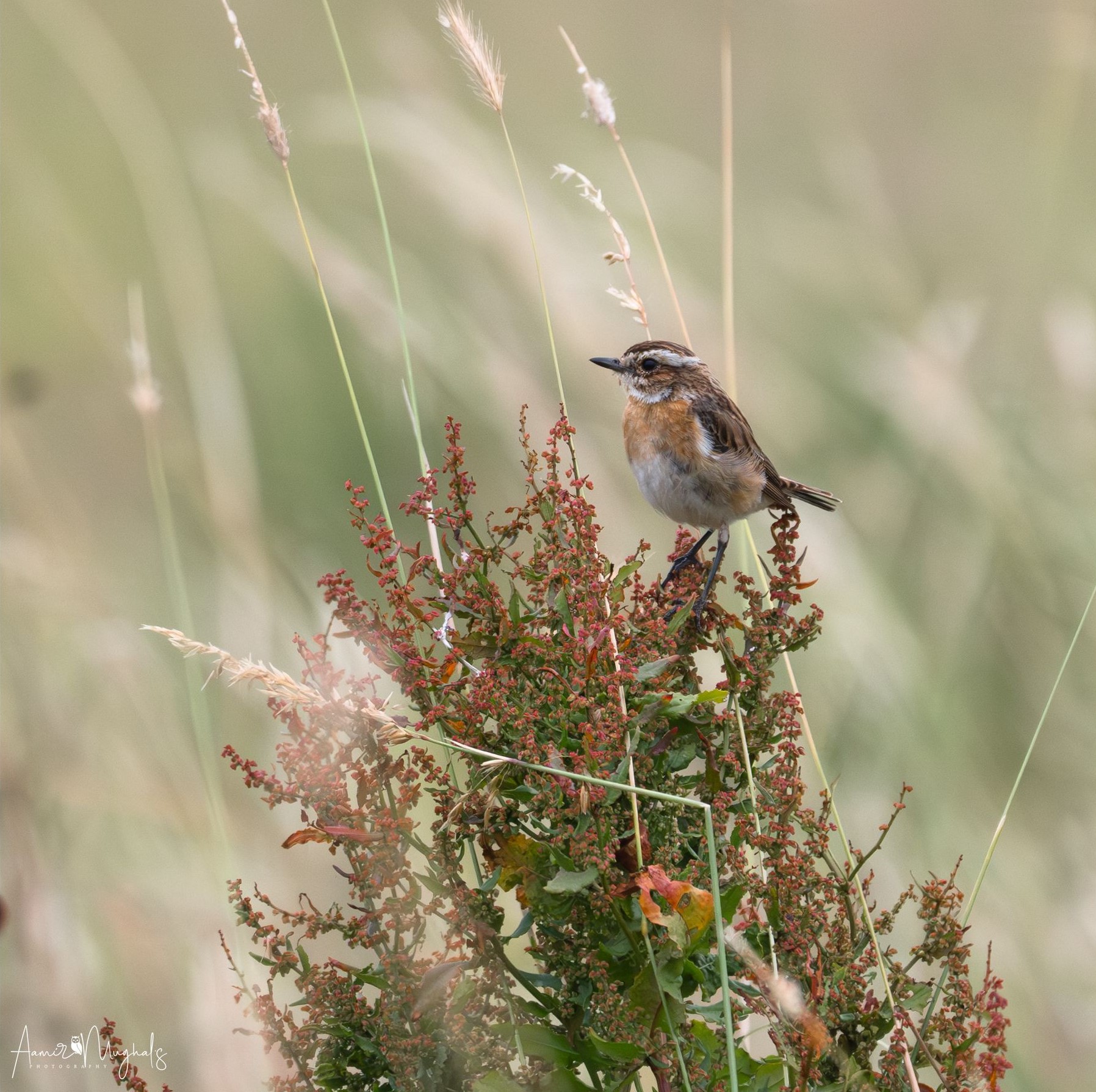
Not quite on the same level as the above species, Stonechats were to be found at Borough Hill, Deene Lake, Earls Barton GP, Ecton SF, Lilbourne Meadows NR, Pitsford and Stanford – the first of these producing the week’s maximum of four on 17th.




 Northants birds