Rarity Round-up, 21st to 27th October 2017

The beginning of the week kicked off with Storm Brian bringing strong south-westerlies to the western part of the UK on 21st. Northamptonshire, though windy, did not experience the full force of the gales as the storm tracked north-eastwards, bringing southerlies, hence higher than average temperatures, to the county. In contrast to last week, the birding was pretty much back to levels normally to be expected locally in late October but migration continued apace and there was still plenty to look at, nonetheless.

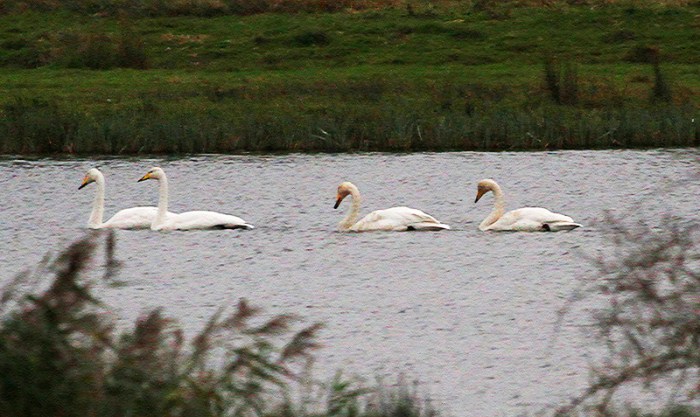
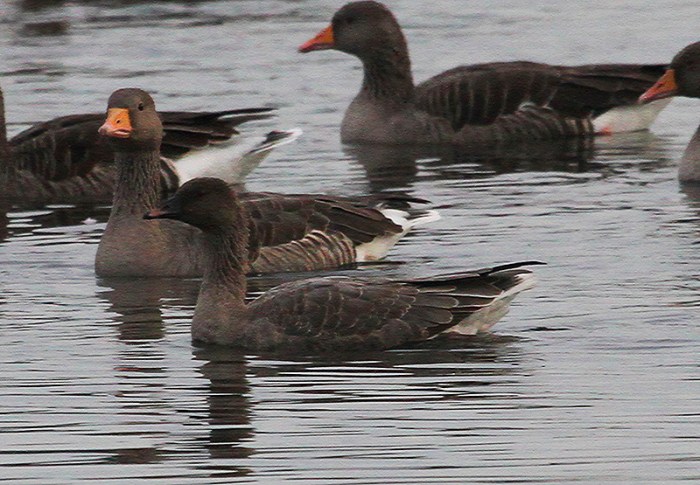
The three Whooper Swans remained at Pitsford Res until at least 22nd and the juvenile Pink-footed Goose was still at Stanwick GP on 24th. Beyond that, the only other unusual wildfowl were escapees and included the returning female Wood Duck at the Wellingborough end of Ditchford GP on 26th, while the escaped, metal-ringed female Bufflehead was still at Clifford Hill GP on 22nd.
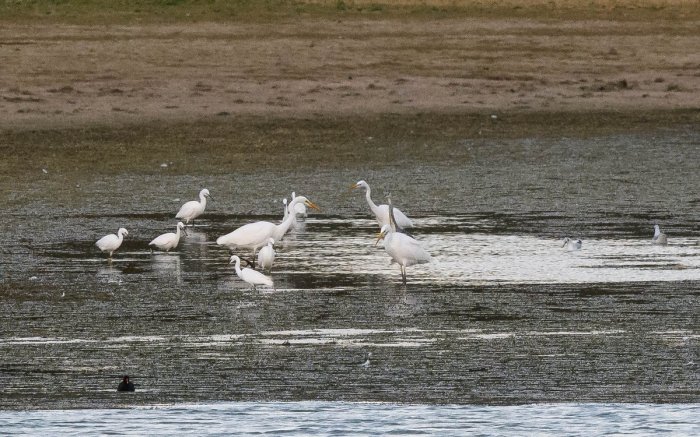
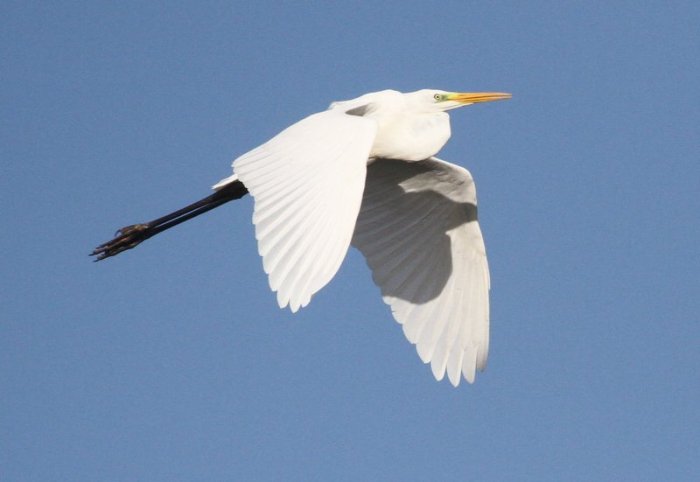
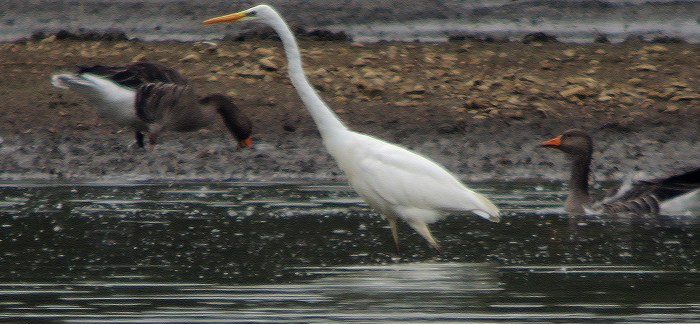
Great White Egrets, Pitsford Res, October 22nd 2017 (Angus Molyneux)

In addition to the three Great White Egrets at Pitsford Res until at least 25th, three were together among a thirty-four-strong flock of Little Egrets on Thrapston GP’s Aldwincle Lake on 21st, one remained at Ravensthorpe Res, being joined there by a second individual on 26th, the Stanwick bird remained all week, likewise being joined by a second on 25th and one flew west over Irthlingborough Lakes & Meadows LNR on 26th. Records from the Nene Valley locations may involve some of the same wandering birds but it’s probably safe to say that there must have been at least eight in the county during the week. Also in the valley, the Black-necked Grebe remained at Ringstead GP until at least 26th.
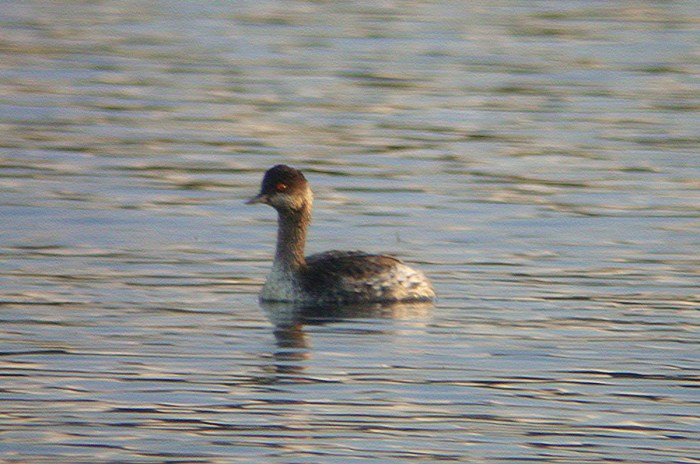
Black-necked Grebe, Ringstead GP, 25th October 2017 (Adrian Borley)

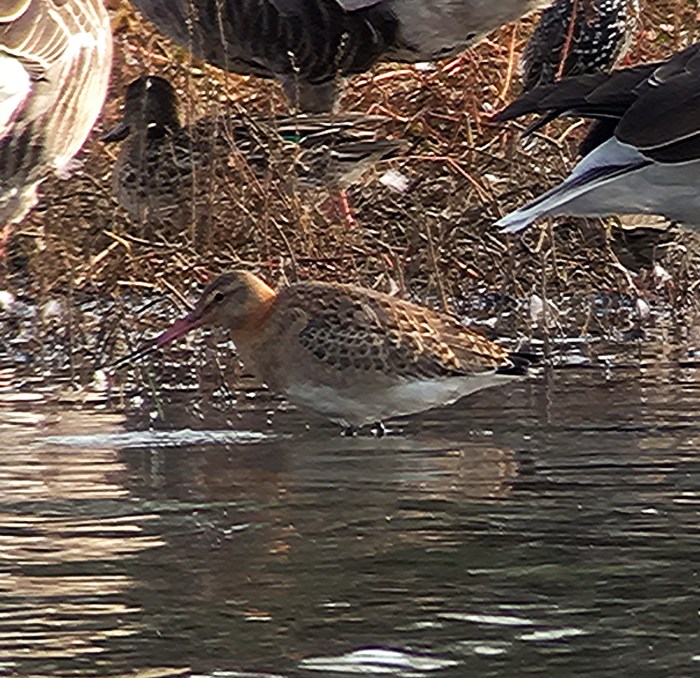
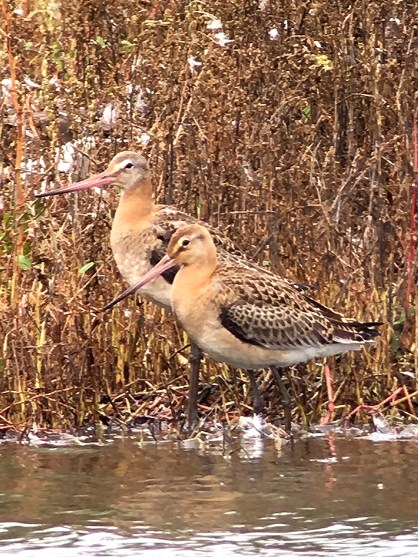
The raptor count was down this week, with single fly-over Merlins at Kingsthorpe (Northampton) on 21st and at Stanford Res on 27th and the county fared little better for waders, with single Black-tailed Godwits at Pitsford Res on 22nd and at Stanford Res on 27th, while last week’s Knot stayed at Hollowell Res until 22nd.

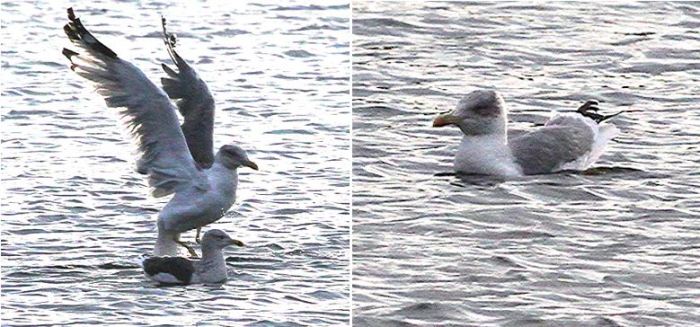
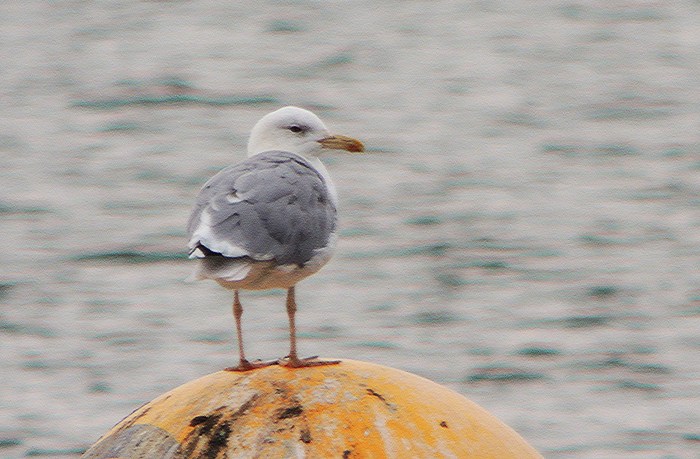
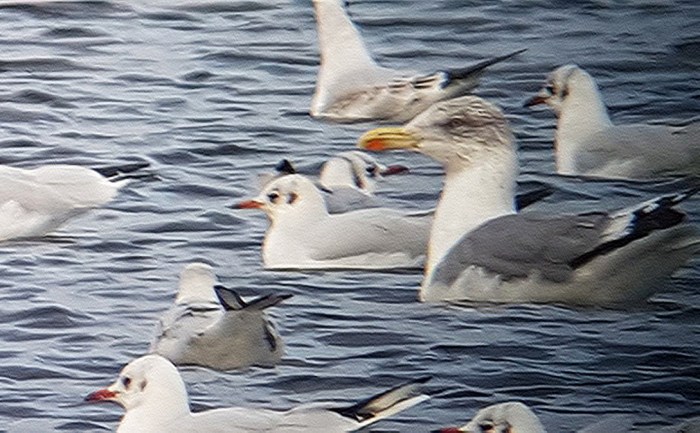
On a par with last week, just one Mediterranean Gull, an adult, visited Stanwick GP on 21st and the putative adult Azorean Gull – now moulting its head streaking and looking less than pukka as a result – was seen again on the Visitor Centre Lake there on 24th.
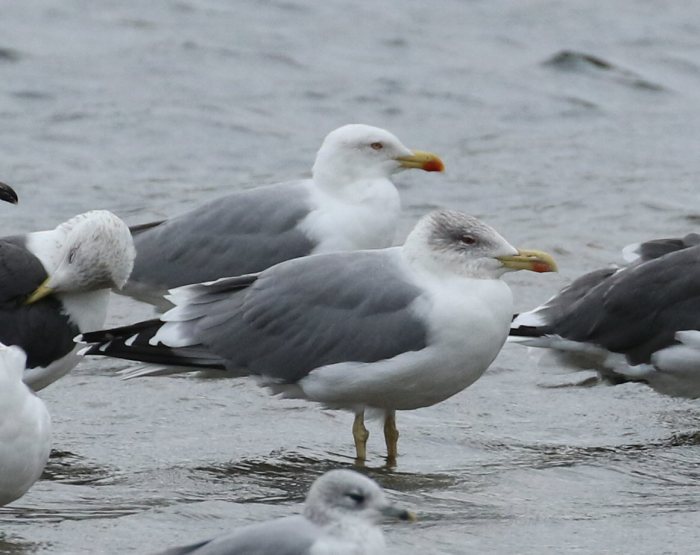
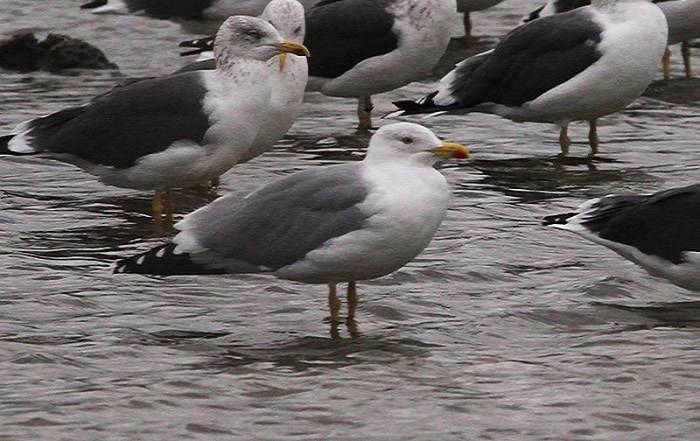
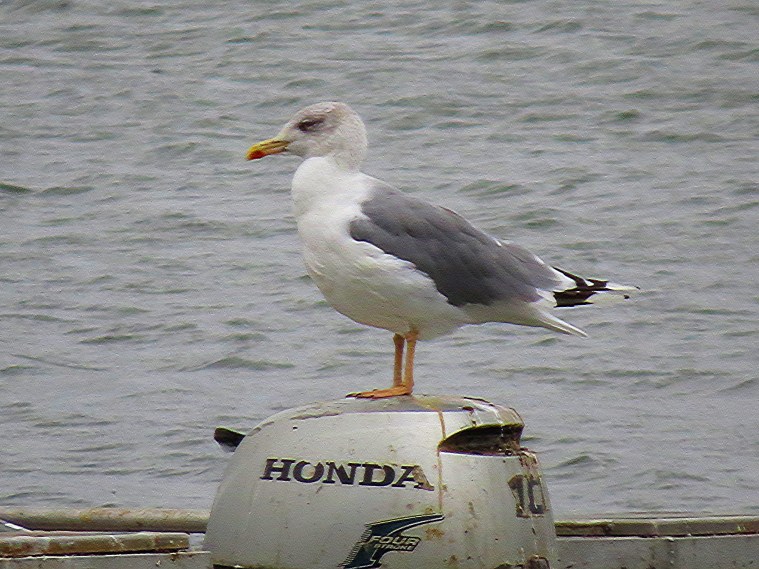
Putative Azorean Gull and Yellow-legged Gull, Stanwick GP, 24th October 2017 (Bob Bullock)

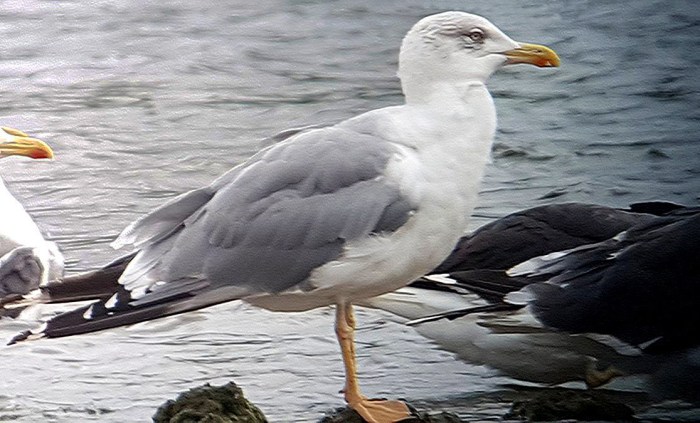
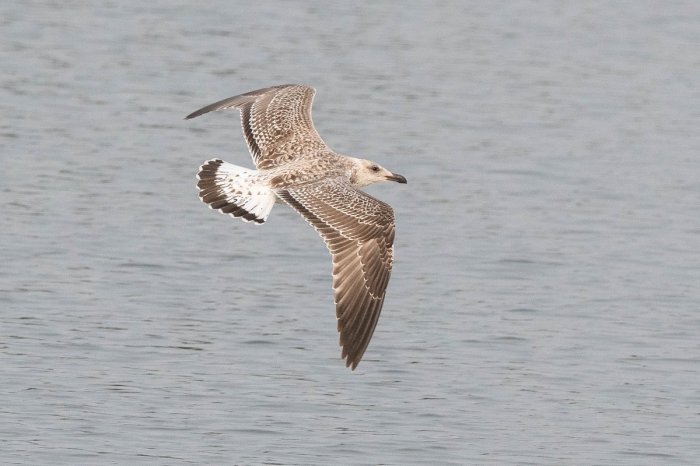
Between one and four Yellow-legged Gulls were seen at Boddington, Hollowell, Pitsford and Ravensthorpe Reservoirs, Daventry CP and Stanwick, while the adult Caspian Gull at Hollowell was joined there by a second-winter on 26th.

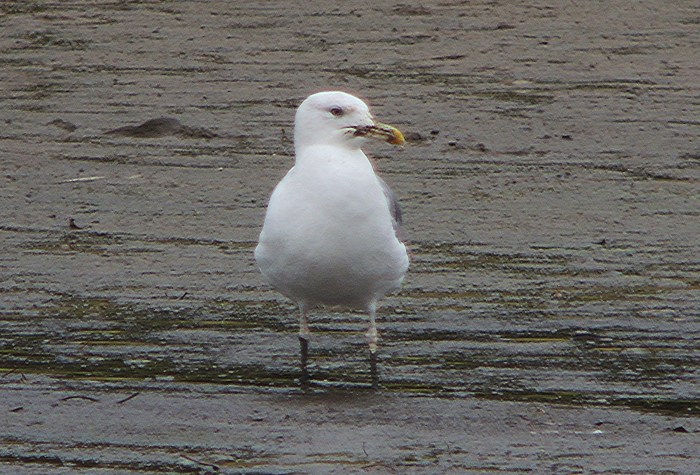
Second-winter Caspian Gull, Hollowell Res, 26th October 2017 (Gary Pullan)

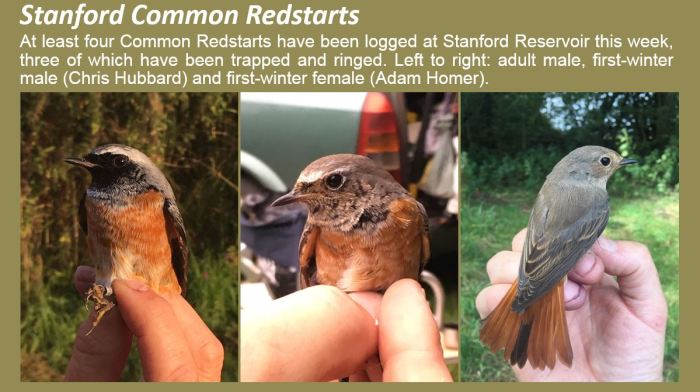
Passerine migrants were still much in evidence this week and, along with the many Redwings and first Fieldfares moving west, came two Ring Ouzels on 23rd – a short-stayer at Stanford Res and one which remained at Earls Barton GP until the next day. The 26th saw the discovery of a Black Redstart at Orlingbury – only the third in the county this year.
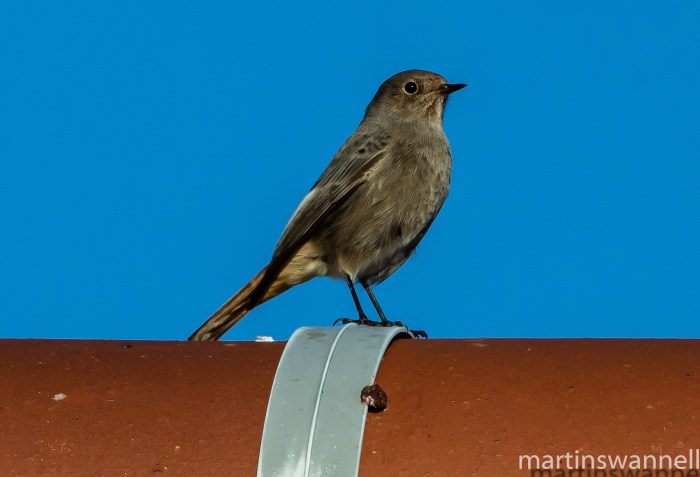
First-winter (probably male) Black Redstart, Orlingbury, 27th October 2017 (Martin Swannell)
First-winter (probably male) Black Redstart, Orlingbury, 27th October 2017 (Mike Alibone)

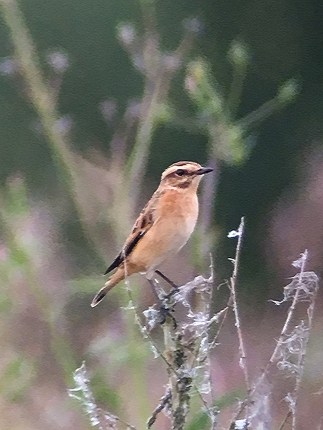
It was still present on 27th, allowing those who were interested, time to catch up with it. Up to three Stonechats were at reservoirs at Boddington, Hollowell and Pitsford throughout the week and one was at Preston Deanery on 23rd, while the UK’s Hawfinch

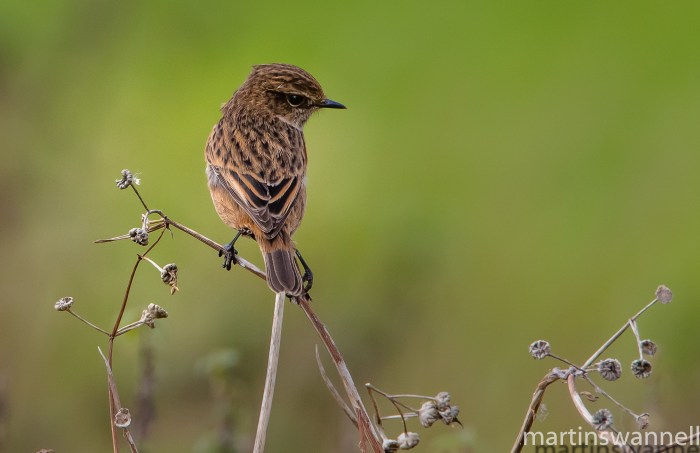
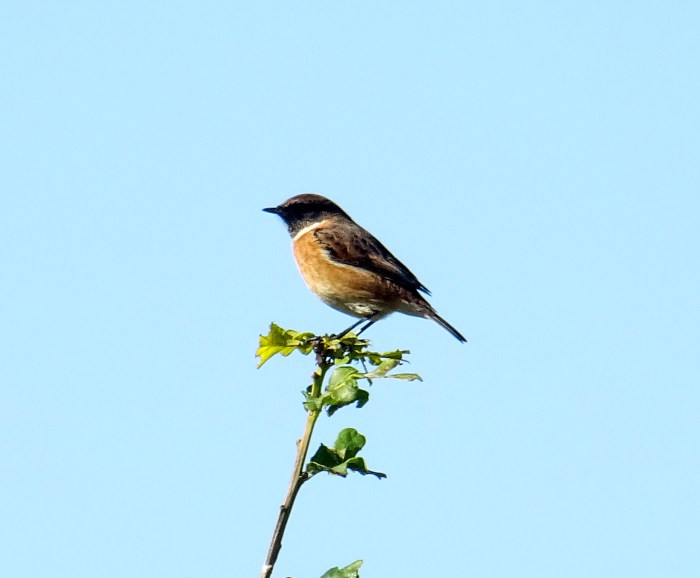
Stonechat, Sywell CP, 24th October 2017 (Alan Francis)

movement continued to deliver, with one at Dallington Cemetery on 21st followed by two there on 26th, one west over Irthlingborough on 23rd and two south over Daventry CP on 26th.


Rarity Round-up, 14th to 20th October 2017

What a difference a week makes! Suddenly it was full-on autumn. On 16th October ex-Hurricane Ophelia battered the west coast and whipped up Saharan sand and smoke from Iberian forest fires, turning the skies an eerie yellow-grey and the sun orange over Northants and much of the remainder of the country. The winds throughout the week took on a distinctly southerly bias, keeping temperatures high, but it is unknown if these conditions contributed to the arrival of some seriously scarce birds, one of which was a Northamptonshire first.

Sun over Alderton, 16th October 2017 (Mike Alibone)

Last week’s two Whooper Swans, which arrived at Pitsford Res on 7th remained all week and were joined by a third individual on 19th, while the 18th saw more arrivals, which included one at Ravensthorpe Res and four at Stanwick GP – the last birds staying until the following day.

Whooper Swans, Stanwick GP, 18th October 2017 (Steve Fisher)

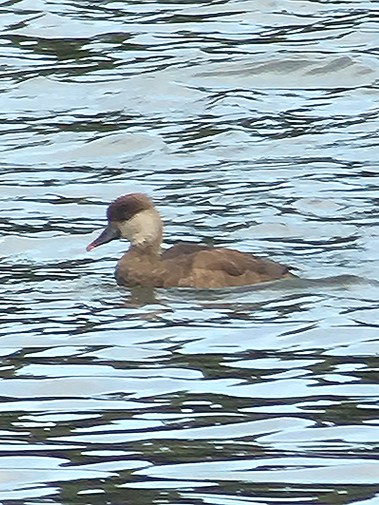
The juvenile Pink-footed Goose also reappeared with Greylags at the latter site on 20th. Smaller scarce wildfowl included a Red-crested Pochard at Thrapston GP on 15th and a female Common Scoter at Boddington Res on 18th-19th, while the escaped, metal-ringed female Bufflehead was still at Clifford Hill GP on 14th.

Juvenile Pink-footed Goose, Stanwick GP, 20th October 2017 (Steve Fisher)

A Bittern was back in the scrape reedbed at Summer Leys LNR on 20th – assuming it had ever left the site – but considerably more upmarket than this, Northamptonshire’s 7th-ever Cattle Egret was found just down the valley at Ditchford GP’s Irthlingborough Lakes & Meadows LNR on 14th. Although it flew east within a few minutes of its discovery, it remained ‘somewhere in the Nene Valley’ for the following three days.

Cattle Egret, Irthlingborough Lakes & Meadows, Ditchford GP, 14th October 2017 (Tony Vials)

During this time, it flew west with Little Egrets over Stanwick GP shortly after first light on 16th and 17th and, on the morning of the latter date, it was discovered feeding with horses on the north side of Chester House Lake at Ditchford GP, again disappearing within two hours of its discovery. There is now a handful of birders who have seen all three egrets in one day in Northants – unimaginable less than a decade ago! So let’s not forget about the formerly rare Great White Egret, up to three of which remained north of the causeway at Pitsford Res all week, as did the individuals at Ravensthorpe Res and Stanwick GP, while two paid the briefest of visits to Stanford Res on the afternoon of 17th. With only one other on offer earlier in the year, a Black-necked Grebe at Ringstead GP from 14th was a welcome addition to this autumn’s cast. They have been unusually scarce this year.

This week’s raptors featured a Marsh Harrier around the scrape at Summer Leys during the early afternoons of 19th and 20th, single fly-over Merlins at East Hunsbury (Northampton) on 16th and at Daventry CP on 18th and a later than last week’s Hobby at Thrapston GP on 15th.

Late passage waders included another juvenile Little Ringed Plover at Boddington Res on 18th-19th, a Grey Plover over Pitsford village on 15th and single Black-tailed Godwits at Pitsford Res on 15th and one remaining at Stanford Res all week. There was more. A Knot was discovered at Hollowell Res on 20th and remained into the weekend, a rather tardy Common Sandpiper was in Pitsford’s Walgrave Bay on the same date and a Turnstone made a late autumn appearance at Stanwick GP on 15th.

On the gull front, an adult Mediterranean Gull visited Pitsford Res on 19th, the same day that the enigmatic, putative adult Azorean Gull was seen again on Stanwick’s Visitor Centre Lake. Up to two Yellow-legged Gulls were at Hollowell, Pitsford, Stanford and Daventry CP, while the adult Caspian Gull at Hollowell was joined by a third-year on 19th, a second-winter was at Pitsford Res on 14th and 19th and an adult visited Stanwick GP on the last of these two dates.

As hundreds now arrive in the UK every autumn it now seems almost inevitable that someone, somewhere, will find a Yellow-browed Warbler. The county’s ninth duly arrived on cue at Irthlingborough Lakes & Meadows (that place again) on 19th. They often don’t stay long in autumn and this one was no exception, vanishing immediately after it was found. The same date brought a blockbuster of a bird to Stanford Res, where the county’s first-ever Dusky Warbler was pulled from the nets of the Stanford Ringing Group. It was released shortly afterward in the reservoir’s eastern car park (on the Leicestershire side) but it was seen only once, briefly, half an hour later.

Dusky Warbler, Stanford Res, 19th October 2017 (Chris Hubbard)

Photographs circulated after the event sparked a debate as to its true identity – read the story here. It was seen in Northamptonshire by only two very lucky birders. Will the rest of us ever get over it … ?

Back on earth, there was again no shortage of Stonechats, with reports from Brampton Valley, Hollowell, Pitsford, Stanford and Sywell CP, while a Northern Wheatear was still at Hollowell on 14th. October normally yields a few passage Rock Pipits and Hollowell produced four on 19th followed by one there the next day and a Water Pipit was mobile with Meadow Pipits around Pitsford’s Maytrees Hide on 18th.

Stonechat, Sywell CP, 19th October 2017 (Alan Francis)

Following last week’s occurrence of two Hawfinches over Long Buckby, it became evident that these were forerunners of a large movement of this species over the UK. One flew south over Scaldwell on 17th and five flew eat at Irthlingborough Lakes & Meadows LNR on 19th. So endeth the best week of the autumn so far – and one which will be difficult to top …

Rarity Round-up, 7th to 13th October 2017

Although it remained largely dry, the west wind continued to blow, swinging north during the early part of the week and then south-southwest, off the continent, elevating temperatures to around 20ºC at the week’s end. Birding came close to floundering in mediocrity but was rescued, in part, by the arrival of some choice winter wildfowl and some obvious visible migration – otherwise there was little change in the birds on the ground during the period.

Two fine adult Whooper Swans arrived at Pitsford Res on 7th – the joint second earliest arrival date (with 1990) in nearly fifty years after the earliest on 29th September 2007. They remained throughout the week.

Whooper Swans, Pitsford Res, 7th October 2017 (Mike Alibone)

Following the usual early autumn influx into the UK, a juvenile Pink-footed Goose appeared with Greylags at Stanwick GP on 12th, while last week’s female Red-crested Pochard remained at Stanford Res until 7th.

Juvenile Pink-footed Goose, Stanwick GP, 12th October 2017 (Steve Fisher)

With Pitsford Res continuing to hold on to its two Great White Egrets north of the causeway all week, two more were found – one at Ravensthorpe Res on 8th-9th and the other at Stanwick GP from 8th to 13th.

Great White Egret, Stanwick GP, 12th October 2017 (Steve Fisher)

For the second week running a Merlin appeared, this time at Daventry CP on 9th, while a late Hobby – likely to be the last of 2017 – was chasing Meadow Pipits at Stanford Res on the same date.

Also late, a juvenile Little Ringed Plover was at Hollowell Res on 7th, from which date a single Black-tailed Godwit remained at Stanford Res until 12th. Last week’s Little Stint (or another) was at Pitsford on 9th, while the only other wader of note was a Jack Snipe at Deene Lake on the same date.

Back on Stanwick’s Visitor Centre Lake, the putative adult Azorean Gull put in another appearance on 10th. Well documented in a series of images, it should surely be identifiable, one way or another, shouldn’t it …?

Putative adult Azorean Gull, Stanwick GP, 10th October 2017 (Steve Fisher)

The only Yellow-legged Gulls were up to three at Pitsford between 8th and 12th, up to five at Stanwick GP between 7th and 11th and one at Daventry CP on 9th, while the adult Caspian Gulls at Hollowell and Naseby were seen on 7th and 9th respectively with the latter date producing another adult at Stanwick and a first-winter at Pitsford.

Adult Yellow-legged Gull, Stanwick GP, 11th October 2017 (Steve Fisher)

There was again no shortage of Stonechats, which were reported from seven localities, with a maximum of six at Hollowell Res on 10th and 13th – the latter date also producing a

Stonechat, Pitsford Res, 8th October 2017 (Martin Swannell)
Stonechat, Hollowell Res, 13th October 2017 (Martin Swannell)
Northern Wheatear, Hollowell Res, 13th October 2017 (Martin Swannell)

Northern Wheatear there, while two Hawfinches were a vizmig flyover for one lucky observer at Cotton End Park, Long Buckby on 10th

Rarity Round-up, 30th September to 6th October 2017

It was back to dominant low pressure systems and westerlies from the word go this week, with winds varying in both strength and direction but always somewhere between SSW and NNW. Still, it didn’t do any harm and a handful of interesting birds appeared, staying for widely varying lengths of time.

The female Red-crested Pochard remained at Stanford Res all week and, for the record, the escaped, metal-ringed female Bufflehead was back at Clifford Hill GP on 30th – assuming it ever left the site in the first place, of course. It’s worth noting that, because of consistently high water levels, Clifford Hill has not been receiving much attention this autumn.

With plenty of mud north of its causeway, Ravensthorpe Res has, however, been looking very attractive but mud’s not what it’s about if you’re a Gannet, four of which flew south there, over the head of one lucky observer, just after midday on 30th. Again, no new Great White Egrets appeared this week with Pitsford Res continuing to host the same two north of the causeway.

Juvenile Gannet, Ravensthorpe Res, 30th September 2017 (Stuart Mundy). One of a group of four to fly south over this site.

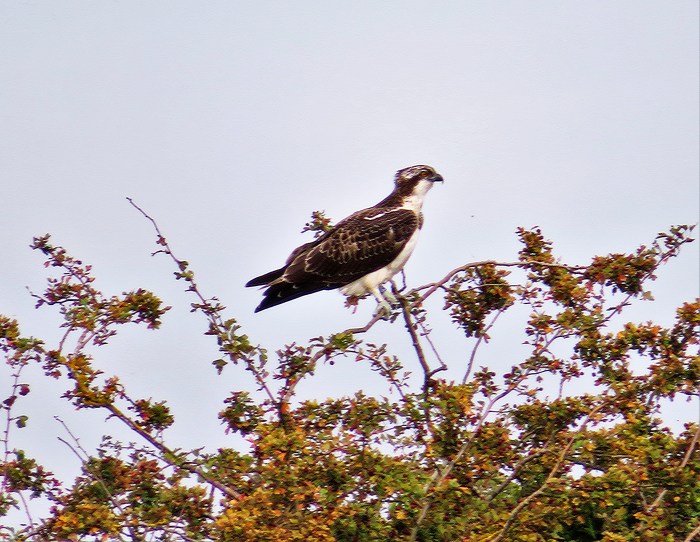
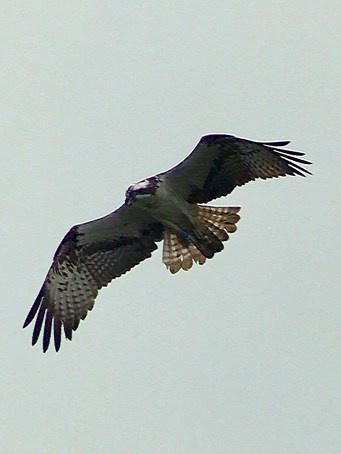
On the raptor front, the lingering juvenile Osprey remained in the vicinity of White Mills Marina (Earls Barton GP) until 1st, while the only other notable raptor was a female Merlin which flew over Stanwick GP on 6th.

The second Grey Plover of the autumn put in a brief appearance at Hollowell Res on 5th and Stanford’s five Black-tailed Godwits just made it into the period but they were not seen after 30th. Of interest, more than one hundred and fifty Black-tailed Godwits have been counted moving through Stanford this year, including good numbers of juveniles, and it’s not just down to water level. This species has enjoyed a better than average breeding season in Iceland as a result of very warm May temperatures there. By contrast, although never common, only the second Curlew Sandpiper of the year was found at Pitsford Res on 1st but it stayed only for the morning before disappearing. However, it – or more likely another – turned up at Hollowell Res during the afternoon of the same day, lingering only until the next morning.

Juvenile Curlew Sandpiper, Hollowell Res, 1st October 2017 (Jon Cook)

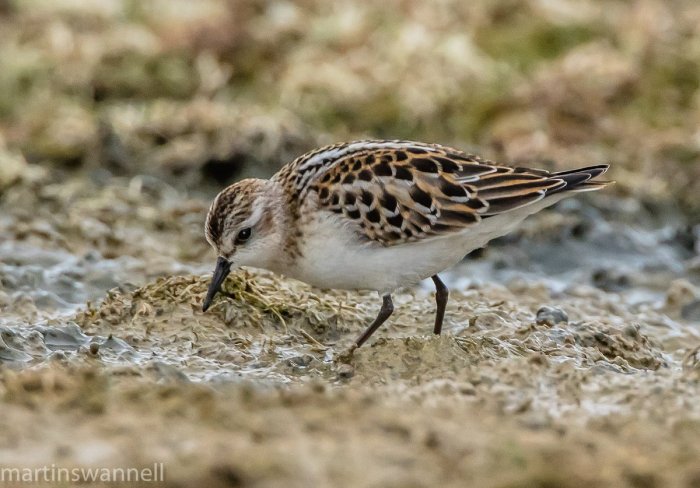
Four new Little Stints arrived this week – one at Pitsford on 30th-1st and another on 6th, one at Stanwick’s hallowed Visitor Centre Lake on 2nd-3rd and another at Hollowell Res on 4th. This species has been in short supply in the county in recent years.

First-winter Mediterranean Gull, Stanwick GP, 4th October 2017 (Steve Fisher)

Skuas have been in even shorter supply, however, and a possible Pomarine Skua chasing Black-headed Gulls at Billing GP on 1st would have been nice to see. What was presumably the same first-winter Mediterranean Gull which had been at Stanwick GP last week was there again on 2nd and 4th but much more noteworthy was the potential adult Azorean Gull seen there again and photographed on the latter date.

Putative Azorean Gull, Stanwick GP, 4th October 2017 (Steve Fisher)

The only Yellow-legged Gulls were up to four at Pitsford between 1st and 3rd and nine at Stanwick GP on 2nd, while the returning adult Caspian Gull at Hollowell was joined there by a first-winter on 4th, the Naseby adult was still there on 2nd and a second-winter visited Pitsford on 1st. A putative adult Baltic Gull was photographed at Ditchford GP on 2nd but it may well have been the same the same long-winged, dark Lesser Black-backed Gull which visited nearby Stanwick during the previous week. More to come on that.

A Firecrest was found in conifers behind the two hides at the northern end of Pitsford’s Scaldwell Bay on 2nd, while the run of Stonechats continued with up to three at both Pitsford and Hollowell, two at Stanford and singles at Stanwick and Clifford Hill GPs. Eight Crossbills flying south over Long Buckby on 30th was, apart from a breeding pair, one of the few records so far this year.

Rarity Round-up, 23rd to 29th September 2017

A change in the weather from day one this week, with the UK sandwiched between a North Atlantic low and a Scandinavian high, producing southerly and south-easterly winds. The potential was there (and still is) for the appearance of continental migrants and, with hundreds now having been recorded, a Yellow-browed Warbler or two.

With two Dark-bellied Brents flying south from Daventry CP on 26th there is reasonable argument for stating that the first geese of the ‘winter’ have arrived (but it’s probably in poor taste to use the ‘w’ word this early in the year …). Otherwise, scarce wildfowl were restricted to a female Red-crested Pochard at Stanford Res on 29th – a species which has been unusually absent from local water bodies so far this autumn.

Red-crested Pochard, Stanford Res, 29th September 2017 (Chris Hubbard)

No new Great White Egrets appeared this week – the one at Pitsford Res again being joined by the second bird which has been seen intermittently since the early autumn.

Proving to be a juvenile, last week’s Osprey remained in the vicinity of White Mills Marina (Earls Barton GP) on 23rd and 24th, while the only other notable raptor was a Marsh Harrier, which flew south-west over the dam at Boddington Res, late in the afternoon, on 29th.

Juvenile Osprey, White Mills Marina, Earls Barton GP, 24th September 2017 (Leslie Fox)

Aside from a continuing stream of Ringed Plovers, the Pitsford count peaking at twenty-eight on 25th, wader numbers crashed this week.


Stanford’s Black-tailed Godwits were the only birds of note during the period, with seven on 24th, dropping to five by 29th.

Juvenile Black-tailed Godwit, Stanford Res, 24th September 2017 (Chris Hubbard)

Instead, there was rather more gull action, which included a first-winter Little Gull at Ravensthorpe Res on 28th and a first-winter Mediterranean Gull, which was seen at Irthlingborough Lakes & Meadows LNR (Ditchford GP) on 23rd and then at adjacent Stanwick GP the following day. The only Yellow-legged Gulls were a first-winter at Daventry CP on 23rd and up to two at Pitsford between 23rd and 28th while, aside from the loafing adult Caspian Gulls at Hollowell and Naseby Reservoirs all week, two first-winters visited Daventry CP on 23rd and a second-winter was at Pitsford on 28th.

Adult Caspian Gull, Hollowell Res, 23rd September 2017 (Mike Alibone), returning for its third winter at this site.
First-winter Caspian Gull, Daventry CP, 23rd September 2017 (Gary Pullan)

Following last week’s Short-eared Owls at Hollowell and Harrington AF, another was seen flying south, mobbed by corvids, at Burton Wold (Burton Latimer) on 25th. Stonechats continued to be found, with up to two at Hollowell Res all week, two at Stanford Res on 24th and one at Neville’s Lodge (Finedon) on 29th, while Hollowell

Stonechat, Stanford Res, 24th September 2017 (Chris Hubbard)

continued to hang on to its Northern Wheatear until 26th, being joined by a second individual on 24th-25th, and another was at Finedon on 29th. The autumn’s first Rock Pipit was found at Hollowell Res on 25th, remaining there until 27th, while a White Wagtail was at Pitsford Res on 28th.

Rarity Round-up, 16th to 22nd September 2017

The week remained unsettled with periodic showers and mid/late-week night-time temperatures down to around 3ºC, the lowest since before the summer. Although predominantly westerly, the wind in the latter part of the week shifted between gentle northerly to mild southerly. Wader numbers crept up and included some autumn ‘firsts’ at a couple of local reservoirs.

In addition to the long-staying Great White Egret at Pitsford Res, two new birds appeared this week – one strutting around the shallows at the eastern end of Sulby Res on 16th and another on the main lake at Stanwick GP on 20th.

Great White Egret, Sulby Res, 16th September 2017 (Mike Alibone)

Fly-over Ospreys were seen on 17th at Bulwick and the following day at White Mills Marina (Earls Barton GP), while the only other notable raptor was a ‘ringtail’ Hen Harrier, which was seen on and off throughout the day at Stanford Res – also on 17th.

Hen Harrier, Stanford Res, 17th September 2017 (Chris Hubbard)

Wader passage picked up during the period, with numbers of Ringed Plovers (twenty-three on 19th and twenty-four on 21st) at Pitsford approaching those of the ‘old days’, while the same site continued to hold a Black-tailed Godwit on 16th-17th, another visited Stanford Res on 20th and seven were there on 22nd. Pitsford – still offering the best wetland birding by miles – continued to provide the main wader focus, with a Turnstone there on 19th and the autumn’s first Little Stint on 18th-19th, rising to two there on 20th-21st.


Juvenile Little Stint, Pitsford Res, 21st September 2017 (Martin Swannell)
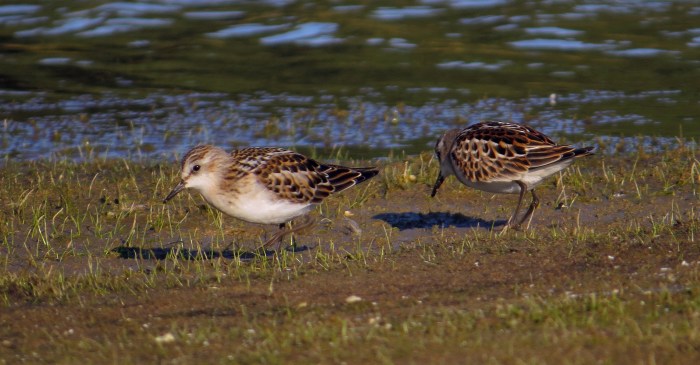
Juvenile Little Stints, Hollowell Res, 19th September 2017 (Cathy Ryden)

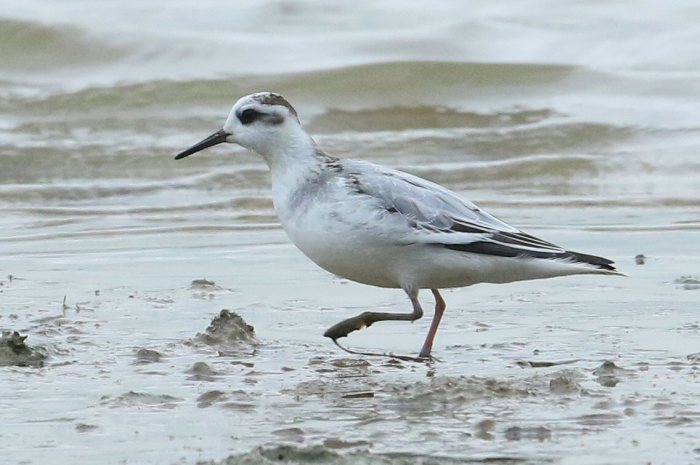
Two Little Stints were also found at Hollowell Res on 19th, where last week’s Grey Phalarope continued to perform until 17th, the last date on which Pitsford’s juvenile Spotted Redshank was also seen.

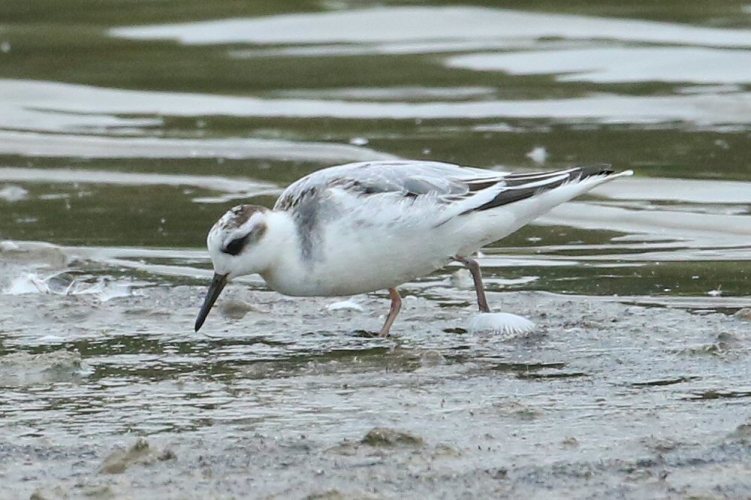
First-winter Grey Phalarope, Hollowell Res, 16th September 2017 (Bob Bullock)

The 17th also signalled time up for last week’s Arctic Tern at Stanford, which had moved on by the following day. A first-winter Little Gull visited Daventry CP on 22nd, just one Mediterranean Gull, a first-winter at Stanwick GP, was seen on 21st, while the only Yellow-legged Gulls were single adults at Cransley Res on 16th and at Pitsford Res on 21st, with four at both Pitsford and Daventry CP on 17th and 20th respectively and two again at Daventry CP on 22nd. This week’s duo of Caspian Gulls comprised what seems destined to become a regular adult at Naseby Res on 16th and 21st and a first-winter at Daventry CP on 20th.

Adult Caspian Gull, Naseby Res, 21st September 2017 (Mike Alibone)

It’s normally October before we encounter the first of the autumn’s Short-eared Owls but this week there were two: one at Hollowell Res on 16th and the other at Harrington AF the following day.

Short-eared Owl, Harrington AF, 17th September 2017 (Richard How)

Only the third reported in the county this year, a female Pied Flycatcher was trapped and ringed at Southwick on 22nd. This species appears to have succeeded in evading county listers in 2017! Still more Common Redstarts came through, with one at Harrington AF on 16th-17th and singles in the Brampton Valley on 20th and 22nd, while three sites produced Whinchats, including one at Stanford Res and two at Stanwick GP on 18th and two in the Brampton Valley on 20th.

Stonechat, Sywell CP, 21st September 2017 (Alan Francis)
Stonechat, Brampton Valley, 22nd September 2017 (Richard How)

Stonechats can either be quite scarce or we can sometimes have a bumper winter but with the first ones arriving, or just passing through, locally we can only speculate. Two were at Pitsford Res on 16th, singles were at Stanford Res on 18th and 20th and at Sywell CP on 21st, while two were in the Brampton Valley on 20th and 22nd.

Northern Wheatear, Hollowell Res, 17th September 2017 (Cathy Ryden)

This autumn is, so far, proving extremely poor for migrant Northern Wheatears and the trend continues this week with just two seen: one was at Hollowell Res from 17th to 21st and another was found in the Brampton Valley on 20th, this locality also producing a fly-over Tree Pipit on 22nd.

Rarity Round-up, 9th to 15th September 2017

More North Atlantic lows, with tightly-packed isobars, ensured a westerly airstream for the whole week. One of these – Storm Aileen – hit the country overnight on 12th, resulting in strong westerly gales delivering a number of inland seabirds, for both Northamptonshire and the UK as a whole. Topping the bill locally was the county’s eleventh-ever Sabine’s Gull, at Daventry Country Park.

Observed only on 9th, just one Garganey was on show briefly at Pitsford Res this week and no other notable wildfowl were reported. Picked up in Duston on 15th, a storm-driven Manx Shearwater was taken into care overnight and, the following morning, transported to a specialist hospital in Swansea for further care prior to its intended release following several days of rehabilitation. Further associated with Aileen’s blow, two juvenile Gannets were reported flying east over Daventry CP, late in the afternoon of 15th. This news appeared on some birding information services and it would be useful to know who the observers were … Meanwhile, back at Pitsford – currently the best habitat for waders and stuff in general for miles around – the long-staying Great White Egret remained all week, while the Fawsley Park Osprey remained from last week, finally departing south on the morning of 10th.

Juvenile Osprey, Fawsley Park, 9th September 2017 (Stuart Mundy)

Three more Ospreys included singles at Stanford Res and flying east near Aldwincle – both on 9th – and one over Hollowell Res on 13th and last week’s Marsh Harrier was also seen again at Stanford Res on 9th.

Marsh Harrier Stanford Res, 9th September 2017 (Bob Bullock). This individual has recently renewed all except its outer primaries (which are faded and heavily worn) and one of its secondaries, which ages it as a second calendar year or older – juveniles still having a full set of new feathers.

Waders: it’s what autumn’s all about, isn’t it? Well, at least for September, anyway. While we’re still awaiting the big numbers and the broader species spectrum, the first Grey Plover of the season was seen flying over Pitsford’s Scaldwell Bay on 14th, while the same site continued to host between one and three Black-tailed Godwits from 9th to 14th and another visited Stanford Res on 9th. In the meantime, Pitsford’s juvenile Spotted Redshank had managed to chalk up twelve days’ stay by the end of the week. Which brings us to another species proving thin on the ground this autumn: Wood Sandpiper. The second of the season was found at Ravensthorpe’s small, muddy north end on 9th but it failed to show the next day. The reverse was true, though, for another storm-driven thing, a first-winter Grey Phalarope, which appeared at Hollowell Res after Aileen’s gales on 13th and performed well for all comers until the week’s end – although it could sometimes be a little elusive.

First-winter Grey Phalarope, Hollowell Reservoir, 13th September 2017 (Cathy Ryden)
First-winter Grey Phalarope, Hollowell Reservoir, 16th September 2017 (Bob Bullock)

The last one in Northants was in 2014. Hollowell also produced four Turnstones, which dropped in just after the discovery of the phalarope, only to disappear very quickly.

Juvenile Arctic Tern, Stanford Res, 13th September 2017 (Chris Hubbard)

The star tern of the week came in the form of two juvenile Arctic Terns, one at Stanwick GP on 13th and the other at Stanford Res from 13th to 15th. However, it’s not very often the true star of the week is a gull but even the most convicted laridophobe could not fail to appreciate the exquisite beauty of the juvenile Sabine’s Gull which graced Daventry CP with its presence for three days during the latter half of the week. Thought by some to be in ill health, it made trips away from the reservoir on a number of occasions, finally disappearing for good after 15th. Being the only one lingering inland after Aileen’s big blow, it proved to be a popular attraction for birders from much further afield than Northants.

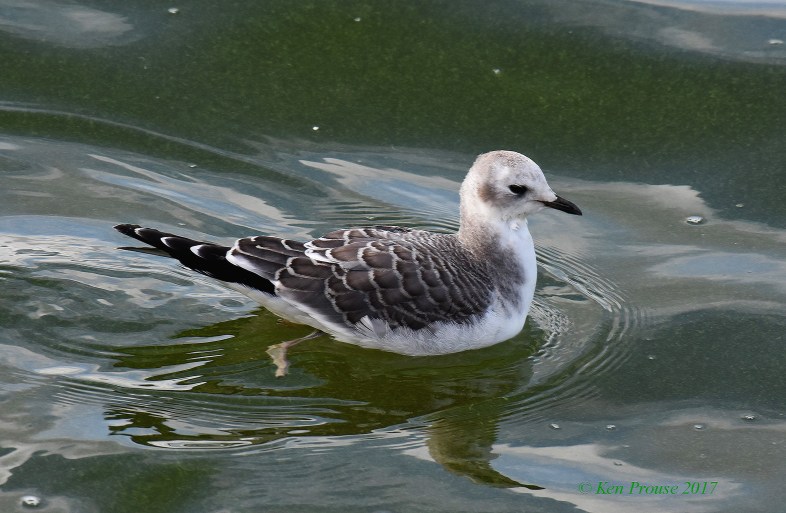
Juvenile Sabine’s Gull, Daventry CP, 14th September 2017 (Ken Prouse)

All of this week’s other gulls were, of course, completely overshadowed but do not escape without mention. Up to two first-winter Mediterranean Gulls continued to be seen on Stanwick’s Visitor Centre Lake between 9th and 12th and one visited nearby Irthlingborough Lakes & Meadows at Ditchford GP on 10th.

First-winter Mediterranean Gull, Stanwick GP, 11th September 2017 (Steve Fisher)

Perhaps unsurprisingly, for the second week running, Stanwick’s putative adult Azores Gull put in another tantalisingly brief appearance there on 15th. Will it return to stay long enough to be nailed? The same site held fourteen Yellow-legged Gulls on 11th but the only other ‘YLGs’ were at Pitsford Res, where there was one on 9th and two on 13th and at Ravensthorpe Res on 10th. Stanwick also produced a first-winter Caspian Gull on 11th and single adults visited both Daventry CP and Naseby Res on 13th.

Adult Yellow-legged Gull, Ravensthorpe Res, 10th September 2017 (Adrian Borley)

With all the attention justly focussed on wetlands this week, it would appear that passerines have been largely forgotten, but the autumn run of Common Redstarts continued and so did the ringing, with two trapped and ringed at Stanford Res on 9th, followed by three more there the next day (two ringed) and a male was trapped and ringed at Southwick on 15th.

Juvenile Whinchat, Pitsford Res, 12th September 2017 (Doug Goddard)

Fewer Whinchats were recorded in comparison to last week, with one at Pitsford Res on 10th-11th being joined by another on 12th, while one was at Hollowell Res on 15th.

Rarity Round-up, 2nd to 8th September 2017

The weather turned rather more unsettled during this first week of September and there was a distinct southerly bias to the wind direction during the first half. Unfortunately, this originated from North Atlantic lows rather than Eastern European highs which, no doubt, would have been more productive from a migrational perspective.

Up to two Garganeys remained at Pitsford Res until at least 5th, with a belated report of two Common Scoters, including an adult drake, in Scaldwell Bay there on 1st September. Pitsford also hung on to at least one of its two Great White Egrets throughout the week. In addition to the now expected Osprey sightings in the north of the county at Stanford Res and nearby Welford Res, where singles were seen on 2nd, a showy – though wide-ranging – juvenile was discovered on 4th at Fawsley Park Lakes, remaining in the vicinity until the week’s end.

Juvenile Osprey, Fawsley Park, 5th September 2017 (Ian Dobson)
Juvenile Osprey, Fawsley Park, 6th September 2017 (Ken Prouse)

The only other notable raptor was a Marsh Harrier which visited Stanford Res on 7th and again on 8th, although it had probably been in the area since 1st.

Juvenile Icelandic Black-tailed Godwits, Stanford Res, 8th September 2017 (Chris Hubbard)

Against a rather thin backcloth of commoner waders, Black-tailed Godwits continued to move through in small numbers. One was at Stanford from 2nd to 6th, with four present there on 8th and one was at Pitsford from 3rd to 8th, with two present on 4th. A juvenile Spotted Redshank at the latter locality, from 4th until the week’s end, was only the second this year, in keeping with this species’ current scarce status in the county. Long gone are the days – and we’re talking ‘70s/’80s – when double-figure flocks were present for weeks at a time on the late autumn mud at Pitsford, when low water levels like this year’s were an annual event.

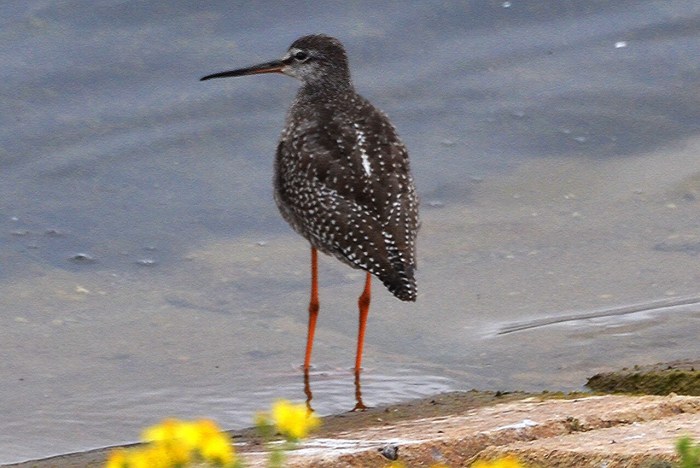
Juvenile Spotted Redshank, Pitsford Res, 4th September 2017 (Stuart Mundy)

Pitsford produced the only tern of the week, a Black Tern, on 3rd. It didn’t linger. Surprisingly few Mediterranean Gulls – normally a regular feature of early autumn – have been reported so far this year and just two first-winters on Stanwick’s Visitor Centre Lake on 7th-8th were the only ones during the period. Which brings us neatly to potential ‘bird of the week’.

Putative adult Azores Gull, Stanwick GP, 8th September 2017 (Steve Fisher)

For just a few minutes on the morning of the 8th, this same lake held a putative Azores Gull. This bird did not have a full winter hood and so did not readily resemble the returning adult from 2013, 2014 and 2015, accepted as the second British record by BBRC. It is said that the extent of the winter head streaking can vary from year to year in the same individual, so is it this returning adult or a lookalike Yellow-legged Gull?

Adult Yellow-legged Gull, Stanwick GP, 7th September 2017 (Steve Fisher)

Talking of which, there were seven at Stanwick on 4th and 7th and smaller numbers elsewhere, including six at Pitsford on 5th and between one and three at Hollowell and Boddington Reservoirs and Daventry CP. Stanwick, Daventry and Hollowell also produced single Caspian Gulls, with first-winters on 4th and 7th and an adult on 8th, respectively.

First-winter Caspian Gull, Stanwick GP, 4th September 2017 (Steve Fisher)

The autumn run of Common Redstarts continued, much to the delight of the ringing fraternity, with the Stanford Ringing Group trapping one on 2nd and two more on 7th, with another seen there on 5th. Harrington AF ringers trapped one on 4th, one was seen there on 7th and another was found at Pitsford Res on 2nd.

Whinchat, Sywell CP, 5th September 2017 (Alan Francis)
Whinchat, Stanford Res, 4th September 2017 (Chris Hubbard)

More Whinchats arrived, with Harrington AF producing up to three on 2nd-3rd, Stanford held two between 5th and 8th, Pitsford produced up to two between 6th and 8th, Sywell CP two on 5th, while one was near Bugbrooke on 4th. Like last week, just one Tree Pipit was found at Harrington AF on 2nd.

It’s still early in the autumn. We need some migrational AWC …

Rarity Round-up, 26th August to 1st September 2017

Another period of locally settled weather with a continual, light, westerly airstream proved unconducive to grounding many migrants. Nevertheless, there were some new arrivals during the week, which ended on the officially recognised first day of ‘meteorological autumn’.

After a blank week for wildfowl, up to two Garganeys were again on site at Pitsford Res until at least 31st, while the same locality produced an adult drake Common Scoter, south of the causeway, on 26th. The escaped, metal-ringed female Bufflehead, first discovered in June, was still found to be lurking at Clifford Hill GP on the same date.

At least one of the Pitsford Great White Egrets remained throughout the week, although two were again on show there on 27th, while the same site produced a fly-over Osprey on 1st.

Great White Egret, Pitsford Res, 28th August 2017 (Mike Alibone)

Ospreys were also seen at Stanford Res on 26th, 27th, 28th and 31st and two more included one in flight over Silverstone Circuit on 27th and another fishing along the River Nene in the vicinity of Cogenhoe Mill on 31st. The only other raptors of note were a Marsh Harrier heading south-west along the Nene Valley at Stanwick on 28th and another in Pitsford’s Walgrave Bay on 1st.

Black-tailed Godwit, Stanford Res, 30th August 2017 (Chris Hubbard)

Pitsford, Stanford and Stanwick shared this week’s small numbers of Black-tailed Godwits between them, Pitsford producing one on 26th-27th, Stanford hosting two on the same dates and one from 28th to 30th and Stanwick holding singles on 29th and 31st. Meanwhile, Stanwick’s Temminck’s Stint became more elusive, behaving erratically and disappearing for periods of time as it commuted between the main lake and the Visitor Centre Lake on 26th and 29th-30th.

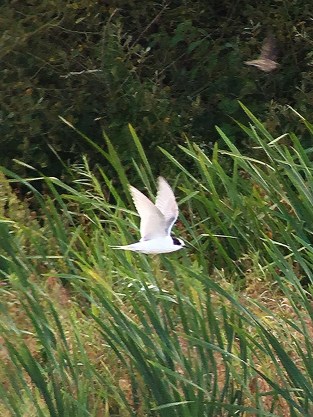
Little Tern, Hollowell Res, 28th August 2017 (Douglas McFarlane)

Unusual but not unprecedented in August, three Little Terns, an adult and two juveniles, arrived at Hollowell Res on the afternoon of 28th, staying there into the early evening, while little materialised in the way of interesting larids, with single Yellow-legged Gulls at Pitsford on 27th and 29th.
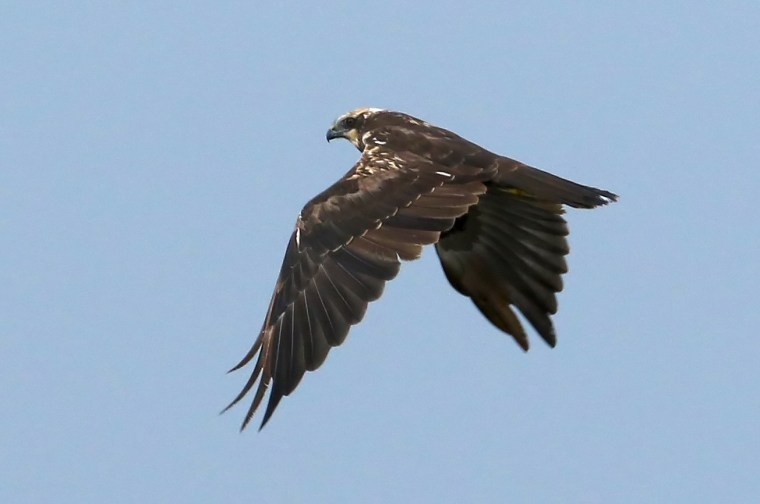
Juvenile Yellow-legged Gull, Pitsford Res, 27th August 2017 (Angus Molyneux)

Stanford Res enjoyed a run of Common Redstarts, with two trapped and ringed on 26th, another trapped and ringed on 28th, followed by one there on 29th. Singles were also seen at Borough Hill on 26th and at Fawsley Park the following day, while two were found in a hedgerow near Twywell on 1st.
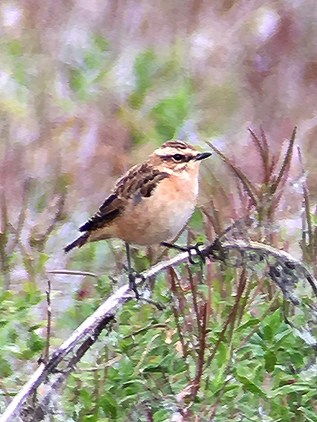
Whinchat, Stanford Res, 31st August 2017 (Chris Hubbard)

After just one, last week, more Whinchats appeared, including singles at Borough Hill on 26th, Hollowell Res on 27th and, on 31st, singles visited Bozenham Mill and Sywell CP, while two were near Glapthorn Cow Pasture and two were also found in a weedy field at Stanford Res, at least one of which remained the following day.

By contrast, very few Northern Wheatears have been found so far this autumn and this week saw only three – one at Stanford Res on 26th, another at Preston Deanery on 31st and one near Twywell on 1st, while a Tree Pipit was discovered at Borough Hill on 27th and two more were at Harrington AF on 31st.

Northern Wheatear, Preston Deanery, 31st August 2017 (Mike Alibone)

Rarity Round-up 19th to 25th August 2017

Another predominantly dry period, with continuing westerly winds and temperatures up from below average to ‘normal for the time of year’ at the week’s end. Aside from the arrival of a Temminck’s Stint, there was a little shrinkage in the migrant spectrum over the last seven days.

The Great White Egret remained settled in Pitsford Reservoir’s Scaldwell Bay all week, the same site producing an Osprey, fishing around the dam, on the morning of 22nd. Two more Ospreys were seen, one at Stanford Res on 21st and the other visiting Hollowell Res on 23rd.

Male Osprey, Stanford Res, 21st August 2017 (Chris Hubbard)

Black-tailed Godwits continued to trickle through in small numbers, Pitsford producing four on 19th, three on 20th and one on 25th, while the autumn’s first juvenile was at Stanford Res on 23rd-24th. The only other wader of note was an adult Temminck’s Stint which, seemingly oblivious to observers, obligingly gave great views at Stanwick GP’s Visitor Centre Lake from 21st to 23rd before moving to the main lake there on 24-25th.

The first Black Tern of the autumn arrived at Stanford Res on 24th but the week goes by without a mention of any scarce gulls – the first ‘blank’ week for a long time.


Adult Temminck’s Stint, Stanwick GP, 21st August 2017 (Mike Alibone)

Common Redstarts were reported from five localities, with singles at Priors Hall (Corby) on 20th, Clifford Hill GP on 22nd, Stanford Res on 23rd and 25th, and at Long Buckby and Preston Deanery on 24th. A Whinchat visited Stanford Res on 20th, while single Northern Wheatears were found Harrington AF on 21st, Whiston Locks on 22nd and Borough Hill on 23rd and 25th and migrant Tree Pipits appeared over Stanwick GP on 22nd, at Harrington AF on the same date and at Borough Hill on 25th.