With below average temperatures, high winds and twice the month’s expected rainfall in two days, June is now odds on to be the wettest on record. The county was deluged by heavy rain during the first week of the review period, resulting in disaster for many ground-nesting birds around bodies of water and in other low-lying areas. Unsurprisingly, there were few new migrants reported.
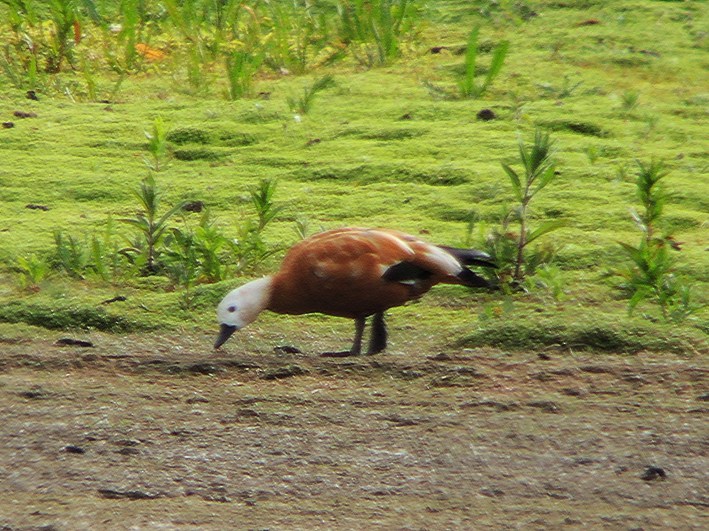
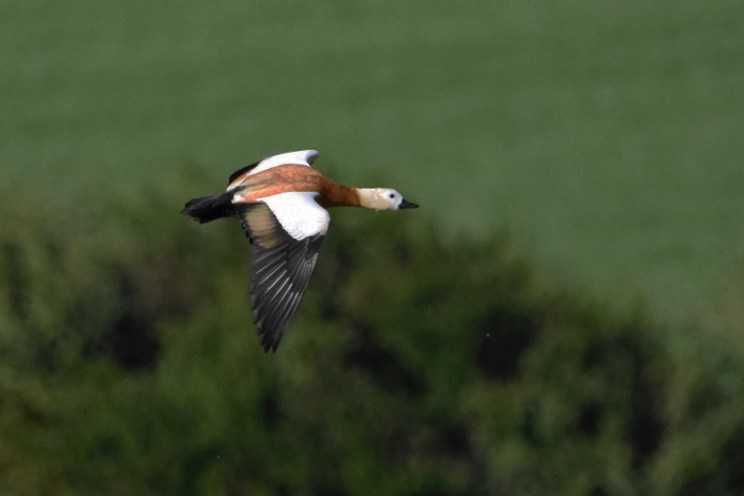
Now seemingly ensconced at Hollowell Res, the first-summer female Ruddy Shelduck remained throughout the period, while the only other waterfowl conceivably vying for attention was a drake Red-crested Pochard at Pitsford Res on 15th-17th.
The first Common Quail of the year was a singing male, just north of Mears Ashby, early on 15th. Unfortunately, it did not linger and it later emerged that what was very likely to have been the same individual was also reported singing from a field at Sywell, 2 km due west, on the same date. Although June is generally recognised as the month, this species is unpredictable in its occurrence in the county. The perception that it is becoming rarer locally is not necessarily true, as the analysis of records, below, illustrates. Occurrences peaked in Northants in the 1990s although, prior to that decade, with four blank years (1973-75 and 1985) Quails look to have been rarer than they appear to be today, which is surprising. But are they being overlooked? [see here] This species is declining as a result, in part, of uncontrolled netting of migrating birds, particularly in Egypt, where Quail trapping is now taking place on an unsustainable, commercial scale. In Europe agricultural intensification has led to the loss of rough grass and uncultivated land and an increase in the use of herbicides and insecticides, which has led to a reduction on the availability of weeds, seeds and insects. In Europe the population size is estimated to be fluctuating and Quail is on the IUCN Red List of Threatened Species (BirdLife International 2018, 2019).
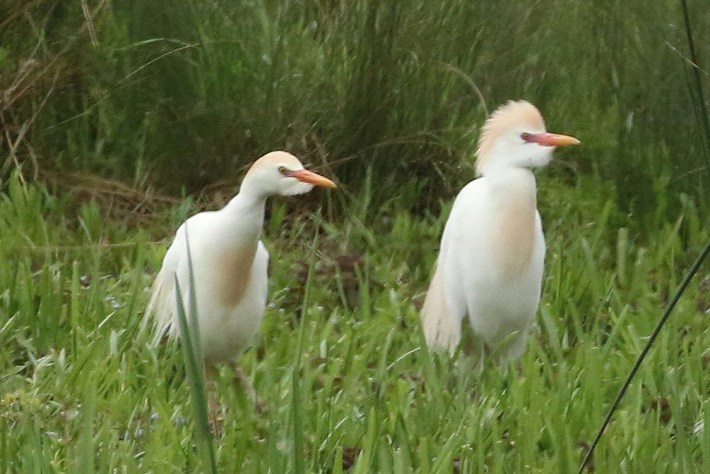
Up to two Cattle Egrets remained at the northern end of Stanwick GP throughout, with one venturing south, down to the main lake, before flying toward Ditchford GP on 10th. Moving up the size scale, with none reported since 29th May, Northants did not manage to stay Great Egret-free for long, as one appeared at Thrapston GP on 14th.
Cattle Egret, Stanwick GP, 10th June 2019 (Steve Fisher)
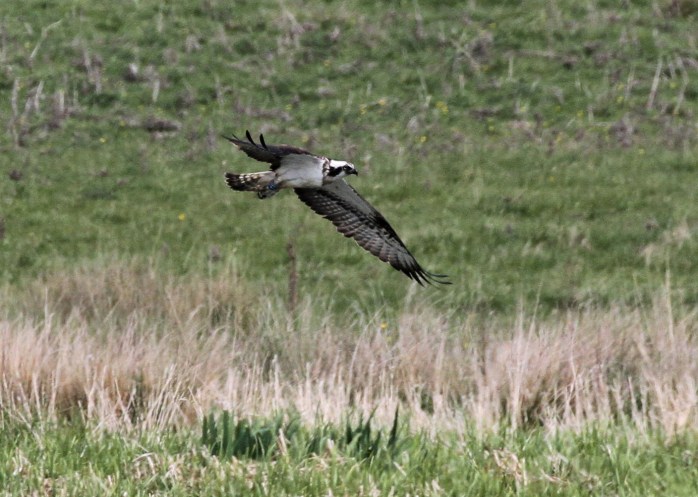
Meanwhile, Hollowell maintained its reliability for Osprey sightings with one on 8th, 9th and 14th, while two were there on 12th. Elsewhere, singles visited Pitsford on 11th and Thrapston on 14th and 18th.
The adult Yellow-legged Gull remained at Hollowell between 8th and 14th, visiting nearby Ravensthorpe on 11th and another adult was at Stanwick on 17th, while the only passerine of the period was a Crossbill, which flew over Yardley Chase’s Denton Wood on 17th.
As we entered the summer lull, a westerly to south-westerly airstream initially brought a heady mix of mid-twenties temperatures and dry sunny conditions, later followed by sunshine and showers. ‘Storm Miguel’, a swirling low pressure system moving north from Iberia, brought rain on gathering south-easterlies at the very end of a not too species-rich period.
Last week’s newly arrived Ruddy Shelduck moved from Ravensthorpe Res and remained settled at nearby Hollowell Res throughout the period. Might it remain into the summer to moult and become temporarily flightless, as others have done in previous years?
First-summer female Ruddy Shelduck, Hollowell Res, 5th June 2019 (Mike Alibone)First-summer female Ruddy Shelduck, Hollowell Res, 6th June 2019 (Jon Cook). The grey centres to the outer three greater coverts, just visible in the image, age this bird as a first-summer and the white face mask barely contrasting with the remainder of the rather worn and faded head sex it as a female.
In the first Great Egret-free week of 2019, remaining throughout were the three Cattle Egrets at the northern end of Stanwick GP, mirroring the small flocks currently residing in north Norfolk.
Osprey, Hollowell Res, 1st June 2019 (Alan Coles)Osprey, Hollowell Res, 1st June 2019 (Alan Coles)
Coming to the fore, Ospreys were reported from five localities, with Hollowell – highest in the reliability stakes – producing birds on 31st, 1st, 2nd and 5th, followed by singles at Biggin Lake (Oundle) on 1st, Thrapston GP on 2nd, flying north over Irthlingborough on 3rd and at Pitsford Res on 5th.
The only migrant wader this week was a Grey Plover, found at Hollowell on 7th.
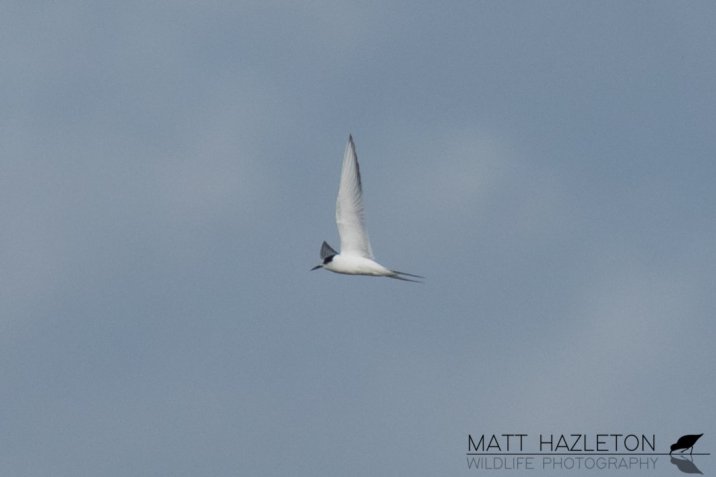
Little Tern, Wicksteed Park Lake, 31st May 2019 (Alan Francis)Little Tern, Wicksteed Park Lake, 31st May 2019 (Alan Francis)
Further scarce migrants appeared in the shape of two Little Terns, surprisingly suburban, at Wicksteed Park Lake (Kettering) on 31st. Perhaps unsurprisingly, they did not linger and neither did the first-summer Arctic Tern, which appeared at Summer Leys on 1st.
An adult Yellow-legged Gull kept the larids afloat this week, with an adult mobile between Hollowell and Ravensthorpe on 5th.
Short-eared Owl, Grendon, 6th June 2019 (Ken Prouse)
Somewhat unseasonal for Northamptonshire, a Short-eared Owl was observed between Grendon and Easton Maudit on 6th, moving on after a brief interaction with a hunting Barn Owl.
The period’s weather fell under the influence of a westerly airflow, which brought intermittent sunshine and showers and, as it happens, very little change to the local birdscape. Topping the charts this week were three Cattle Egrets at Stanwick, all resplendent in summer plumage … and one up on last week’s total.
A late spring Ruddy Shelduck at Ravensthorpe Res on 29th, moving to nearby Hollowell Res the next day, was a tad earlier than would be expected for an overshoot from the European feral breeding population, many of which move north in the summer to moult in The Netherlands. This particular individual was unringed but that counts for little where this species is concerned.
The tally of Cattle Egrets in the county increased by 50% on last week’s total, with three at the northern end of Stanwick GP from 26th to 30th. They can often be difficult to see in the long grass and lightly undulating terrain chosen by the cattle. By contrast, the only Great Egrets reported were two at Summer Leys LNR on 29th.
Cattle Egret, Stanwick GP 27th May 2019 (Steve Fisher)Cattle Egret, Stanwick GP, 29th May 2019 (Bob Bullock)Cattle Egrets, Stanwick GP, 29th May 2019 (Bob Bullock)Cattle Egrets and Little Egret, Stanwick GP, 29th May 2019 (Bob Bullock)
Continuing to put in erratic appearances throughout the week, Ospreys were again seen at Hollowell Res on 25th, Pitsford Res on 29th and Thrapston GP on 30th and they are likely to maintain their status as sole raptor representative within these reports … until something a little more exotic turns up, of course.
Osprey, Hollowell Res, 25th May 2019 (Alan Coles)Osprey, Hollowell Res, 25th May 2019 (Alan Coles)
Wader passage has all but dried up. A Whimbrel dropped into Summer Leys scrape briefly on 25th and a Greenshank was on Round Island there on 30th and, of course, gulls are thin on the ground this time of the year, too. Maybe not too surprising was the appearance of an adult Mediterranean Gull at Summer Leys on 25th and another – or the same – at Stanwick GP on 28th. If they are breeding again somewhere, this year, then they are maintaining an ultra-low profile. Making a somewhat unseasonal appearance, a first-summer Caspian Gull appeared at Daventry CP on 30th.
Belated news of a Firecrest in a Braunston garden on 23rd May means that a passerine creeps into this week’s round-up. After a short video performance, it promptly disappeared.
Nice reminder today of what got me into birds and #ornithology – my dad casually finds a firecrest while laying turf. Also a nice reminder why it’s handy to live next door! Hilarious photo of dad at start of vid. #Northantsbirds@NorthantsBTOpic.twitter.com/sYZEexCPYo
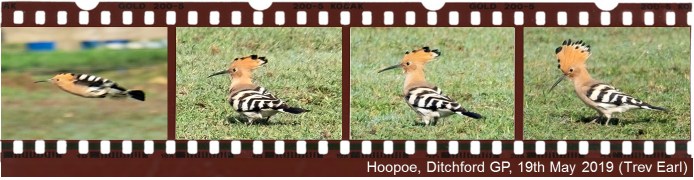
Another fine, largely dry week commenced with the convergence of two pressure systems over the central part of the country, producing only a few short-lived, local showers on northerly winds. Though fairly quiet, undoubtedly bird of the week was a Hoopoe, which stayed long enough to pose briefly for photos for just one lucky, right place, right time photographer …
Two Garganeys at Irthlingborough Lakes & Meadows (Ditchford GP) on 18th were this week’s sole representatives of their kind and it looks like we will have to wait until the autumn before the appearance of any further rare or scarce wildfowl – escapes and ferals notwithstanding.
Who would have thought it but this week saw more Cattle Egrets in the county than Great Egrets, when a second individual joined the herd at the northern end of Stanwick GP from 21st to 24th and the only Great Egret reported was one at Stanford Res on 19th and 22nd. Continuing the kaleidoscope run of Black-necked Grebes this spring, another was found at Clifford Hill GP on 18th but like the previous birds at Daventry CP, a couple of weeks back, it moved swiftly on.
Black-necked Grebe, Clifford Hill GP, 18th May 2019 (Andrew Cook)Black-necked Grebe, Clifford Hill GP, 18th May 2019 (Mike Alibone)
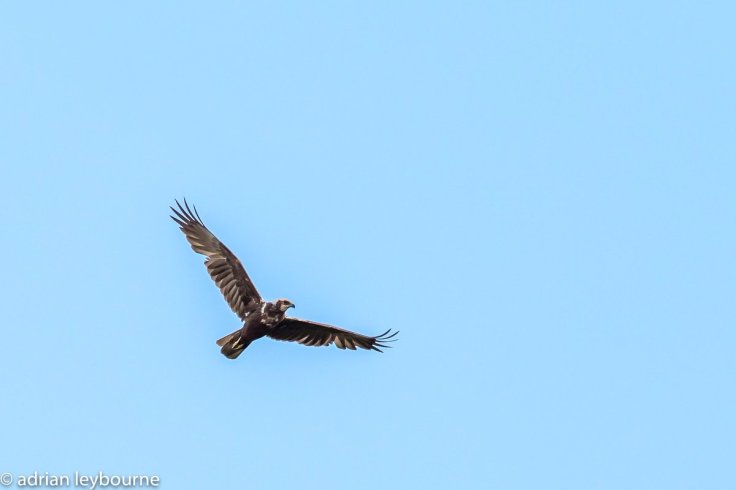
A Marsh Harrier – unusually scarce this spring – appeared over Summer Leys LNR on 24th. For anyone yet to catch up with a local Osprey this year, the reservoirs in north-west Northamptonshire are often a good bet for picking up wandering individuals from the slowly expanding Midlands population. Singles this week visited Hollowell Res on 18th and 21st and Naseby Res on 23rd.
Marsh Harrier, Summer Leys LNR, 24th May 2019 (Ady Leybourne)Osprey, Hollowell Res, 21st May 2019 (Jon Cook)
And with expanding populations in mind, some may wonder why we don’t seem to stumble across the odd migrant Corncrake, or two, given the proximity of the RSPB reintroduction project running since 2003 at the Nene Washes reserve near Peterborough. This is, of course, in response to their re-establishment in England being identified as a priority in the UK Biodiversity Action Plan. But it remains a true rarity and an unconfirmed report of a calling male between Dalscote and Gayton on 20th-21st remained exactly that, as numerous birders put in the hours throughout 22nd along the quiet, single-track road bordering the monoculture crop-field in which it was reported. Veterans will no doubt be casting their minds back to the famous singing male, which spent three weeks, sometimes showing well, in an overgrown and richly plant-diverse meadow adjacent to Billing GP in May 1972. Ah yes, those were the days …
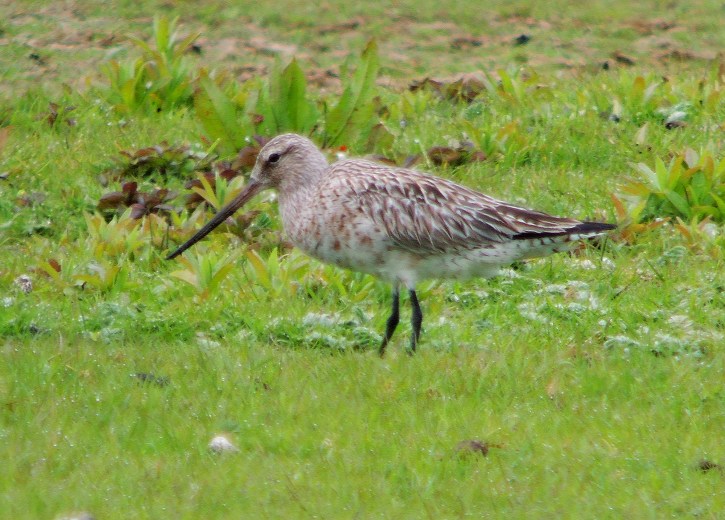
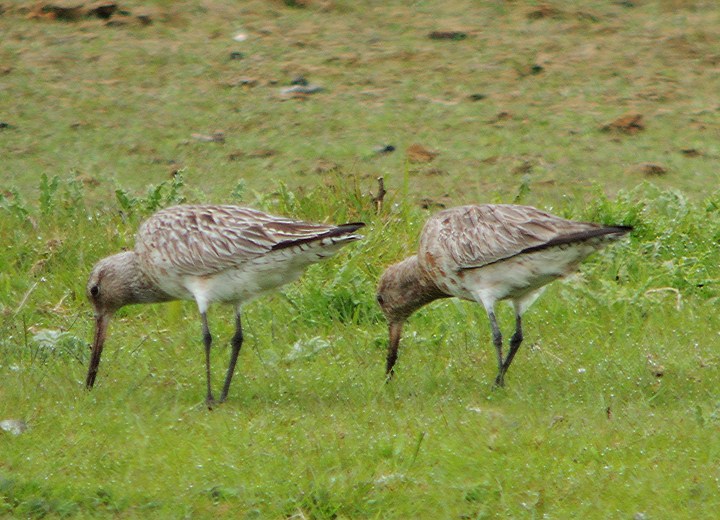
First-summer Bar-tailed Godwit, Clifford Hill GP, 18th May 2019 (Mike Alibone)Bar-tailed Godwits, Clifford Hill GP, 18th May 2019 (Mike Alibone)
And so to waders and two of the three Bar-tailed Godwits at Clifford Hill GP on 15th remained until 18th, with at least one still present the following day, while the Hollowell Sanderling stayed overnight on 17th, still being present the following morning. Refusing to be left out, Stanford Res cashed in on its bid for this species, producing one on the dam there on 22nd, while two more were found on the dam at Pitsford on 23rd.
Sanderling, Pitsford Res, 23rd May 2019 (David Smith)Sanderling, Pitsford Res, 23rd May 2019 (David Smith)Sanderlings, Pitsford Res, 23rd May 2019 (David Smith)
Meanwhile, a Greenshank spent four days at Summer Leys, from 18th to 21st. Passage of gulls and terns dwindled considerably.
The 18th produced single Black Terns at Clifford Hill GP, Stanwick GP and Pitsford Res, followed by a first-summer Little Gull at the latter locality the next day.
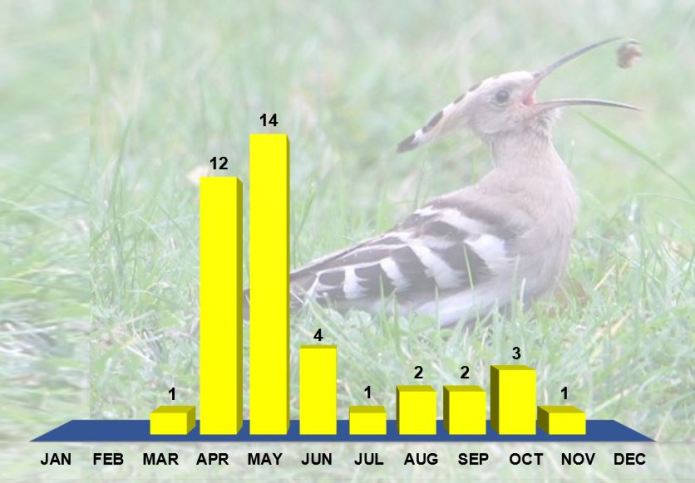
Saving the best until last – or maybe it’s just the way the systematic cookie crumbles – but when it comes to sheer style and flamboyance, Upupa epops everybody’s cork. In this instance, however, it was not to be and the masses missed out this week on the first Northamptonshire Hoopoe since 2015.
Hoopoe, Ditchford GP, 19th May 2019 (Trev Earl)Hoopoe, Ditchford GP, 19th May 2019 (Trev Earl)Hoopoe, Ditchford GP, 19th May 2019 (Trev Earl)Hoopoe: Monthly distribution of records, 50 years, 1969-2018. (Background image Bob Bullock).
Glebe Meadow, ‘Home of Kasa Lake Alpacas’ and part of the Ditchford GP complex, was the venue chosen by this particular individual, which rapidly did a bunk after being harassed by Jackdaws but not before it was quickly caught on camera. There have been forty records in the last fifty years, during which there were twenty-nine blank years, a massive seven-year gap (1996 to 2003) with no records and a maximum of four records in any one year (1973). They are impossible to predict but May accounts for 35% of all records followed closely by April with 30%. How long will we have to wait until the next … ?
A fine, dry week saw the pace of migration slow somewhat, although winds in the latter half were a keen north-easterly, turning to a strengthening easterly at the very end of the period. With all the summer visitors now in, speculation is running high on what might be found over the forthcoming two weeks.
Apart from a few thinly scattered Wigeon, the last vestiges of winter wildfowl remained in the shape of the first-summer Whooper Swan, still present at Thrapston GP until at least 12th, while the escaped female Bufflehead was seen again at Clifford Hill GP on 14th.
With singles at Thrapston on 12th-13th and one at Stanford Res on 16th, this week’s two Great Egrets doubled last week’s total but they generated little interest when compared with the reappearance of the Cattle Egret, back at the far north end of Stanwick GP from 12th until at least 14th. Assuming this is the same individual, which was last seen there on 23rd April, where has it been during the intervening period?
Away from the Nene Valley, roaming Ospreys continued to be reported, including singles at Stanford Res on 12th and at Hollowell Res on 13th and 16th-17th. Otherwise, it was a week of little action on the raptor front.
Male Ruff, Summer Leys LNR, 15th May 2019 (John Moon)Male Ruff, Summer Leys LNR, 15th May 2019 (John Moon)
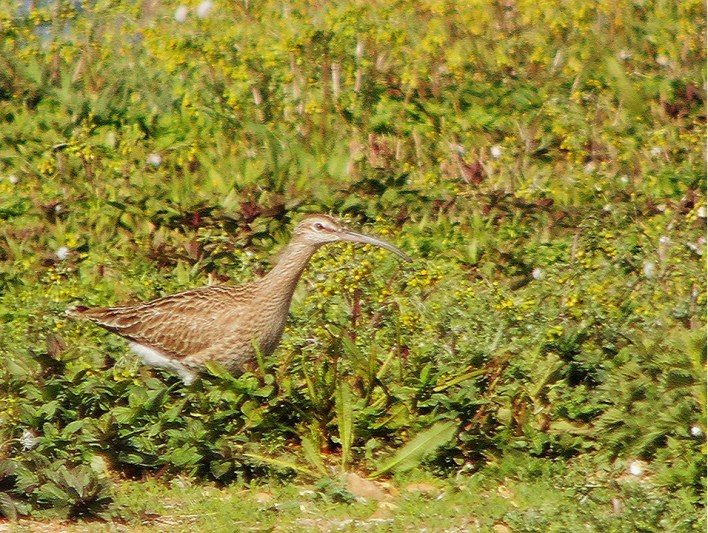
This was not the case with waders, however. With most of the occurrences in the Nene Valley, Summer Leys LNR produced two fabulously flamboyant male Ruffs from 14th until 16th with, following last week’s run, another Grey Plover there on the latter date. The week’s only Whimbrel was reported from Ravensthorpe Res on 11th while, back in the valley, two Bar-tailed Godwits were found at Clifford Hill GP on 14th, being joined there by a third the following day.
Bar-tailed Godwits, Clifford Hill GP, 15th May 2019 (Doug Goddard). Two of three present on this date.
Hollowell Res subsequently produced only the third Sanderling of the year so far, with one on Guilsborough Bay Point on 17th. Back at Summer Leys, following two Wood Sandpipers on the scrape last week, another turned up on 15th and two were present the next day, these figures being mirrored there by Greenshanks on the same dates. Five Greenshanks were at Ravensthorpe Res on 15th, followed by three more at nearby Hollowell two days later, on 17th.
After last week’s ‘big passage’, events this week were less dramatic when it came to Black Terns moving through the county. The 11th saw singles at Thrapston GP and Stanford Res, followed by three at the latter locality on 12th, two at Pitsford Res on 16th, with two also at Summer Leys/Earls Barton GP on the same date and two at Stanwick the next day.
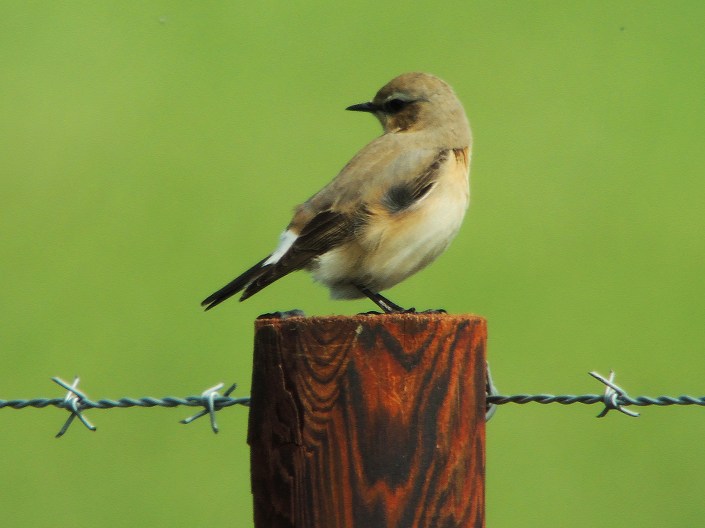
Female Northern Wheatear, Clifford Hill GP, 11th May 2019 (Mike Alibone)
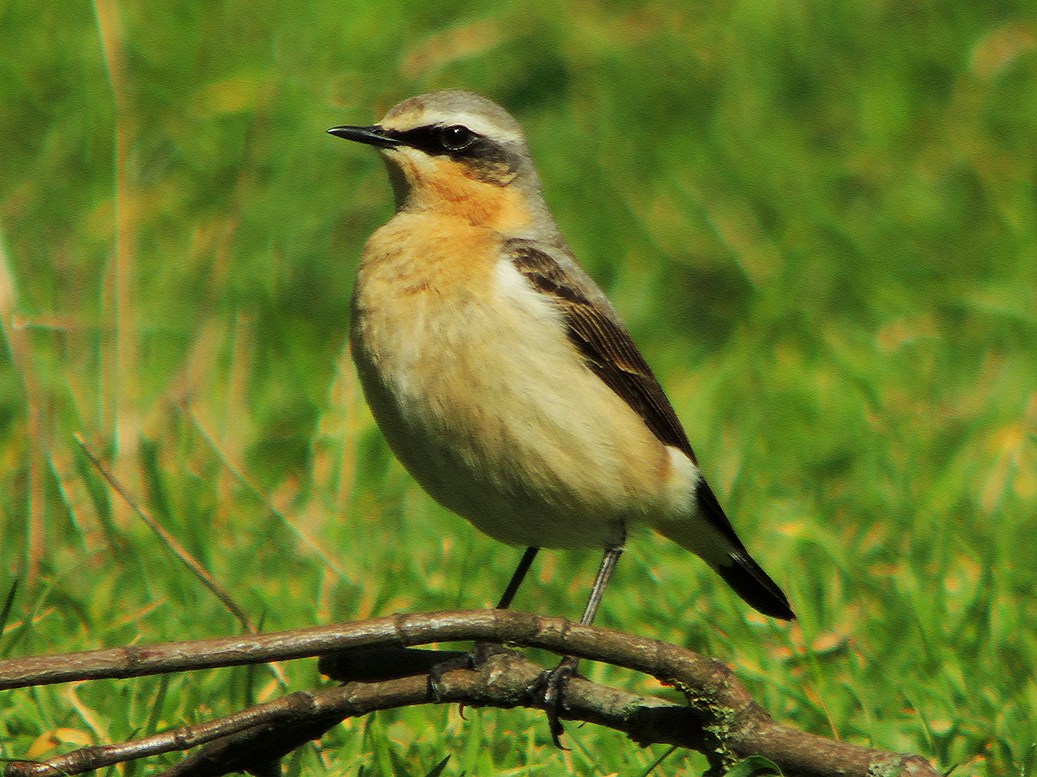
In terms of numbers, passerines were poorly represented over the past seven days. The Clifford Hill Northern Wheatears – looking very much like the ‘Greenlanders’ they surely are – had increased to at least five on 11th but had fallen back to two by 14th, while another two were found at Park Farm, Wellingborough on 11th.
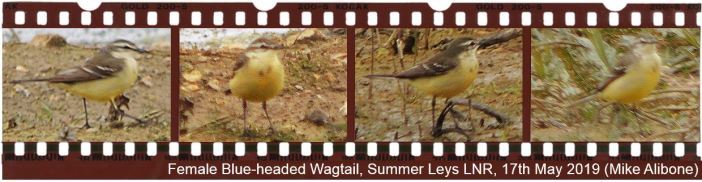
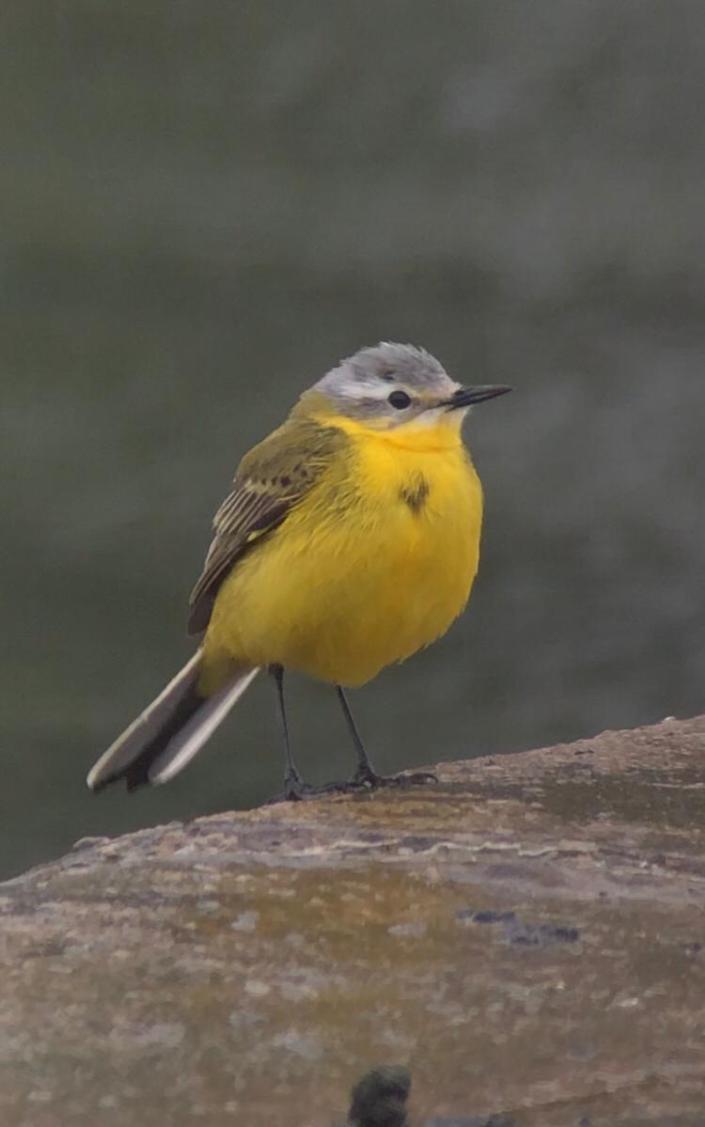
A female presumed Blue-headed Wagtail appeared on the scrape at Summer Leys on 17th, although nothing about its appearance ruled out Grey-headed Wagtail but then, with flava wagtails, there is always that nagging complication of intergrades … Two Crossbills were mobile around Hanging Houghton on the last day of the period, apart from which, things were quiet.
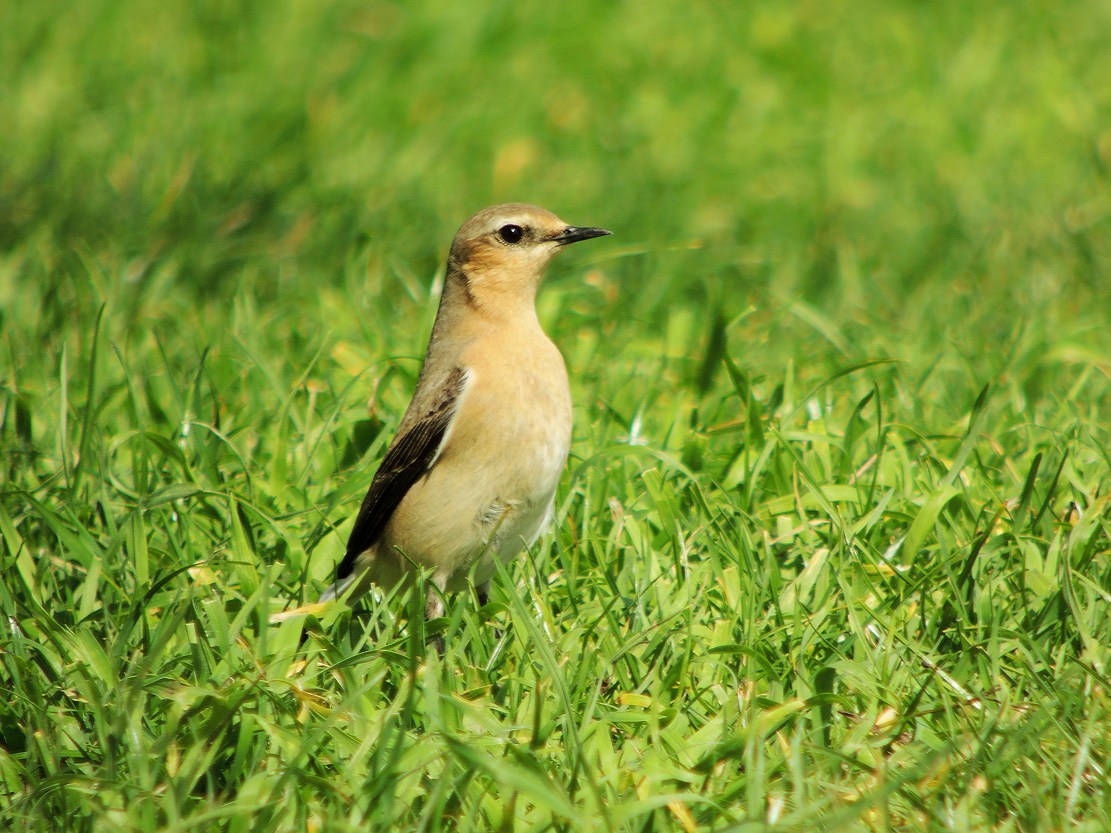
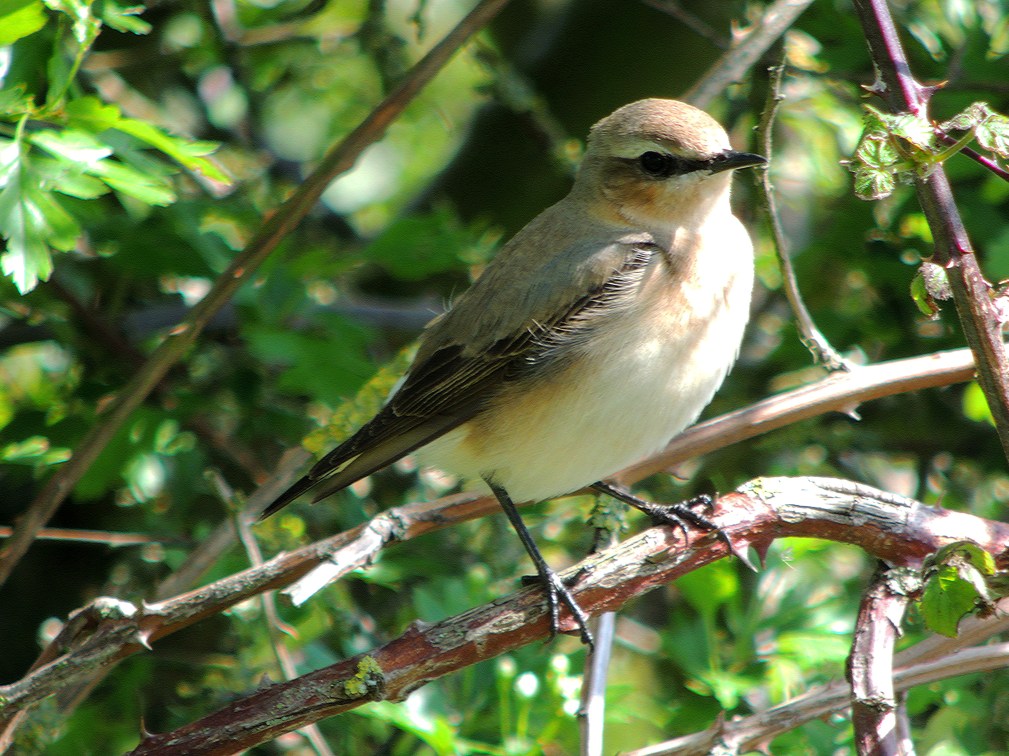
I spent some time with the Northern Wheatears at Clifford Hill GP this weekend. They were feeding around the base of a small group of trees alongside Hardingstone Dyke, which runs the full length of the southern side of the main barrage lake. Although two had been present since 9th May, there were at least five, including one male. All appeared to be of the Greenland race leucorhoa but it is, of course, not possible to say with any significant degree of certainty. Comments within captions, below.
First-summer male Northern Wheatear, Clifford Hill GP, 11th May 2019 (Mike Alibone). Brownish wings with pale fringes to coverts, along with blotchy, not clean black, ear coverts age this individual. Rich orange throat and upper breast, plus orange/buff-suffused underparts, bulky appearance and upright stance when standing and feeding, strongly suggest Greenland race, leucorhoa.Female Northern Wheatear, Clifford Hill GP, 11th May 2019 (Mike Alibone). Showing similar features to the male in terms of richness and extent of throat and colour of underparts. Upright stance and longish legs show well here.Female Northern Wheatear, Clifford Hill GP, 11th May 2019 (Mike Alibone). Same individual as above. Note diffuse dark lores.Female Northern Wheatear, Clifford Hill GP, 11th May 2019 (Mike Alibone). A different female, with sharply demarcated, solid black lores.Female Northern Wheatear, Clifford Hill GP, 11th May 2019 (Mike Alibone). Same individual as above, with underparts strongly lit by sunlight. Very long primary projection is again a good pointer toward leucorhoa.
Ringing data from Leicestershire and Norfolk indicate the majority of migrant Northern Wheatears after 30th April are ‘Greenlanders’.
In a week when local temperatures remained depressed, Britain recorded one of its coldest May Day bank holidays on record and predominantly northerly winds and rain did their best to halt migration. Undeterred by the weather, migrants continued to push through, evidenced in the main by large numbers of hirundines and Common Swifts battling against the elements, alongside a notable second wave of Black Terns and a continuing northward movement of waders.
Summer visitors recorded arriving for the first time during the past week include:
10th May – Spotted Flycatcher, Daventry CP
Still in no apparent hurry to depart, the first-summer Whooper Swan remained at Thrapston GP until at least 8th, feeding with the resident Mute Swans in surrounding crop fields. Numbers of other wildfowl were, unsurprisingly, limited for early May but the monopoly maintained by Summer Leys LNR on Garganey was at long last broken when a drake appeared at Pitsford Res on 8th-9th, while the Summer Leys drake was still present, though elusive, on 10th. Stopping off on the latter date, two female Common Scoters were well north of the dam at Pitsford Res, while the escaped female Bufflehead, described as ‘legendary’ by BirdGuides, was back at Clifford Hill GP on the last day of the period. Since she was last seen there on 2nd, her roving nature has taken her up to South Yorkshire, where she spent at least two days at Old Moor, in the Dearne Valley, before returning to Clifford Hill!
Just one Great Egret, at Stanford Res on 4th-5th, ensured this species’ continued presence in the county this week but is that it now until its return in late summer? After four Black-necked Grebes at Daventry CP, present for just one day, on 26th April, another appeared at the same site on 9th, again remaining for one day only.
Another week, another harrier – this time it was a Marsh Harrier which livened up Polebrook AF on 5th, following a Hen Harrier at the same locality last week but it was Ospreys which continued to steal the limelight. Pitsford produced multiple sightings of single birds on 4th, 7th and 10th, Hollowell yielded singles on 4th and 8th, with two there on 9th, one attracted unwanted attention from local gulls at Ravensthorpe on 8th and one was at Thrapston on 5th.
Osprey, Ravensthorpe Res, 8th May 2019 (Paul Crotty)
Wader passaged picked up more momentum after a relatively quiet period last week. Set against a backcloth of double-figure Dunlins and Ringed Plovers, scarcer species this week appeared in the form of two Avocets at Clifford Hill GP on 10th, following a run of Nene Valley occurrences earlier in the spring.
Avocets, Clifford Hill GP, 10th May 2019 (Mike Alibone)
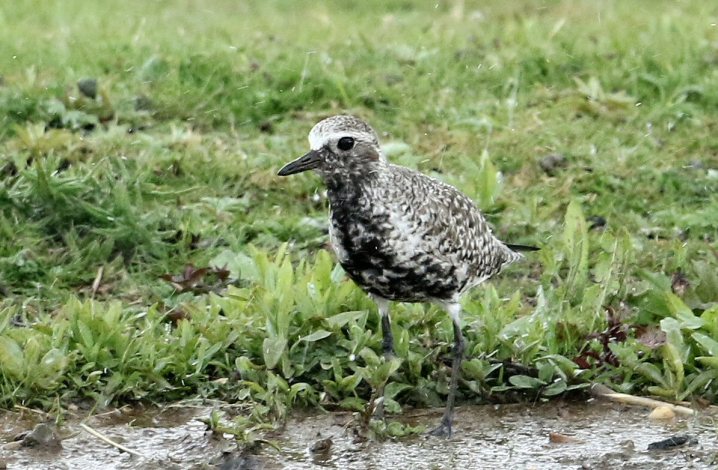
More Grey Plovers also came through, including singles at Clifford Hill GP, Hollowell Res and Summer Leys – all on 8th, followed by two flying north-east over Pitsford the next day and another at Hollowell on 10th, while single Whimbrels were seen at Stanwick GP
Grey Plover, Clifford Hill GP, 8th May 2019 (Bob Bullock)
on 4th, Ditchford GP on 9th and at both Pitsford and Clifford Hill on 10th. But it was Bar-tailed Godwits which rose to prominence during the week, with one at Summer Leys on 4th and another there, showing well at different points around the reserve, for three days from 8th.
Whimbrel, Stanwick GP, 4th May 2019 (Mike Alibone)
Eighteen flew north over Pitsford on 8th, followed by another four over the next day. Pitsford also produced the only Sanderlings of the spring so far – one over north on 8th followed by a rather showy individual on the dam the next day. Back at Summer Leys, a Wood Sandpiper dropped on to the scrape before quickly departing on 7th and another followed the same pattern the next day, similarly moving on rather sharpish. Summer Leys has developed a track record as the classic locality for spring sightings of this species over the years.
Sanderling, Pitsford Res, 9th May 2019 (Bob Bullock)
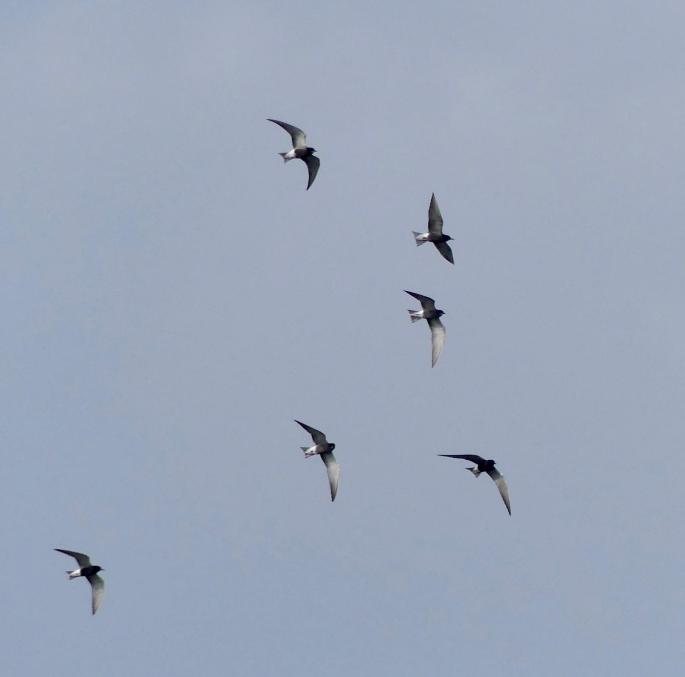
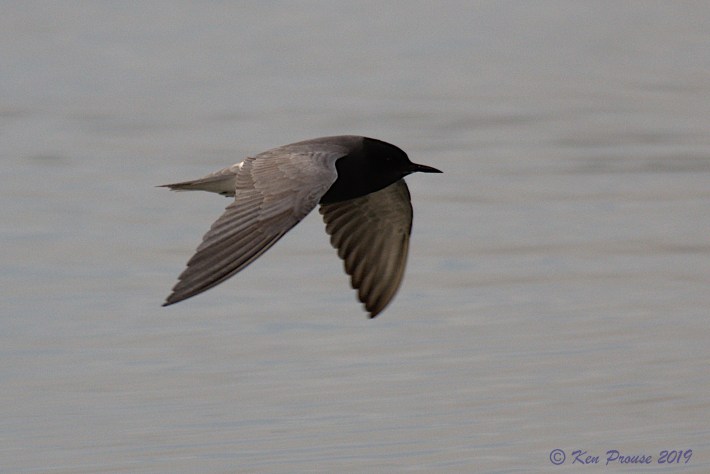
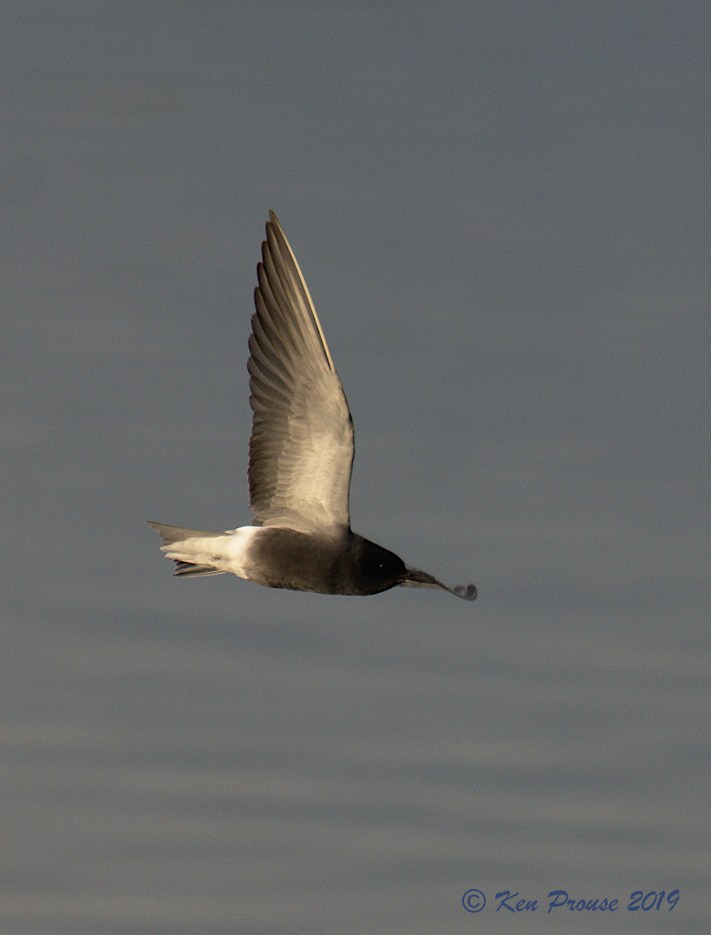
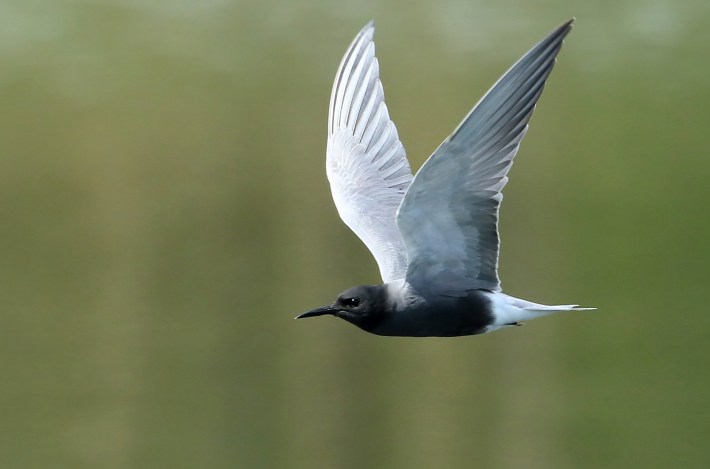
After a week without any, Black Terns were back in the spotlight, being found at ten localities, including the county’s reservoirs as well as various sites along the Nene Valley. It seems likely that more than one hundred and twenty were recorded, the largest flocks of which were twenty at Stanwick GP on 7th, sixteen at Pitsford Res on 8th and twelve at Stanford Res on 7th.
Black Terns, Stanford Res, 7th May 2019 (Chris Hubbard)Black Tern, Earls Barton GP, 8th May 2019 (Ken Prouse)Black Tern, Earls Barton GP, 8th May 2019 (Ken Prouse)Black Tern, Stanford Res, 8th May 2019 (Steve Nichols)Black Tern, Stanwick GP, 10th May 2019 (Bob Bullock)Black Tern, Stanwick GP, 10th May 2019 (Bob Bullock)
Two Little Terns also made the news – one reported at Ravensthorpe Res on 8th, the other stopping off briefly at Summer Leys the following day. Arctic Terns continued to pass through in small numbers throughout the week, with single-figure counts from eight localities, the highest being seven at Hollowell Res on 8th.
Little Tern, Summer Leys LNR, 9th May 2019 (Bob Bullock)
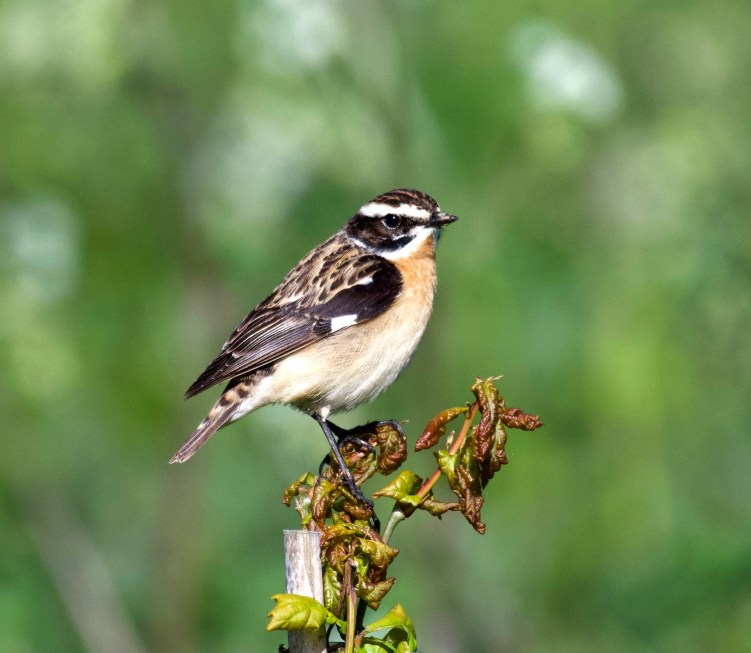
Passerines were thin on the ground. One of the two Ring Ouzels remained at Newnham Hill until 6th and a rather lean serving of Whinchats included singles at Earls Barton GP and Sywell CP on 4th and two at Clifford Hill GP on 9th-10th.
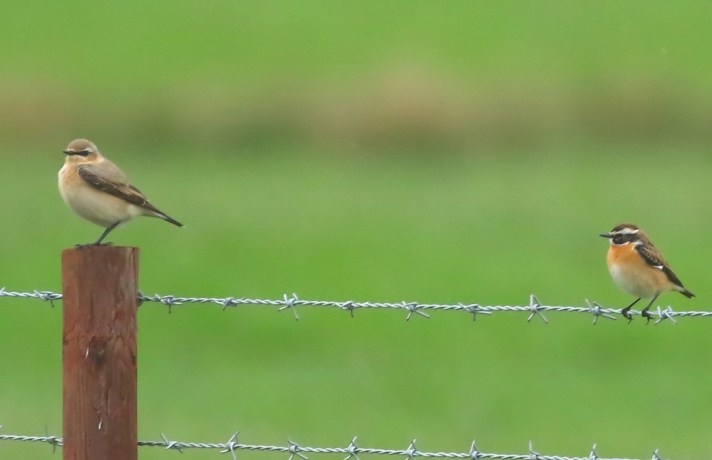
Male Whinchat, Sywell CP, 4th May 2019 (Ian Hicks)Male Whinchat, Clifford Hill GP, 9th May 2019 (Bob Bullock)Northern Wheatear and Whinchat, Clifford Hill GP, 9th May 2019 (Bob Bullock)
Northern Wheatears were still to be found in select locations. A single female was at Borough Hill on 5th, another lingered at Summer Leys from 5th to 8th, a male was found near Glapthorn on 6th and two were at Clifford Hill GP on 9th – this number having doubled by the following day. The smart male ‘Channel’ Wagtail, found at Stanford Res as long ago as 23rd April, has remained on site on the Leicestershire side of the reservoir ever since, venturing into Northamptonshire again on 10th.
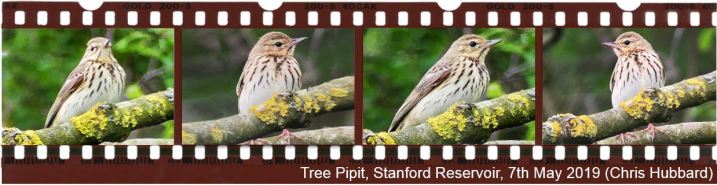
Male ‘Channel’ Wagtail, Stanford Res, 9th May 2019 (Chris Hubbard)Tree Pipit, Stanford Res, 7th May 2019 (Chris Hubbard)Tree Pipit, Stanford Res, 7th May 2019 (Chris Hubbard)
Stanford also produced a Tree Pipit on 7th and, for a change, it wasn’t simply a fly-over – unlike the vast majority of reports of this former widespread breeder, now sadly reduced to scarce migrant status.
Following the age and sex analysis (or ‘speculation’ may now be a more apt term) of last week’s Newnham Hill Ring Ouzels, I received some excellent images from Bob Bullock of one of the two females. This was the first of the two to be found, on 29th April – the one without the heavily-marked throat.
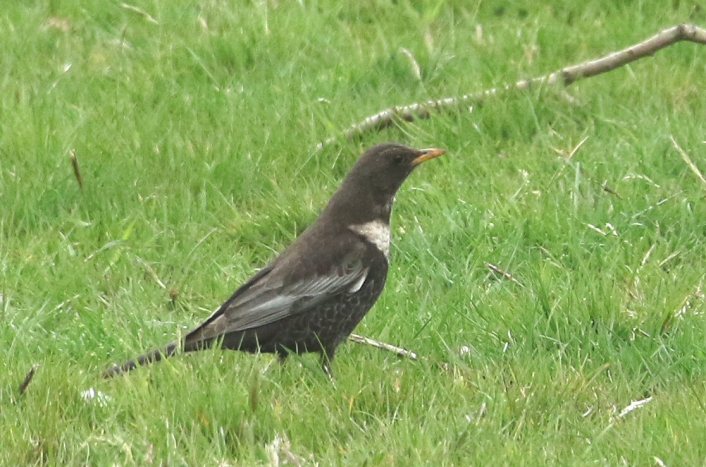
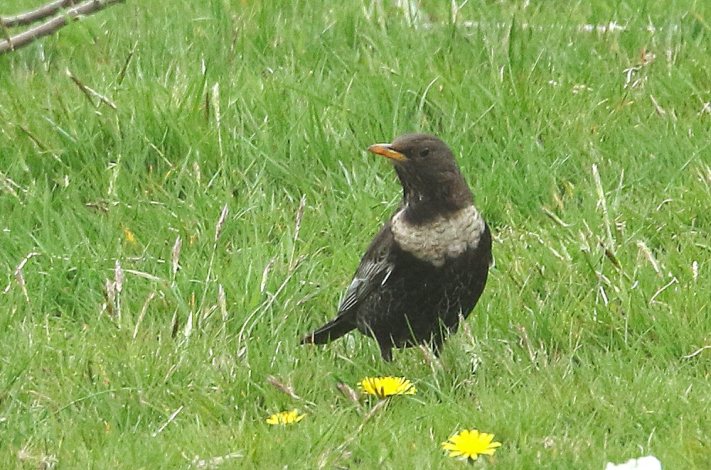
Although photos can be deceptive, the first of the three images, below, depicts a dark-looking individual, which appears to show a moult limit in the greater coverts of the left wing, i.e. the outer coverts have broad pale (juvenile) edges and the inners appear to be new, adult-type feathers. Ageing from this image in isolation would put the bird into the first-summer court. The general darkness of the plumage and the relative prominence of the whitish bib, ending in a point at the sides, would suggest a male.
Female/first-summer male Ring Ouzel, Newnham Hill, 29th April 2019 (Bob Bullock)
However, the second image, of the other side of the bird, appears to show some uniformity across the greater coverts, the bird appears slightly browner and this would point to adult female – so that’s a puzzle.
Female/first-summer male Ring Ouzel, Newnham Hill, 29th April 2019 (Bob Bullock)
Head-on, the third image highlights the bib, which is really rather dull and contains plenty of dark scales – probably more than would be expected in a first-summer male. So, still likely to be a female, then and probably adult as the bib looks to be adult in its extent and prominence.
Female/first-summer male Ring Ouzel, Newnham Hill, 29th April 2019 (Bob Bullock)
Tricky stuff – comments welcomed! Many thanks to Bob for his fine images.
Last week’s prolonged easterly airstream unfortunately broke down and gave way to winds from a westerly quarter, ultimately turning northerly at the week’s end. As a result, and in stark contrast to the last review period, passage migrants took a tumble in numbers, the heady flow of godwits and Little Gulls dried up and there was only one ‘first-time’ summer visitor reported.
Summer visitors recorded arriving for the first time during the past week include:
3rd May – Whinchat, Duston (Northampton)
Making it into May, the first-summer Whooper Swan was still footloose at Thrapston GP on 2nd. This species does not form pair bonds until two years old, so it’s clearly in no rush to go anywhere … just yet. Also at the same site, at least two of the three Pink-footed Geese were still with the Greylag flock on 30th. The county’s only Garganey to date this year was the pair at Summer Leys, where they appeared settled until 30th, at least.
Drake Garganey, Summer Leys LNR, 30th April 2019 (Adrian Leybourne)
Not even the slightest hint of adrenaline was associated with the finding of a Bufflehead at Clifford Hill GP on 2nd. Yes, after almost a year’s absence, ‘Buffy’ was back. Since her initial discovery, at Clifford Hill GP in June 2017, this itchy-footed, attention-seeking female on the run from captivity has been doing her level best to tease birders the length and breadth of the country. Spring 2019 alone has seen her visiting Baston, Lincolnshire (30th March), Ouse Washes, Cambridgeshire (2nd-13th April), Potteric Carr, South Yorkshire (18th April), Ouse Washes again (19th April), Hanningfield Reservoir, Essex (21st April), Holme Pierrepont, Nottinghamshire (23rd April) and Fairburn Ings, West Yorkshire (27th-29th April).* Quite an amazing series of movements – assuming just one bird is involved.
Just three Great Egrets were present in the county this week, this total comprising singles at Daventry CP on 27th, Thrapston GP on 30th and Stanford Res on 1st. Following the recent good winter locally, another Hen Harrier, a ‘ringtail’, was seen at Polebrook AF on 29th but more commonly encountered nowadays are Ospreys, singles of which were seen at Pitsford Res on 28th and 29th, Hollowell Res on 30th, Daventry CP and Foxholes Fisheries (Crick) on 1st and Thrapston GP on 2nd and 3rd. Continued successful breeding, resulting in a growing population over the border at nearby Rutland Water, has led to a diaspora, with a number of pairs now having become established in the region around, but away from, Rutland. In this respect, we can look forward to this unique and magnificent raptor being more frequently encountered locally with every passing year.
Waders this week were in short supply. Whimbrel numbers nudged three, with singles over Boddington Res and at Summer Leys on 27th and again at the latter locality on 30th. We scraped just one Black-tailed Godwit – at Ditchford GP on 27th – while Summer Leys produced the only Bar-tailed Godwits, with singles there on 27th, 2nd and 3rd.
The trickle of Arctic Terns continued this week, most occurring on 27th, upon which twos were at Clifford Hill GP, Hollowell Res and Stanford Res, one was at Pitsford Res and up to eighteen were at Boddington Res. Stanford produced a loner on 30th and two were at Pitsford on 3rd. Meanwhile, the locally roving pair of adult Mediterranean Gulls cruised east over Summer Leys on 28th.
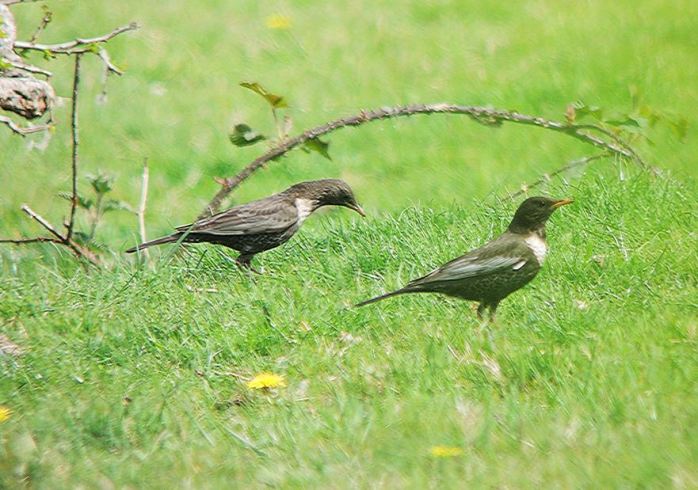
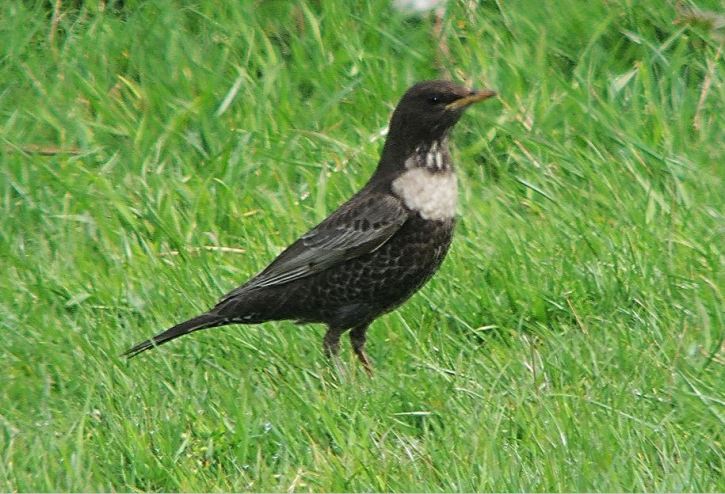
Passerine passage enjoyed a bit of a revival compared to last week’s low numbers and rather narrow species mix. This week’s star attraction arrived in the shape of two rather classy female Ring Ouzels, which graced Newnham Hill on 30th, following one there on the previous day and one remaining until 2nd.
Ring Ouzels, Newnham Hill, 30th April 2019 (Mike Alibone)
A ‘female-type’ Black Redstart was reported from St Peter’s Church at Deene on 28th. Said to have been present for several days, it was nowhere to be seen on 29th. A Common Redstart was at Blueberry Farm, Maidwell on 27th and single Northern Wheatears were Summer Leys on 28th, Harrington AF on 29th-30th and at Moulton on 30th and a male Whinchat was found at Duston (Northampton) on 3rd.
Female Northern Wheatear, Moulton, 30th April 2019 (Darryl Sutcliffe)
The rather smart ‘Channel’ Wagtail at Stanford Res lingered into the new week but wasn’t seen again after 27th, while the number of White Wagtails totaled just two, at Hollowell Res on 27th and at Summer Leys on 3rd.
The discovery by Chris Coe, yesterday, of a Ring Ouzel at Newnham Hill, a locality which has, in recent years, established itself as a regular spring stop-off site for this species, sparked some debate about its age and sex.
It was still present this morning and Dave Warner located another one accompanying it, both birds remaining until at least late afternoon. While frequently retiring to the cover of one of the hill’s many hedgerows, both could often be seen feeding out on the open grassy slopes.
The news went out initially as a female being present on the hill but images released later suggested to some, at least, that it was a male, due to the extent of the white bib and the general ‘darkness’ of the plumage.
Female Ring Ouzel, Newnham Hill, 30th April 2019 (Mike Alibone). Note some minor streaking on the neck and throat.
Ring Ouzel sexing is oversimplified by many publications, which suggest that the difference between the sexes is as stark as it is in Blackbirds, i.e. the male is jet black and the female is brown. In reality, it is not that simple and the difference in the ground colours between the sexes is far less marked than it is in Blackbirds. This was highlighted by Shirihai & Svensson in their publication Handbook of Western Palearctic Birds, which also includes many useful photographs to illustrate the point.
Female Ring Ouzel, Newnham Hill, 30th April 2019 (Mike Alibone). Note heavier neck streaking.
In truth, male Ring Ouzels are never as ‘black’ as male Blackbirds and females are often very dark brown and can even appear almost blackish in the field. In some instances, females can be almost indistinguishable from males and when you throw first-summer birds into the mix, then things become more complicated, with first-summer males often closely resembling adult females to the point of being almost indistinguishable.
Female Ring Ouzel, Newnham Hill, 30th April 2019 (Mike Alibone)
Typical adult males normally look obviously black and will have a striking, contrasting, ‘clean’ white bib, which ends in a point at each side. Adult females can ‘appear’ really quite blackish and can have the same extent of bib but it is not usually gleaming white, being sullied with brownish scales and/or with smudgy brownish bleeding into it from the breast, to some degree. The sides of the bib do not end in a point and they are rounded or even square-ended. First-summers of both sexes, if seen well or in the hand, should show a moult limit in the greater coverts, i.e. the unmoulted outer few have broad (depending on wear) pale fringes, compared to the inners, which are more narrowly-fringed or largely plain. Adults have the same narrow fringes across the greater coverts, with the difference not so marked as it is in first-summers.
Female Ring Ouzel, Newnham Hill, 30th April 2019 (Mike Alibone). Illustrates just how ‘brown’ these individuals are.
The Newnham Hill birds are both adult females. When seen well, their plumage is dark brown, not black, their bibs are ‘dirty’ and do not end in sharp points at the sides and the greater covert fringes are all of even width.
I was lucky to catch up with them both today and pleased to be able to watch them in such a nice setting. With its far vistas, plentiful cover and easily observable open areas, Newnham Hill would appear to offer more to the birder than nearby Borough Hill, which has become more popular with the general public and now suffers massively from human disturbance.
 This species is declining as a result, in part, of uncontrolled netting of migrating birds, particularly in Egypt, where Quail trapping is now taking place on an unsustainable, commercial scale. In Europe agricultural intensification has led to the loss of rough grass and uncultivated land and an increase in the use of herbicides and insecticides, which has led to a reduction on the availability of weeds, seeds and insects. In Europe the population size is estimated to be fluctuating and Quail is on the IUCN Red List of Threatened Species (BirdLife International 2018, 2019).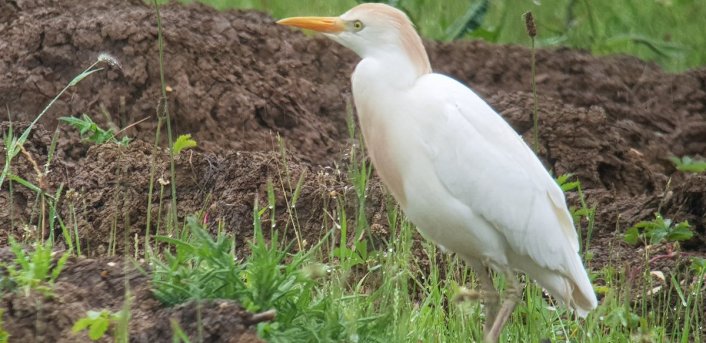





 The period’s weather fell under the influence of a westerly airflow, which brought intermittent sunshine and showers and, as it happens, very little change to the local birdscape. Topping the charts this week were three Cattle Egrets at Stanwick, all resplendent in summer plumage … and one up on last week’s total.



 Another fine, largely dry week commenced with the convergence of two pressure systems over the central part of the country, producing only a few short-lived, local showers on northerly winds. Though fairly quiet, undoubtedly bird of the week was a Hoopoe, which stayed long enough to pose briefly for photos for just one lucky, right place, right time photographer …




 A fine, dry week saw the pace of migration slow somewhat, although winds in the latter half were a keen north-easterly, turning to a strengthening easterly at the very end of the period. With all the summer visitors now in, speculation is running high on what might be found over the forthcoming two weeks.





 In a week when local temperatures remained depressed, Britain recorded one of its coldest May Day bank holidays on record and predominantly northerly winds and rain did their best to halt migration. Undeterred by the weather, migrants continued to push through, evidenced in the main by large numbers of hirundines and Common Swifts battling against the elements, alongside a notable second wave of Black Terns and a continuing northward movement of waders.
 Summer visitors recorded arriving for the first time during the past week include:
 Still in no apparent hurry to depart, the first-summer Whooper Swan remained at Thrapston GP until at least 8th, feeding with the resident Mute Swans in surrounding crop fields. Numbers of other wildfowl were, unsurprisingly, limited for early May but the monopoly maintained by Summer Leys LNR on Garganey was at long last broken when a drake appeared at Pitsford Res on 8th-9th, while the Summer Leys drake was still present, though elusive, on 10th. Stopping off on the latter date, two female Common Scoters were well north of the dam at Pitsford Res, while the escaped female Bufflehead, described as ‘legendary’ by BirdGuides, was back at Clifford Hill GP on the last day of the period. Since she was last seen there on 2nd, her roving nature has taken her up to South Yorkshire, where she spent at least two days at Old Moor, in the Dearne Valley, before returning to Clifford Hill!







 Last week’s prolonged easterly airstream unfortunately broke down and gave way to winds from a westerly quarter, ultimately turning northerly at the week’s end. As a result, and in stark contrast to the last review period, passage migrants took a tumble in numbers, the heady flow of godwits and Little Gulls dried up and there was only one ‘first-time’ summer visitor reported.