Rarity Round-up, 9th to 15th September 2017

More North Atlantic lows, with tightly-packed isobars, ensured a westerly airstream for the whole week. One of these – Storm Aileen – hit the country overnight on 12th, resulting in strong westerly gales delivering a number of inland seabirds, for both Northamptonshire and the UK as a whole. Topping the bill locally was the county’s eleventh-ever Sabine’s Gull, at Daventry Country Park.

Observed only on 9th, just one Garganey was on show briefly at Pitsford Res this week and no other notable wildfowl were reported. Picked up in Duston on 15th, a storm-driven Manx Shearwater was taken into care overnight and, the following morning, transported to a specialist hospital in Swansea for further care prior to its intended release following several days of rehabilitation. Further associated with Aileen’s blow, two juvenile Gannets were reported flying east over Daventry CP, late in the afternoon of 15th. This news appeared on some birding information services and it would be useful to know who the observers were … Meanwhile, back at Pitsford – currently the best habitat for waders and stuff in general for miles around – the long-staying Great White Egret remained all week, while the Fawsley Park Osprey remained from last week, finally departing south on the morning of 10th.

Juvenile Osprey, Fawsley Park, 9th September 2017 (Stuart Mundy)

Three more Ospreys included singles at Stanford Res and flying east near Aldwincle – both on 9th – and one over Hollowell Res on 13th and last week’s Marsh Harrier was also seen again at Stanford Res on 9th.
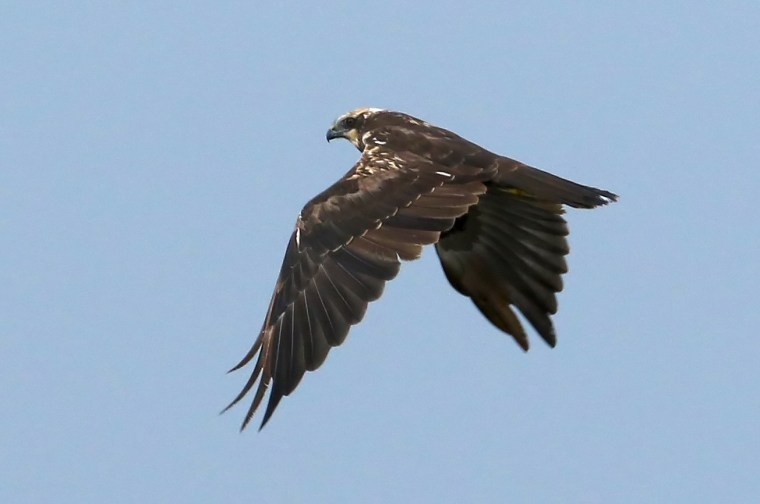
Marsh Harrier Stanford Res, 9th September 2017 (Bob Bullock). This individual has recently renewed all except its outer primaries (which are faded and heavily worn) and one of its secondaries, which ages it as a second calendar year or older – juveniles still having a full set of new feathers.

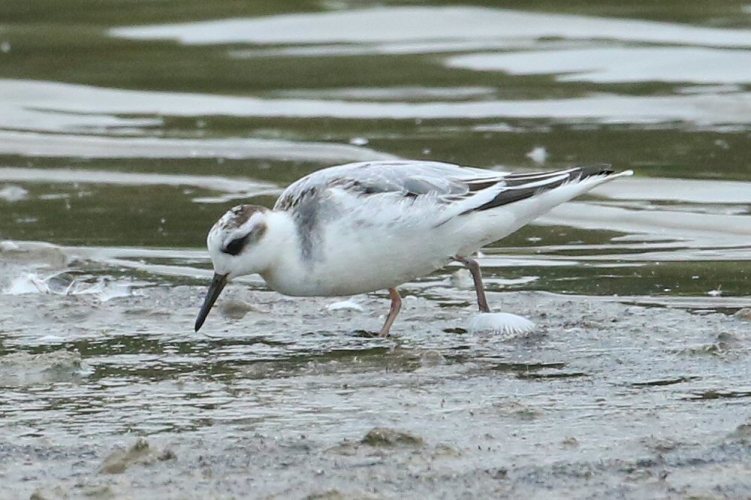
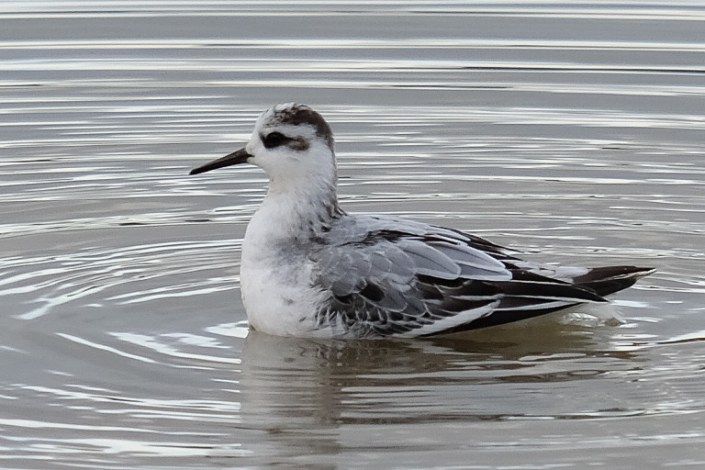
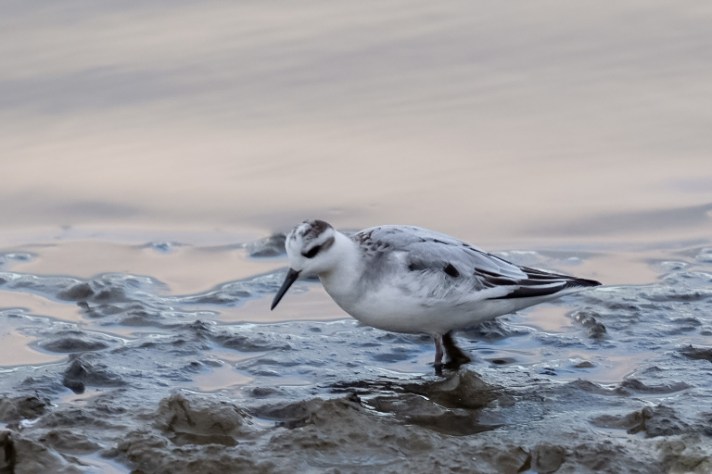
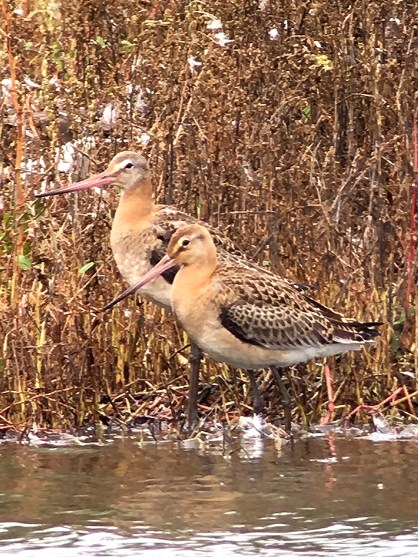
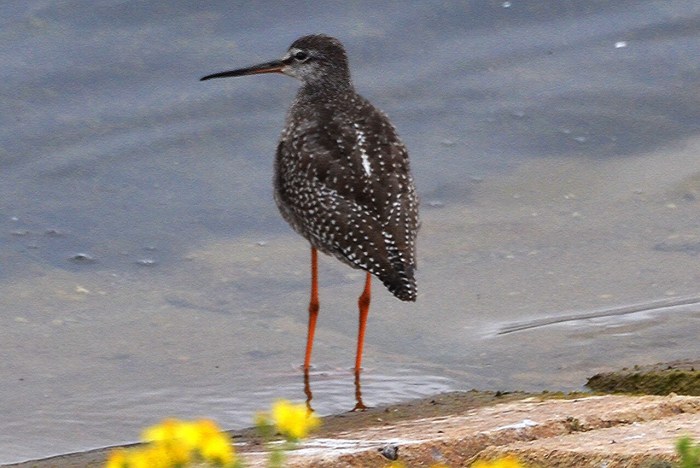
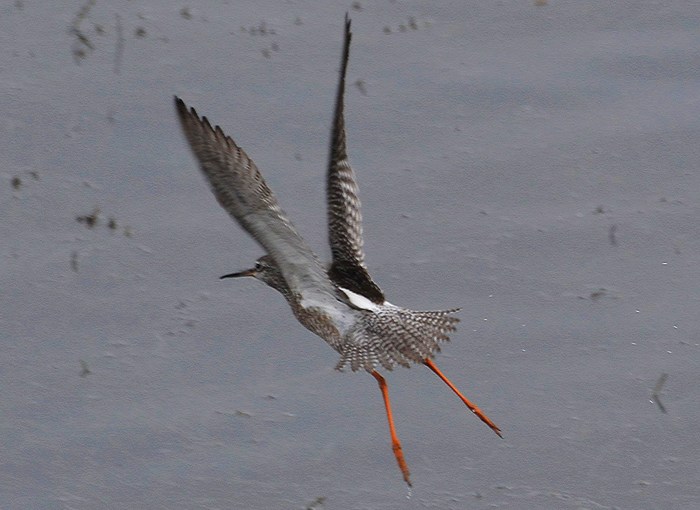
Waders: it’s what autumn’s all about, isn’t it? Well, at least for September, anyway. While we’re still awaiting the big numbers and the broader species spectrum, the first Grey Plover of the season was seen flying over Pitsford’s Scaldwell Bay on 14th, while the same site continued to host between one and three Black-tailed Godwits from 9th to 14th and another visited Stanford Res on 9th. In the meantime, Pitsford’s juvenile Spotted Redshank had managed to chalk up twelve days’ stay by the end of the week. Which brings us to another species proving thin on the ground this autumn: Wood Sandpiper. The second of the season was found at Ravensthorpe’s small, muddy north end on 9th but it failed to show the next day. The reverse was true, though, for another storm-driven thing, a first-winter Grey Phalarope, which appeared at Hollowell Res after Aileen’s gales on 13th and performed well for all comers until the week’s end – although it could sometimes be a little elusive.

First-winter Grey Phalarope, Hollowell Reservoir, 13th September 2017 (Cathy Ryden)
First-winter Grey Phalarope, Hollowell Reservoir, 16th September 2017 (Bob Bullock)

The last one in Northants was in 2014. Hollowell also produced four Turnstones, which dropped in just after the discovery of the phalarope, only to disappear very quickly.

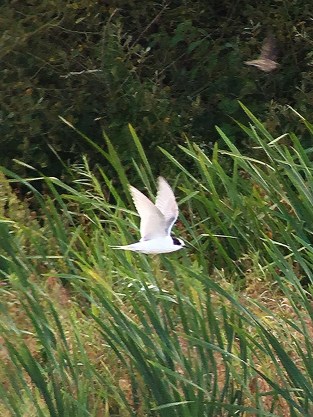
Juvenile Arctic Tern, Stanford Res, 13th September 2017 (Chris Hubbard)

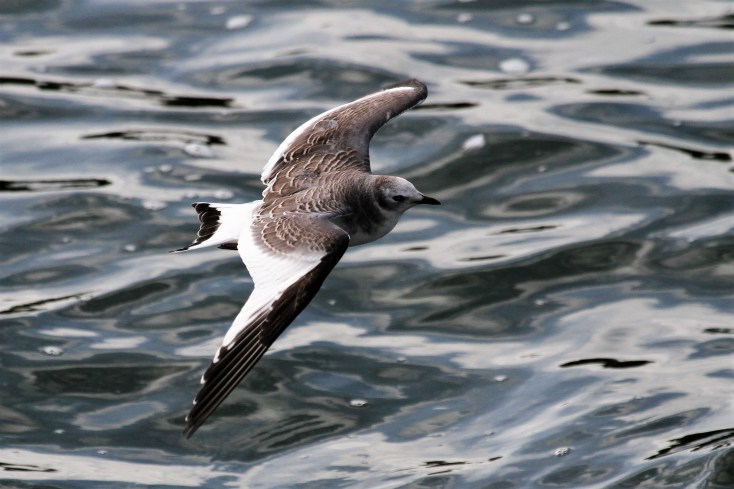
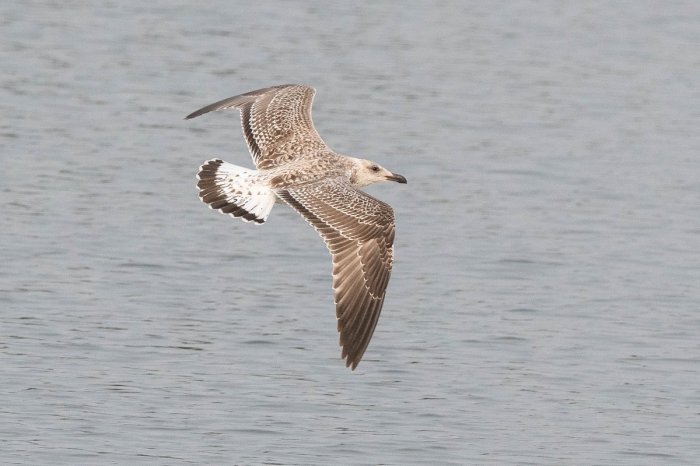
The star tern of the week came in the form of two juvenile Arctic Terns, one at Stanwick GP on 13th and the other at Stanford Res from 13th to 15th. However, it’s not very often the true star of the week is a gull but even the most convicted laridophobe could not fail to appreciate the exquisite beauty of the juvenile Sabine’s Gull which graced Daventry CP with its presence for three days during the latter half of the week. Thought by some to be in ill health, it made trips away from the reservoir on a number of occasions, finally disappearing for good after 15th. Being the only one lingering inland after Aileen’s big blow, it proved to be a popular attraction for birders from much further afield than Northants.
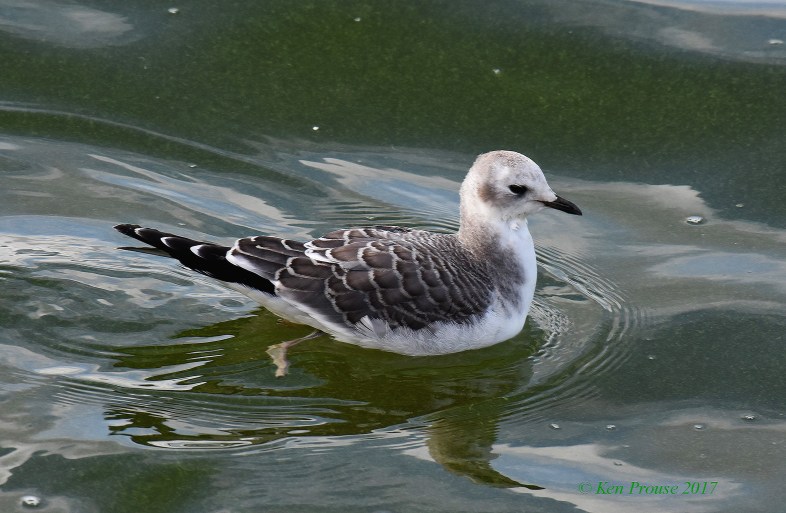
Juvenile Sabine’s Gull, Daventry CP, 14th September 2017 (Ken Prouse)

All of this week’s other gulls were, of course, completely overshadowed but do not escape without mention. Up to two first-winter Mediterranean Gulls continued to be seen on Stanwick’s Visitor Centre Lake between 9th and 12th and one visited nearby Irthlingborough Lakes & Meadows at Ditchford GP on 10th.

First-winter Mediterranean Gull, Stanwick GP, 11th September 2017 (Steve Fisher)

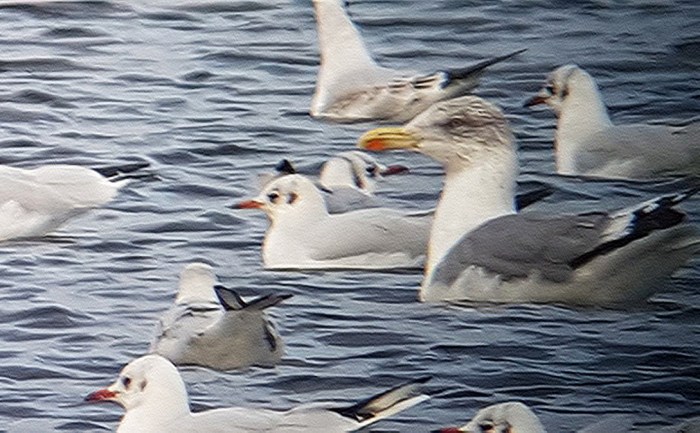
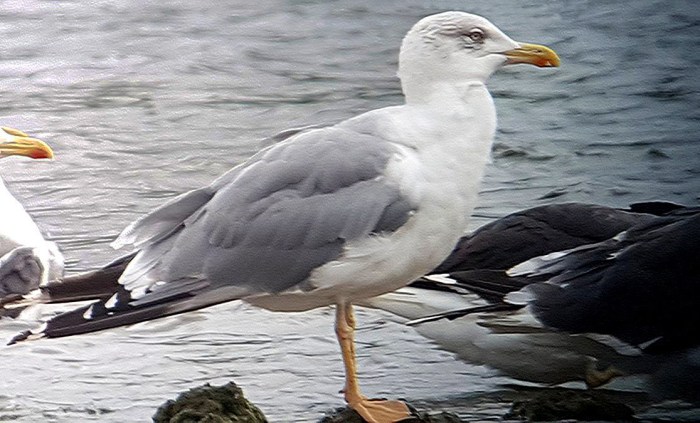
Perhaps unsurprisingly, for the second week running, Stanwick’s putative adult Azores Gull put in another tantalisingly brief appearance there on 15th. Will it return to stay long enough to be nailed? The same site held fourteen Yellow-legged Gulls on 11th but the only other ‘YLGs’ were at Pitsford Res, where there was one on 9th and two on 13th and at Ravensthorpe Res on 10th. Stanwick also produced a first-winter Caspian Gull on 11th and single adults visited both Daventry CP and Naseby Res on 13th.
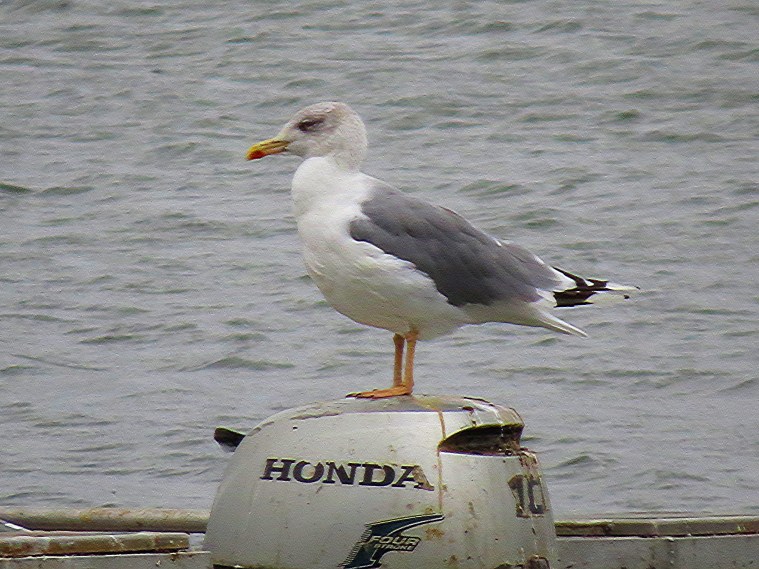
Adult Yellow-legged Gull, Ravensthorpe Res, 10th September 2017 (Adrian Borley)

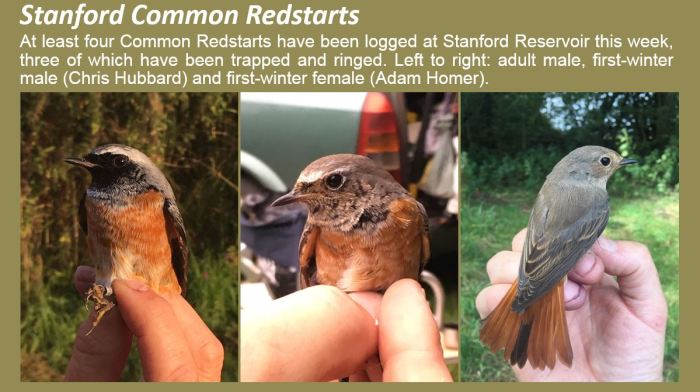
With all the attention justly focussed on wetlands this week, it would appear that passerines have been largely forgotten, but the autumn run of Common Redstarts continued and so did the ringing, with two trapped and ringed at Stanford Res on 9th, followed by three more there the next day (two ringed) and a male was trapped and ringed at Southwick on 15th.

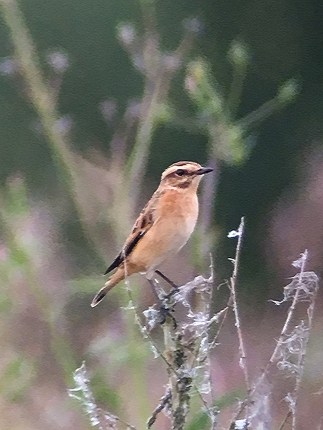
Juvenile Whinchat, Pitsford Res, 12th September 2017 (Doug Goddard)

Fewer Whinchats were recorded in comparison to last week, with one at Pitsford Res on 10th-11th being joined by another on 12th, while one was at Hollowell Res on 15th.

Grey Phalarope at Hollowell

Anticipation was running high among local birders when Storm Aileen made landfall in the UK on Tuesday, with the strong westerly blow continuing into the early part of Wednesday. The resultant winds, 70 mph in some areas, were already producing storm-driven seabirds along the western seaboard and the scene was set for discoveries further inland.

Wednesday, therefore, called for an early start and a reservoir tour was clearly in order, commencing at Pitsford dam. Unfortunately, Pitsford delivered nothing unusual – neither did Naseby, Welford, Sulby or Stanford.

I was beginning to run out of steam by the time I reached Hollowell and decided on a quick, long-distance overview of the northern and central parts of the reservoir from the lay-by on the A5119. And there it was, apparently the only wader there at the time, an animated speck, busily feeding along the shoreline of the Guilsborough Bay Point.

I quickly made my way to the point and, after putting the news out, started to watch and video it, keeping a safe distance so as not to disturb it. I needn’t have bothered. I was soon joined by Cathy Ryden and we were then dismayed to witness a crew of noisy young rowers cruising alarmingly close to the phalarope, at which point it was spooked and promptly vanished. Fortunately, Cathy relocated it later in the afternoon and it remained on site until at least mid-morning today.
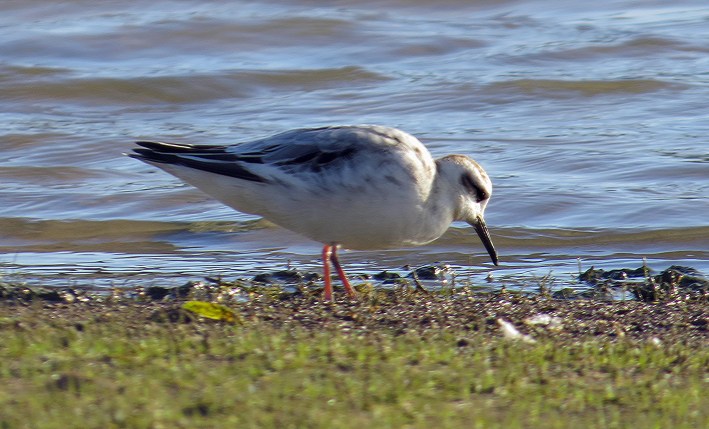
First-winter Grey Phalarope, Hollowell Res, 13th September 2017 (Cathy Ryden)
First-winter Grey Phalarope, Hollowell Res, 15th September 2017 (Cathy Ryden)
First-winter Grey Phalarope, Hollowell Res, 15th September 2017 (Jonathan Cook)

Part of a national influx, this is the first Grey Phalarope in Northants since the relatively long-staying Pitsford individual in autumn 2014 and prior to that, there was one in 2011. There have been thirty-three previous records. As result of Aileen, many have been recorded across the UK during the past few days, although most have been seen at coastal locations.

Many thanks to Cathy Ryden and Jonathan Cook for supplying images,

Wrecked: Manx Shearwater in Duston

Another victim of Aileen

Found exhausted in Duston yesterday, a Manx Shearwater was picked up and taken to the local vets. Not knowing the best course of action to take, they contacted Jim Murray who, in turn contacted Dave James for further advice. An initial plan to release it in Northants was quickly deemed inappropriate and subsequently ditched.

Manx Shearwater, in care, Northamptonshire 15th September 2017 (Jim Murray)

Fortunately, it survived overnight and JM today set out to take it took it to the Pembrokeshire coast, where the plan was to meet up with the Pembrokeshire Sea Bird Rescue Society to pass it over to them for further care prior to a hopefully successful release. On the way over, PSBRS recommended taking it to a specialist wild bird hospital near Swansea, which then became the revised destination.

After its admission to the hospital the prognosis appears good, with the hospital confident of the bird’s continued survival with a release planned after a few days. Apparently, Northants is the furthest point away the hospital has ever received a seabird from. Further good news is eagerly awaited.

This individual was not alone in its finding itself inland, presumably as a result of Storm Aileen’s big westerly blow on 12th-13th September. Other Manx Shearwaters were found in inland counties, e.g. Cambridgeshire, London area and up to wrecked birds 300 are being treated and released in Somerset http://bbc.in/2y5HeN5

Many thanks to Dave James and Jim Murray for providing details.

Wednesday 13th September. In the wake of Storm Aileen it was difficult to believe no displaced seabirds would have occurred in Northants. On cue, then, a juvenile Sabine’s Gull arrived at Daventry Country Park at 16.30 and was picked up straight away by Gary Pullan as it circled the northern end of the reservoir.

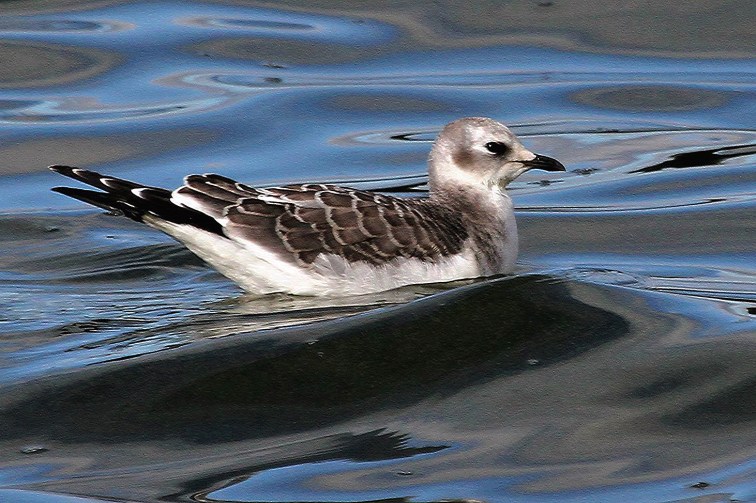
It soon settled down and spent the next two days in the vicinity of the dam, occasionally flying off north but habitually returning again after only short periods of absence. It is still present today (15th September).

First recorded as recently as 1987, it’s a major rarity in Northants with only ten previous records, in 1987 (5), 1993, 1997, 2007, 2008 and 2010, all of which have been in September or October.

Juvenile Sabine’s Gull, Daventry CP, 14th September 2017 (Alan Coles)

Rarity Round-up, 2nd to 8th September 2017

The weather turned rather more unsettled during this first week of September and there was a distinct southerly bias to the wind direction during the first half. Unfortunately, this originated from North Atlantic lows rather than Eastern European highs which, no doubt, would have been more productive from a migrational perspective.

Up to two Garganeys remained at Pitsford Res until at least 5th, with a belated report of two Common Scoters, including an adult drake, in Scaldwell Bay there on 1st September. Pitsford also hung on to at least one of its two Great White Egrets throughout the week. In addition to the now expected Osprey sightings in the north of the county at Stanford Res and nearby Welford Res, where singles were seen on 2nd, a showy – though wide-ranging – juvenile was discovered on 4th at Fawsley Park Lakes, remaining in the vicinity until the week’s end.

Juvenile Osprey, Fawsley Park, 5th September 2017 (Ian Dobson)
Juvenile Osprey, Fawsley Park, 6th September 2017 (Ken Prouse)

The only other notable raptor was a Marsh Harrier which visited Stanford Res on 7th and again on 8th, although it had probably been in the area since 1st.

Juvenile Icelandic Black-tailed Godwits, Stanford Res, 8th September 2017 (Chris Hubbard)

Against a rather thin backcloth of commoner waders, Black-tailed Godwits continued to move through in small numbers. One was at Stanford from 2nd to 6th, with four present there on 8th and one was at Pitsford from 3rd to 8th, with two present on 4th. A juvenile Spotted Redshank at the latter locality, from 4th until the week’s end, was only the second this year, in keeping with this species’ current scarce status in the county. Long gone are the days – and we’re talking ‘70s/’80s – when double-figure flocks were present for weeks at a time on the late autumn mud at Pitsford, when low water levels like this year’s were an annual event.

Juvenile Spotted Redshank, Pitsford Res, 4th September 2017 (Stuart Mundy)

Pitsford produced the only tern of the week, a Black Tern, on 3rd. It didn’t linger. Surprisingly few Mediterranean Gulls – normally a regular feature of early autumn – have been reported so far this year and just two first-winters on Stanwick’s Visitor Centre Lake on 7th-8th were the only ones during the period. Which brings us neatly to potential ‘bird of the week’.

Putative adult Azores Gull, Stanwick GP, 8th September 2017 (Steve Fisher)

For just a few minutes on the morning of the 8th, this same lake held a putative Azores Gull. This bird did not have a full winter hood and so did not readily resemble the returning adult from 2013, 2014 and 2015, accepted as the second British record by BBRC. It is said that the extent of the winter head streaking can vary from year to year in the same individual, so is it this returning adult or a lookalike Yellow-legged Gull?

Adult Yellow-legged Gull, Stanwick GP, 7th September 2017 (Steve Fisher)

Talking of which, there were seven at Stanwick on 4th and 7th and smaller numbers elsewhere, including six at Pitsford on 5th and between one and three at Hollowell and Boddington Reservoirs and Daventry CP. Stanwick, Daventry and Hollowell also produced single Caspian Gulls, with first-winters on 4th and 7th and an adult on 8th, respectively.

First-winter Caspian Gull, Stanwick GP, 4th September 2017 (Steve Fisher)

The autumn run of Common Redstarts continued, much to the delight of the ringing fraternity, with the Stanford Ringing Group trapping one on 2nd and two more on 7th, with another seen there on 5th. Harrington AF ringers trapped one on 4th, one was seen there on 7th and another was found at Pitsford Res on 2nd.

Whinchat, Sywell CP, 5th September 2017 (Alan Francis)
Whinchat, Stanford Res, 4th September 2017 (Chris Hubbard)

More Whinchats arrived, with Harrington AF producing up to three on 2nd-3rd, Stanford held two between 5th and 8th, Pitsford produced up to two between 6th and 8th, Sywell CP two on 5th, while one was near Bugbrooke on 4th. Like last week, just one Tree Pipit was found at Harrington AF on 2nd.

It’s still early in the autumn. We need some migrational AWC …

Rarity Round-up, 26th August to 1st September 2017

Another period of locally settled weather with a continual, light, westerly airstream proved unconducive to grounding many migrants. Nevertheless, there were some new arrivals during the week, which ended on the officially recognised first day of ‘meteorological autumn’.

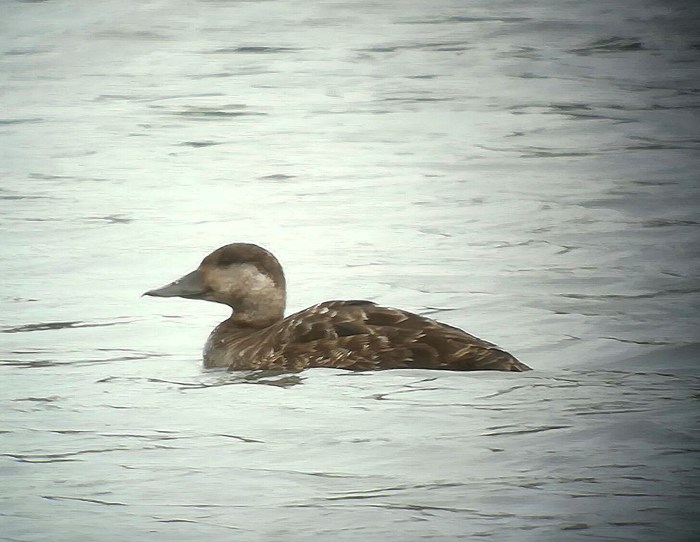
After a blank week for wildfowl, up to two Garganeys were again on site at Pitsford Res until at least 31st, while the same locality produced an adult drake Common Scoter, south of the causeway, on 26th. The escaped, metal-ringed female Bufflehead, first discovered in June, was still found to be lurking at Clifford Hill GP on the same date.

At least one of the Pitsford Great White Egrets remained throughout the week, although two were again on show there on 27th, while the same site produced a fly-over Osprey on 1st.

Great White Egret, Pitsford Res, 28th August 2017 (Mike Alibone)

Ospreys were also seen at Stanford Res on 26th, 27th, 28th and 31st and two more included one in flight over Silverstone Circuit on 27th and another fishing along the River Nene in the vicinity of Cogenhoe Mill on 31st. The only other raptors of note were a Marsh Harrier heading south-west along the Nene Valley at Stanwick on 28th and another in Pitsford’s Walgrave Bay on 1st.

Black-tailed Godwit, Stanford Res, 30th August 2017 (Chris Hubbard)

Pitsford, Stanford and Stanwick shared this week’s small numbers of Black-tailed Godwits between them, Pitsford producing one on 26th-27th, Stanford hosting two on the same dates and one from 28th to 30th and Stanwick holding singles on 29th and 31st. Meanwhile, Stanwick’s Temminck’s Stint became more elusive, behaving erratically and disappearing for periods of time as it commuted between the main lake and the Visitor Centre Lake on 26th and 29th-30th.

Little Tern, Hollowell Res, 28th August 2017 (Douglas McFarlane)

Unusual but not unprecedented in August, three Little Terns, an adult and two juveniles, arrived at Hollowell Res on the afternoon of 28th, staying there into the early evening, while little materialised in the way of interesting larids, with single Yellow-legged Gulls at Pitsford on 27th and 29th.

Juvenile Yellow-legged Gull, Pitsford Res, 27th August 2017 (Angus Molyneux)

Stanford Res enjoyed a run of Common Redstarts, with two trapped and ringed on 26th, another trapped and ringed on 28th, followed by one there on 29th. Singles were also seen at Borough Hill on 26th and at Fawsley Park the following day, while two were found in a hedgerow near Twywell on 1st.
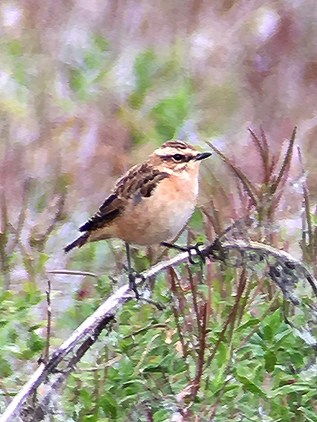
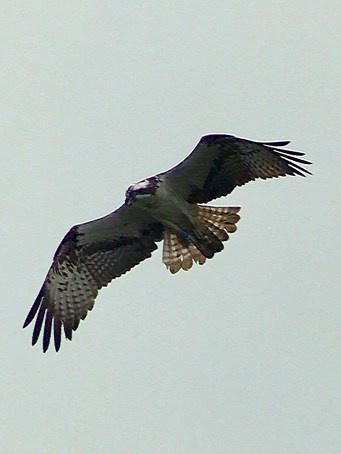
Whinchat, Stanford Res, 31st August 2017 (Chris Hubbard)

After just one, last week, more Whinchats appeared, including singles at Borough Hill on 26th, Hollowell Res on 27th and, on 31st, singles visited Bozenham Mill and Sywell CP, while two were near Glapthorn Cow Pasture and two were also found in a weedy field at Stanford Res, at least one of which remained the following day.

By contrast, very few Northern Wheatears have been found so far this autumn and this week saw only three – one at Stanford Res on 26th, another at Preston Deanery on 31st and one near Twywell on 1st, while a Tree Pipit was discovered at Borough Hill on 27th and two more were at Harrington AF on 31st.

Northern Wheatear, Preston Deanery, 31st August 2017 (Mike Alibone)

Rarity Round-up 19th to 25th August 2017

Another predominantly dry period, with continuing westerly winds and temperatures up from below average to ‘normal for the time of year’ at the week’s end. Aside from the arrival of a Temminck’s Stint, there was a little shrinkage in the migrant spectrum over the last seven days.

The Great White Egret remained settled in Pitsford Reservoir’s Scaldwell Bay all week, the same site producing an Osprey, fishing around the dam, on the morning of 22nd. Two more Ospreys were seen, one at Stanford Res on 21st and the other visiting Hollowell Res on 23rd.

Male Osprey, Stanford Res, 21st August 2017 (Chris Hubbard)

Black-tailed Godwits continued to trickle through in small numbers, Pitsford producing four on 19th, three on 20th and one on 25th, while the autumn’s first juvenile was at Stanford Res on 23rd-24th. The only other wader of note was an adult Temminck’s Stint which, seemingly oblivious to observers, obligingly gave great views at Stanwick GP’s Visitor Centre Lake from 21st to 23rd before moving to the main lake there on 24-25th.

The first Black Tern of the autumn arrived at Stanford Res on 24th but the week goes by without a mention of any scarce gulls – the first ‘blank’ week for a long time.


Adult Temminck’s Stint, Stanwick GP, 21st August 2017 (Mike Alibone)

Common Redstarts were reported from five localities, with singles at Priors Hall (Corby) on 20th, Clifford Hill GP on 22nd, Stanford Res on 23rd and 25th, and at Long Buckby and Preston Deanery on 24th. A Whinchat visited Stanford Res on 20th, while single Northern Wheatears were found Harrington AF on 21st, Whiston Locks on 22nd and Borough Hill on 23rd and 25th and migrant Tree Pipits appeared over Stanwick GP on 22nd, at Harrington AF on the same date and at Borough Hill on 25th.

Temminck’s Stint at Stanwick

The county’s first autumn Temminck’s Stint for sixteen years materialises in the early morning gloom of Stanwick’s Visitor Centre Lake.

Persistent patch-watching pays premiums – the proof appearing in the form of a nice adult Temminck’s Stint for Steve Fisher at Stanwick this morning. Present throughout the day on the Visitor Centre Lake, it performed well for all comers, allowing many to catch up with what is now a very scarce visitor to Northants.

Adult Temminck’s Stint, Stanwick GP, 21st August 2017 (Mike Alibone)

Lacking the fresh, brightly-fringed mantle, coverts and flight feathers, it’s a rather grey adult with a few dark-centred feathers of breeding plumage. The first Temminck’s Stint to be recorded in Northants occurred as recently as 1946, at Ecton Sewage Farm, where one was also present during winter 1968-1969 – an amazing record in itself.

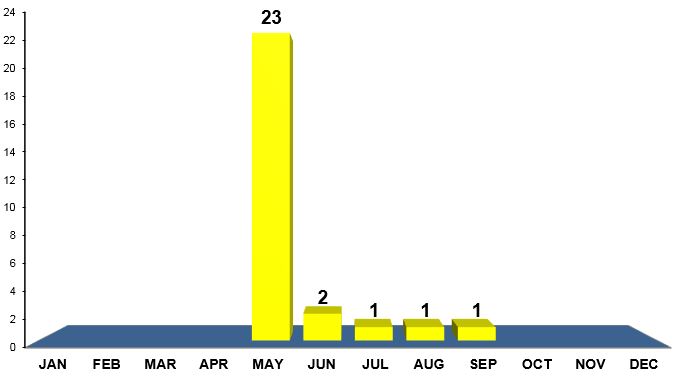
Temminck’s Stint. Distribution of records by month over the last 30 years (1987-2016)

The vast majority appear in spring, however, with autumn occurrences being extremely unusual almost anywhere in the UK. May is the month in which to find one and Summer Leys LNR is the place to look, producing 48% of the May records over the past thirty years, followed by Stanwick GP, which produced 30%. The last in autumn, prior to this year, was a very approachable juvenile at Hollowell Reservoir, between 22nd September and 1st October 2001.

Juvenile Temminck’s Stint, Hollowell Res, September 2001 (Richard Chandler)

Conforming to the established pattern, there has already been one during spring this year, on 9th-10th May, at Pitsford Reservoir.

Rarity Round-up 12th to 18th August 2017

This week was largely dry but the winds varied between north-westerly and south-westerly – hardly conducive to migrants from the continent. Lingering ducks and egrets, a continual stream of godwits and news that Northamptonshire’s 11th Night Heron had been present in the county for well over a week, under the dreaded ‘locality withheld’ caveat, did little to lift local spirits.

Two Garganeys were again in Scaldwell Bay at Pitsford Res on 12th, while last week’s female Common Scoter remained at Daventry CP until 14th and the escaped, metal-ringed female Bufflehead reappeared at Clifford Hill GP on 13th. A singing male Quail was a bonus for ringers at Harrington AF between 01.30 and 02.00 on 16th. Insomnia clearly has its plus points.

Female Common Scoter, Daventry CP, 14th August 2017 (Gary Pullan)

The shock revelation, this week, that a juvenile Night Heron had been present and photographed in the vicinity of a garden pond in Blisworth, from late July to at least 7th August, will have come as a blow to many. Attempts made to persuade the landowners to ‘let people in’ had apparently failed. Even the promise of flashing the cash reportedly cut no ice. Clearly, then, if you’re lucky enough to have a pond in your garden you don’t need the extra dosh to get by … Oh well, there’s always Great White Egret to fall back on, with the now seemingly settled Pitsford individual – joined by a second until 13th – offering unrestricted viewing all week. Tongue, cheek and all that.

Raptors were rationed during the period, with a juvenile Marsh Harrier flying west over fields north of Great Brington on 18th, an Osprey visiting Hollowell Res on 13th and 14th and one flying high over Pitsford, without stopping, on 16th.

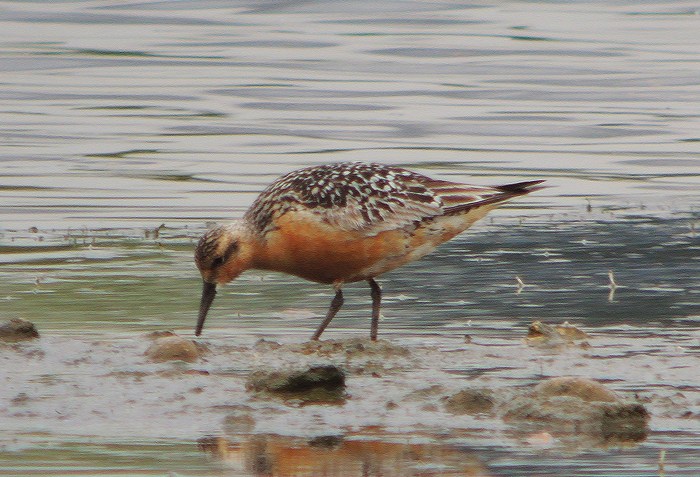
The week’s highest count of Icelandic Black-tailed Godwits was made at Pitsford Res, where twenty-nine arrived on 12th, six were there from 13th to 15th and three until the week’s end. The only other site visited by this species during the period was Stanford Res, where one remained from 13th to 15th and two more appeared on 18th. Hanging on into the new week was Stanwick GP’s adult Knot, still on the Visitor Centre Pit until 12th.

Adult Knot, Stanwick GP, 12th August 2017 (Mike Alibone)

The only Mediterranean Gull was a juvenile at Boddington Res on 12th, similarly the only Caspian Gull was one at Clifford Hill GP the following day, while between one and two Yellow-legged Gulls occurred at Pitsford Bes, Boddington Res, Stanford Res, Daventry CP and Clifford Hill.

Adult female Common Redstart, Stanford Res, 14th August 2017 (Peter N)

Common Redstarts were more in evidence this week, with 13th producing four at Fawsley Park, two at Clifford Hill GP and a female, initially ringed as a nestling at Ripon in Yorkshire in June, controlled at Harrington AF. Another female was trapped and ringed at Stanford Res the following day. A very early juvenile Stonechat was found at Clifford Hill GP on 13th and the same date produced nine migrant Tree Pipits at Harrington AF.

Rarity Round-up 5th to 11th August 2017

This week’s weather was largely a repetition of last week’s, with Atlantic lows sweeping across the country, although continual heavy rain accompanied more northerly winds on 8th-9th. No coincidence, then, that these two days produced some new and scarce arrivals, some of which lingered … while others didn’t.

Duck of the week was the female Common Scoter, which turned up at Daventry CP during the poor weather of 9th and was still present on 11th, while last week’s Great White Egret remained at Pitsford Res until at least 7th.

Female Common Scoter, Daventry CP, 9th August 2017 (Gary Pullan)

Just one Whimbrel was seen – at Stanwick GP on 9th – in contrast to last week’s double-figure flocks, while Icelandic Black-tailed Godwits continued to appear in reasonable numbers. On 5th there were three at Stanford Res and singles at Pitsford Res, Hollowell Res and Daventry CP, the following day there were five at Pitsford and one at Stanford, the 7th saw sixteen at Stanford and one at Daventry. Stanford also held four on 8th-9th and one thereafter on 10th-11th and one was at Stanwick GP on 9th.

Icelandic Black-tailed Godwits, Stanford Res, 7th August 2017 (Chris Hubbard)

The latter locality also produced an adult Knot, showing well on the Visitor Centre Pit from 8th to 11th, while another autumn Sanderling made landfall at Hollowell Res during the poor weather on 8th. The autumn’s second Wood Sandpiper was found at Stanford on 9th, remaining there until 11th.

Adult Knot, Stanwick GP, 9th August 2017 (Mike Alibone)

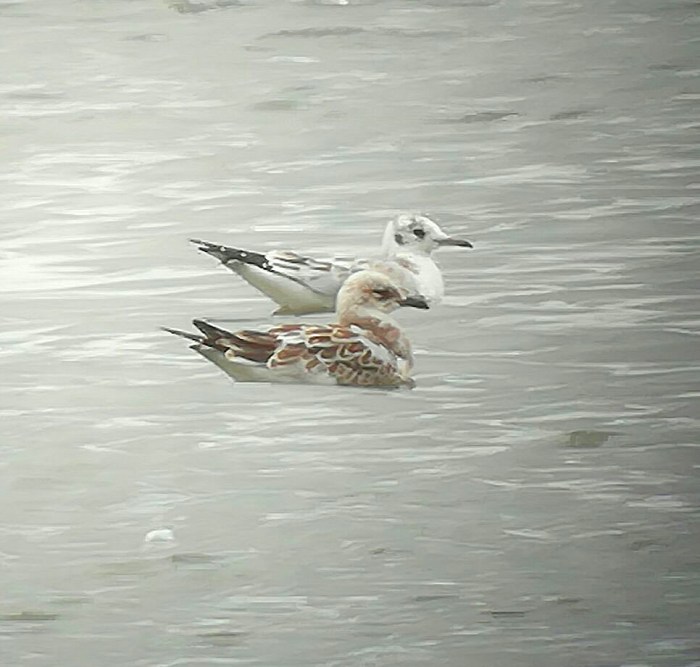
Three Arctic Terns flew east at Stanwick GP during the rain on 8th, as did an adult Little Gull and a first-summer Little Gull was discovered on the Visitor Centre Pit there later the same day. The only Mediterranean Gulls this week were single juveniles at Daventry CP on 8th and Boddington Res on 11th, while Daventry produced an adult and a

Juvenile Mediterranean Gull, Boddington Res, 11th August 2017 (Gary Pullan)

second-summer Caspian Gull on 5th and a juvenile two days later, on 7th. A third-summer Caspian Gull was also at Stanwick GP on 7th along with at least thirty Yellow-legged Gulls. Between one and four Yellow-legged Gulls were seen at each of Daventry CP, Boddington Res, Hollowell Res and Pitsford Res throughout the week.

Adult Yellow-legged Gull, Pitsford Res, 7th August 2017 (Alan Francis)
Juvenile Black Redstart, East Hunsbury, Northampton, 9th August 2017 (Paul Howes)

A juvenile Black Redstart was seen on houses and garage roofs in East Hunsbury (Northampton) on 9th but could not be relocated the following day while a male Common Redstart was discovered in hedgerow at Twywell Hills and Dales on 11th and a Northern Wheatear visited Pitsford Res on 7th.