The Starling murmuration at Thrapston Gravel Pits’ Titchmarsh Reserve continues to attract attention – not just from us birders but from predators, too. Alan Coles captured this Sparrowhawk on the edge of the flock, having a go, this evening.
Starling murmuration and Sparrowhawk, Thrapston GP, 21st November 2014 (Alan Coles)
One recent estimate has put the total of Starlings roosting in the reedbed at between fifteen and twenty thousand! To view, park in the Aldwincle car park, walk down the track to the gate, turn right and walk to the second hide.
The weather remained relatively mild and blustery with showers and occasional heavy rain as the initial south-south-westerly winds at the beginning of the period gave way to a south-easterly airstream for the majority of the week.
The Stanford Res Pink-footed Goose remained with the Greylag flock all week, while the two Ruddy Shelducks at Pitsford Res were still present on 12th, when ten Pintails were also there. Only nineteen Red-crested Pochards – a drop from last week’s record thirty – were counted there on the same date and a respectable twelve were at Stanford Res on 9th. The female Scaup remained at Daventry CP, being joined there by another on 13th, both birds being present the following day.
Female Scaup, Daventry CP, 14th November 2014 (John Moon)
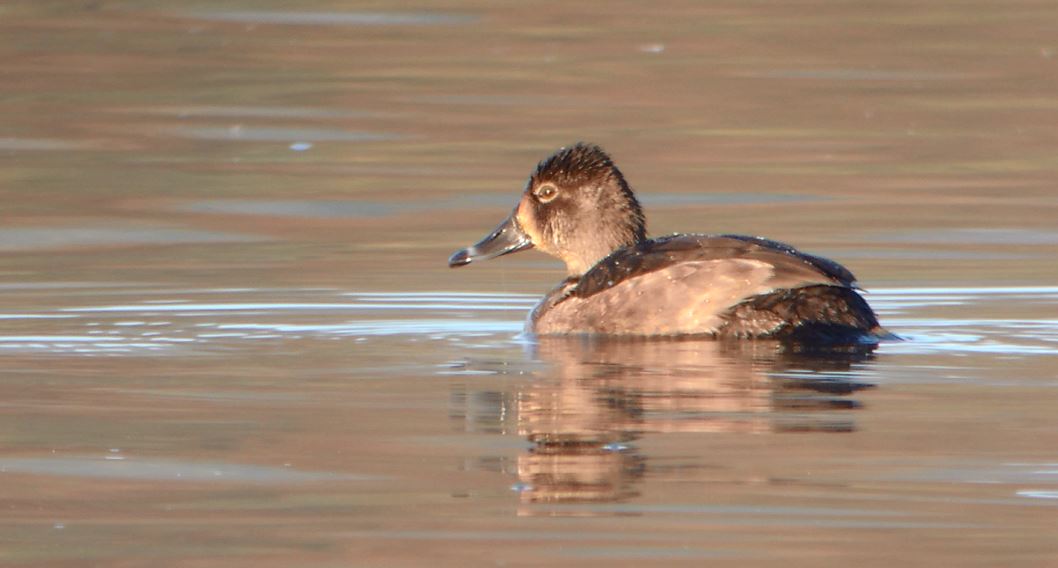
The ducks deluxe highlight of the autumn was, however, the female Ring-necked Duck discovered at Wicksteed Park Lake, Kettering on 8th and remaining throughout the week. This very obligingly showy individual, present with just a handful of Tufted Ducks and Pochards, represents only the fifth record for Northamptonshire, following hot on the heels of the fourth, at Stanwick GP, in November 2013. How many more of these need to occur before Northants gets its first Lesser Scaup – long overdue for the county list …?
Female Ring-necked Duck, Wicksteed Park Lake, 8th November 2014 (Mike Alibone)
Up to two Great White Egrets remained at Pitsford Res throughout the week, female Merlins were at Harrington AF on 9th and Pitsford Res on 12th, the only Peregrines were singles at Ditchford GP on 8th and Harrington AF on 10th, while the only other raptor of note was a ‘ringtail’ Hen Harrier between Brigstock and Lower Benefield on 9th.
The maximum number of Golden Plovers during the period was four hundred at Clifford Hill GP on 8th with the same number at Bozenham Mill on 12th, while up to fifty at Harrington AF was the only other recorded count of this species this week. Three Green Sandpipers at Ravensthorpe Res on 14th was the week’s only record, as were single Redshanks at Clifford Hill GP on 8th and Daventry CP on 13th, while fifty-nine Common Snipe at Pitsford Res on 12th was an impressive count by today’s standards.
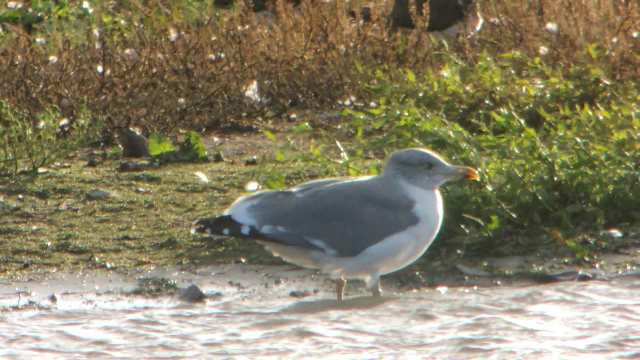
A first-winter Mediterranean Gull at Daventry CP on 13th may have been a revisit by last week’s individual and no more than one Yellow-legged Gull was seen here or at reservoirs at Boddington, Hollowell, Pitsford and Ravensthorpe, while Stanwick GP saw four on 13th, with the same site hosting two adult Caspian Gulls on 13th with a sub-adult at Boddington Res on 12th.
The run of Short-eared Owl records from Blueberry Farm appears to have dried up in recent days, although two were at nearby Harrington AF on 10th, while Ring Ouzels just keep coming – this week’s being a first-winter over Daventry CP with Fieldfares on 8th and single males – also associated with Fieldfare movements – at Harrington AF on 9th and Boddington Res on 11th. This week’s Stonechats were singles at Ditchford GP and Clifford Hill GP on 8th, Pitsford Res on 9th and 12th and three at Hollowell Res on 14th, while a late Rock Pipit flew over Boddington Res on 9th, several Bramblings were over Harrington AF on the same date and a single Snow Bunting – the second of the year – visited Clifford Hill GP on 8th.
Receiving far less attention than the nearby Ring-necked Duck, this ‘black-fronted’ Grey Heron proved to be quite a striking bird. At first sight it may be easy to assume it is oiled but closer examination reveals a rather uniform density of dark feather symmetry – not the patchy, uneven distribution of staining associated with a liquid, and this suggests it is natural pigmentation rather than the result of an oily encounter.
Aberrant Grey Heron, Wicksteed Park, Kettering, 9th November (Simon Hales)
Grey Herons with aberrant plumage occur from time to time. Structurally, the Wicksteed individual is a Grey Heron and is not likely to be a hybrid, unlike this bird, which it closely resembles in plumage but not structure. Interesting bird and thanks to Simon Hales for his image.
This female Ring-necked Duck swam into the record books as Northamptonshire’s 5th when Nick Parker picked it up during heavy rain at Wicksteed Park Lake, Kettering yesterday afternoon. Poor light hampered serious photography and the identification was tentative.
Not so today, though, when the bird showed well all day on the south-east side of the lake. A nice adult female: defined, though narrow while subterminal bill band (less defined and more diffuse on juv/1st winter), restricted, dull yellow-tinged feathering around bill base (whiter and more extensive on juv/first-winter) and uniformly patterned underparts (patchy/whitish in juv/1st winter) offer clues to age and sex of this individual.
Female Ring-necked Duck, Wicksteed Park Lake, 9th November 2014 (Bob Bullock)Female Ring-necked Duck, Wicksteed Park Lake, 9th November 2014 (Mike Alibone)
This bird follows hot on the heels of last year’s female at Stanwick GP on 20th November, images and previous records here.
More of the same as the country remained under the influence of a continued south-westerly airstream, ensuring generally mild – though blustery – conditions with only a minor, short-lived north to north-easterly airflow in the second half of the period. A new record high temperature of 24°C (21°C locally) was set for the last day of October.
The Pink-footed Goose at Stanford Res seems set to stay and was still being seen there on 6th, while the two Ruddy Shelducks at Pitsford Res were still present until at least 30th and the Pintail flock appeared to peak at eighteen there the following day. The only other Pintail during the period was one at Stanwick GP on 29th. Also reaching new heights, the flock of Red-crested Pochards at Pitsford Res increased to thirty on 2nd and the Stanford Res flock comprised seventeen between 29th and 6th, while three were at Thrapston GP on 1st and singles visited Stortons GP on 4th and Ravensthorpe Res on 7th. A female Scaup was discovered at Daventry CP on 29th, remaining there until 6th and a female Common Scoter paid a brief visit to Stanford Res before flying of west on 2nd.
Up to three Great White Egrets remained at Pitsford Res until at least 3rd, and another dropped in to Byfield Pool (Boddington Res) briefly before heading south on 26th, another was at Irthlingborough Meadows (Ditchford GP) on 28th and possibly the same individual visited Barclaycard Pit at Thrapston GP on 4th. By comparison a Bittern at Stortons GP on 25th seemed rare … The two Black-necked Grebes were again very much in evidence on Thrapston GP’s Town Lake between 28th and 1st.
A better than normal selection of raptors included a female Merlin at Blueberry Farm, Maidwell on 28th, 29th and 2nd plus a male at Stortons GP on 1st, while Peregrines were seen at Blueberry Farm, Cold Higham, Daventry CP, Harrington AF, Polebrook AF, Stanford Res and Thrapston GP. Moving up a size, a ‘ringtail’ Hen Harrier visited Blueberry Farm on 2nd and a male flew SSW at Daventry CP on 6th and a male Marsh Harrier was at Great Oxendon on 25th. Raptor of the week – or year – or decade, depending on your perspective, was the juvenile Rough-legged Buzzard which drifted past a couple of seriously jammy observers as it headed down the Brampton Valley, without so much as a look back, on 29th. This is the 17th record for the Teflon county and the first since 2009 when two were seen in spring. Prior to that it was a fly-over in October 1994 and veteran birders will remember the one before that as being a single-observer fly-by at Pitsford Res in October 1974 – the last time there was an invasion of this species into the UK. With others currently appearing well inland it’s clearly time to stop counting Tufted Ducks and get out to the remoter parts of the county to look for them. Can you really afford to wait another 40 years for the next influx …?
The maximum number of Golden Plovers during the period was three hundred and fifty at Stanford Res on 25th with smaller numbers in Brampton Valley, Harrington AF and near Cotterstock, while a Grey Plover put in appearances in Brampton Valley on 29th and 1st. A Ruff visited Pitsford Res on 1st, single Dunlins were seen briefly at Stanwick GP on 30th, Hollowell Res on 31st and Stanford Res on 6th and the (relatively) long-staying Grey Phalarope remained at Pitsford Res before finally departing on 30th. A sprinkling of Green Sandpipers included two at Pitsford Res on 25th and 31st and singles at Ravensthorpe Res on 27th-29th and again on 7th, while the Greenshank – believed to have had a damaged wing – was still at the latter site on 29th. The only Redshank reported was one at Stanwick GP on 30th, small numbers of Common Snipe were reported from reservoirs at Hollowell, Ravensthorpe and Stanford as well as at Stortons GP, where there was also a Jack Snipe on 25th-26th and another of the latter species was flushed at Harrington AF on 3rd.
The 29th produced two Mediterranean Gulls – an adult at Hollowell Res and a first-winter at Daventry CP and another first-winter visited the gull roost at Pitsford Res on 1st, while a strong candidate for an adult Baltic Gull was seen well for a period of thirty minutes at Hollowell Res – also on 29th. No more than two Yellow-legged Gulls were seen at Daventry CP, Pitsford Res, Hollowell Res, Stanford Res and Stanwick GP during the period, with the latter site hosting single adult Caspian Gulls on 29th and 1st with an adult and a second-winter there on 2nd and two adults there on 5th.
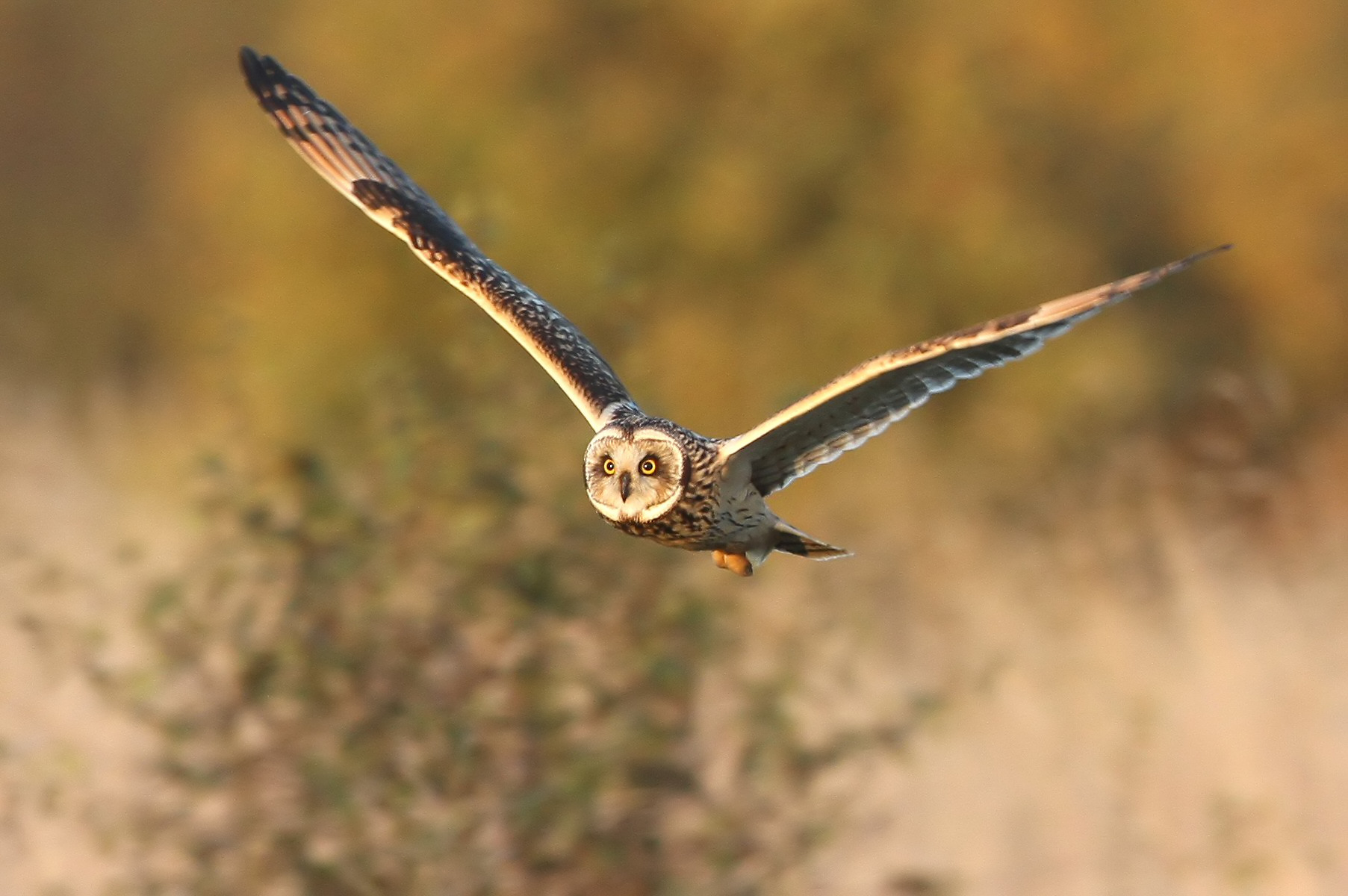
Up to two Short-eared Owls remained throughout the period proving, as ever, to be a popular draw with locals and out-of-county birders alike, and further singles were at Harrington AF on 27th-29th, below Hanging Houghton on 30th and at Stanwick GP on 4th.
Short-eared Owl, Blueberry Farm, 3rd November 2014 (Bob Bullock)Short-eared Owl, Blueberry Farm, 3rd November 2014 (Bob Bullock)
It’s worth mentioning that a Cetti’s Warbler trapped at Stanford Res on 1st was the second to be trapped at the site this year; this species is rare in Northants away from the Nene Valley.
Cetti’s Warbler, Stanford Res, 1st November 2014 (Adam Homer). The second to be ringed this year at Stanford and only the tenth to be ringed at this site.
Airfield Ring Ouzels continued to appear with a male – this time at Chelveston on 31st while a Black Redstart on farm buildings near Long Buckby on 3rd was another typical late autumn record in a similarly typical choice of habitat.
Black Redstart, Long Buckby, 3rd November 2014 (Bob Bullock)
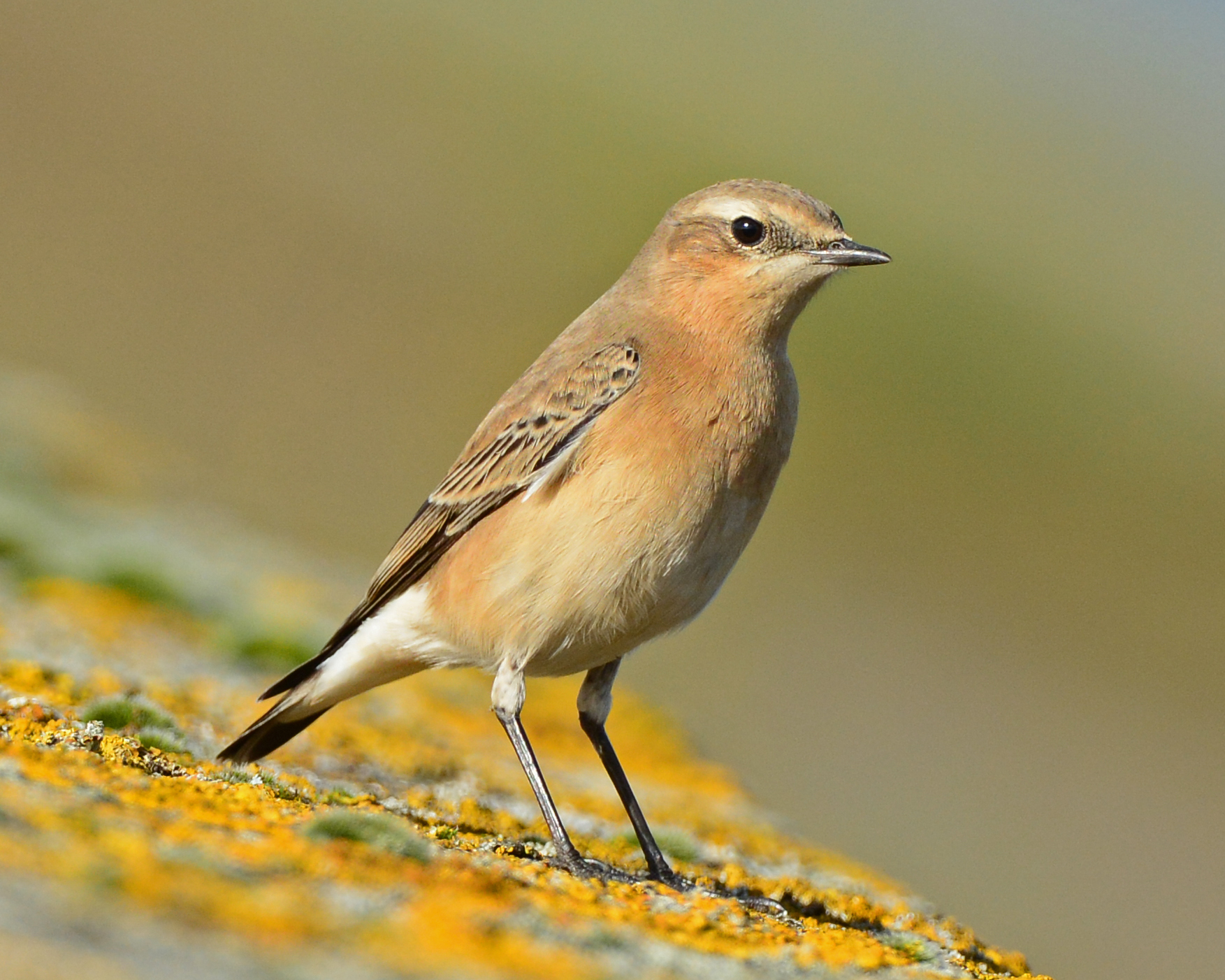
It’s still proving to be a good autumn for Stonechats and, aside from the six present at Blueberry Farm, lower numbers were found in the wider Brampton Valley and at Borough Hill, Ditchford GP, Harrington AF, Hollowell Res, Pitsford Res and Sywell CP, while two late Greenland race Northern Wheatears were at Polebrook AF on 26th. What was probably the last Rock Pipit of the autumn flew over Stanford Res on 1st and, as winter drew ever closer, more Bramblings were found at Daventry CP, Hanging Houghton, Harrington AF, Pitsford Res, Stanwick GP and near Lyveden New Bield, while four Crossbills were at Harlestone Heath on 27th.
This week’s weather was again dominated by Atlantic low pressure systems – initially delivering a warm, southerly airstream with temperatures up to 20°C – before the winds turned strong north-westerly on 20th-21st as the tail-end of ex-Hurricane Gonzalo hit the UK, resulting in the strongest gales of the autumn so far. Surprisingly, there were fewer inland seabirds than were recorded during last week’s north-easterly blow and, not surprisingly, Northants received none.
Forget the usual escapes and ferals – a Pink-footed Goose at Stanford Res on 19th was surely ‘real’ while the two Ruddy Shelducks remained at Pitsford Res until at least 22nd, the same site hosting thirteen Pintails and the now regular flock of Red-crested Pochards, which reached a record twenty-seven on 22nd. Two drakes of the latter species were at Stanford Res on 18th – the same date a Garganey was found at Pitsford Res, while another ‘new’ Garganey was at Ravensthorpe Res two days later. The first Goosander of the winter, a drake, appeared at Daventry CP on 22nd.
It appears last week’s Gannet at Pitsford Res on 14th was not alone as belated news emerged of another flying over Rushden, late in the afternoon, on the same date. At least two Great White Egrets remained at Pitsford Res and one visited Summer Leys LNR briefly on 19th, while a Bittern was found at Ditchford GP on 18th and two were seen flying into the reedbed at Stanwick GP on 24th. Just one Black-necked Grebe remained on Thrapston GP’s Town Lake by 18th and Peregrines were at Stanford Res on 18th, Hollowell Res on 20th, Higham Ferrers on 21st and Lamport on 23rd.
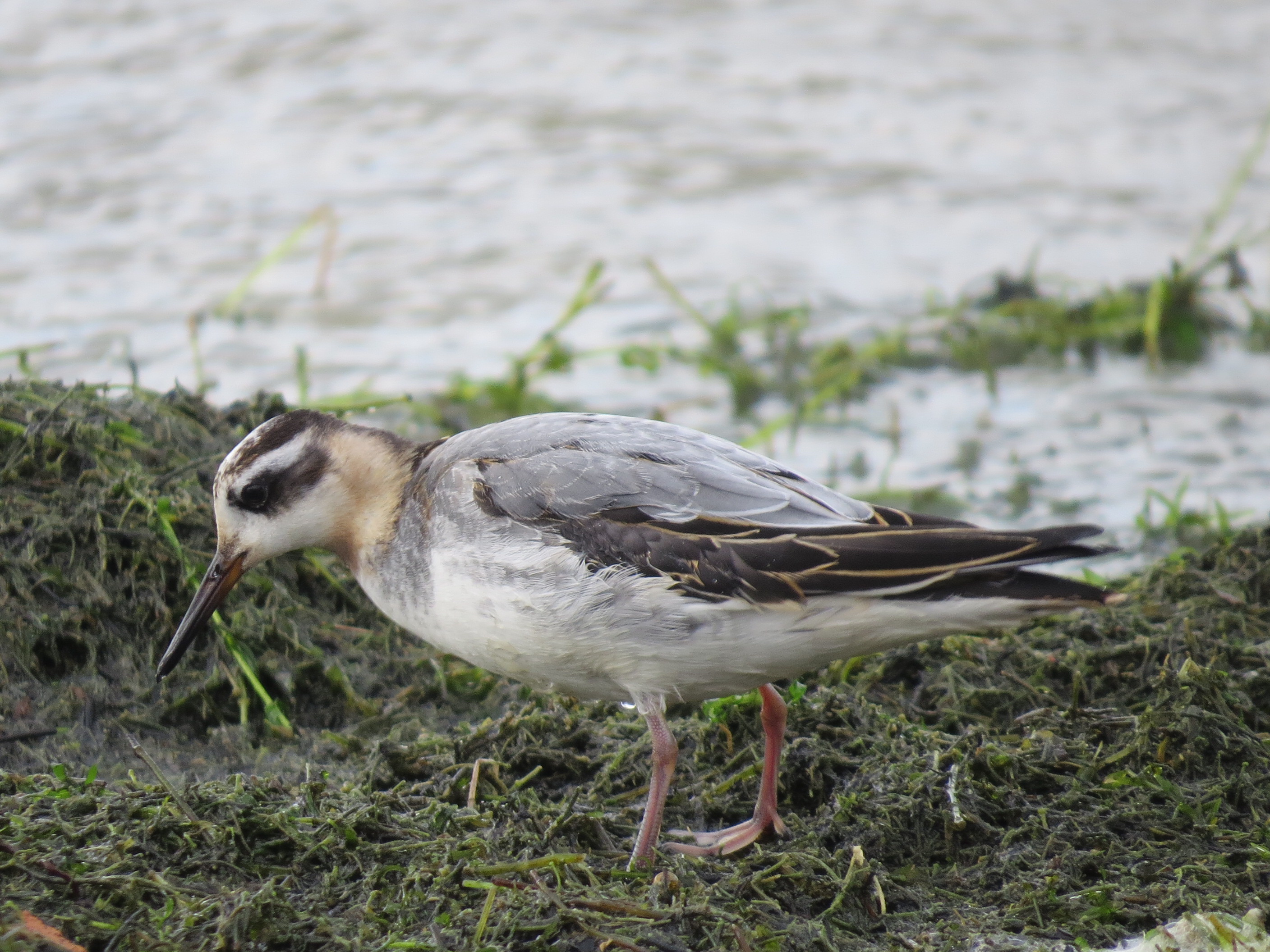
The maximum number of Golden Plovers this week was two hundred and ninety-five at Daventry CP on 24th and, for the second week running, a Grey Plover was seen in the Nene Valley – this time at Clifford Hill GP on 18th. The only Dunlin this week was one at Pitsford Res on 22nd and this appears to be the last date on which the well-photographed, celebrity Grey Phalarope was reported there, becoming ludicrously approachable toward the end of its stay.
First-winter Grey Phalarope, Pitsford Res, 19th October 2014 (Simon Hales)
Three late Common Sandpipers were found: one at Stanford Res on 18th, one at Stanwick GP on 20th-21st and one at Pitsford Res on 22nd, while a single Green Sandpiper was found at Ditchford GP on 18th and other site maxima for this species included three at Pitsford Res on 22nd and five at Ravensthorpe Res on 20th. The latter site continued to host a Greenshank until at least 23rd and Common Snipe were reported from this locality as well as at Barnes Meadow, Brixworth STW, Ditchford GP and Pitsford Res, where there was a maximum of thirty-eight present on 22nd. A Jack Snipe was also found at Barnes Meadow on 19th.
Up to three adult Yellow-legged Gulls were at Pitsford Res during the period, with singles at Hollowell Res, Ravensthorpe Res and Stanwick GP, with the latter site hosting an apparent adult showing characteristics of the race atlantis, colloquially known as ‘Azorean Gull’, for little more than twenty minutes during the late afternoon of 20th. This is the second or third occurrence of this race in the county, following one – possibly two different individuals – at the same site on six dates during September/October 2013.
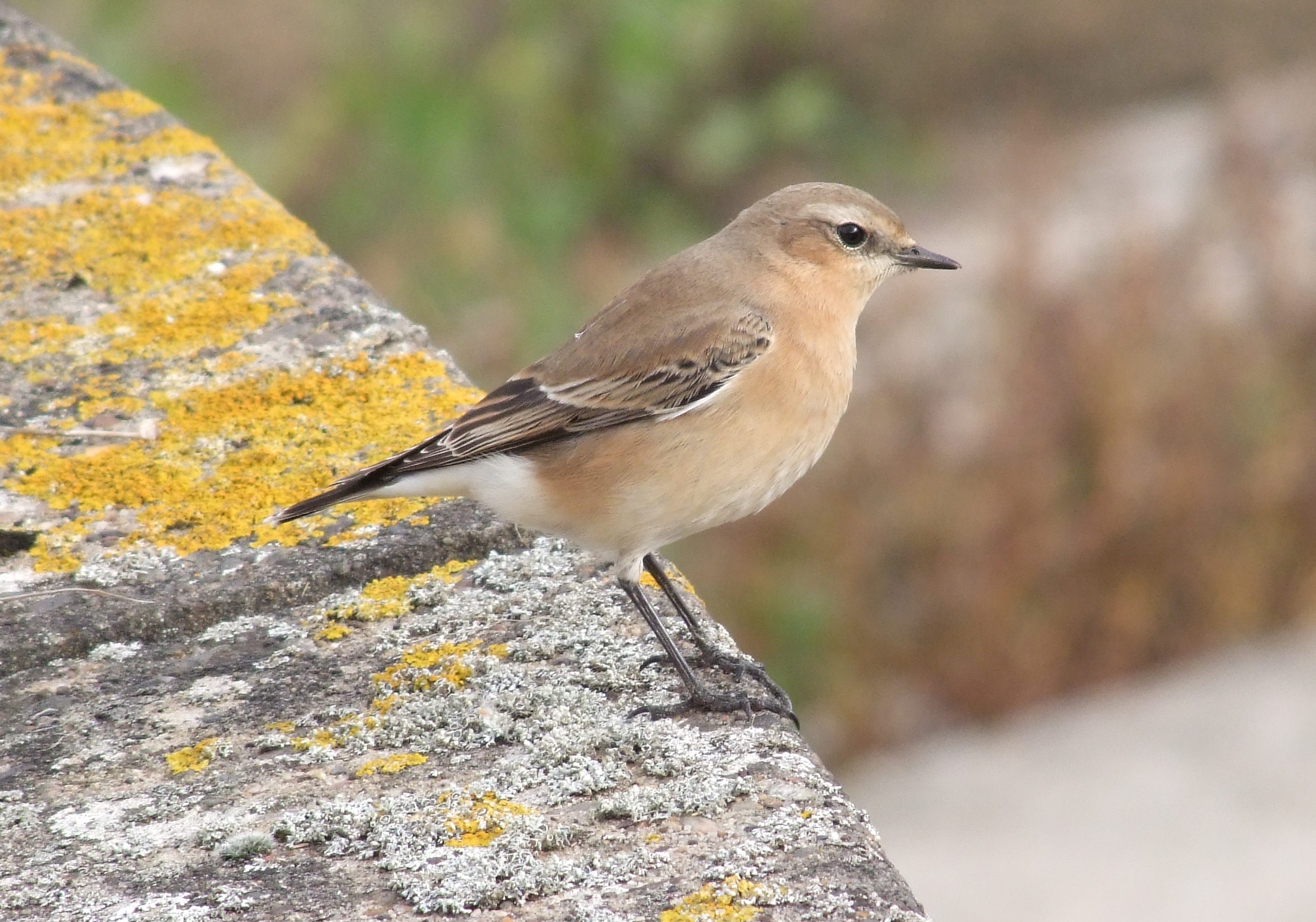
Blueberry Farm’s Short-eared Owl remained all week, showing frequently in the southernmost field of the complex, and another was at Harrington AF on 18th-19th. October is a strong passage month for Shorties so it’s too early to predict if it’s going to be a good winter for this species. Barely a week goes by these days without a report of a flyover Ring-necked Parakeet and this one is no exception with one flying over Weston Favell, Northampton on 19th, while it appears that the previous week’s Swallows were not the last after all as one was at Pitsford Res, also on 19th. Similarly, the Willow Warbler trapped and ringed at Stanford Res on 15th made it on to this week’s list, being retrapped there on 18th, along with an equally late Reed Warbler on site. A Ring Ouzel appeared at Harrington AF on 24th – now almost to be expected in late October at this site – and up to two Stonechats were present here and at Pitsford Res, Blueberry Farm and Ditchford GP with three still at Hollowell Res on 23rd. Single Northern Wheatears hung on at Pitsford Res, Harrington AF and in the Brampton Valley between 18th and
Northern Wheatear, Pitsford Res, 20th October 2014 (Doug Goddard)
20th; surely they are the last ones this year … and a Water Pipit was back at this species’ traditional wintering site of Ditchford GP on 18th – or it may just have been a migrant. A handful of Bramblings were seen in the Brampton Valley and at Harrington AF between 20th and 24th, while Harrington hosted a latter-day local scarcity – a Corn Bunting – on the last of these two dates.
Possibly. I was driving back from a meeting in St Neots when, at about 4 pm, the phone buzzed and a tweet from Steve Fisher flashed up: Azorean type ad layby islands stanwick @bonxie #northantsbirds By good fortune I was just turning on to the A45 at Higham Ferrers …
Still under observation by Steve, accompanied by Bob Webster, the bird was on the nearest part of the island to the causeway which divides the A45 Lay-by Pit. Although largely against the light, and hampered by the blustery wind, I was able to shoot some video through my scope during the time the bird was present. At about 4.20 pm it flew off north over the willow scrub and appeared to be heading toward the main lake, where large gulls regularly gather in the late afternoon prior to roosting elsewhere. A quick walk round to the lake drew a blank. The gull was nowhere to be seen.
This is not the first adult gull showing characteristics of the altlantis race of Yellow-legged Gull. There have been two before – both at Stanwick GP. Remember the last one from September 2013? See here for a discussion on ID features of that bird and UK status and some thoughts.
Today’s individual appears almost, if not completely, identical although this time we have a clear view of the legs, which are a deep, rich ochre, not bright yellow.
And there’s that broad, dark grey band on the underside of the secondaries extending on to the primaries again. Is that significant? Is it also coincidence that individuals turning up here also have that striking bill pattern of largely ‘dirty’ dull base contrasting strongly with extensive and prominent orange gonys spot, sandwiched between blackish subterminal band and yellow tip? What are these birds if they are not Azorean Gulls … ? Comments welcomed.
Atlantic low pressure systems shaped the weather for the week, a particularly deep low crossing the UK on 13th, bringing with it strong north-easterly winds and rain and displaced seabirds inland in several counties. Northamptonshire’s share was, as usual, meagre compared to neighbouring counties, nevertheless this was arguably the most exciting week of autumn so far.
Aside from the lingering escapes and ferals – specifically Cackling Goose still at Stanford Res on 11th, the two Barnacle Geese still at Hollowell Res all week and the female Wood Duck coming out of the woodwork (where else) on the River Nene in downtown Northampton on 14th, the number of wildfowl remained unremarkable. On 15th-17th the two Ruddy Shelducks were again at Pitsford Res, where sixteen Pintails were counted on 11th and 25 Red-crested Pochards were present the following day. The count for the last species also reached double figures at Stanford Res with ten (eight drakes) on 11th.
An immature Gannet at Pitsford Res on 14th was the chief prize delivered by the previous day’s low pressure system, although it remained on site for little more than one hour after its discovery.
Second calendar year Gannet, Pitsford Res, 14th October 2014 (Dave Jackson)
The same locality collected yet another Great White Egret – a colour-ringed individual from France – bringing the total there to three from 11th to at least 15th, with singles still at Thrapston GP on 12th and Summer Leys LNR on 14th. Following the two Black-necked Grebes at Pitsford Res last week, two, perhaps the same, were discovered at Thrapston GP on 11th and remained all week.
An immature Merlin flew over Boddington Res on 16th, two Peregrines were at Rushden on 11th and 13th and singles were seen at Polebrook AF on 12th, over Northampton on 14th and at Hollowell Res on 17th.
Passage waders enjoyed a resurgence this week. Single Golden Plovers appeared at Stanford Res on 11th and Boddington Res on 14th with ten over Blueberry Farm, Maidwell on 12th and 2 at Hollowell Res on 13th, although two hundred at Harrington AF on 11th are presumably set to winter in the area. A Grey Plover visited Thrapston GP on 14th and a Dunlin appeared at Summer Leys LNR on 12th and 13th, with two more visiting Hollowell Res on the second of these two dates. Hollowell also produced a Little Stint on 14th as well as the first of this week’s storm-driven Grey Phalaropes briefly on 13th, which was quickly followed by two more equally briefly at Pitsford Res the following day. One of these – or perhaps a different individual – was relocated at the southern end there on 15th. A dapper first-winter, it initially showed well and remained until the week’s end, becoming increasingly elusive during its stay.
First-winter Grey Phalarope, Pitsford Res, 16th October 2014 (Clive Bowley)
Late Common Sandpipers visited Stanford Res on 11th and Boddington Res on 16th, with 2 there on 17th, while a single Green Sandpiper remained at Pitsford Res to 17th and four were at Ravensthorpe Res on the same date. Spotted Redshanks continue to remain scarce migrants in Northants and the one which visited Sywell CP for minutes on 14th didn’t do anything to reverse its current status while, on the following day, a Redshank and two Greenshanks visited Pitsford Res and another Greenshank was at Ravensthorpe Res from 15th until 17th. A Woodcock – perhaps the first of the many continental migrants – was at Harrington AF on 15th and single Common Snipe were at Stanford Res on 11th and Boddington Res on 16th with twelve at the latter site on 17th.
Lone, straggler terns are often encountered inland in late autumn so a juvenile Arctic Tern at Thrapston GP on 12th was not unusual so neither was the juvenile Common Tern seen there over the following two days … More unusual – although not entirely unexpected – was one of the largest flocks of Kittiwakes in the county for many years, in the wet and windy conditions at Pitsford Res on the evening of 13th; another visited Summer Leys LNR during the afternoon on the same date. Thrapston GP produced a juvenile Little Gull, an adult Mediterranean Gull and a second-winter Caspian Gull the following day, at which time a first-winter Mediterranean Gull was at Pitsford Res. The usual single, lingering adult Yellow-legged Gulls remained at Pitsford Res, Hollowell Res and Ravensthorpe Res and one visited Boddington Res on 17th, although three adults were present at the first of these four sites on 14th.
Site-faithful Short-eared Owls returned to Blueberry Farm, Maidwell from 10th with two there on 12th and singles on 14th and 16th, the southernmost set-aside fields having consistently held varying numbers of this species in recent winters. For the second year running, an October Hoopoe was found in Northants, this time visiting a garden near Towcester Racecourse only briefly on 13th. While two Ring-necked Parakeets were seen flying over Eastfield, Northampton on 14th, late news emerged of a ‘colony’ consisting of three nest-holes in trees at a locality in south Northants. This species is still on the up in the UK but numbers recorded in the county remain low. Potentially the last Swallows, three at Pitsford Res on 15th, and the last House Martin, one at Polebrook AF on 12th, were recorded this week and a late Willow Warbler was trapped and ringed at Stanford Res on 15th. Among the many northern thrushes coming through during the week – five hundred Redwings being notable at Thrapston GP on 14th – a juvenile Ring Ouzel was found at Blueberry Farm on 12th and the first Fieldfares, approximately sixty, were seen nearby in the Brampton Valley the following day. The same area hosted four Stonechats throughout the week, while the same number was at Thrapston GP on 16th, up to six remained at Hollowell Res on 15th and two were still at Harrington AF on 12th.
Northern Wheatear, Pitsford Res, 16th October 2014 (Clive Bowley)
Perhaps the year’s last Northern Wheatears visited Harrington AF on 11th and Pitsford Res on 15th-17th and up to two Rock Pipits were at Hollowell Res on 13th-14th, with singles at Thrapston GP on 14th and Pitsford Res on 14th-15th and again on 17th.
Rock Pipit, Pitsford Res, 14th October 2014 (Mike Alibone)
Finally, Bramblings moved in: two or three at Blueberry Farm on 11th, six at Thrapston GP on 14th and singles at Harrington AF and Hanging Houghton on 15th and 17th and at Castle Ashby Lakes and Pitsford Res on 16th. Winter is here … nearly.
Mid-October, low pressure, tightly-packed isobars, strong winds and rain = inland seabirds, although not many – as is usual for Northamptonshire. After a couple of foul weather fly-bys, including one watched briefly by Gary Pullan at Hollowell Res on Monday (13th) followed by fleeting views of two at Pitsford Res by David Arden yesterday, Bob Bullock finally nailed one at Pitsford at lunchtime today.
First-winter Grey Phalarope, Pitsford Res, 15th October 2014 (Bob Bullock)First-winter Grey Phalarope, Pitsford Res, 15th October 2014 (Bob Bullock)
Grey Phalarope is by no means an annual visitor to Northants, with many previous records relating to storm-driven individuals in late autumn. Dark, rufous-fringed tertials, strong salmon wash to breast and predominantly dark bill age this bird as a first-winter.
Tempting as it is to believe that our Great White Egrets originate from The Netherlands (and some may well do so) it appears that the colour-ringed individual currently at Pitsford Reservoir has channel-hopped from France.
Great White Egret, Pitsford Res, 11th October 2014 (Adrian Borley)
The combination of ring colours allows it to be identified as one ringed as a nestling at Lac de Grand-Lieu (Loire Atlantique), in western France, on 14th May 2014. In addition, it also bears a numbered metal ring inscribed CA76915 on its right tibia.
Before it arrived at Pitsford it was also seen at Amwell Nature Reserve, Hertfordshire, on 6th August. This adds to the growing number of British records of other known colour-ringed individuals which originate in France. The returning Blashford Lakes (Hampshire) bird – also ringed at Lac de Grand-Lieu and now enjoying its 12th great UK winter – is a prime example and strongly suggests that wintering birds are site-faithful.
Thanks to Adrian Borley for finding the bird and supplying the images and many thanks to Loïc Marion, the ringer of this bird at Lac de Grand-Lieu, for providing the above information. The Lac is the most important site in France for this species, with a recent breeding population estimate of 144-165 pairs (2008-2010).













 Northants birds