Newsround – 16th to 22nd November 2024

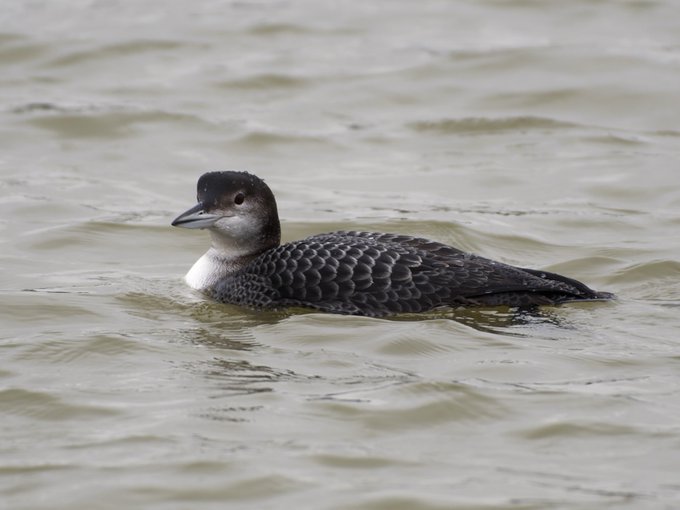
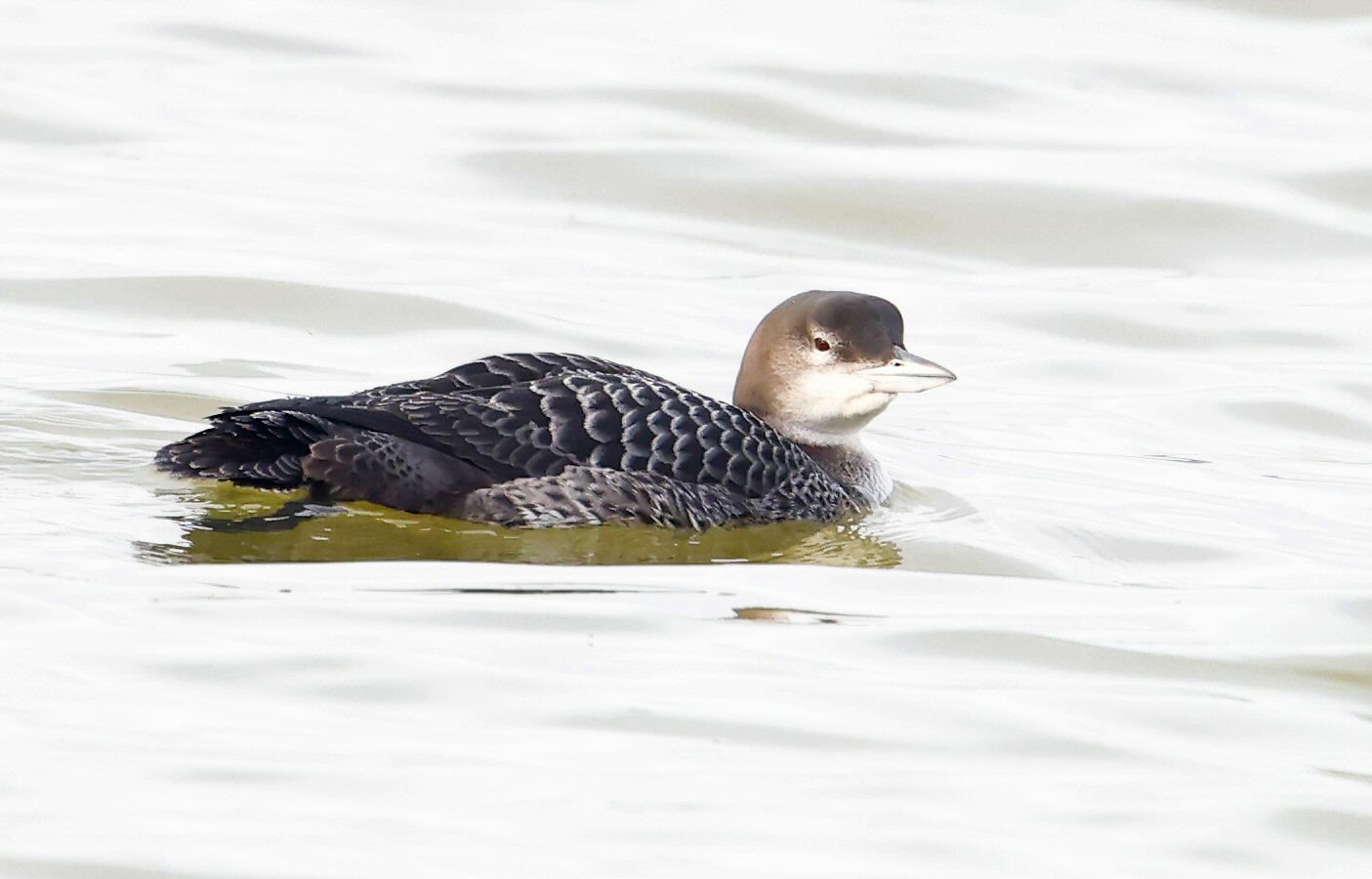
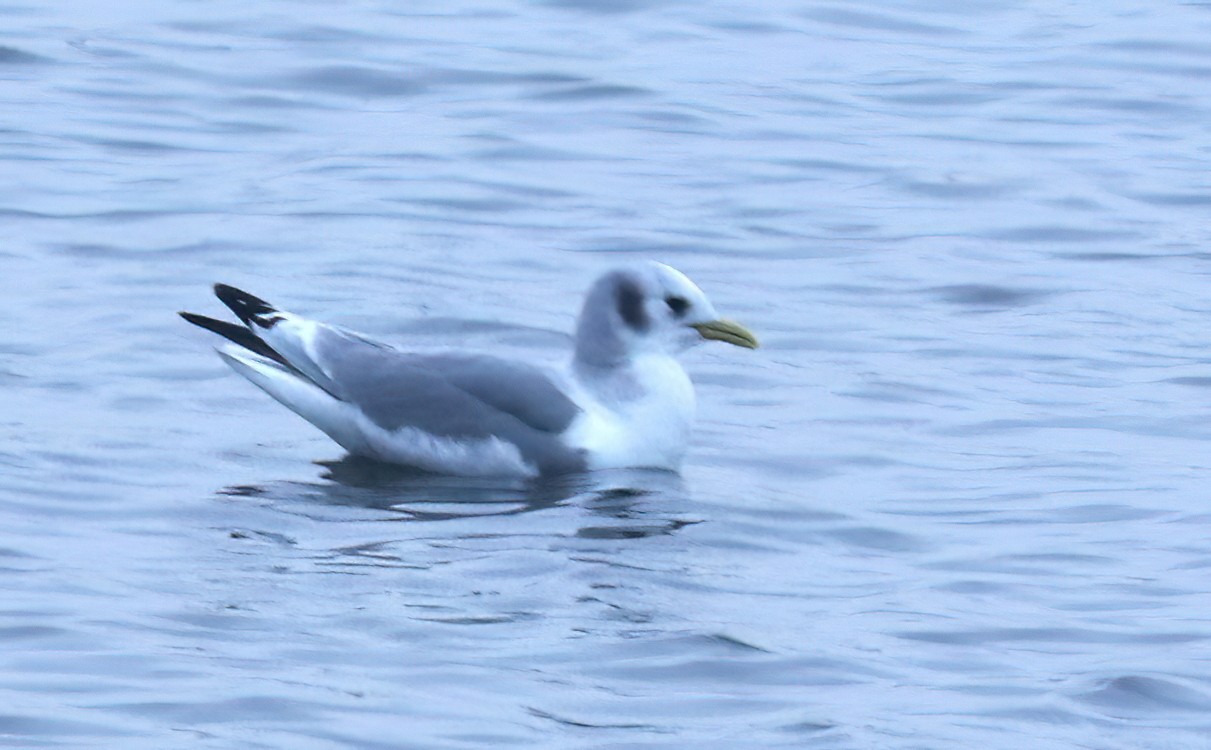
A substantial freezing air mass sliding down from the Arctic brought us the first taste of winter this week, delivering sub-zero temperatures and snow showers which, although settling in some areas, were mercifully short-lived. And riding the wave of all this came the first Kittiwakes of the year … 

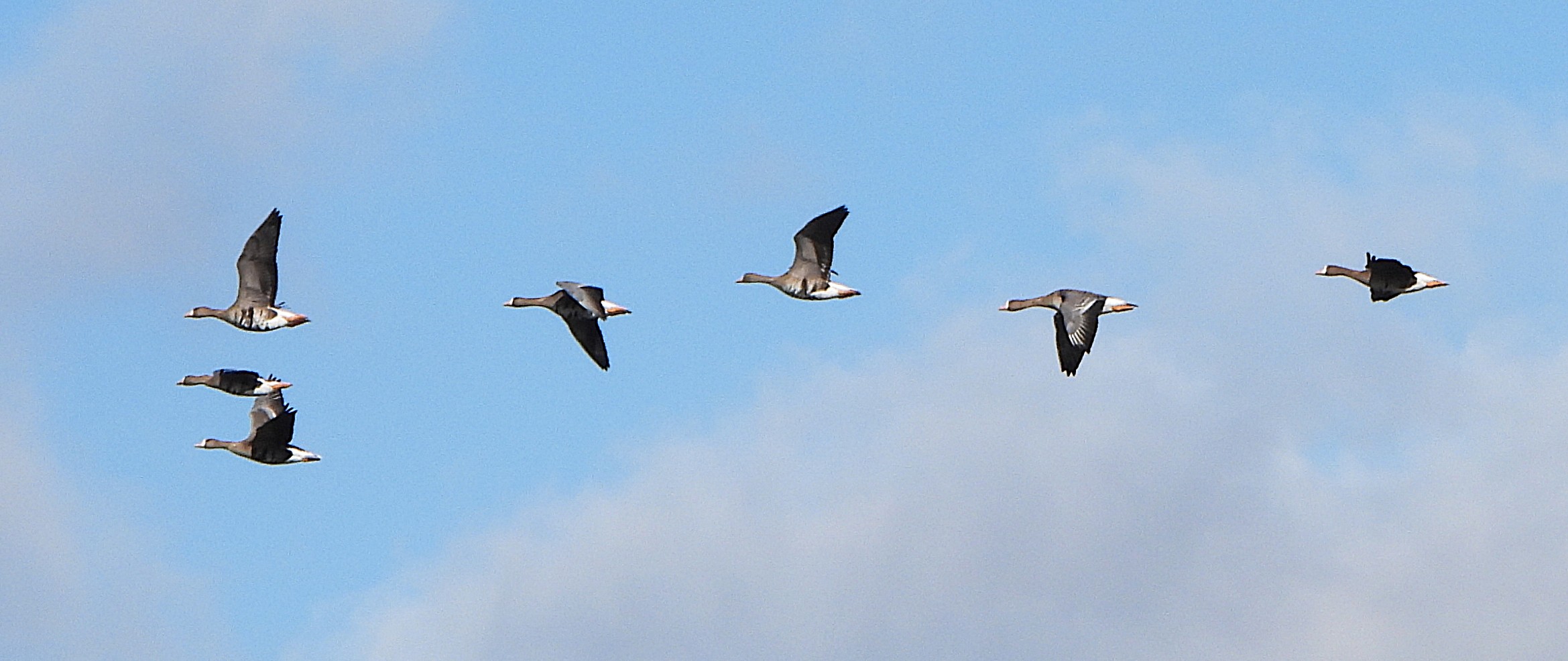
Continuing the trend in their increase in occurrence, however, were Pink-footed Geese. Although not matching last week’s impressive numbers, eighteen flew east over Thrapston GP’s Titchmarsh LNR on 16th, the same date on which one dropped in briefly at Deene Lake, while seven flew east over Blueberry Farm, Maidwell on 20th.

Whooper Swans also continued to move through with a small herd of two adults and four juveniles flying north along the Nene Valley at Oundle on 17th.

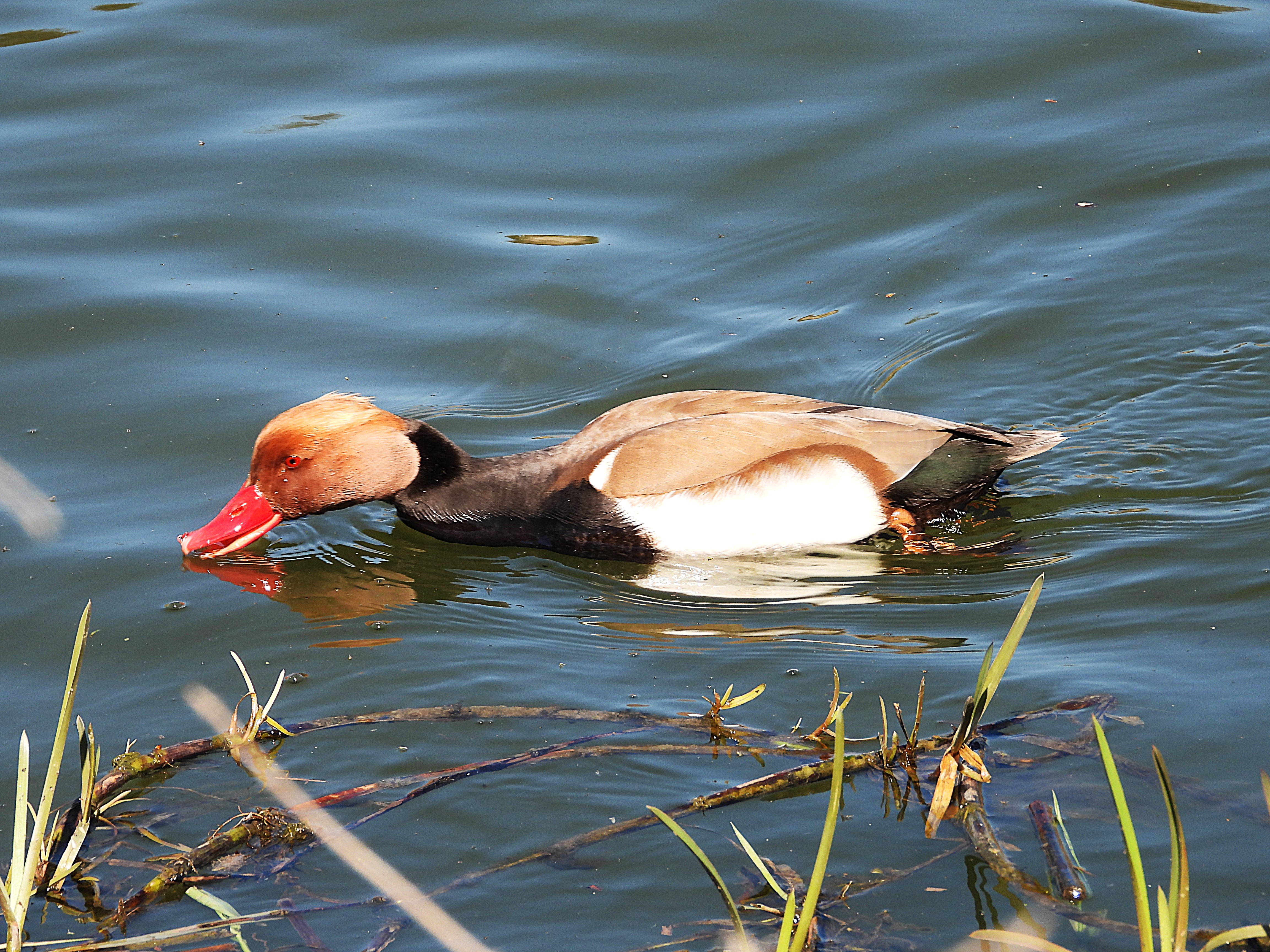
The same four localities as last week produced the period’s Red-crested Pochards, the maximum number being four at Blatherwycke Lake on 16th. Stanford Res held on to at least two throughout, while Kislingbury GP’s female also remained settled and the Pitsford Res drake was still present on 19th. Blatherwycke also retained its first-winter female Greater Scaup until at least 16th.

This week’s waders were limited to just one Jack Snipe, at Summer Leys, on 16th.

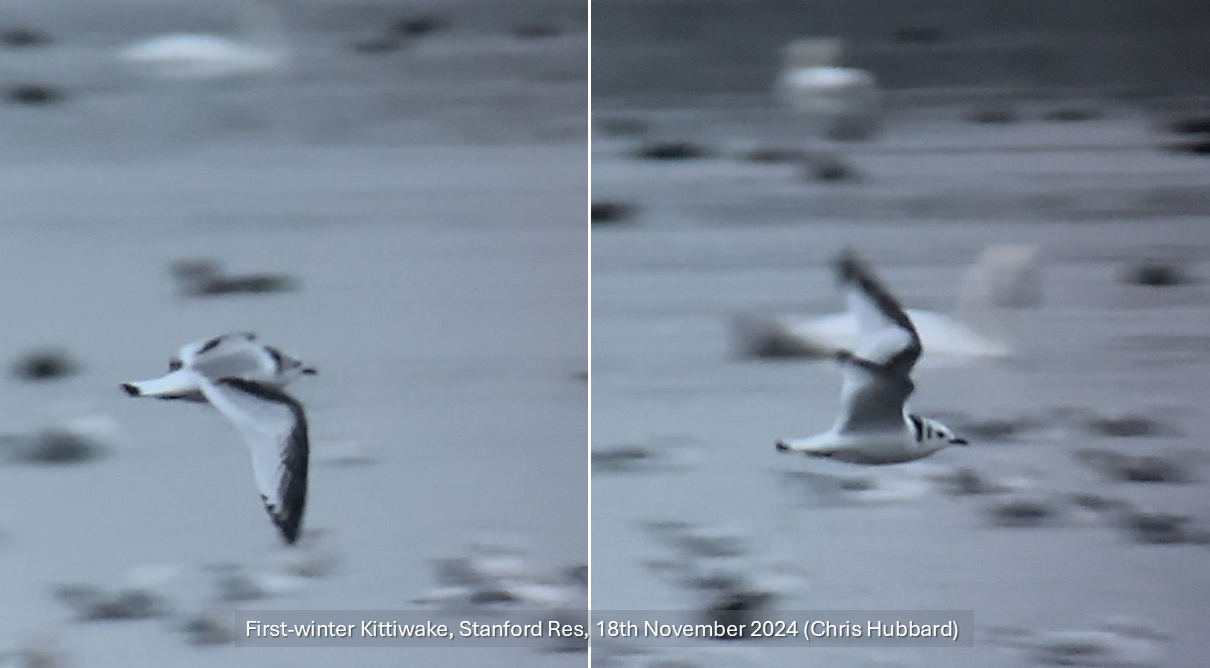
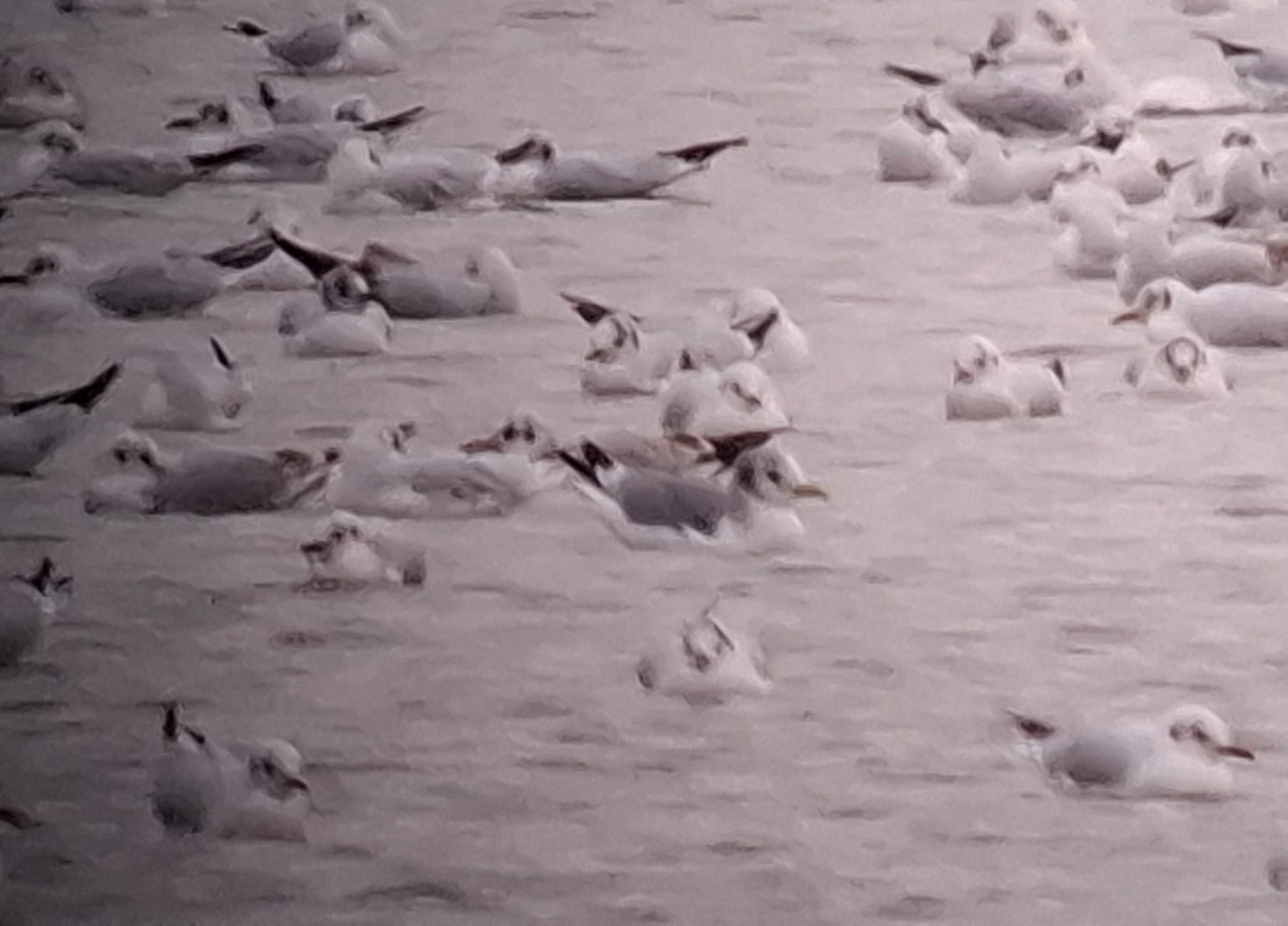
A first-winter Kittiwake off the dam at Pitsford on the afternoon of 18th, quickly joined by another and then a further five was, surprisingly, the first of the year so far in the county. All seven left high to the south in the fading light but Pitsford’s exclusivity for this species was short-lived as, away to the north-west, Stanford was enjoying its own first-winter which dropped into the gull roost before similarly disappearing.

The following evening saw an adult visiting the Boddington roost, further adding to the week’s total, all of which played their part in a wider influx across England, including birds in the neighbouring counties of Bedfordshire, Buckinghamshire, Leicestershire, Oxfordshire and Warwickshire.

While Kittiwakes are no strangers to Northamptonshire in November, they are far more frequently encountered on passage in early spring, most records in that period being of single birds.

Flocks, on the other hand, are more likely in autumn, the largest of which was in excess of twenty at Ditchford GP way back on 12th November 1972 and, more recently, approximately twenty at Pitsford on 13th October 2014.

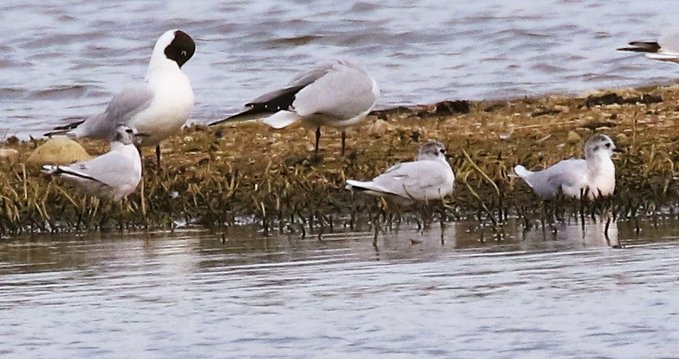
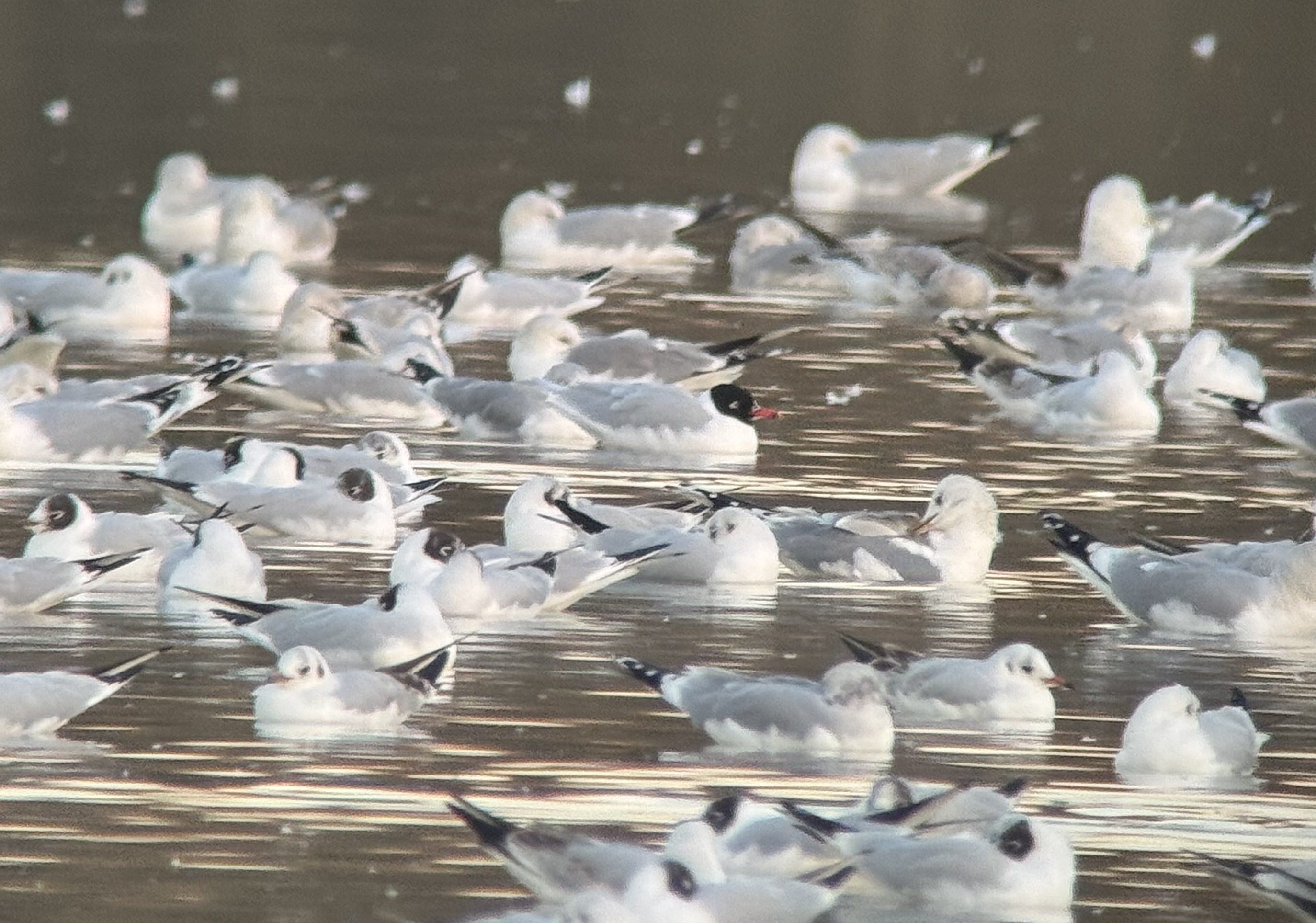
With the above having provided a momentary, though welcome, distraction for regular gull roost watchers, more standard fare was on offer in the form Mediterranean Gulls at Stanford, where a second-winter was present on 17th and 20th plus a first-winter on 19th, while Boddington Res dished up an adult on 22nd. These two bodies of water also produced all but one of the week’s Caspian Gulls, with an adult and a second-winter at Stanford on 16th and an adult there on 17th and 20th-21st. Boddington’s roost also held an adult on 19th. Bucking the trend, however, was an adult found on the small lake at Cottesbrooke Hall on 16th.

Small numbers of Yellow-legged Gulls across the board included an adult at Sywell CP on 16th, two in the Boddington roost on 19th and 22nd and single adults at Pitsford on 19th and at Earls Barton GP’s New Workings (South) on 21st.

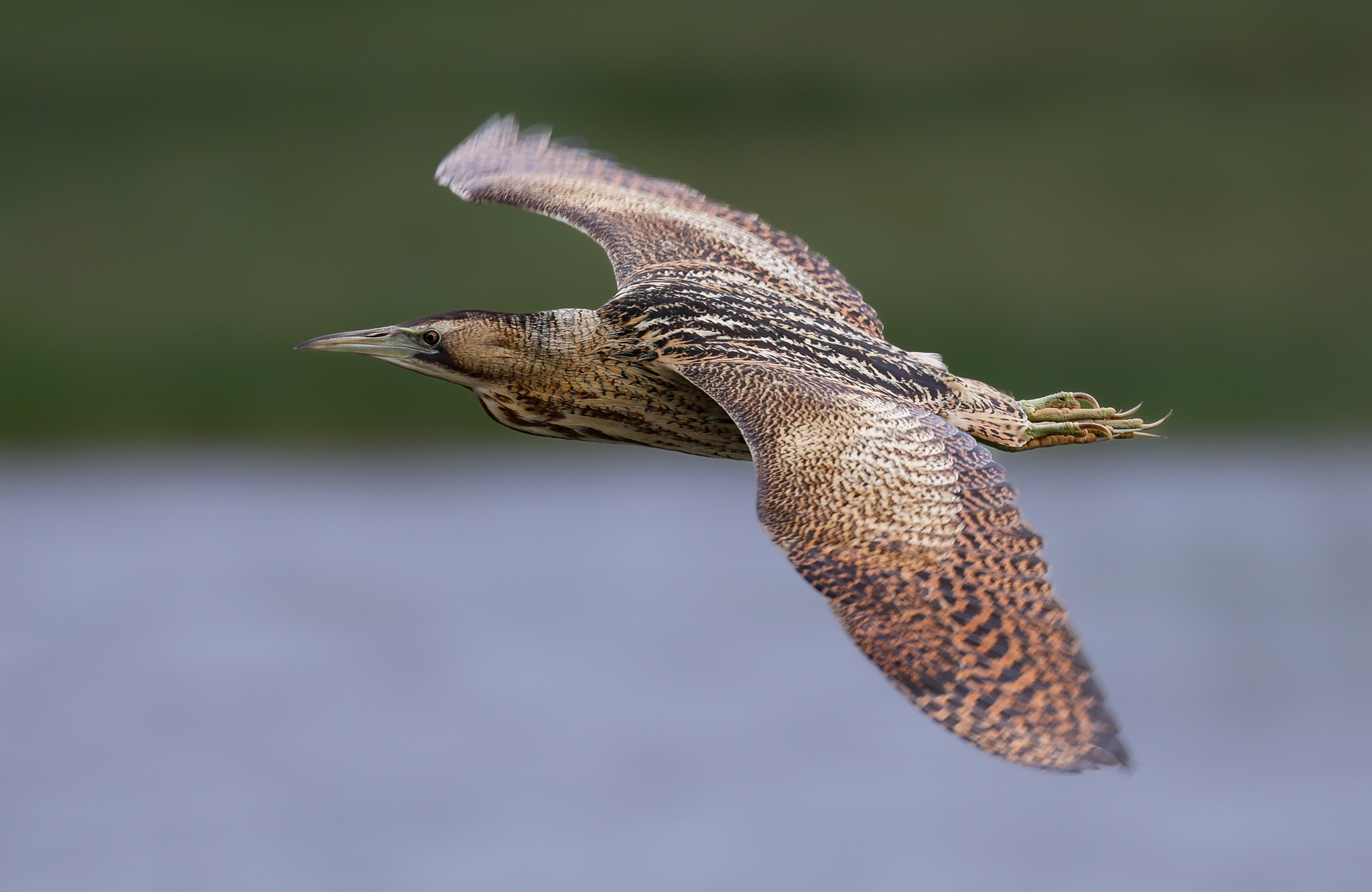
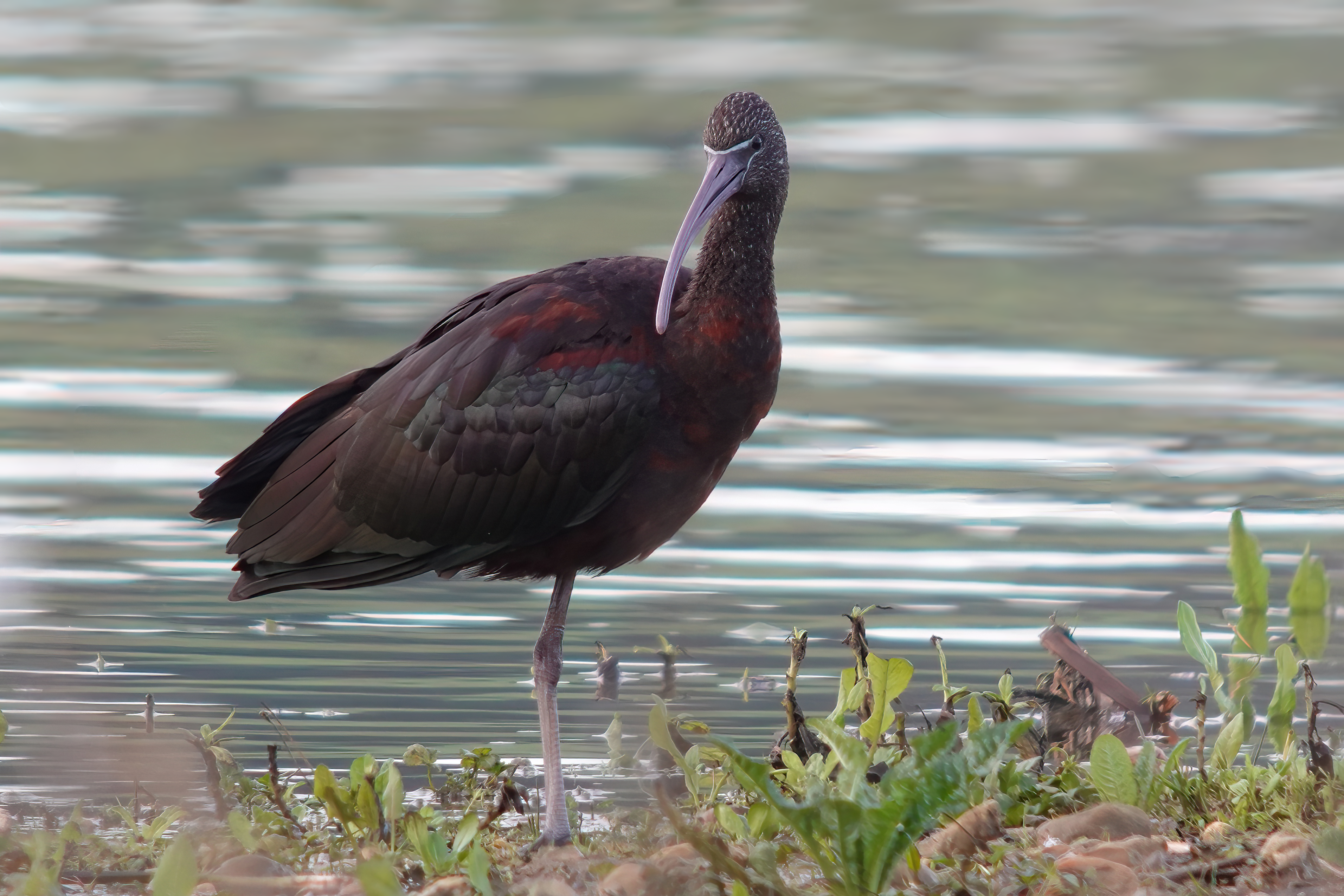
After going unreported since 13th, the Glossy Ibis was back at Summer Leys on 22nd, while this week’s Bitterns were the preserve of Titchmarsh LNR, where one was seen on 16th and 19th. Cattle Egrets maintained a low profile with single birds at Titchmarsh 16th, Ditchford GP’s Irthlingborough Lakes and Meadows LNR on 18th and seven in a cattle field immediately north-east of, and viewable from, Kinewell Lake at Ringstead GP on 19th.

And as for raptors, they were in short supply during the period. After an impressive showing last week, Hen Harriers were off the scene completely, while a single Marsh Harrier continued to visit Summer Leys between 17th and 22nd after what was presumably the same individual seen at adjacent Earls Barton GP’s New Workings (South) on 16th.

Single Short-eared Owls were seen just prior to dusk at Nobottle on 16th and at Harrington AF on 18th.

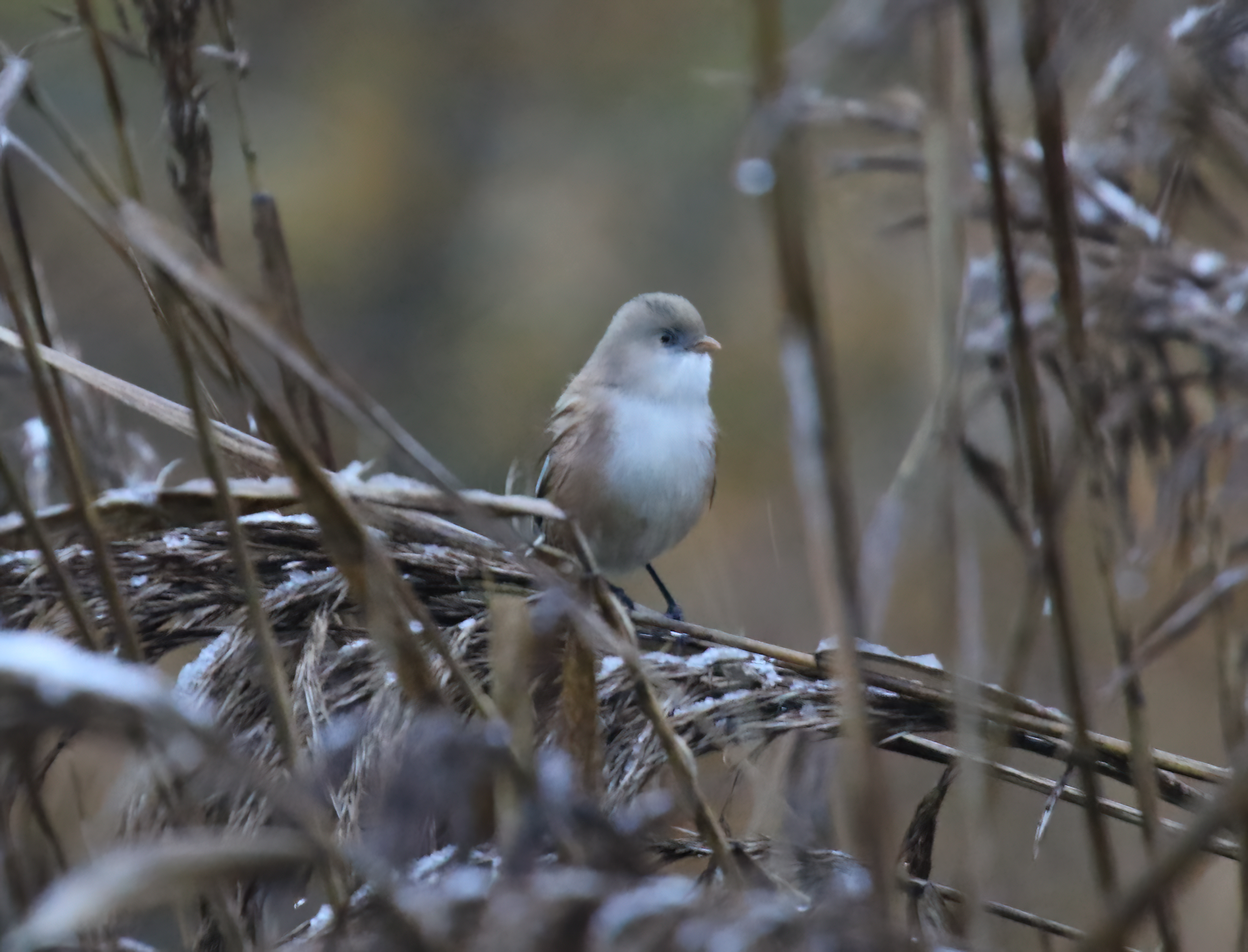
After no reports since 10th, the female Bearded Tit at least appeared still to be present on site at Stanwick on 19th.

Seen only at four sites compared to nine last week, another species seeing a drop in numbers over the period was Stonechat, of which three were at Earls Barton on 16th and Pitsford on 20th, while singles were also present at Summer Leys and Upton CP.

Following the county’s first of the year last week, another ‘in flight’ Rock Pipit was seen and heard over Daventry on 22nd, constituting another bizarrely late record.

And even though they were still out there to be found, the level of attention given to Hawfinches waned markedly during the period, compared to that of the previous week.

Just the two key localities of Blatherwycke and Cottesbrooke produced all of this week’s birds with the first of the these holding eight on 16th, five on 18th and 20th and two on 22nd, while the latter held three on 16th, five on 17th and one on 18th.

Newsround – 12th to 18th October 2024

Edging that little bit closer to late autumn saw the arrival of large waves of winter thrushes pushing through the county, as well as the first Whooper Swans this side of the last winter period. Reluctant to move on, the Glossy Ibis dug its heels in, while yet more Yellow-browed Warblers seemed intent on making further advances on their already record high numbers.

Stanford was the top performing reservoir this week, with the birds on offer there including the locally roaming Pink-footed Goose again dropping in on 17th. Prior to this, four Whooper Swans flew east early on 13th, followed by what was believed to be a different quartet on the water there later in the afternoon. This latter herd remained overnight and was seen to depart to the east early the next day. Thrapston GP also got in on the action with four on Titchmarsh LNR on 13th, one of which bore rings – a white ‘65L’ on its right leg and a metal ring on its left. Observer research revealed it had been ringed as an adult male at Lake Sandvatn, Iceland on 8th August this year and that the Titchmarsh sighting was the first anywhere since this date.

Back at Stanford, Red-crested Pochard numbers fell from seven to four, all of which were still present at the week’s end. Elsewhere, the first-winter drake remained settled at Boddington Res throughout the period and two were present at Earls Barton GP’s New Workings (South) on 13th.

With waders well and truly off the radar, it fell to gulls to provide a little waterfront entertainment. Boddington Res and Stanwick GP were to carve up the Mediterranean Gulls between them, Boddington regularly producing a first-winter between 14th and 18th and Stanwick a second-winter on 14th-15th.

Stanwick also produced a first-winter Caspian Gull on 12th, while single adults visited both Boddington and Stanford on 15th and Hollowell Res held two adults on the latter date and one on 17th. The week’s Yellow-legged Gulls were found at three widely separated localities with singles at Stanwick on 12th, Boddington on 12th and 14th and Ravensthorpe Res on 17th, while five joined the roost at Boddington on 15th.

A late Black Tern was found at Pitsford Res, also on 15th.

Continuing its protracted stay, the Glossy Ibis notched up another week at Summer Leys LNR and surrounding area, where it has now been present for a solid 28 days. Interestingly, one was reported by a biodiversity survey team at Stanwick on 13th, which seems likely to be a different individual as the Summer Leys bird was being reported at, or about, the same time.

Stanwick was also the only site to record Bittern this week, with one there on 14th, while the same location saw three Cattle Egrets fly over on 12th and four on the ground there the following day. Further down the valley, fields immediately north-east of Ringstead GP produced the highest counts of the week, though, with one on 12th, eight on 15th and six on 18th, while one turning up to roost at Boddington on 14th was only the second record for the site.

Meanwhile, raptors were up on the last period with sightings of Marsh Harriers dominating. Seemingly now part of the Summer Leys furniture, one remained there throughout the week, also being seen in the wider area of the Earls Barton GP complex on 15th and 18th, while further reports came from Titchmarsh on 14th, Stanwick on 15th and Ditchford GP on 18th.

A Hen Harrier – the fifth of the autumn, so far – was present at Stanford on 17th-18th but was not seen thereafter and a Merlin stuck around in the Brampton Valley, between Cottesbrooke and Hanging Houghton, on 14th-15th.

After the last fortnight’s record-breaking four Yellow-browed Warblers, there was more to come and it seems we’re not done yet with this little Siberian gem. While the Ringstead bird was still to be had on the first day of the period, another was found at Stanford on 15th, followed by yet another at Earls Barton GP three days later, on 18th. And here’s the thing: over the last ten years (2014-2023) Yellow-broweds have outnumbered Wood Warblers in the county with a total of fourteen vs. thirteen of the latter. Throw in this year’s (2024) occurrences for both so far and Wood Warbler moves up one to fourteen, while Yellow-browed soars to nineteen – potentially twenty if this week’s individual at Stanford was indeed a new bird!

Rightly overshadowed, as well as likely overlooked, a Ring Ouzel at Harrington AF on 16th was about par for the autumn course as far as this species is concerned.

And as for other passerines, Stonechats were found in at least eight localities, comprising Brampton Valley, Ditchford, Earls Barton, Harrington, Hollowell, Pitsford, Stanford and Summer Leys, with maxima of six in the Brampton Valley and at Earls Barton.

It should be said that, given the numbers seen in the UK so far this autumn, ‘Eastern Stonechat’ is not impossible and, although it’s a bit of a long shot, inland records are not unprecedented …

Newsround – 28th September to 11th October 2024

We’re now well into October and sustained easterlies in the early part of the month have produced a veritable smorgasbord of Siberian vagrants along the eastern coast of Britain. Although situated far inland, we can’t really complain about the mid-autumn fare on offer locally. With a long-staying Glossy Ibis remaining throughout the period and a record number of Yellow-browed Warblers set to match that present on the Isles of Scilly (well, almost), there was enough out there to fuel enthusiasm and set local pulses racing.

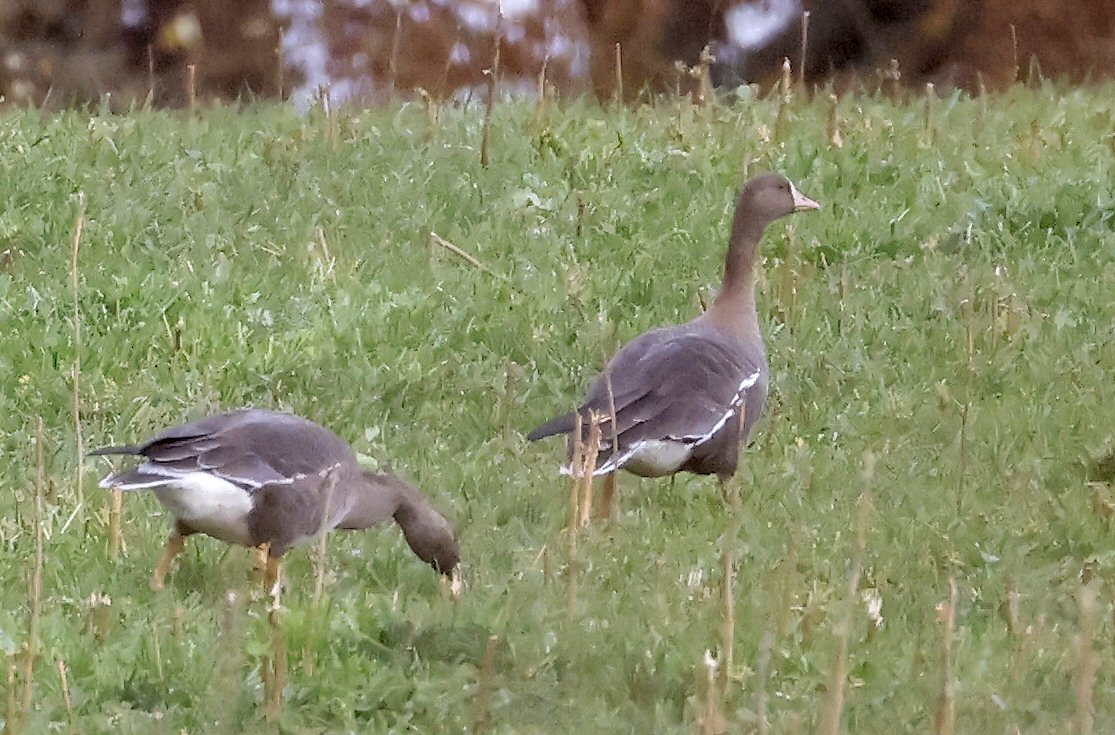
With the provenance of a lone White-fronted Goose flying south-west over Stanford Res on 28th unestablished, it fell to the reservoir itself to produce the majority of this week’s more static wildfowl. Remaining there from the last full week of September was the flock of seven Red-crested Pochards, holding steady throughout the period, while the first-winter drake at Boddington Res also appeared similarly settled. Two more put in a one-day appearance at Daventry CP on 4th.

After a visit on 3rd September, what was presumably the same female Ferruginous Duck was back again at Stanford on 11th. It seems likely this is one of the birds which has been frequenting Shawell Sandpit, Leicestershire, since early September. As the duck flies, this site is little more than 6 km from Stanford.

And after what has turned out to be a decent year for Common Scoters in the county, three more were found at Daventry CP on 9th.

Summer Leys held the pick of the period’s meagre offering of waders, with a Black-tailed Godwit there on 3rd and a Ruff on 29th, 4th and 5th, while a Jack Snipe was found at Daventry CP on 7th.

The number of scarce gulls was down to just a first-winter Mediterranean Gull at Stanford on 9th-10th and single adult Caspian Gulls at Hollowell Res on 2nd and at Stanford on 5th. Yellow-legged Gulls did not fare much better, with a second-winter at Hollowell on 29th and a near-adult at Daventry on 9th.

And a late juvenile Arctic Tern at Thrapston GP’s Town Lake, from 30th until 2nd, was about par for the course for local records at this time of the year. Black Terns continued to appear throughout the period, though, with the four late September juveniles lingering at Clifford Hill GP until 1st and new birds turning up at Thrapston GP’s Town Lake, where there were three on 29th, followed by singles at Ravensthorpe Res on 30th, Hollowell from 10th to 11th and at Pitsford Res on the latter date.

And sticking more or less with seabirds, it’s been a while since the last Gannet was recorded in the county – 7th October 2021, to be precise – so two together in flight over Ditchford GP’s Irthlingborough Lakes & Meadows LNR on 2nd was a boon for one local observer. They flew south-west but, perhaps surprisingly, they were not picked up by any other observers further up the Nene Valley in the same way that some have been in previous years.

Now seemingly settled, the Glossy Ibis, first found on 21st September, was seen daily on and around Summer Leys, although it was mobile between Earls Barton GP’s Hardwater Lake area and, at one point, Wellingborough Embankment. Not the crowd-puller it once was, we can no doubt expect more to come as ‘Cambridgeshire overspill’ following recent breeding in that county, where the species seems nigh on gaining residential status.

While Summer Leys held on to its Bittern, which was seen sporadically up until 9th, there was neither sight nor sound of the one at Stanford after 28th.

The number of Cattle Egrets in the Nene Valley looked like it was beginning, once again, to approach double figures when eight were located in water meadows immediately east of Woodford on 4th. At least seven were still present the following day. One also visited Irthlingborough Lakes & Meadows LNR on 3rd.

And have we now seen the last of this year’s Ospreys? Single birds were watched flying purposefully over Stanford on 3rd and south-east over Lowick on 9th. To demonstrate just how quickly they make tracks for their winter quarters, a ringed individual that was present at Belvide Res, Staffordshire on the 25th September was back at the Palmarin Reserve in Senegal 14 days later, on 9th October (per Tim Mackrill).

Other raptors were also available – namely Marsh Harriers. As well as being seen almost daily at Summer Leys, singles appeared at Pitsford Res on 28th, in the River Tove Valley below Grafton Regis, on 4th and at Thrapston on 7th-8th.

Also out quartering rough ground was the autumn’s first Short-eared Owl, at Harrington AF on 3rd.

But the classic jewel in the autumn crown for many of us is Yellow-browed Warbler and with another major UK influx underway it would have been surprising if we had not picked up at least one. And so it came as no surprise when one was pulled from the hallowed nets of the Stanford Ringing Group on 28th, when it was ringed and immediately released it back into the nearby scrub from whence it came.

What was a surprise, though, was the trapping of a second Yellow-browed at the same site the following day! Could things get any better? Well, in fact, yes. A third, unringed, individual was found only a few hundred metres away along the reservoir periphery, on 30th, this third bird remaining in the area until 4th.

Meanwhile, the individual trapped and ringed on 29th was retrapped on 3rd and upon weighing, it was discovered that it had increased its weight from 7.1 grams to 7.8 grams – a weight gain of almost 10%.

Before the period was out, though, another was discovered at Ringstead GP, alongside Kinewell Lake, on 11th, giving rise to a record four Yellow-broweds in one Northamptonshire autumn – and it’s not over yet …

Other passerines were available, of course, and a late Common Redstart was trapped and ringed at Pitsford Res on 4th, while Stonechats were found at Earls Barton, Grafton Regis, Hollowell and Stanford, with no more than two at each locality.

In Northampton, a Hawfinch was reported briefly at Dallington Cemetery on 5th.

Newsround – 21st to 27th September 2024

The last full week of September kicked off nicely with a Glossy Ibis at Summer Leys and ended on the same note. However, from the get-go, heavy downpours off the near continent and in from the Atlantic persisted throughout the period, resulting in all-out flooding of the Nene Valley, considerably widening the choice of wetlands for any visiting birds associated with them. Conversely, the choice for birders became more limited as rising water levels effectively cut off access to a number of favoured areas.

Despite being nice weather for ducks, as they say, there was little new in the way of dabblers and divers this week and it’s overwhelmingly likely that the Pink-footed Goose found with Greylags, at Hollowell Res on 24th, was last week’s bird from not-too-distant Naseby Res. Once again, the female Ruddy Shelduck was seen on the dam at Ravensthorpe Res on 22nd and, at Stanford Res, the number of Red-crested Pochards had nudged up to seven well before the end of the week. A new Red-crested Pochard appeared at Boddington Res on 26th and was still present the next day.

Sticking with Boddington, the reservoir was added to the list of sites producing Black-necked Grebes this autumn when one was found there on 24th. Like last week’s bird, though, it had disappeared by the following day.

It’s late September and we’re now seeing a wind-down in wader passage with just two species featuring in the week’s tally. Two Black-tailed Godwits visited Stanwick GP on 22nd, the same date seeing two Ruffs fly over Stanford, followed by one discovered at an extensively flooded Summer Leys on 27th.  

More was to unfold at Stanwick where, as we moved into day 2 of the period, a gull passing through, initially identified as a first-winter Kittiwake, is now believed more likely to have been a juvenile Sabine’s Gull. With one in Leicestershire on the same date and another in Derbyshire two days later, it would seem in all probability that this was, frustratingly, the one that got away …

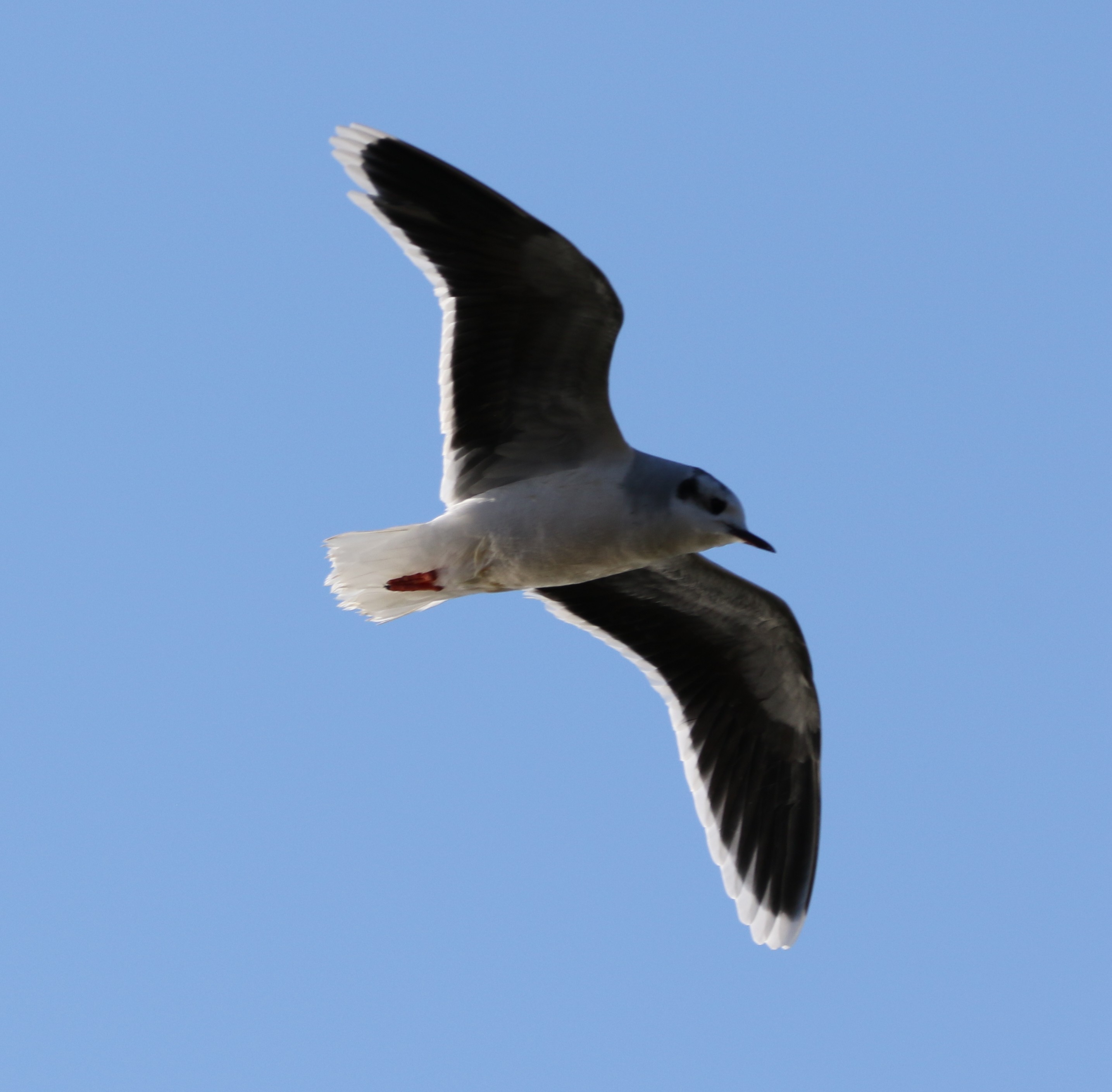
Not quite measuring up to the above but certainly in no shadow of a doubt, a first-winter Little Gull visited Boddington on 23rd. Two first-winter Mediterranean Gulls also appeared this week, although both moved quickly on. The first was at Stanford on 22nd, the second at Daventry CP three days later, on 25th. The period’s Caspian Gulls comprised a first-winter and near-adult at Daventry on 23rd and two adults – including the regular, loitering, German-ringed individual – at Naseby Res on 24th, one of which remained the next day. Pitsford held up to two adult Yellow-legged Gulls between 21st and 24th, while a first-winter appeared at Boddington on 26th.

Following a recent run of records from several localities, including Clifford Hill GP, during the second week of September, Black Terns were back in the frame at the latter locality with three juveniles there on 24th being joined by a fourth individual from 25th to 27th.

But the star prize was discovered further down the Nene Valley at Summer Leys, just as the week commenced, on 21st. Enter Northamptonshire’s eleventh-ever Glossy Ibis. After spending little more than three hours on the Scrape there, it flew off and that was that – or so it was believed. Early on 22nd, though, it was back for a matter of minutes before again vanishing and reappearing as a fly-past on 24th. Three more days elapsed before it was again seen there on the ground in a landscape drastically changed by extensive flooding. In the meantime, one was reported flying over the A5 north of Towcester at Foster’s Booth, on 23rd.  

Far less rare nowadays, the period’s Bitterns were divvied up between Summer Leys, where there were up to two, and Stanford, which held on to its newly acquired individual found last week. All remained throughout. Continuing to maintain a low profile, Cattle Egrets were reduced to two at Stanwick on 21st.

And after none last week, an Osprey drifted over Stanford on 27th, while Marsh Harriers took a tumble down to just the one, regularly visiting Summer Leys throughout the period.

A Whinchat at Hollowell on 25th might well be the last we see of the species this year, having been replaced by Stonechats both moving through and moving in for the winter. Examples of the latter were singles at Summer Leys on 23rd and Boddington on 26th, while two were at Hollowell on 24th-25th.

Northern Wheatears were also on the wane, with up to two – possibly three – at Clifford Hill between 24th and 26th.

Newsround – 31st August to 6th September 2024

As we crossed the line into meteorological autumn, a humid week kicked off with a strong southerly airstream from the continent, swiftly being replaced by sustained north-easterlies out of Scandinavia. The weather’s influence on the birds occurring may have been difficult to gauge and while Stanford Res scored its, and the county’s, second Ferruginous Duck of the year, there was plenty afoot to keep local birders on their toes.

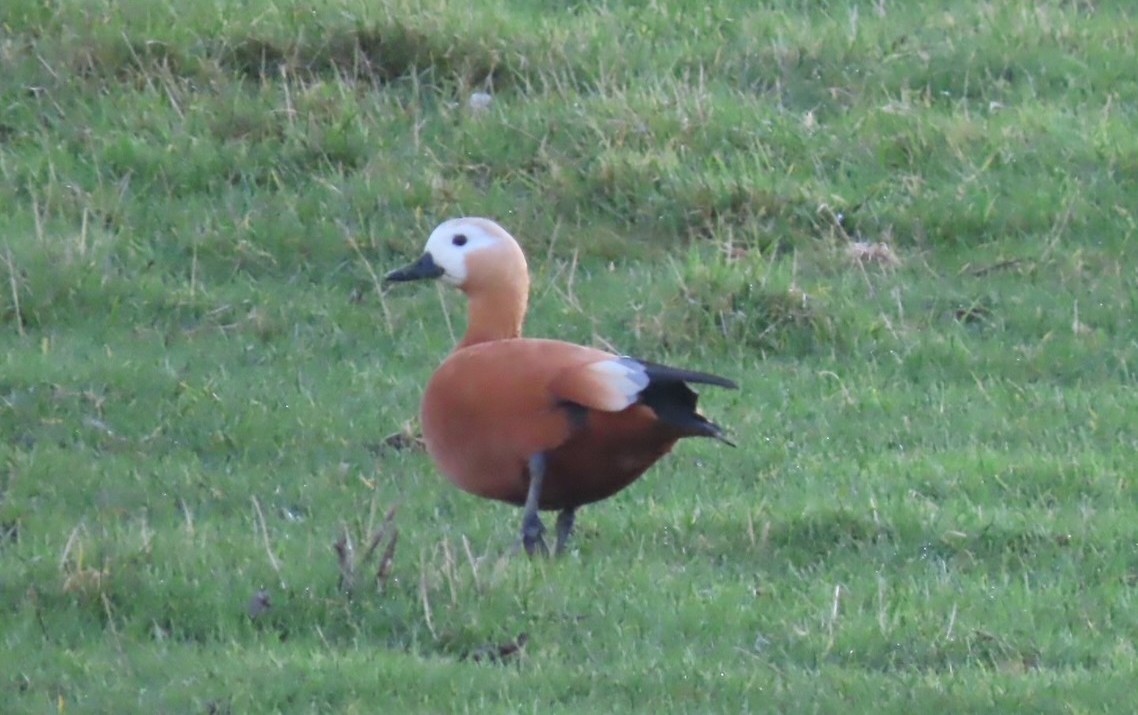
And in terms of locale, that’s precisely where we start, with the female Ruddy Shelduck keeping up appearances as the week duly unfolded. The only other dabbling duck to make it into the Newsround was Garganey, with up to three extending their stay, and still mobile, around Summer Leys LNR throughout.

But the wildfowl of the week occurred when Stanford laid claim to its second Ferruginous Duck of the year – this time a female. Found during the morning of 3rd, it proved itself a slippery customer, evading further observation until putting in a brief reappearance during the evening. It was not seen subsequently …

More usually associated with spring rather than autumn, Common Scoters were making news on the last day of the period when Stanford again delivered, producing two drakes, while a drake was also found at Clifford Hill GP. These formed part of a wider inland movement through Central England, from West Yorkshire to Surrey, with records from nineteen localities during the latter half of the week.

Also at Clifford Hill, the now long-staying Black-necked Grebe chalked up another week in residence, attracting a steady procession of observers – some apparently making a special trip from as far away as Luton …

And as for waders it was down to just four species to keep the wheels turning, top of which was a single, short-staying Whimbrel on the dam at Pitsford Res on 2nd. With the peak passage period for Black-tailed Godwits long gone, this week’s stragglers were made up of three at Summer Leys on 31st, followed by one there on 6th, the latter date also seeing one at Wicksteed Park Lake, Kettering. Summer Leys also held on to last week’s juvenile Ruff throughout the period, while five were present there briefly on 1st. A juvenile female also visited Daventry CP on 3rd.

Also at Summer Leys, a Greenshank remained throughout and another was found at Thrapston GP’s Titchmarsh LNR on 5th.

The autumn’s first Little Gull – a first-winter – dropped in at Stanford on 5th.

Two more Mediterranean Gulls hopefully laid the ground for more to come – a juvenile at Ravensthorpe Res on 1st, followed by a first-winter at Boddington Res over the three days of 4th, 5th and 6th.

Boddington also produced three out of this period’s four Caspian Gulls with a juvenile on 2nd and two different second-year birds on 5th and 6th, while another juvenile was found at Daventry CP on 5th.

With reports from seven localities the number of Yellow-legged Gulls climbed this week, Pitsford producing the highest day total of seven on 1st. Three were present there on 3rd and four on 5th and 6th. The second highest total came from Boddington, where there were six on 5th, two on 2nd and three on 6th. Elsewhere, four were found at Ravensthorpe on 1st with the same number also at Wicksteed Park Lake the following day, the latter site again producing two on 4th. Single birds were also present at Hollowell Res on 2nd, Daventry on 3rd and Titchmarsh on 4th.

There were further appearances this week in the shape of Sandwich Terns, the surprising autumn run of which is clearly far from over, the last two days of the period delivering birds to three different sites. Single fly-overs were clocked at Stanford on 5th and 6th, the latter date also seeing another over Daventry and a respectable six at Summer Leys. Unlike last week’s obliging three at Clifford Hill, none saw fit to stick around. In common with the aforementioned scoters, these formed part of a wider inland movement through Central England, from South Yorkshire to Surrey, with records from at least twenty-five localities during the last two days of the week.

Not to be sniffed at, a notable supporting cast comprised three juvenile Arctic Terns at Stanford on 2nd-3rd and single Black Terns at Pitsford on 1st and Boddington on 2nd.

Following one on Summer Leys Scrape last week, a Bittern was seen at Titchmarsh on 4th. Long gone are the days when this was the standout site for this species during the winter months.

In stark contrast to last week, Cattle Egret numbers took a tumble to just seven at Ditchford GP’s Irthlingborough Lakes and Meadows LNR on 31st, one between Earls Barton and Ecton on 1st and at least one at Stanwick GP on 6th.

And for those in need of a showy raptor fix, Summer Leys again proved its worth –firstly for Ospreys, two of which were present on 3rd, one straying to adjacent Mary’s Lake at Earls Barton GP. Two were also reported from Titchmarsh on 2nd, followed by one there on 3rd and 6th, while singles visited Pitsford on 31st, 1st and 4th, Stanford on 1st and 5th and Hollowell on 4th.

And secondly, with multiple daily sightings, Summer Leys simply oozed Marsh Harriers, three different birds having visited the reserve this week. Four other localities also produced singles, including the Brampton Valley between Cottesbrooke and Hanging Houghton on 1st and 6th, Boddington on 2nd, Harrington AF on 1st-2nd and Stanford on 1st.

Set against a backcloth of increasing numbers of common migrants, the week’s passerines saw the movement of Common Redstarts begin to fall. Three were trapped and ringed at Stanford on 31st and the same number was seen at Harrington on 2nd, followed by one there the next day. Elsewhere, singles were found at both Clifford Hill and Lamport on 1st and at Blueberry Farm, Maidwell on 2nd.

While Common Redstarts were on the wane, Whinchats were on the up, with birds seen daily across a collective eight localities. The highest numbers were six at both Stanford on 1st and Clifford Hill GP on 6th. Other site maxima were four in the Brampton Valley on 4th-6th, three at Hollowell on 31st, two at Harrington on 2nd and singles at Orlingbury on 4th and at both Boddington and Brackley on 6th.

A Stonechat remained at Hollowell on 1st-3rd and one was present at Harrington on 2nd, while Northern Wheatears again remained low in numbers with just singles at Harrington on 2nd-3rd, in the Brampton Valley on 3rd-5th, at Hollowell on 3rd and at both Clifford Hill and Pitsford on 4th.

Caspian Gull, yellow-legged gull, or hybrid?

In the world of  gulls, things aren’t always what they seem …

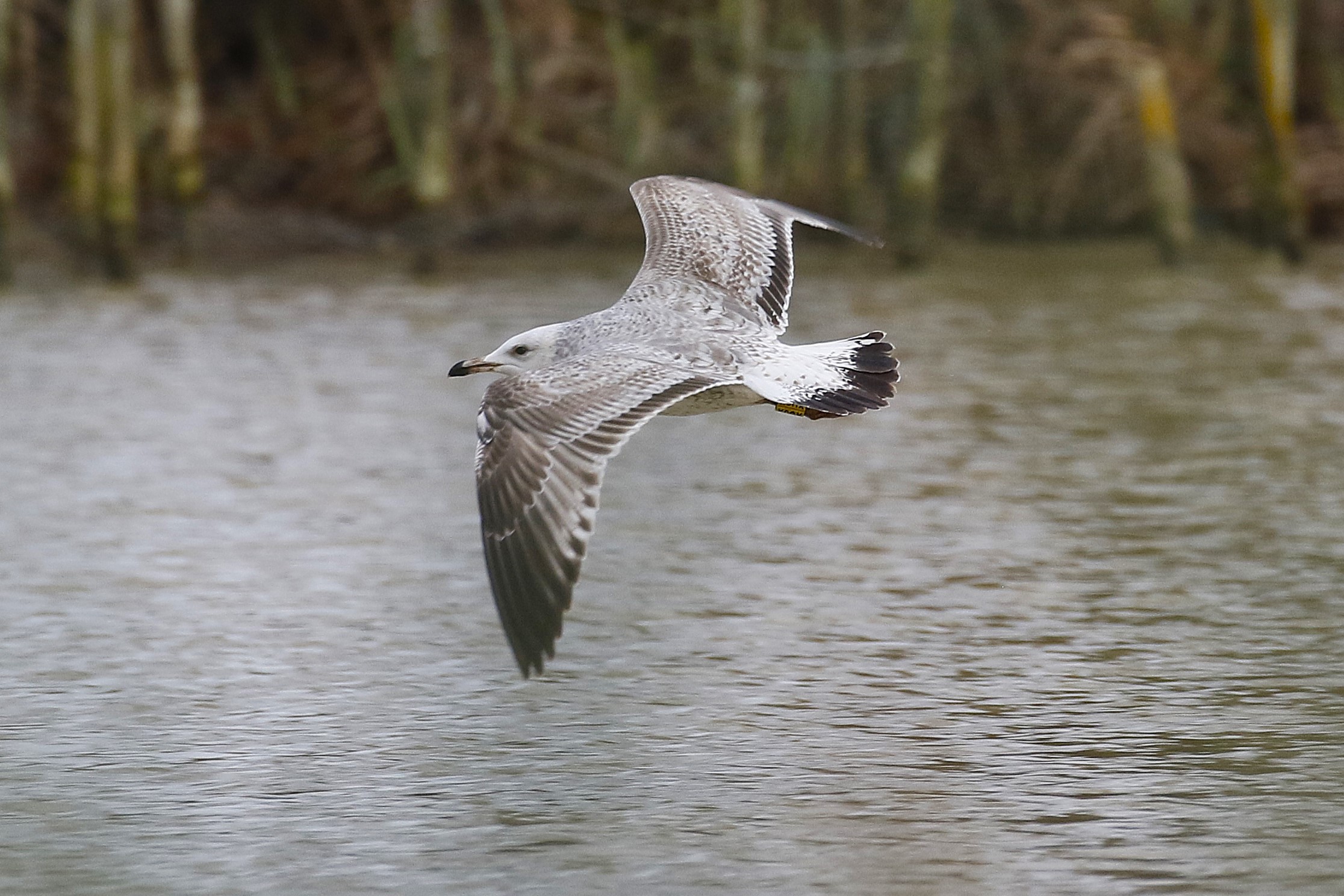
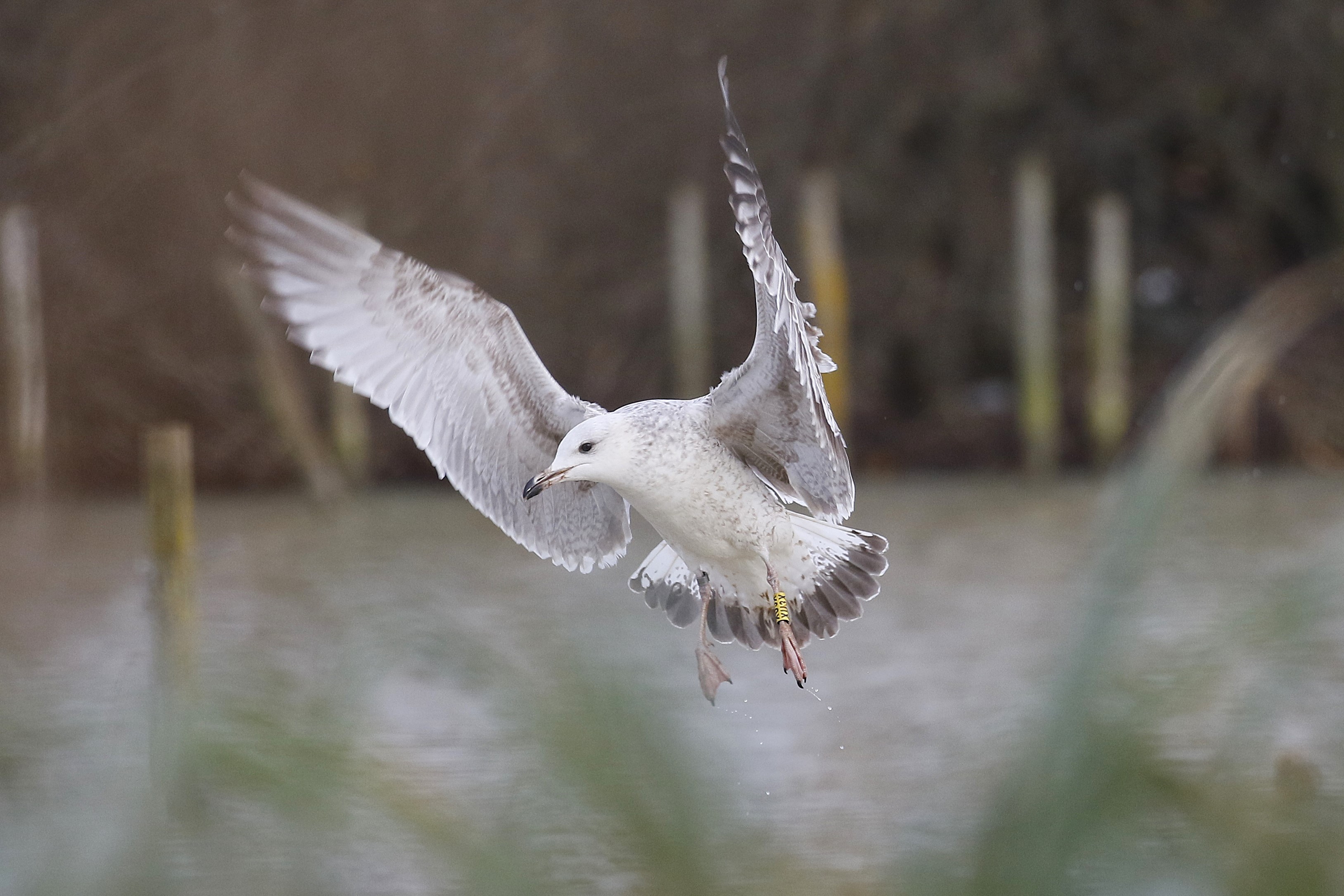
And so it was with the apparent ‘Caspian’ Gull at DIRFT 3 on 23rd July. This bird was part of a day-roosting flock of approximately 150 large gulls, which also included 7 Yellow-legged Gulls. Based on structure alone, this bird was within the Caspian camp but there were some anomalies when it came to plumage and, potentially, leg colour.

The upperparts and upper wings were darker than normal ‘western’ Caspian and as dark as nearby Yellow-legged Gulls, the legs dull/pale yellowish, flesh-coloured feet, it showed extensive black on the outer primaries while three inner primaries had been replaced with new ones which were still growing.

According to Malling Olsen & Larsson (Gulls of Europe, Asia and North America, 2004), these features seemed to fit reasonably well with Caspian Gulls from the eastern part of the species’ range. It did not go all the way to being a different race, not fitting barabensis in terms of the latter’s more compact structure, precise primary pattern and more intense yellow bare part colour.

After posting the images included here on the Western Palearctic Gulls Facebook page, out of 26 likes/comments, 4 were pro-Yellow-legged Gull and one pro-Caspian.

I also consulted Carl Baggott (Leicestershire Recorder and renowned gull expert). Here’s his take on it:

“Interesting looking beast. I can see where you are coming from, but it might be better to think of something closer to hand. Yellow-legged Gull is the most likely and I have seen some very Caspian Gull like birds in southern Europe. As you have gathered, the amount of black in the primaries is too extensive for a cachinnans, but it falls within the range of barabensis or michahellis. The leg colour is a bit insipid for a michahellis but within variation. The long legged small headed appearance can also be a result of the bird being a bit malnourished. Head moult can also alter a gull’s appearance. Can’t be certain but I would lean towards YLG. Another thing that seems to be an issue is Birdflu as some adult HGs now have black eyes and this might be affecting YLGs as well.”

However, given its Caspian-like features (parallel-sided bill, more gently curved distal part of upper mandible, consistently flattened head and long, sloping forehead, plus general jizz) I don’t think Caspian x Yellow-legged can be entirely ruled out, as hybrids have been recorded where the ranges of the two species overlap.

Carl kindly commented further:

“The hybrid idea may well be the answer.”

“ However, the long legs and flattish head do suggest Caspian Gull, but this isn’t always cast iron. There are a lot of YLGs in Eastern Europe and so hybrid Caspian x YLG should exist. I just can’t 100% rule out an odd ball YLG.”

Any further opinions welcomed …

Newsround – 13th to 19th July 2024

Mid-July is not renowned for its delivery of the rare and the scarce – this is, after all, Northamptonshire … But as the weather warmed up so, to some extent, did the birds with the county’s two scarcest – though regular – migrant terns appearing on the same day.

Now looking like a fixed feature of forthcoming weekly Newsrounds, the female Ruddy Shelduck took a break from its favoured location of Winwick Pools to visit Stanford Res on 15th but it was back at Winwick three days later.

The only other duck of note, though, was a female Common Scoter, which dropped into Thrapston GP’s Titchmarsh LNR on 16th.

This week’s passage of notable waders was again limited to the same three species as the week prior, with lower numbers of Black-tailed Godwits restricted to Stanwick GP, where there were eight on 16th and two on 17th. Stanwick also produced a Wood Sandpiper on 16th, while a single Greenshank remained at Lilbourne Meadows NR until at least 18th.

Pitsford Res held on to its regular adult Yellow-legged Gull all week, while 17th saw a Sandwich Tern pay the briefest of visits to Stanford and, following last week’s Clifford Hill duo, yet another Little Tern appeared fleetingly at Earls Barton GP’s Mary’s Lake on the same day. The largest of the two is only the fourth this year, while its diminutive cousin has six previous records in 2024 to date.

In the Nene Valley, the number of juvenile Cattle Egrets jumped from two to four at this year’s new breeding site on 13th.

Following a week with, surprisingly, no reports, Ospreys staged a bid for a comeback, with the reservoirs of Pitsford and Stanford producing the most sightings. Two were at the first of these localities on 14th, followed by singles there on 15th, 16th and 19th, while one visited the latter site on multiple occasions between 15th and 18th. Elsewhere, one was found at Ravensthorpe Res on 14th and one flew high east over Summer Leys LNR on 19th.

And on the passerine front, Common Redstarts continued to be seen in the usual hotspots for this species. Up to two were at Blueberry Farm, Maidwell between 13th and 18th, a male remained at Woodford Halse NR, where it was seen on 14th-15th, Lilbourne Meadows held on to a male between 14th and 19th and single females were found at Stanford on 14th and at Ramsden Corner Plantation NR near Upper Stowe on 17th.

The second Whinchat of the autumn put in an appearance at Pitsford Res on 15th.

Newsround – 6th to 12th July 2024

A somewhat unsettled week, weatherwise, delivered a varied selection of migrants across the board, with passerines pushing to make a comeback.

Settled back in one of its favoured localities was the female Ruddy Shelduck, at Winwick Pools, on the last two days of the period.

Once again, wader passage was dominated by Black-tailed Godwits which continued to drop in for short periods at a number of locations. Clifford Hill GP was the host to the most, producing nine on 6th, one on 9th and twenty-four on 12th, followed by Summer Leys LNR, which delivered ten on 6th and 7th, two on 9th and eight on 10. Smaller numbers included six flying east over Daventry CP on 10th, two at Stanwick GP on 6th and singles at Thrapston GP’s Titchmarsh LNR on 8th, Stanford Res on 9th and Lilbourne Meadows NR on 12th.

Two sites yielded Wood Sandpipers – a short-stayer dropping in briefly at Summer Leys on 6th and another completing a one-day stay at Lilbourne Meadows on 9th.

The latter site also produced the week’s only Greenshank, also on 9th.

On the larid front, a lone adult Yellow-legged Gull was at Pitsford Res on 9th, following one, or the same, there last week, on 30th. But, continuing what appears to be turning into a good year for the species, two more Little Terns put in an appearance at Clifford Hill GP, also on 9th. There have been five previous records so far this year.

Cattle Egrets maintained a low profile with two, possibly three, birds – all juveniles – that included one at Stanwick on 8th and one at both Summer Leys and at nearby Earls Barton GP on 11th.

Passerines were well represented for early July. A Black Redstart was found at Harrington AF on 8th, followed by a second bird discovered there the next day. Surprisingly, these are the first for 2024 and this year is the first this century that we have had no spring records. Up to three Common Redstarts – all males – hung on from last week at Lilbourne Meadows until at least 11th, two were at Blueberry Farm, Maidwell on 8th-9th, with one there on 12th and one was at Woodford Halse NR on 9th-10th.

The first Whinchat of the autumn, a male, put in a brief appearance by the River Nene, close to Earls Barton GP on 10th.

Newsround – 29th June to 5th July 2024

With a new week, a new month and a mounting backdrop of migrants, there can be little doubt that we are now in ‘ornithological autumn’ …

Just one bird keeping wildfowl afloat this week was the drake Common Scoter that dropped into Stanford Res on 3rd, no doubt a component of this species’ moult migration that takes place annually at this time of the year.

North of Walgrave at least one male Common Quail was still present, singing until at least 2nd.

But it’s now July and more waders are on the move. In terms of numbers, Black-tailed Godwits were, unsurprisingly, well in evidence with, chronologically, two at Ditchford GP on 29th, eight at Summer Leys LNR on 30th and two at Stanwick GP on the same date, two at Summer Leys on 2nd followed by one there on 5th, the latter date seeing six at Clifford Hill GP and one at Pitsford Res. Single Greenshanks visited Stanwick on 30th and Summer Leys on 5th.

The week’s larids were represented by lone Yellow-legged Gulls at Pitsford on 30th and Stanwick on 4th.

And bird of the week? Well, that accolade fell firmly to the Spoonbill that paid a brief, early morning visit to Summer Leys on 4th. Following an unconfirmed report of one in flight over Wood Burcote on 17th April and another short-stayer at Clifford Hill GP four days later, this week’s is only the third to grace the county so far this year.

Bitterns were again at one site, while single Cattle Egrets were at Earls Barton GP’s New Workings (North) on 29th and Summer Leys the following day, with four at Stanwick GP on 2nd.

The week’s fly-over Ospreys were widely spread across four localities in the county, namely Irthlingborough on 29th, Pitsford on 2nd, Stanford on 3rd and Thrapston GP’s Titchmarsh LNR on 4th.

And they’re back! We’re talking Common Redstarts. It was late April since we last saw one but this week Lilbourne Meadows NR dished up the first one of the autumn on 29th-30th and three males had accrued there by 4th.

The same date also delivered one apiece to Harrington AF and Pitsford, the latter site also producing a juvenile Stonechat, which was trapped and ringed there on 29th.

Newsround – 22nd to 28th June 2024

The movement of the jet stream to the north of the UK brought us a settled and dry week with temperatures reaching the high twenties for three consecutive days, thereby designated a heatwave. But one bird in particular generated heat of a different kind in the northern reaches of the county, up on the border with Leicestershire …

And it certainly wasn’t the female Ruddy Shelduck which, after its usual protracted absence at this time of the year, was back at Hollowell Res on 28th. Nor was it the Red-crested Pochard at Pitsford Res on the same date.

Following last week’s call for a Common Quail in the county, and after the suggestion that there may potentially be a long wait in the offing, as if by magic, three came along at once. Unlike buses, though, they were not easy to catch up with, or so it seems. On the evening of 25th, two males were singing north of Walgrave with one reportedly still present the following evening and two again on 28th. Meanwhile, another was discovered singing less than 5 km to the north-west, at Harrington AF, also on 26th.

A quick review of past occurrences suggests they are holding steady after a sharp peak in records between the late ‘80s and late ‘90s and there have been only four blank years in the last 55 years, namely 1985 and a run in 1973-75.  

And while the aforementioned species is arriving, waders are on their way back. Against a countywide backcloth of smaller numbers of Green Sandpipers, Common Sandpipers and Dunlin, an impressive flock of thirty summer-plumaged Black-tailed Godwits dropped in at Stanwick GP’s Main Lake on the last day of the week.

Sticking with Stanwick, three Mediterranean Gulls – two adults and a first-summer – flew south-west over the site on 25th, while a sub-adult Yellow-legged Gull visited Stanford Res on the same date.

It’s not too late for a spring Little Tern and, to prove it, one was found mobile around Hollowell on 22nd – the fifth for the county this year.

Bitterns continued to be seen at two sites, while Cattle Egrets maintained a low profile with singles at Stanwick on 27th and Earls Barton GP the following day.

It was all quiet on the Osprey front, too, with singles at Pitsford on 25th-26th and 28th, and at Hollowell on the latter date, while a total of six young birds from nests in the county were ringed on 26th. This week’s Marsh Harrier was last week’s Marsh Harrier – a standout, abraded individual that again visited Stanwick GP on 24th.

Although set to tantalise and tease, the birding gods smiled on Northamptonshire – albeit momentarily – this week when a female Red-backed Shrike was found in the southern extremity of Leicestershire, just north of Cottingham. Discovered early in the morning of 23rd, it remained on the wrong side of the line until mid-afternoon, when it briefly border-hopped into our own good county before promptly returning to Leicestershire.

Following the popular 2022 juvenile at Duston, this is only the fifteenth record for the county since 1971. In some respects, the occurrence of this week’s bird is not really out of context, given the phenomenal numbers recorded in the UK during late spring. The overwhelming majority were along the east coast, from Kent to Shetland, with more than 350 being recorded during the last ten days of May alone.