A cooler week by far, despite a run of strong southwesterlies delivering a temperate airstream off the Atlantic and western Europe. With more inbound spring migrants there was plenty to play for but, once again, the cream of the crop was well out of reach for all but those in the right place at the right time …
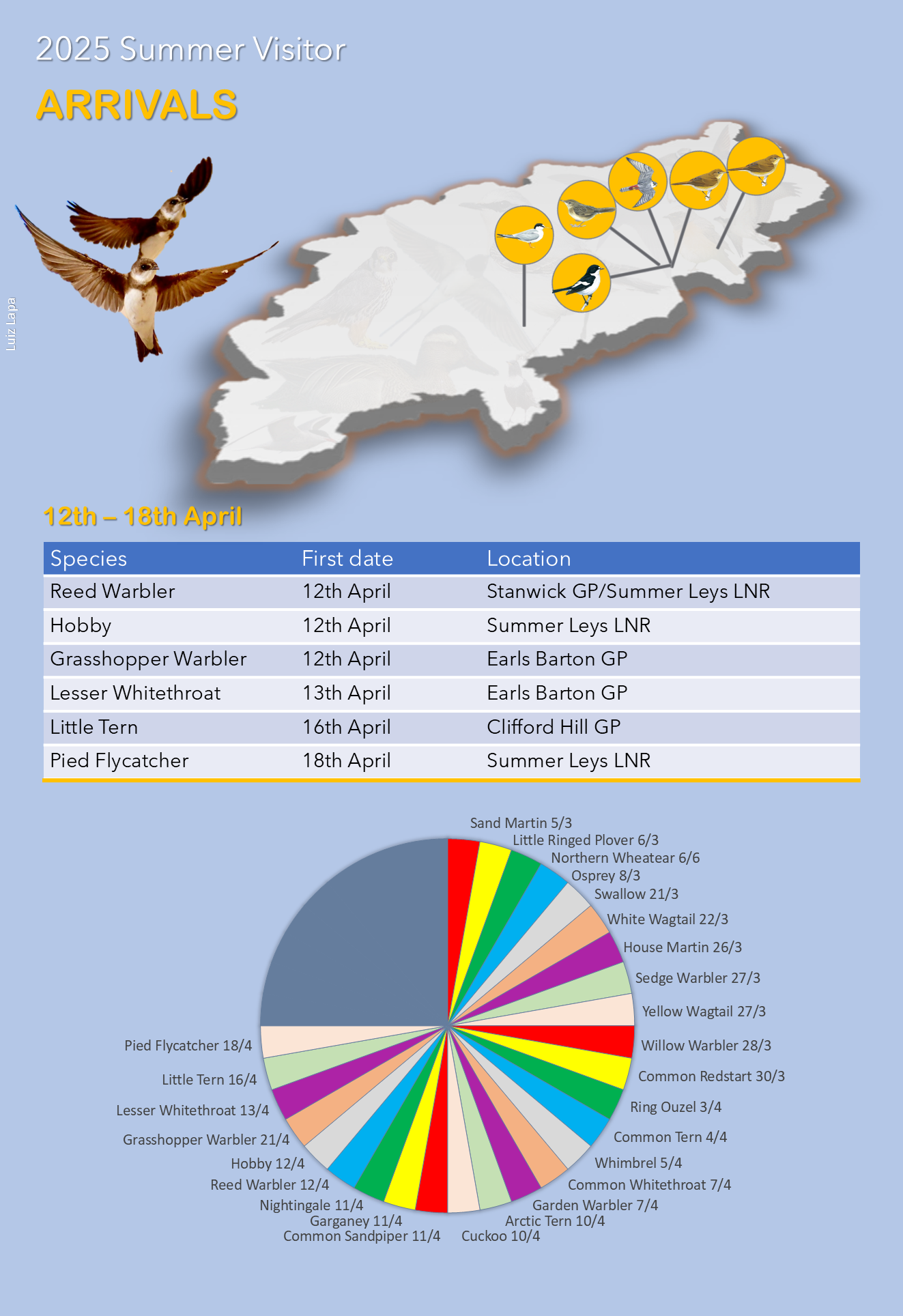
Summer visitors added to the clock during the period all occurred in the Nene Valley, although there was a Reed Warbler at Stanford Res the previous week but it was, alas, on the Leicestershire side of the county line.
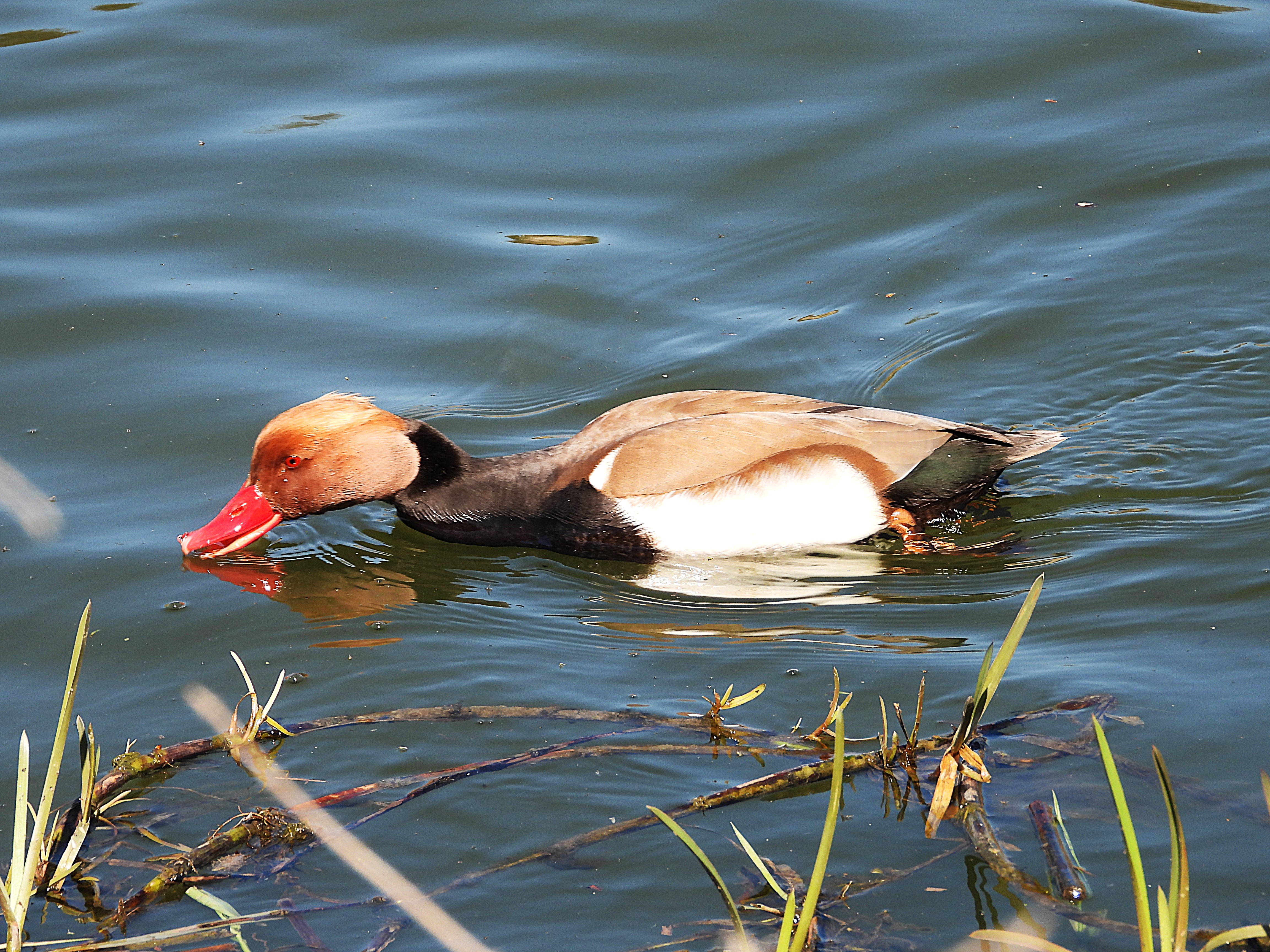
Pink-footed Geese were still very much in evidence this week and, as well as the long-stayer in the Earls Barton GP/Cogenhoe area being present throughout, the period’s quota included one again at Stanford Res on 13th and 14th and nine flying east over Lilbourne Meadows NR on the latter date. Last week’s Garganey duo remained throughout at Earls Barton GP’s New Workings, moving to the northern section on 18th, while the drake Red-crested Pochard was also keeping up appearances on the adjacent River Nene.
And, while we’re still in the same area, this site laid claim to the fourth occurrence of Common Crane for the county this year as one flew over, calling, on 12th.
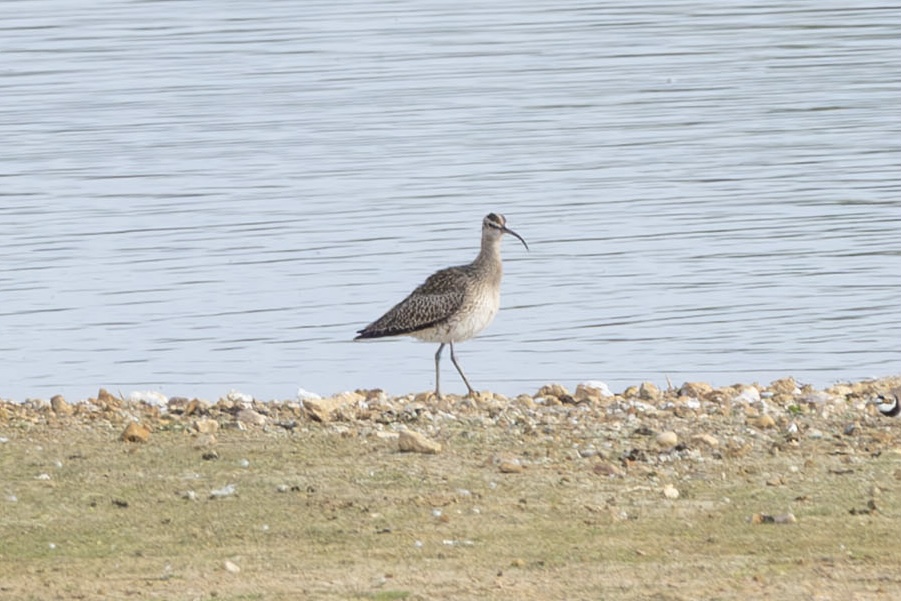
Further up the valley, Clifford Hill GP notched up its – and the county’s – second record of Grey Plover this year as an eastbound flock of five flew through without stopping on 15th. Whimbrels were also on the move, with singles at Earls Barton GP’s New Workings (South), Lower Barnwell Lock (Oundle) and Summer Leys – all on 12th and another paid a brief visit to Clifford Hill GP on 17th.

Last week’s solitary Bar-tailed Godwit at Summer Leys made it into the week, still being present there on 12th, while the same site produced a Black-tailed Godwit on 12th, 15th, 17th and 18th and two were at Stanford Res at different points in time on 15th.

More Greenshanks moved through during the period in which singles visited Lower Barwell Lock on 12th and 15th, Summer Leys on 12th, Earls Barton GP on 14th and Stanford on 15th and a single Jack Snipe was still holding out at Hollowell Res on 14th.
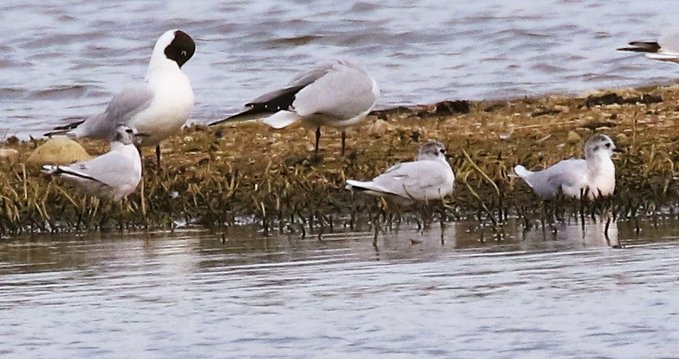
Compared to last week, this week’s Little Gull passage had reduced to a mere drip comprising three at Earls Barton GP on 12th, while a Mediterranean Gull dropped into Stanford on 17th. Larger gulls included a first-summer apparent hybrid Caspian x Herring Gull at DIRFT 3 on 13th, where there was also a first-summer Yellow-legged Gull on the same date.

The only other Yellow-legged Gulls were single adults at Pitsford Res on 13th and 16th.
A Little Tern at Clifford Hill on 16th was much appreciated as well as equalling the earliest ever county record – the latter being at Earls Barton GP in 1996.

And another week, another White Stork – this one visually tracked as it took its time in moving westward from Earls Barton/Whiston Lock toward Ecton. Surprisingly, there were no subsequent sightings in Northants but undoubtedly the same bird was logged later in the day over Napton Res in east Warwickshire, 37 km further west.

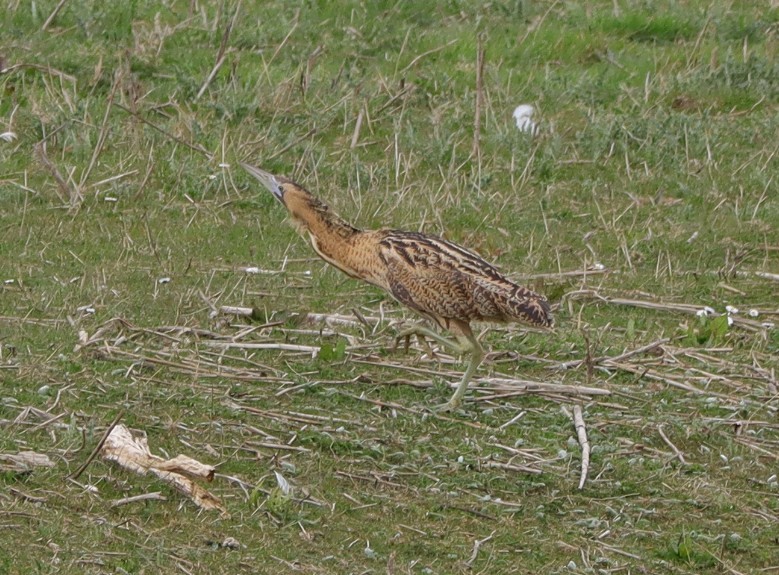
Once again, the Summer Leys Glossy Ibis clocked up another week, the latter site also producing a showy Bittern on 16th and 18th.
Four Cattle Egrets flying south-west over Stanwick GP on 17th once again represented a rather poor weekly showing for this species.
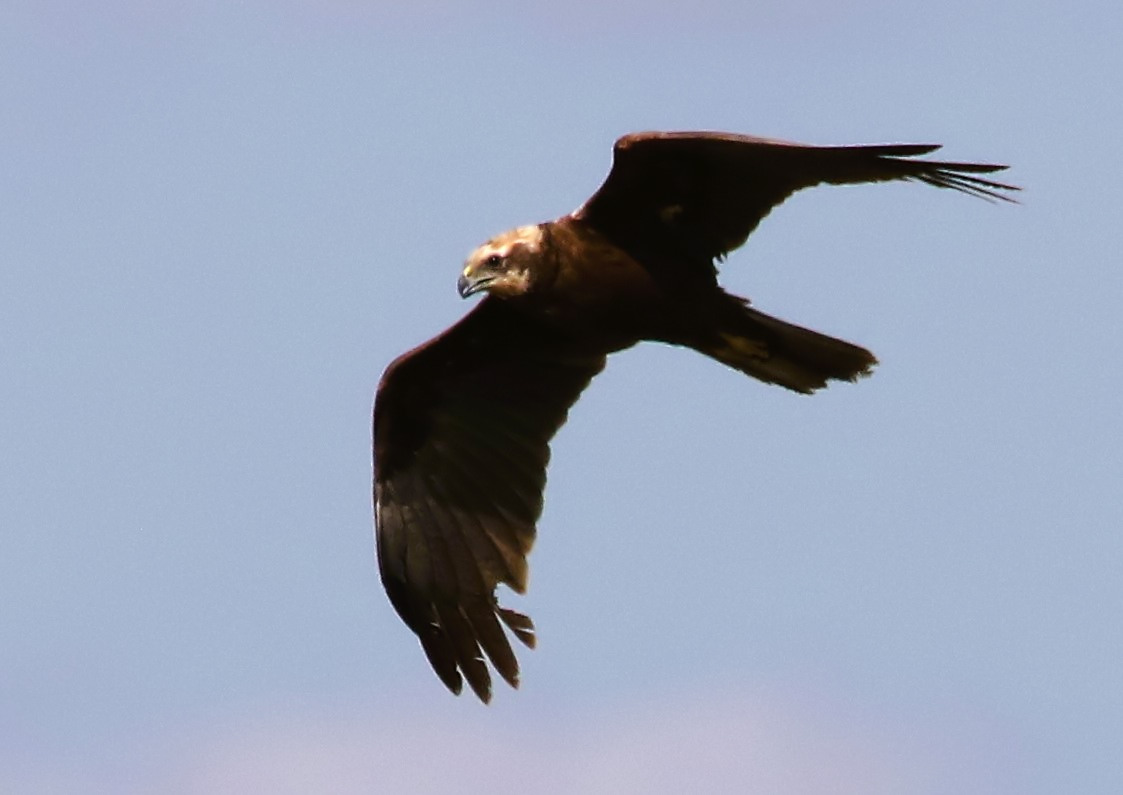
Not so for Marsh Harriers, though – that is, of course, for those in the right place at the right time. Favouring the reedbed, the immature male was again seen at Stanwick on 12th and 18th, Summer Leys produced two on 14th and one on 16th and one was nearby at Earls Barton GP’s Quarry Walk on the latter date.
We’ve become increasingly aware of this spring’s invasion of Hoopoes into the southern reaches of the UK and their subsequent penetration further north. Given that this week saw just over a hundred in the country, prior to the astoundingly higher total of one hundred and eighty the week before, it would have been surprising if we’d not managed to secure one in our own good county. And we did. Two, to be precise. Unfortunately, they were both off limits and appeared to be short-stayers only. The first was in a garden in Hanging Houghton on 13th before flying off, giving rise to a local search that yielded no result. The following day, one was photographed on the windowsill of a farmhouse at Silverstone prior to making a similar rapid departure. The wait for one nailed down goes on …

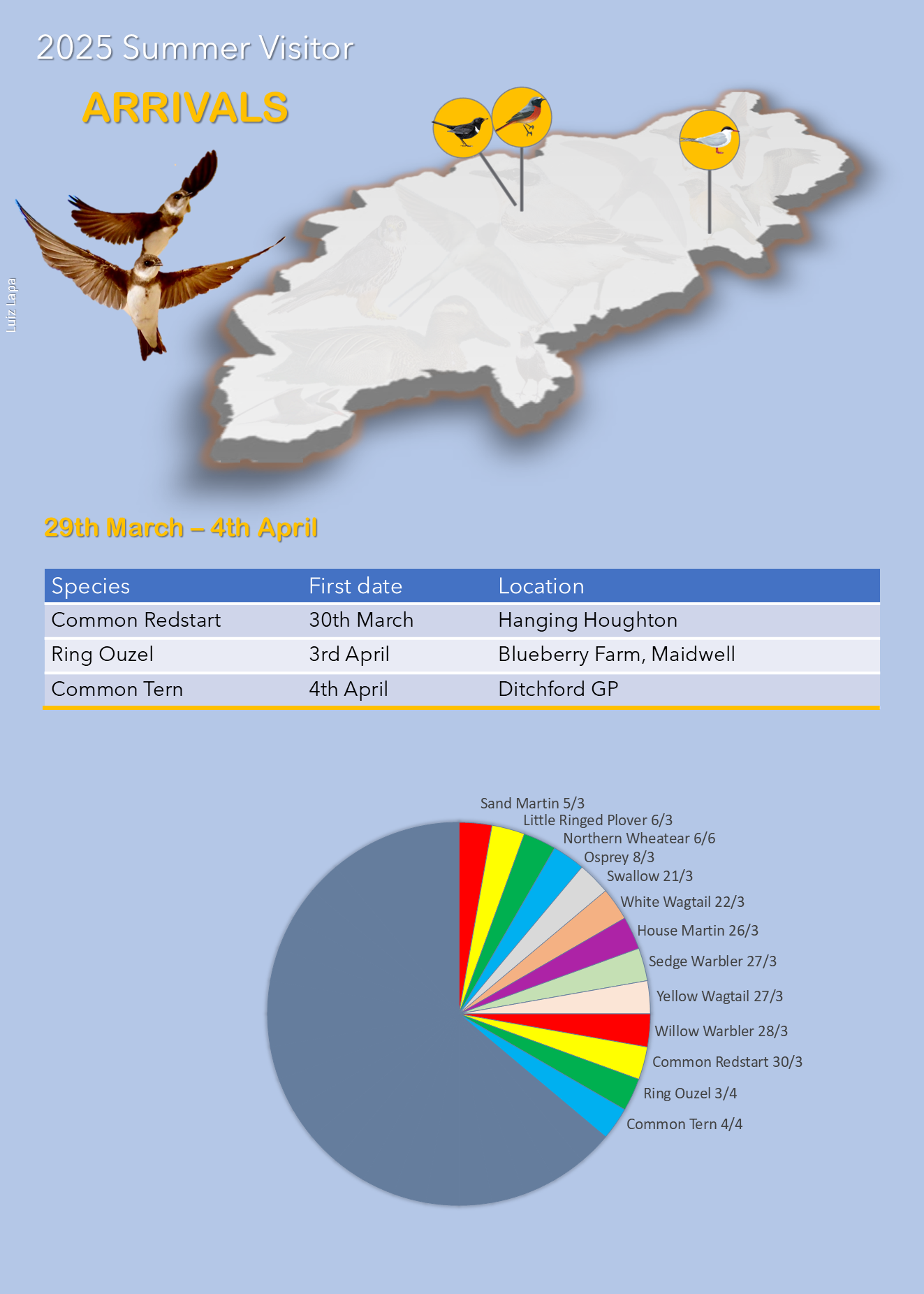
Meanwhile, there were more Ring Ouzels, unsurprisingly comprising one at Blueberry Farm, Maidwell on 14th and another at Harrington AF the following day – both favoured localities that have history for the species.
Conversely, Summer Leys does not have history when it comes to producing Pied Flycatchers, a male of which was seen briefly from the car park on 18th.
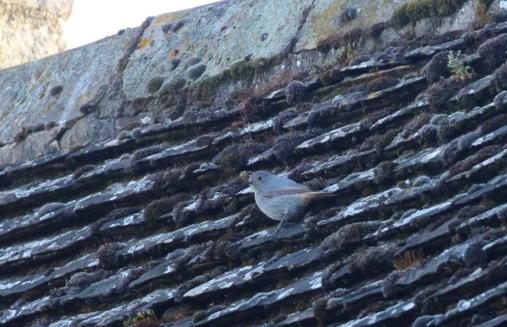
A Black Redstart at Harrington did a bunk before any would-be observers were on the scene on 17th, as did one photographed on a roof in Easton on the Hill the previous day. These are the fourth and fifth for the year, none of which has had the decency to stay put.
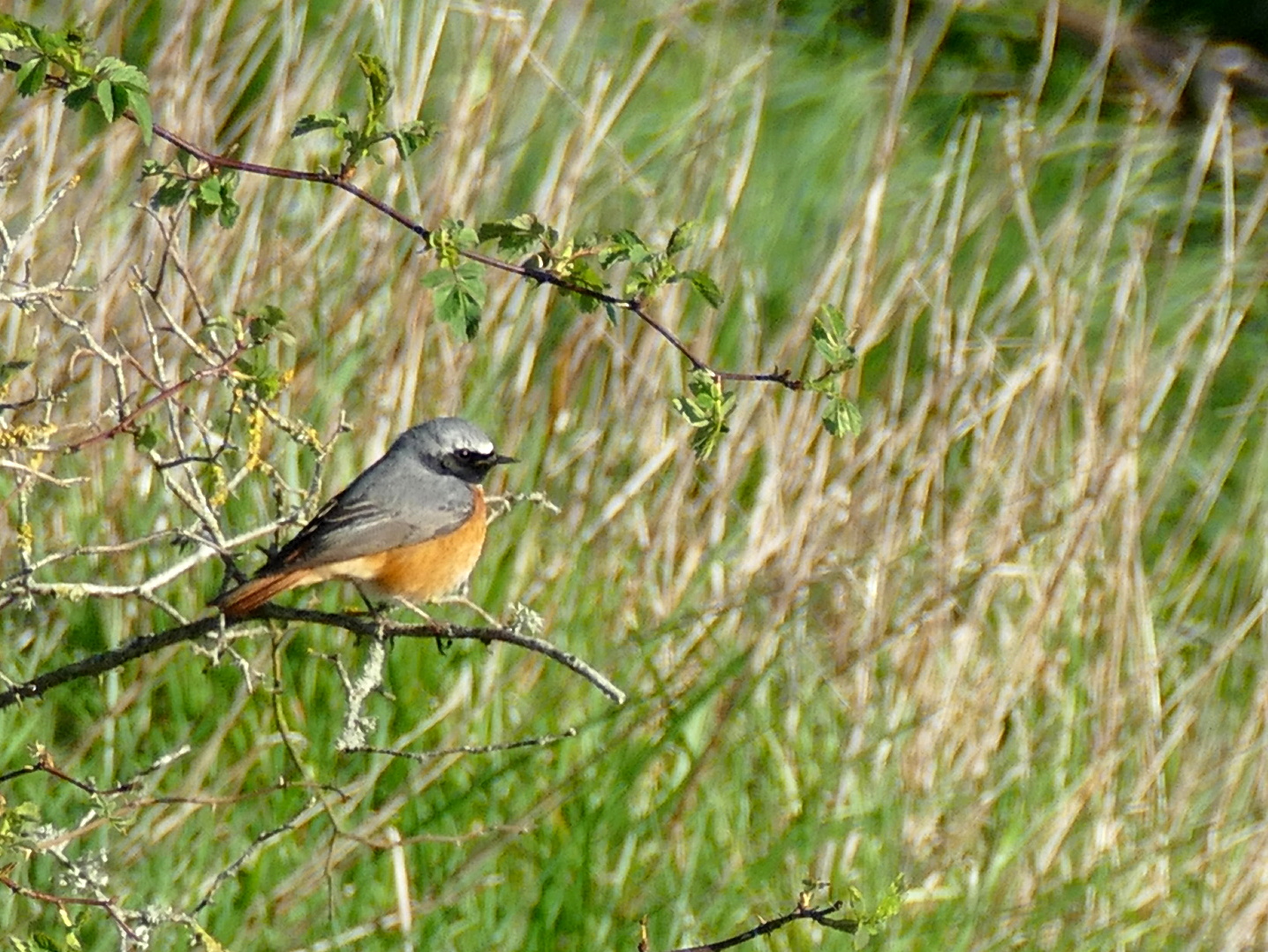
Single male Common Redstarts were found at Harrington on 13th-14th, Blueberry Farm on 15th and at Lilbourne Meadows on 17th.
There was a mini-surge in Northern Wheatears this week with, on 17th, Harrington producing nine, Hinton AF at least six, Clifford Hill four, and both Earls Barton and Mears Ashby one apiece.
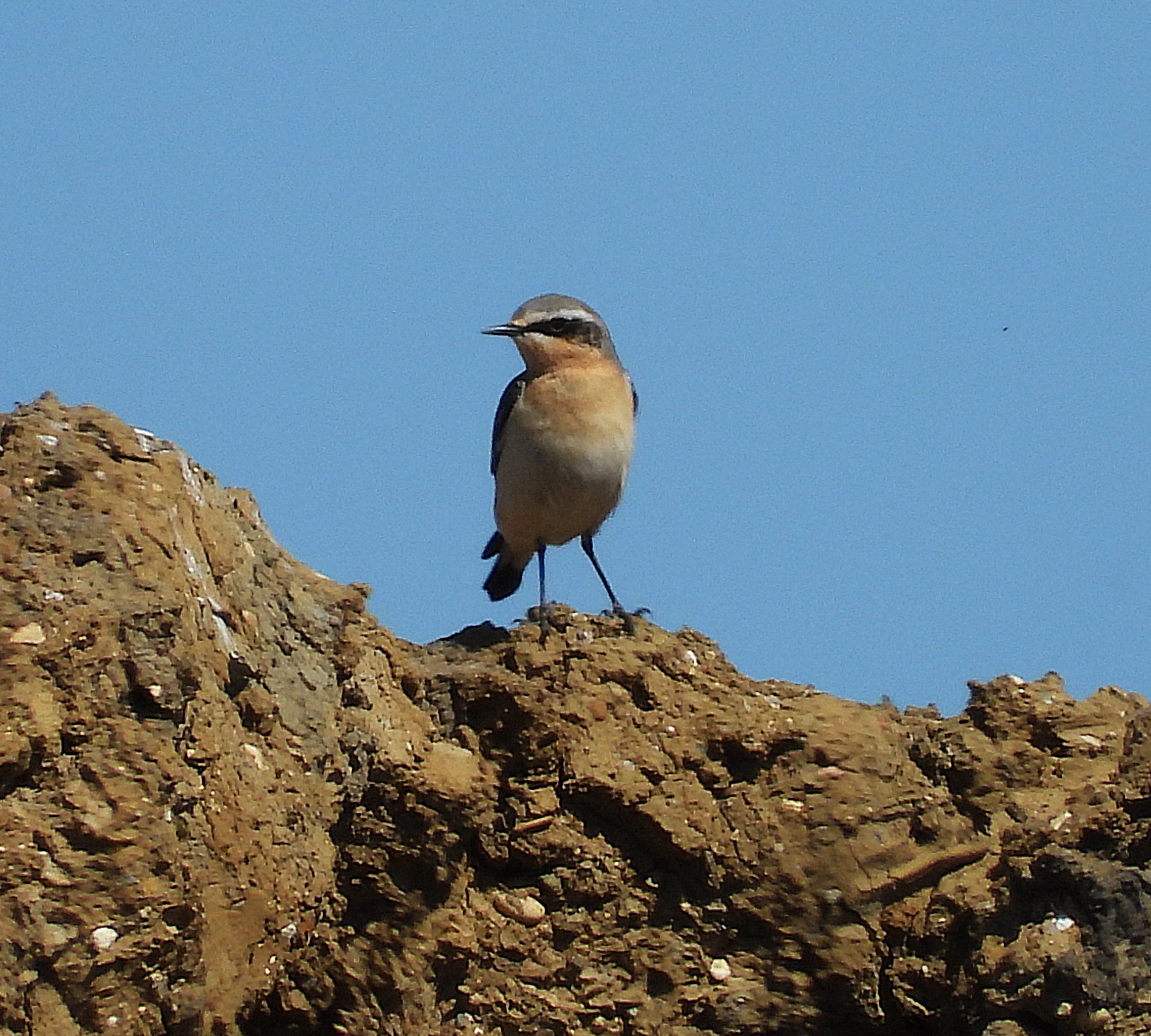
On other dates, two were at Heathencote on 12th, three were at Harrington and two at Earls Barton on 14th, two were at Blueberry Farm and one below Great Doddington on 15th and one was at Borough Hill on 18th. A male Greenland Wheatear was at Clifford Hill on 17th.

With Earls Barton GP’s New Workings (South) rising in popularity and attracting more birders of late, it comes as no surprise that more interesting birds are being found there. One such individual – a ‘yellow’ wagtail – came under scrutiny on 15th when it exhibited some features inconsistent with the standard fare in the Yellow Wagtail group of races and may have been a hybrid (see here for a more detailed discussion).

No such queries were raised by this week’s White Wagtails, a maximum of at least five of which were at the latter site on 18th, while singles were logged at Lower Barnwell Lock on 12th, Clifford Hill on 15th and 17th, Pitsford on 16th and at Ditchford GP’s Rushden Lakes on 17th.





 Northants birds