In stark contrast to last week, a run of low pressure systems to the north of the UK drew westerly winds in off the Atlantic, laden with rain and introducing below average temperatures. While the birding scene quietened down considerably, there was a welcome return – albeit fleetingly – of a once common species that has not been seen in the county for three years.
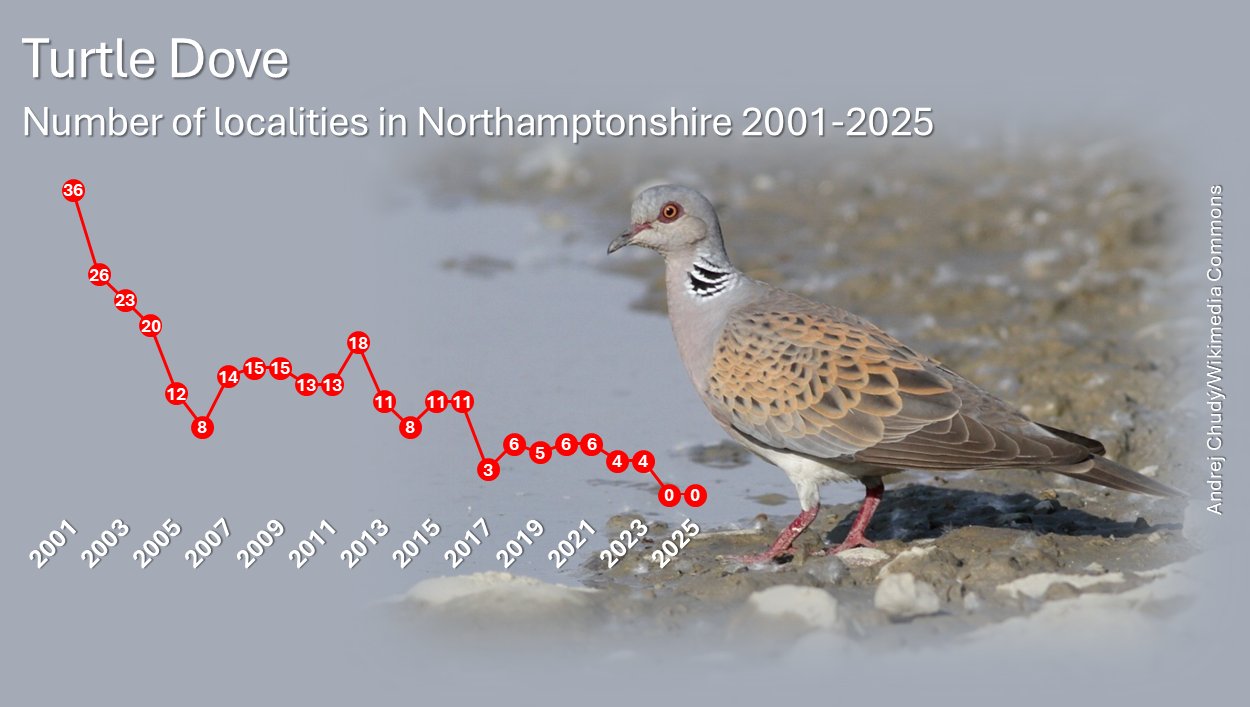
We’re talking, of course, about Turtle Dove – a long-lost, breeding summer visitor, whose UK population has declined by 98% since 1994 and one of which was seen briefly in Cogenhoe on 2nd. This dramatic drop is the largest UK decline of any of the 119 species tracked by the RSPB Breeding Birds Survey over the period of monitoring. In line with this, the number of localities where Turtle Doves were recorded in Northamptonshire during the first quarter of this century has fallen drastically from 36 in 2001 to zero in 2024-25.
Evidence suggests one reason for the overall decline is a shortened breeding period, which has reduced the number of nesting attempts, thought to be driven by reduced food availability as a result of increased herbicide use. Mortality both on the wintering grounds from habitat deterioration and on migration through hunting, are also potential drivers (BTO). A moratorium on hunting along the ‘Western European Flyway’ (France, Portugal, Spain) came into force in 2021 and has had a positive effect with the number of breeding pairs of Turtle Dove subsequently increasing along it by an estimated 40.5%. However, abundance along the Central European Flyway, where no restrictions are in place, continues to decline and the moratorium on the western flyway was lifted in 2025, although a limited quota is now in force (Joint Nature Conservation Committee, 2025). What impact this will have on our own Turtle Dove population remains to be seen.
In other news, two Avocets were at Summer Leys LNR on 31st, two flew east at Clifford Hill GP on 3rd and a Whimbrel also visited the latter site on 2nd.
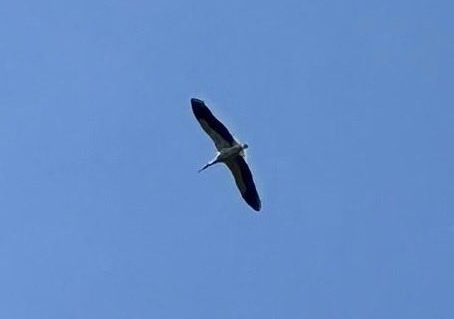
Following one over Thrapston GP on 4th May, another – or the same – White Stork flew high over the A605 there on 30th and was identified as one from the Knepp reintroduction project, some of which are satellite-tagged.
White Stork, Thrapston, 30th May 2026 (Lucy Milner)
Back at Clifford Hill, a Cattle Egret was present on 1st-2nd.
Having reached a crescendo on the migration front by the end of last week, the end of this week couldn’t have looked more different. A dramatic downturn in the number of waders and no new summer visitors suggested spring had all but finished but we’re now into a month in which the scales tend to tip in favour of quality, not quantity …
Wetland associates
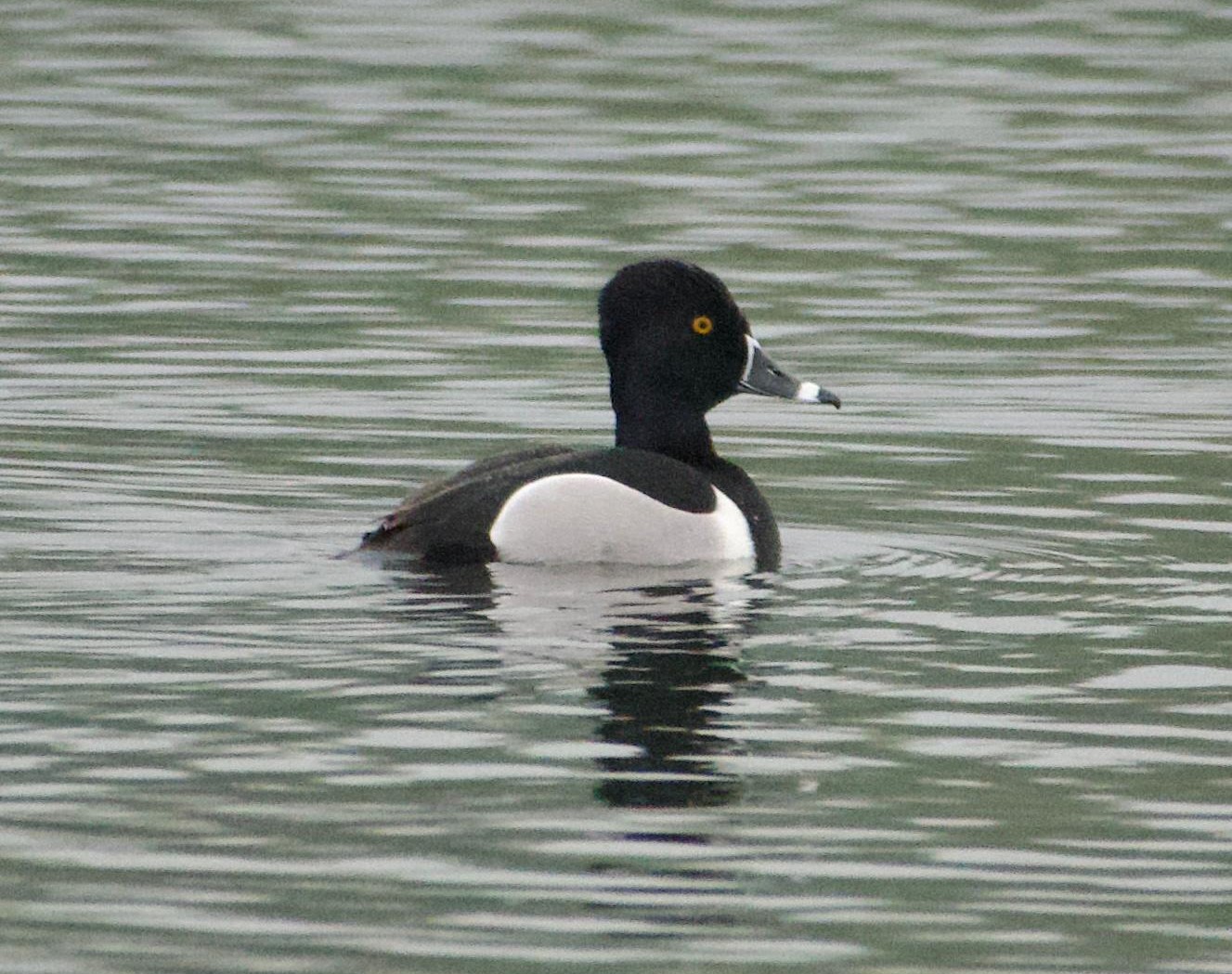
Second only for the year and hot on the heels of the recent bird at Stanwick GP, a drake Garganey graced Thrapston GP’s Titchmarsh NR on 2nd but, like last week’s, it evaded the masses, not being seen again after its initial discovery. After a cracking winter, nationally, and with at least ten still around in the UK at present, it perhaps comes as no surprise that the county pulled in another Ring-necked Duck, with a dapper drake surfacing at Stanford Res on 3rd and showing no hurry to move on until after 7th.
Drake Ring-necked Duck, Stanford Res, 3rd May 2026 (Chris Hubbard)
There was no significant change to the wader menu this week, just smaller portions to go round, with Avocets still up there as starters. Summer Leys LNR opened with four on 2nd, after which numbers dropped to three on 3rd, two on 4th-5th and one from 6th to 8th. One also visited Clifford Hill GP on 3rd, the latter location also giving rise to the county’s third Grey Plover of the year on the same date.
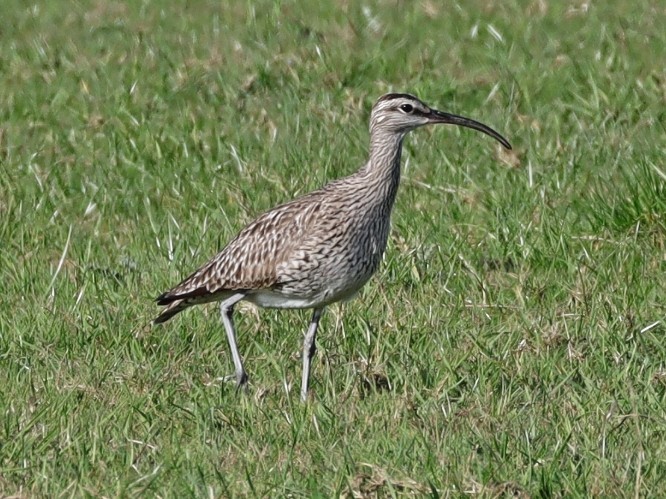
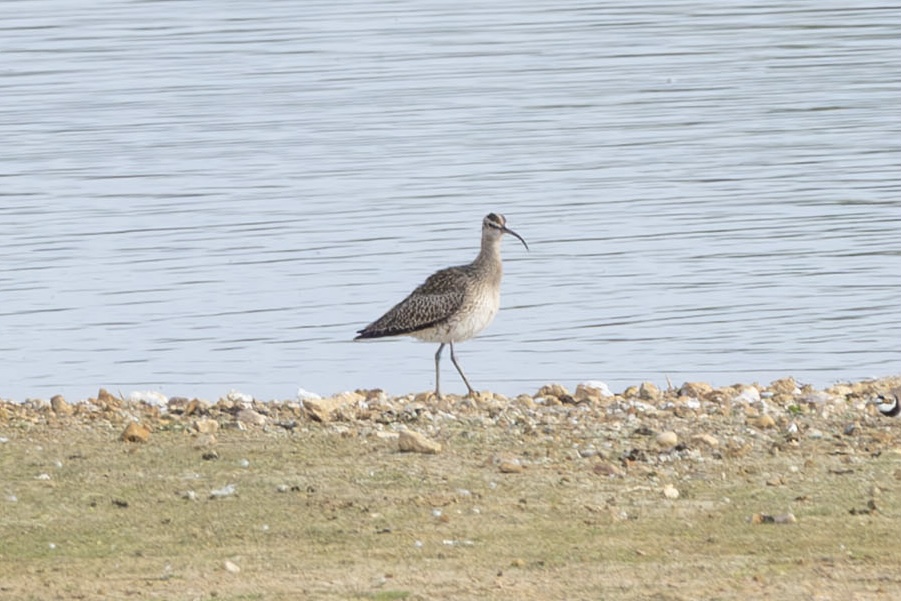
And sticking with Clifford Hill, it has emerged as the go-to site for Whimbrels this spring – not only producing the year’s first and the county’s earliest-ever but sightings virtually daily from 12th April to date. And so they continued this week, with two there on 2nd and one from 3rd until the end of the period. Elsewhere, one flew over Stanford on 2nd and singles were between Great Doddington and Summer Leys on 4th and at the latter site on 7th-8th.
Whimbrel, Clifford Hill GP, 6th May 2026 (Tony Stanford)
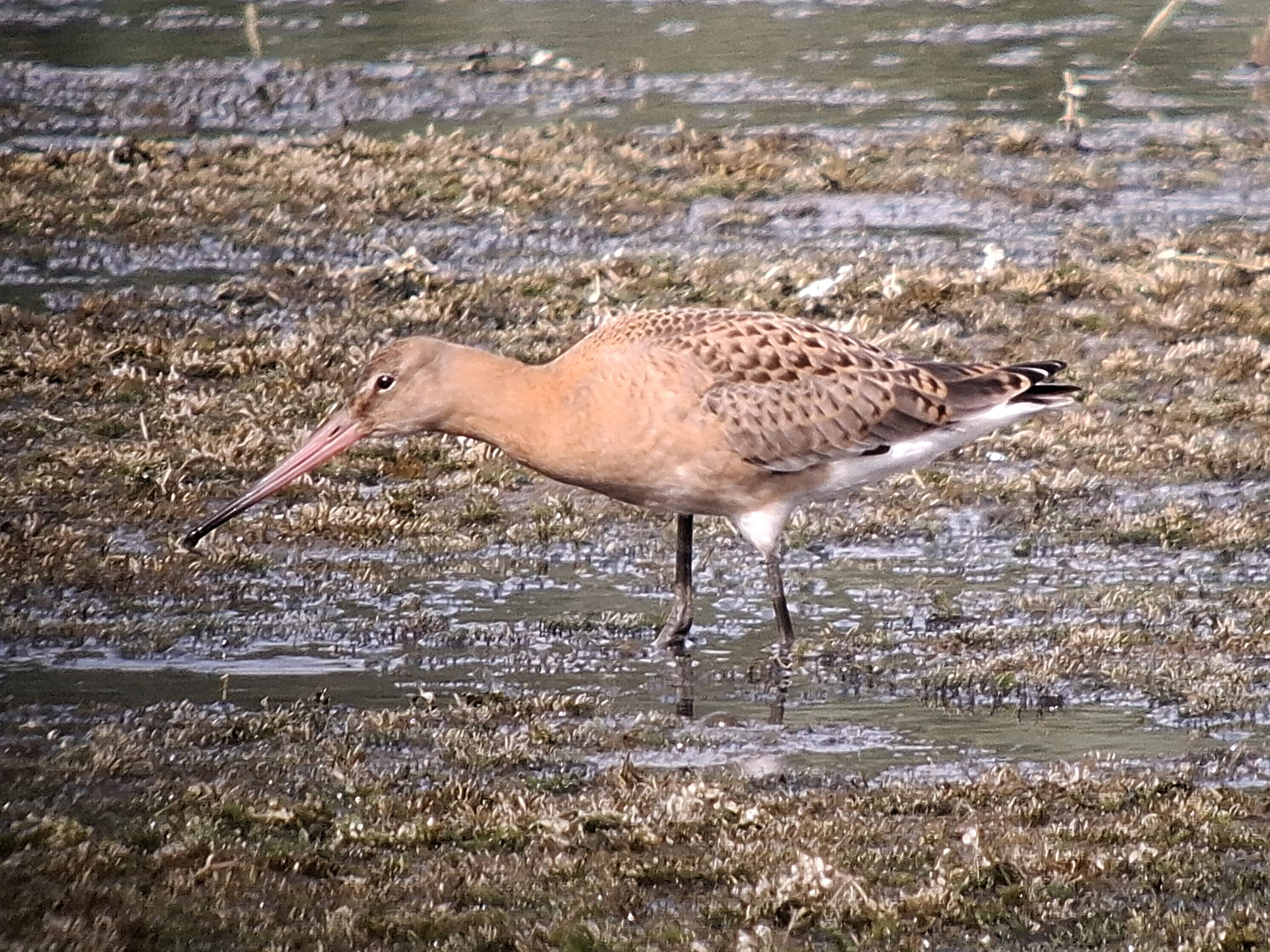
Last week’s Bar-tailed Godwit lingered at Summer Leys until 3rd but the only other to be seen this week was one at Earls Barton GP’s New Workings (South) on 6th. Following the year’s first, fast disappearing from the latter locality last week, two somewhat more obliging Sanderlings made landfall at Clifford Hill on 4th.
And still with us as the week opened were nine Wood Sandpipers at New Workings (South) on 3rd, dropping to three there the next day and one only from 5th to 7th. Britain as a whole has experienced a significant influx this spring and our own fair county was generously provided with the opportunity to get in on the action.
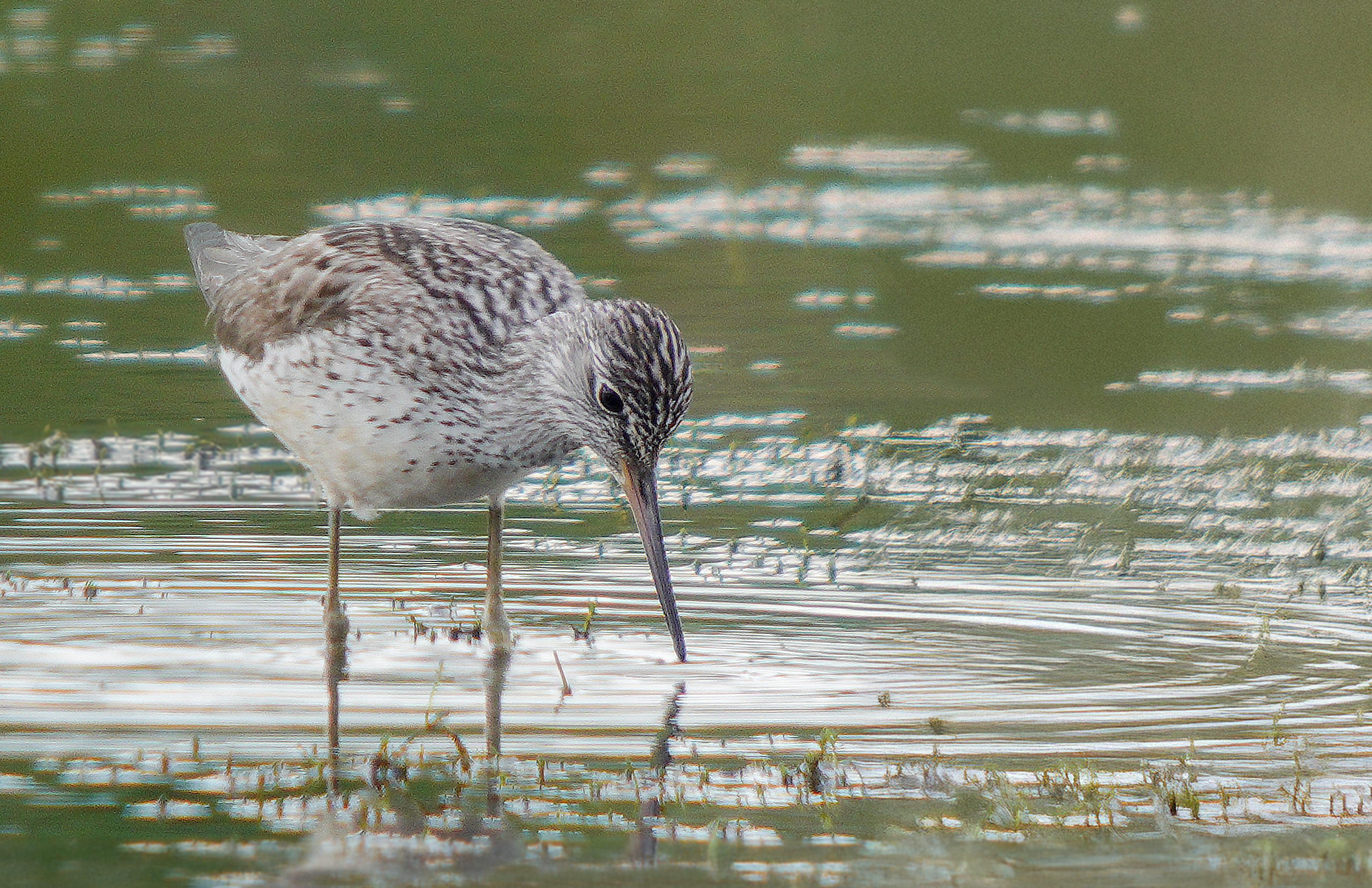
That leaves us with Greenshanks, of which we’ve also seen decent numbers of late. The first half of the week saw eight at New Workings (South) but these subsequently dwindled to three on 7th and just one on 8th. The only other site hosting them throughout the period was Lilbourne Meadows NR, with one on 2nd-3rd and two present from 4th until at least 7th.
Greenshank, Lilbourne Meadows NR, 6th May 2026 (Mike Alibone)
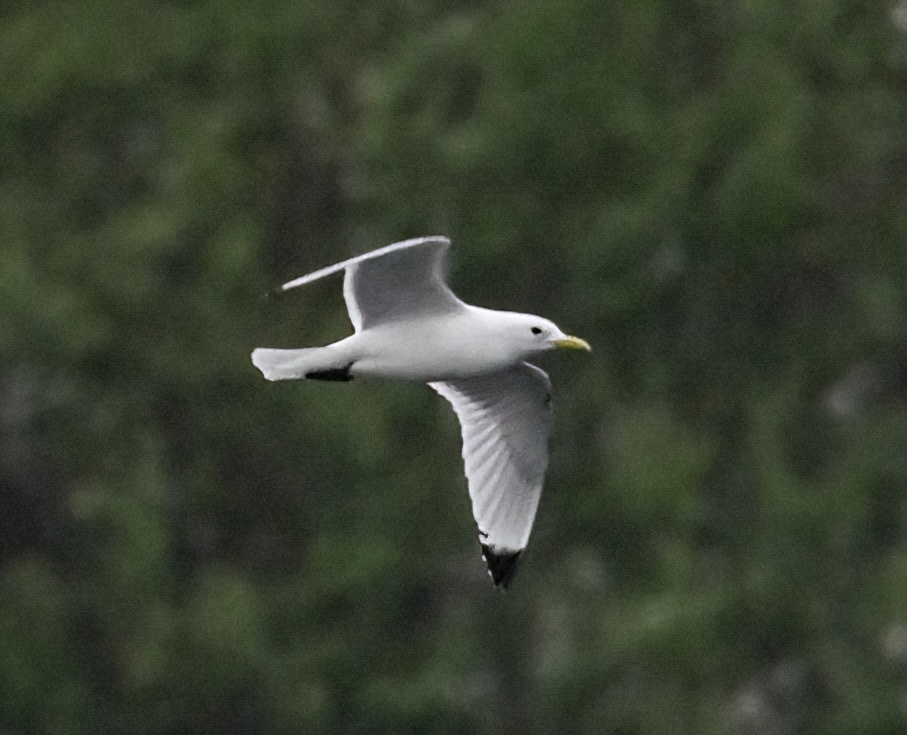
Enter gulls, and the jug had not run dry as far as Kittiwakes were concerned when one flew east over Stanford on 4th.
Kittiwake, Stanford Res, 4th May 2026 (Chris Hubbard)
An adult Little Gull visiting Summer Leys on 2nd was the only one of its kind during the period and the latter locality also saw its two adult Mediterranean Gulls return after they made a flying visit to Clifford Hill on 3rd, one remaining until 4th.
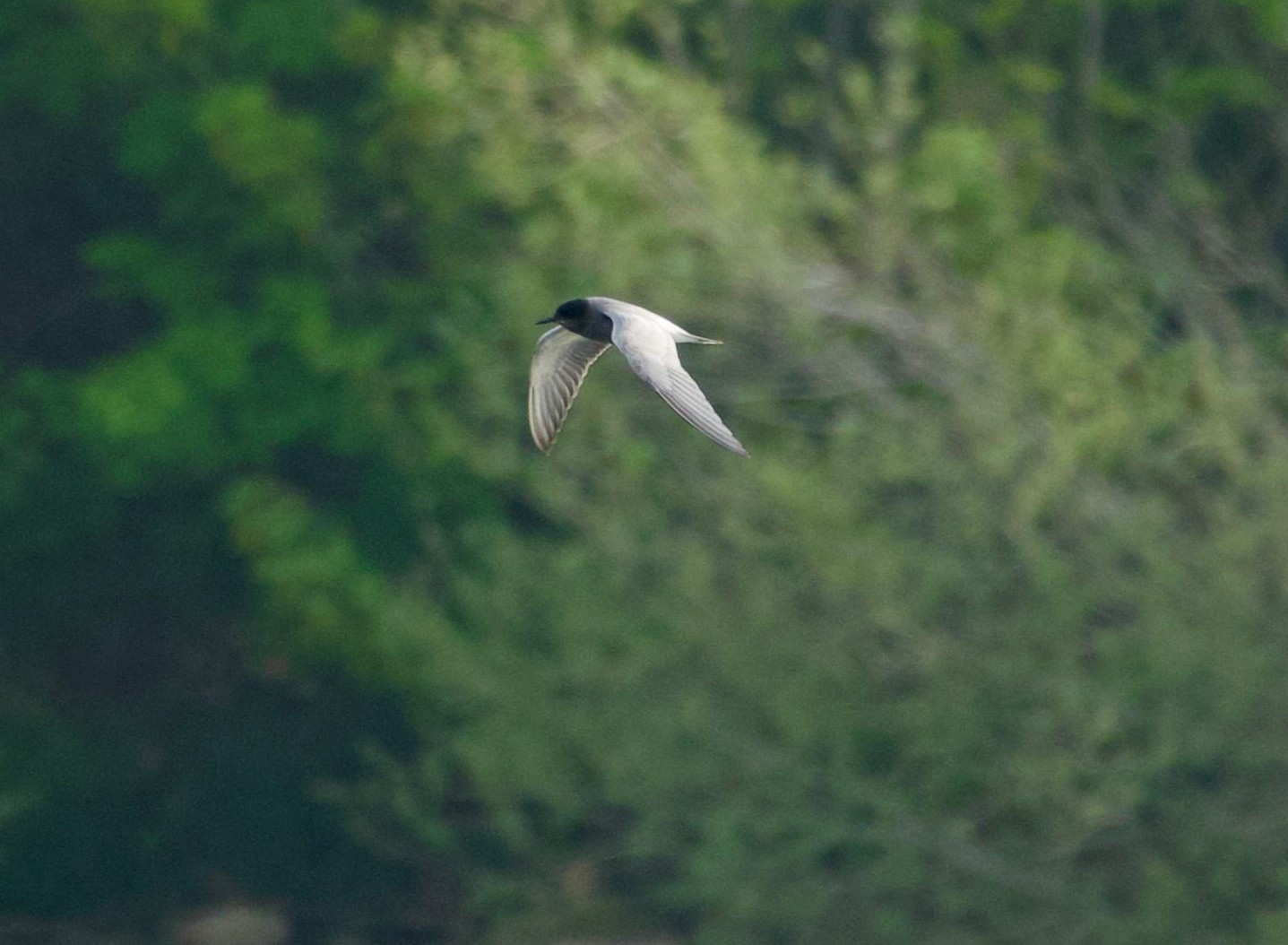
Tern numbers were down on the previous week, with 3rd seeing a single Arctic Tern at Stanford and 4th giving rise to two flying north-east through Clifford Hill and three making their way in the same direction over Stanwick. Meanwhile, Black Terns were limited to singles at Summer Leys on 2nd and Stanford on 5th.
Black Tern, Stanford Res, 5th May 2026 (Chris Hubbard)
Following three in 2025, now virtually an annual visitor and, arguably, bird of the week, a White Stork soaring in a thermal near Thrapston’s Town Lake climbed to a good height before exiting south-west, on 4th.
And, further extending its dwell time, the county’s long-staying Glossy Ibis saw another week out at Summer Leys, as well as a short sojourn at New Workings (South) on 2nd.
The latter site also produced a Bittern on 3rd, while at least two were still present at Titchmarsh NR this week. Six Cattle Egrets were again at Stanwick on 2nd.
Flags and tags
There were slim pickings on the raptor front, with just a single Osprey at Pitsford Res on 6th but Summer Leys saw the return of a wing-tagged Marsh Harrier on 5th-6th. ‘Yellow DP’ – a first summer female – had previously visited the reserve on 28th March after being ringed and tagged near Hardley, Norfolk in 2025. Since its initial visit, it was recently seen at Marbury in Cheshire on 29th April before its return to Summer Leys, where there was also a non-tagged Marsh Harrier on 6th.
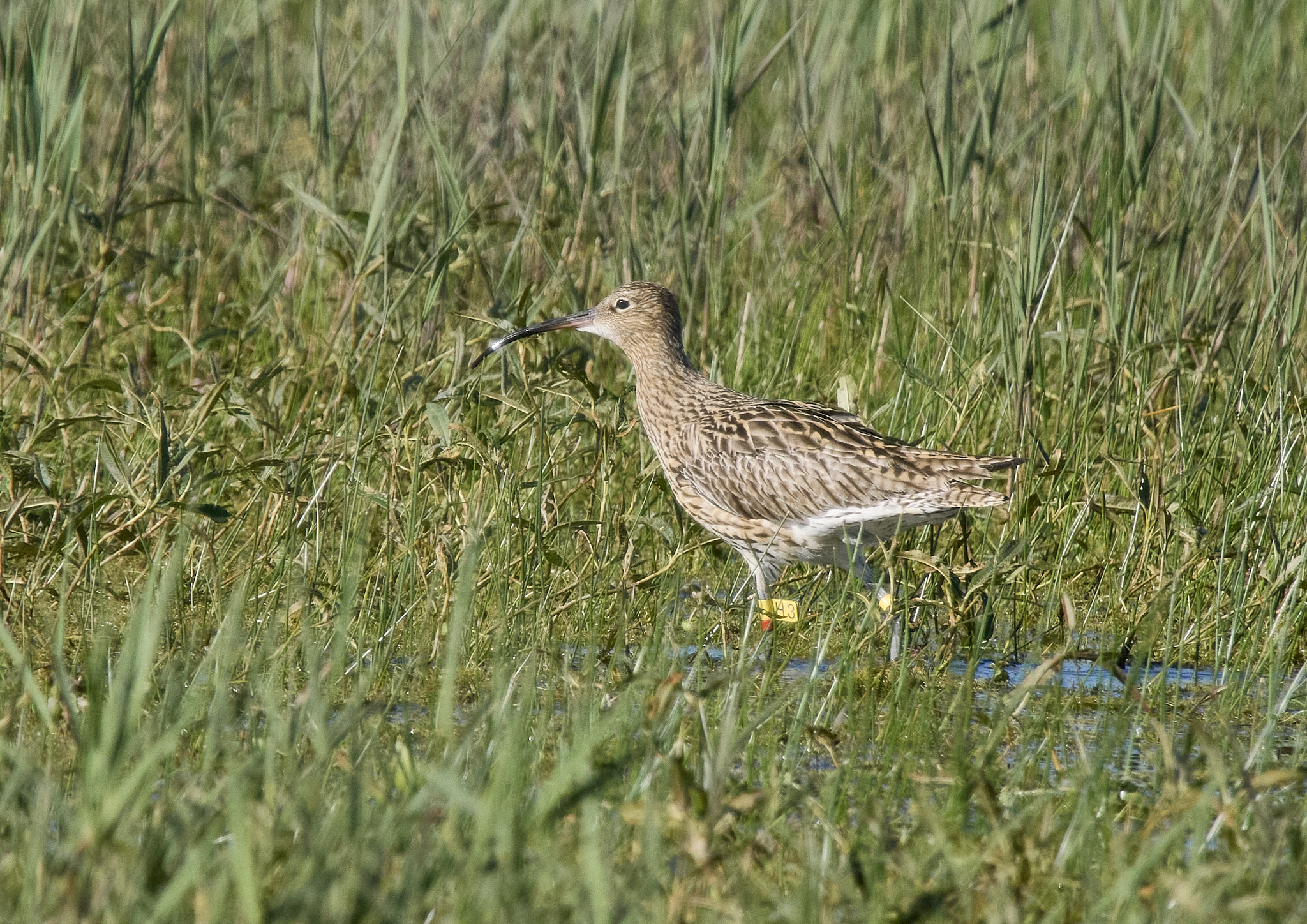
Flagged, not tagged, a Curlew, ‘yellow H3’ that was released as part of a re-introduction project in southern England dropped into Summer Leys on the 30th April. It was released as part of a re-introduction project in southern England, which involves eggs being taken from ‘at-risk’ nests within stable populations in Northern England, then incubated, hatched and reared in captivity. The young birds are released at three sites in the south: Cranborne in Dorset, Peppering in West Sussex, and Elmley in Kent. The project has been running since 2022. ‘H3’ was released at the Peppering Estate on 17th August 2024 and this is the first sighting since its release (per Roger Eads).
Curlew ‘H3’, Summer Leys LNR, 30th April 2026 (Roger Eads)
Passerines
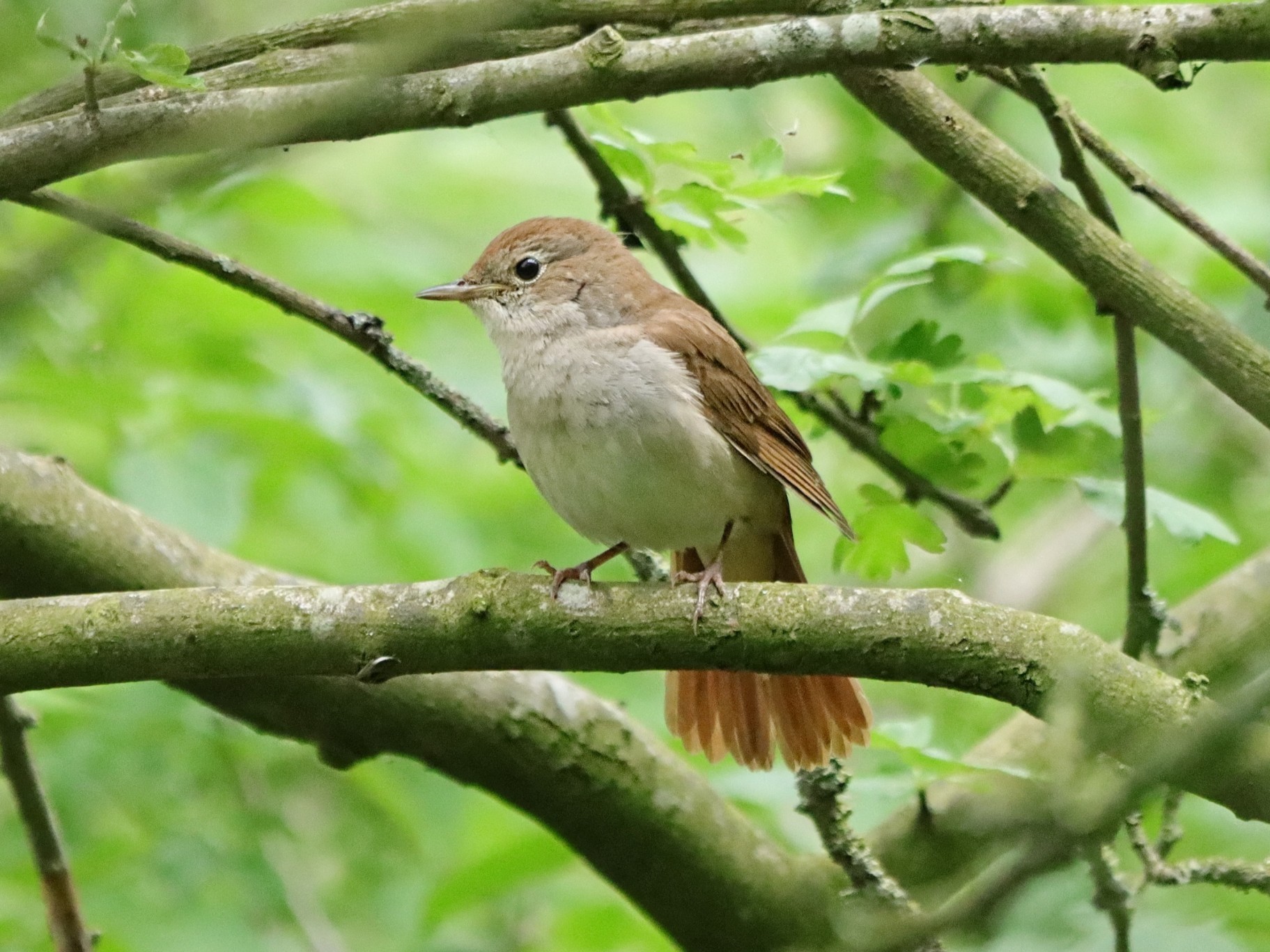
Scarcer passerines were in the minority this week but there was enough to keep the home fires burning in this respect. A male Firecrest was still singing at an undisclosed locality on 2nd. Also featuring strongly this spring are Nightingales which, although annual county breeders, have been present at notably many more sites than in recent years, including some not previously recognised as breeding localities. Although this species has seen a dramatic national population decline of 34% between 1995 and 2024, the numbers of singing males on RSPB reserves have increased over the last two summers.
Nightingale, Stortons GP, 3rd May 2026 (Tony Stanford)
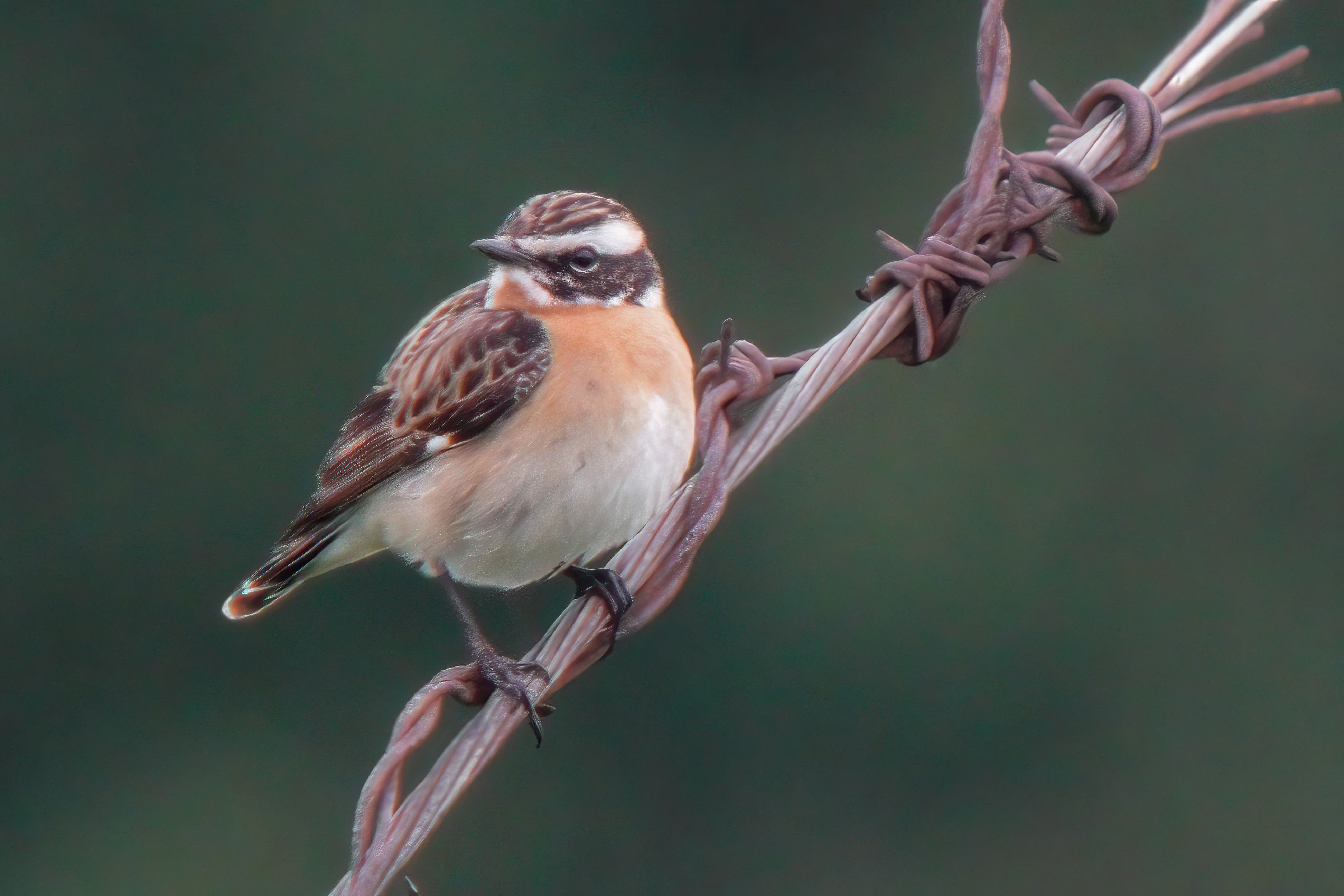
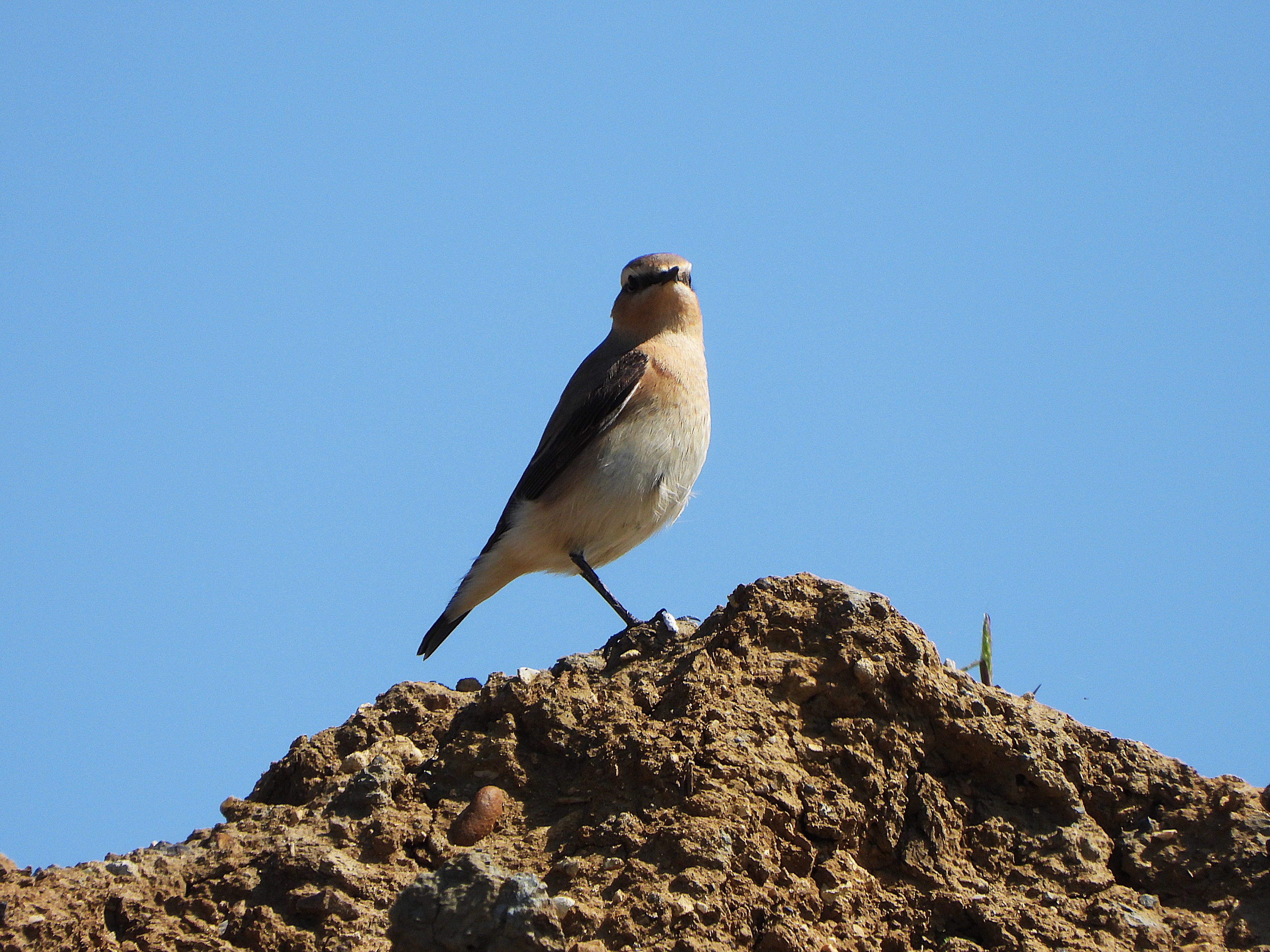
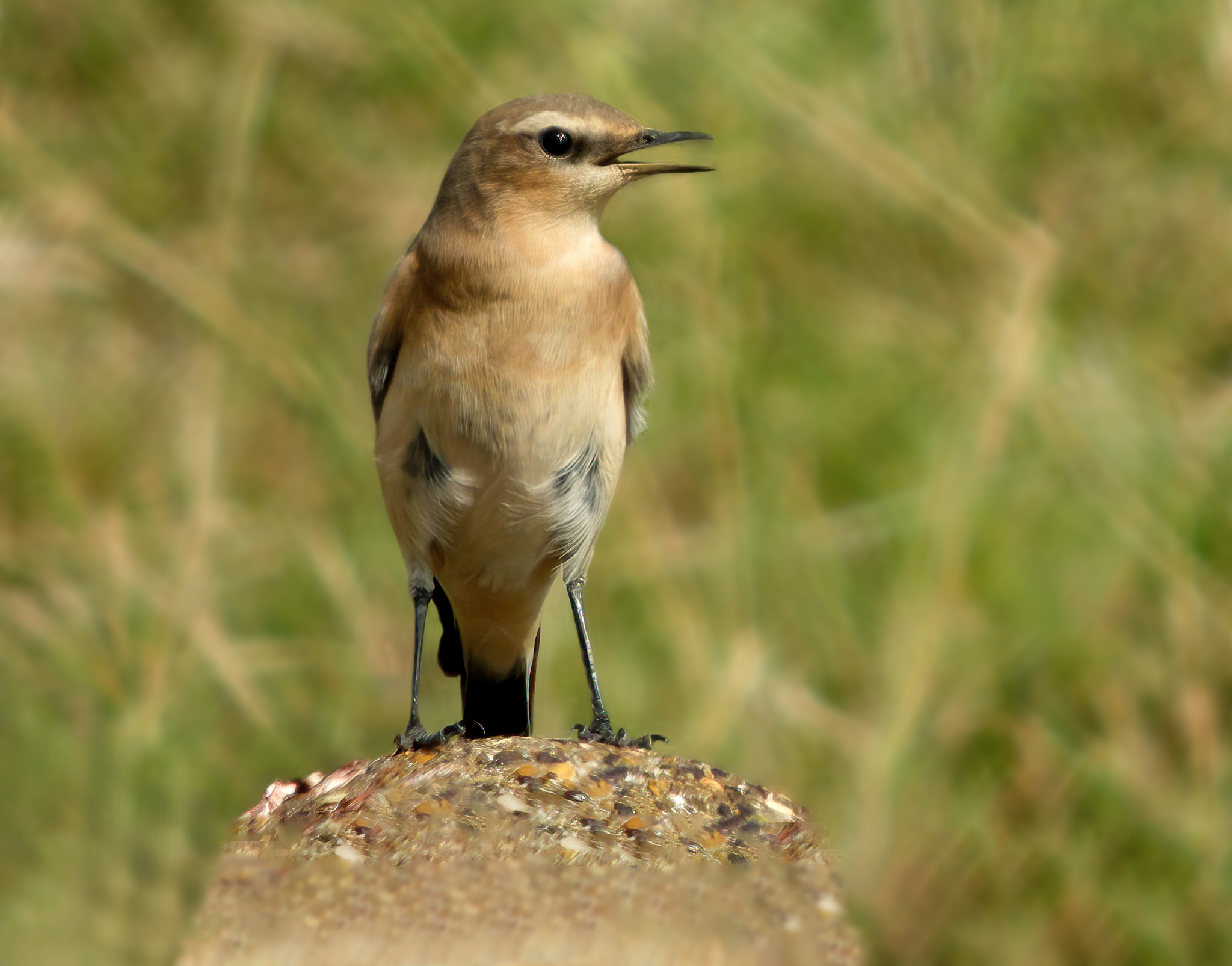
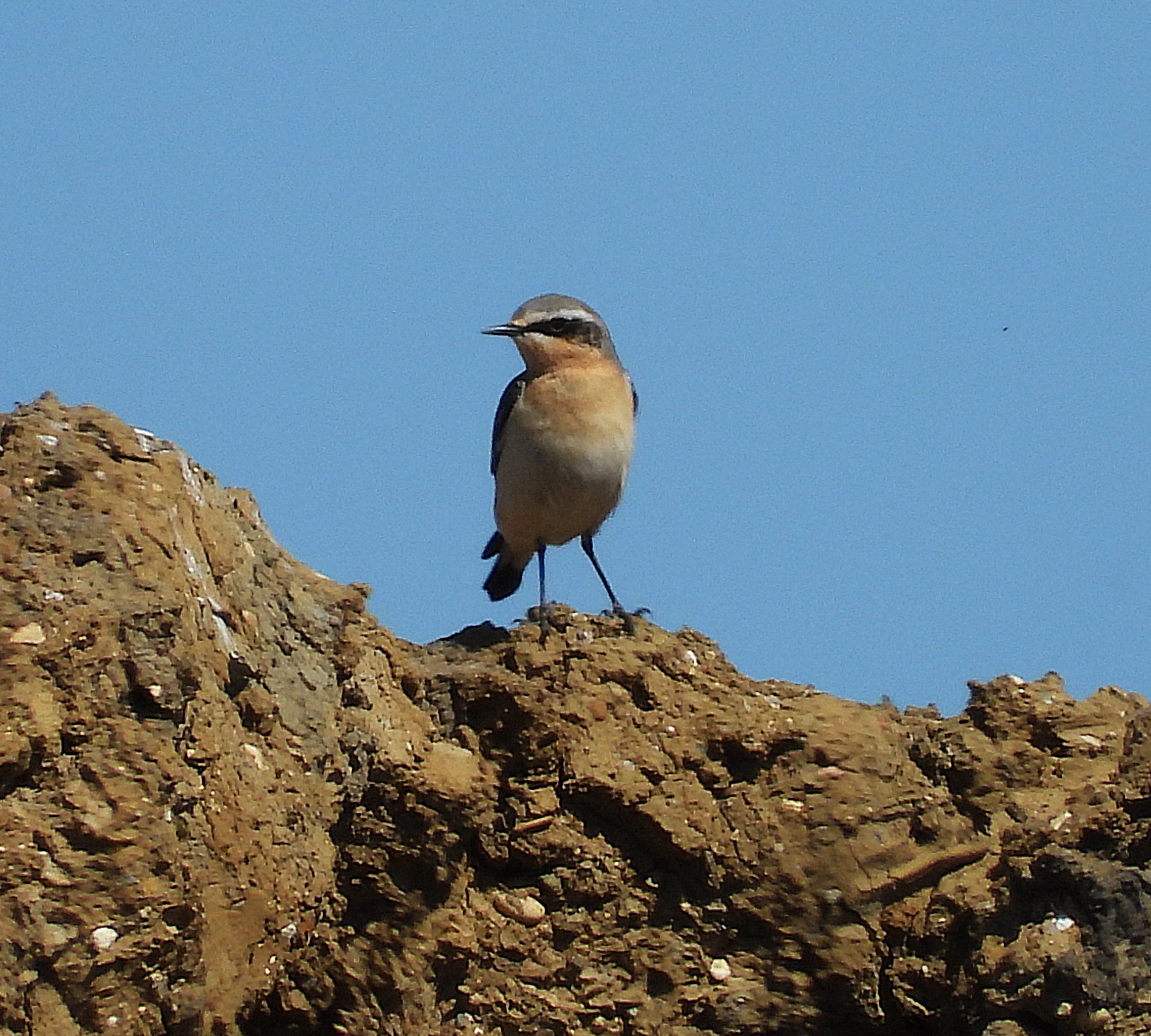
Other passerines were available, including a Whinchat at Lilbourne Meadows on 4th, a Northern Wheatear at New Workings (South) on 2nd, followed by two in the Brampton Valley between Cottesbrooke and Hanging Houghton on the last day of the week.
Whinchat, Lilbourne Meadows NR, 4th May 2026 (Mike Alibone)Female Northern Wheatear, Earls Barton GP, 2nd May 2026 (Leslie Fox)
A Blue-headed Wagtail was present at Clifford Hill on 2nd.
High pressure drifting east allowed the country to tap into hot and humid air off the continent, delivering a peak in local temperatures of 31°C on the 12th. The pick of the crop of this week’s hot birding saw a fly-over Goshawk and the year’s fourth Pied Flycatcher which, like the previous three, was not readily available to the masses, and the first of the autumn’s Tree Pipits …
Ducking but not diving, the female Ruddy Shelduck extended its stay on, and around, the dam at Ravensthorpe Res until at least 14th.
Female Ruddy Shelduck, Ravensthorpe Res, 12th August 2025 (James Urwin)
There was, however, a reasonable run of waders kicking off with a Curlew at Summer Leys LNR on 9th. The 13th saw two Black-tailed Godwits at Daventry CP and one at Pitsford Res, followed by six more, briefly, at Summer Leys on 15th, where a Ruff was also present on the same date.
Juvenile Black-tailed Godwit, Daventry CP, 13th August 2025 (Gary Pullan)
The latter locality was also visited by two Wood Sandpipers on 14th-15th.
Wood Sandpiper, Summer Leys LNR, 15th August 2025 (Alan Coles)
Greenshanks continued to proliferate, the maximum number being five, again at Summer Leys, on 11th, numbers having dropped to just two there by the week’s end. Both Hollowell Res and Pitsford produced numbers varying up to three apiece between 11th and 15th, while singles were to be had at Earls Barton GP on 10th, Naseby Res on 11th and Boddington Res from 12th to 15th.
Greenshanks, Summer Leys LNR, 13th August 2025 (Alan Coles)Greenshank, Summer Leys LNR, 14th August 2025 (Mike Alibone)
Boddington also produced the week’s only Mediterranean Gull, a juvenile, on 9th.
Juvenile Mediterranean Gull, Boddington Res, 9th August 2025 (Gary Pullan)
The German-ringed adult male Caspian Gull was seen again at Naseby on 11th and 14th and one – possibly the same – visited Hollowell on 15th. Yellow-legged Gulls again crept into double figures with daily sightings at Pitsford peaking there at ten on the last day of the period. Boddington was the only other site to produce one, a first-summer on 9th.
Last week’s White Stork remained into this week, being seen at Round Spinney Industrial Estate on 11th and in flight south over Northampton General Hospital two days later, on 13th. The ring number, CV03 (not CY03 as previously stated) identifies the bird as a male released as part of the wider UK reintroduction scheme, at Cove Valley, Devon on 4th June this year.
The period’s Cattle Egrets were limited to two flying south-west over Stanwick GP on 11th and one briefly visiting Summer Leys the following day.
Topping the week’s raptors was a male Goshawk which flew north over the church at Byfield on 12th. The species has long been suspected a scarce breeder in the county … somewhere … but it is seldom seen. We can only pray for more … So it was down to the now run-of-the-mill Ospreys and Marsh Harriers to lift the spirits, so to speak. With singles on 9th, 11th and 12th, Pitsford produced the most Ospreys, Thrapston GP coming second with singles on 13th and 15th, while either side of the latter locality, Ringstead GP and Oundle’s Biggin Lake held fishing birds on 9th and 12th, respectively. Marsh Harriers made their biggest impact so far this year, being seen at Blueberry Farm, Maidwell on 13th-14th, Boddington Res on 13th, in the Brampton Valley and at Ditchford GP on 12th, Harrington AF on 11th, Pitsford village, where there were two circling, on 10th, Pitsford Res on 12th, Stanford Res on 9th, 11th, 13th, 14th-15th (two), Summer Leys on 10th-12th and 14th-15th and at Warmington on 12th.
Lighting up the passerines, a Firecrest was an unusual August visitor to a Duston, Northampton garden, moving off quickly with a mobile tit flock, on 12th, while the fourth Pied Flycatcher to be reported so far this year put in an equally brief appearance at Pitsford on 11th.
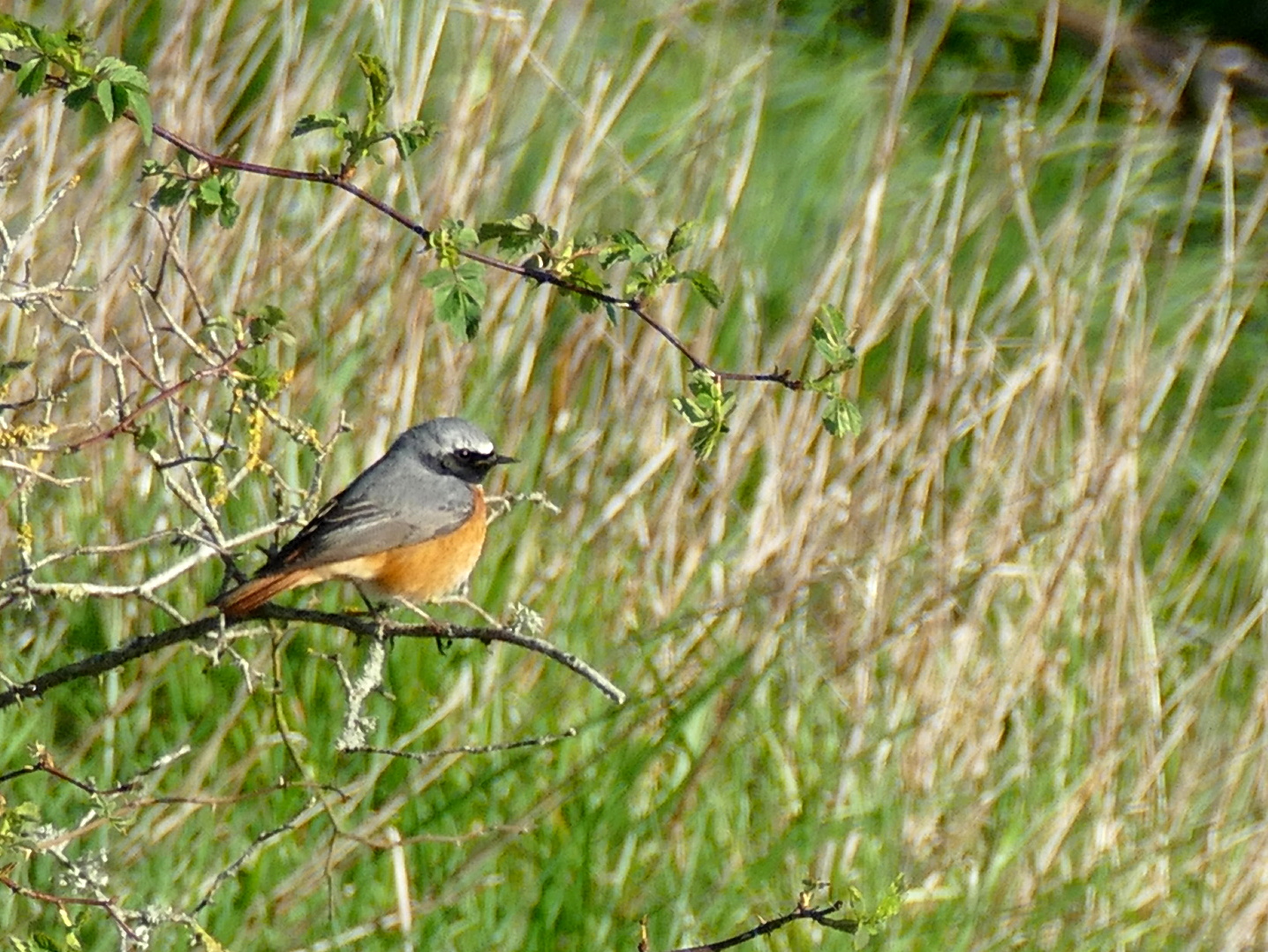
Common Redstarts maintained their prominence, being seen at thirteen localities. Stanford produced the most with a total of seven trapped and ringed during the week, while one to two were seen at Blueberry Farm, at two sites in the Brampton Valley, Hanging Houghton, Harrington AF, Lamport, Long Buckby, Old, Thrapston GP, Welford Quarry, Woodford and Woodford Halse.
Male Common Redstart, Stanford Res, 14th August 2025 (Chris Hubbard)
Whinchats, on the other hand, were rather more scarce. Hollowell delivered the maximum of three on 14th, followed by just one there the next day. The 12th saw two in the Brampton Valley and one at Stanford, two were at Blueberry Farm on 14th with one there on 13th and one was at Thrapston on the latter date. The only Northern Wheatears were at Clifford Hill GP on 12th and at Blueberry Farm the following day.
Northern Wheatear, Clifford Hilll GP, 12th August 2025 (Mike Alibone)
After a meagre two in April, the first of the autumn’s Tree Pipits appeared, commencing on 9th with four in the Brampton Valley below Brixworth, two of which were trapped and ringed. These were followed the next day by two at Pitsford (one trapped and ringed), one over Abington Park, Northampton on 11th and one in the Brampton Valley between Cottesbrooke and Hanging Houghton on 12th.
And Crossbills continued to trickle through, with three south over Pitsford on 11th, six over Blueberry Farm on 14th and one south over Hollowell Res on the same date.
A cooler week by far, despite a run of strong southwesterlies delivering a temperate airstream off the Atlantic and western Europe. With more inbound spring migrants there was plenty to play for but, once again, the cream of the crop was well out of reach for all but those in the right place at the right time …
Summer visitors added to the clock during the period all occurred in the Nene Valley, although there was a Reed Warbler at Stanford Res the previous week but it was, alas, on the Leicestershire side of the county line.
Pink-footed Geese were still very much in evidence this week and, as well as the long-stayer in the Earls Barton GP/Cogenhoe area being present throughout, the period’s quota included one again at Stanford Res on 13th and 14th and nine flying east over Lilbourne Meadows NR on the latter date. Last week’s Garganey duo remained throughout at Earls Barton GP’s New Workings, moving to the northern section on 18th, while the drake Red-crested Pochard was also keeping up appearances on the adjacent River Nene.
And, while we’re still in the same area, this site laid claim to the fourth occurrence of Common Crane for the county this year as one flew over, calling, on 12th.
Further up the valley, Clifford Hill GP notched up its – and the county’s – second record of Grey Plover this year as an eastbound flock of five flew through without stopping on 15th. Whimbrels were also on the move, with singles at Earls Barton GP’s New Workings (South), Lower Barnwell Lock (Oundle) and Summer Leys – all on 12th and another paid a brief visit to Clifford Hill GP on 17th.
Whimbrel, Clifford Hill GP, 17th April 2025 (Tyler Atkinson)Whimbrel, Clifford Hill GP, 17th April 2025 (Tyler Atkinson)
Last week’s solitary Bar-tailed Godwit at Summer Leys made it into the week, still being present there on 12th, while the same site produced a Black-tailed Godwit on 12th, 15th, 17th and 18th and two were at Stanford Res at different points in time on 15th.
Black-tailed Godwit, Summer Leys LNR, 17th April 2025 (Alan Coles)
More Greenshanks moved through during the period in which singles visited Lower Barwell Lock on 12th and 15th, Summer Leys on 12th, Earls Barton GP on 14th and Stanford on 15th and a single Jack Snipe was still holding out at Hollowell Res on 14th.
Compared to last week, this week’s Little Gull passage had reduced to a mere drip comprising three at Earls Barton GP on 12th, while a Mediterranean Gull dropped into Stanford on 17th. Larger gulls included a first-summer apparent hybrid Caspian x Herring Gull at DIRFT 3 on 13th, where there was also a first-summer Yellow-legged Gull on the same date.
First-summer presumed Caspian Gull x Herring Gull hybrid, DIRFT 3, 13th April 2025 (Mike Alibone)
The only other Yellow-legged Gulls were single adults at Pitsford Res on 13th and 16th.
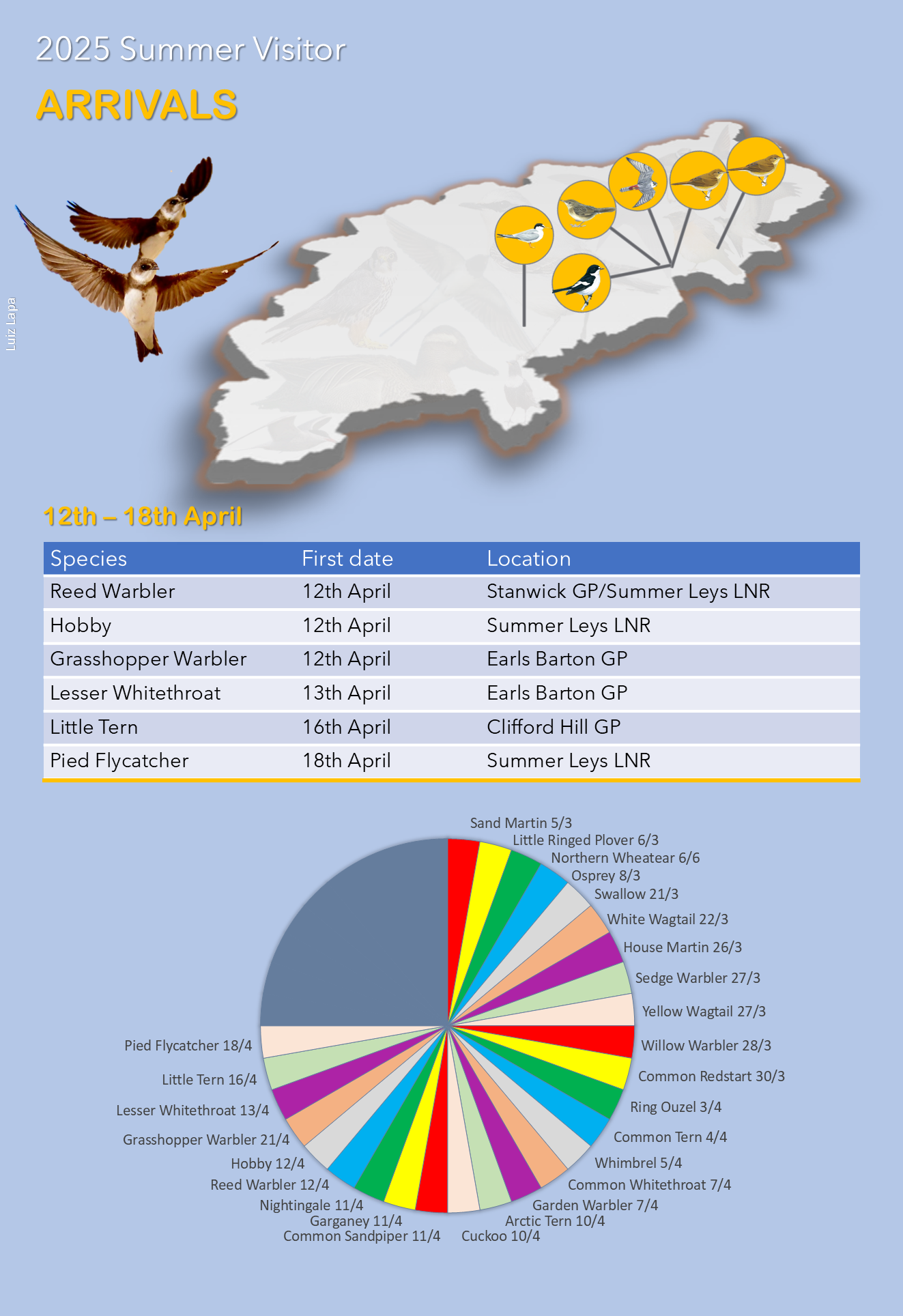
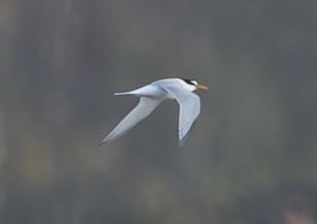
A Little Tern at Clifford Hill on 16th was much appreciated as well as equalling the earliest ever county record – the latter being at Earls Barton GP in 1996.
Little Tern, Clifford Hill GP, 16th April 2025 (Tyler Atkinson)Little Tern, Clifford Hill GP, 16th April 2025 (Tyler Atkinson)
And another week, another White Stork – this one visually tracked as it took its time in moving westward from Earls Barton/Whiston Lock toward Ecton. Surprisingly, there were no subsequent sightings in Northants but undoubtedly the same bird was logged later in the day over Napton Res in east Warwickshire, 37 km further west.
White Stork, Earls Barton GP, 13th April 2025 (Ant Hall)
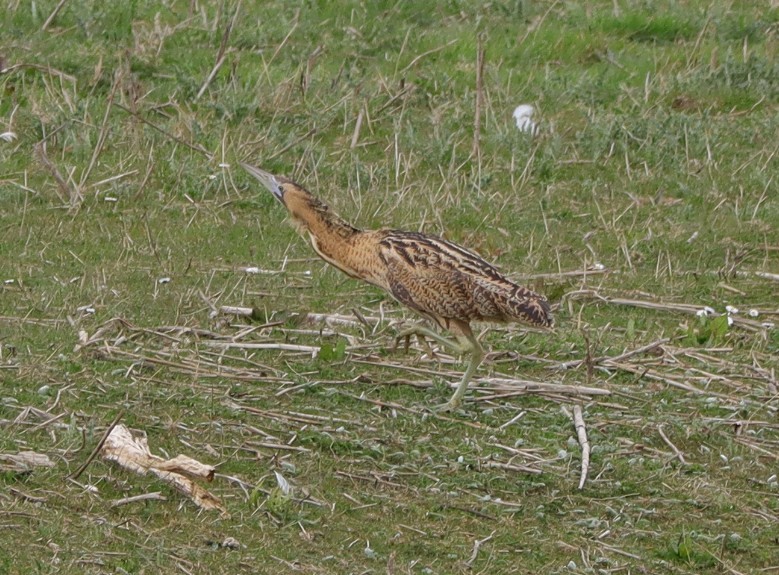
Once again, the Summer Leys Glossy Ibis clocked up another week, the latter site also producing a showy Bittern on 16th and 18th.
Bittern, Summer Leys LNR, 18th April 2025 (Tony Stanford)
Four Cattle Egrets flying south-west over Stanwick GP on 17th once again represented a rather poor weekly showing for this species.
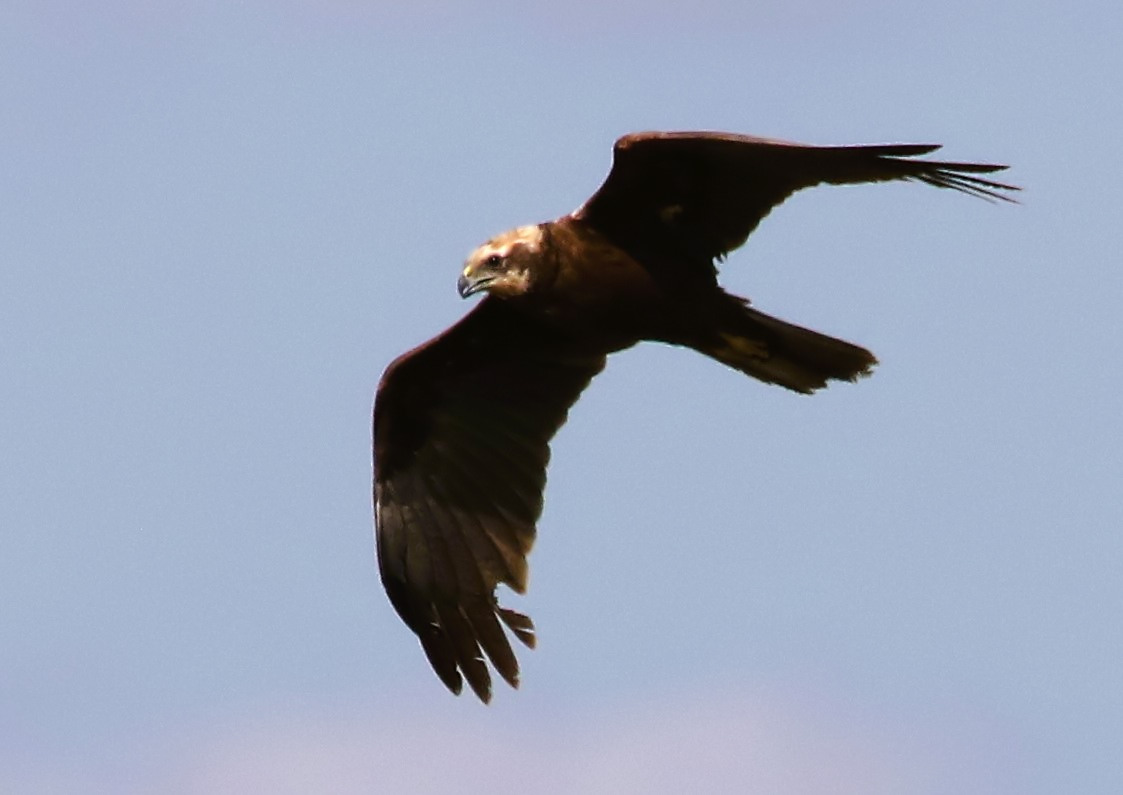
Not so for Marsh Harriers, though – that is, of course, for those in the right place at the right time. Favouring the reedbed, the immature male was again seen at Stanwick on 12th and 18th, Summer Leys produced two on 14th and one on 16th and one was nearby at Earls Barton GP’s Quarry Walk on the latter date.
Marsh Harrier, Summer Leys LNR, 16th April 2025 (Alan Coles)
We’ve become increasingly aware of this spring’s invasion of Hoopoes into the southern reaches of the UK and their subsequent penetration further north. Given that this week saw just over a hundred in the country, prior to the astoundingly higher total of one hundred and eighty the week before, it would have been surprising if we’d not managed to secure one in our own good county. And we did. Two, to be precise. Unfortunately, they were both off limits and appeared to be short-stayers only. The first was in a garden in Hanging Houghton on 13th before flying off, giving rise to a local search that yielded no result. The following day, one was photographed on the windowsill of a farmhouse at Silverstone prior to making a similar rapid departure. The wait for one nailed down goes on …
Hoopoe, Silverstone, 14th April 2025 (Tom Howse)
Meanwhile, there were more Ring Ouzels, unsurprisingly comprising one at Blueberry Farm, Maidwell on 14th and another at Harrington AF the following day – both favoured localities that have history for the species.
Conversely, Summer Leys does not have history when it comes to producing Pied Flycatchers, a male of which was seen briefly from the car park on 18th.
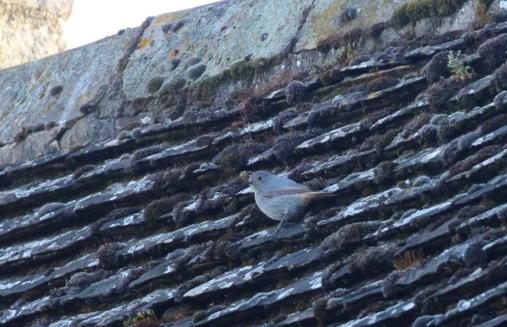
A Black Redstart at Harrington did a bunk before any would-be observers were on the scene on 17th, as did one photographed on a roof in Easton on the Hill the previous day. These are the fourth and fifth for the year, none of which has had the decency to stay put.
Black Redstart, Easton on the Hill, 16th April 2025 (Jeff Davies)
Single male Common Redstarts were found at Harrington on 13th-14th, Blueberry Farm on 15th and at Lilbourne Meadows on 17th.
Male Common Redstart, Harrington AF, 14th April 2025 (David Arden)
There was a mini-surge in Northern Wheatears this week with, on 17th, Harrington producing nine, Hinton AF at least six, Clifford Hill four, and both Earls Barton and Mears Ashby one apiece.
Male Northern Wheatear, Earls Barton GP, 17th April 2025 (Leslie Fox)
On other dates, two were at Heathencote on 12th, three were at Harrington and two at Earls Barton on 14th, two were at Blueberry Farm and one below Great Doddington on 15th and one was at Borough Hill on 18th. A male Greenland Wheatear was at Clifford Hill on 17th.
Male Greenland Wheatear, Clifford Hill GP, 17th April 2025 (Tyler Atkinson)
With Earls Barton GP’s New Workings (South) rising in popularity and attracting more birders of late, it comes as no surprise that more interesting birds are being found there. One such individual – a ‘yellow’ wagtail – came under scrutiny on 15th when it exhibited some features inconsistent with the standard fare in the Yellow Wagtail group of races and may have been a hybrid (see here for a more detailed discussion).
Apparent ‘hybrid’ Yellow Wagtail showing some Citrine Wagtail-like characteristics, Earls Barton GP, 15th April 2025 (Mike Alibone)
No such queries were raised by this week’s White Wagtails, a maximum of at least five of which were at the latter site on 18th, while singles were logged at Lower Barnwell Lock on 12th, Clifford Hill on 15th and 17th, Pitsford on 16th and at Ditchford GP’s Rushden Lakes on 17th.
Easterlies persisted until mid-week, after which a more northerly vector dominated, although temperatures managed to reach an unseasonally high 20°C by the end of the period. With the weather highly conducive to migration, it was unusually busy for the second week of April, which produced an uplift in migrants as well as some class birds, but getting to grips with the latter remained the preserve of the lucky few …
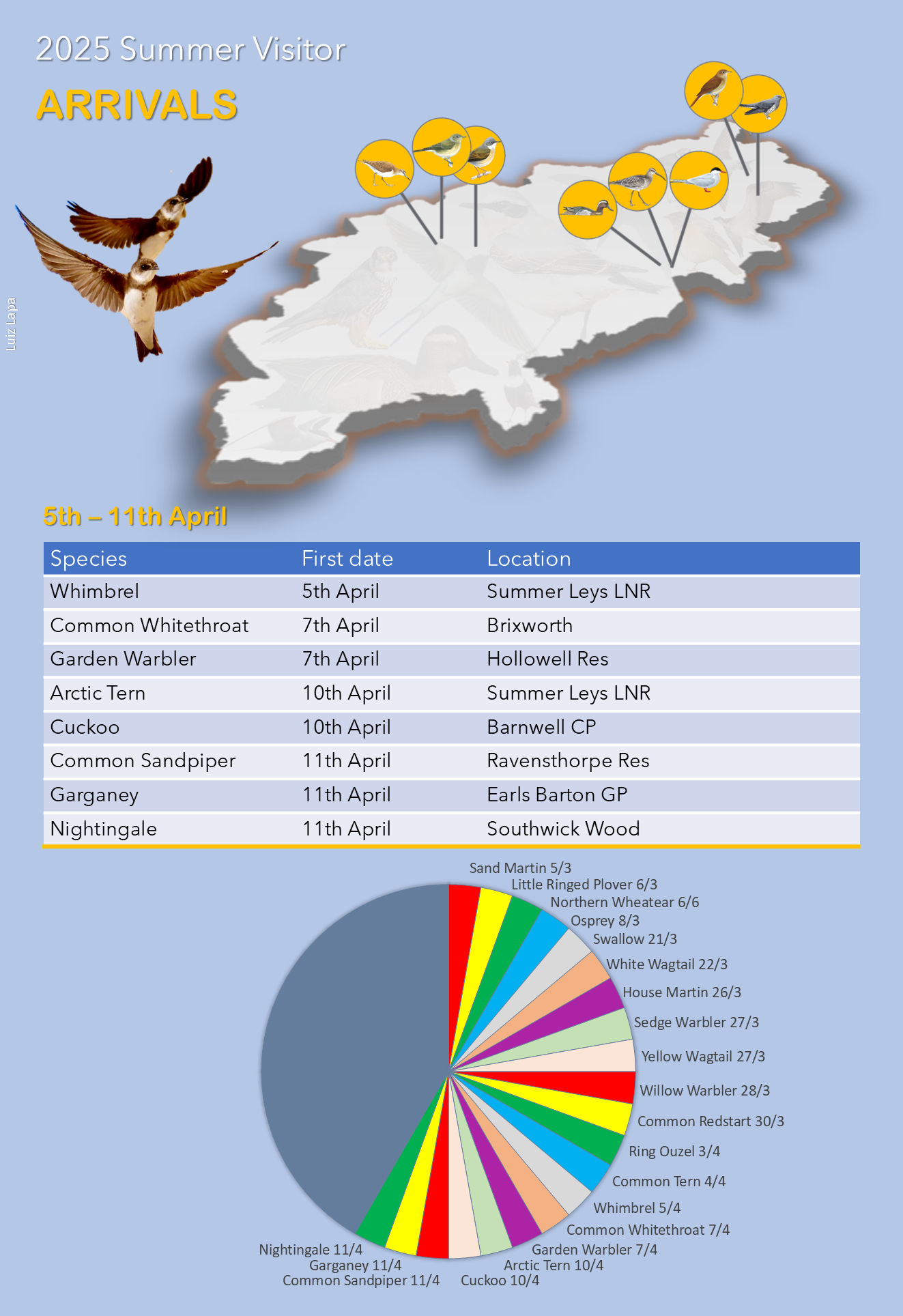
On the summer visitor front, new birds for the year appeared thick and fast this week with seven new species on the clock. One Common Sandpiper had already been logged, of course, although the latter was a rogue, overwintering individual at Earls Barton GP during February and March.
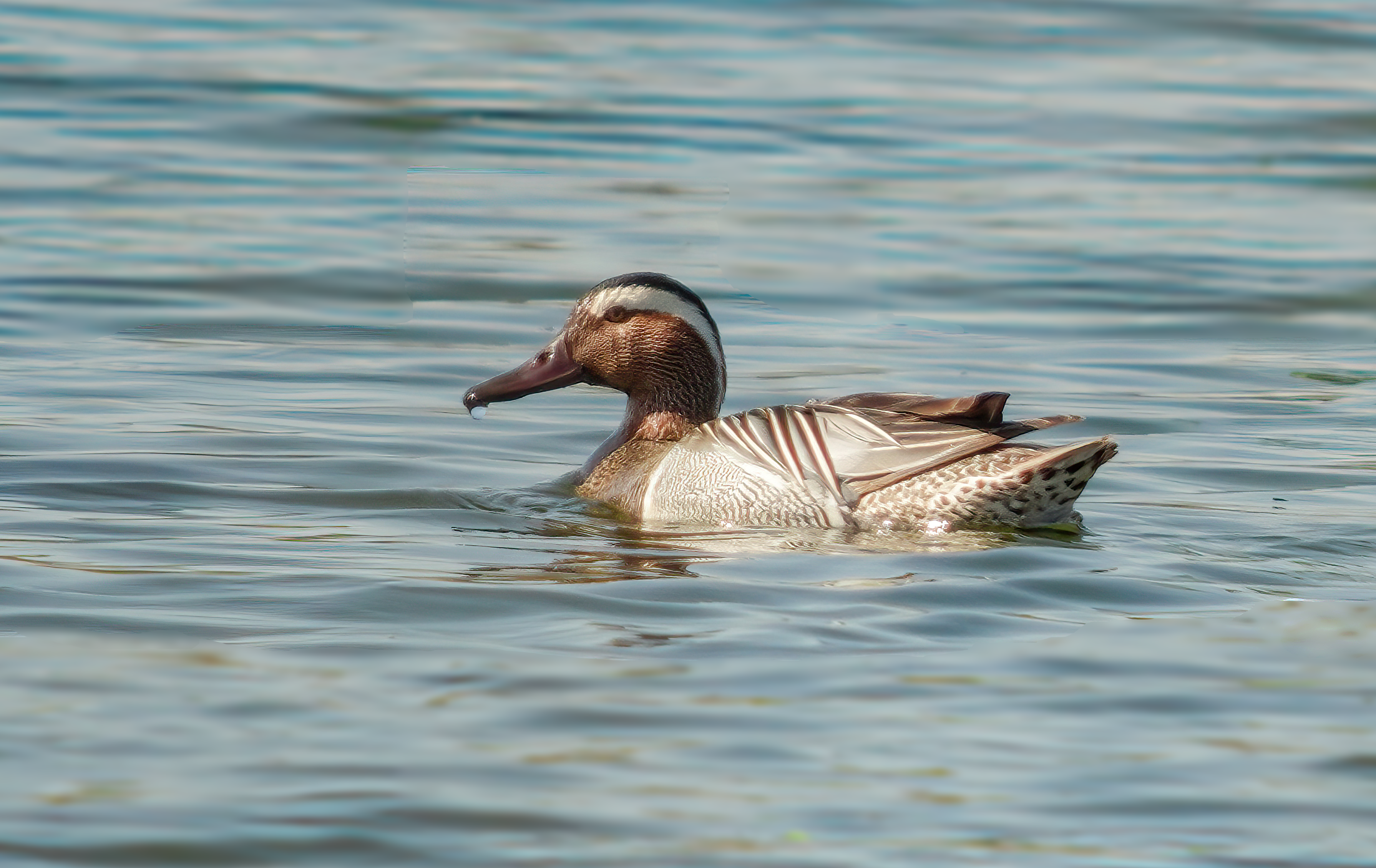
Wildfowl bounced back from last week, with the long-staying Pink-footed Goose still seeing the week out in the Earls Barton GP New Workings (South) area, where the year’s first Garganeys – a duck and drake – were found on the last day of the period.
Drake Garganey, Earls Barton GP, 11th April 2025 (Mike Alibone)
The above site also held on to its drake Red-crested Pochard, favouring the River Nene until at least 9th, while further up the Nene Valley, two Common Scoters made a stopover at Clifford Hill GP on 10th.
Common Scoters, Clifford Hill GP, 10th April 2025 (Mark Williams)
Two Avocets visited Summer Leys LNR on 7th but waders of the week and, at this juncture, of the year, were the two Dotterels that dropped in at Harrington AF the following day. Completing little more than a two-hour stay, they moved on without so much as a by your leave … This apparently constitutes the 15th county record and first since one at Hemington in April 2022, as well as appearing to be the earliest-ever in the county and generally very early for the UK as a whole. To put things in context, there were others in Dorset on 27th-28th March, Cumbria on 2nd April and in Ayrshire on 8th April.
Avocets, Summer Leys LNR, 7th April 2025 (Bob Bullock)
The number of other waders moving through ramped up appreciably and included the first, second and third records of Whimbrel this year, kicking off with one at Summer Leys LNR on 5th, followed by four at Thrapston GP’s Titchmarsh NR on 10th and one flying north over Ravensthorpe Res the following day.
Whimbrel, Titchmarsh NR, 10th April 2025 (Nick Parker)Whimbrel, Titchmarsh NR, 10th April 2025 (Nick Parker)
The first Bar-tailed Godwit of the year dropped into Summer Leys on 10th and was still to be found there on 11th, while four Black-tailed Godwits left over from last week also remained there on 5th-6th, dropping to three on 7th and one on 9th. One also visited Ditchford GP’s Irthlingborough Lakes & Meadows NR on 7th.
Bar-tailed Godwit, Summer Leys LNR, 10th April 2025 (Bob Bullock)Bar-tailed Godwit, Summer Leys LNR, 11th April 2025 (Mike Alibone)
Single Ruffs visited the flooded meadow by the River Nene at Oundle’s Lower Barnwell Lock on 5th and one was at Titchmarsh NR two days later, on 7th. The first of these two sites produced an early spring record of no less than three Spotted Redshanks together on 5th, dropping to just one straggler there on 6th-7th. It has been a good few years since a ‘flock’ of Spotted Redshanks last visited the county …
Two Greenshanks at Summer Leys on 5th represented only the second record for the year after an exceptionally early one over Earls Barton GP in February. Up to two Jack Snipes remained at Hollowell Res throughout the period.
Clearly associated with the continuing easterly airflow, there was no let up in the number of Little Gulls moving through. The Nene Valley undoubtedly enjoyed the lion’s share, with fourteen at Clifford Hill GP, ten at Stanwick GP, 2 at Summer Leys and one at Thrapston GP – all on 5th, while five were at Ravensthorpe Res and one at Pitsford Res on the same date. The following day’s stragglers comprised twos at both Pitsford and Thrapston.
Larger gulls on the scarcity spectrum were a second-summer Caspian Gull at Priors Hall Quarry Lake on 11th, where there was also a second-summer Yellow-legged Gull on the same date. Pitsford continued to hold up to two Yellow-legged Gulls throughout.
Second-summer Yellow-legged Gull, Priors Hall Quarry, 11th April 2025 (James Underwood)
An Arctic Tern at Summer Leys on 10th was new for the year.
Still to be had at Pitsford on 7th was the juvenile Great Northern Diver which has extended its winter occupancy well into spring.
Given its ongoing reintroduction project, perhaps only to be expected with increasing frequency in the county is White Stork, one of which flew over Warmington on 9th. Wild or not, a pulse-racer on a chance encounter.
Once again, the Summer Leys Glossy Ibis clocked up another week …
Cattle Egrets continued to maintain a low profile, with singles in the Nene Valley below Cogenhoe on 7th and at both Stanwick and Hollowell on 11th, the latter apparently a site first.
And so to raptors … and away from the Nene Valley it was, for Ospreys at least. Hollowell enjoyed a visit from the blue-ringed male, ‘3AY’ on 5th, which was the same individual that was photographed at Summer Leys last week. It originates from the Rutland project and was ringed as a pullus in 2019. So far, it remains unpaired. Up to two were also seen at Pitsford between 7th and 11th.
Male Osprey, Hollowell Res, 5th April 2025 (Jon Cook)
Back in the valley, though, Marsh Harriers were seen at Summer Leys on 5th, Stanwick on 5th and 11th and Titchmarsh NR on the latter date. Rather more upmarket, an adult male Hen Harrier was seen close to Everdon Stubbs on 5th.
The week’s passerines were not to be outdone, though, and a male Ring Ouzel at Blueberry Farm, Maidwell on 5th was considered to be a different individual to the bird present there last week. A splendid male Black Redstart in a private garden in Old was pretty much off limits for any would-be observers on 8th. It’s the third one this year, the previous two having also been inaccessible. There will be more …
Male Black Redstart, Old, 8th April 2025 (Krysten Newby)Male Black Redstart, Old, 8th April 2025 (Krysten Newby)
Common Redstarts continued to trickle through, with one trapped and ringed at Stanford Res on 8th, followed the next day by single birds at Blueberry Farm and on farmland north of Ashby St Ledgers.
Female Common Redstart, Stanford Res, 8th April 2025 (Adam Homer)
Northern Wheatears were also low in numbers, this week’s birds being compressed into a small, localised region of north-central Northants that included Blueberry Farm, where there was one on 5th and three on 10th, Harrington AF, which held one on 6th-8th and in the Brampton Valley, where two were present on 10th.
A male Blue-headed Wagtail appeared at Clifford Hill on 7th, while Lower Barnwell Lock held a single White Wagtail on 5th, followed by two there on 7th.

















 Northants birds