Rarity Round-up, 14th to 20th October 2017

What a difference a week makes! Suddenly it was full-on autumn. On 16th October ex-Hurricane Ophelia battered the west coast and whipped up Saharan sand and smoke from Iberian forest fires, turning the skies an eerie yellow-grey and the sun orange over Northants and much of the remainder of the country. The winds throughout the week took on a distinctly southerly bias, keeping temperatures high, but it is unknown if these conditions contributed to the arrival of some seriously scarce birds, one of which was a Northamptonshire first.

Sun over Alderton, 16th October 2017 (Mike Alibone)

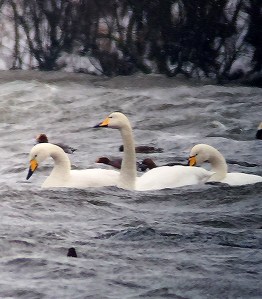
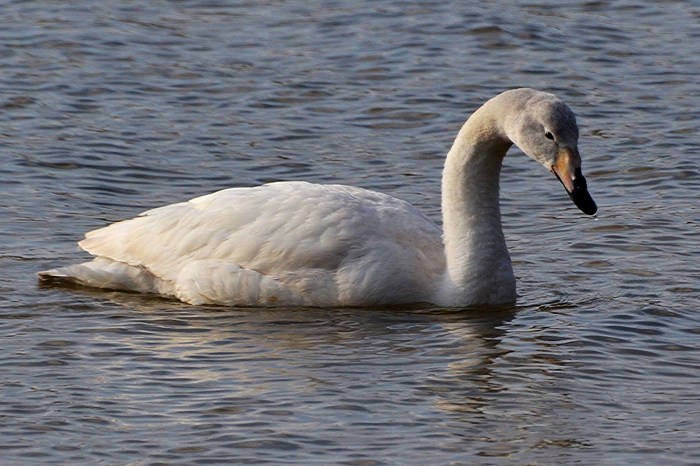
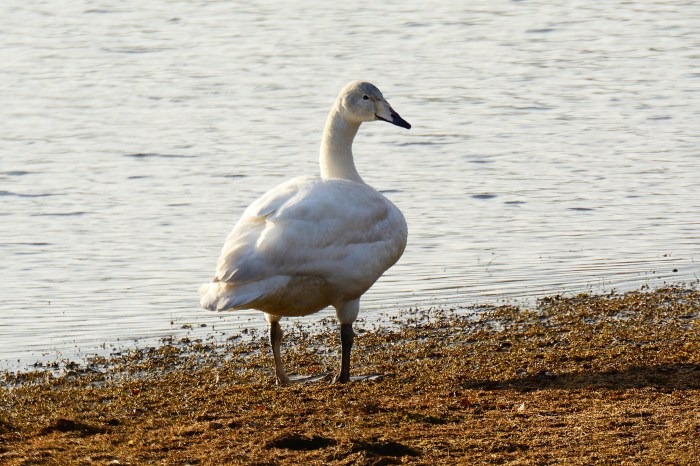
Last week’s two Whooper Swans, which arrived at Pitsford Res on 7th remained all week and were joined by a third individual on 19th, while the 18th saw more arrivals, which included one at Ravensthorpe Res and four at Stanwick GP – the last birds staying until the following day.

Whooper Swans, Stanwick GP, 18th October 2017 (Steve Fisher)

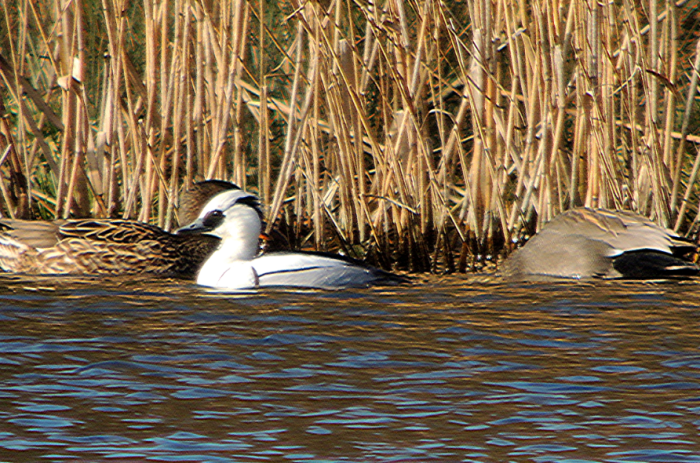
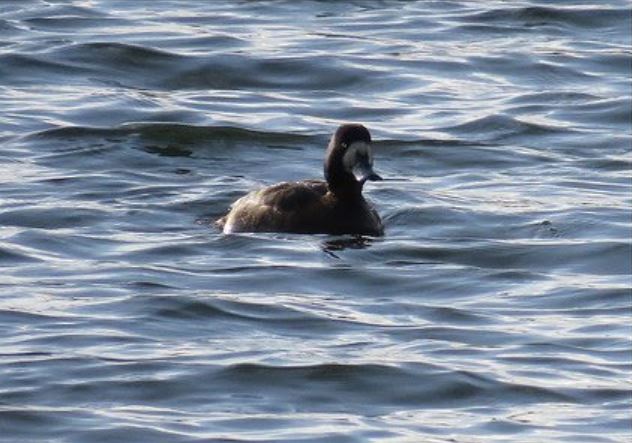
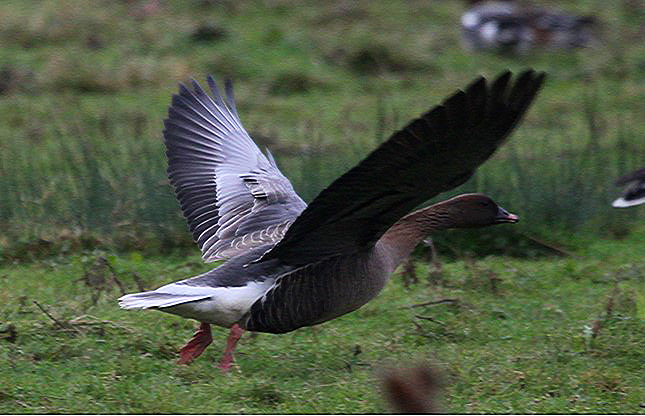
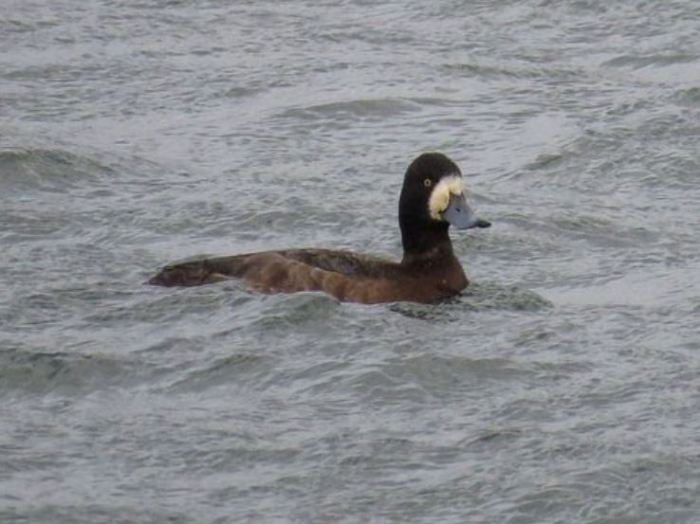
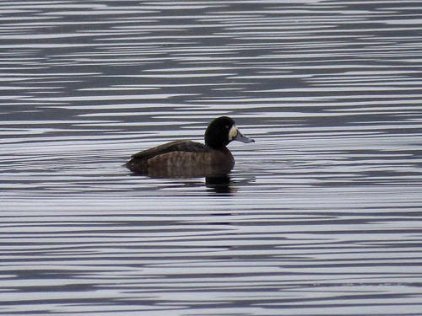
The juvenile Pink-footed Goose also reappeared with Greylags at the latter site on 20th. Smaller scarce wildfowl included a Red-crested Pochard at Thrapston GP on 15th and a female Common Scoter at Boddington Res on 18th-19th, while the escaped, metal-ringed female Bufflehead was still at Clifford Hill GP on 14th.

Juvenile Pink-footed Goose, Stanwick GP, 20th October 2017 (Steve Fisher)

A Bittern was back in the scrape reedbed at Summer Leys LNR on 20th – assuming it had ever left the site – but considerably more upmarket than this, Northamptonshire’s 7th-ever Cattle Egret was found just down the valley at Ditchford GP’s Irthlingborough Lakes & Meadows LNR on 14th. Although it flew east within a few minutes of its discovery, it remained ‘somewhere in the Nene Valley’ for the following three days.

Cattle Egret, Irthlingborough Lakes & Meadows, Ditchford GP, 14th October 2017 (Tony Vials)

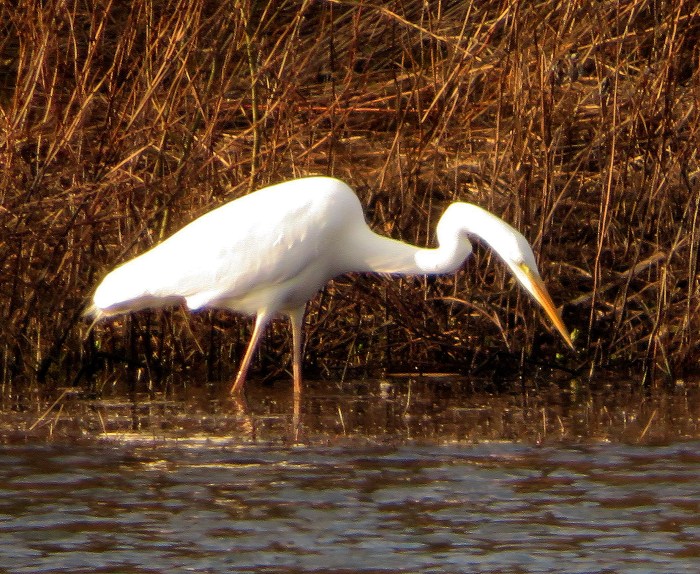
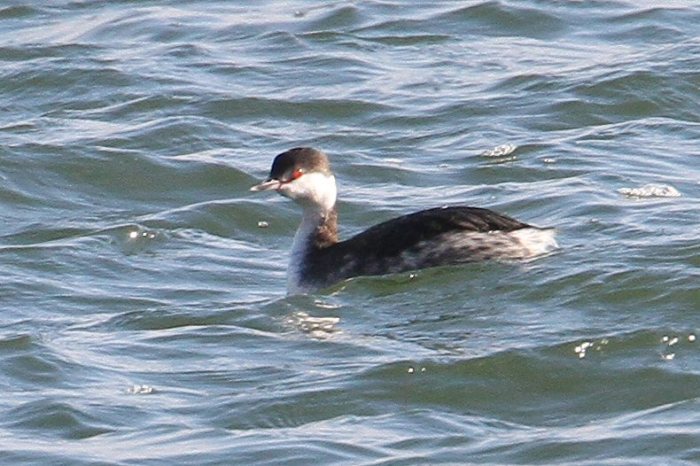
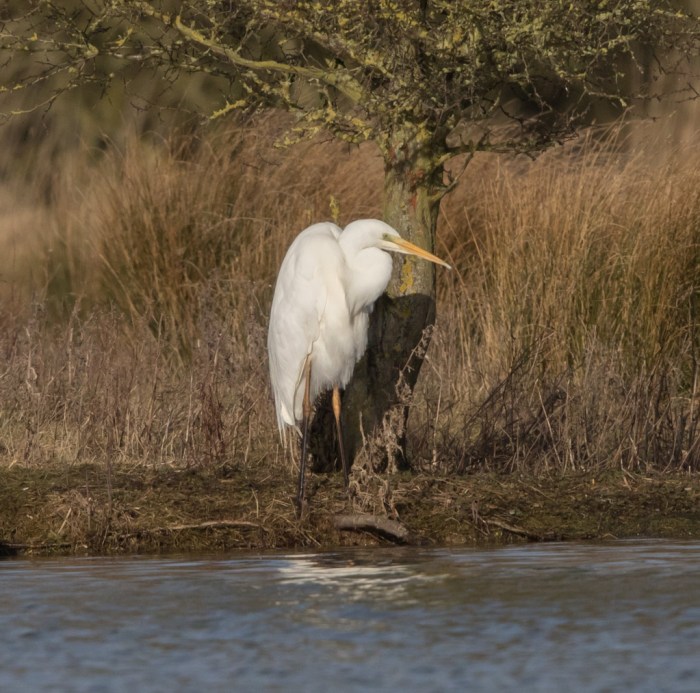
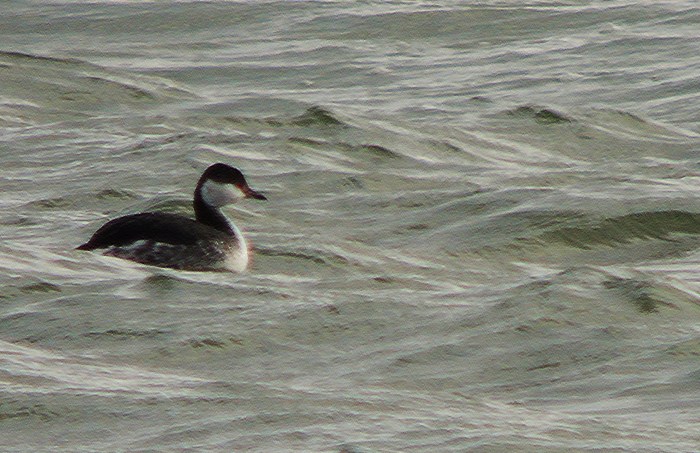
During this time, it flew west with Little Egrets over Stanwick GP shortly after first light on 16th and 17th and, on the morning of the latter date, it was discovered feeding with horses on the north side of Chester House Lake at Ditchford GP, again disappearing within two hours of its discovery. There is now a handful of birders who have seen all three egrets in one day in Northants – unimaginable less than a decade ago! So let’s not forget about the formerly rare Great White Egret, up to three of which remained north of the causeway at Pitsford Res all week, as did the individuals at Ravensthorpe Res and Stanwick GP, while two paid the briefest of visits to Stanford Res on the afternoon of 17th. With only one other on offer earlier in the year, a Black-necked Grebe at Ringstead GP from 14th was a welcome addition to this autumn’s cast. They have been unusually scarce this year.

This week’s raptors featured a Marsh Harrier around the scrape at Summer Leys during the early afternoons of 19th and 20th, single fly-over Merlins at East Hunsbury (Northampton) on 16th and at Daventry CP on 18th and a later than last week’s Hobby at Thrapston GP on 15th.

Late passage waders included another juvenile Little Ringed Plover at Boddington Res on 18th-19th, a Grey Plover over Pitsford village on 15th and single Black-tailed Godwits at Pitsford Res on 15th and one remaining at Stanford Res all week. There was more. A Knot was discovered at Hollowell Res on 20th and remained into the weekend, a rather tardy Common Sandpiper was in Pitsford’s Walgrave Bay on the same date and a Turnstone made a late autumn appearance at Stanwick GP on 15th.

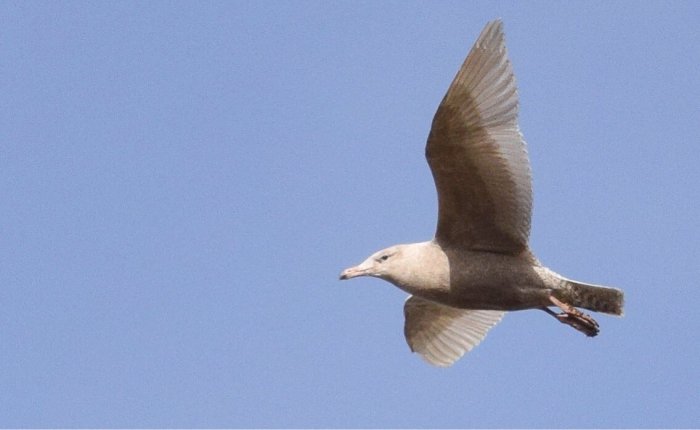
On the gull front, an adult Mediterranean Gull visited Pitsford Res on 19th, the same day that the enigmatic, putative adult Azorean Gull was seen again on Stanwick’s Visitor Centre Lake. Up to two Yellow-legged Gulls were at Hollowell, Pitsford, Stanford and Daventry CP, while the adult Caspian Gull at Hollowell was joined by a third-year on 19th, a second-winter was at Pitsford Res on 14th and 19th and an adult visited Stanwick GP on the last of these two dates.

As hundreds now arrive in the UK every autumn it now seems almost inevitable that someone, somewhere, will find a Yellow-browed Warbler. The county’s ninth duly arrived on cue at Irthlingborough Lakes & Meadows (that place again) on 19th. They often don’t stay long in autumn and this one was no exception, vanishing immediately after it was found. The same date brought a blockbuster of a bird to Stanford Res, where the county’s first-ever Dusky Warbler was pulled from the nets of the Stanford Ringing Group. It was released shortly afterward in the reservoir’s eastern car park (on the Leicestershire side) but it was seen only once, briefly, half an hour later.

Dusky Warbler, Stanford Res, 19th October 2017 (Chris Hubbard)

Photographs circulated after the event sparked a debate as to its true identity – read the story here. It was seen in Northamptonshire by only two very lucky birders. Will the rest of us ever get over it … ?

Back on earth, there was again no shortage of Stonechats, with reports from Brampton Valley, Hollowell, Pitsford, Stanford and Sywell CP, while a Northern Wheatear was still at Hollowell on 14th. October normally yields a few passage Rock Pipits and Hollowell produced four on 19th followed by one there the next day and a Water Pipit was mobile with Meadow Pipits around Pitsford’s Maytrees Hide on 18th.

Stonechat, Sywell CP, 19th October 2017 (Alan Francis)

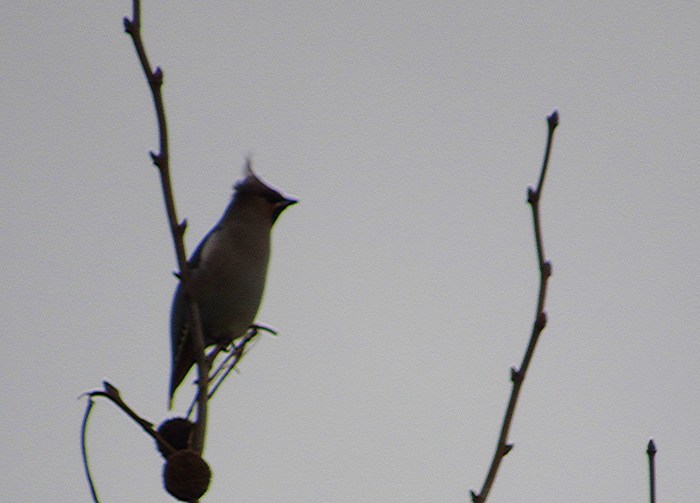
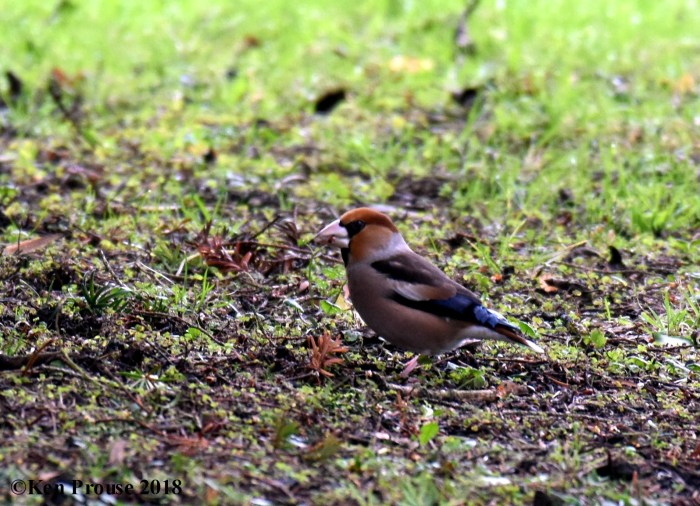
Following last week’s occurrence of two Hawfinches over Long Buckby, it became evident that these were forerunners of a large movement of this species over the UK. One flew south over Scaldwell on 17th and five flew eat at Irthlingborough Lakes & Meadows LNR on 19th. So endeth the best week of the autumn so far – and one which will be difficult to top …

Dusky Warbler at Stanford Reservoir

… or is it a Radde’s?

Before packing up this morning, the last bird pulled from the nets of the Stanford Ringing Group proved to be a Northamptonshire first but the subsequent circulation of the in-hand images generated a debate over its identity and a good deal of controversy as a result.

A break in today’s somewhat inclement weather provided a two-hour window of opportunity for Mick Townsend to get some ringing in at the usual site in, and around, the Blower’s Lodge Bay area at Stanford Reservoir. MT was just making the final round of checking the nets when he noticed a dull, brown passerine in the bottom pocket of the last net he came to. Upon approach, and with the bird facing away, Mick thought it was a late Reed Warbler but when he came to extract the bird it was immediately obvious that it was a dark phylloscopus warbler with a hugely prominent supercilium. He quickly identified it as a Dusky Warbler, took some biometrics and then set about putting the news out but – sod’s law – his phone’s battery was virtually dead and he just managed to get a text out to Chris Hubbard, a mile up the road, before it died.

Dusky Warbler, Stanford Res, 19th October 2017 (Chris Hubbard)

Chris arrived within 15 minutes and took the images reproduced here. Because the ringing station is on private land (and access to the reservoir is by permit only) it was decided to release the bird in the scrub in the car park by the inlet. Sadly, for Northants birders, this release area is the wrong side of the inlet, i.e. in Leicestershire!


The bird was duly released at 11.05 and flew to the nearest cover. It was next seen at 11.35, in hawthorns along the Leicestershire bank, about 100 metres from the car park but this was a brief observation after which it disappeared and was not seen subsequently, despite a search by good numbers of observers, who had gathered there since its release.

Dusky Warbler, Stanford Res, 19th October 2017 (Chris Hubbard)

The images circulated later in the day produced a mixed reaction, with some birders believing it was a Radde’s Warbler. I have to admit it does show some pro-Radde’s features and it had me wondering at the time.

Dusky Warbler, Stanford Res, 19th October 2017 (Chris Hubbard)

Had it been seen in the field and heard calling then there would have been no debate over its ID but a bird in the hand can be a different matter altogether and the two species can appear so similar that, in some instances, the only sure-fire method to confirm the ID is by measurement of the depth and the breadth of the bill – neither of which was recorded in this instance.

Dusky Warbler, Stanford Res, 19th October 2017 (Chris Hubbard)

Pro-Radde’s features exhibited by this individual are:

  • very long, strong, broad supercilium, extending along the full length of the ear coverts
  • very broad, almost blackish eyestripe, almost as deep as the eye, contrasting markedly with the supercilium and, in some images, appearing slightly darker than the mantle
  • ‘mean-looking’ appearance
  • pale spotted (not plain) ear coverts
  • cinnamon under tail coverts
  • large orange feet and, from what is visible, palish orangey legs

Pro-Dusky features are:

  • supercilium almost uniform in colour, whitish in front of eye in some images (Radde’s is buffish in front of eye, contrasting with paler behind)
  • Mantle is wholly brown – confirmed by MT (olive-tinged to strongly olive in Radde’s)
  • Edges to closed primaries are pale brown (not greenish-tinged like Radde’s)
  • Underparts sullied and dull, lacking the faint, sometimes ‘clean’ yellowish tinge of Radde’s
  • Bill shows dark upper mandible with extent of pale limited to cutting edge only (Radde’s usually shows more extensive pale areas); note the left side conforms to this but there is more extensive pale on the right side!

Having studied a number of photographs, Gary Pullan has today put forward what may yet prove to be a new identification feature for these two species, namely that the bill depth at its base is broader than the diameter of the eye on Radde’s Warbler but not on Dusky – and this fits the Stanford bird. GP went on to state that, having seen this bird briefly in the field, the bill appeared weak-looking and the bird did not look bull-necked like a Radde’s Warbler does.

Many – if not all – the pro-Radde’s features, above, can also be shown by Dusky Warbler. The logical ID conclusion is, then, that this is a Dusky Warbler. So, another amazing bird from the nets of Stanford. What will be next and … will we get to see it?

Of further interest, a number of feathers became dislodged when the bird was ringed. These will be sent off for DNA analysis … to be sure, to be sure …

Rarity Round-up, 7th to 13th October 2017

Although it remained largely dry, the west wind continued to blow, swinging north during the early part of the week and then south-southwest, off the continent, elevating temperatures to around 20ºC at the week’s end. Birding came close to floundering in mediocrity but was rescued, in part, by the arrival of some choice winter wildfowl and some obvious visible migration – otherwise there was little change in the birds on the ground during the period.

Two fine adult Whooper Swans arrived at Pitsford Res on 7th – the joint second earliest arrival date (with 1990) in nearly fifty years after the earliest on 29th September 2007. They remained throughout the week.

Whooper Swans, Pitsford Res, 7th October 2017 (Mike Alibone)

Following the usual early autumn influx into the UK, a juvenile Pink-footed Goose appeared with Greylags at Stanwick GP on 12th, while last week’s female Red-crested Pochard remained at Stanford Res until 7th.

Juvenile Pink-footed Goose, Stanwick GP, 12th October 2017 (Steve Fisher)

With Pitsford Res continuing to hold on to its two Great White Egrets north of the causeway all week, two more were found – one at Ravensthorpe Res on 8th-9th and the other at Stanwick GP from 8th to 13th.

Great White Egret, Stanwick GP, 12th October 2017 (Steve Fisher)

For the second week running a Merlin appeared, this time at Daventry CP on 9th, while a late Hobby – likely to be the last of 2017 – was chasing Meadow Pipits at Stanford Res on the same date.

Also late, a juvenile Little Ringed Plover was at Hollowell Res on 7th, from which date a single Black-tailed Godwit remained at Stanford Res until 12th. Last week’s Little Stint (or another) was at Pitsford on 9th, while the only other wader of note was a Jack Snipe at Deene Lake on the same date.

Back on Stanwick’s Visitor Centre Lake, the putative adult Azorean Gull put in another appearance on 10th. Well documented in a series of images, it should surely be identifiable, one way or another, shouldn’t it …?

Putative adult Azorean Gull, Stanwick GP, 10th October 2017 (Steve Fisher)

The only Yellow-legged Gulls were up to three at Pitsford between 8th and 12th, up to five at Stanwick GP between 7th and 11th and one at Daventry CP on 9th, while the adult Caspian Gulls at Hollowell and Naseby were seen on 7th and 9th respectively with the latter date producing another adult at Stanwick and a first-winter at Pitsford.

Adult Yellow-legged Gull, Stanwick GP, 11th October 2017 (Steve Fisher)

There was again no shortage of Stonechats, which were reported from seven localities, with a maximum of six at Hollowell Res on 10th and 13th – the latter date also producing a

Stonechat, Pitsford Res, 8th October 2017 (Martin Swannell)
Stonechat, Hollowell Res, 13th October 2017 (Martin Swannell)
Northern Wheatear, Hollowell Res, 13th October 2017 (Martin Swannell)

Northern Wheatear there, while two Hawfinches were a vizmig flyover for one lucky observer at Cotton End Park, Long Buckby on 10th

Rarity Round-up, 30th September to 6th October 2017

It was back to dominant low pressure systems and westerlies from the word go this week, with winds varying in both strength and direction but always somewhere between SSW and NNW. Still, it didn’t do any harm and a handful of interesting birds appeared, staying for widely varying lengths of time.

The female Red-crested Pochard remained at Stanford Res all week and, for the record, the escaped, metal-ringed female Bufflehead was back at Clifford Hill GP on 30th – assuming it ever left the site in the first place, of course. It’s worth noting that, because of consistently high water levels, Clifford Hill has not been receiving much attention this autumn.

With plenty of mud north of its causeway, Ravensthorpe Res has, however, been looking very attractive but mud’s not what it’s about if you’re a Gannet, four of which flew south there, over the head of one lucky observer, just after midday on 30th. Again, no new Great White Egrets appeared this week with Pitsford Res continuing to host the same two north of the causeway.

Juvenile Gannet, Ravensthorpe Res, 30th September 2017 (Stuart Mundy). One of a group of four to fly south over this site.

On the raptor front, the lingering juvenile Osprey remained in the vicinity of White Mills Marina (Earls Barton GP) until 1st, while the only other notable raptor was a female Merlin which flew over Stanwick GP on 6th.

The second Grey Plover of the autumn put in a brief appearance at Hollowell Res on 5th and Stanford’s five Black-tailed Godwits just made it into the period but they were not seen after 30th. Of interest, more than one hundred and fifty Black-tailed Godwits have been counted moving through Stanford this year, including good numbers of juveniles, and it’s not just down to water level. This species has enjoyed a better than average breeding season in Iceland as a result of very warm May temperatures there. By contrast, although never common, only the second Curlew Sandpiper of the year was found at Pitsford Res on 1st but it stayed only for the morning before disappearing. However, it – or more likely another – turned up at Hollowell Res during the afternoon of the same day, lingering only until the next morning.

Juvenile Curlew Sandpiper, Hollowell Res, 1st October 2017 (Jon Cook)

Four new Little Stints arrived this week – one at Pitsford on 30th-1st and another on 6th, one at Stanwick’s hallowed Visitor Centre Lake on 2nd-3rd and another at Hollowell Res on 4th. This species has been in short supply in the county in recent years.

First-winter Mediterranean Gull, Stanwick GP, 4th October 2017 (Steve Fisher)

Skuas have been in even shorter supply, however, and a possible Pomarine Skua chasing Black-headed Gulls at Billing GP on 1st would have been nice to see. What was presumably the same first-winter Mediterranean Gull which had been at Stanwick GP last week was there again on 2nd and 4th but much more noteworthy was the potential adult Azorean Gull seen there again and photographed on the latter date.

Putative Azorean Gull, Stanwick GP, 4th October 2017 (Steve Fisher)

The only Yellow-legged Gulls were up to four at Pitsford between 1st and 3rd and nine at Stanwick GP on 2nd, while the returning adult Caspian Gull at Hollowell was joined there by a first-winter on 4th, the Naseby adult was still there on 2nd and a second-winter visited Pitsford on 1st. A putative adult Baltic Gull was photographed at Ditchford GP on 2nd but it may well have been the same the same long-winged, dark Lesser Black-backed Gull which visited nearby Stanwick during the previous week. More to come on that.

A Firecrest was found in conifers behind the two hides at the northern end of Pitsford’s Scaldwell Bay on 2nd, while the run of Stonechats continued with up to three at both Pitsford and Hollowell, two at Stanford and singles at Stanwick and Clifford Hill GPs. Eight Crossbills flying south over Long Buckby on 30th was, apart from a breeding pair, one of the few records so far this year.

Putative Azorean Gull at Stanwick

There are two accepted British records of Azorean Gull, the atlantis race of Yellow-legged Gull, based upon two individuals, one of which was a well-travelled bird that visited Northamptonshire in 2013, 2014 and 2015. Is this another, or the same returning individual in a different guise?

On Wednesday, 4th October, Steve Fisher found and photographed a good candidate for an Azorean Gull at Stanwick Gravel Pits. It appears to be the same bird which he also saw there briefly on both 8th and 15th September. Steve’s images, below, pretty much capture all the visible features, so, is it one?

Putative Azorean Gull, Stanwick GP, 4th October 2017 (Steve Fisher)

Head and mantle
This bird does not have a full winter hood and so doesn’t immediately resemble the returning adult from 2013, 2014 and 2015, accepted as the second British record by BBRC. It has been said that the extent of the winter head streaking can vary from year to year in the same individual but this remains to be proven – unless anyone knows otherwise. In any case, the returning individual over those three years appears to have exhibited consistency in the extent of its head streaking, always giving the bird a strikingly hooded appearance. Additionally, the mantle of that bird appeared darker than that of this autumn’s individual, although light conditions, camera settings and processing can, of course, serve to distort the true colour. Having said that, in comparison with the Yellow-legged Gull in the image below, there appears to be little difference in mantle colour. Extent of winter hood varies considerably in Azorean Gull – see here, for example and the bird is not too dissimilar to one, also thought possibly to be Azorean Gull, which visited Shawell in Leicestershire in September 2012.

Putative Azorean Gull, Stanwick GP, 4th October 2017 (Steve Fisher)

Wing pattern
The upper and lower wing patterns are interesting and look like they could fall within range of variation for Azorean Gull. There is a single mirror on P10, separated from the small white tip by a narrow black band and no mirror on P9, where Yellow-legged Gull usually has a small mirror. P5 shows a black subterminal band. The underwing shows darkish grey secondaries and primary bases contrasting with white coverts – perhaps not as dark as may be expected for Azorean Gull. Questions: is the mirror on the upper side of P10 too extensive for Azorean Gull? It looks OK on the underside. Is the subterminal black band on P5 too broad for Azorean Gull?

Putative Azorean Gull, Stanwick GP, 4th October 2017 (Steve Fisher)

Moult
According to literature (specifically Olsen & Larsson – Gulls of Europe, Asia and North America), Azorean Gull moults earlier than Yellow-legged, which fits with the Stanwick bird which is still growing P10 but everything else, including secondaries and tail, appears to have been completed. Yellow-legged might be expected to still show more signs of moult at this time of the year (but not always).

For reasons stated above, it is clear this is not the same individual as has already occurred here in previous years. So, a very interesting bird, then. Comments welcomed.

Rarity Round-up, 23rd to 29th September 2017

A change in the weather from day one this week, with the UK sandwiched between a North Atlantic low and a Scandinavian high, producing southerly and south-easterly winds. The potential was there (and still is) for the appearance of continental migrants and, with hundreds now having been recorded, a Yellow-browed Warbler or two.

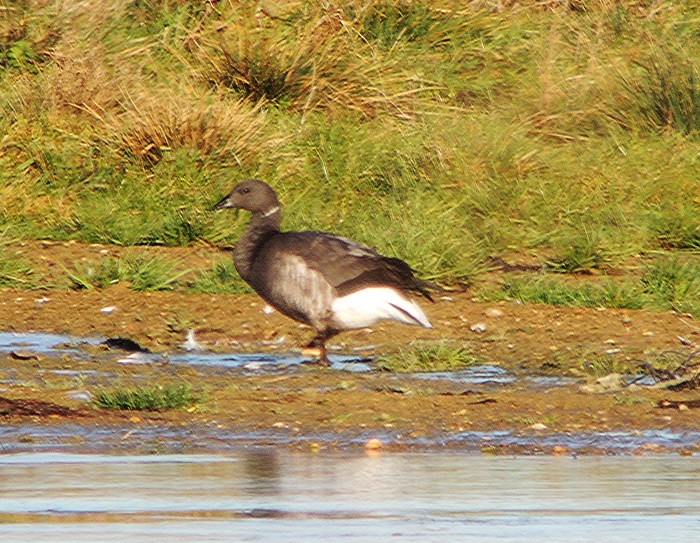
With two Dark-bellied Brents flying south from Daventry CP on 26th there is reasonable argument for stating that the first geese of the ‘winter’ have arrived (but it’s probably in poor taste to use the ‘w’ word this early in the year …). Otherwise, scarce wildfowl were restricted to a female Red-crested Pochard at Stanford Res on 29th – a species which has been unusually absent from local water bodies so far this autumn.

Red-crested Pochard, Stanford Res, 29th September 2017 (Chris Hubbard)

No new Great White Egrets appeared this week – the one at Pitsford Res again being joined by the second bird which has been seen intermittently since the early autumn.

Proving to be a juvenile, last week’s Osprey remained in the vicinity of White Mills Marina (Earls Barton GP) on 23rd and 24th, while the only other notable raptor was a Marsh Harrier, which flew south-west over the dam at Boddington Res, late in the afternoon, on 29th.

Juvenile Osprey, White Mills Marina, Earls Barton GP, 24th September 2017 (Leslie Fox)

Aside from a continuing stream of Ringed Plovers, the Pitsford count peaking at twenty-eight on 25th, wader numbers crashed this week.


Stanford’s Black-tailed Godwits were the only birds of note during the period, with seven on 24th, dropping to five by 29th.

Juvenile Black-tailed Godwit, Stanford Res, 24th September 2017 (Chris Hubbard)

Instead, there was rather more gull action, which included a first-winter Little Gull at Ravensthorpe Res on 28th and a first-winter Mediterranean Gull, which was seen at Irthlingborough Lakes & Meadows LNR (Ditchford GP) on 23rd and then at adjacent Stanwick GP the following day. The only Yellow-legged Gulls were a first-winter at Daventry CP on 23rd and up to two at Pitsford between 23rd and 28th while, aside from the loafing adult Caspian Gulls at Hollowell and Naseby Reservoirs all week, two first-winters visited Daventry CP on 23rd and a second-winter was at Pitsford on 28th.

Adult Caspian Gull, Hollowell Res, 23rd September 2017 (Mike Alibone), returning for its third winter at this site.
First-winter Caspian Gull, Daventry CP, 23rd September 2017 (Gary Pullan)

Following last week’s Short-eared Owls at Hollowell and Harrington AF, another was seen flying south, mobbed by corvids, at Burton Wold (Burton Latimer) on 25th. Stonechats continued to be found, with up to two at Hollowell Res all week, two at Stanford Res on 24th and one at Neville’s Lodge (Finedon) on 29th, while Hollowell

Stonechat, Stanford Res, 24th September 2017 (Chris Hubbard)

continued to hang on to its Northern Wheatear until 26th, being joined by a second individual on 24th-25th, and another was at Finedon on 29th. The autumn’s first Rock Pipit was found at Hollowell Res on 25th, remaining there until 27th, while a White Wagtail was at Pitsford Res on 28th.

Rarity Round-up, 16th to 22nd September 2017

The week remained unsettled with periodic showers and mid/late-week night-time temperatures down to around 3ºC, the lowest since before the summer. Although predominantly westerly, the wind in the latter part of the week shifted between gentle northerly to mild southerly. Wader numbers crept up and included some autumn ‘firsts’ at a couple of local reservoirs.

In addition to the long-staying Great White Egret at Pitsford Res, two new birds appeared this week – one strutting around the shallows at the eastern end of Sulby Res on 16th and another on the main lake at Stanwick GP on 20th.

Great White Egret, Sulby Res, 16th September 2017 (Mike Alibone)

Fly-over Ospreys were seen on 17th at Bulwick and the following day at White Mills Marina (Earls Barton GP), while the only other notable raptor was a ‘ringtail’ Hen Harrier, which was seen on and off throughout the day at Stanford Res – also on 17th.

Hen Harrier, Stanford Res, 17th September 2017 (Chris Hubbard)

Wader passage picked up during the period, with numbers of Ringed Plovers (twenty-three on 19th and twenty-four on 21st) at Pitsford approaching those of the ‘old days’, while the same site continued to hold a Black-tailed Godwit on 16th-17th, another visited Stanford Res on 20th and seven were there on 22nd. Pitsford – still offering the best wetland birding by miles – continued to provide the main wader focus, with a Turnstone there on 19th and the autumn’s first Little Stint on 18th-19th, rising to two there on 20th-21st.


Juvenile Little Stint, Pitsford Res, 21st September 2017 (Martin Swannell)
Juvenile Little Stints, Hollowell Res, 19th September 2017 (Cathy Ryden)

Two Little Stints were also found at Hollowell Res on 19th, where last week’s Grey Phalarope continued to perform until 17th, the last date on which Pitsford’s juvenile Spotted Redshank was also seen.

First-winter Grey Phalarope, Hollowell Res, 16th September 2017 (Bob Bullock)

The 17th also signalled time up for last week’s Arctic Tern at Stanford, which had moved on by the following day. A first-winter Little Gull visited Daventry CP on 22nd, just one Mediterranean Gull, a first-winter at Stanwick GP, was seen on 21st, while the only Yellow-legged Gulls were single adults at Cransley Res on 16th and at Pitsford Res on 21st, with four at both Pitsford and Daventry CP on 17th and 20th respectively and two again at Daventry CP on 22nd. This week’s duo of Caspian Gulls comprised what seems destined to become a regular adult at Naseby Res on 16th and 21st and a first-winter at Daventry CP on 20th.

Adult Caspian Gull, Naseby Res, 21st September 2017 (Mike Alibone)

It’s normally October before we encounter the first of the autumn’s Short-eared Owls but this week there were two: one at Hollowell Res on 16th and the other at Harrington AF the following day.

Short-eared Owl, Harrington AF, 17th September 2017 (Richard How)

Only the third reported in the county this year, a female Pied Flycatcher was trapped and ringed at Southwick on 22nd. This species appears to have succeeded in evading county listers in 2017! Still more Common Redstarts came through, with one at Harrington AF on 16th-17th and singles in the Brampton Valley on 20th and 22nd, while three sites produced Whinchats, including one at Stanford Res and two at Stanwick GP on 18th and two in the Brampton Valley on 20th.

Stonechat, Sywell CP, 21st September 2017 (Alan Francis)
Stonechat, Brampton Valley, 22nd September 2017 (Richard How)

Stonechats can either be quite scarce or we can sometimes have a bumper winter but with the first ones arriving, or just passing through, locally we can only speculate. Two were at Pitsford Res on 16th, singles were at Stanford Res on 18th and 20th and at Sywell CP on 21st, while two were in the Brampton Valley on 20th and 22nd.

Northern Wheatear, Hollowell Res, 17th September 2017 (Cathy Ryden)

This autumn is, so far, proving extremely poor for migrant Northern Wheatears and the trend continues this week with just two seen: one was at Hollowell Res from 17th to 21st and another was found in the Brampton Valley on 20th, this locality also producing a fly-over Tree Pipit on 22nd.

Rarity Round-up, 9th to 15th September 2017

More North Atlantic lows, with tightly-packed isobars, ensured a westerly airstream for the whole week. One of these – Storm Aileen – hit the country overnight on 12th, resulting in strong westerly gales delivering a number of inland seabirds, for both Northamptonshire and the UK as a whole. Topping the bill locally was the county’s eleventh-ever Sabine’s Gull, at Daventry Country Park.

Observed only on 9th, just one Garganey was on show briefly at Pitsford Res this week and no other notable wildfowl were reported. Picked up in Duston on 15th, a storm-driven Manx Shearwater was taken into care overnight and, the following morning, transported to a specialist hospital in Swansea for further care prior to its intended release following several days of rehabilitation. Further associated with Aileen’s blow, two juvenile Gannets were reported flying east over Daventry CP, late in the afternoon of 15th. This news appeared on some birding information services and it would be useful to know who the observers were … Meanwhile, back at Pitsford – currently the best habitat for waders and stuff in general for miles around – the long-staying Great White Egret remained all week, while the Fawsley Park Osprey remained from last week, finally departing south on the morning of 10th.

Juvenile Osprey, Fawsley Park, 9th September 2017 (Stuart Mundy)

Three more Ospreys included singles at Stanford Res and flying east near Aldwincle – both on 9th – and one over Hollowell Res on 13th and last week’s Marsh Harrier was also seen again at Stanford Res on 9th.

Marsh Harrier Stanford Res, 9th September 2017 (Bob Bullock). This individual has recently renewed all except its outer primaries (which are faded and heavily worn) and one of its secondaries, which ages it as a second calendar year or older – juveniles still having a full set of new feathers.

Waders: it’s what autumn’s all about, isn’t it? Well, at least for September, anyway. While we’re still awaiting the big numbers and the broader species spectrum, the first Grey Plover of the season was seen flying over Pitsford’s Scaldwell Bay on 14th, while the same site continued to host between one and three Black-tailed Godwits from 9th to 14th and another visited Stanford Res on 9th. In the meantime, Pitsford’s juvenile Spotted Redshank had managed to chalk up twelve days’ stay by the end of the week. Which brings us to another species proving thin on the ground this autumn: Wood Sandpiper. The second of the season was found at Ravensthorpe’s small, muddy north end on 9th but it failed to show the next day. The reverse was true, though, for another storm-driven thing, a first-winter Grey Phalarope, which appeared at Hollowell Res after Aileen’s gales on 13th and performed well for all comers until the week’s end – although it could sometimes be a little elusive.

First-winter Grey Phalarope, Hollowell Reservoir, 13th September 2017 (Cathy Ryden)
First-winter Grey Phalarope, Hollowell Reservoir, 16th September 2017 (Bob Bullock)

The last one in Northants was in 2014. Hollowell also produced four Turnstones, which dropped in just after the discovery of the phalarope, only to disappear very quickly.

Juvenile Arctic Tern, Stanford Res, 13th September 2017 (Chris Hubbard)

The star tern of the week came in the form of two juvenile Arctic Terns, one at Stanwick GP on 13th and the other at Stanford Res from 13th to 15th. However, it’s not very often the true star of the week is a gull but even the most convicted laridophobe could not fail to appreciate the exquisite beauty of the juvenile Sabine’s Gull which graced Daventry CP with its presence for three days during the latter half of the week. Thought by some to be in ill health, it made trips away from the reservoir on a number of occasions, finally disappearing for good after 15th. Being the only one lingering inland after Aileen’s big blow, it proved to be a popular attraction for birders from much further afield than Northants.

Juvenile Sabine’s Gull, Daventry CP, 14th September 2017 (Ken Prouse)

All of this week’s other gulls were, of course, completely overshadowed but do not escape without mention. Up to two first-winter Mediterranean Gulls continued to be seen on Stanwick’s Visitor Centre Lake between 9th and 12th and one visited nearby Irthlingborough Lakes & Meadows at Ditchford GP on 10th.

First-winter Mediterranean Gull, Stanwick GP, 11th September 2017 (Steve Fisher)

Perhaps unsurprisingly, for the second week running, Stanwick’s putative adult Azores Gull put in another tantalisingly brief appearance there on 15th. Will it return to stay long enough to be nailed? The same site held fourteen Yellow-legged Gulls on 11th but the only other ‘YLGs’ were at Pitsford Res, where there was one on 9th and two on 13th and at Ravensthorpe Res on 10th. Stanwick also produced a first-winter Caspian Gull on 11th and single adults visited both Daventry CP and Naseby Res on 13th.

Adult Yellow-legged Gull, Ravensthorpe Res, 10th September 2017 (Adrian Borley)

With all the attention justly focussed on wetlands this week, it would appear that passerines have been largely forgotten, but the autumn run of Common Redstarts continued and so did the ringing, with two trapped and ringed at Stanford Res on 9th, followed by three more there the next day (two ringed) and a male was trapped and ringed at Southwick on 15th.

Juvenile Whinchat, Pitsford Res, 12th September 2017 (Doug Goddard)

Fewer Whinchats were recorded in comparison to last week, with one at Pitsford Res on 10th-11th being joined by another on 12th, while one was at Hollowell Res on 15th.

Grey Phalarope at Hollowell

Anticipation was running high among local birders when Storm Aileen made landfall in the UK on Tuesday, with the strong westerly blow continuing into the early part of Wednesday. The resultant winds, 70 mph in some areas, were already producing storm-driven seabirds along the western seaboard and the scene was set for discoveries further inland.

Wednesday, therefore, called for an early start and a reservoir tour was clearly in order, commencing at Pitsford dam. Unfortunately, Pitsford delivered nothing unusual – neither did Naseby, Welford, Sulby or Stanford.

I was beginning to run out of steam by the time I reached Hollowell and decided on a quick, long-distance overview of the northern and central parts of the reservoir from the lay-by on the A5119. And there it was, apparently the only wader there at the time, an animated speck, busily feeding along the shoreline of the Guilsborough Bay Point.

I quickly made my way to the point and, after putting the news out, started to watch and video it, keeping a safe distance so as not to disturb it. I needn’t have bothered. I was soon joined by Cathy Ryden and we were then dismayed to witness a crew of noisy young rowers cruising alarmingly close to the phalarope, at which point it was spooked and promptly vanished. Fortunately, Cathy relocated it later in the afternoon and it remained on site until at least mid-morning today.

First-winter Grey Phalarope, Hollowell Res, 13th September 2017 (Cathy Ryden)
First-winter Grey Phalarope, Hollowell Res, 15th September 2017 (Cathy Ryden)
First-winter Grey Phalarope, Hollowell Res, 15th September 2017 (Jonathan Cook)

Part of a national influx, this is the first Grey Phalarope in Northants since the relatively long-staying Pitsford individual in autumn 2014 and prior to that, there was one in 2011. There have been thirty-three previous records. As result of Aileen, many have been recorded across the UK during the past few days, although most have been seen at coastal locations.

Many thanks to Cathy Ryden and Jonathan Cook for supplying images,

Wrecked: Manx Shearwater in Duston

Another victim of Aileen

Found exhausted in Duston yesterday, a Manx Shearwater was picked up and taken to the local vets. Not knowing the best course of action to take, they contacted Jim Murray who, in turn contacted Dave James for further advice. An initial plan to release it in Northants was quickly deemed inappropriate and subsequently ditched.

Manx Shearwater, in care, Northamptonshire 15th September 2017 (Jim Murray)

Fortunately, it survived overnight and JM today set out to take it took it to the Pembrokeshire coast, where the plan was to meet up with the Pembrokeshire Sea Bird Rescue Society to pass it over to them for further care prior to a hopefully successful release. On the way over, PSBRS recommended taking it to a specialist wild bird hospital near Swansea, which then became the revised destination.

After its admission to the hospital the prognosis appears good, with the hospital confident of the bird’s continued survival with a release planned after a few days. Apparently, Northants is the furthest point away the hospital has ever received a seabird from. Further good news is eagerly awaited.

This individual was not alone in its finding itself inland, presumably as a result of Storm Aileen’s big westerly blow on 12th-13th September. Other Manx Shearwaters were found in inland counties, e.g. Cambridgeshire, London area and up to wrecked birds 300 are being treated and released in Somerset http://bbc.in/2y5HeN5

Many thanks to Dave James and Jim Murray for providing details.