A largely dry and settled week saw us taking a step closer to winter with movements of small numbers of Redwings noted across the county. Similarly, winter wildfowl were also on the up with the first Whooper Swans appearing at a number of localities. Aside from this, rare waders were still out there to be had …
It’s clearly evident that we’re taking the first steps down the road to winter when Whooper Swans start moving through the county … and this was the week it happened. First up was the herd of eight that flew over the north side of Pitsford Res on 5th and, thinking better of landing, headed off north-east. These were followed the next day by a brief drop-in by a single bird at Daventry CP and similarly, on 7th, one also paid a short visit to Thrapston GP’s Titchmarsh NR before moving off south. On 8th, three dropped in at Stanford Res, ahead of five more settled birds found at Clifford Hill GP on 9th.
Whooper Swan, Titchmarsh NR, 7th October 2025 (Nick Parker)
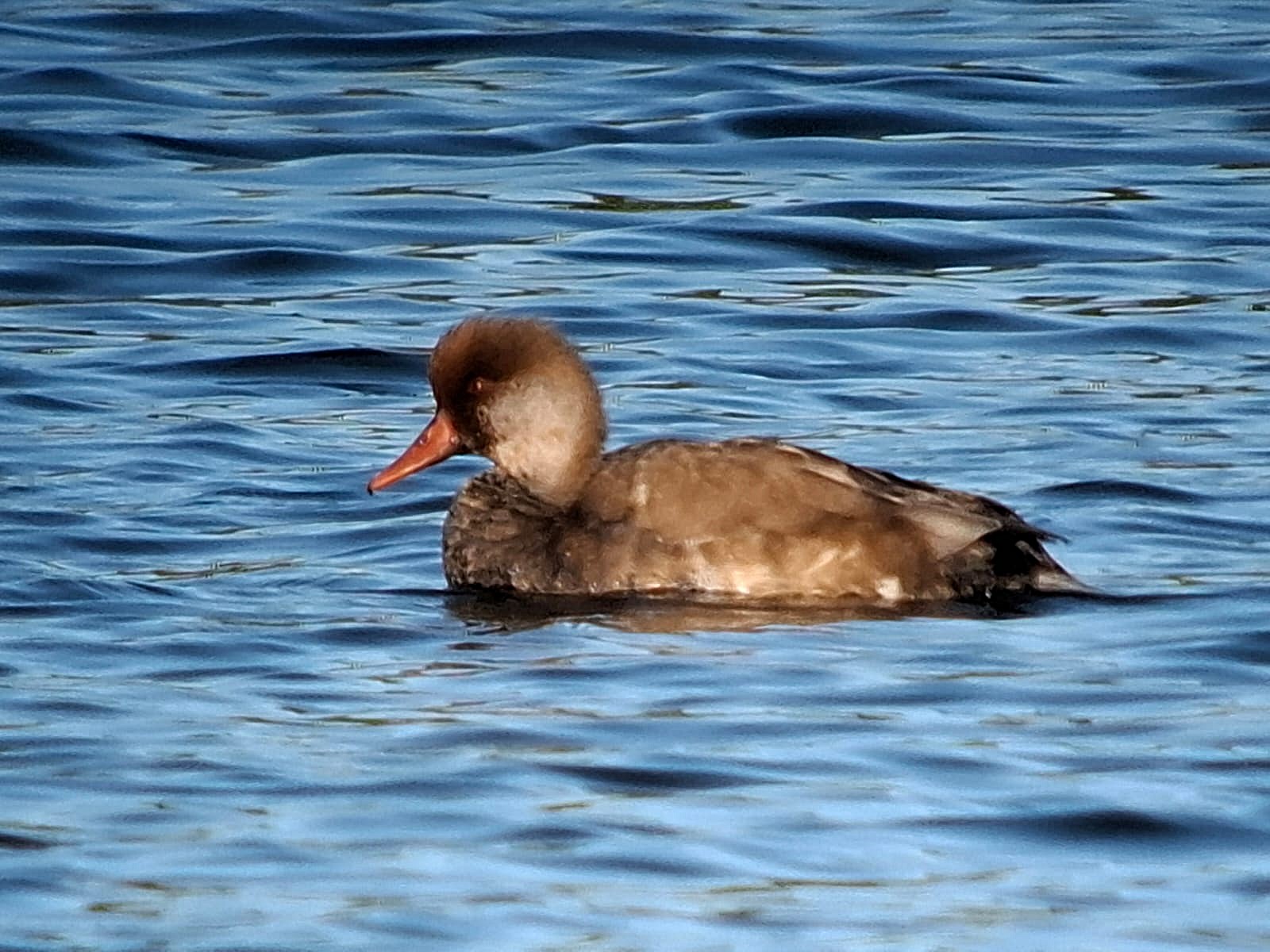
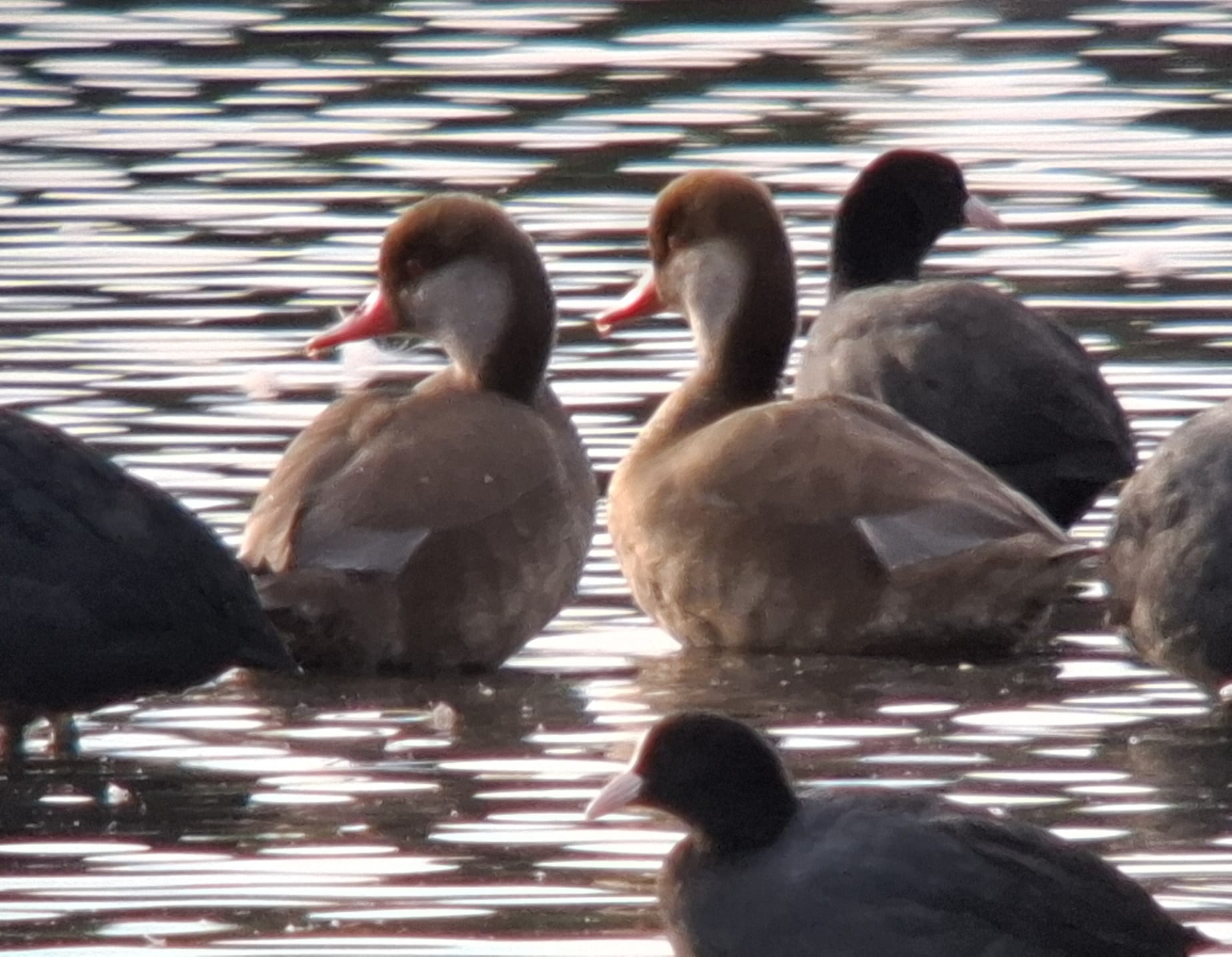
The only other wildfowl just about worthy of note was a long-staying drake Red-crested Pochard at Daventry seeing another week out on site.
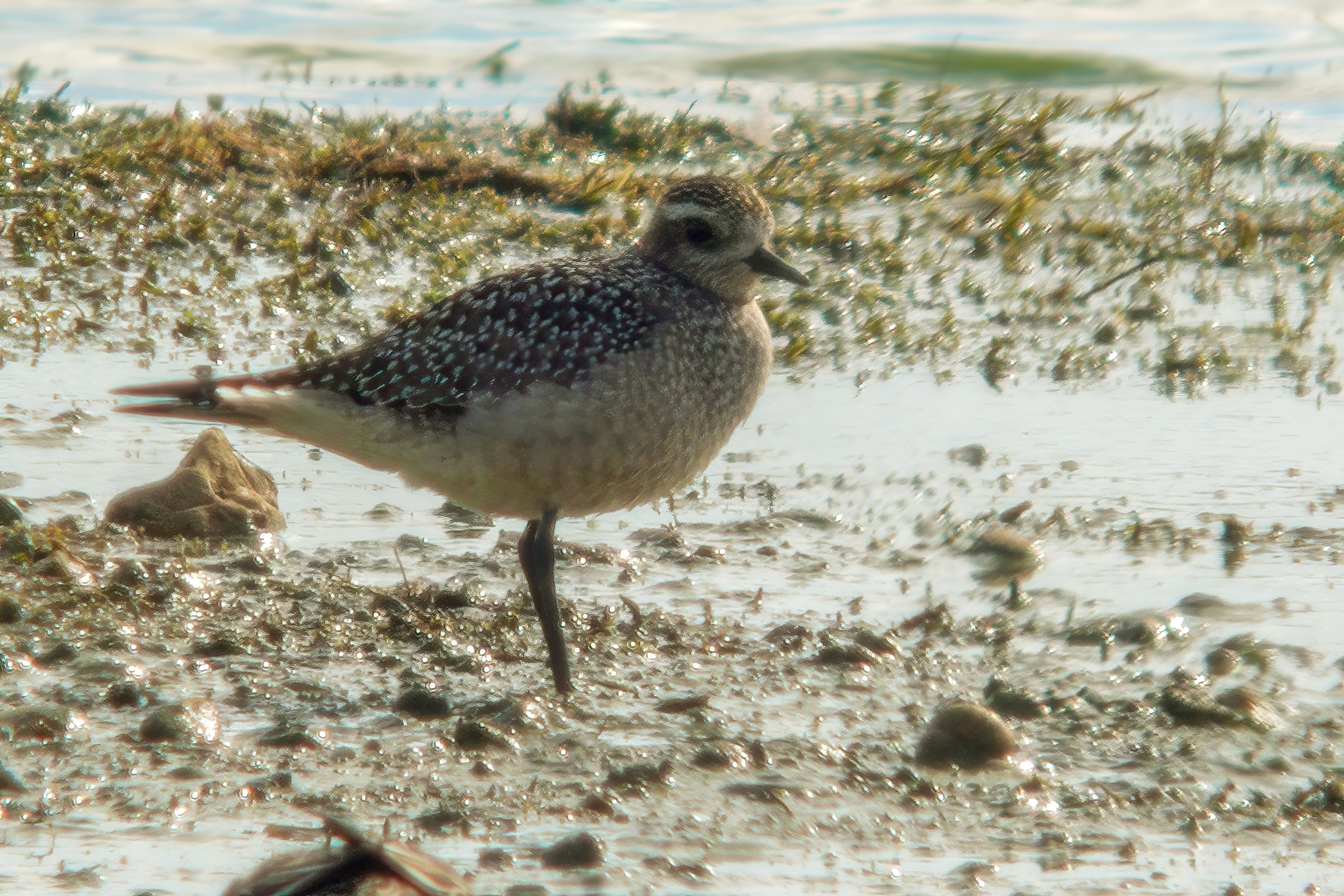
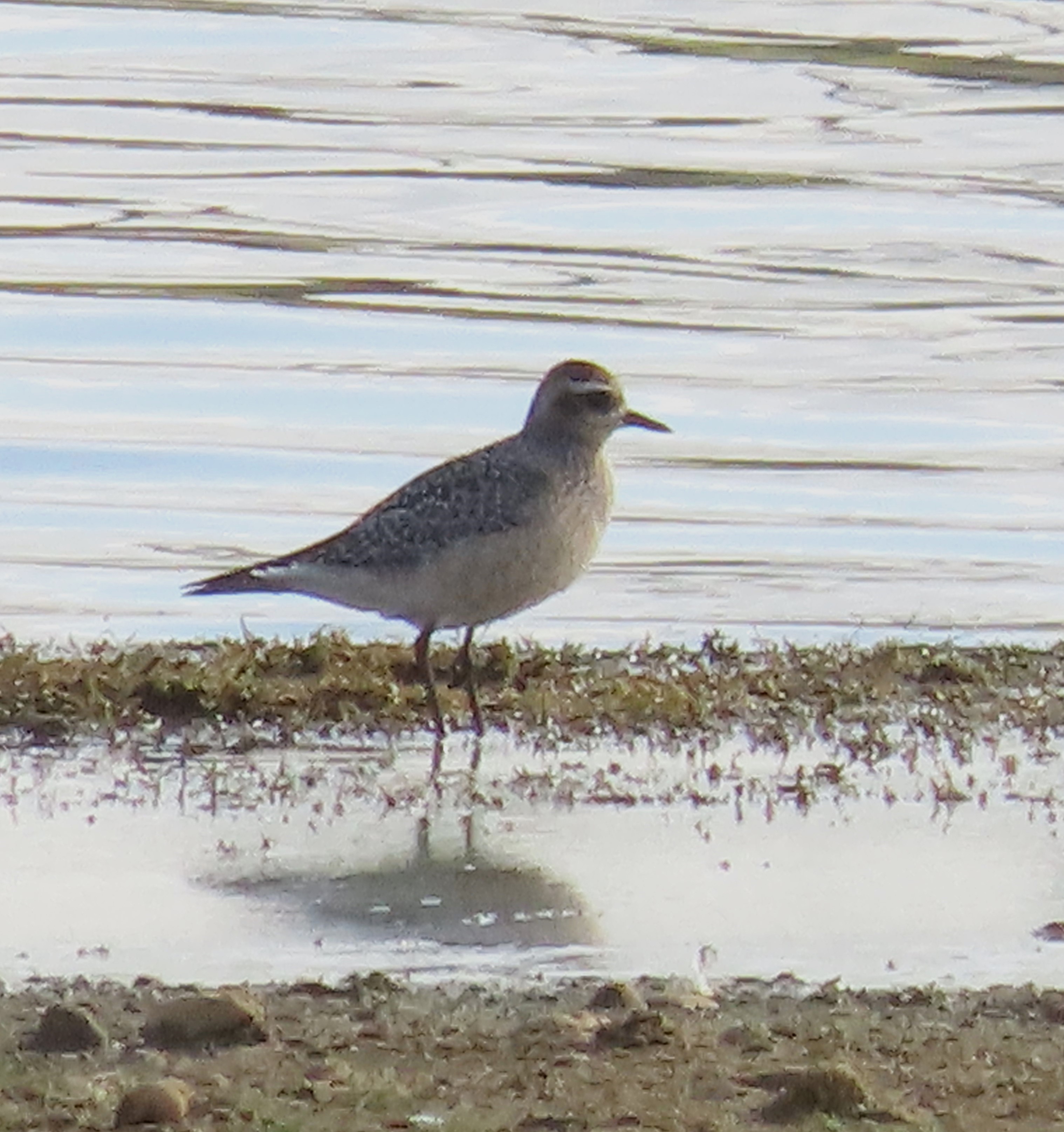
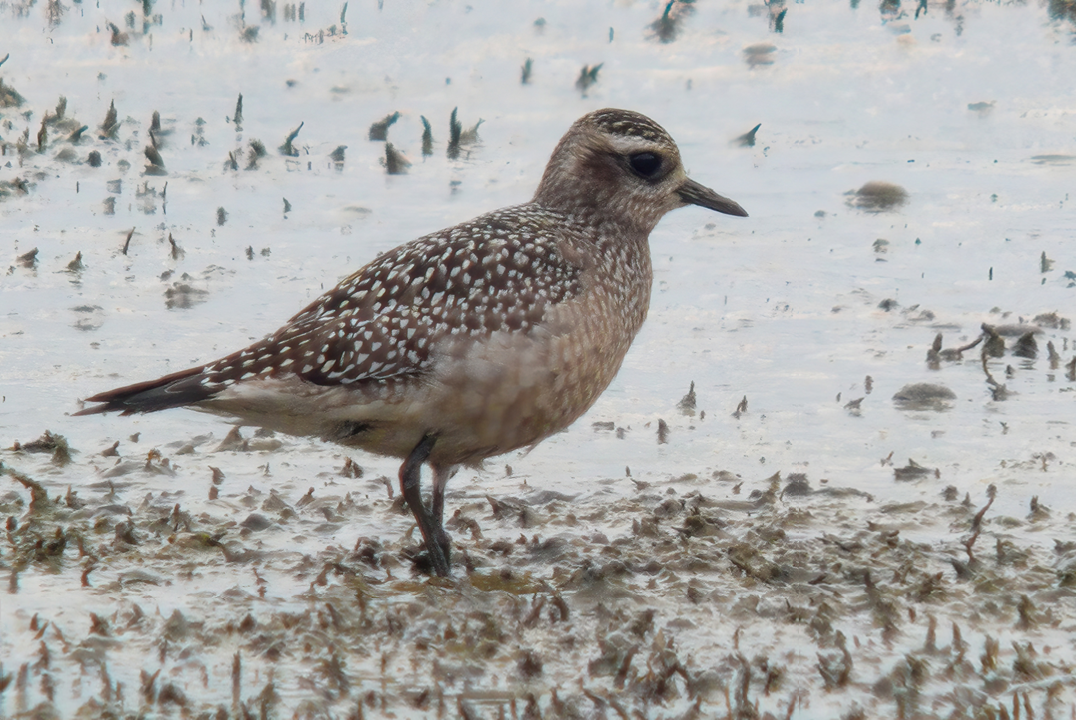
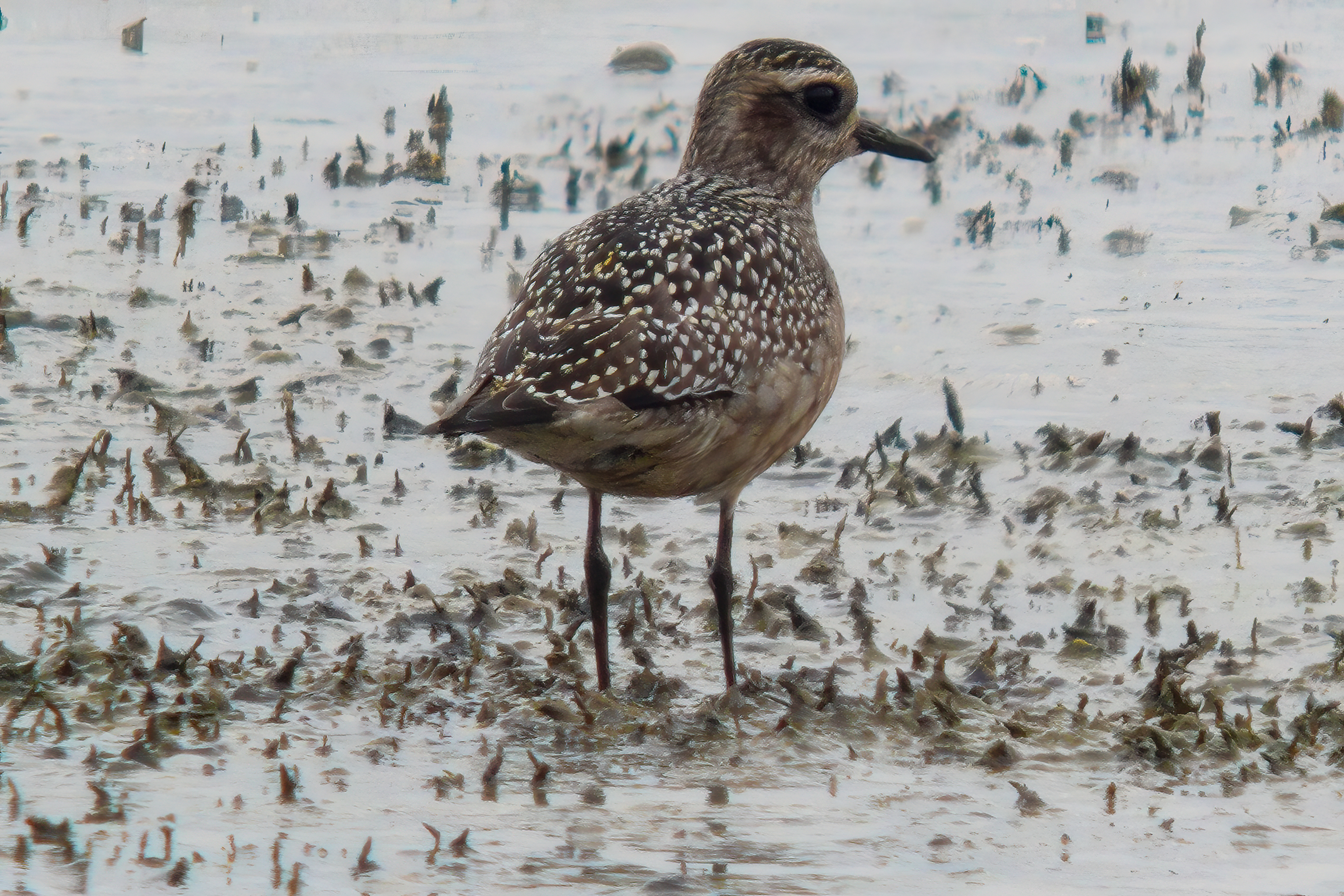
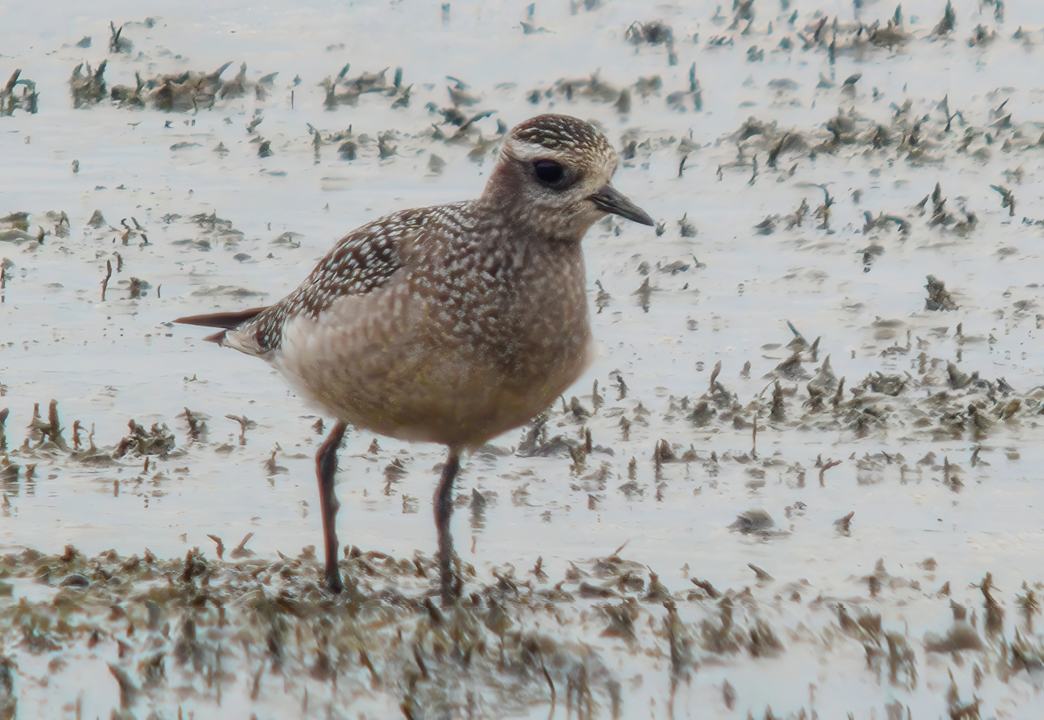
Last week’s excitement generated by the county’s fourth-ever American Golden Plover spilled over into this week, with the bird still present at Pitsford on day one, the 8th, after which it appeared to be gone for good.
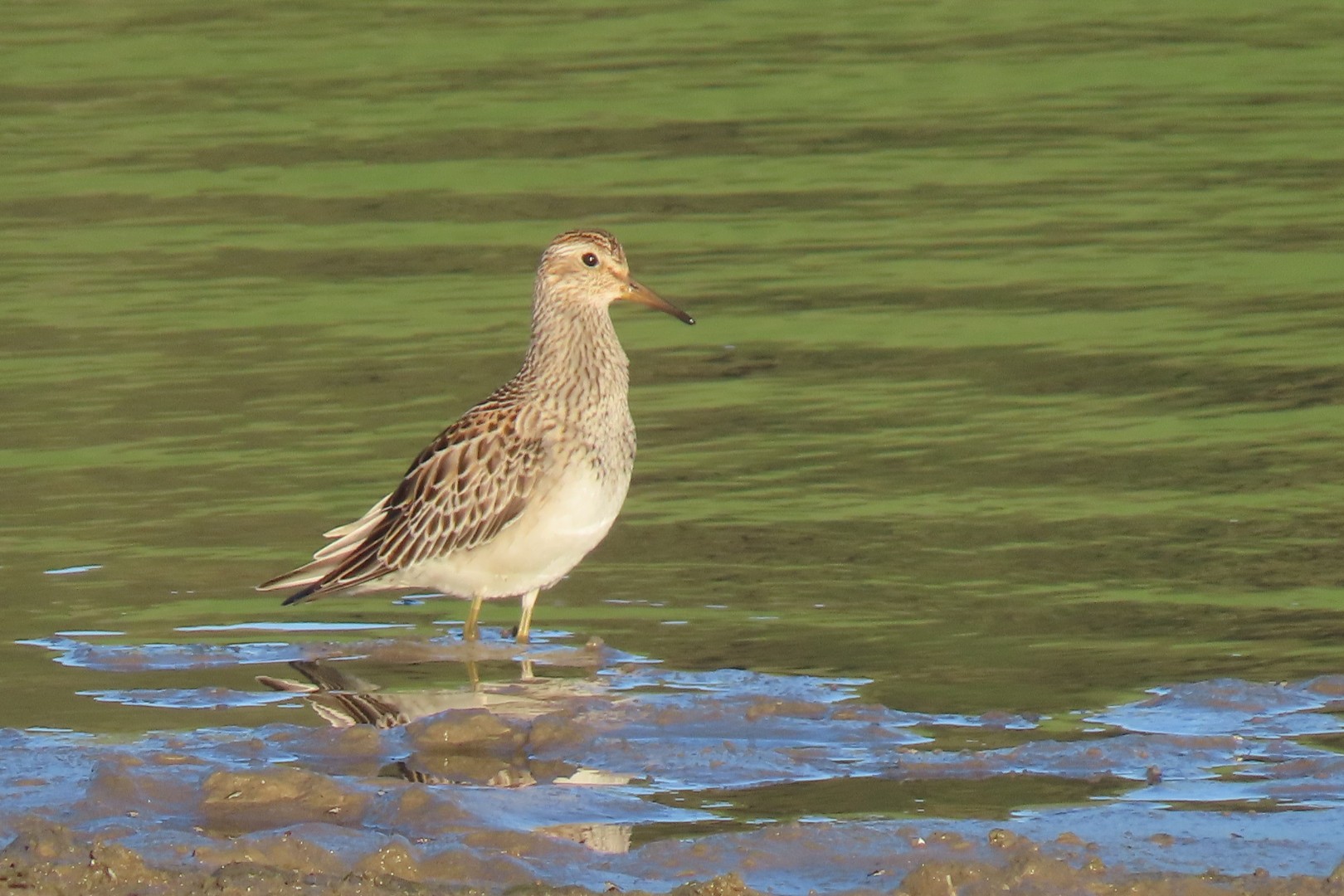
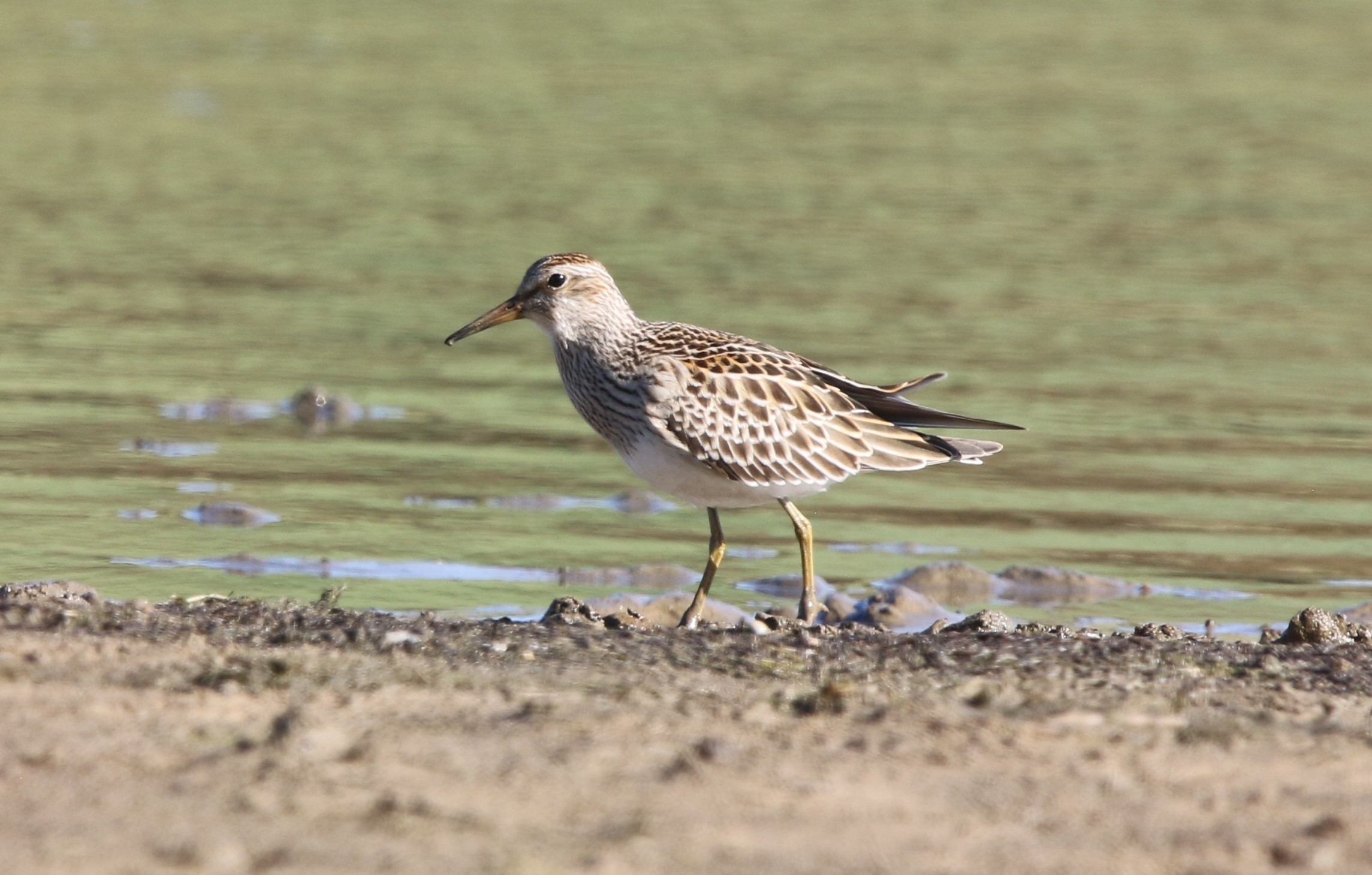
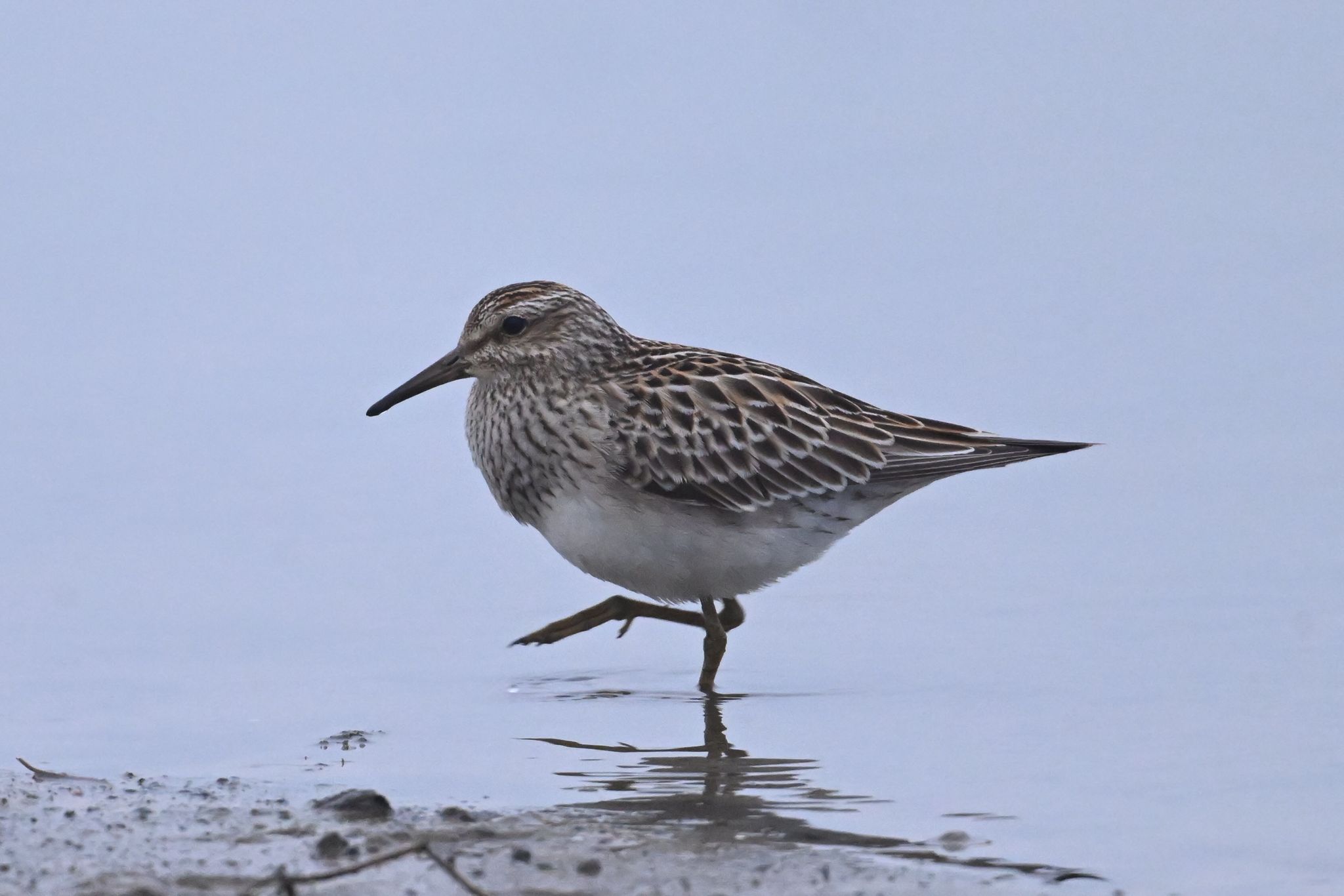
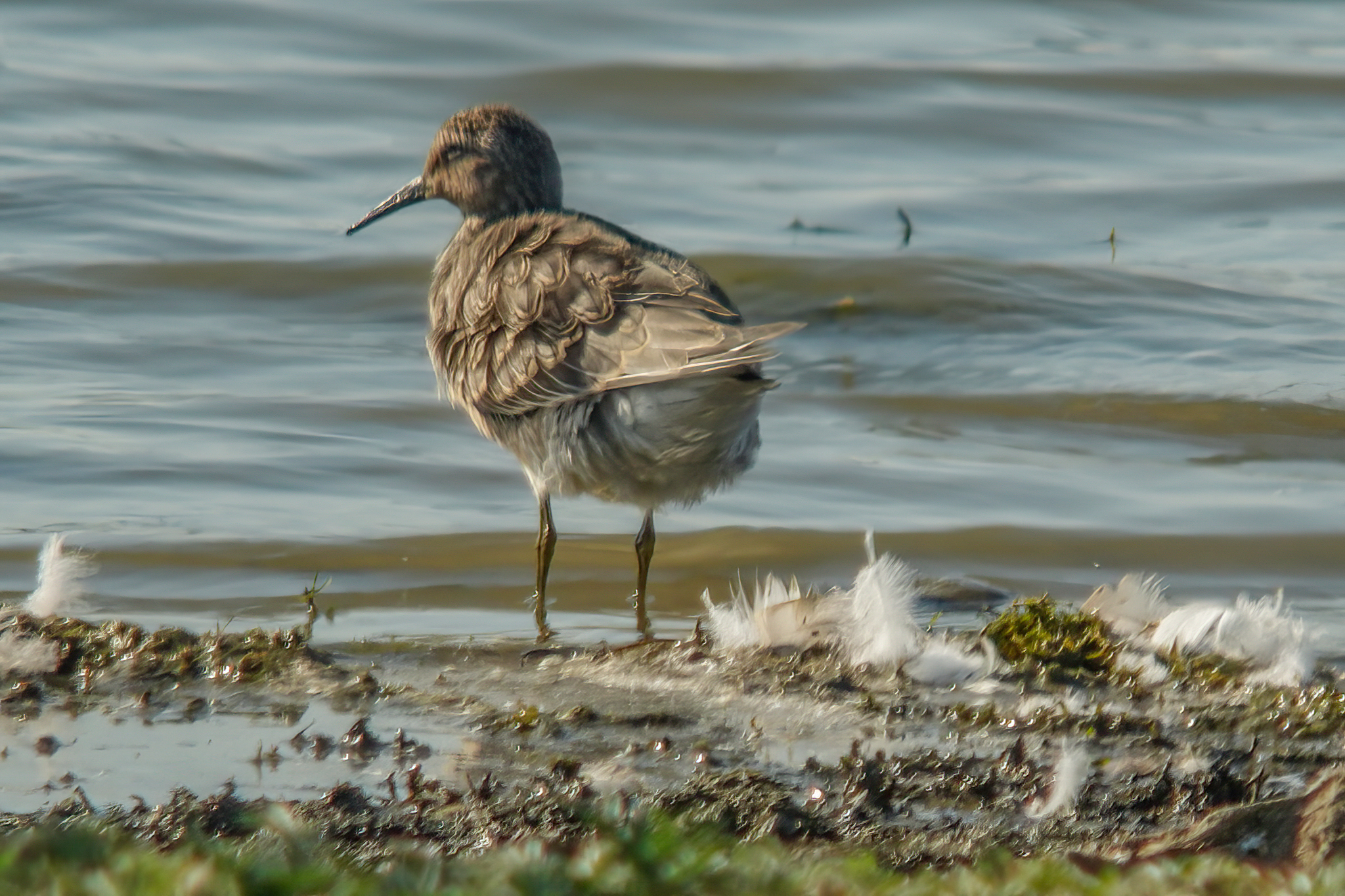
Meanwhile, the nicely confiding juvenile Pectoral Sandpiper at Hollowell Res continued to attract a respectable number of admirers, having notched up a nine-day stay there by the end of the period.
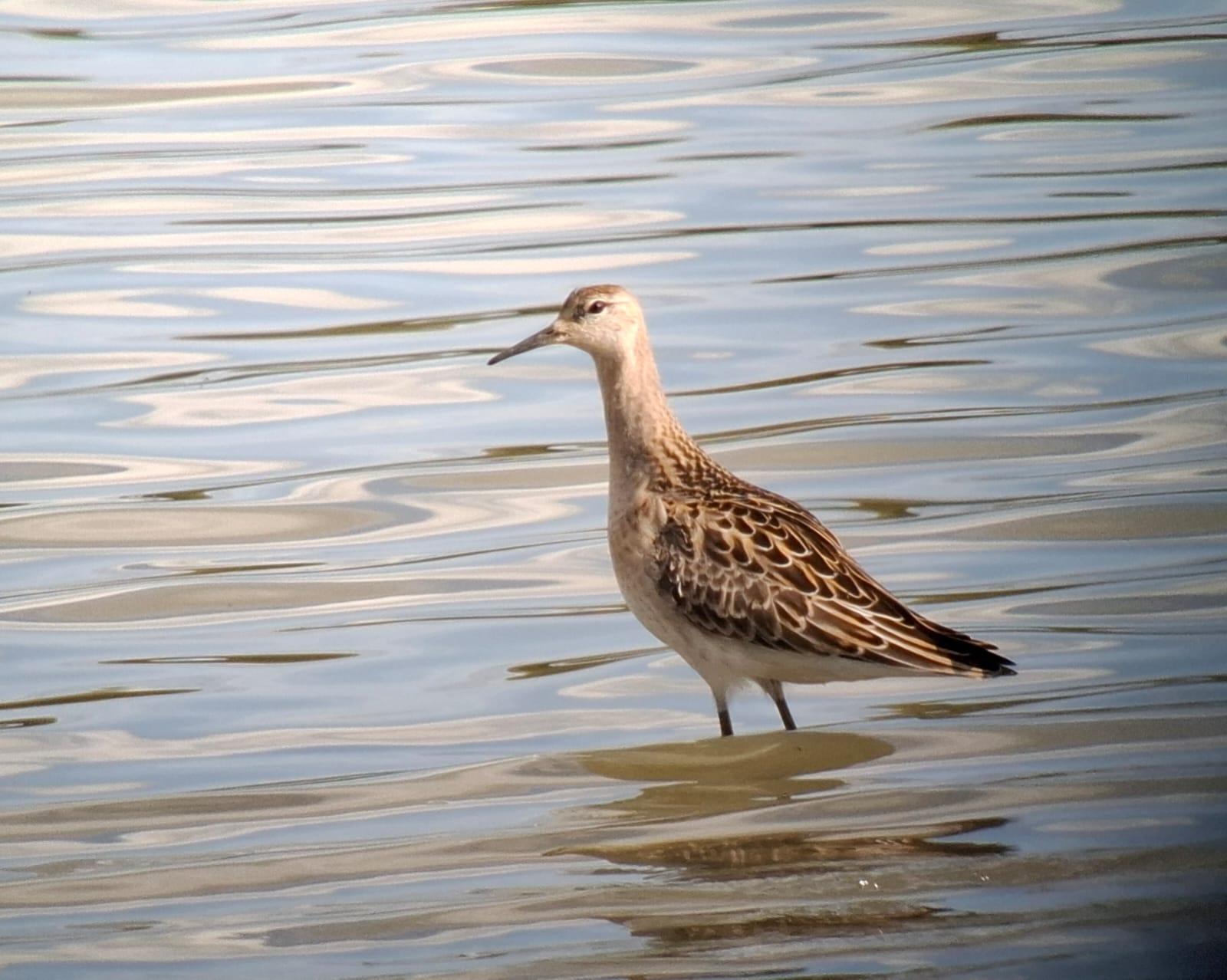
Juvenile Pectoral Sandpiper, Hollowell Res, 6th October 2025 (Colin Manning)Juvenile Pectoral Sandpiper, Hollowell Res, 6th October 2025 (James Urwin)Juvenile Pectoral Sandpiper, Hollowell Res, 6th October 2025 (Phil West)Juvenile Pectoral Sandpiper, Hollowell Res, 7th October 2025 (Mike Alibone)Juvenile Pectoral Sandpiper, Hollowell Res, 8th October 2025 (Jon Cook)Juvenile Pectoral Sandpiper, Hollowell Res, 9th October 2025 (Jon Cook)
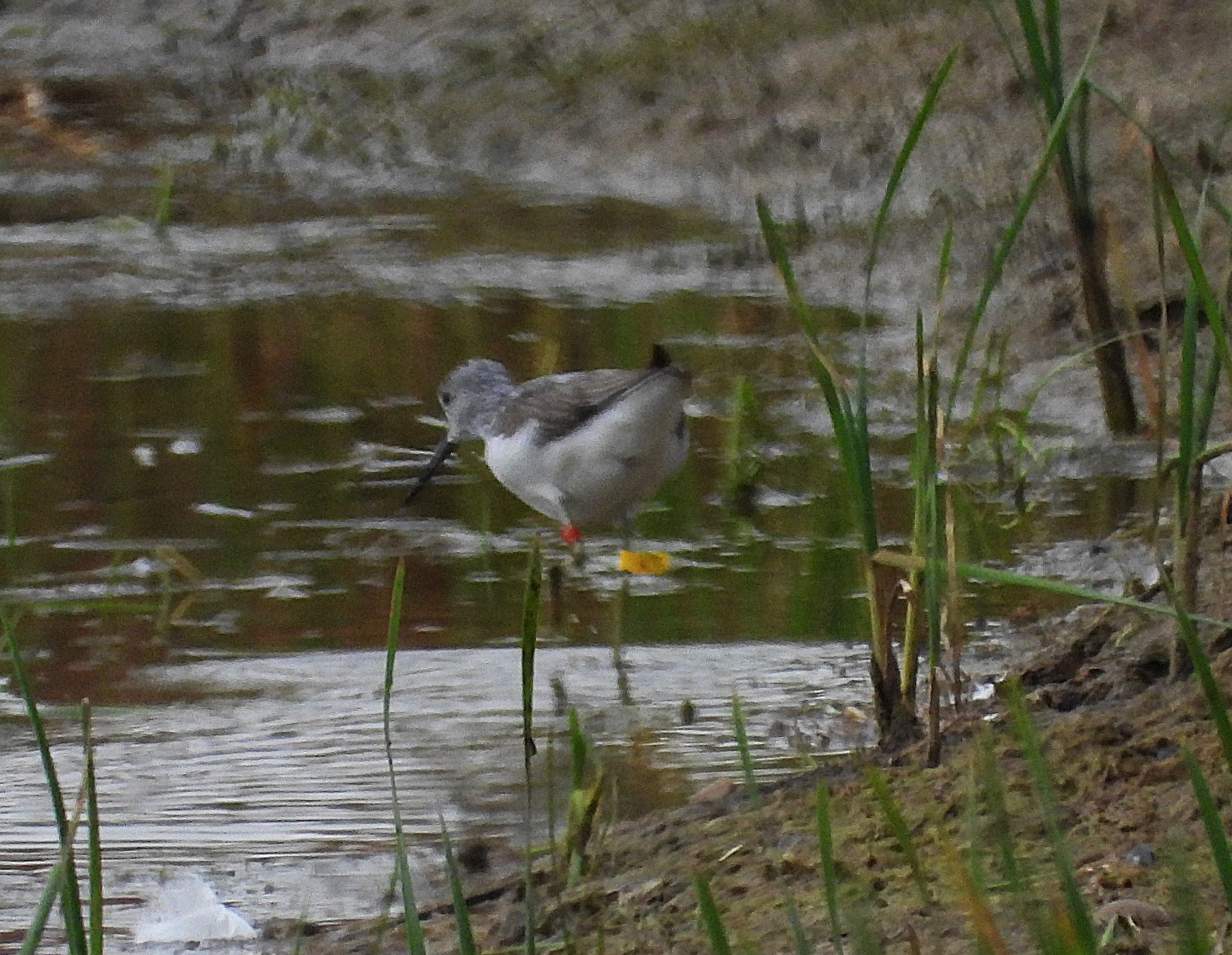
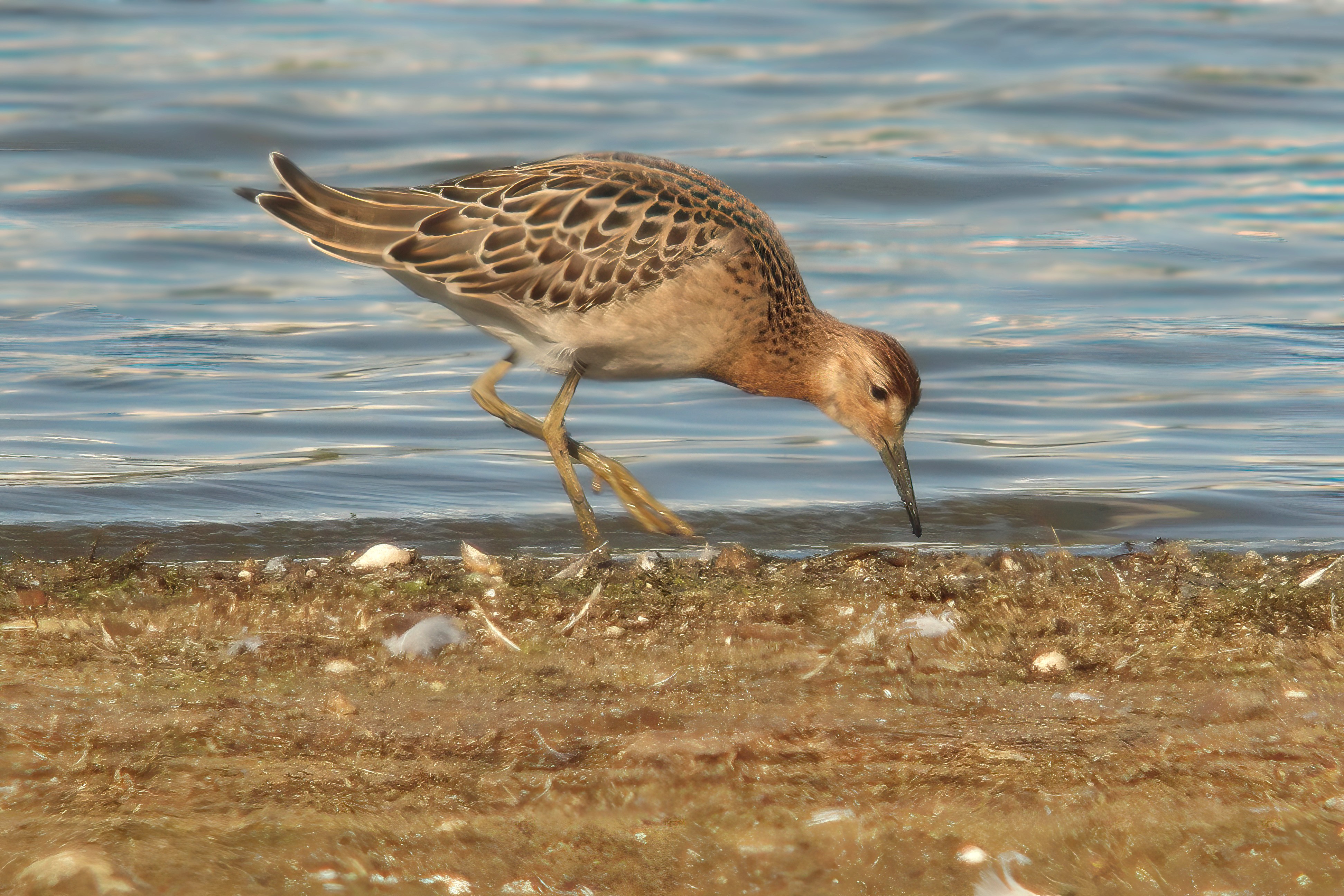
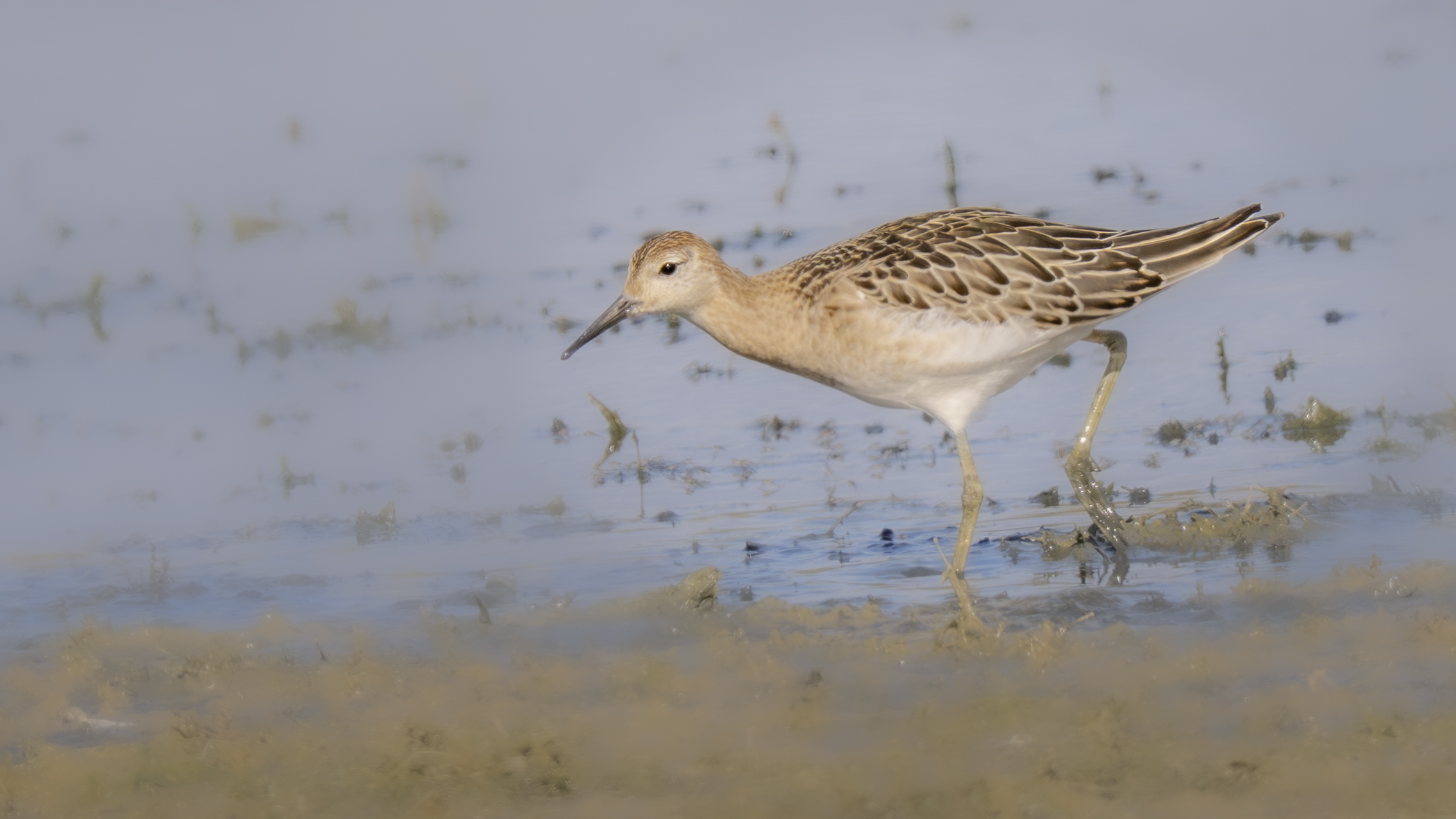
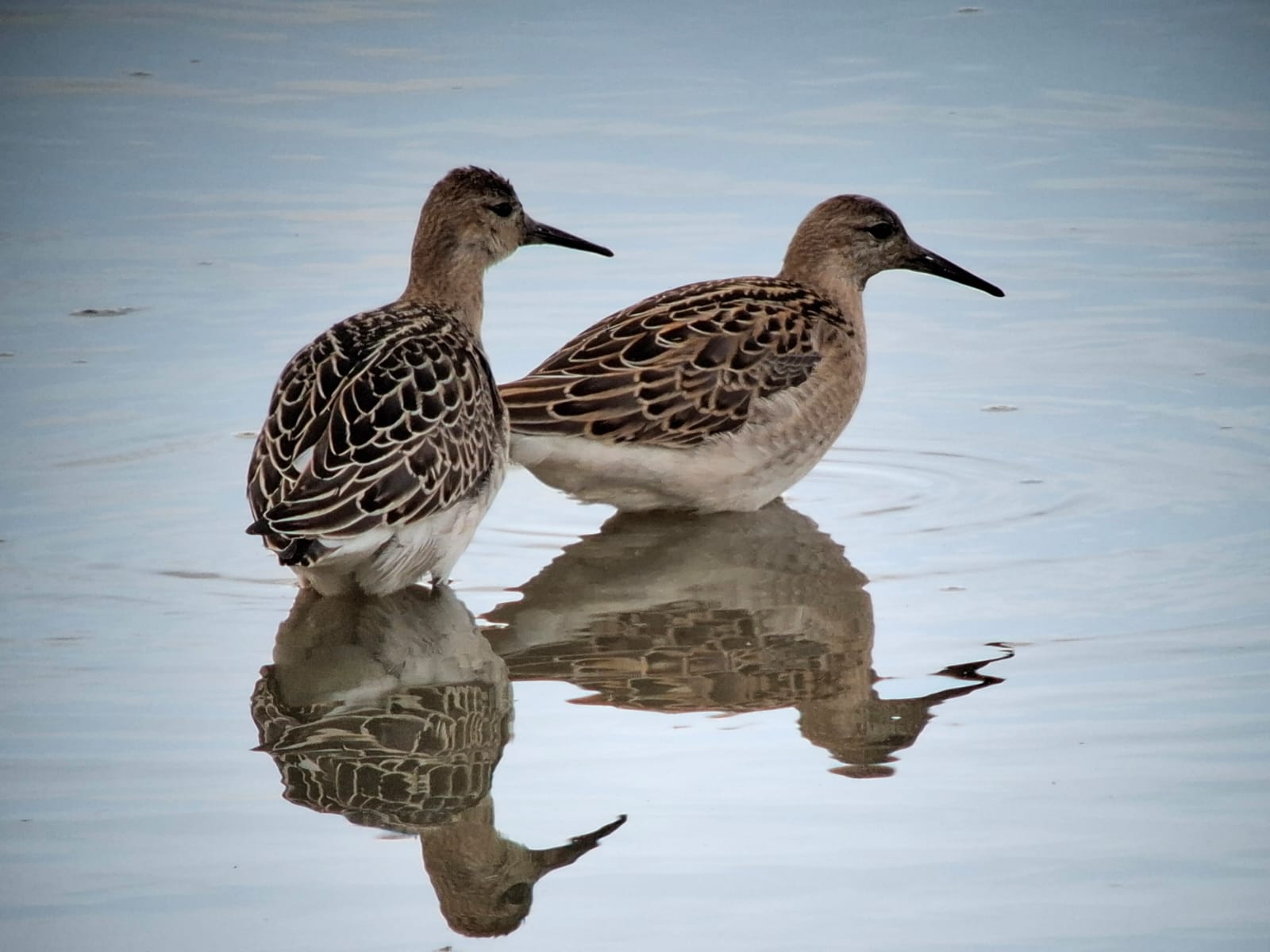
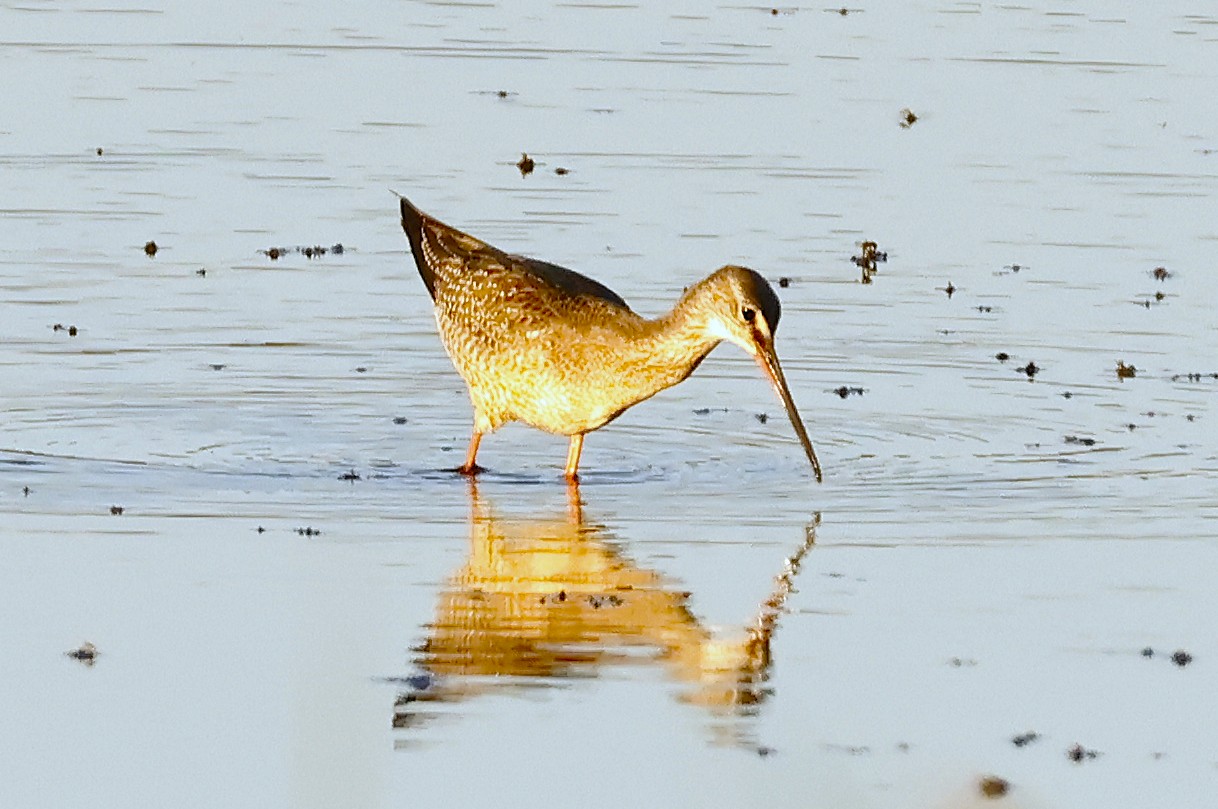
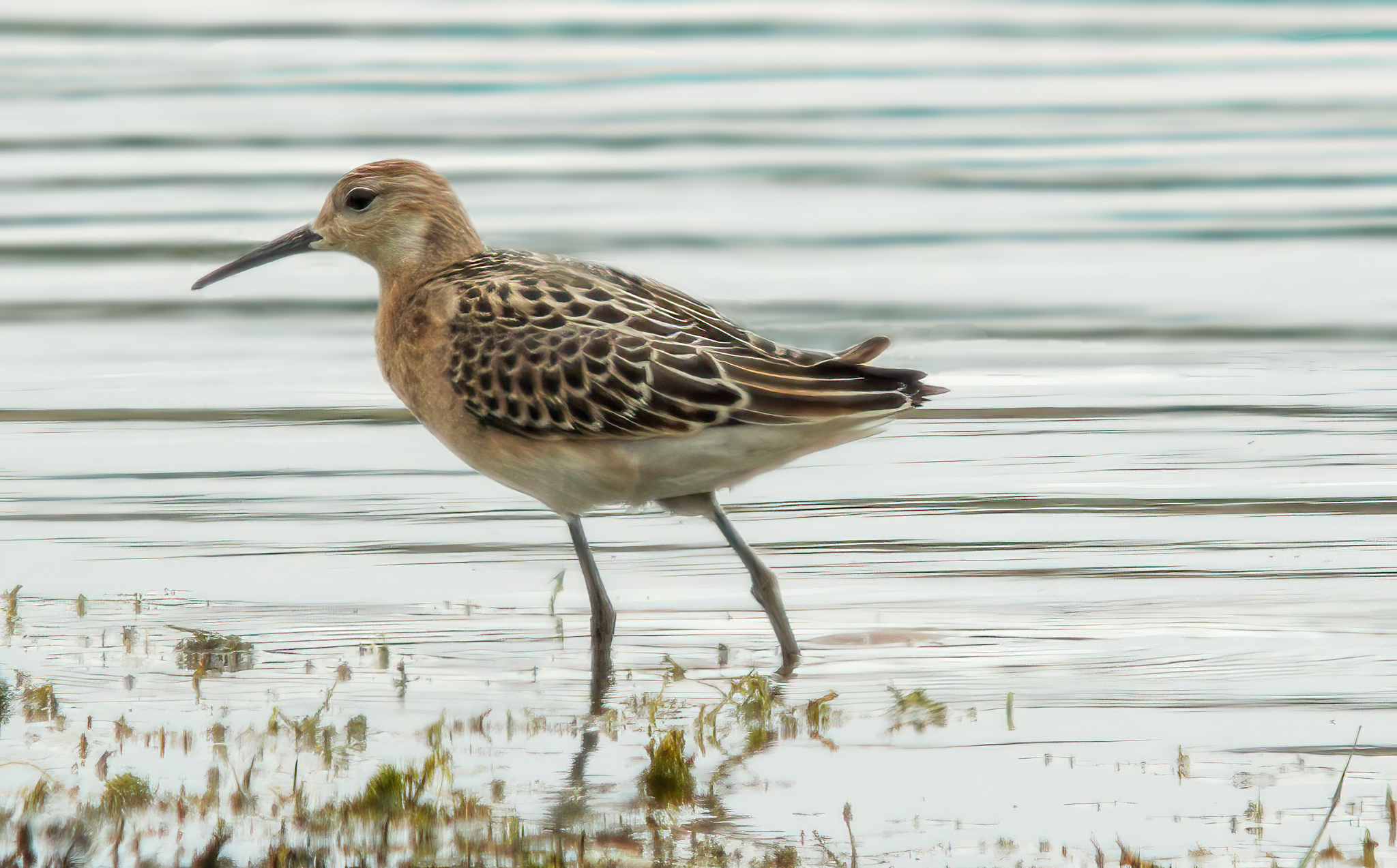
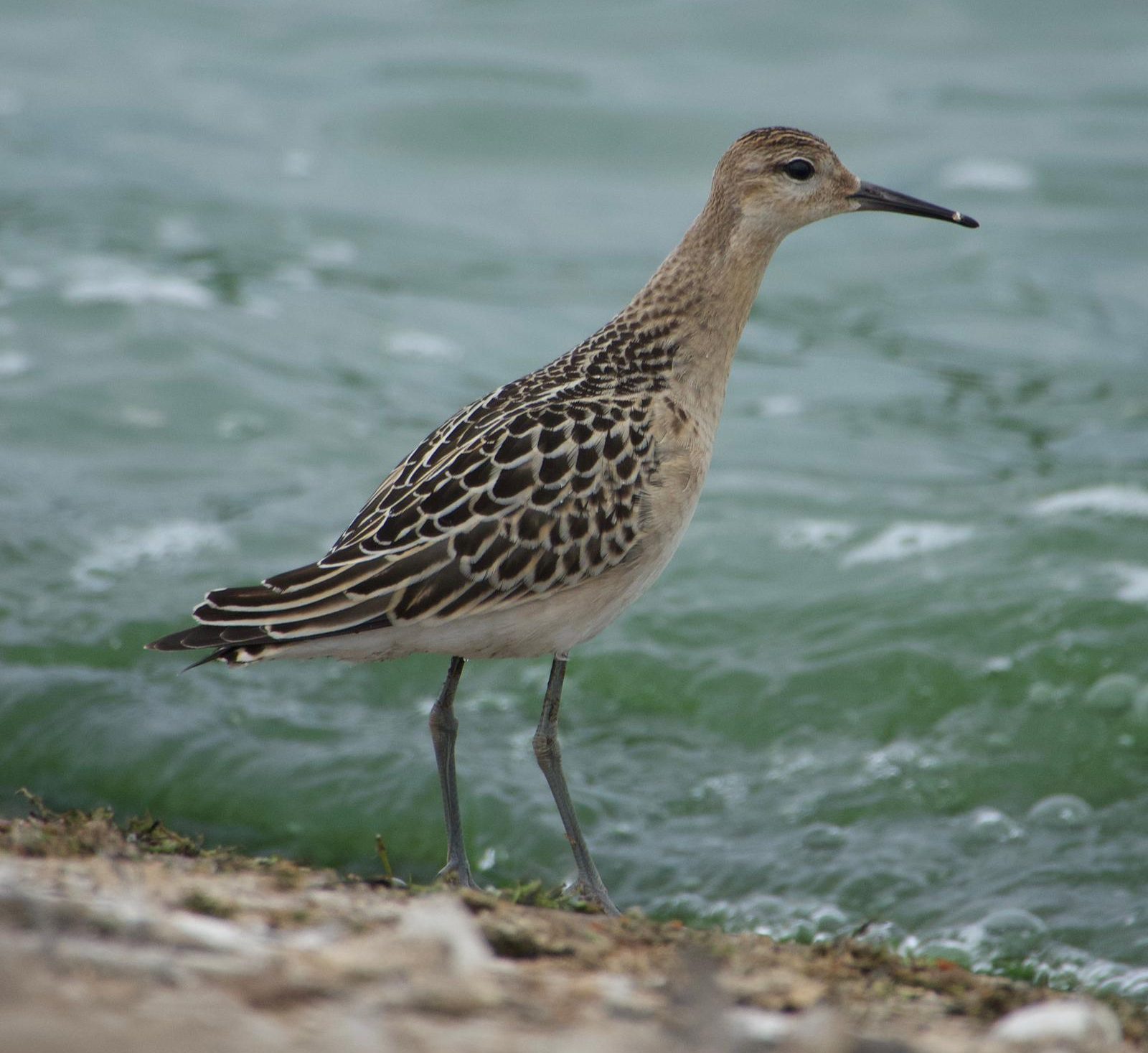
This week’s best of the rest included a Black-tailed Godwit at Pitsford from 5th until 9th and three Ruffs at the latter locality on 4th, with one remaining until 10th. One also lingered at Titchmarsh NR, being seen sporadically throughout the period. Earls Barton GP’s New Workings (North) continued to hold on to a Greenshank, still present on 10th, while a new arrival at New Workings (South) on 8th bore tibial bling – a red ring on the left and a yellow flag on the right. Unfortunately the characters on the flag were not legible at distance but the colour coding and positioning identify the bird as an individual from a ringing scheme in Norway.
Norwegian-ringed Greenshank, Earls Barton GP, 8th October 2025 (Leslie Fox)
A further sign that winter is on its way appeared in the form of a Jack Snipe – the first of the season – at Summer Leys between 4th and 7th.
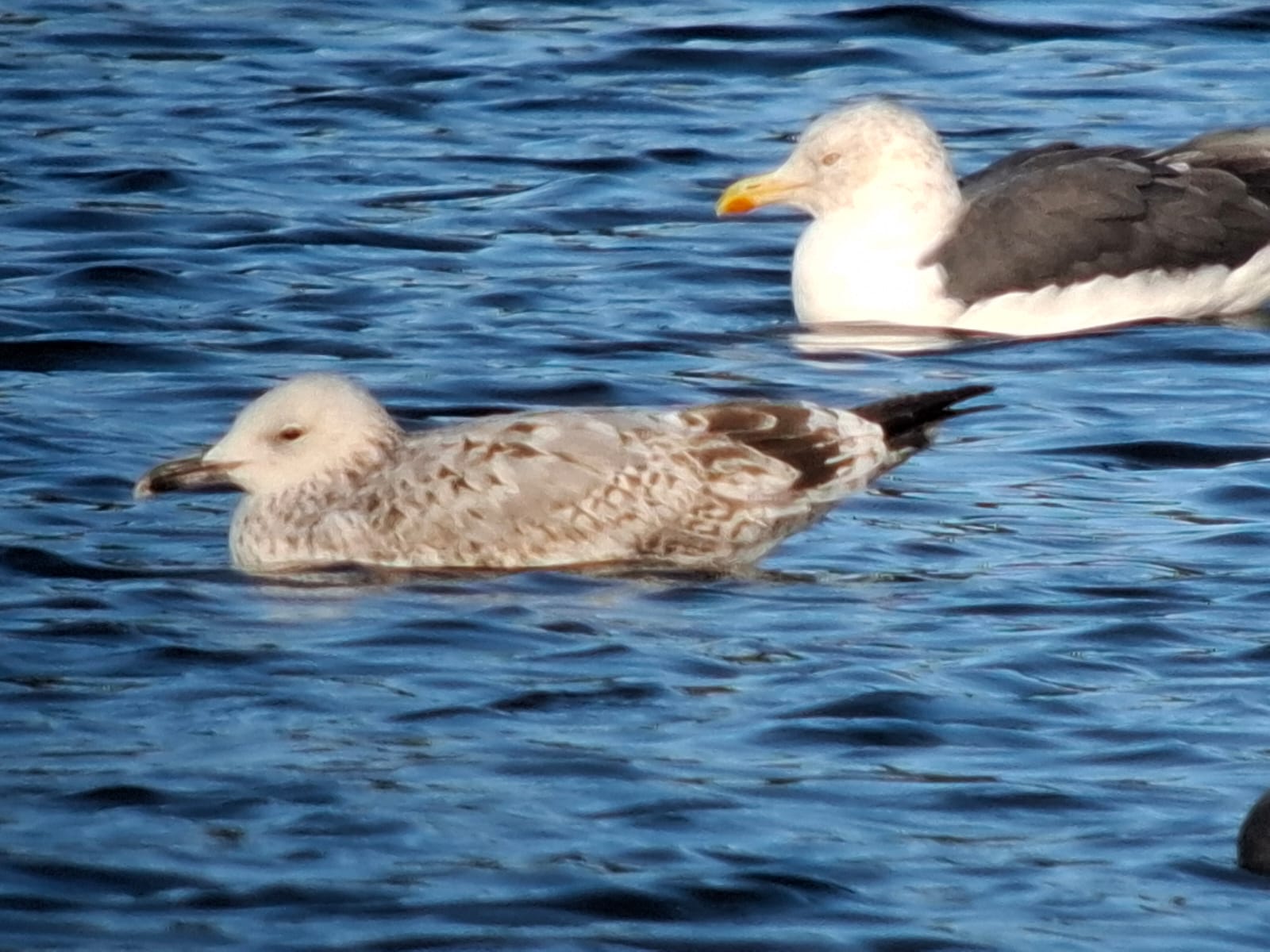
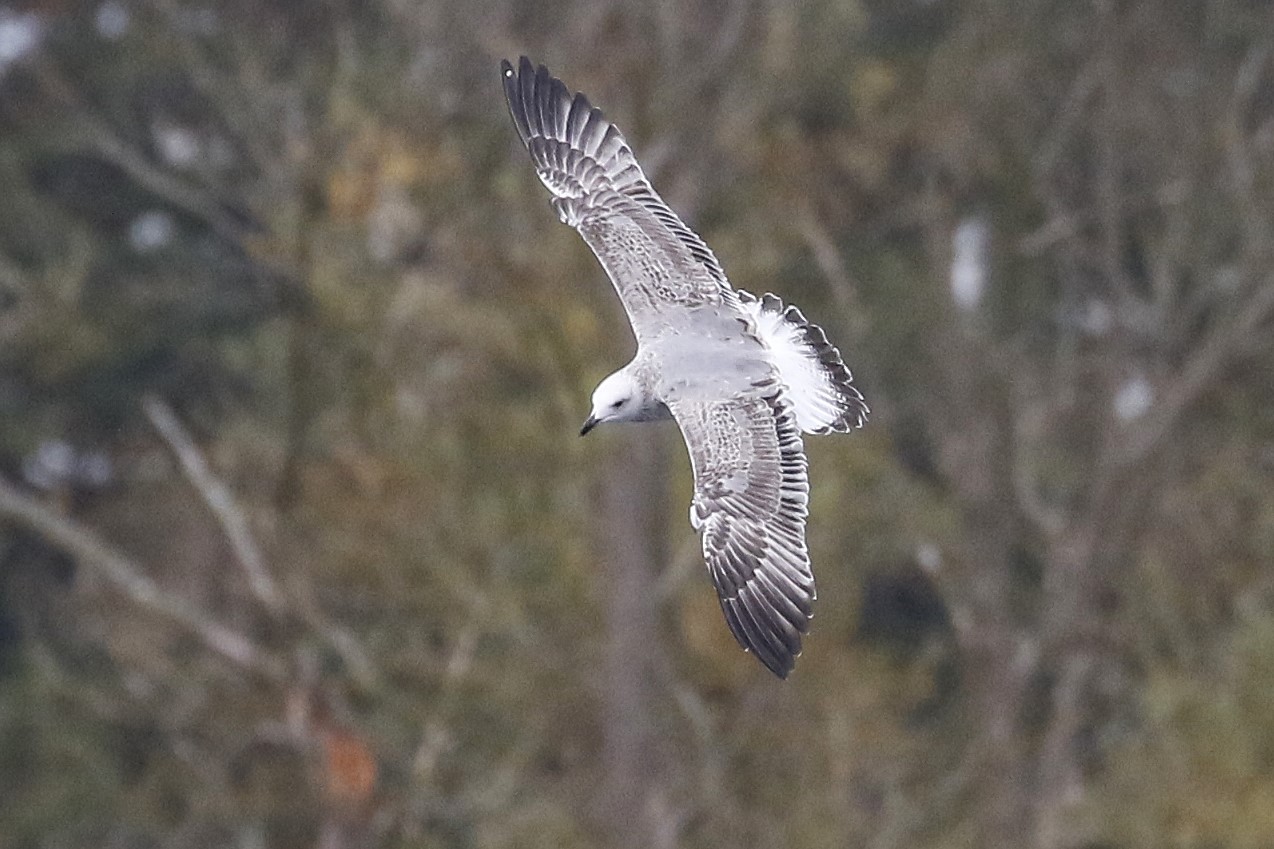
Scarce gulls were at a low ebb this week, with a first-winter Caspian Gull at Earls Barton GP’s Mary’s Lake on 4th and two second-winters – one at Daventry CP on 6th and the other at Wicksteed Park Lakes, Kettering on 9th.
Second-winter Caspian Gull, Daventry CP, 6th October 2025 (Gary Pullan)Second-winter Caspian Gull, Wicksteed Park Lakes, Kettering, 9th October 2025 (Julie Roe)Second-winter Caspian Gull, Wicksteed Park Lakes, Kettering, 9th October 2025 (Julie Roe)
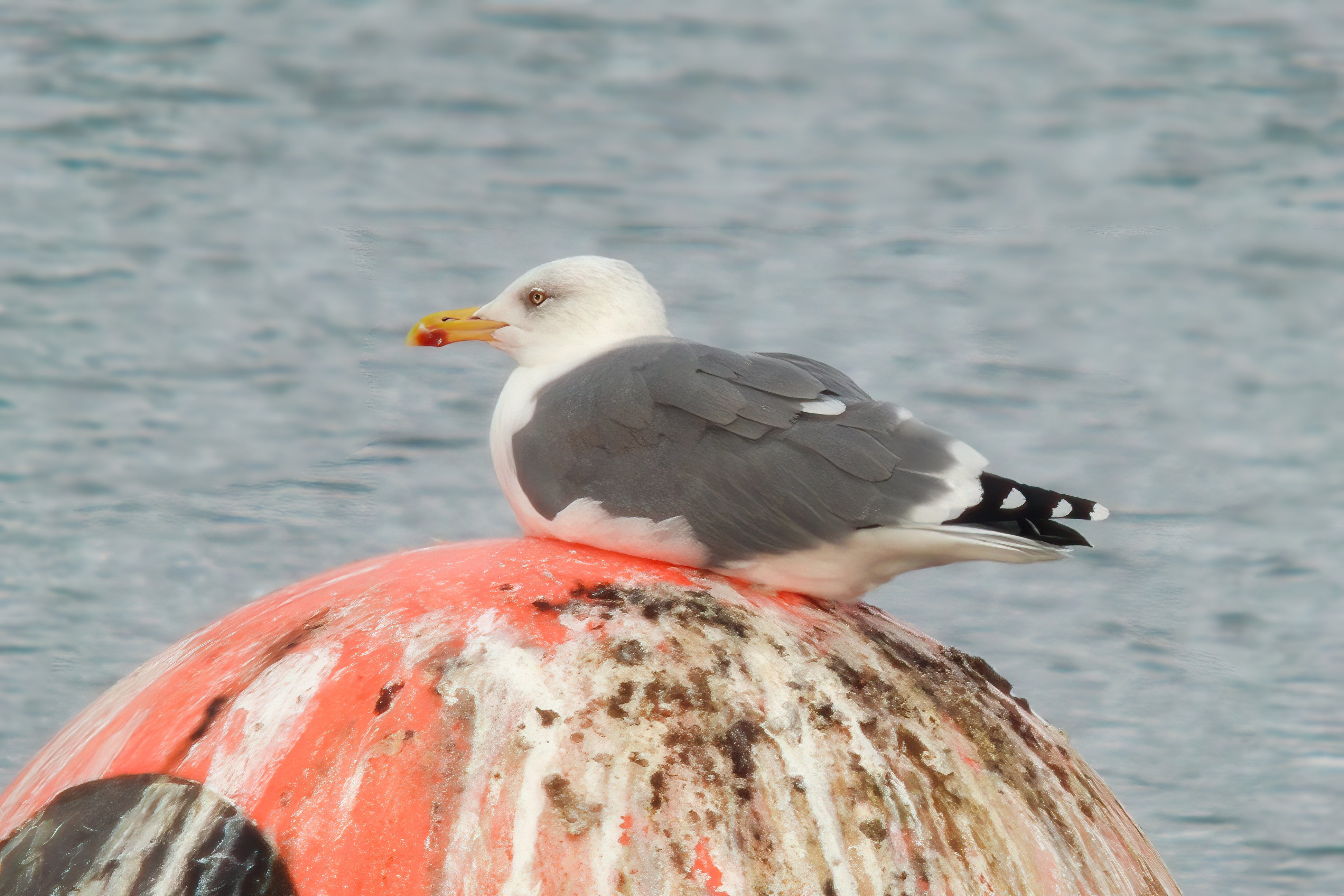
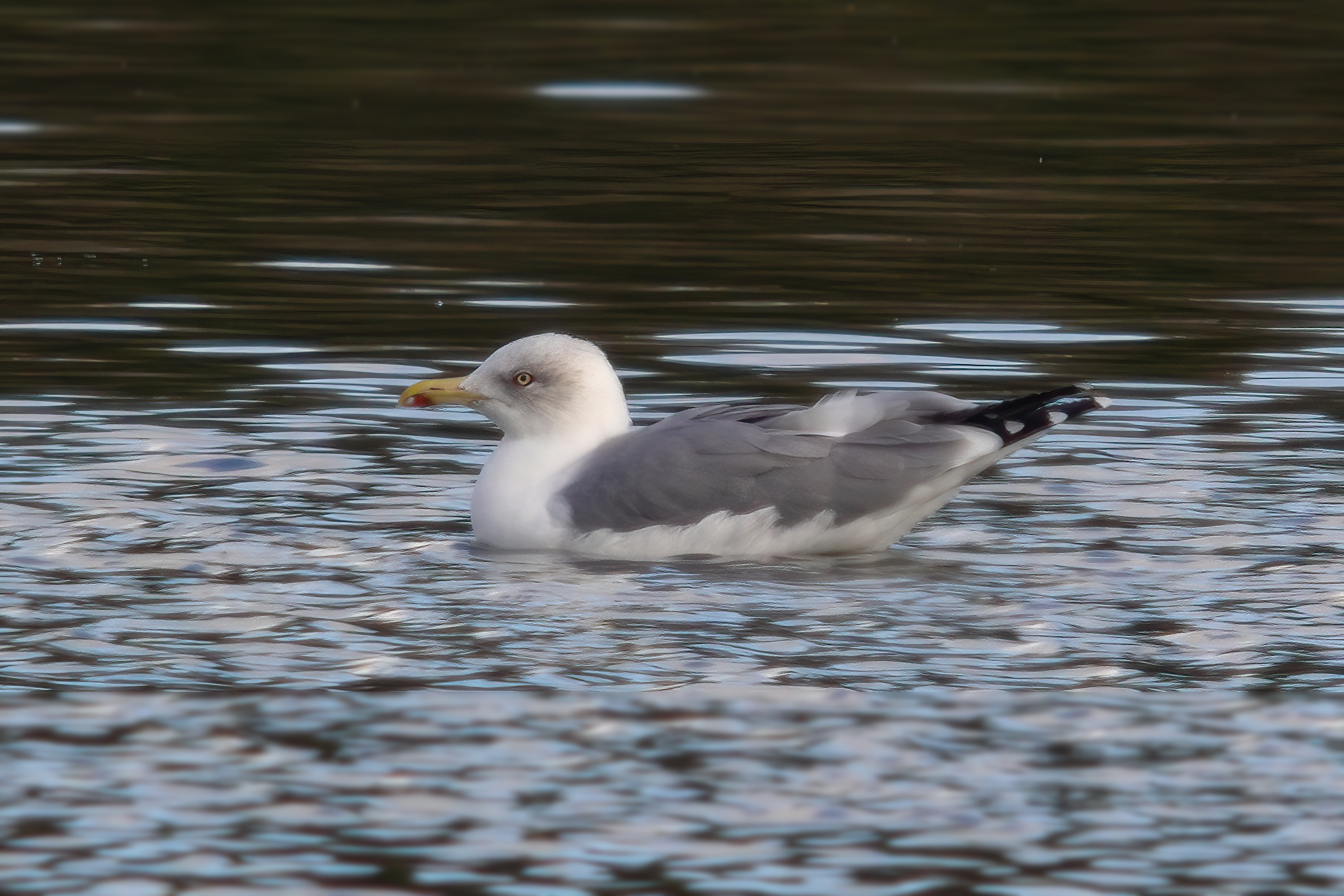
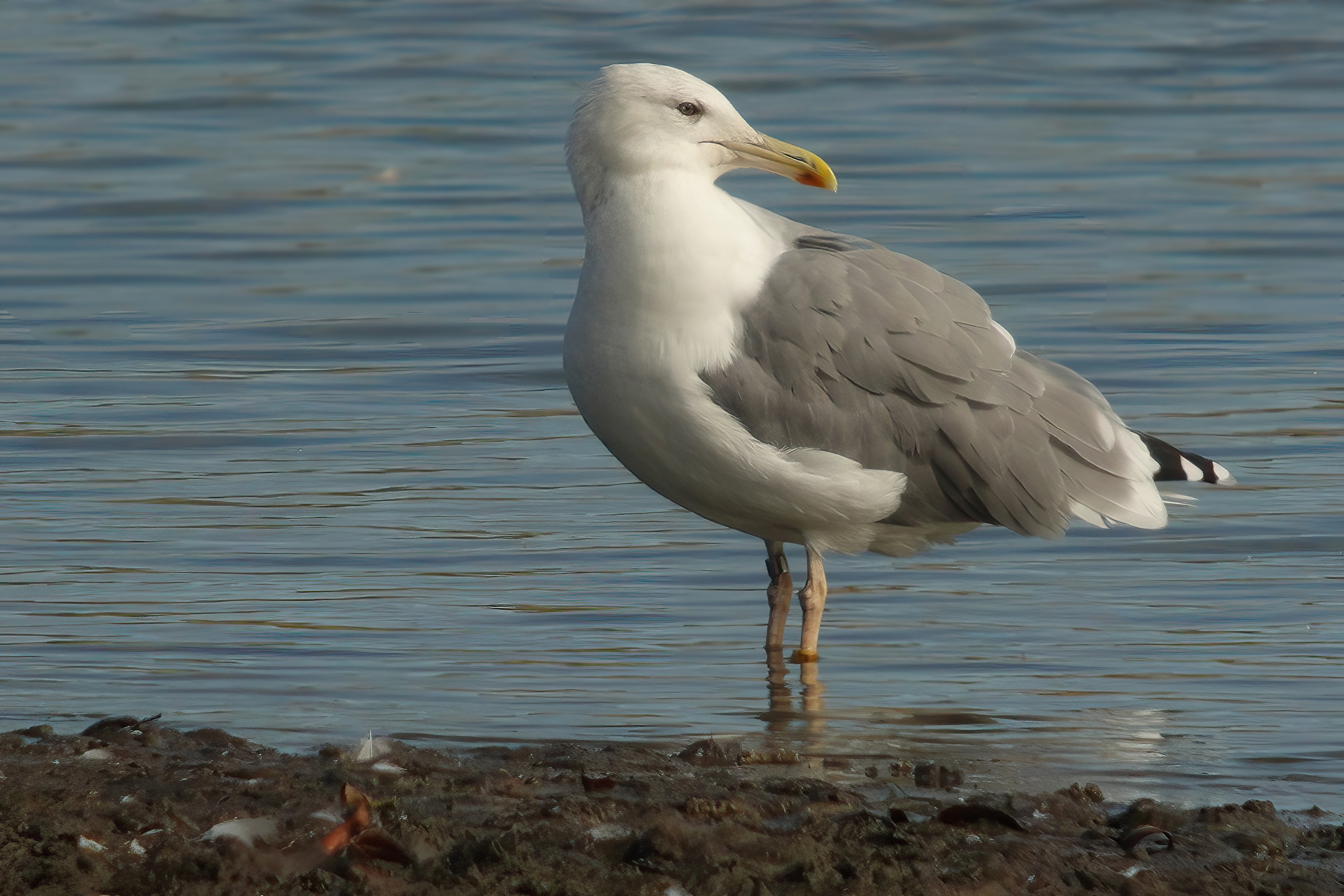
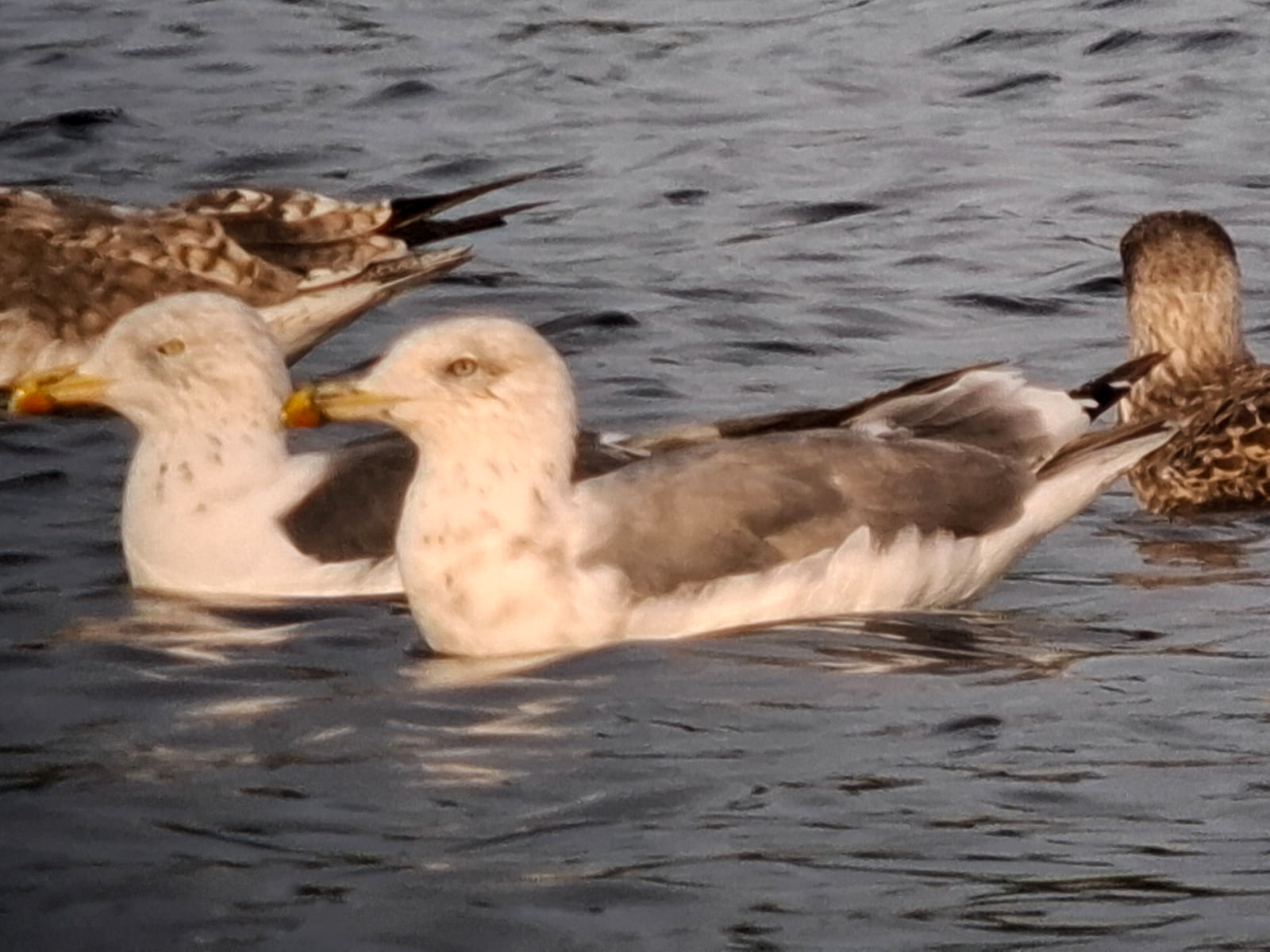
Yellow-legged Gulls were down to an adult at the first of the above locations on 4th and four adults at Pitsford on 10th.
Adult Yellow-legged Gull, Pitsford Res, 10th October 2025 (Mike Alibone)
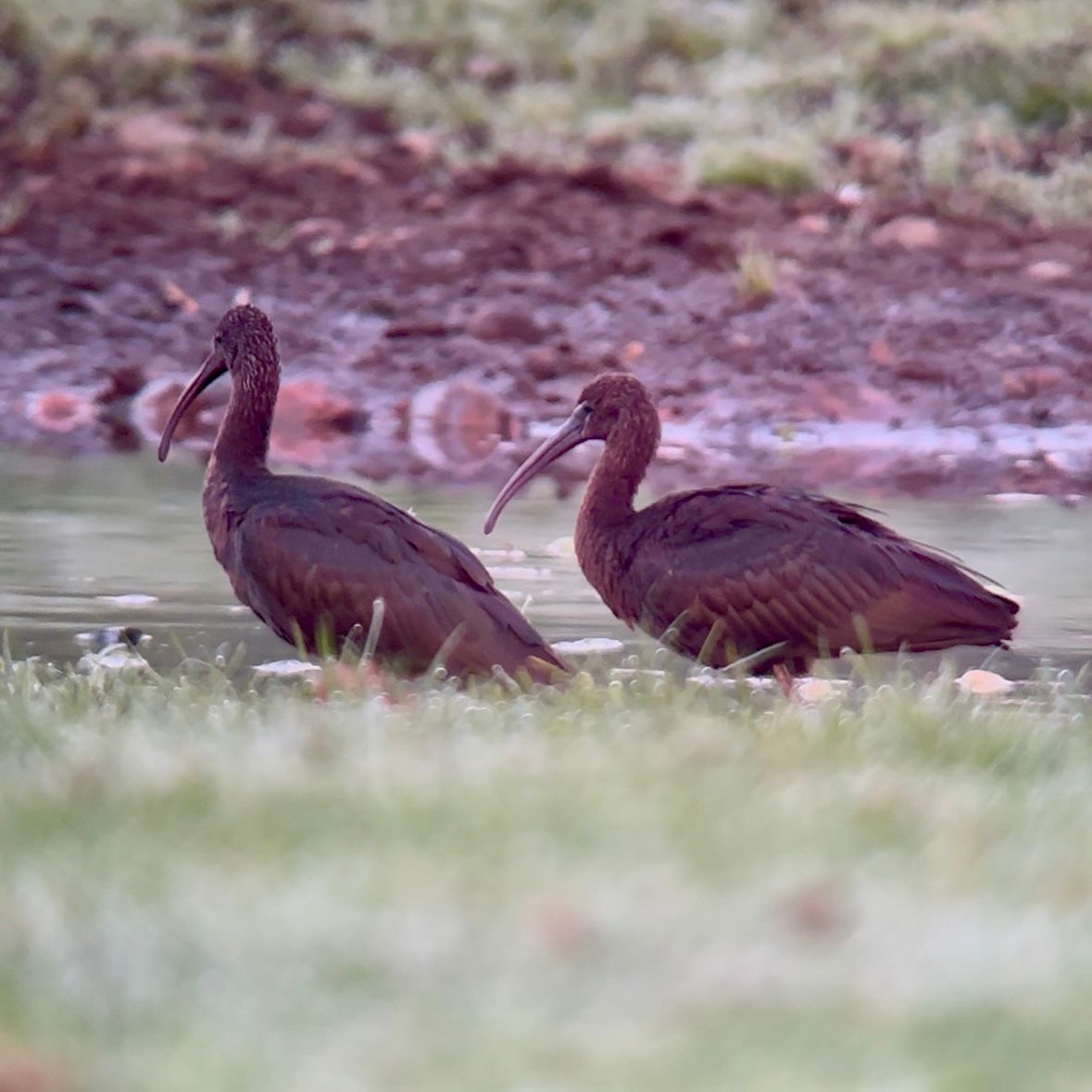
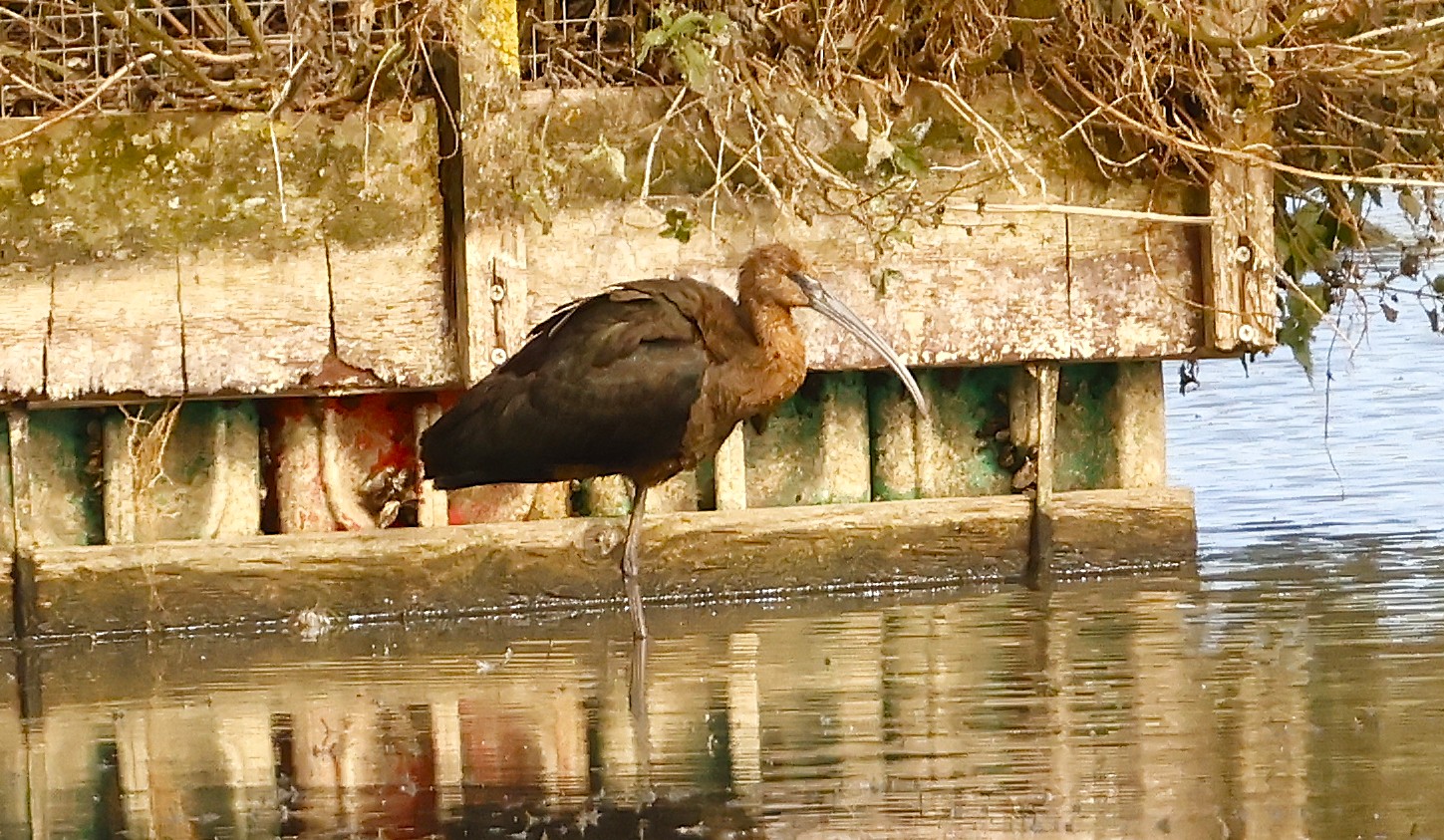
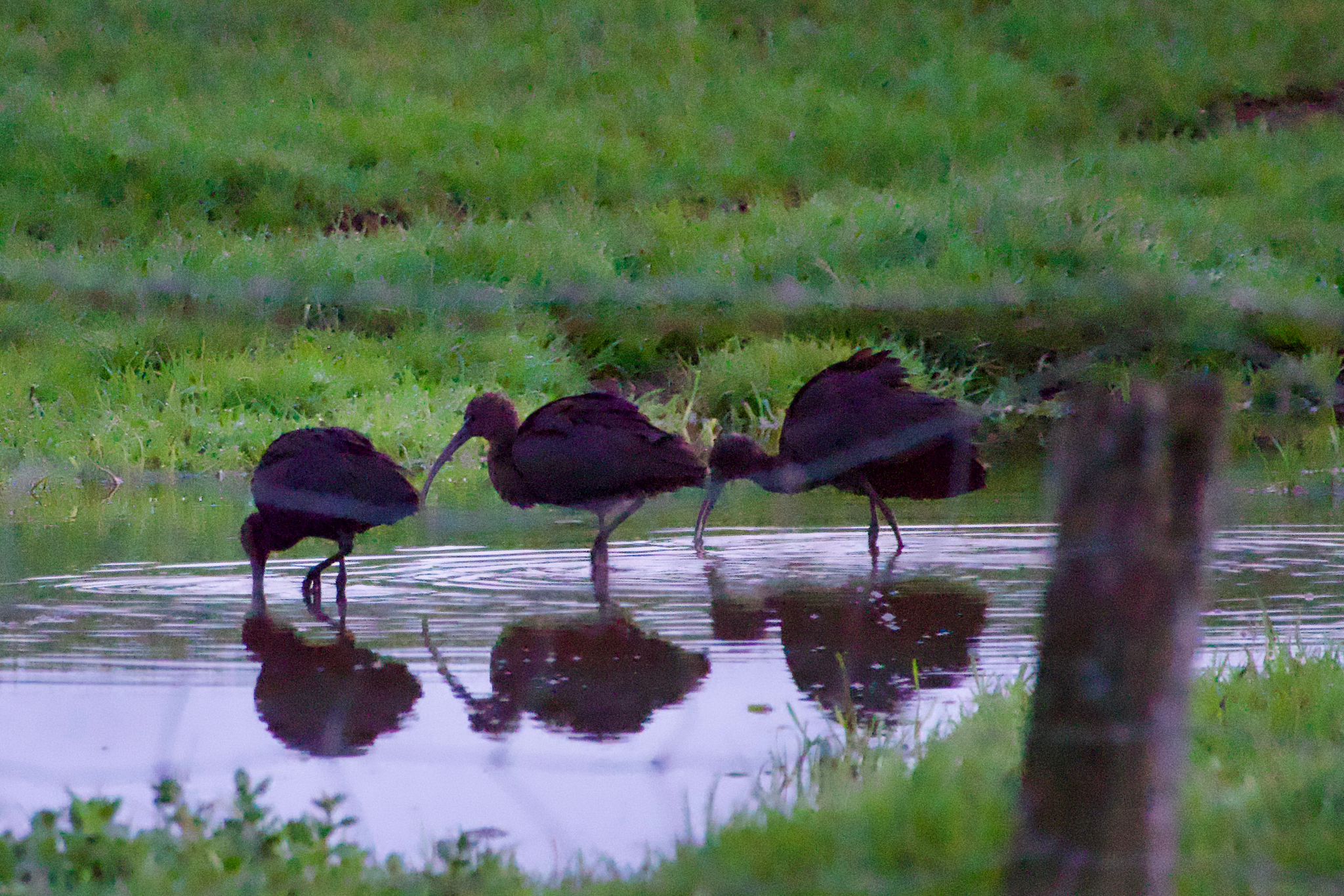
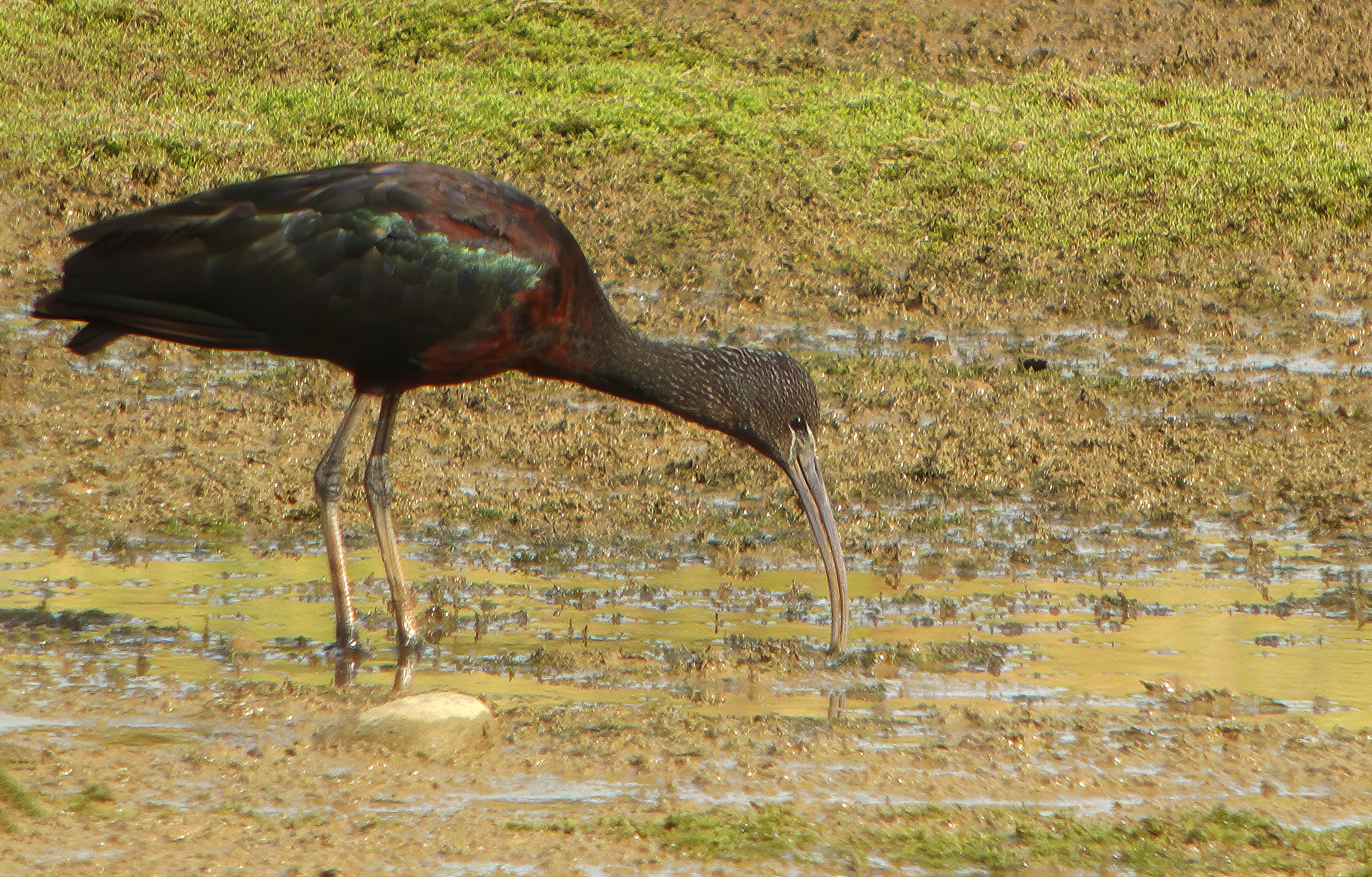
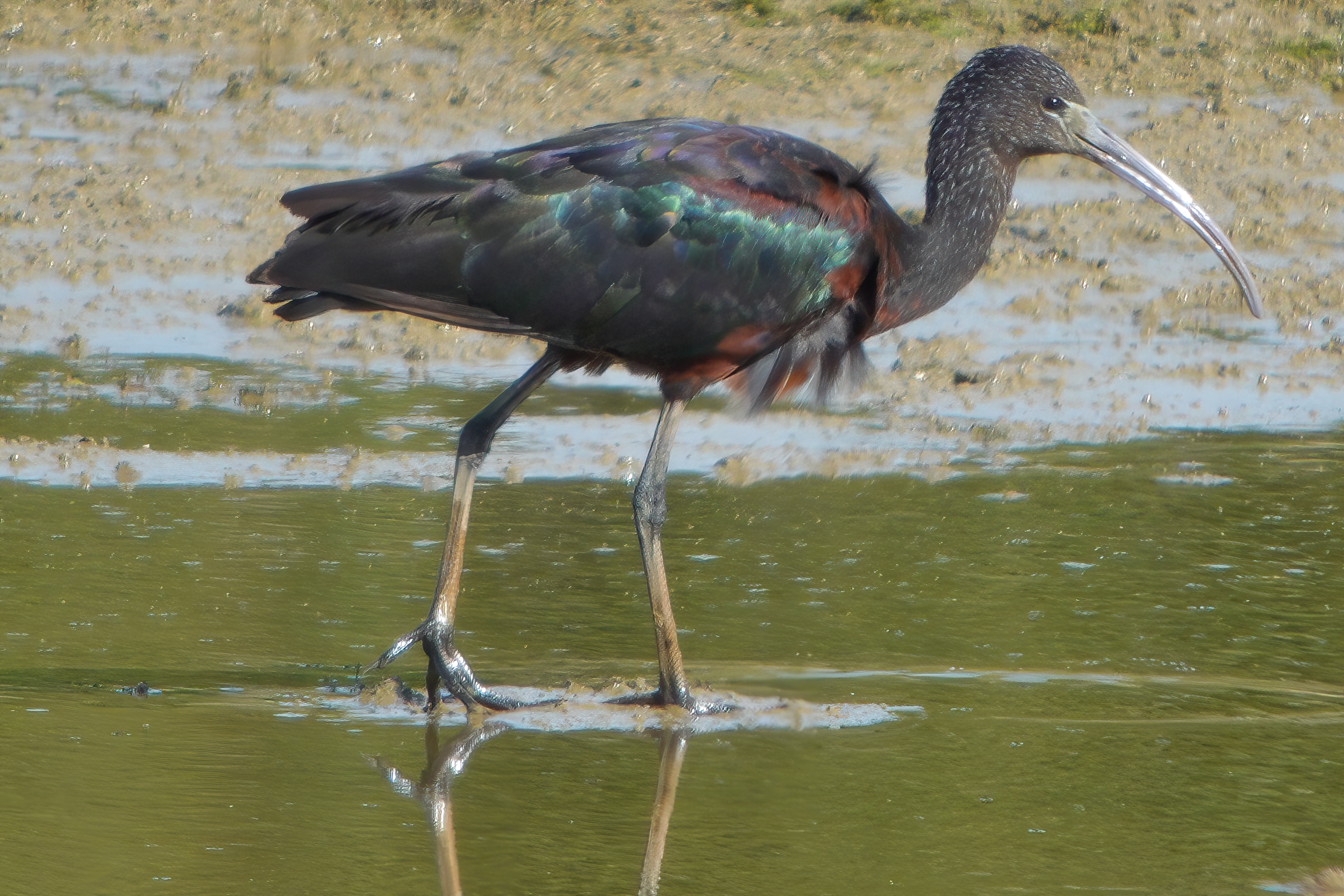
Last week’s Glossy Ibises all remained present and correct throughout the period, including two daily drop-ins at Stanford’s Settling Pond and single birds seemingly settled at Summer Leys LNR and Titchmarsh.
Two Bitterns were seen together in flight at Stanford on 8th, again being present on the Leicestershire side of the reservoir for the larger part of their stay during the period, while single Cattle Egrets were on the ground at both Ringstead GP and Summer Leys on 4th.
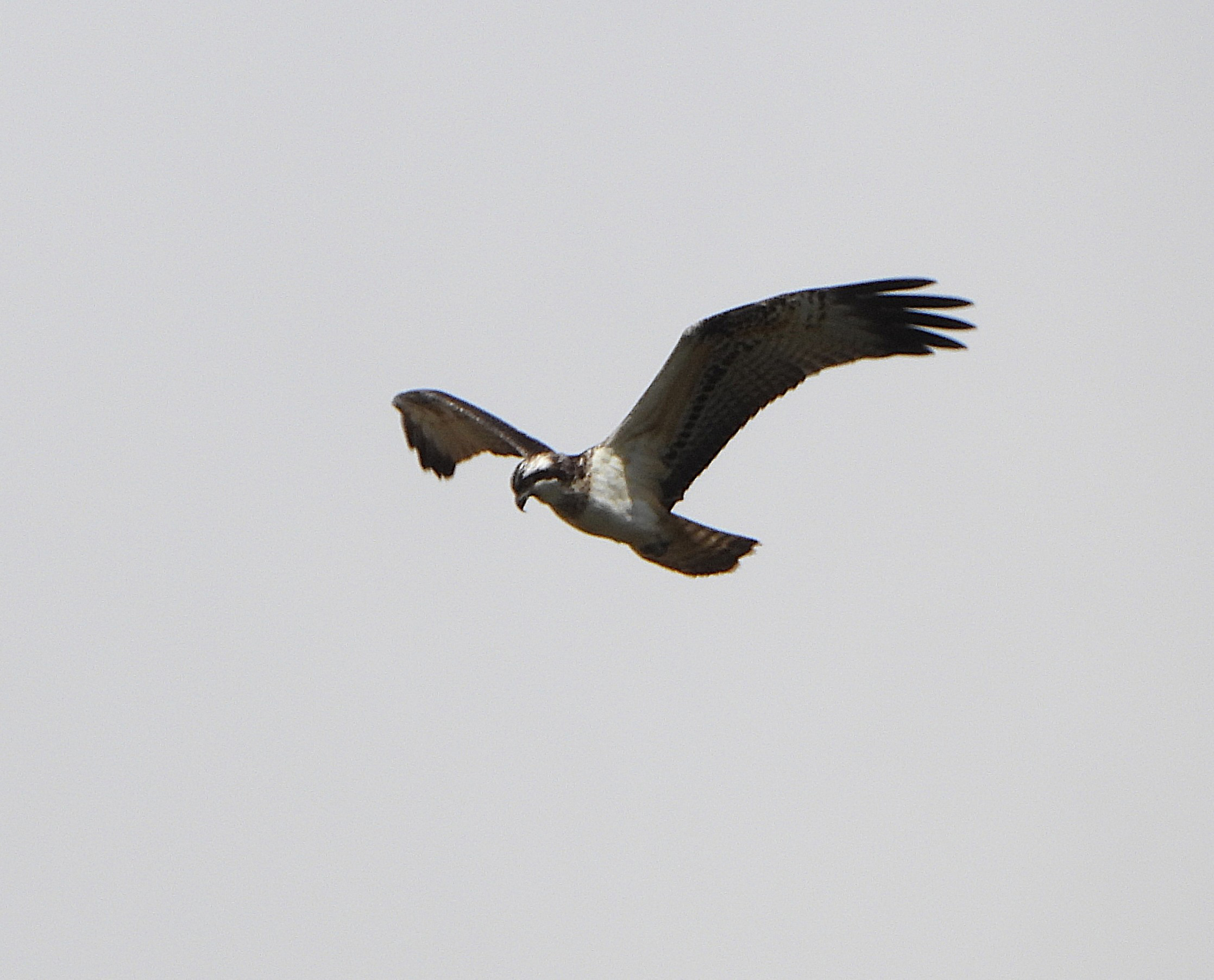
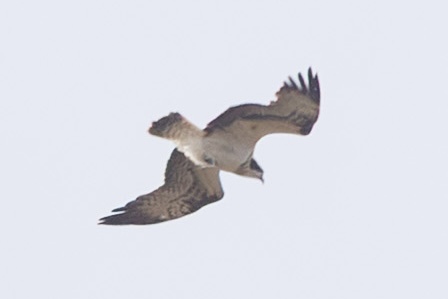
An Osprey at Pitsford on 4th was the only one reported during the period.
Also on 4th, a Short-eared Owl – presumably last week’s individual – was at Harrington AF, the latter site producing a Merlin on 7th, the same or another of which was seen in the Brampton Valley between Cottesbrooke and Hanging Houghton on 4th and 9th.
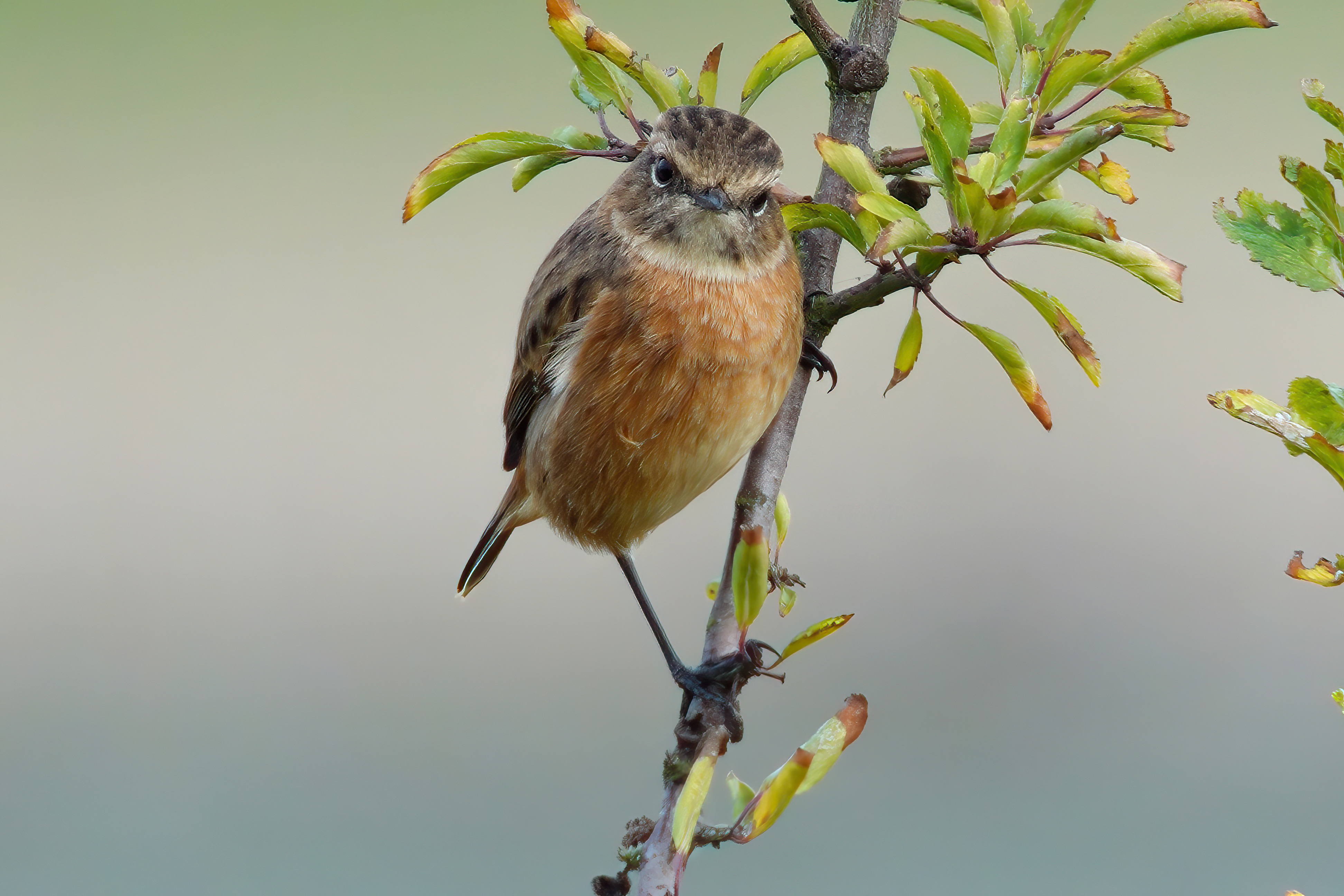
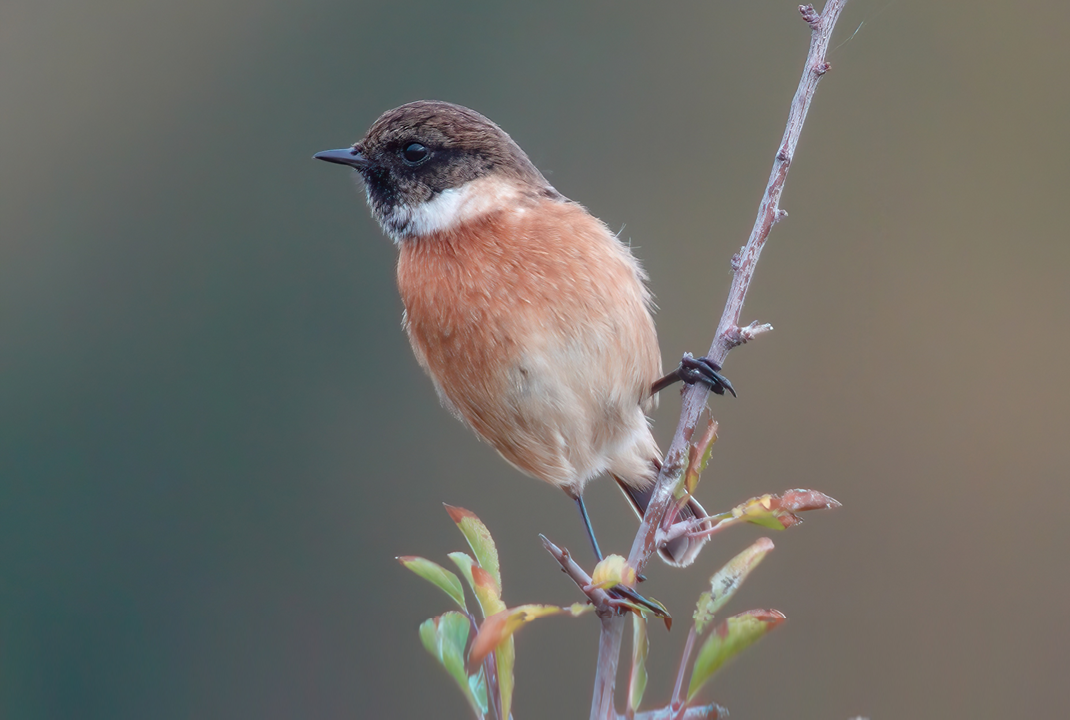
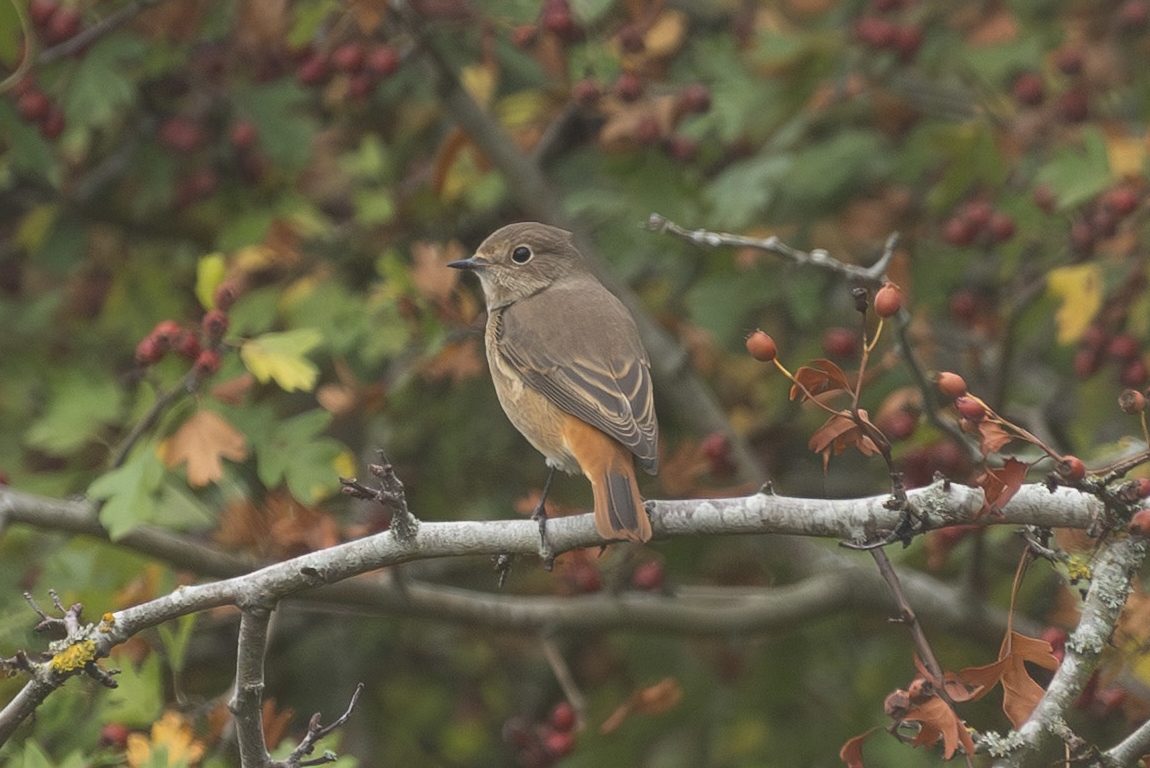
On the passerine front, Stonechats were present at nine localities, the Brampton Valley holding up well with last week’s ten still there on 4th. Elsewhere, four were at Newton Bromswold on 10th, three at Lilbourne Meadows NR on 5th, with ones and twos at Borough Hill, Harrington, Hollowell, Pitsford, Summer Leys and Titchmarsh.
Female Stonechat, Pitsford Res, 10th October 2025 (Mike Alibone)Male Stonechat, Pitsford Res, 10th October 2025 (Mike Alibone)
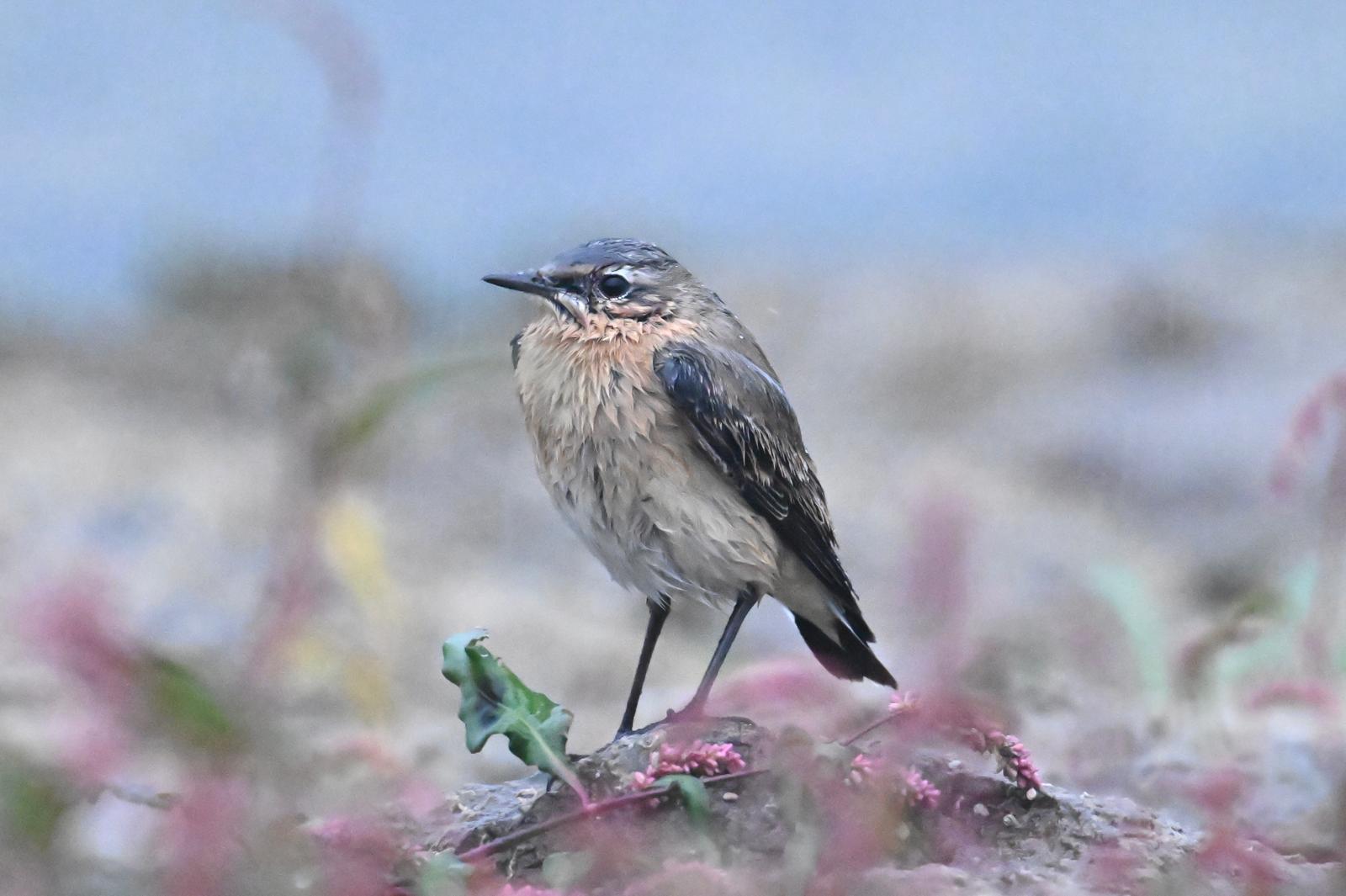
Northern Wheatears were down to a trickle and included two at DIRFT 3/Lilbourne Meadows NR on 5th and one at Harrington the following day.
And following on from last week’s Rock Pipits at Daventry, another one put in an equally brief appearance there on 9th.
To round off, Crossbills are still out there to be found, all be they fly-overs with, on 6th, three above Harrington and one over Kettering.
An Azores high pressure system brought settled and relatively warm conditions up from the deep south west for the first half of the week, after which things deteriorated somewhat. It was anything but settled on the birding front, however, with three new birds for the year, including a top-class wader, the likes of which have not been seen in the county for nigh on a quarter of a century …
We can quickly dispense with the week’s ducks at this point – just the two malingering drake Red-crested Pochards shooting the breeze at Daventry CP throughout the period.
And so on to the bird which ultimately turned into a crowd-puller … It had been all quiet on the wader front until, that is, the 30th, when things began to look up along the northern shoreline of Clifford Hill GP’s Main Barrage Lake. Enter an unidentified Pluvialis sp. Grey Plover? No. Golden Plover? No. Turns out the bird in question was a pretty obvious American Golden Plover … and only the fourth for Northamptonshire to boot. With somewhat itchy feet it appeared unsettled, prone to taking long flights but ultimately returning and remaining until the middle of the following morning, after which it flew high south and was gone.
Juvenile American Golden Plover, Clifford Hill GP, 30th September 2025 (Mike Alibone)Juvenile American Golden Plover, Clifford Hill GP, 30th September 2025 (Bob Bullock)Juvenile American Golden Plover, Clifford Hill GP, 30th September 2025 (Bob Bullock)Juvenile American Golden Plover, Clifford Hill GP, 30th September 2025 (Jim Dunkley)
But not gone for good, however, providing a second bite of the cherry for those who had failed to connect with it as, two days later, on 2nd, there it was, bold as brass in Pitsford Reservoir’s Scaldwell Bay, remaining there to see the week out.
Juvenile American Golden Plover, Pitsford Res, 2nd October 2025 (Mike Alibone)Juvenile American Golden Plover, Pitsford Res, 2nd October 2025 (Mike Alibone)Juvenile American Golden Plover, Pitsford Res, 2nd October 2025 (Mike Alibone)
The last record of American Golden Plover was at Summer Leys LNR, from 13th to 17th May 2001 and, prior to that, one was near Welford in October 1992, quickly following the county’s first at Pitsford in October 1991.
But this was not the end as far as American waders were concerned as, on 2nd, a fine, stripy juvenile Pectoral Sandpiper dropped in to Hollowell Res, again still present at the week’s end.
Juvenile Pectoral Sandpiper, Hollowell Res, 2nd October 2025 (Jon Cook)Juvenile Pectoral Sandpiper, Hollowell Res, 2nd October 2025 (Jon Cook)Juvenile Pectoral Sandpiper, Hollowell Res, 2nd October 2025 (Bob Bullock)
And the best of the rest was the lingering Little Stint at Pitsford, chalking up a week’s stay there until 28th. The period’s only Black-tailed Godwit was also at Pitsford on 27th, the same site continuing to hold three Ruffs throughout the week. Elsewhere, single birds were at Boddington Res on 27th, Thrapston GP’s Titchmarsh NR on 27th and 1st and at Hollowell on 30th.
Juvenile Ruff, Pitsford Res, 28th September 2025 (Mike Alibone)Juvenile Ruffs, Pitsford Res, 29th September 2025 (Tony Stanford)Juvenile Ruff, Pitsford Res, 30th September 2025 (Wayne Weedon)
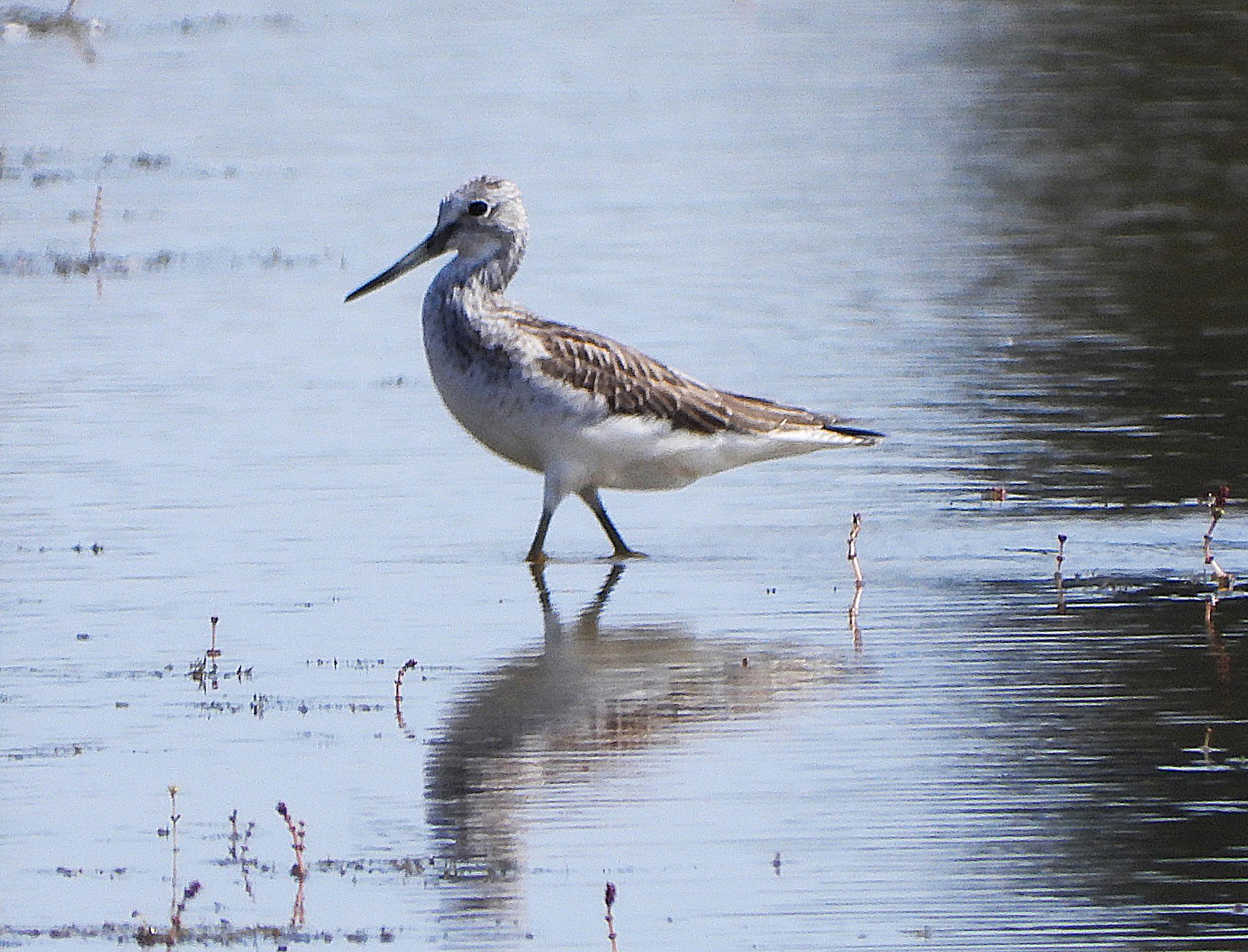
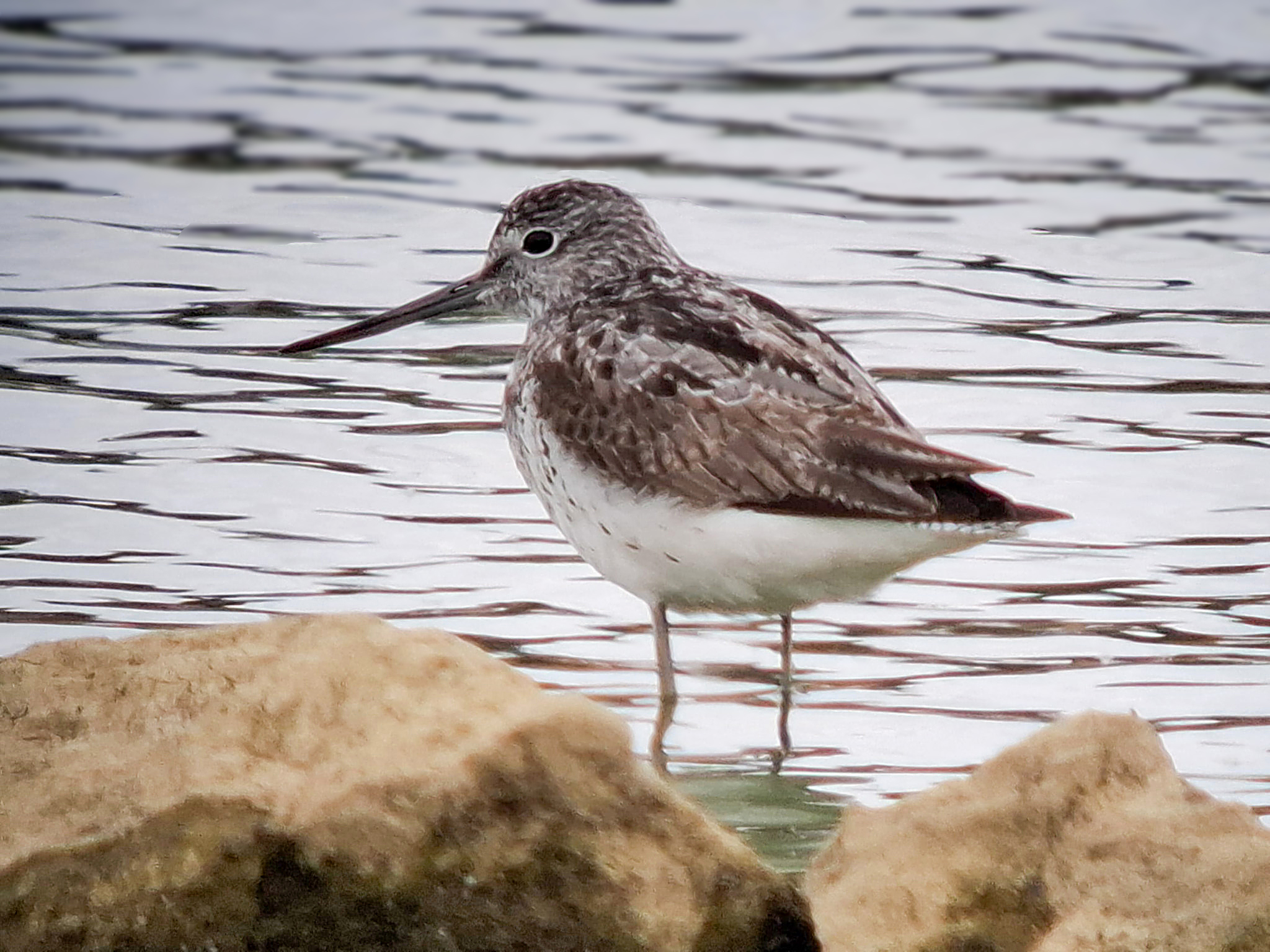
Titchmarsh also produced two Greenshanks on 1st, while one remained at Earls Barton GP’s New Workings (North) on 2nd.
Greenshank, Earls Barton GP, 2nd October 2025 (Leslie Fox)
The week’s gulls were restricted to a first-winter Mediterranean Gull at Boddington on 29th, while the usual German-ringed adult male Caspian Gull was present at Naseby Res on 30th, visiting Hollowell on 1st and returning to Naseby on 3rd, when it was accompanied by another adult. A first-winter visited Earls Barton GP’s Mary’s Lake on 2nd, the latter site also producing an adult Yellow-legged Gull on 1st-2nd, while single adults were present at Pitsford on 28th and in the roost at Stanford Res on 2nd.
Adult Yellow-legged Gull, Pitsford Res, 28th September 2025 (Mike Alibone)
In this grand year for Glossy Ibises, they continued to mark their presence at three localities throughout the week. Producing the only multiples, the top site was Stanford, where four were seen in flight over their favoured Settling Pond area on 3rd. Up to two continued to drop in there, early in the morning, on a daily basis. Summer Leys continued to hang on to its long-stayer, throughout, while one of last week’s Titchmarsh individuals remained loyal to the site all week.
Glossy Ibises, Stanford Res, 30th September 2025 (Chris Hubbard)Glossy Ibis, Summer Leys LNR, 1st October 2025 (Mike Alibone)
Four localities accounted for the period’s Bitterns, with single birds at Stanwick GP and Titchmarsh on 27th, Summer Leys on 3rd and Stanford virtually daily, although present on the Leicestershire side of the reservoir in the majority of instances.
The number of raptors continued to diminish. Single Ospreys were seen at Pitsford on 28th-29th and 2nd and at Hollowell on 29th.
Juvenile Osprey, Pitsford Res, 29th September 2025 (Tony Stanford)
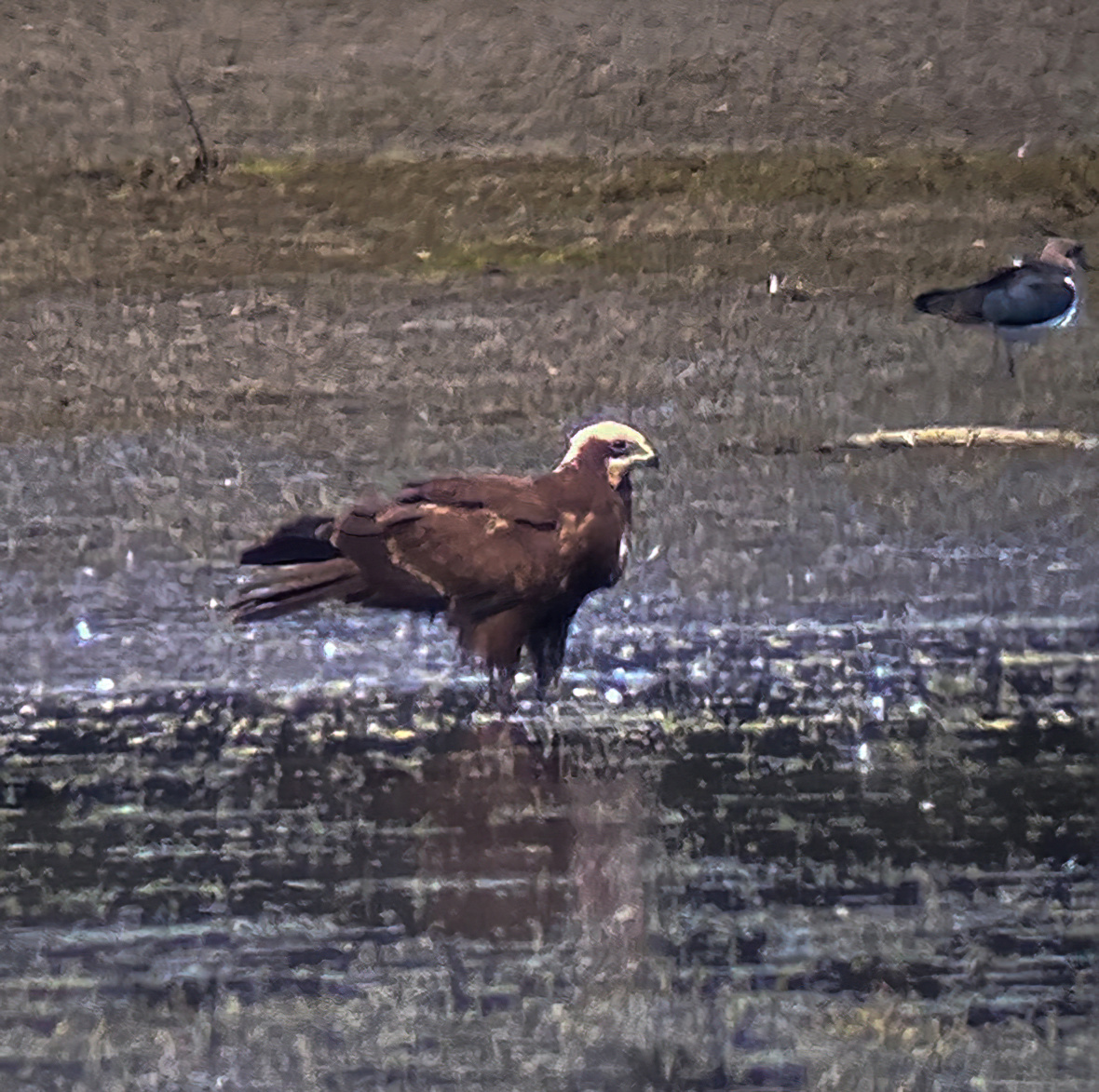
And only one day saw Marsh Harriers, singles of which were logged at both Harrington AF and Summer Leys on 30th, the first of these two sites laying claim to a Short-eared Owl on 27th and 29th.
Following one over suburban Northampton on 8th September, the second and third Merlins of the autumn were logged this week, with a male at Duston on 1st and a female in the Brampton Valley between Cottesbrooke and Hanging Houghton the following day.
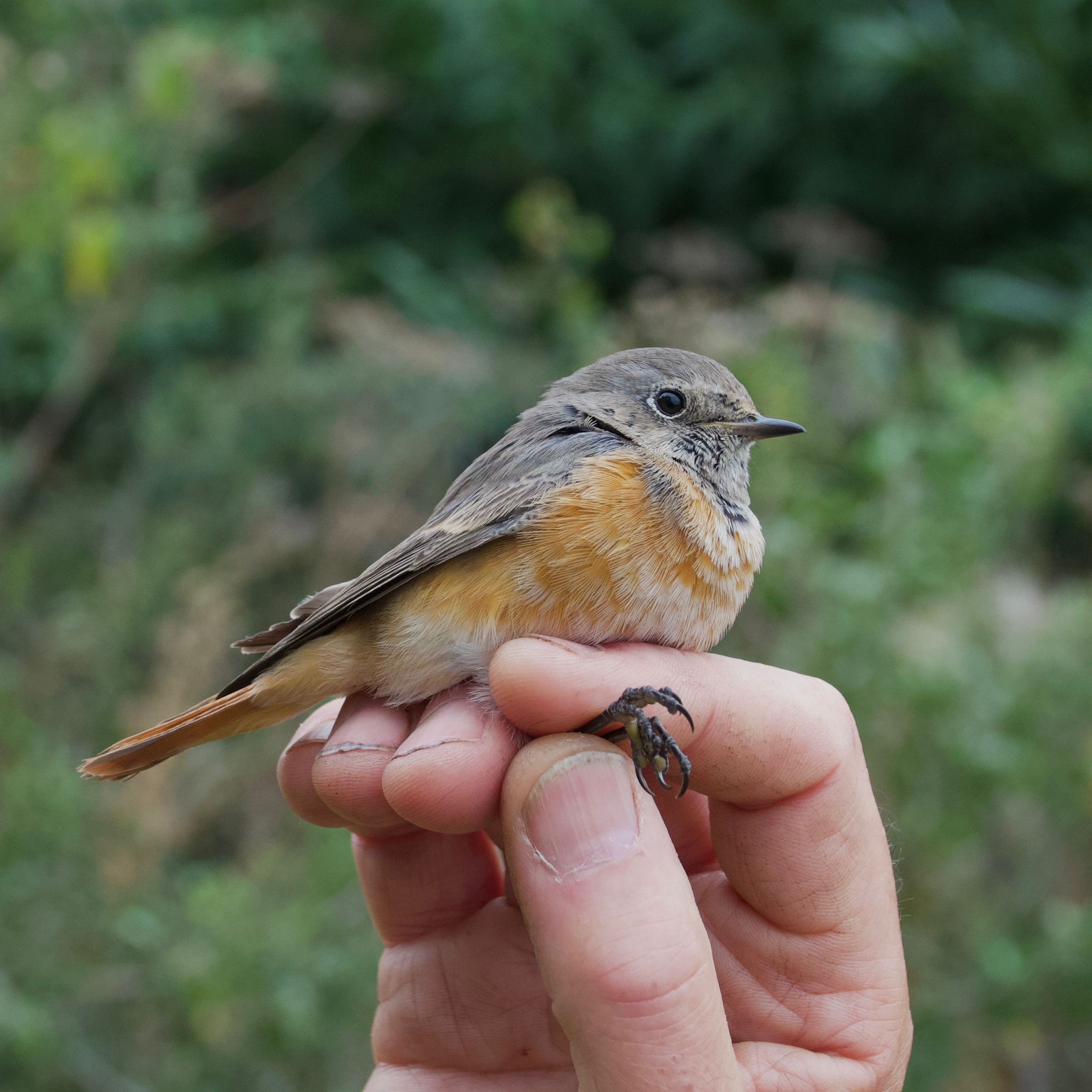
And on the passerine front, the autumn’s first Ring Ouzel was reported from Harrington on 27th, the same site producing one of the week’s two Common Redstarts on 29th, the same date on which the other was trapped and ringed at Stanford Res. Similarly, Whinchats were down to just two sightings, both in the Brampton Valley where there was one on 29th and two on 2nd. Moving in to replace them, however, were more Stonechats, numbers of which have been steadily increasing as we move deeper into autumn. The top locality was the Brampton Valley, where there were ten on 2nd – pipping Hollowell by one, the latter site producing nine on 29th. Across the wider region, top counts consisted of four at Pitsford on 27th and the same number at Sammocks Hill, Old Sulehay on 30th, two at Harrington between 27th and 30th, two at Earls Barton GP’s New Workings (South) on 2nd and singles at Boddington on 29th and Summer Leys on 3rd.
Stonechat, Pitsford Res, 28th September 2025 (Mike Alibone)
Northern Wheatears continued to move through in small numbers, singles being found on 28th at Clifford Hill, Harrington and Hollowell, followed by one in the Brampton Valley on 29th.
Northern Wheatear, Hollowell Res, 28th September 2025 (Jon Cook)
And to round off on a higher note, two Rock Pipits – the first of the year – dropped in briefly at Daventry CP on 29th.
Rock Pipit, Daventry CP, 29th September 2025 (Gary Pullan)
With lower numbers now passing through the county in recent years, this species has become much more difficult to connect with, although October is traditionally the month …
The week’s weather was dominated by a high pressure system drifting slowly east, keeping Atlantic weather fronts at bay and delivering an easterly airstream out of Eastern Europe and beyond. What impact this may ultimately have remains to be seen, but, clearly unrelated to this came a bolt from the blue in the shape of a long-awaited first for Northamptonshire …
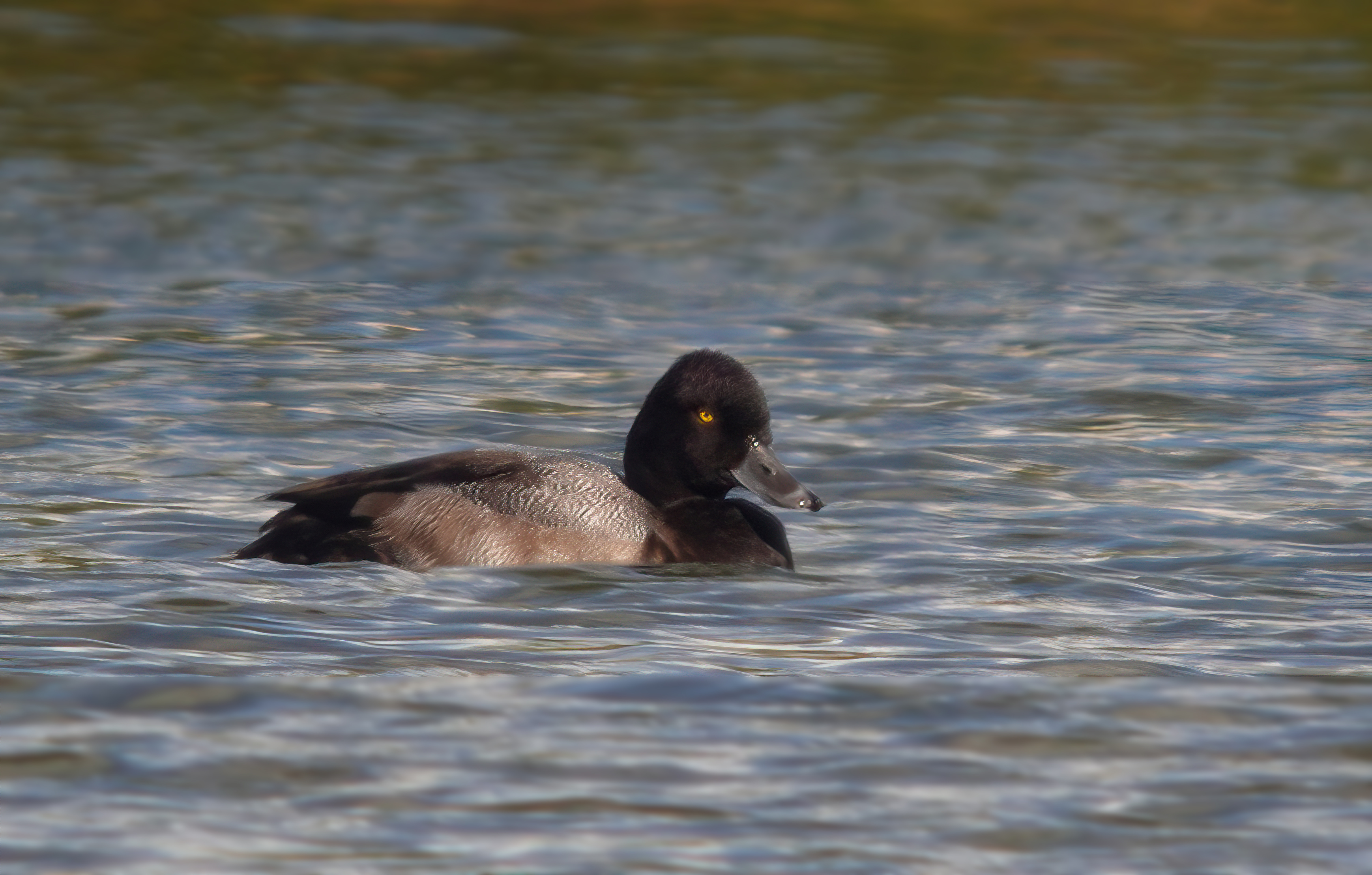
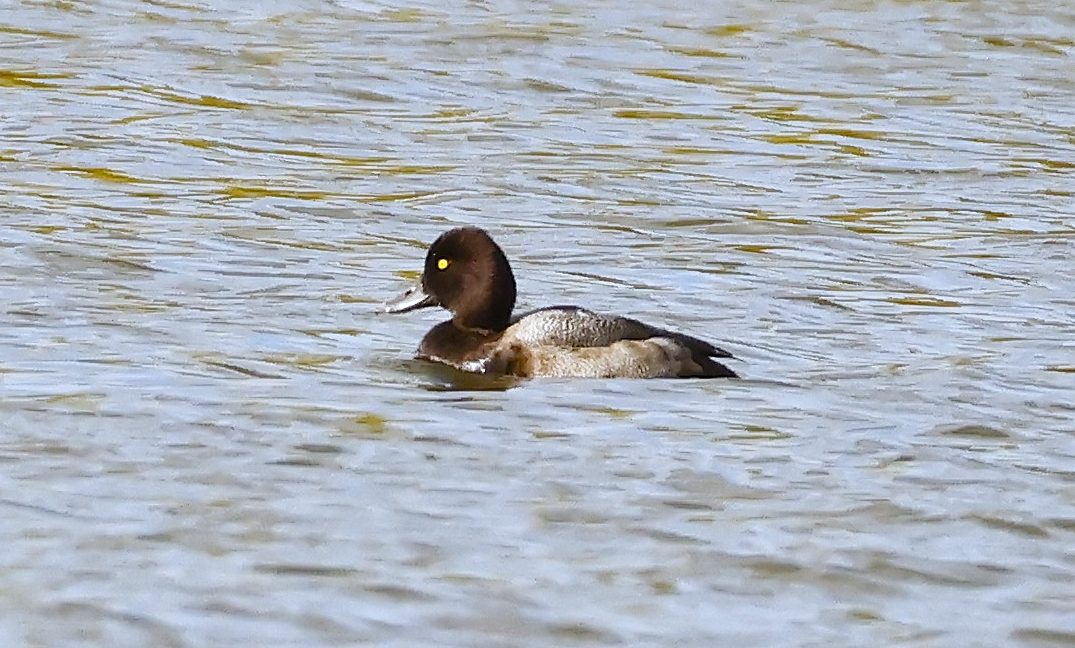
While multiples have occurred in all of our surrounding counties, one species has been the bane of frustration for many a local birder, having managed to evade us for many years. Until now, that is. This week, finally, the sun shone on our own fair county, the clouds parted and there it was … Northamptonshire’s first Lesser Scaup – a fine adult drake coming out of eclipse, found on the morning of 23rd at a location that has already offered up another county first this autumn. Yes, Stanford Res has done it again but, thankfully, it was not the product of a mist-net which vanished into the ether. No, this bird was, of course, out on the water, found by Chris Hubbard as a just reward for his high level of commitment and dedication to his personal stomping ground. While showing throughout the afternoon, this bird remained into only the early morning of the following day before deciding to up sticks and move on, much to the annoyance of those who made the journey to see it and were left looking at a drake Pochard x Tufted Duck hybrid which had been present there for several days.
Drake Lesser Scaup, Stanford Res, 23rd September 2025 (Mike Alibone)Drake Lesser Scaup, Stanford Res, 23rd September 2025 (Mike Alibone)Drake Lesser Scaup, Stanford Res, 23rd September 2025 (Bob Bullock)Drake Lesser Scaup, Stanford Res, 23rd September 2025 (Bob Bullock)
While other wildfowl were left in the shade, Stanford also dished up the next best duck of the week – certainly in the context of this year’s abnormally low numbers – a Garganey on 25th.
Garganey, Stanford Res, 25th September 2025 (Chris Hubbard)
Vying for recognition, though, came Hollowell Res, where a female or immature Common Scoter was found on the same date as the aforementioned Garganey.
Common Scoter, Hollowell Res, 25th September 2025 (Jon Cook)
Which leaves us with two drake Red-crested Pochards at Daventry CP from 22nd until 26th and a solitary drake at Pitsford on the last day of the period.
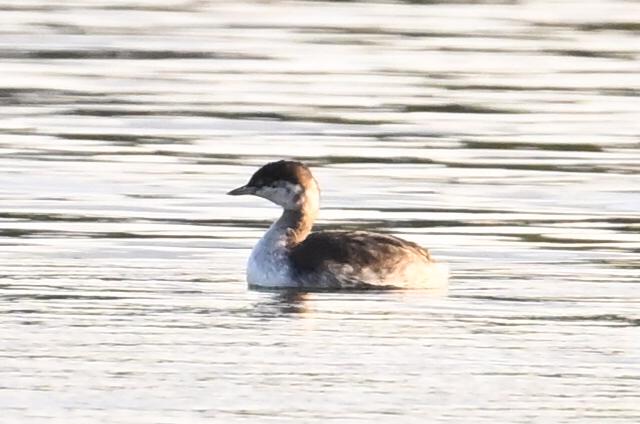
And when it came to rare grebes, Daventry, Hollowell and Stanford were up there again when each produced its own Slavonian Grebe – the first ones for 2025. All proved to be one-day stayers, at Daventry and Hollowell on 24th and Stanford on 26th.
Slavonian Grebe, Daventry CP, 24th September 2025 (Gary Pullan)Slavonian Grebe, Daventry CP, 24th September 2025 (Bob Bullock)Slavonian Grebe, Daventry CP, 24th September 2025 (Bob Bullock)Slavonian Grebe, Hollowell Res, 24th September 2025 (Jon Cook)Slavonian Grebe, Stanford Res, 26th September 2025 (Barry Silverman)Slavonian Grebe, Stanford Res, 26th September 2025 (Chris Hubbard)
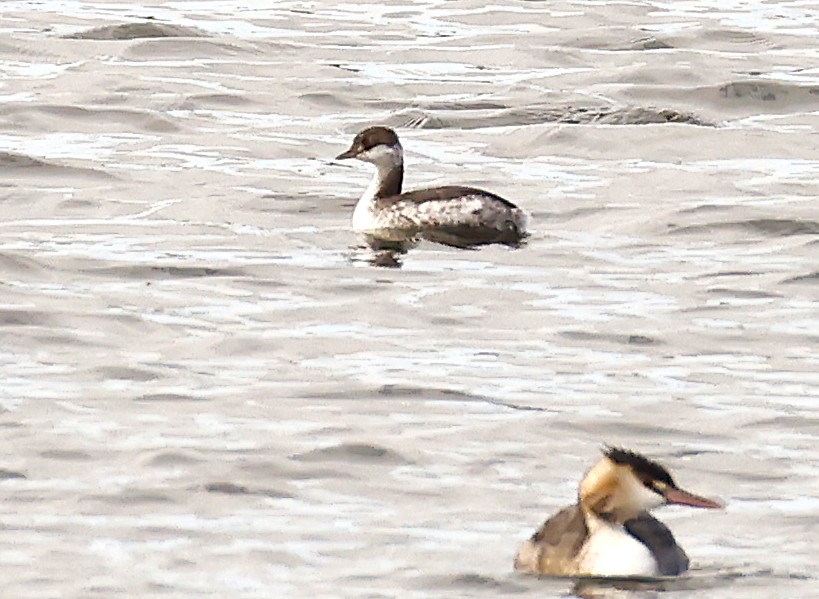
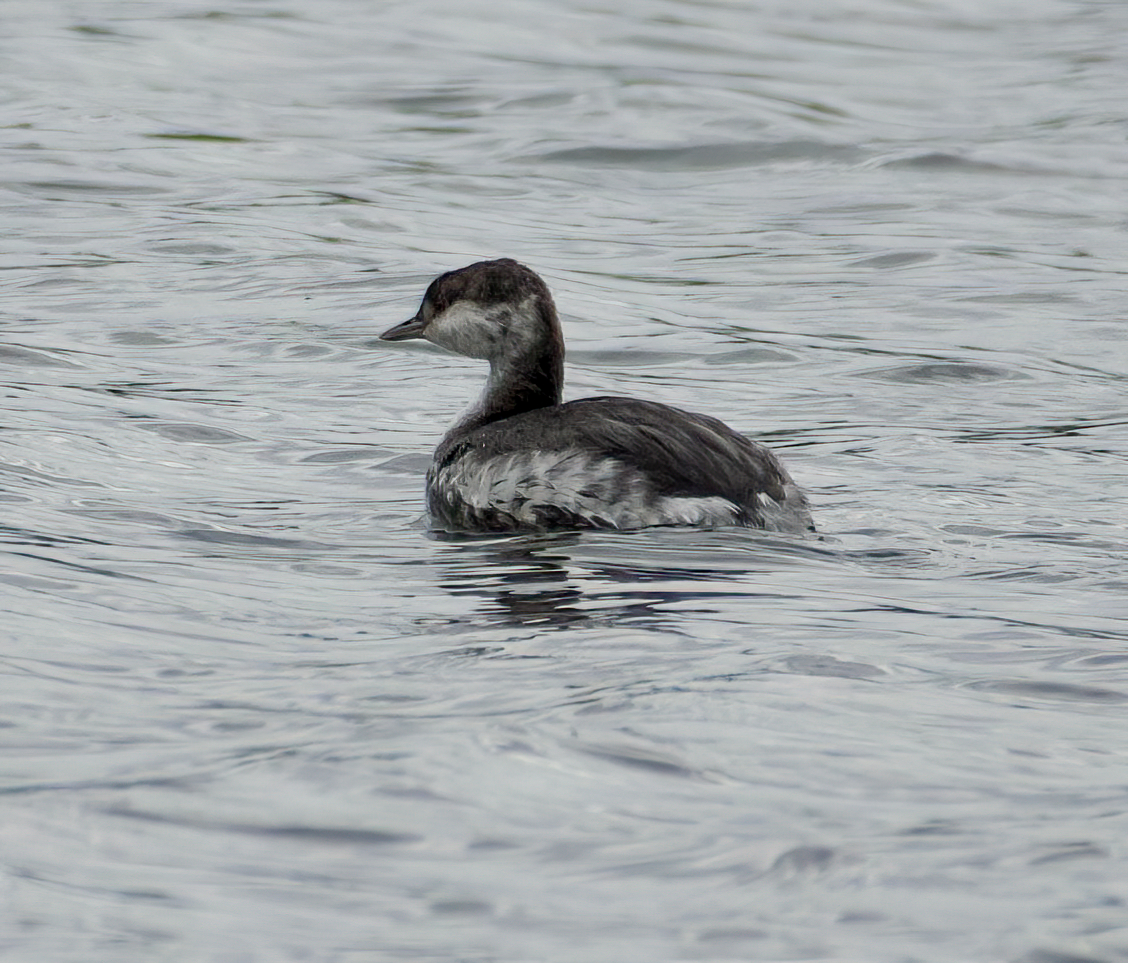
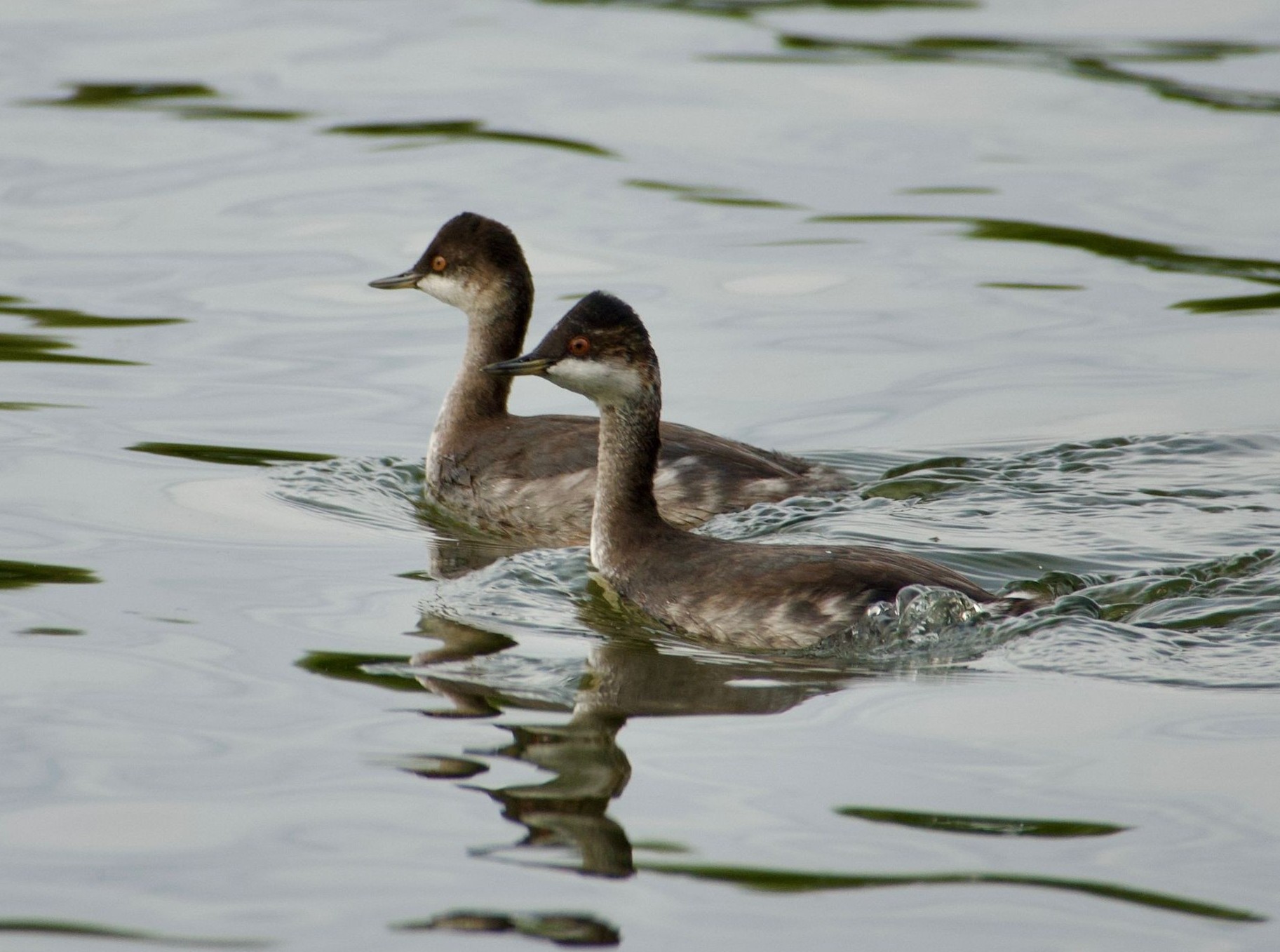
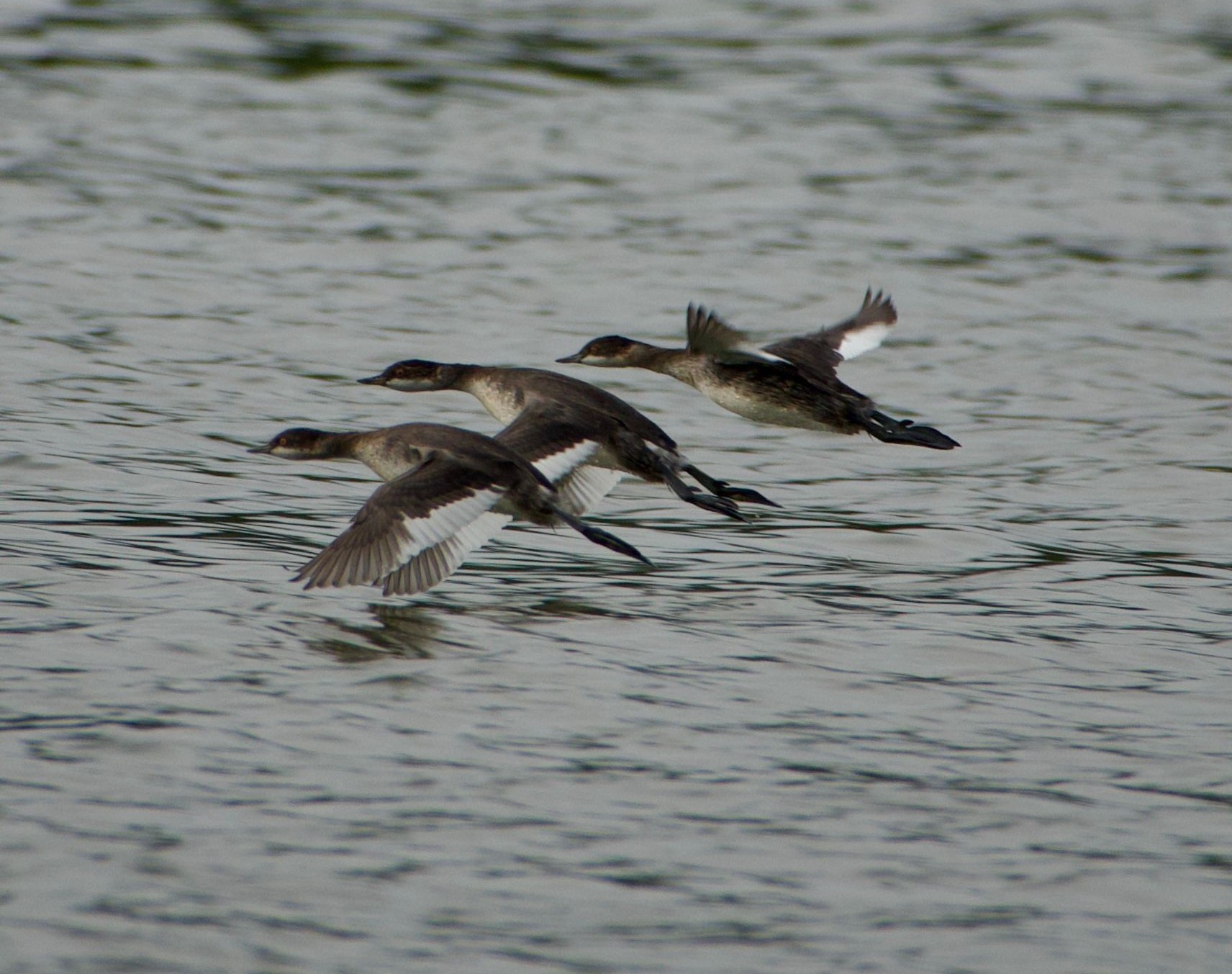
But it wasn’t over just yet for Stanford, which also added a Black-necked Grebe to its tally on 20th.
Black-necked Grebe, Stanford Res, 20th September 2025 (Chris Hubbard)
Moving into late September traditionally marks the period for declining numbers of passage waders, which is what we saw this week. At Boddington Res, a Curlew flew over on 20th, while three Ruffs were present there on 20th-21st, followed by one from 22nd to 23rd and two on 24th. The only other site to host this species was Pitsford Res, where up to three were to be found throughout the period.
Juvenile Ruff, Boddington Res, 24th September 2025 (Gary Pullan)
Pitsford also produced the county’s fifth Little Stint of the year, from 22nd until the week’s end. Greenshank numbers took a further tumble, with two at Earls Barton GP on 20th, dropping to one there from 23rd until 26th. Two were found at Clifford Hill GP on 23rd, followed by one on 24th, when one was also at Pitsford.
Greenshank, Earls Barton GP, 23rd September 2025 (Leslie Fox)
Last week’s first-winter Mediterranean Gull at Boddington was again to be found there on 20th, while Caspian Gulls were the preserve of Hollowell and Naseby Reservoirs, the latter site holding on to its regular German-ringed adult male all week and Hollowell producing a first-winter on 22nd and an adult on 26th.
German-ringed adult male Caspian Gull, Naseby Res, 21st September 2025 (Mike Alibone)
Three reservoirs also delivered the week’s quota of Yellow-legged Gulls, with an adult at Naseby on 21st, one at Pitsford on 21st and 24th-25th and one at Ravensthorpe Res on 26th.
Adult Yellow-legged Gull, Naseby Res, 21st September 2025 (Mike Alibone)
A Sandwich Tern was seen in flight over Stanwick GP on 20th.
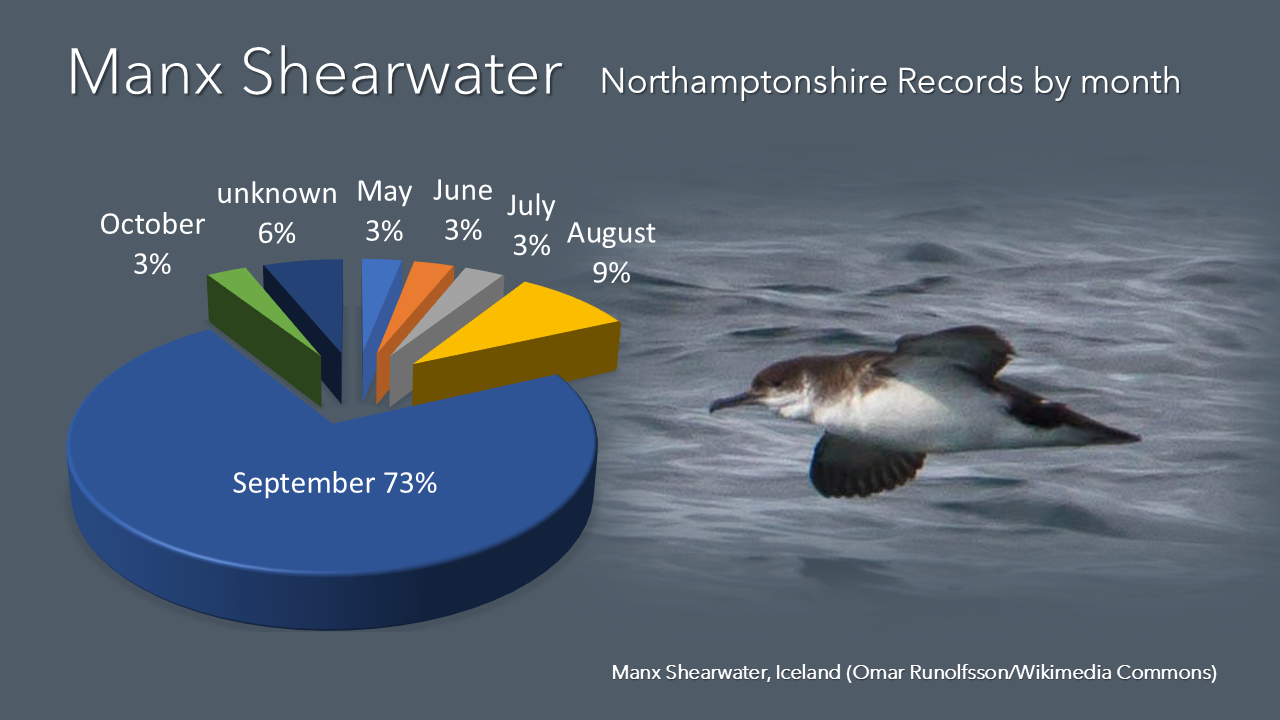
Following a south-westerly blow during the preceding week, significant numbers of Manx Shearwaters were driven inland with many apparently being taken into care. Northants was not to be left out of the proceedings and two – the first in the county since 2017 – duly appeared. The first was found exhausted at Blisworth on 22nd and was taken into care by Animals In Need, Little Irchester and, with no apparent injuries, was still in good health at the period’s end prior to its intended release at a coastal location next week. Sadly, the same could not be said for the second one – a corpse picked up on the A428 near Long Buckby on 23rd.
Manx Shearwater, Long Buckby, 23rd September 2025 (John Seymour)Manx Shearwater, Little Irchseter, 24th September 2025 (Animals In Need Northamptonshire)
There have been approximately 33 previous county records, the overwhelming majority of which have occurred in September.
And, not unexpectedly, Glossy Ibises were on the up. Present for a month now, the Summer Leys individual remained throughout the period, while the Pitsford bird chalked up its third week, staying loyal to the site at the week’s end. Stanford’s trio were there for early risers, appearing to roost in the vicinity and flying in for no more than half an hour to feed near the Settling Pond from around 06.45. Their number had dropped to two from 24th, one of the three having exhibited a damaged wing prior to this. Its fate is not currently known. Two were also present at Thrapston GP’s Titchmarsh NR from 24th until the week’s end.
Juvenile Glossy Ibis, Pitsford Res, 21st September 2025 (Bob Bullock)Glossy Ibises, Stanford Res, 21st September 2025 (Chris Hubbard)
A Bittern was again at Stanford between 23rd and 26th and last week’s Cattle Egret was still to be found there on the first day of the period.
Bittern, Stanford Res, 25th September 2025 (Barry Silverman)
On the raptor front, Ospreys had all but faded away, with just one seen at Pitsford almost daily between 20th and 26th. Marsh Harriers were down, too, with singles at Summer Leys on 20th and 24th, Stanford on 22nd-23rd, Harrington on 24th and Pitsford on 25th. And the sky momentarily darkened over Byfield on 22nd as a White-tailed Eagle flew south during the afternoon. The Roy Dennis Wildlife Foundation has confirmed that satellite tracking shows this was ‘G602’, a second-calendar year male released on the Isle of Wight last year, having summered on the North Yorks Moors and is now heading south.
On to passerines and a single Common Redstart at Clifford Hill GP on 20th was the only one of its kind this week, being outnumbered by Whinchats, with up to two at Blueberry Farm, Maidwell between 20th and 24th, one at Hollowell Res on 23rd and two in the Brampton Valley between Cottesbrooke and Hanging Houghton from 23rd until 25th.
Whinchat, Hollowell Res, 23rd September 2025 (Jon Cook)
This week saw a significant increase in Stonechat numbers, which reached double figures at Hollowell where there were at least ten on 25th. Elsewhere, up to five were present in the Brampton Valley, four at Pitsford and one at Clifford Hill GP. Single Northern Wheatears were found at Lilbourne Meadows NR on 21st, in the Brampton Valley on 23rd and 25th and at Blueberry Farm on 24th.
Pitsford saw two fly-over Crossbills on 22nd and one flew south over Naseby on 26th, while a Corn Bunting remained elusive in the Brampton Valley between 20th and 25th.
Moving deeper into autumn saw temperatures take a tumble in the early part of the period, followed by a momentary reprieve on the last day as a south-westerly airstream up from the Azores warmed the cockles and put some extra gloss on the week.
Keeping their tribe afloat, two Red-crested Pochards at Pitsford Res on 16th were the only ducks of note over the last seven days.
Waders continued to be well represented, however, with Boddington Res producing the pick of the bunch, kicking off with a Tundra Ringed Plover on 14th. Much further north, a Whimbrel flew over Harrington AF on 14th and a Curlew was similarly picked up in flight over Stanford Res on 16th.
Black-tailed Godwits continued to feature throughout the week with the largest number comprising a flock of twelve flying south-west over Clifford Hill GP on 14th. Two other localities held on to some longer-stayers, with one at Naseby Res from 13th until 18th and two at Pitsford on 17th.
Black-tailed Godwit, Naseby Res, 14th September 2025 (Mike Alibone)
Maintaining their stand, Ruffs were to be found at five localities – Pitsford holding on to five throughout the period, while Boddington held two from the beginning of the week, increasing to three there on 18th. Elsewhere, two were present at Clifford Hill on 13th-14th with one remaining until 16th and singles were at Summer Leys LNR on 13th and at Naseby on 13th and 17th-18th.
Juvenile Ruffs, Boddington Res, 16th September 2025 (Gary Pullan)Juvenile Ruff, Clifford Hill GP, 16th September 2025 (Mike Alibone)
Strong winds and heavy rain delivered Boddington’s best on 14th, when a Sanderling and the county’s fourth Little Stint of the year dropped in, the latter remaining until 16th, with the former also being reported again briefly on 15th.
Juvenile Little Stint, Boddington Res, 15th September 2025 (Gary Pullan)Juvenile Little Stint, Boddington Res, 15th September 2025 (Gary Pullan)
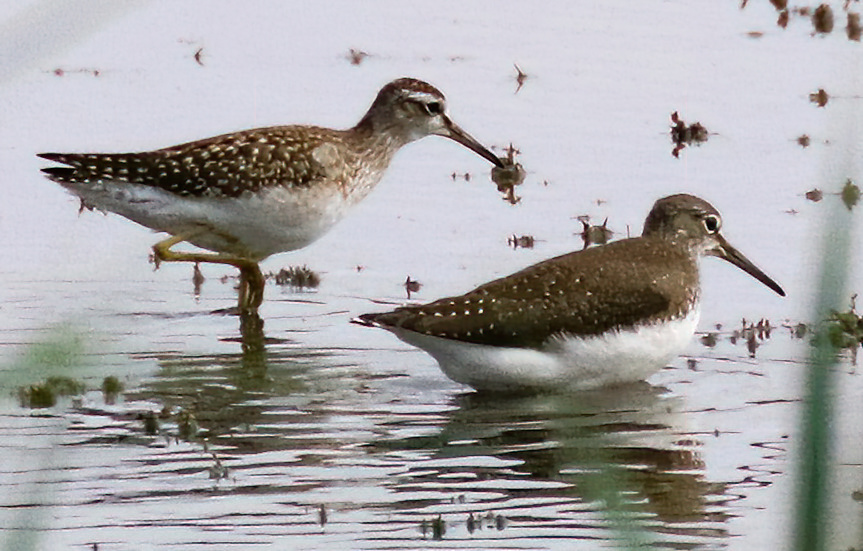
Getting late now for Wood Sandpiper, last week’s individual remained at Naseby until 16th and another was reported at Cransley Res on the last day of the period.
Wood Sandpiper, Naseby Res, 14th September 2025 (Mike Alibone)
And after last week’s double-figure peak at Pitsford, Greenshanks were down to three there between 14th and 19th, while singles were at Clifford Hill and Summer Leys on 13th, Naseby on 15th and Earls Barton GP’s New Workings (North) on 19th.
On the larid front, the best of the bunch this week was a first-winter Mediterranean Gull at Daventry CP on the last day of the period.
First-winter Mediterranean Gull, Daventry CP, 19th September 2025 (Gary Pullan)
The same site also produced three different Caspian Gulls, with a first-winter on 16th, an adult on 17th and a third-winter on 18th, while Boddington delivered a first-winter on 14th and the regular German-ringed adult was present at Naseby all week, accompanied by a juvenile/first-winter on 15th and a second adult on 17th and again on 19th.
First-winter Caspian Gull, Daventry CP, 16th September 2025 (Gary Pullan)Third-winter Caspian Gull, Daventry CP, 18th September 2025 (Gary Pullan)
Single Yellow-legged Gulls were at Daventry on 14th and Pitsford on 16th, the latter site holding four on 18th.
Yellow-legged Gull, Daventry CP, 14th September 2025 (Gary Pullan)
Daventry also hosted an adult Herring Gull x Lesser Black-backed Gull – resembling an Azores Gull, no less – on 18th.
Hybrid Herring Gull x Lesser Black-backed Gull, Daventry CP, 18th September 2025 (Gary Pullan)
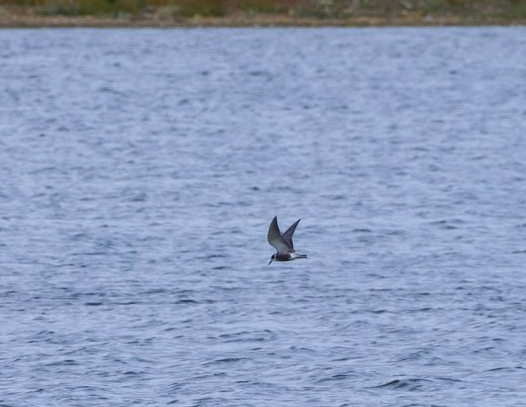
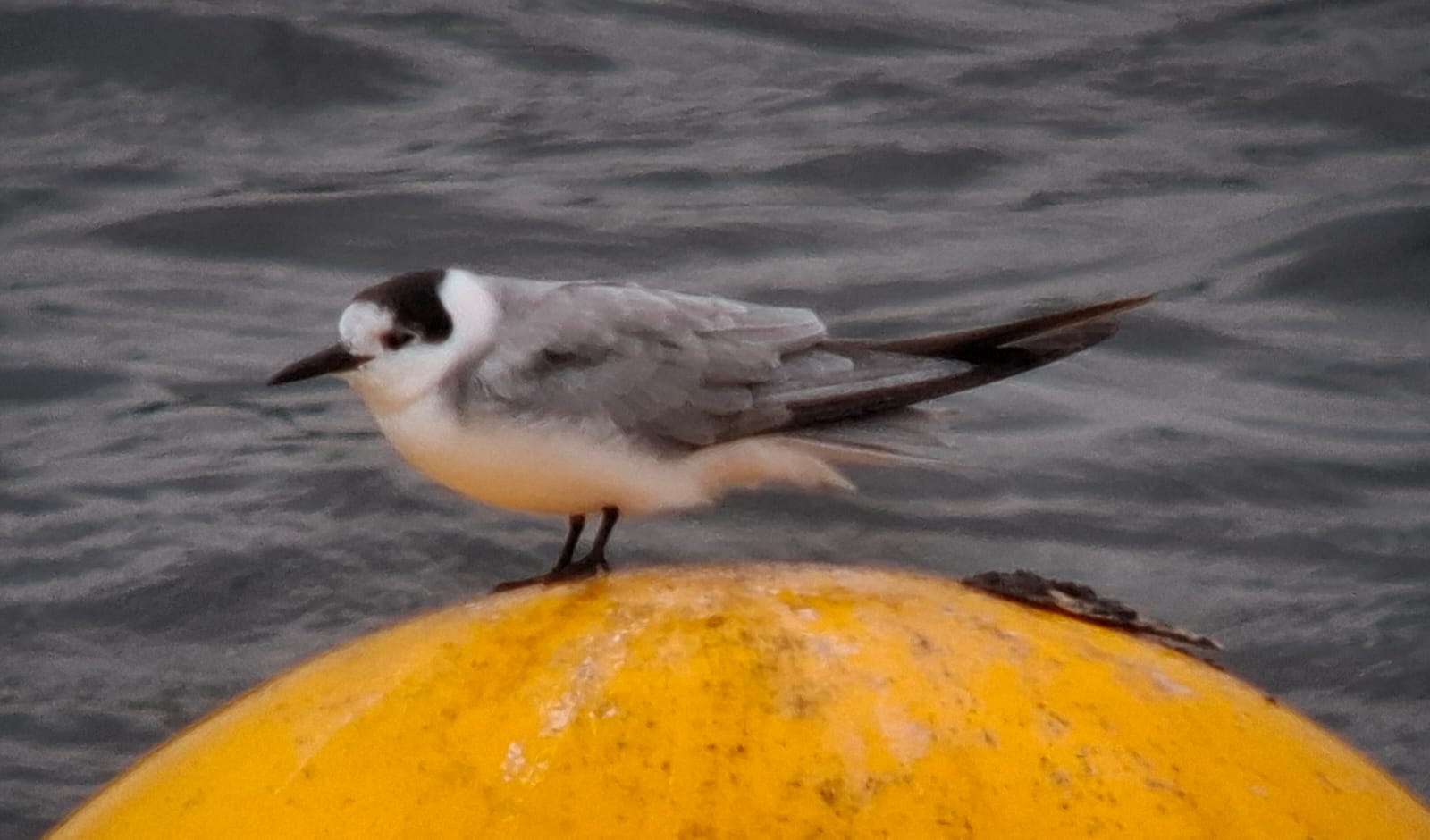
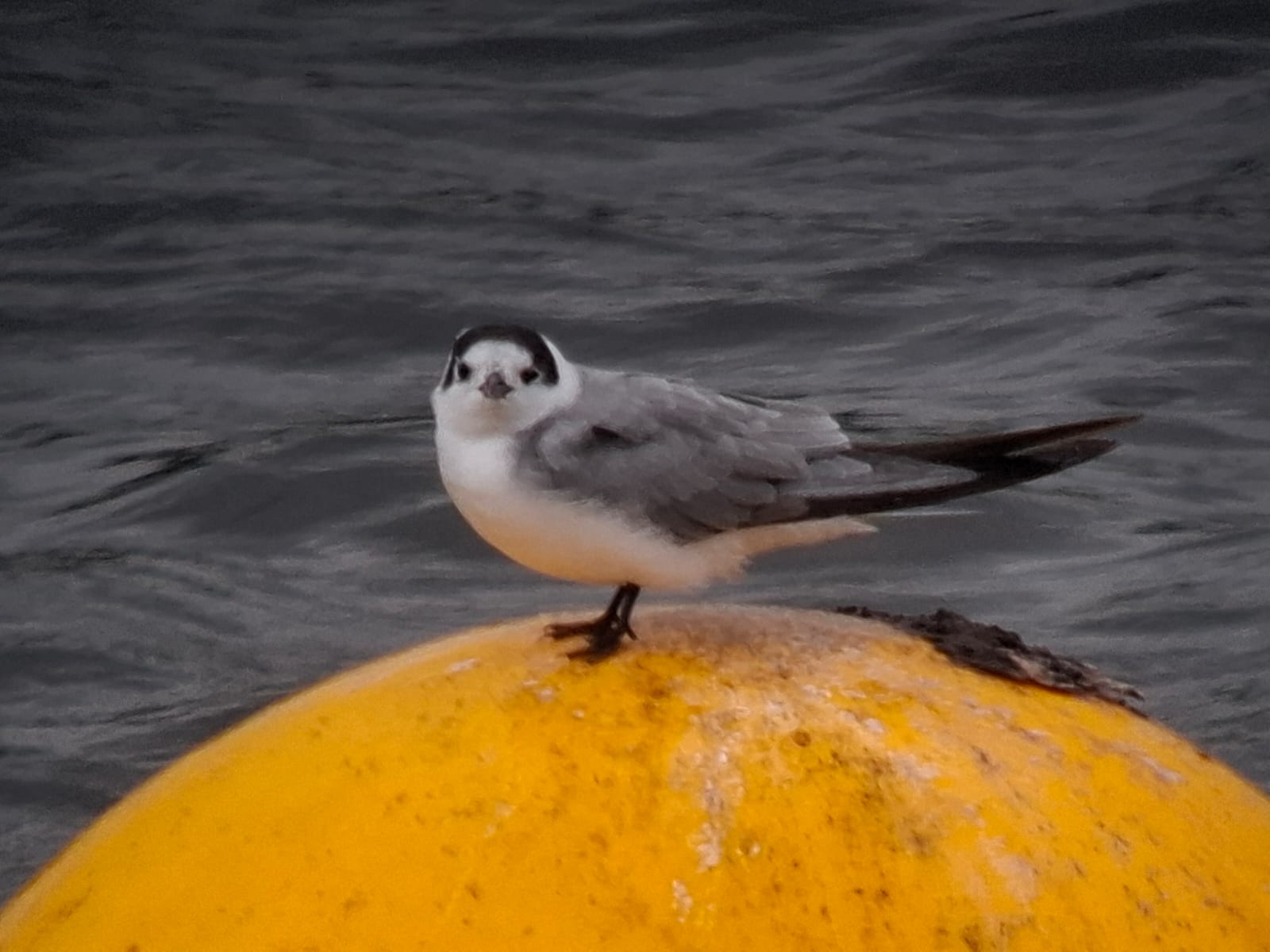
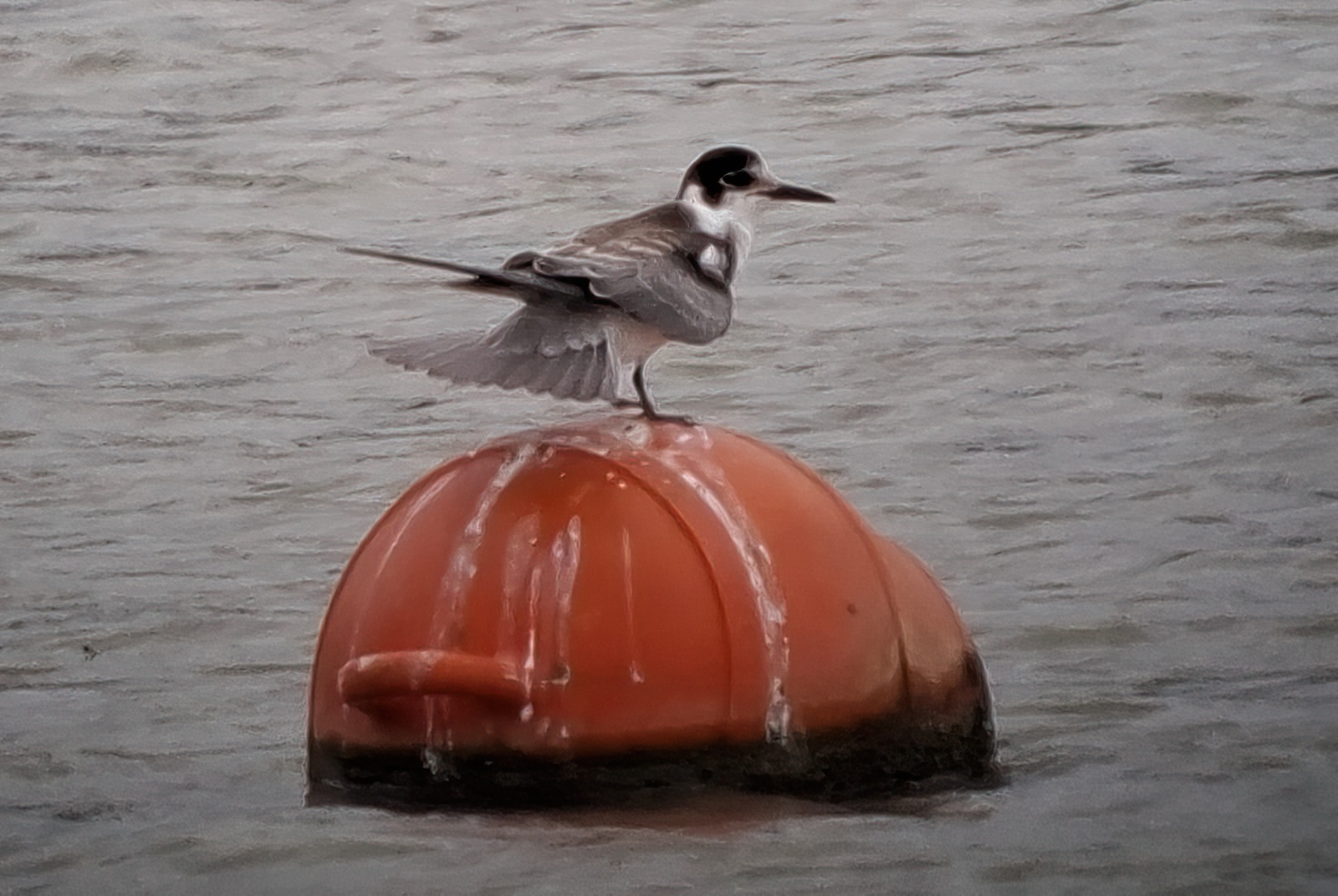
Downsizing, three species of tern were reported during the period – a Sandwich Tern at Boddington on 15th and an Arctic Tern at Hollowell Res on the same date, while the continuing trickle of Black Terns saw last week’s individual lingering at Ditchford GP’s Irthlingborough Lakes and Meadows NR on 13th, the same date producing two at Ravensthorpe Res and two at Hollowell – perhaps last week’s four, divided. One, or another, was at the latter site on 15th.
Black Tern, Irthlingborough Lakes Meadows NR, 13th September 2025 (Tony Vials)
With UK numbers still well into the hundreds this week, more Glossy Ibises were again likely to be on the cards – or so one would think – and, yes, there were new arrivals. Both individuals from last week remained throughout at Pitsford and Summer Leys but, in addition to these, one flew west over Wollaston Motors Prep Centre car park and on over Earls Barton GP’s New Workings (North) on 17th, although there is a fair chance it may have been the Summer Leys individual. Undoubtedly new in, however, were three adjacent to Stanford’s Settling Pool, briefly, during the morning of 19th, before flying north-east. Another, or one of the above trio, was seen in flight going north over Stanford during the afternoon of the same date.
Glossy Ibis, Summer Leys LNR, 14th September 2025 (Matt Cottrell)Glossy Ibis, Summer Leys LNR, 18th September 2025 (Matt Cottrell)Glossy Ibis, Stanford Res, 19th September 2025 (Chris Hubbard)
One each of Bittern and Cattle Egret were again at Summer Leys on 13th and Stanford on 19th, respectively.
Raptors comprised the usual suspects of late, with daily sightings of Ospreys at Pitsford, including two on 16th, while singles flew south and west over Hollowell on 13th and 16th, respectively. Single Marsh Harriers were also on offer at Pitsford, where singles were present on 13th, 14th, 15th and 18th, with two there on 19th. Further singles graced Harrington AF on 14th, Summer Leys on 15th-16th and Earls Barton GP’s New Workings (South) on 19th. Last week’s ‘ringtail’ Hen Harrier made a return visit to Blueberry Farm, Maidwell on 14th.
And, on the passerine front, Common Redstarts enjoyed a mini-resurgence with three at Borough Hill on 13th, 2 at Glassthorpe Hill, Harpole on 14th and singles at Pitsford on 13th, Blueberry Farm on 14th, Harrington on 14th and 17th and in the Brampton Valley between Cottesbrooke and Hanging Houghton on 16th.
Common Redstart, Harpole, 14th September 2025 (Jon Cook)
The same area of the Brampton Valley continued to produce Whinchats, with a maximum of six there on 16th, 2 on 14th and one on 17th, two were at Harrington on 14th and one was again at Thrapston GP’s Elinor Trout Lake on 17th. And while Whinchats may be on the wane, numbers of Stonechats were on the up – this week seeing a maximum of four at Hollowell on 19th, while ones and twos were found in the Brampton Valley, at Harrington, Pitsford and Yardley Chase.
Northern Wheatears continued to trickle through, with singles at Harrington on 14th and in the Brampton Valley between 14th and 16th, while two were found at Clifford Hill GP on 17th with one remaining the following day.
A low pressure system centred to the north of the UK was the driving force for much of the week’s weather, initially delivering a short spell of south-easterlies, during which another first for the year made landfall in the west of the county.
Continuing to do the rounds, though, the female Ruddy Shelduck, was still to be found at Stanford Res on 6th-7th, aside from which a mini-arrival of Red-crested Pochards saw two eclipse drakes at Daventry CP on 7th-8th and six at Pitsford Res on the last day of the period.
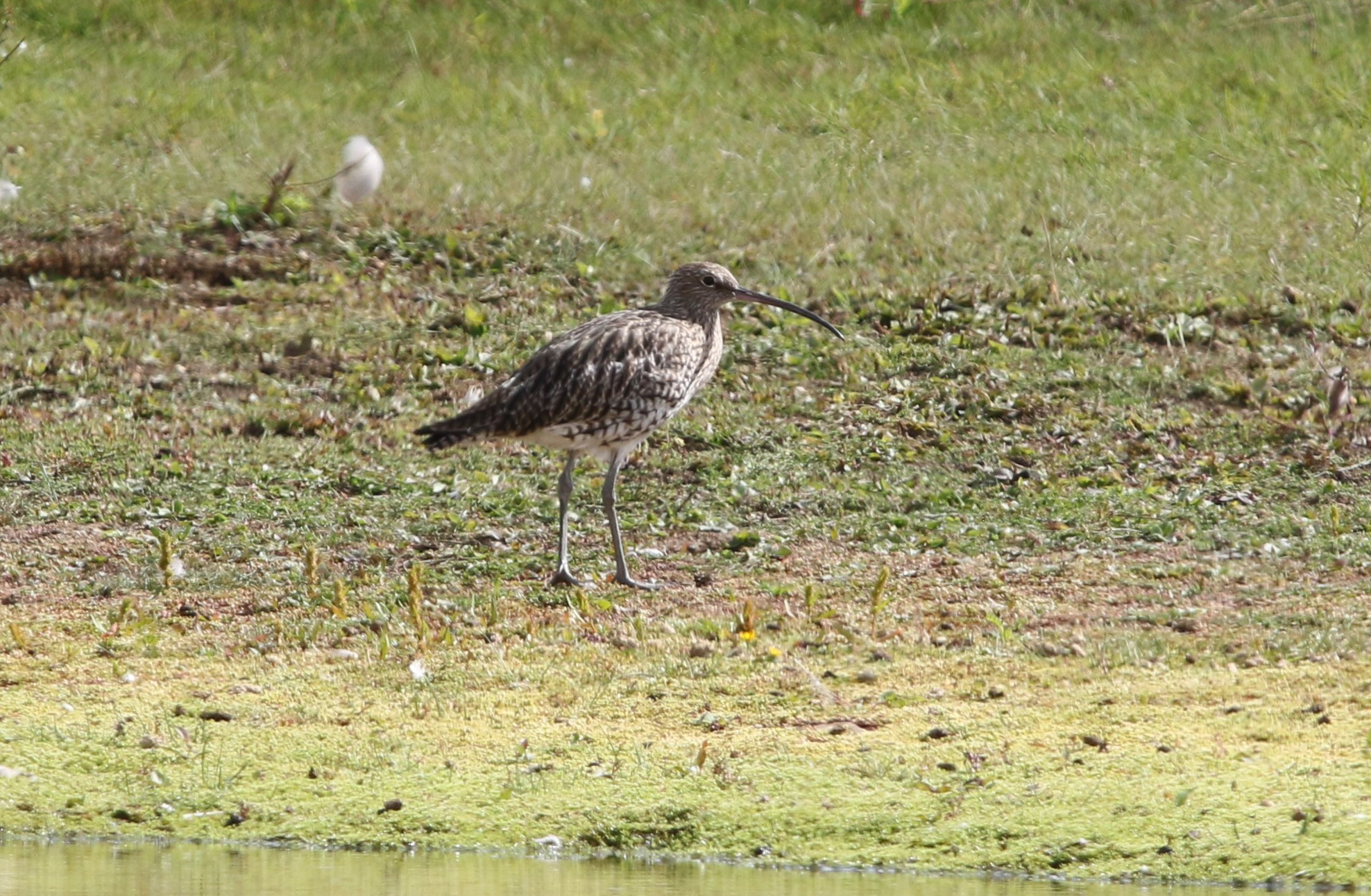
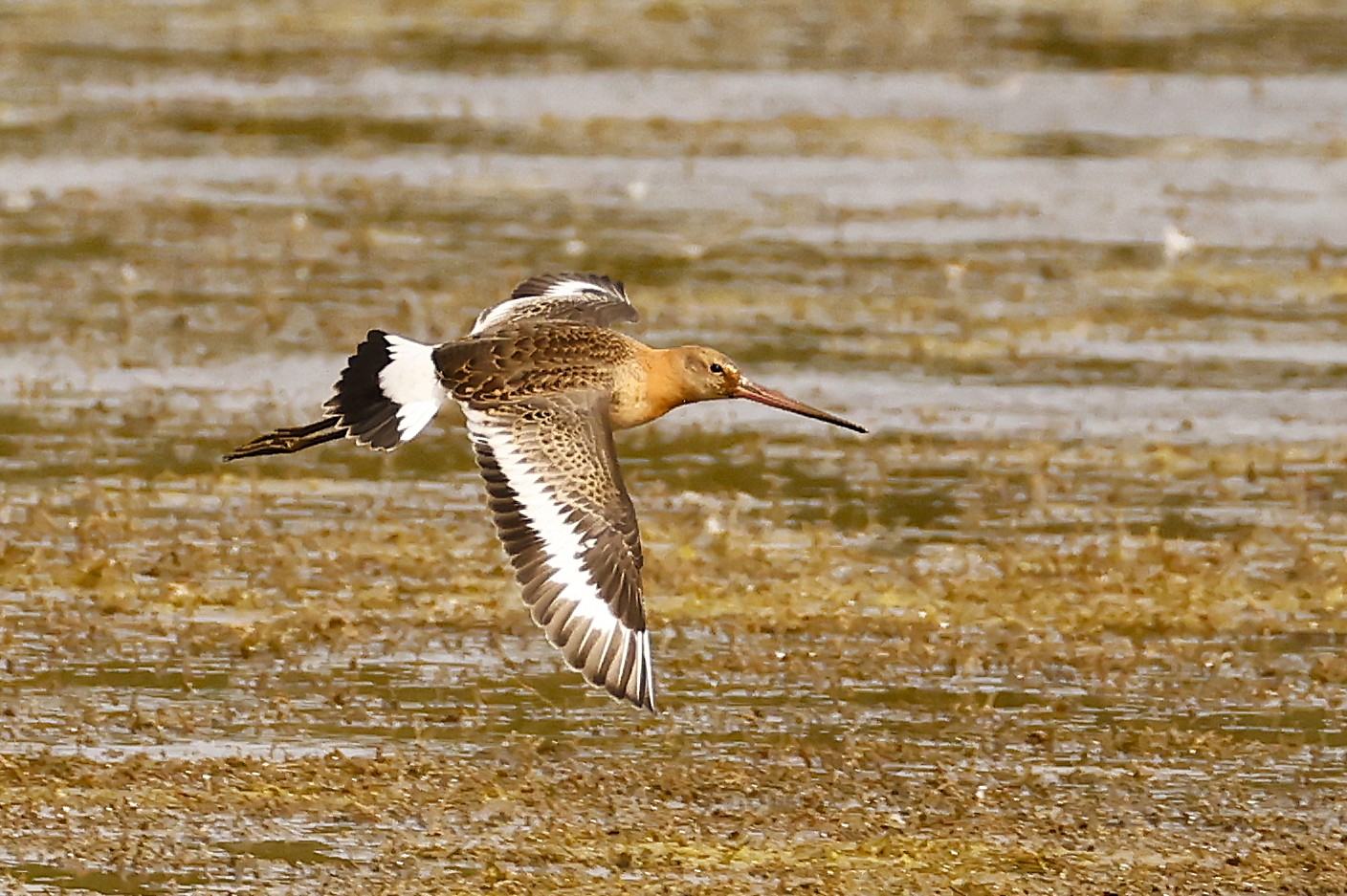
In the meantime, it’s September and waders were still out there to be had. Single Curlews visited Stanford on 7th and Lilbourne Meadows NR two days later, on 9th, while three Black-tailed Godwits were hangers on from last week at Pitsford until 8th, after which one remained into the latter part of the week. One was also present at Naseby Res on 9th and 12th.
Curlew, Lilbourne Meadows NR, 9th September 2025 (Phil West)Juvenile Black-tailed Godwit, Pitsford Res, 6th September 2025 (Bob Bullock)
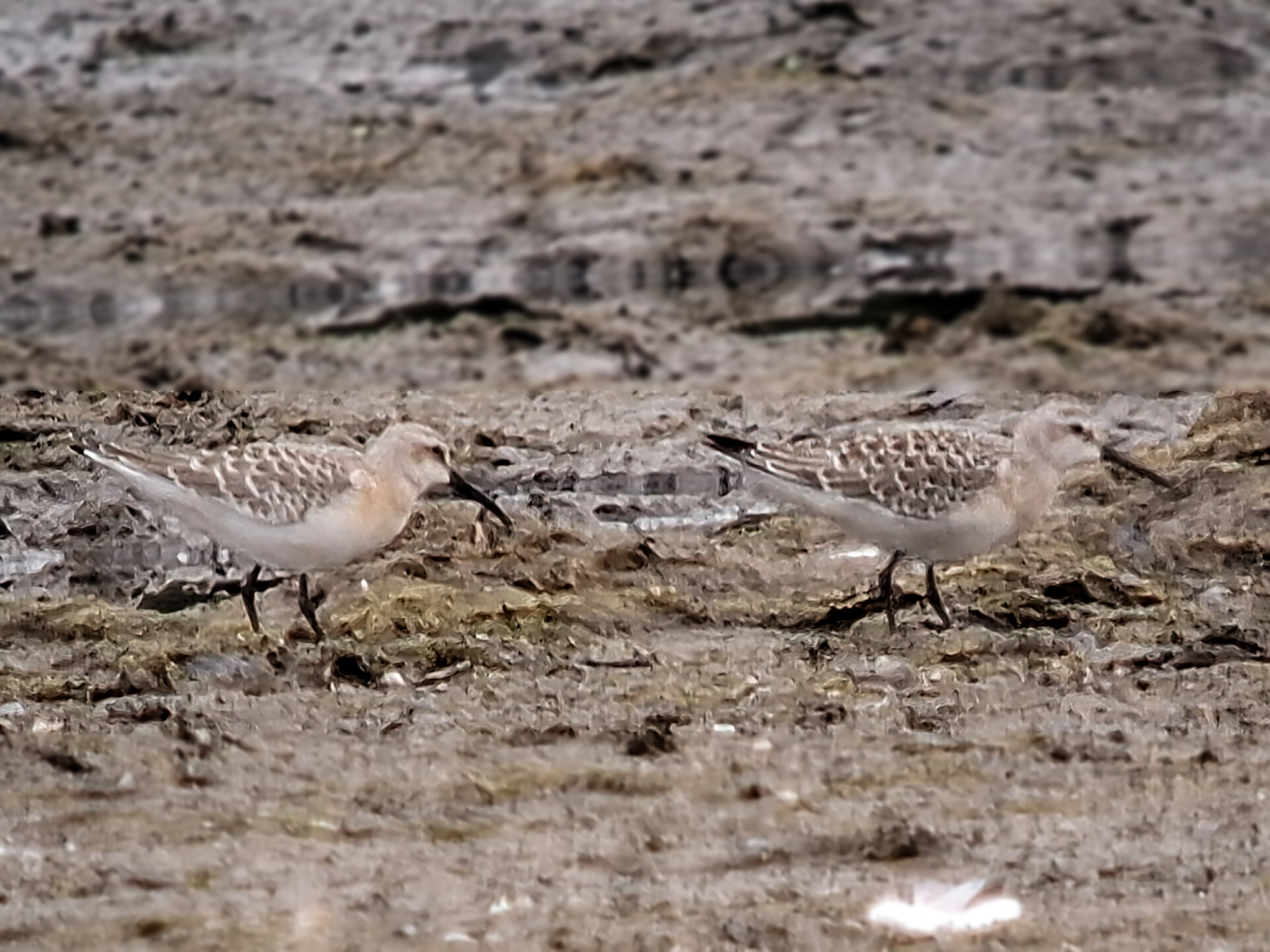
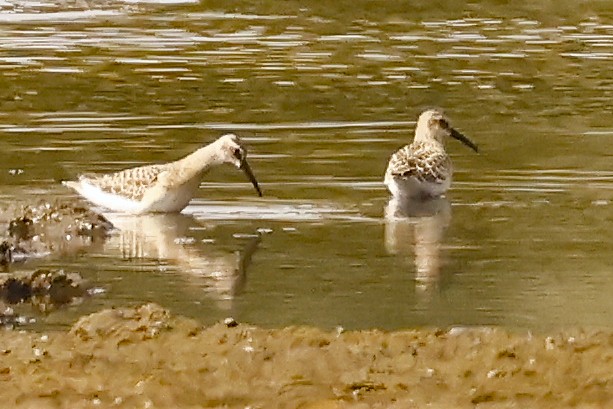
Ruffs, too, were present at four localities with numbers at Pitsford all week increasing from three to six on 11th. Elsewhere, Clifford Hill GP produced two on 11th following one there on 9th and singles were found at Summer Leys LNR on 6th, 9th and 11th and at Naseby on 8th and 12th. Wader of the week – and a first for the year in the county – was Curlew Sandpiper, two juveniles of which dropped in at Daventry on 7th but, alas, failed to stick around and had departed by the following morning.
Juvenile Curlew Sandpipers, Daventry CP, 7th September 2025 (Gary Pullan)Juvenile Curlew Sandpipers, Daventry CP, 7th September 2025 (Gary Pullan)Juvenile Curlew Sandpipers, Daventry CP, 7th September 2025 (Bob Bullock)
And while Wood Sandpiper was back on the menu, with one at Naseby Res on 12th, Greenshanks hit their highest single site total in recent years when numbers rose to fifteen at Pitsford on 7th, dropping down to a mere three there by the end of the week. Smaller numbers elsewhere included five at Earls Barton GP’s New Workings (South) on 10th, three flying east over Oundle on 7th and singles at Boddington Res on 8th and at Naseby on 8th-9th and 12th.
Greenshank, Earls Barton GP, 10th September 2025 (Leslie Fox)
Naseby also held on to its near-resident German-ringed adult Caspian Gull throughout the period, while a juvenile visited Hollowell and Ravensthorpe on 8th and 9th, respectively, and a second-winter was found at Wicksteed Park Lakes, Kettering on 12th. Single Yellow-legged Gulls were duly logged at both Pitsford and Stanford on 6th, also at both Boddington and Priors Hall Quarry Lake, Corby on 7th and at Thrapston GP on 10th.
Daventry continued its decent run of autumn migrants this week with a juvenile Arctic Tern, briefly, on 10th, plus a Black Tern on the same date. More were to follow with, out east, two at Thrapston on the latter date and one at Ditchford GP’s Irthlingborough Lakes and Meadows NR on 12th, while Ravensthorpe laid claim to four on 11th, the latter moving across to nearby Hollowell the following day.
Adult Black Tern, Daventry CP, 10th September 2025 (Gary Pullan)Adult Black Tern, Daventry CP, 10th September 2025 (Gary Pullan)
And, given the record-breaking influx currently under way, enter stage left, another Glossy Ibis – this time a juvenile –found on day one of the period at Pitsford where it was still in residence at the week’s end. Meanwhile, the Summer Leys bird remained settled there throughout the week. With numbers estimated to be in excess of six hundred across the UK, including a jaw-dropping ninety-two at one site in Cornwall on 8th, it seems likely we could be in for a few more in our own fair county …
Juvenile Glossy Ibis, Pitsford Res, 6th September 2025 (Bob Bullock)
Causing less of a stir, a Bittern was seen again at Summer Leys on 11th and a Cattle Egret spent a short time at Boddington Res before moving off north on 7th.
On the raptor front, up to two Ospreys were present throughout the week at Pitsford and singles elsewhere included one flying west over Northampton’s Abington Park on 6th, at Stanford Res on 7th, Boddington on 8th, Hollowell on 8th and 12th and at both Earls Barton and Summer Leys on 11th.
Osprey, Earls Barton GP, 11th September 2025 (Leslie Fox)
Taking a bit of a slide, though, Marsh Harrier numbers were down a little on last week with one at Pitsford seen on 9th, 11th and 12th, one in the Blueberry Farm/Brampton Valley area on 9th and 11th and one at Summer Leys on 11th doubling to two there the following day. Last week’s ‘ringtail’ Hen Harrier remained in the Brampton Valley between Cottesbrooke and Hanging Houghton until at least 9th.
A Merlin provided an unusually striking sight in suburbia when one flew over Abington Park on 8th.
Juvenile Merlin, Abington Park, Northampton, 8th September 2025 (Tyler Atkinson)
And then there were passerines. The continual run of Common Redstarts we have become used to took a tumble this week with numbers down to just single birds at Blueberry Farm, Maidwell on 9th and in the Brampton Valley on 10th. The same could not be said for Whinchats, with the increasingly popular locality of the Brampton Valley holding good and producing small numbers daily, peaking at five there from 8th to 11th. Nearby Blueberry Farm also held up to three between 6th and 9th and singles were found at Earls Barton GP’s New Workings (South) on 6th-7th and at Hollowell Res on 9th.
Moving further into autumn, Stonechats are beginning to creep in with two in the Brampton Valley on 9th and one at Boddington on 10th.
Stonechat, Boddington Res, 10th September 2025 (Gary Pullan)
There were fewer Northern Wheatears reported during the period – just one at Hollowell on 8th, two at Blueberry Farm on 9th and two in the Brampton Valley on 10th-11th.
And Crossbill movements have also continued to slow to a trickle with Wakerley Great Wood producing at least two on 6th, while four were at Gamboro Plantation in the Brampton Valley on 9th.
A hefty westerly blow across the UK also included some southerlies on the back of it which may have influenced the birds found in this week’s mix …
Apart from the female Ruddy Shelduck, which jumped ship from Naseby Res and moved to nearby Stanford Res by the week’s end, there were no other ducks to elicit any serious interest.
It was a different matter with regard to waders, though, and, with this summer’s drought-induced multiple muddy margins to choose from, they were well scattered. Proving prime in this respect, Pitsford Res continued to deliver the goods with five Black-tailed Godwits from 30th to 1st, dwindling to three by the end of the week. Elsewhere, Thrapston GP’s Titchmarsh NR also produced a juvenile on 5th, this site already having held a short-staying flock of 5 Knots on 3rd.
Black-tailed Godwits, Pitsford Res, 30th August 2025 (Tyler Atkinson)
Continuing their respectable autumn run, Ruffs were found at seven localities, the highest count being five at Stanford on 4th. Pitsford came second with three between 3rd and 5th, Summer Leys LNR was home to one between 30th and 4th, with two present there on 1st and singles were at Hollowell Res on 31st, Naseby on 1st, Titchmarsh NR on 5th and at Daventry CP all week.
Hot on the heels of the year’s first Little Stint at Clifford Hill GP on 22nd, two more juveniles arrived on 30th – one at Boddington Res, the other at Pitsford – both proving to be short-stayers.
And numbers of Greenshanks remained solid, Pitsford producing the week’s top site total of nine between 31st and 4th. Elsewhere, three were found at Ditchford on 2nd, Boddington held two between 30th and 4th and singles were at Naseby between 1st and 5th, Summer Leys on 30th and 2nd, Hollowell on 2nd and Daventry on 3rd.
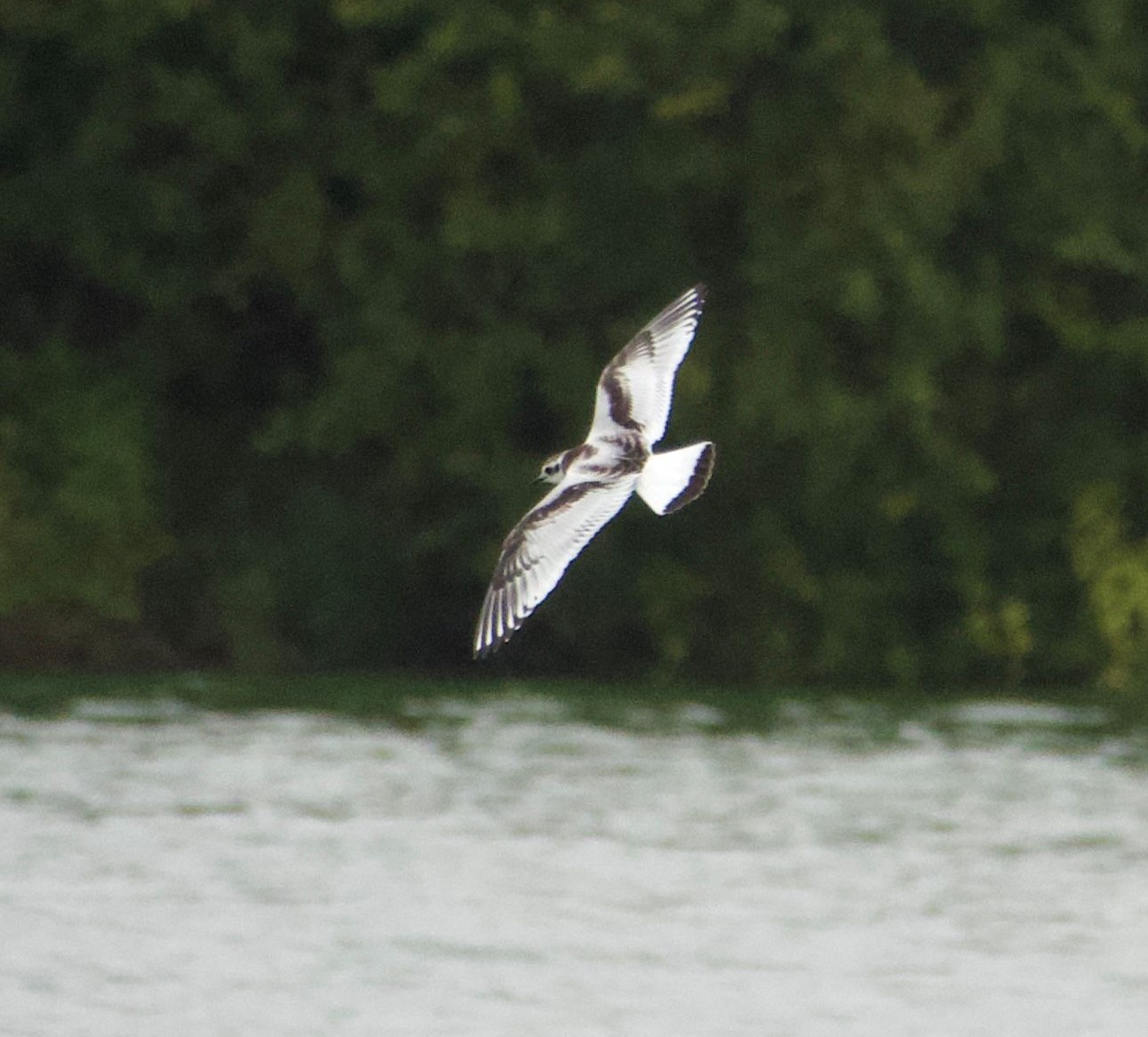
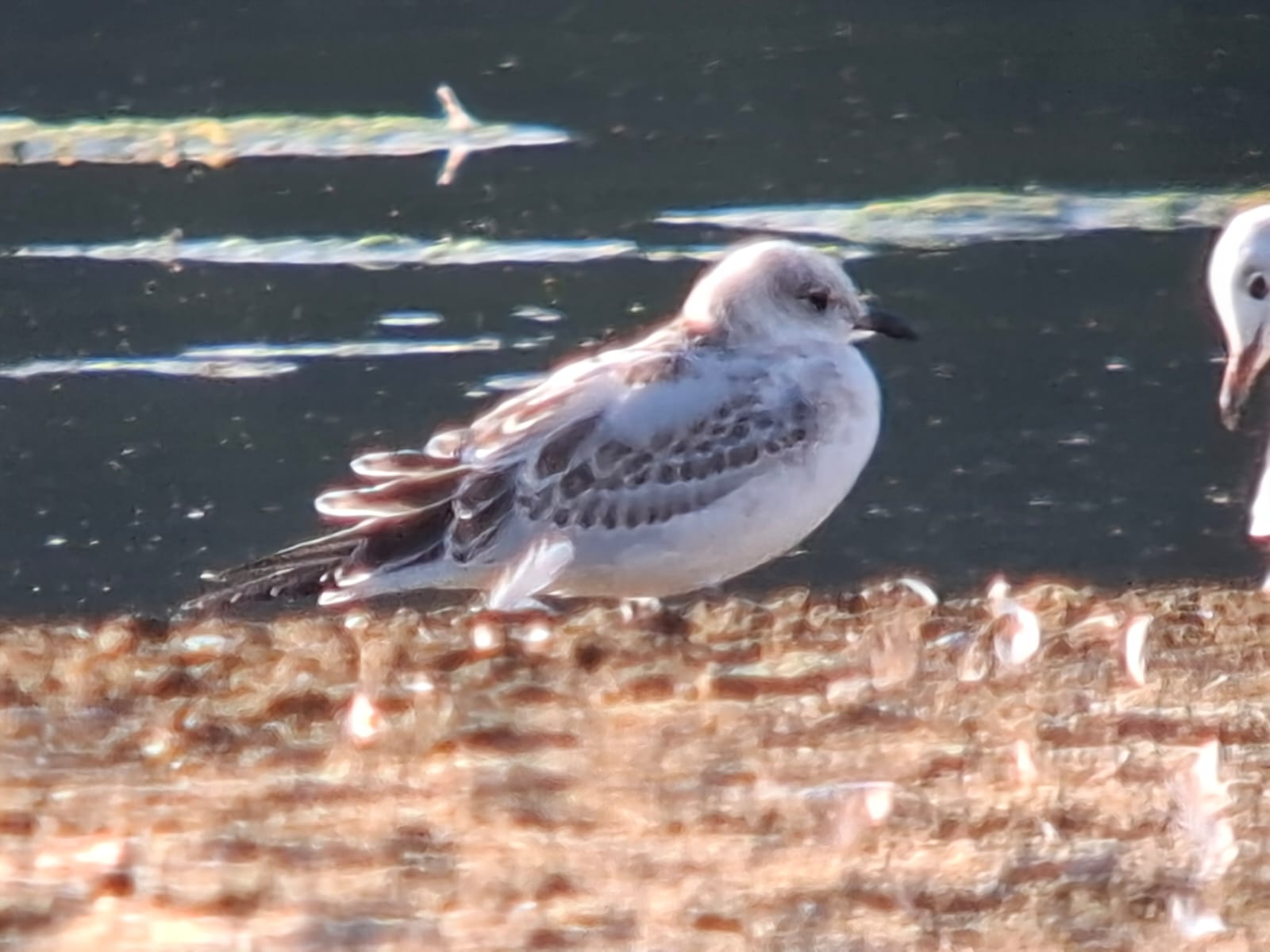
Stanford scored on the larid front with, on 3rd, a smart juvenile Little Gull, as well as a juvenile Mediterranean Gull – both in the vicinity of the dam there. Another juvenile Mediterranean Gull dropped into Daventry on 30th.
Juvenile Little Gull, Stanford Res, 3rd September 2025 (Chris Hubbard)Juvenile Little Gull, Stanford Res, 3rd September 2025 (Chris Hubbard)Juvenile Mediterranean Gull, Daventry CP, 30th August 2025 (Gary Pullan)
Remaining faithful to Naseby, the German-ringed adult male Caspian Gull was present all week, while an adult visited Pitsford on 31st and a juvenile was at Daventry on 2nd. And the usual Yellow-legged Gulls were around at Pitsford, where there were three on 31st, four on 3rd and one on 4th, two were at Thrapston GP on 2nd and a juvenile was present Daventry from 1st to 3rd.
A single Black Tern stayed on from the previous week, remaining at Pitsford from 30th to 4th.
Following last week’s reappearance of a Glossy Ibis at two sites in the Nene Valley, this initially mobile individual finally settled at Summer Leys, where it showed nicely all week, after flipping back to Ditchford GP’s Irthlingborough Lakes and Meadows NR for a quick recce on 31st. This bird is seemingly an integral part of a mounting nationwide invasion, involving at least fifty birds, as far north as Lancashire, down to some far southwestern outposts, including multiples on the Isles of Scilly and double figures in Cornwall.
Glossy Ibis, Summer Leys LNR, 2nd September 2025 (Bob Bullock)Glossy Ibis, Summer Leys LNR, 3rd September 2025 (Mike Alibone)Glossy Ibis, Summer Leys LNR, 3rd September 2025 (Mike Alibone)Glossy Ibis, Summer Leys LNR, 3rd September 2025 (Mike Alibone)
If your local wetland patch begins with an ‘S’ then it may only be a matter of time before a Bittern turns up, single birds being seen daily at Summer Leys between 2nd and 5th, at Stortons GP on 3rd and again at Stanford on 5th. The period’s Cattle Egret sightings were somewhat restricted this week, the 5th yielding three at Ringstead GP and one at Titchmarsh.
And the raptor draw continued to hold plenty. Pitsford was prime for Ospreys with two – possibly three – there on 30th, followed by singles on 31st-1st and 4th-5th. Elsewhere, singles were present at Thrapston/Titchmarsh on 1st-2nd and flying west over both Mears Ashby and suburban Northampton’s Abington Park on 4th.
Osprey, Abington Park, Northampton, 4th September 2025 (Tyler Atkinson)
Meanwhile, Marsh Harriers were still to be seen in reasonable numbers, with singles at Pitsford on 30th, Harrington AF on 31st and 2nd, Stanford on 31st and 4th, in the Brampton Valley on 1st, Summer Leys on 2nd and 4th and at Titchmarsh on 5th. Following recent occurrences of a ‘ringtail’ Hen Harrier in the Brampton Valley/Blueberry Farm area, what was presumably the same individual was back quartering the arable fields and hedges there again on 30th and daily between 3rd and 5th.
And sticking with the same general area above, what was presumably the same Pied Flycatcher was again seen at Gamboro Plantation on 30th and 1st and, again, it remained highly elusive, with multiple would-be observers leaving empty-handed …
Keeping up appearances, Common Redstarts were seen at seven localities with, unsurprisingly, Stanford Res claiming the highest daily total of five trapped and ringed on 30th, followed by one there on 4th. Harrington laid claim to three on 31st and one on 2nd, up to two were at Blueberry Farm, Maidwell between 1st and 5th, Brampton Valley held two separate birds from 2nd to 5th, while further singles were present at Earls Barton GP’s Mary’s Lake on 30th and at both Lamport Hall and Nobottle Woods on 31st.
Common Redstart, Earls Barton GP, 30th August 2025 (Tyler Atkinson)
Rural Whinchat numbers dropped a little – the usual sites of Brampton Valley holding four between 1st and 5th, Blueberry Farm three on 2nd, Harrington one on 31st and 2nd and, off the regular Whinchat grid, Boddington one on 2nd.
Whinchat, Boddington Res, 2nd September 2025 (Gary Pullan)
Aside from two at Clifford Hill GP on 3rd, lone Northern Wheatears were to be found at Pitsford Res on 30th and 5th, Harrington AF on 31st and 2nd, in Brampton Valley on 1st-2nd and 5th, at Blueberry Farm on 2nd, at Hollowell Res on 4th-5th and at Thrapston on 5th.
Northern Wheatear, Stanford Res, 3rd September 2025 (Chris Hubbard)
A Tree Pipit touched down at Stanford, briefly, on 5th and, up in the north of the county, the Corby area produced single Crossbills at Corby Old Village on 30th and Brookfield Plantation on 31st.
Against a largely south-westerly airstream, migration continued apace, going on to deliver some more quality birds of which, so far this year, have been in short supply.
Excluded from the latter category, though, was the itinerant female Ruddy Shelduck, which ditched Hollowell Res for the more modest confines of Naseby Res, where it stayed until the week’s end. Conversely, Garganey, a duck we’ve not had the pleasure of easily connecting with this year, was found at Thrapston GP’s Titchmarsh NR on 27th, subsequently followed by another at Summer Leys LNR on 29th. These are only the fourth and fifth records of the year, following a rather lacklustre spring for this species in the county. Back on the agenda this week, three drake Red-crested Pochards appeared at Stanford Res on 28th, quickly followed by a female at Summer Leys the next day.
For once seen and not heard, a Quail in the Brampton Valley between Cottesbrooke and Hanging Houghton on 29th was only the third one for the year, following singing males at nearby Blueberry Farm in mid-July and at Stanford for three days in early June.
The period enjoyed another good run of waders with the 26th seeing a passage of Whimbrels at the select locations of Stanford Res – where a total of fifteen (twelve, two and one) flew south-west within a two-hour period – Clifford Hill GP, where two circled before moving on, and at Naseby, where a solitary individual flew south.
Whimbrel, Clifford Hill GP, 26th August 2025 (Tyler Atkinson)
A single Curlew flew south over Boddington Res on 24th. Black-tailed Godwits were still on the move, trickling through in small numbers with last week’s three remaining at Titchmarsh NR until 26th, two at Pitsford Res on 23rd and singles at Clifford Hill GP on 25th and 29th.
Following the year’s one and only Knot at Clifford Hill on 19th May, three more appeared there on 25th, after which two remained until 28th.
Juvenile Knot, Clifford Hill GP, 25th August 2025 (Mike Alibone)
And it was another decent week for Ruffs, the run of which continued with five remaining at Pitsford Res until 25th, with three thereafter until 28th and one on 29th. Last week’s two at Boddington Res remained on site until 28th and singles were present at Titchmarsh NR on 23rd and 28th, Summer Leys from 24th to 29th, Clifford Hill from 25th to 28th, Hollowell Res on 25th and Daventry CP from 27th to 29th.
Juvenile Ruff, Boddington Res, 26th August 2025 (Gary Pullan)
Pitsford and Summer Leys carved up the week’s Wood Sandpipers between them, singles of which were at the former site from 23rd until 25th and at the latter from 25th to 27th.
Following up to three at Barnwell Lock, Oundle between 5th and 7th April, the second and third Spotted Redshanks for the year were found at both Clifford Hill and Summer Leys on 25th, the latter individual seeing the day out.
Meanwhile, Greenshanks continued to proliferate, being present throughout at Boddington, Ditchford GP, Earls Barton GP, Hollowell, Naseby, Pitsford and Summer Leys, the peak count of seven coming from Pitsford on 24th.
Greenshanks, Boddington Res, 29th August 2025 (Gary Pullan)
Taking the prime slots for the week’s larids were Caspian Gulls, the German-ringed adult male seeing another week out at Naseby, while Daventry produced a third-summer on 27th and a juvenile on 28th. Pitsford delivered the week’s highest count of six Yellow-legged Gulls on 25th, two were at Earls Barton on 27th and single adults were at Cransley Res and Stanford on 28th and 29th, respectively.
The week also saw small numbers of the county’s scarer terns, with a juvenile Arctic Tern flying west through Summer Leys on 27th, while single Black Terns visited both Stanford and Hollowell on 25th, two were at the latter site the following day and two were at Pitsford on 27th, followed by one there on 28th-29th.
It’s been a while since the long staying Glossy Ibis departed Summer Leys, with the last confirmed report there on 14th May, followed by what was presumably the same bird at Stanwick from 14th to 16th May. This week, both sites saw a return to form, with one flying south-west over Stanwick on 28th before being relocated at Summer Leys later in the day, set to hang out there over the coming days, no doubt.
This week’s two Bitterns were both seen in flight at Stanford on 23rd and at Stanwick on 29th and a more respectable showing of Cattle Egrets than of late included ten flying low north-west over Boddington on 27th, constituting only the third record for the site. Elsewhere, six were in a field adjoining Ringstead GP on 24th, five visited Stanwick GP on 27th and one was at Titchmarsh on 23rd and 25th.
We’ve being used to it for a while now and, throughout the period, the usual raptors abounded – Brampton Valley, Hollowell, Pitsford and Thrapston all providing this week’s locational mix for Osprey numbers of between one and two.
Osprey, Brampton Valley, 24th August 2025 (Tyler Atkinson)
Marsh Harriers followed suit, with singles reported from Blueberry Farm (Maidwell), Harrington AF, Hollowell, Pitsford, Stanford, Stanwick and Wellingborough. A Goshawk flew over the Brampton Valley, between Cottesbrooke and Hanging Houghton, on 23rd.
Juvenile Marsh Harrier, Pitsford Res, 24th August 2025 (Steve Nichols)
And, once more from the nets of Stanford, another smart catch in the shape of a Pied Flycatcher on 25th – a great bird but rather sublime in comparison to last week’s top-notch rarities served up there. Much more elusive, though, was a male found the previous day at Gamboro Plantation in the Brampton Valley, north-east of Cottesbrooke. It was also present on 25th, remaining under the radar until the end of the week … and showy it wasn’t.
Pied Flycatcher, Stanford Res, 25th August 2025 (Stanford Ringing Group)
Present at seven sites, Common Redstarts retained their prominence, being seen with some regularity, with up to three at Blueberry Farm and Harrington and three being trapped and ringed at Stanford on 24th. Ones and twos were also seen in the Brampton Valley and at Lamport, Old and Yardley Chase throughout the period.
Common Redstart, Brampton Valley, 24th August 2025 (Tyler Atkinson)
Whinchat numbers were on the up, reaching double figures, with ten in the week’s most popular locality of the Brampton Valley on 28th. Top site totals elsewhere were twos at both Blueberry Farm on 25th and Harrington on 25th-27th and singles at Thrapston on 23rd and Earls Barton on 29th.
Whinchat, Brampton Valley, 24th August 2025 (Tyler Atkinson)
The third Stonechat of the autumn was a juvenile at Hollowell Res on 28th, while numbers of Northern Wheatears were up slightly on last week’s with the top total being four at Harrington AF on 27th, when three were also at Spanhoe AF. Elsewhere, singles were at Blueberry Farm on 23rd and 25th, Stanford on 23rd and 27th and in the Brampton Valley on 23rd and 28th-29th.
Northern Wheatear, Stanford Res, 27th August 2025 (Chris Hubbard)
And after none last week, Tree Pipits put in a further appearance when two flew south over Pitsford on 24th while, also still on the move, Crossbills numbered five at Gamboro Plantation on 25th with four there on 28th and six flew over Blueberry Farm on 25th.
Not normally hot on the birding front, sliding into the latter half of August, for once, caused a phenomenal stir. From mid-week the winds turned favourably easterly, quickly followed by northeasterlies and then northerlies. Off the back of this came a first for Northamptonshire, as well as a second, and then two more firsts for the year. On the downside, being trapped and ringed, those apical birds were, sadly, not widely available to the masses, having apparently vanished into thin air immediately upon being released …
Having now moved from Ravensthorpe Res, the female Ruddy Shelduck was relocated at nearby Hollowell Res on the last day of the period.
With the overwhelming majority of water bodies now at a low level, waders were the main focus of the week for many local birders. Single Curlews visited Lilbourne Meadows NR on 17th and Hollowell on 22nd, while the only other ‘large’ waders in evidence were Black-tailed Godwits, which included one at the latter locality on 18th and three at Thrapston GP’s Titchmarsh NR on 21st.
The second Turnstone of the autumn appeared at Summer Leys LNR on 17th and there was a decent run of Ruffs this week with birds present at eight sites. Pitsford Res was the standout locality, producing daily sightings, with three from 16th to 20th, five on 21st and four on 22nd. Stanwick GP held three on 21st, one remained at Boddington Res from 18th to 21st with two present on 22nd, one was at Summer Leys on 17th-18th and two were there on 21st. Elsewhere, singles were at Stanford Res from 18th to 21st, Clifford Hill GP from 18th to 22nd, Naseby Res on 21st-22nd and Hollowell Res on 22nd.
Juvenile Ruff, Clifford Hill GP, 18th August 2025 (Mike Alibone)Juvenile Ruff, Stanford Res, 18th August 2025 (Chris Hubbard)Juvenile Ruffs, Boddington Res, 22nd August 2025 (Gary Pullan)
Upping the quality, somewhat, a Sanderling visited Naseby on 19th and the year’s first Little Stint was found at Clifford Hill the following day.
Little Stint, Clifford Hill GP, 22nd August 2025 (Bob Bullock)
And then there were Wood Sandpipers. Following an exceptional spring, the autumn run continued with daily sightings from Pitsford, where one was present throughout the week, joined by a second individual on 17th. Earls Barton GP’s New Workings (South) produced one on the latter date, while Summer Leys held on to singles on 16th-17th and 22nd.
Wood Sandpiper, Summer Leys LNR, 22nd August 2025 (Alan Coles)Wood Sandpiper and Green Sandpiper, Summer Leys LNR, 22nd August 2025 (Alan Coles)
Keeping up appearances, too, were Greenshanks with numbers hitting double figures at one site – that locality being Pitsford, where birds were present daily, numbers peaking at eleven on 19th. Summer Leys held up to four between 16th and 19th and one on 22nd, while Naseby produced three on 19th-22nd after two there on 18th. Two at Earls Barton GP on 16th preceded three there the following day and one on 20th, three were at Ditchford on 19th, two visited Clifford Hill on 18th and singles were present at Boddington on 16th-17th and Hollowell on 18th.
Boddington also produced a juvenile Kittiwake, briefly, on 18th before it headed off south. This unfortunately short-stayer is only the second record for the county this year.
Juvenile Kittiwake, Boddington Res, 18th August 2025 (Gary Pullan)
This week’s standard showing juvenile Mediterranean Gull was found at Stanwick on 21st, while the German-ringed adult male Caspian Gull continued its stay at Naseby throughout, being joined there by a first-summer on 18th. A juvenile (or hybrid) was also seen at Pitsford on 20th. By contrast, Yellow-legged Gulls were found at five localities, with Pitsford holding the highest total of five on 20th. Twos were at Thrapston on 18th and Stanwick on 20th, while singles visited Hollowell and Boddington on 18th and 19th, respectively.
Terns were back on the books this week, with single juvenile Arctic Terns at Daventry CP on 16th and Naseby on 20th – both remaining for only a few minutes at each locality. Black Terns also put in an appearance, one being at Boddington on 16th and two spending a short time at Stanford on 19th.
Juvenile Black Tern, Boddington Res, 16th August 2025 (Gary Pullan)
Stanford birders also welcomed an unusual visitor to the site in the shape of a Bittern on 20th-21st, while further singles were at the more traditional Nene Valley localities of Stortons GP on 17th and Titchmarsh NR on 18th. The latter site also produced three of the period’s four Cattle Egrets on 16th, followed by a lone bird at Stanwick two days later, on 18th.
Raptors continued to feature throughout. Once again, Pitsford was the standout locality for Ospreys which were seen there on multiple occasions on at least four days during the period. Hollowell laid claim to two – possibly three – on 19th, followed by one there on 22nd, single birds flew over Stanwick on 16th and 18th, while Stanford and Titchmarsh logged one apiece on 18th and 22nd, respectively. And hardly a week now goes by without the presence of Marsh Harriers, the glut of which continued with what was presumably the same bird seen between 16th and 18th at Summer Leys and further singles at both Boddington and Titchmarsh on 16th, Stanford on 17th-18th and 21st, Pitsford on 19th, Stanwick on 20th, Harrington AF on 20th and in the Brampton Valley between Cottesbrooke and Hanging Houghton on 22nd. The latter site also produced a juvenile female Hen Harrier, showing well periodically, often toward Blueberry Farm, between 18th and 21st.
Juvenile Hen Harrier, Brampton Valley, 19th August 2025 (Bob Bullock)
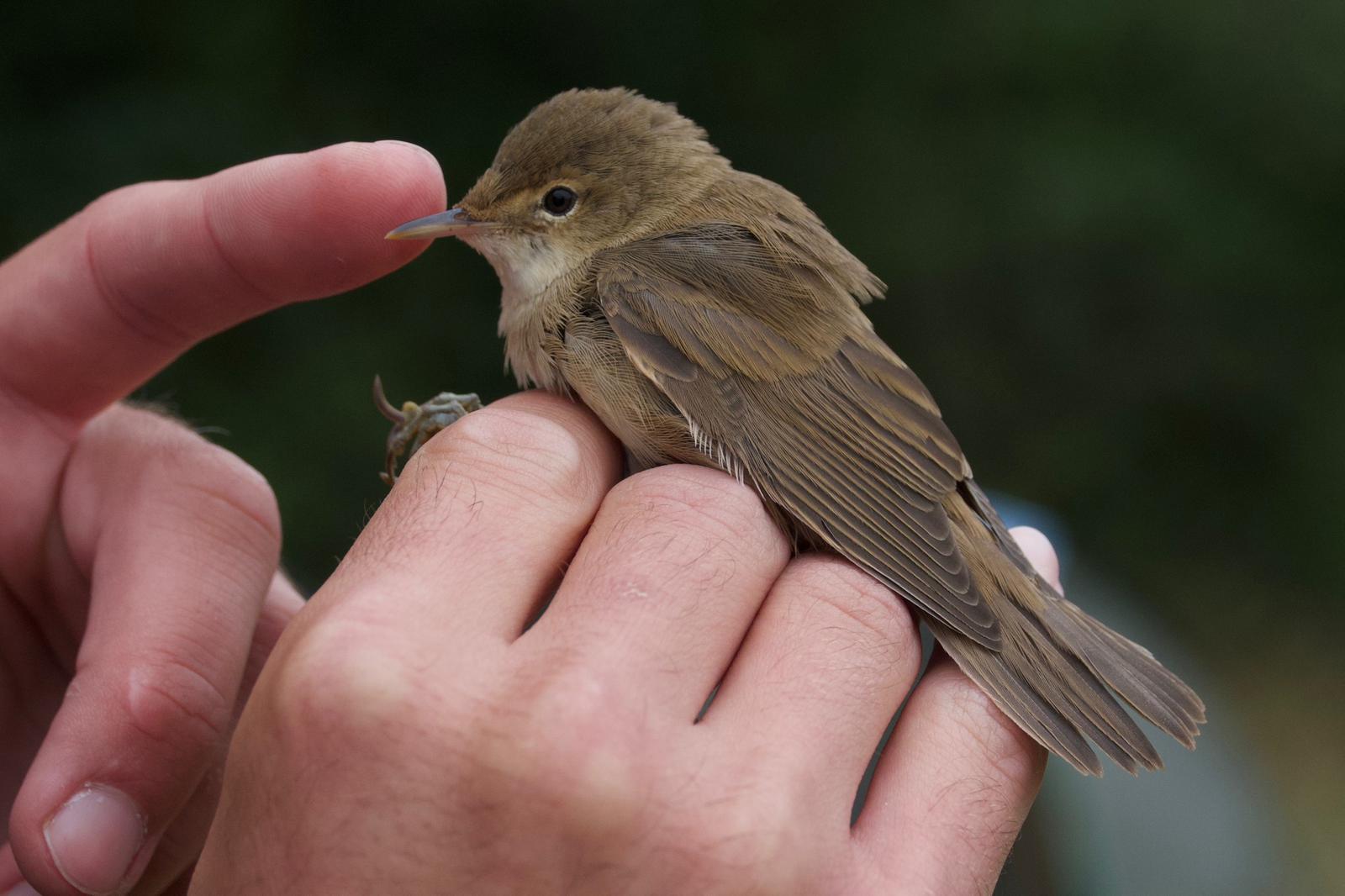
But it was up on the northern border of the county where this week’s action played out, as the hallowed nets of Stanford once again delivered … big time. With the way events unfolded at Stanford Res this week, the local ringers could be forgiven for thinking they were operating on the UK’s east coast. It wasn’t so long ago – 8th September 2022, in fact – that Northamptonshire’s first and only Blyth’s Reed Warbler was trapped and ringed there and, this week, the story was to be repeated with another Blyth’s extracted from the nets and ringed on 16th. A shock and a mega in no uncertain terms.
But as the week rolled out, the site was to become a warbler wonderland as, some four days later on 20th, during a somewhat drizzly spell, an early round of the nets yielded a rather meagre twenty-two birds, twenty-one of which were, shall we say, standard fare. Bird number twenty-two, however, was a different kettle of fish entirely. And there it was … Northamptonshire’s first-ever Barred Warbler – a sight to behold indeed. After being released it rapidly disappeared into the extensive swathe of waterside vegetation and largely impenetrable scrub that borders Blowers Lodge Bay and that, as they say, was that. It was never seen again, despite being searched for on and off throughout the day.
Juvenile Barred Warbler, Stanford Res, 20th August 2025 (Chris Hubbard)Juvenile Barred Warbler, Stanford Res, 20th August 2025 (Chris Hubbard)
More was to come. The week went out with a bang as, on 22nd, a Wood Warbler – a latter-day local rarity – was also trapped and ringed, this being only the fifth for the site after previous records in 1977, 1982, 1999 and 2020. It’s also a first for the year in Northants.
Wood Warbler, Stanford Res, 22nd August 2025 (Chris Hubbard)
And just for good measure, a Willow Warbler showing characteristics of the Northern race acredula was also trapped and ringed on 16th. Stanford has produced all of the county’s records of this race to date.
Northern Willow Warbler, Stanford Res, 16th August 2025 (Chris Hubbard)
All of the above are arguably just reward for a week’s concerted effort on site by the Stanford Ringing Group.
Following one in a suburban Northampton setting last week, another Firecrest was found – this time at Hinton AF on 17th.
Back at Stanford the ringers were busy with Common Redstarts, at least a dozen of which were trapped and ringed during the period. Elsewhere, up to three were at Blueberry Farm (Maidwell), the same number in the Brampton Valley and singles at Harrington AF, Lamport Hall and Yardley Chase, on and off, throughout the week.
Common Redstart, Stanford Res, 16th August 2025 (Chris Hubbard)
Whinchats were present at Blueberry Farm, Brampton Valley, Hollowell, Stanford and Thrapston with no more than two at any one site, while the week’s Northern Wheatears were limited to singles at Daventry CP on 16th, Lilbourne Meadows on 17th, Blueberry Farm on 21st, Pitsford on 22nd and two in Brampton Valley on the latter date.
Whinchat, Brampton Valley, 21st August 2025 (Alan Coles)
Crossbills were poorly represented during the period, with just one just scraping in over Cavendish Drive, Northampton on 17th and, once again, still proving difficult to catch up with, Corn Buntings popped unexpectedly at Ditchford GP, where two were present briefly on 19th.
High pressure drifting east allowed the country to tap into hot and humid air off the continent, delivering a peak in local temperatures of 31°C on the 12th. The pick of the crop of this week’s hot birding saw a fly-over Goshawk and the year’s fourth Pied Flycatcher which, like the previous three, was not readily available to the masses, and the first of the autumn’s Tree Pipits …
Ducking but not diving, the female Ruddy Shelduck extended its stay on, and around, the dam at Ravensthorpe Res until at least 14th.
Female Ruddy Shelduck, Ravensthorpe Res, 12th August 2025 (James Urwin)
There was, however, a reasonable run of waders kicking off with a Curlew at Summer Leys LNR on 9th. The 13th saw two Black-tailed Godwits at Daventry CP and one at Pitsford Res, followed by six more, briefly, at Summer Leys on 15th, where a Ruff was also present on the same date.
Juvenile Black-tailed Godwit, Daventry CP, 13th August 2025 (Gary Pullan)
The latter locality was also visited by two Wood Sandpipers on 14th-15th.
Wood Sandpiper, Summer Leys LNR, 15th August 2025 (Alan Coles)
Greenshanks continued to proliferate, the maximum number being five, again at Summer Leys, on 11th, numbers having dropped to just two there by the week’s end. Both Hollowell Res and Pitsford produced numbers varying up to three apiece between 11th and 15th, while singles were to be had at Earls Barton GP on 10th, Naseby Res on 11th and Boddington Res from 12th to 15th.
Greenshanks, Summer Leys LNR, 13th August 2025 (Alan Coles)Greenshank, Summer Leys LNR, 14th August 2025 (Mike Alibone)
Boddington also produced the week’s only Mediterranean Gull, a juvenile, on 9th.
Juvenile Mediterranean Gull, Boddington Res, 9th August 2025 (Gary Pullan)
The German-ringed adult male Caspian Gull was seen again at Naseby on 11th and 14th and one – possibly the same – visited Hollowell on 15th. Yellow-legged Gulls again crept into double figures with daily sightings at Pitsford peaking there at ten on the last day of the period. Boddington was the only other site to produce one, a first-summer on 9th.
Last week’s White Stork remained into this week, being seen at Round Spinney Industrial Estate on 11th and in flight south over Northampton General Hospital two days later, on 13th. The ring number, CV03 (not CY03 as previously stated) identifies the bird as a male released as part of the wider UK reintroduction scheme, at Cove Valley, Devon on 4th June this year.
The period’s Cattle Egrets were limited to two flying south-west over Stanwick GP on 11th and one briefly visiting Summer Leys the following day.
Topping the week’s raptors was a male Goshawk which flew north over the church at Byfield on 12th. The species has long been suspected a scarce breeder in the county … somewhere … but it is seldom seen. We can only pray for more … So it was down to the now run-of-the-mill Ospreys and Marsh Harriers to lift the spirits, so to speak. With singles on 9th, 11th and 12th, Pitsford produced the most Ospreys, Thrapston GP coming second with singles on 13th and 15th, while either side of the latter locality, Ringstead GP and Oundle’s Biggin Lake held fishing birds on 9th and 12th, respectively. Marsh Harriers made their biggest impact so far this year, being seen at Blueberry Farm, Maidwell on 13th-14th, Boddington Res on 13th, in the Brampton Valley and at Ditchford GP on 12th, Harrington AF on 11th, Pitsford village, where there were two circling, on 10th, Pitsford Res on 12th, Stanford Res on 9th, 11th, 13th, 14th-15th (two), Summer Leys on 10th-12th and 14th-15th and at Warmington on 12th.
Lighting up the passerines, a Firecrest was an unusual August visitor to a Duston, Northampton garden, moving off quickly with a mobile tit flock, on 12th, while the fourth Pied Flycatcher to be reported so far this year put in an equally brief appearance at Pitsford on 11th.
Common Redstarts maintained their prominence, being seen at thirteen localities. Stanford produced the most with a total of seven trapped and ringed during the week, while one to two were seen at Blueberry Farm, at two sites in the Brampton Valley, Hanging Houghton, Harrington AF, Lamport, Long Buckby, Old, Thrapston GP, Welford Quarry, Woodford and Woodford Halse.
Male Common Redstart, Stanford Res, 14th August 2025 (Chris Hubbard)
Whinchats, on the other hand, were rather more scarce. Hollowell delivered the maximum of three on 14th, followed by just one there the next day. The 12th saw two in the Brampton Valley and one at Stanford, two were at Blueberry Farm on 14th with one there on 13th and one was at Thrapston on the latter date. The only Northern Wheatears were at Clifford Hill GP on 12th and at Blueberry Farm the following day.
Northern Wheatear, Clifford Hilll GP, 12th August 2025 (Mike Alibone)
After a meagre two in April, the first of the autumn’s Tree Pipits appeared, commencing on 9th with four in the Brampton Valley below Brixworth, two of which were trapped and ringed. These were followed the next day by two at Pitsford (one trapped and ringed), one over Abington Park, Northampton on 11th and one in the Brampton Valley between Cottesbrooke and Hanging Houghton on 12th.
And Crossbills continued to trickle through, with three south over Pitsford on 11th, six over Blueberry Farm on 14th and one south over Hollowell Res on the same date.
An array of fronts in off the Atlantic produced a mixed bag of weather with winds at their peak on the 4th as a spin off from ‘Storm Floris’, after which more settled conditions conducive to migration ensued. Of unknown origin, a White Stork in the latter part of the period obstinately refused to be pinned down and continued to play hard to get as the week came to a close.
Continuing its stay at Ravensthorpe Res, the female Ruddy Shelduck remained settled there throughout the period, surprisingly drawing in a few admirers …
And after last week’s two one-day birds at Clifford Hill GP, three new Black-necked Grebes – all juveniles – turned up for an equally short stay at Stanford Res on 6th.
Juvenile Black-necked Grebes, Stanford Res, 6th August 2025 (Chris Hubbard)Juvenile Black-necked Grebes, Stanford Res, 6th August 2025 (Chris Hubbard)
There was little new on the wader front, with a single Whimbrel at Pitsford Res on 7th and two Curlews over Hollowell village the following day, while the only Black-tailed Godwits was a respectable flock of sixteen at Summer Leys LNR on 5th. The county fared better for smaller waders, though, with the second and third Wood Sandpipers of the autumn, so far, found at both Cransley Res and Clifford Hill GP on 5th – the latter individual remaining until 7th.
Wood Sandpiper, Clifford Hill GP, 6th August 2025 (Mike Alibone)
Greenshanks were present at six sites, with maximum numbers of three at Ditchford GP’s Irthlingborough Lakes & Meadows NR on 7th and two at Boddington Res on the same date. Elsewhere, singles were at Earls Barton GP from 2nd to 6th, Hollowell Res from 3rd to 7th, Pitsford on 5th and Daventry CP on 7th.
Greenshank, Earls Barton GP, 6th August 2025 (Leslie Fox)Greenshank, Boddington Res, 7th August 2025 (Gary Pullan)
Naseby Res welcomed back its returning adult male Caspian Gull on 4th, where it has been an annual visitor since being ringed at Gräbendorfer See, Germany in April 2021, when it was already at least four years old.
German-ringed adult male Caspian Gull, Naseby Res, 4th August 2025 (Mike Alibone)
Seemingly in short supply, Yellow-legged Gulls were lower in numbers this week, with the ever-reliable Pitsford Res holding just two on 4th and three on 7th.
Pitsford also dished up two Little Terns north of the Causeway on 7th – the seventh record for 2025, which has so far turned out to be quite a decent year for them in the county.
But eliciting rather more interest was a mobile White Stork in the Moulton/Overstone area, where it was seen in the vicinity of the A43, both on the ground and in flight on 5th, 7th and 8th, following a belated report from Overstone on 1st. Perched on a house roof on 5th, it was snapped by a local resident, enabling the yellow ring, number CY03, to be read, so it’s only a matter of time before its origins become clear, but how long it will stick around is anyone’s guess …
White Stork, near Moulton, 5th August 2025 (anonymous local resident)
A Cattle Egret at Thrapston GP’s Titchmarsh NR on 7th was the only one of its kind during the period.
And then there were raptors. A week without an Osprey or two is, nowadays, barely unthinkable and so it was that four localities delivered the goods, kicking off with two over Brampton Valley on 2nd, followed by singles at Hollowell Res on 3rd and 6th, Pitsford on 5th and 8th and Titchmarsh NR on 2nd and 7th. Marsh Harriers were again very much in evidence, with Stanford producing one on 4th and then holding on to two from 6th to 8th, while singles were on show at Summer Leys on 2nd, in the Brampton Valley on 2nd-4th and 7th-8th, at Harrington AF on 2nd and 5th and at Pitsford on the latter date.
Juvenile Marsh Harrier, Stanford Res, 6th August 2025 (Barry Silverman)Juvenile Marsh Harrier, Stanford Res, 6th August 2025 (Barry Silverman)
On the passerine front, Common Redstarts continued to be a daily occurrence and a delight to many across the county, the hotspot being Cold Ashby, where up to three were present and readily accessible between 2nd and 6th. With potential to rival this site was Cotton End Park, Long Buckby, where there were three on 5th and a small copse between Brockhall and Little Brington at which three were also discovered on 6th. The Brampton Valley between Cottesbrooke and Hanging Houghton held up to two between 3rd and 8th, up to two remained at Woodford Halse between 3rd and 7th, two were between Old and Pitsford Res from 3rd to 5th and singles were at Blueberry Farm, Maidwell between 3rd and 5th, at Pitsford Res on 5th and at Harrington on 8th.
Male Common Redstart, Woodford Halse, 6th August 2025 (Mike Alibone)
Two Whinchats were in the Brampton Valley on 3rd and 8th and Crossbills continued their southerly movement, with two over Wakerley Great Wood on 2nd, a small flock over Bucknell Wood on 3rd, two over Ditchford GP on 7th and one over Hanging Houghton on 8th.




























































 Northants birds