Newsround 10th to 16th May 2025

Seeing out another dry week with, initially, a warm, southerly airstream swinging round to a more northerly flow from mid-period, amid a not insignificant wader rush the county picked up two new birds for the year.

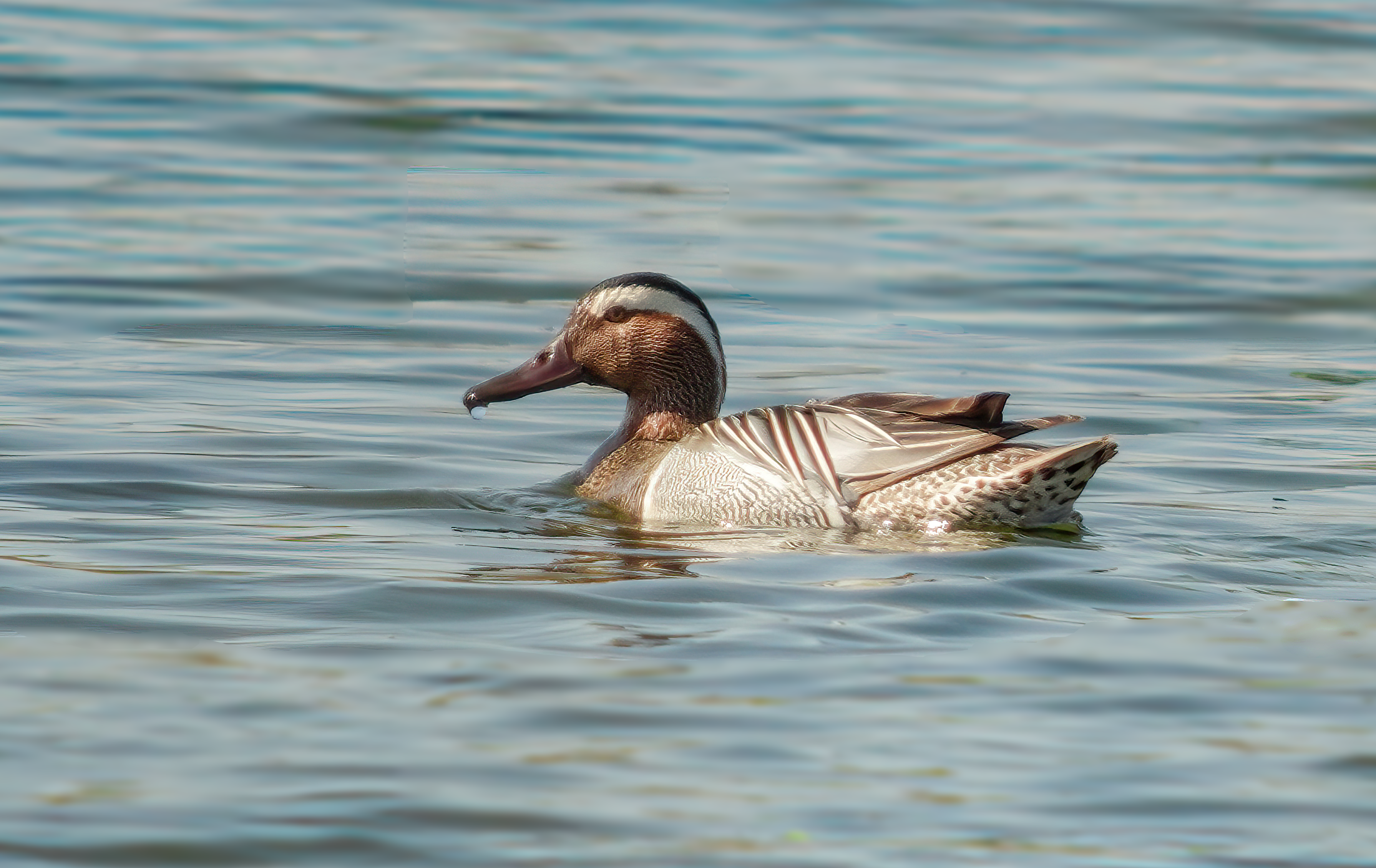
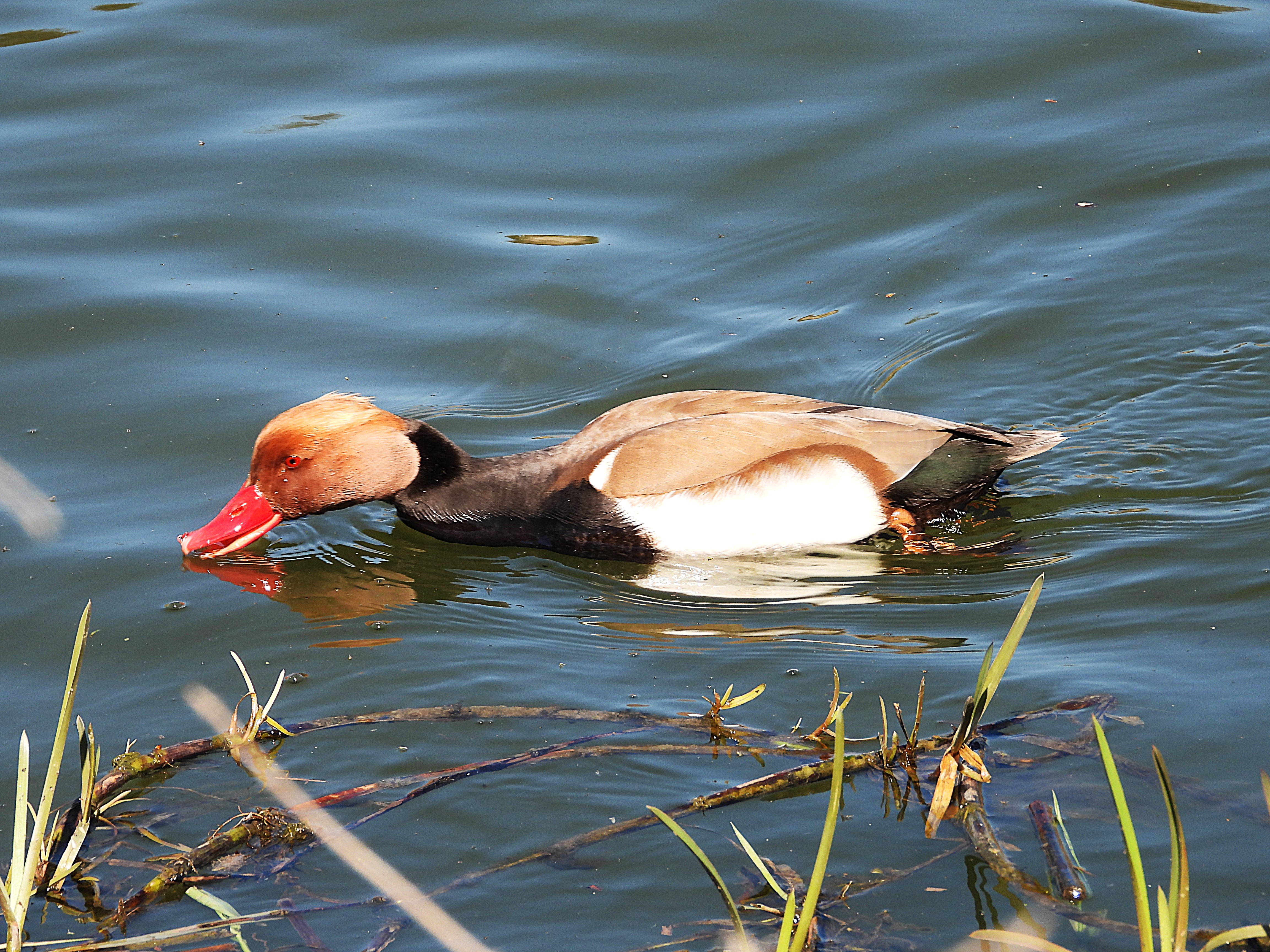
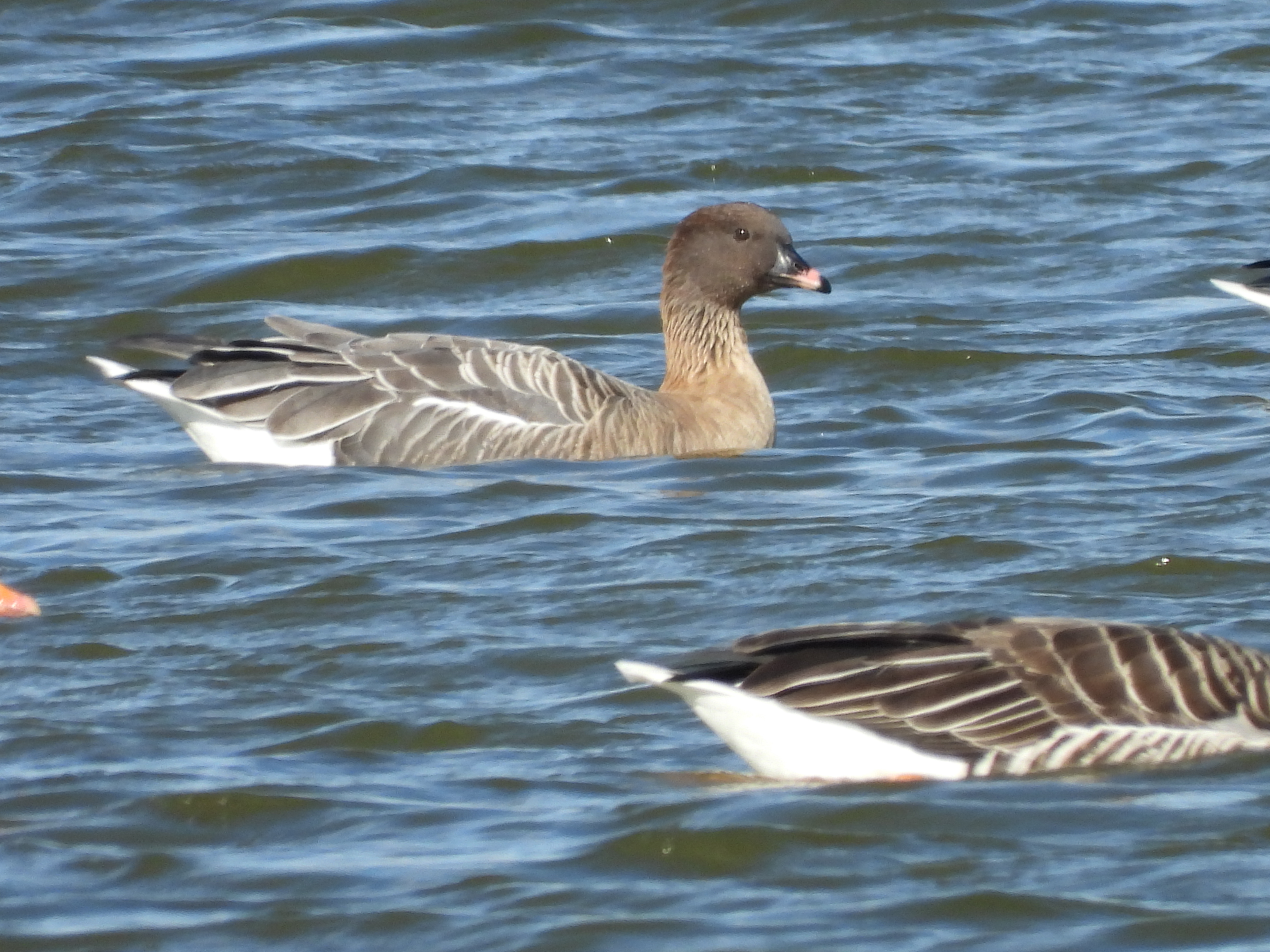
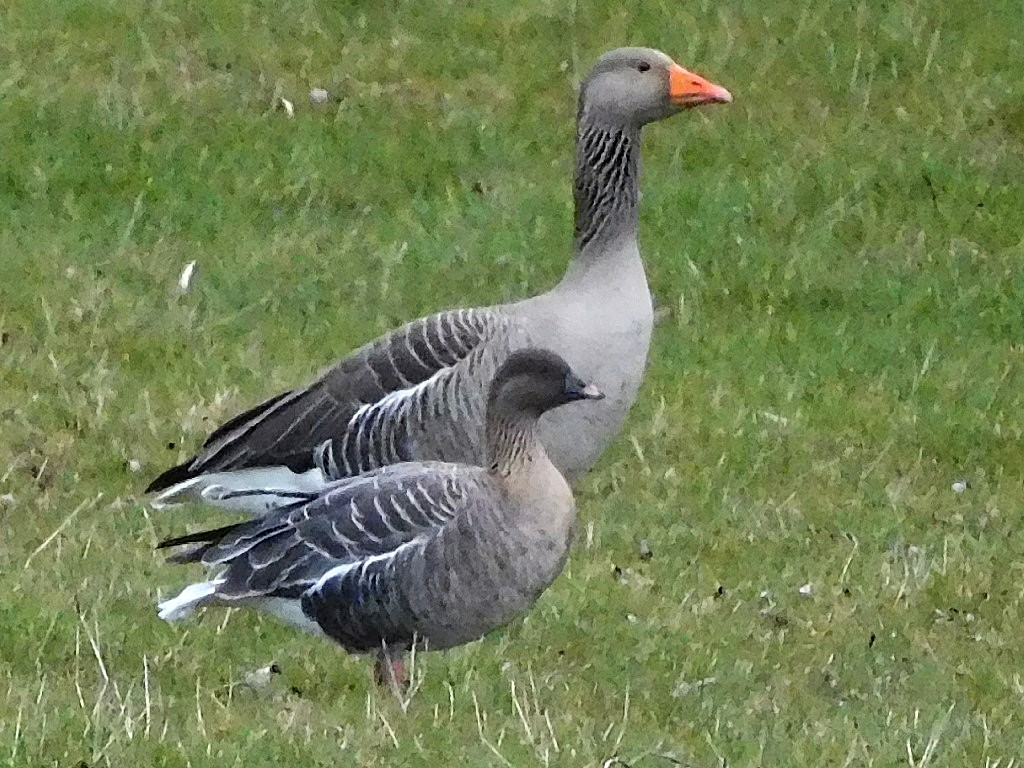
Another week, another Pink-footed Goose – or, more likely, one of last week’s, dropping into Clifford Hill GP on 12th – while the long staying drake Red-crested Pochard saw another week out on the River Nene in the vicinity of Earls Barton GP’s New Workings (South).

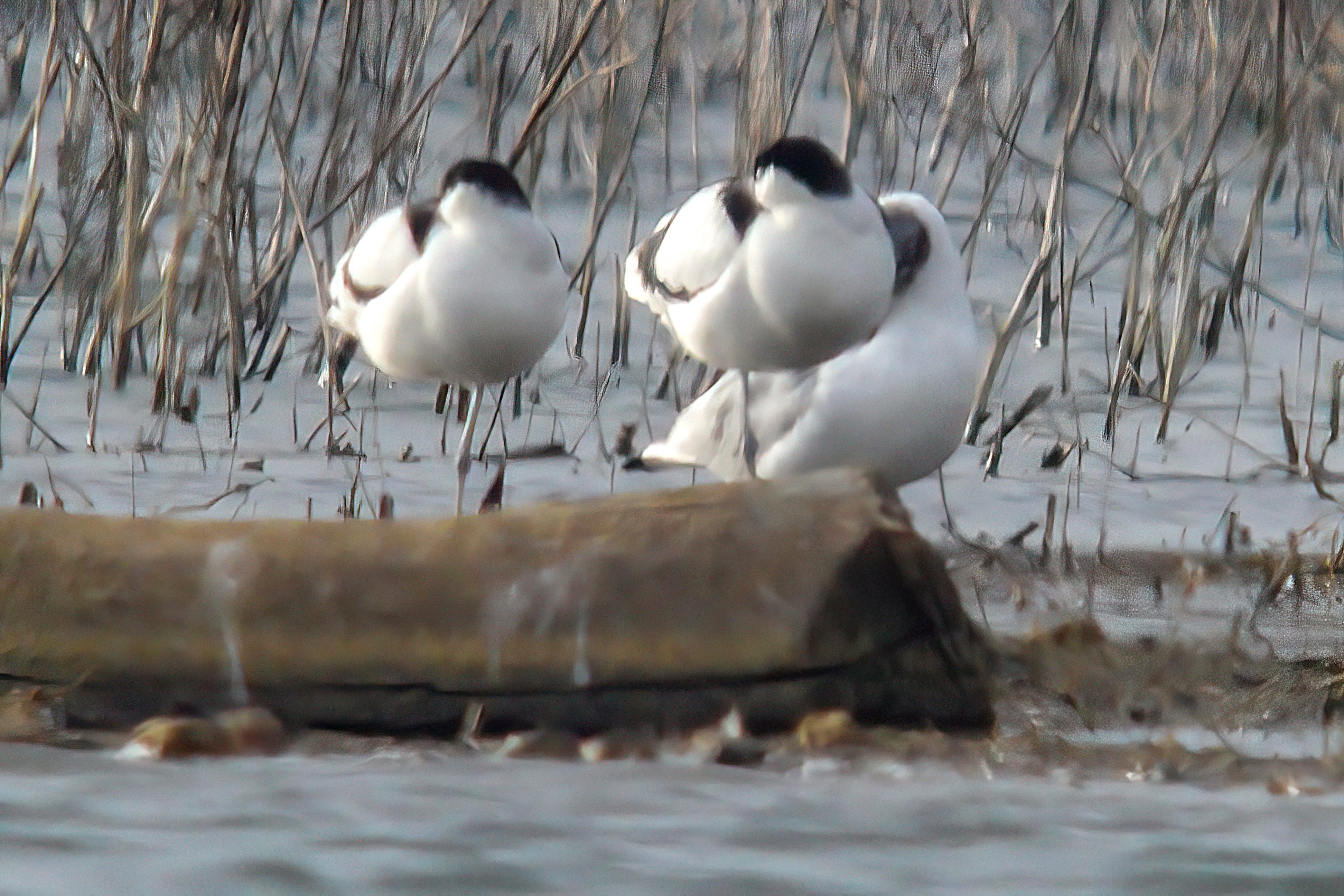
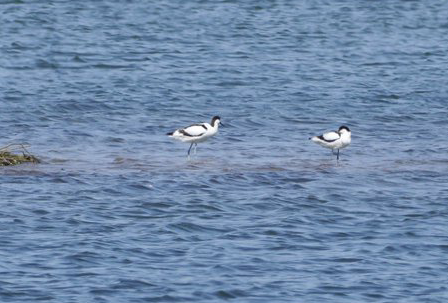
Apart from that, it was waders all the way and with Avocets now seemingly run of the mill – but always a pleasure, of course – it came as little surprise that more were to follow. New in were two at Ditchford GP’s Irthlingborough Lakes & Meadows NR on 13th, lingering there on Dragonfly Lake throughout the day, the same date seeing one at Clifford Hill, where it remained until the week’s end.
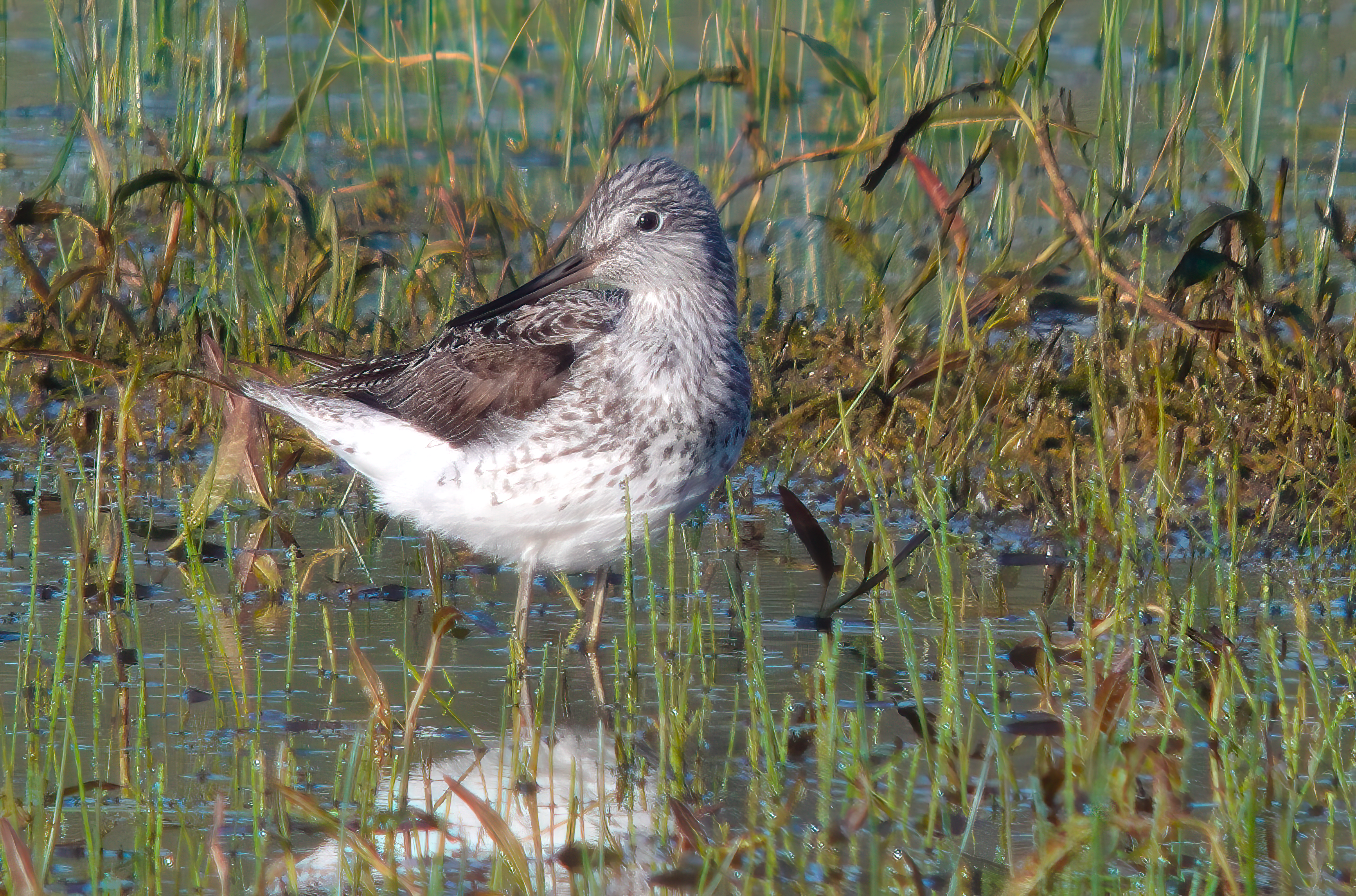
And after almost three weeks with none, two more Grey Plovers made it into the county, with one at Thrapston GP’s Titchmarsh NR on 10th and the second … where else but what seems to be the main attraction for the species this year, Clifford Hill, on 12th. Single Whimbrels were again to be had at Thrapston GP’s Elinor Trout Lake, where last week’s bird extended its stay until 13th, at Stanwick GP on 15th and at Titchmarsh NR the following day.

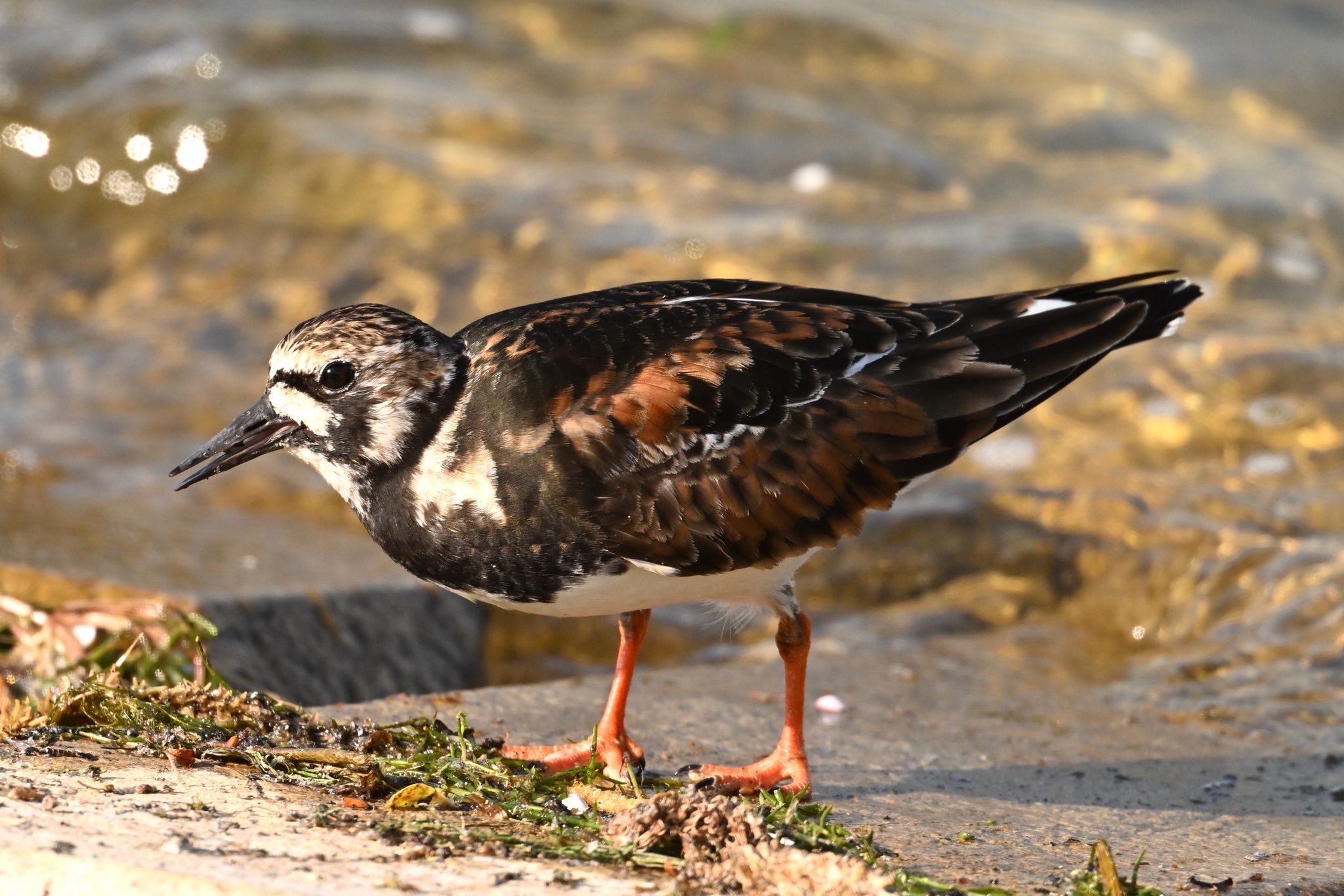
New for the year and constituting the very essence of mid-May, Turnstones and Sanderlings arrived on cue – the first of these two species being represented by a very confiding individual on the dam at Pitsford Res on 12th. This was followed the next day by one at Stanwick and three at Clifford Hill, two more turning up at the latter location on 15th, when two also visited Summer Leys LNR. To round the week off, one was found at Titchmarsh on 16th.
Sanderlings were in short supply, however, with just single birds at Titchmarsh on 12th and Irthlingborough Lakes & Meadows the following day.

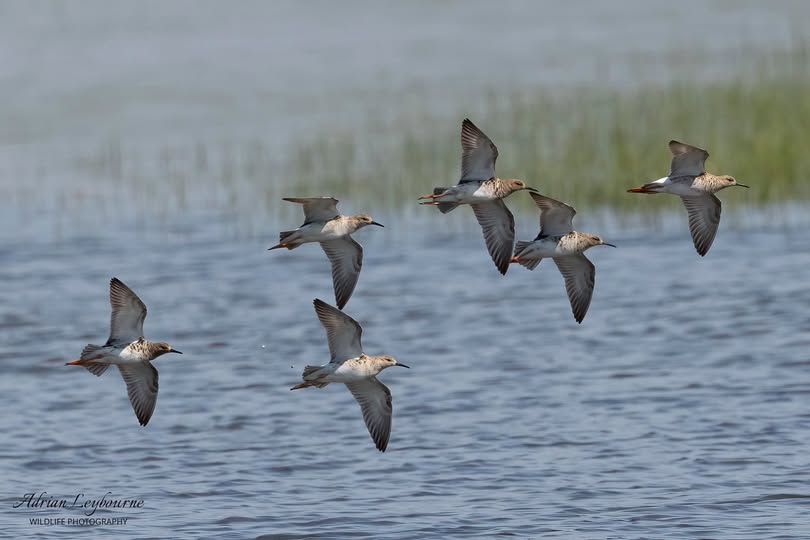
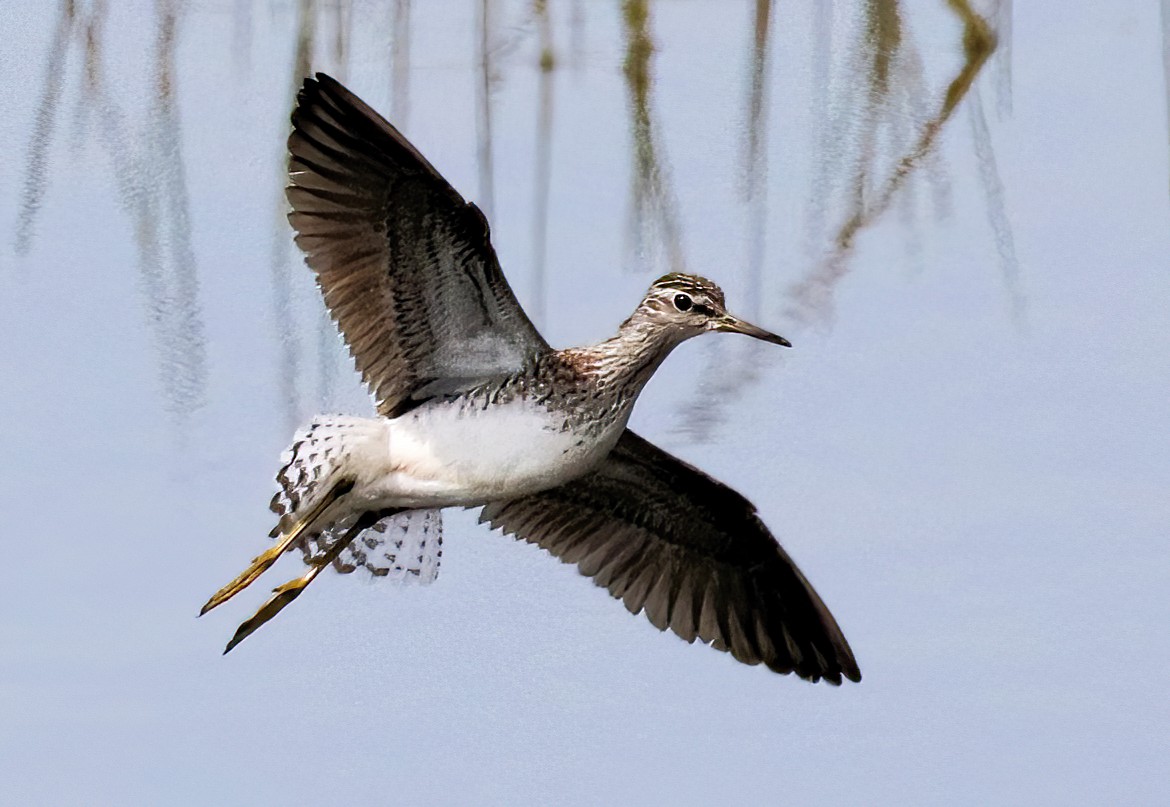
Very much on its own this week, a Ruff made it onto the list for the period when one visited Lilbourne Meadows NR on 12th, while an already decent run of Wood Sandpipers this spring saw two more added, which included one at Lilbourne Meadows on 14th-15th followed by another at Summer Leys on 16th.

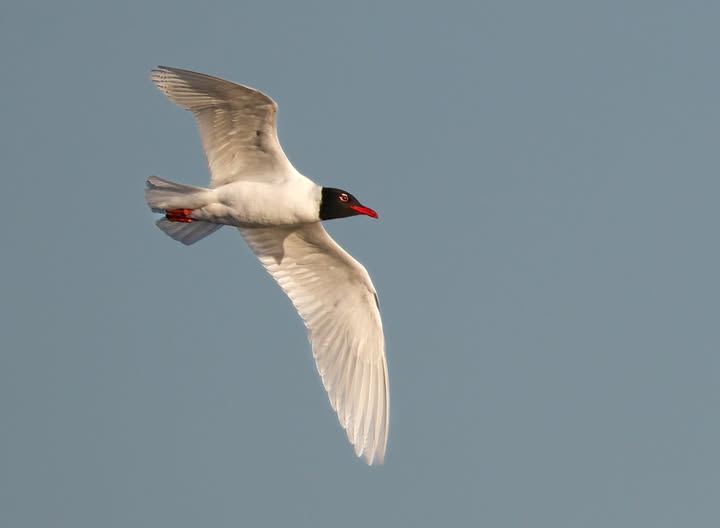
Scarce larids were at a premium, their sole representative being a fine adult Mediterranean Gull over Summer Leys on 10th.
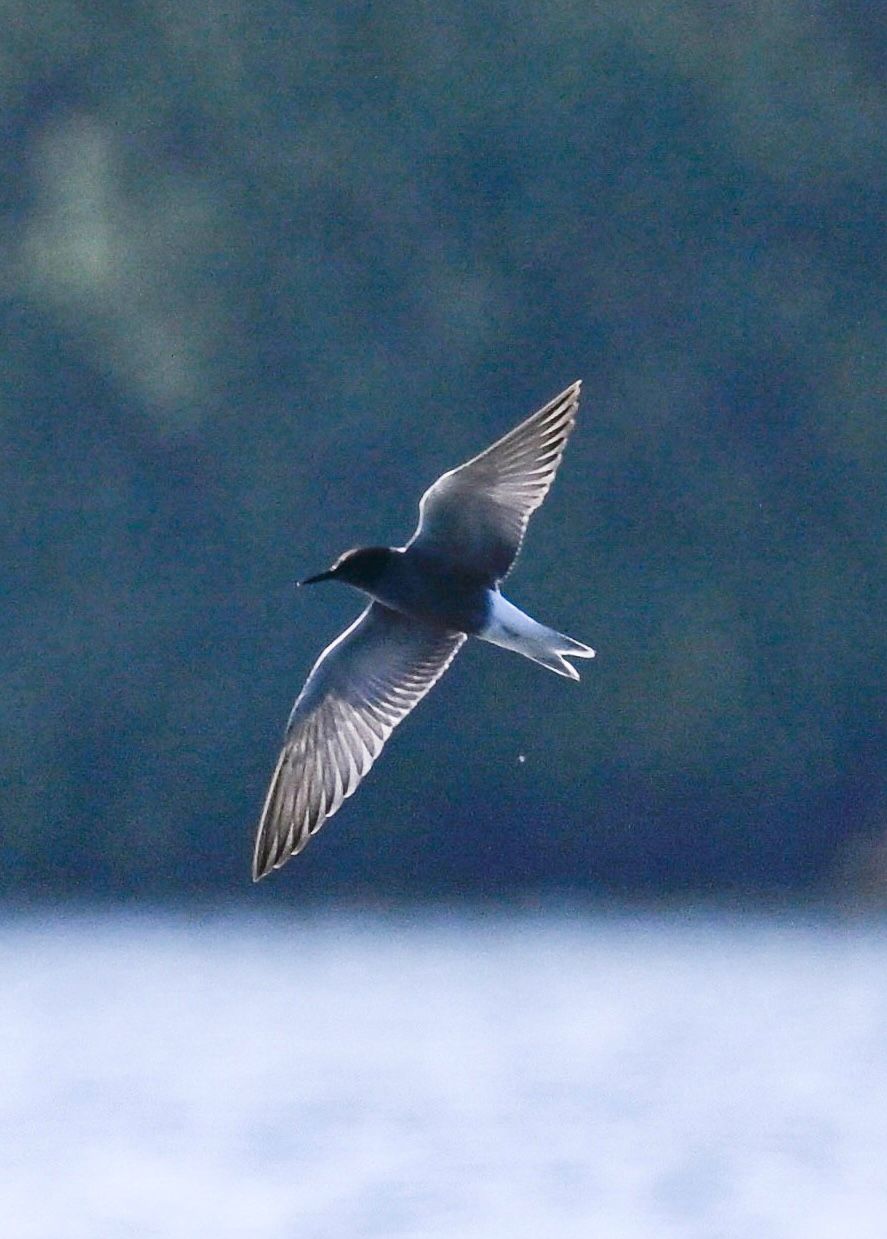
Made of sterna stuff, the same did not apply to terns, however, and a remarkable flock of five Little Terns flying north-east through Irthlingborough Lakes & Meadows on 12th was, unfortunately, not picked up elsewhere along the Nene Valley. An Arctic Tern at Summer Leys on 15th was the only one of the week but Black Terns did a little better with singles at Stanford Res on 10th and Clifford Hill on 12th, when four were also found on Earls Barton GP’s Mary’s Lake.
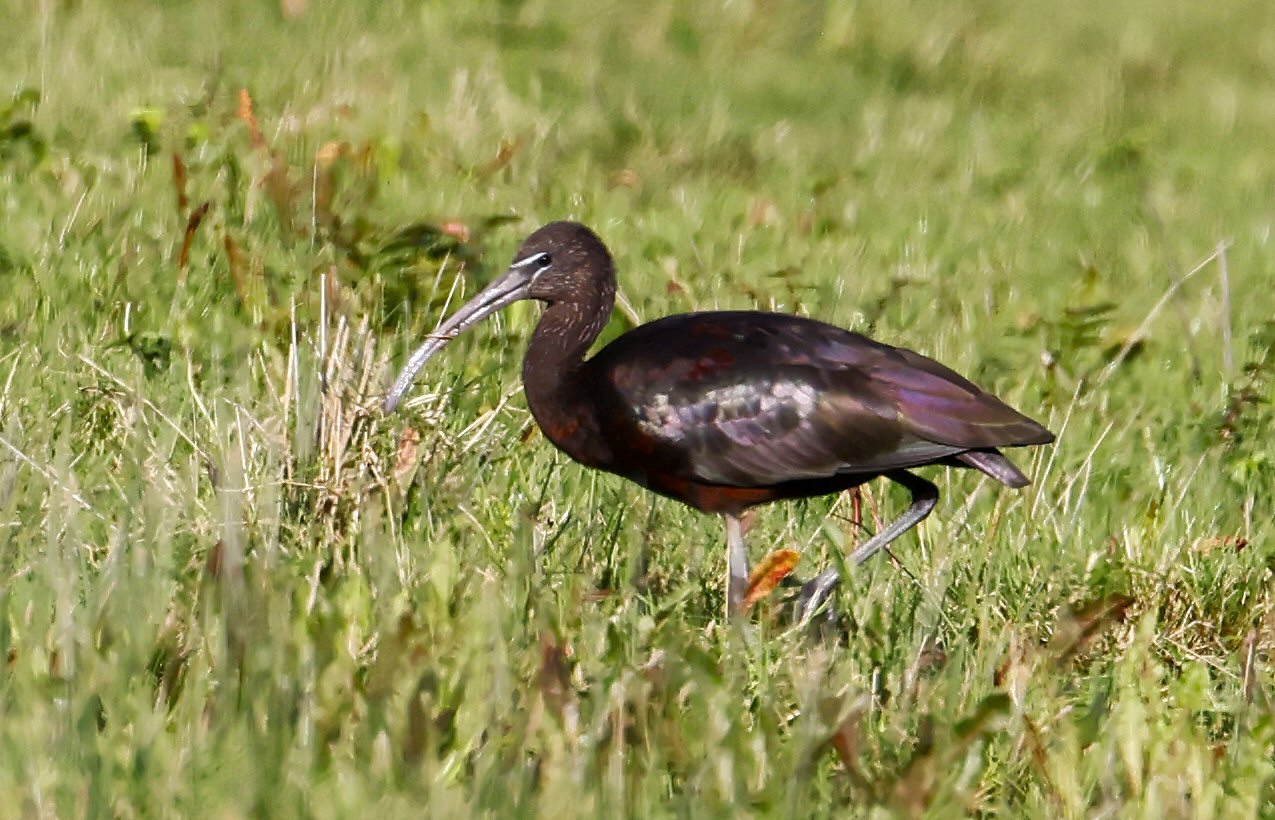
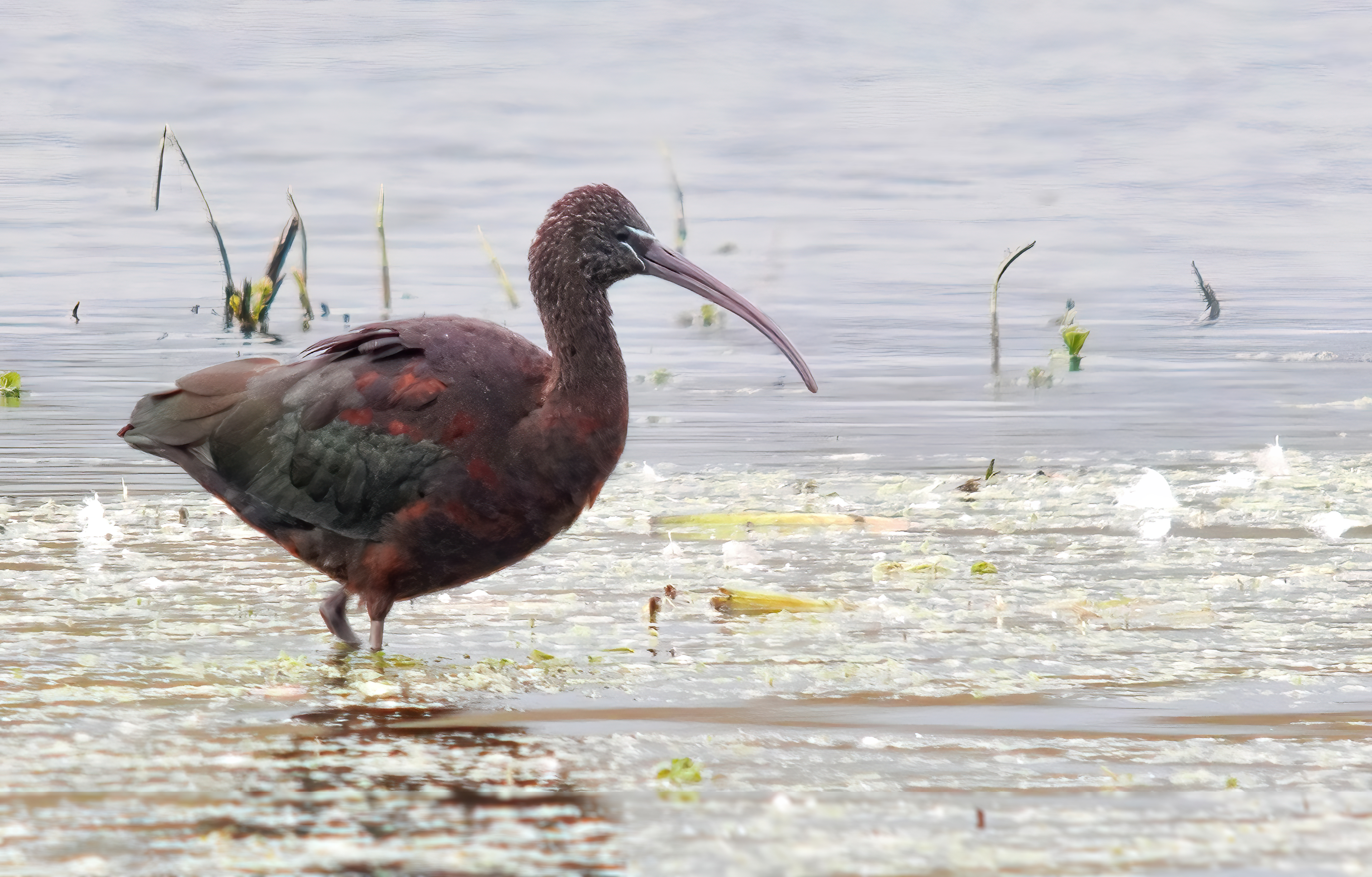
And just when we thought it was all over as far as Glossy Ibis is concerned – the Summer Leys long stayer now long gone – one pitched up at Lilbourne Meadows on 12th, remaining into the afternoon of the following day. On 14th it was no longer on site there but what was surely the same individual was discovered at Stanwick’s Main Lake, early in the morning on that date. Fidgety and flighty, by late morning it had made its way up the valley to Summer Leys, where it was equally skittish and difficult to pin down, before it was last seen flying off north-east in the evening.
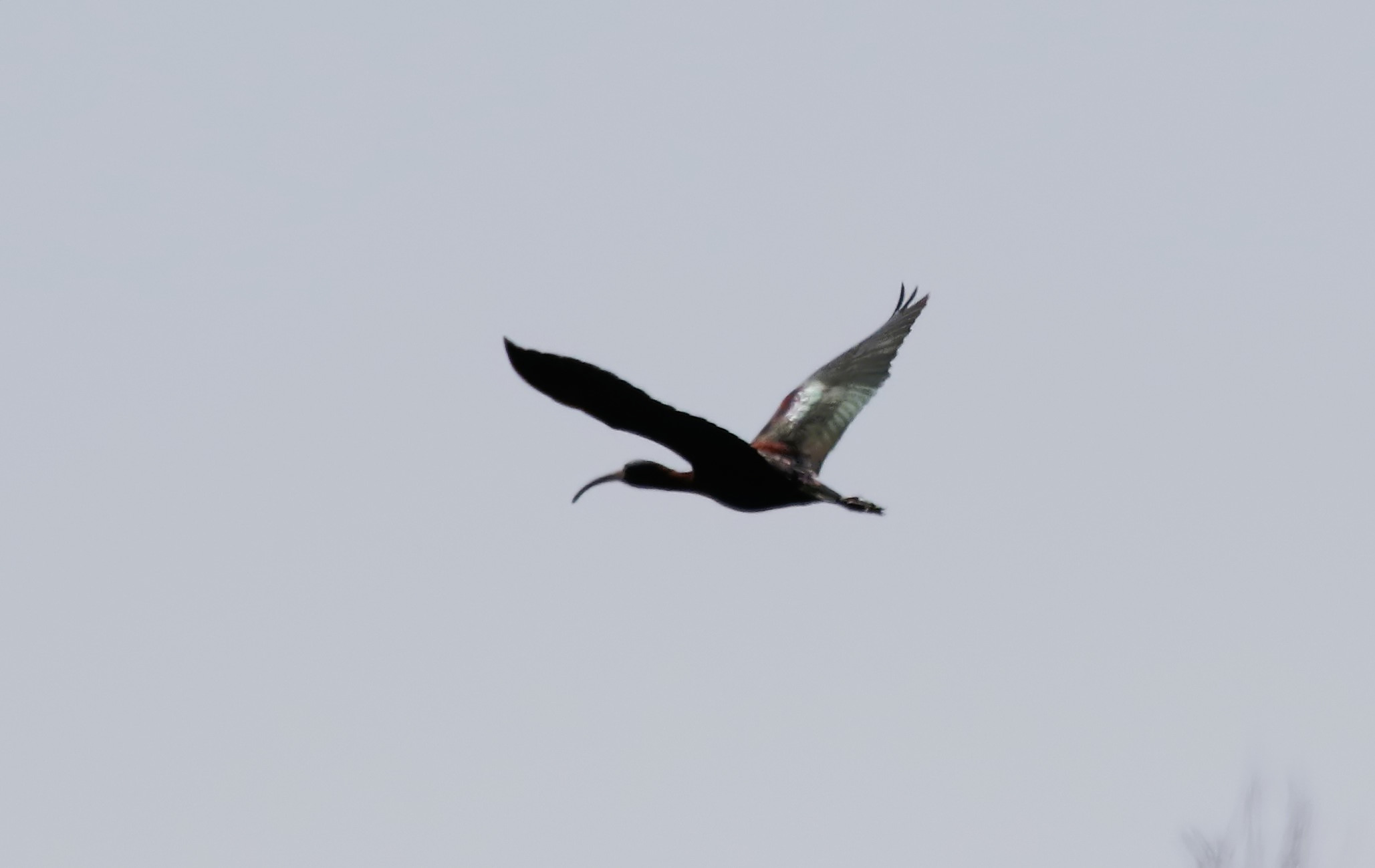
It was subsequently seen again at Stanwick early in the mornings of 15th and 16th, after which there was no further sign. All this begs the question … was it our wintering bird from Summer Leys which, prior to this week, was last seen there on 20th April, or was it a new one entirely?

Given the latter’s showy, long winter stay, more desirable in view of its timing and brevity of visit was last week’s Spoonbill, which also made it into this week, hopping from Earls Barton’s New Workings (South) across the river to New Workings (North) on 10th.
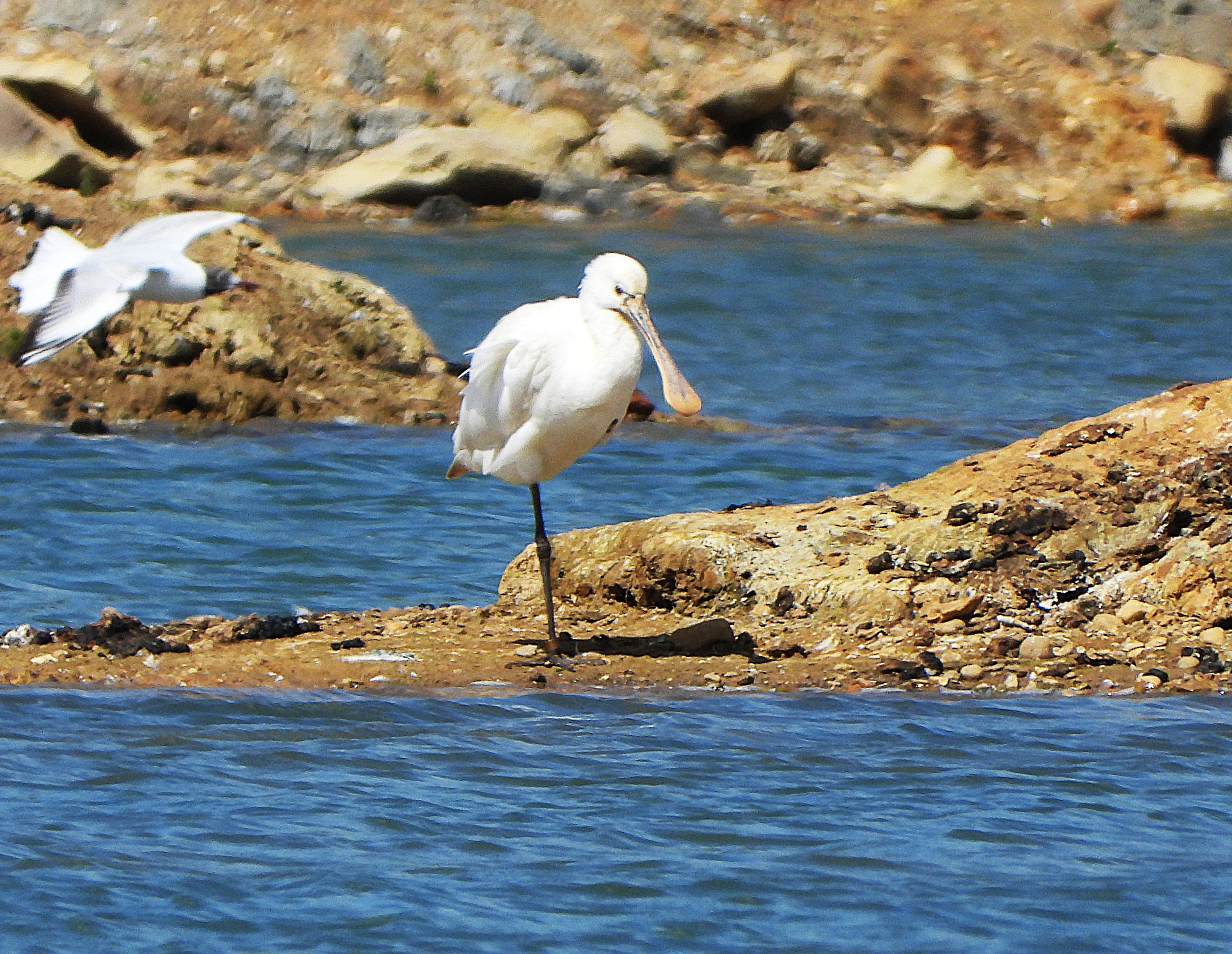
Meanwhile, Titchmarsh logged a Bittern on 10th-11th and 16th and one was in the vicinity of Summer Leys on 14th. Cattle Egrets popped up in two unexpected locations which included Upton CP, where there were two on 10th, and Thrapston GP, where one was present between Elinor Trout Lake and Harper’s Brook on 14th.

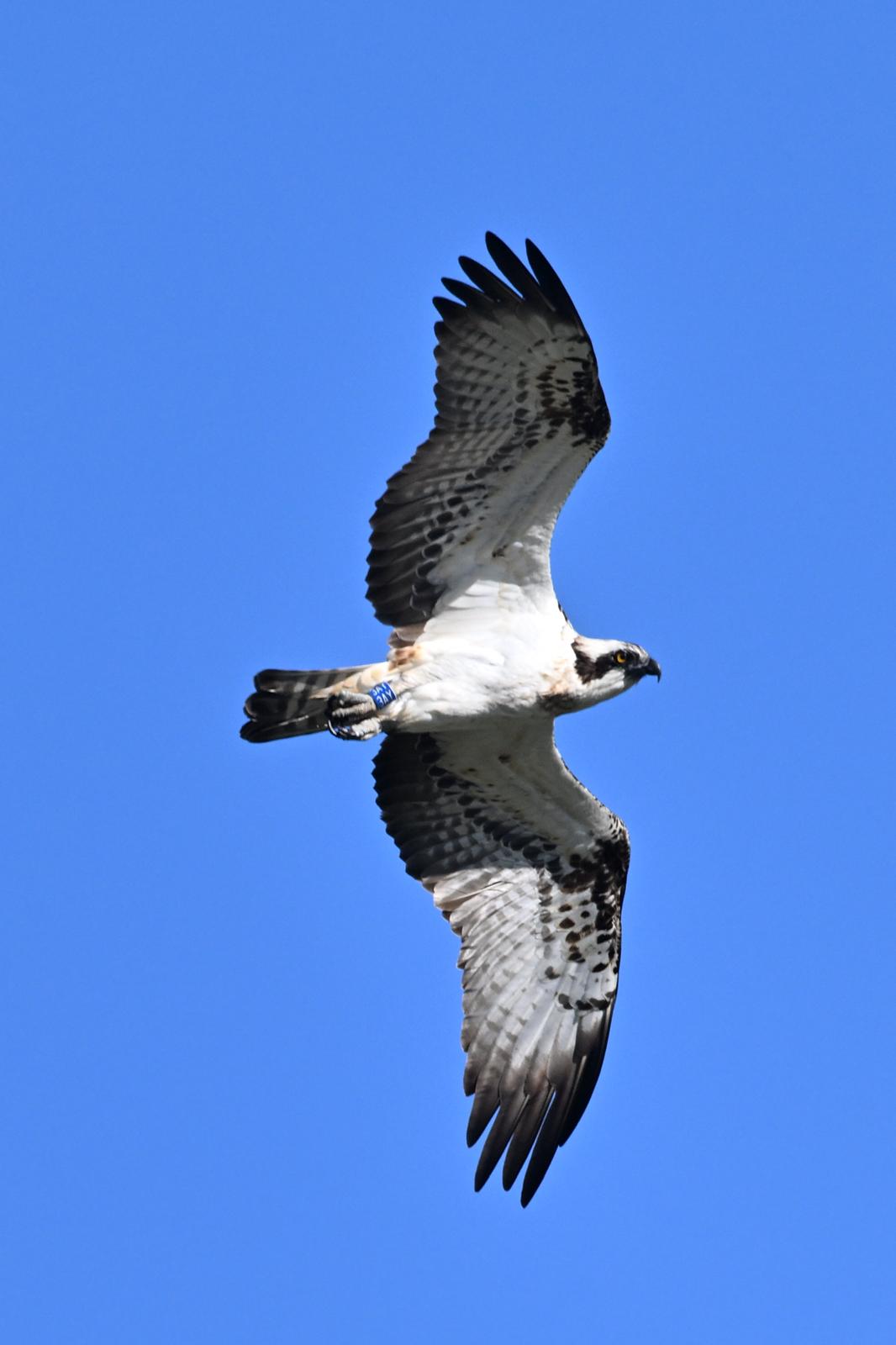
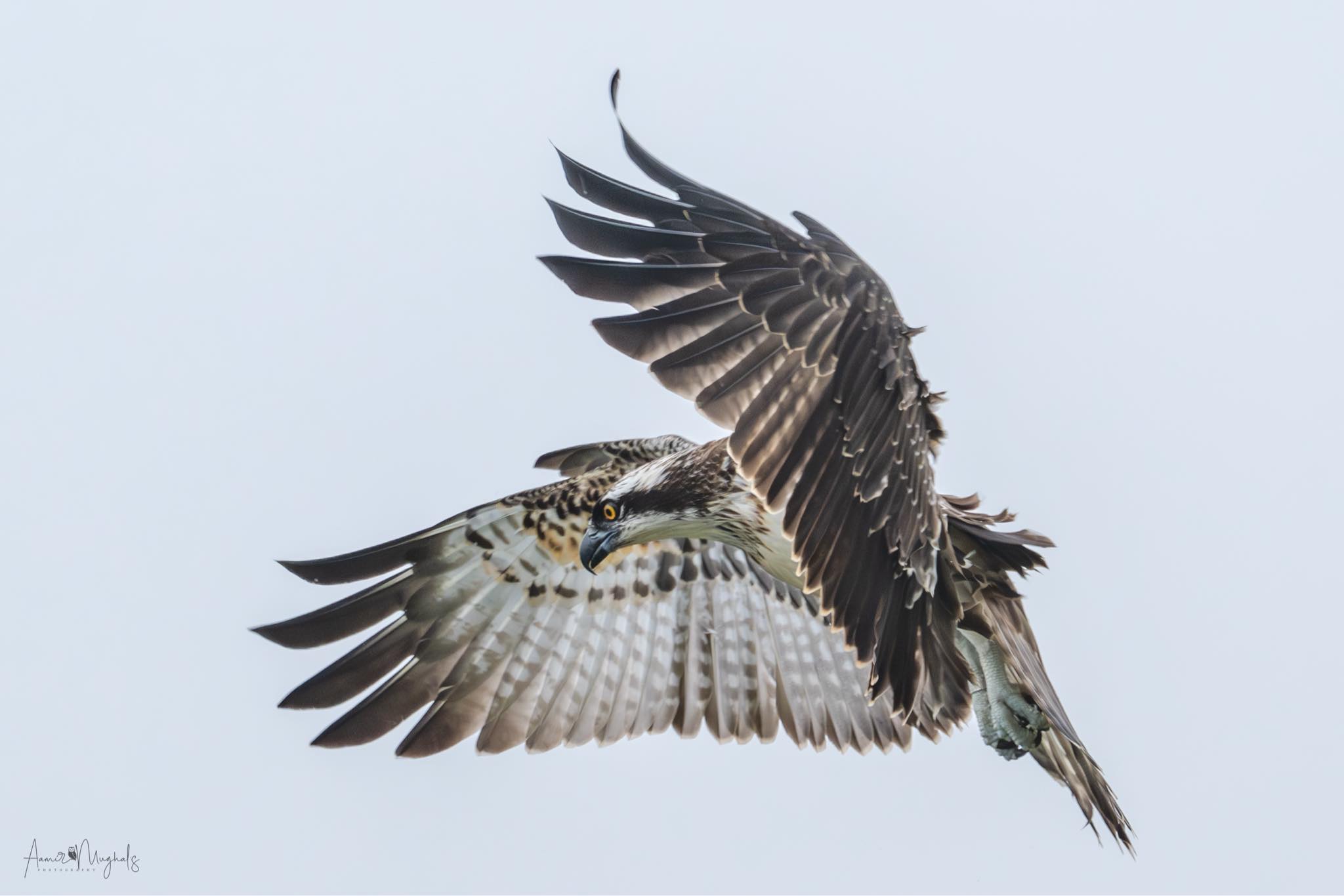
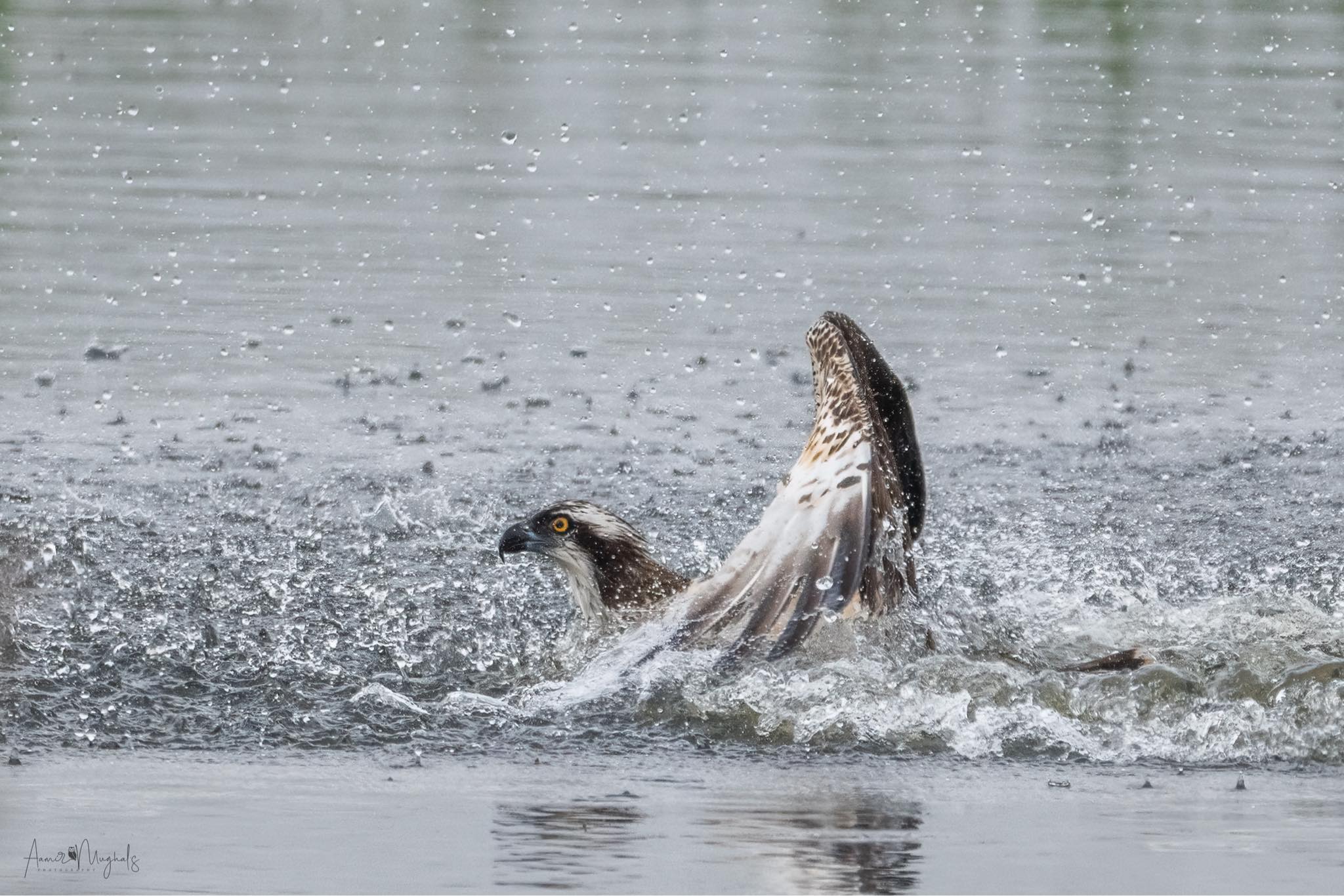
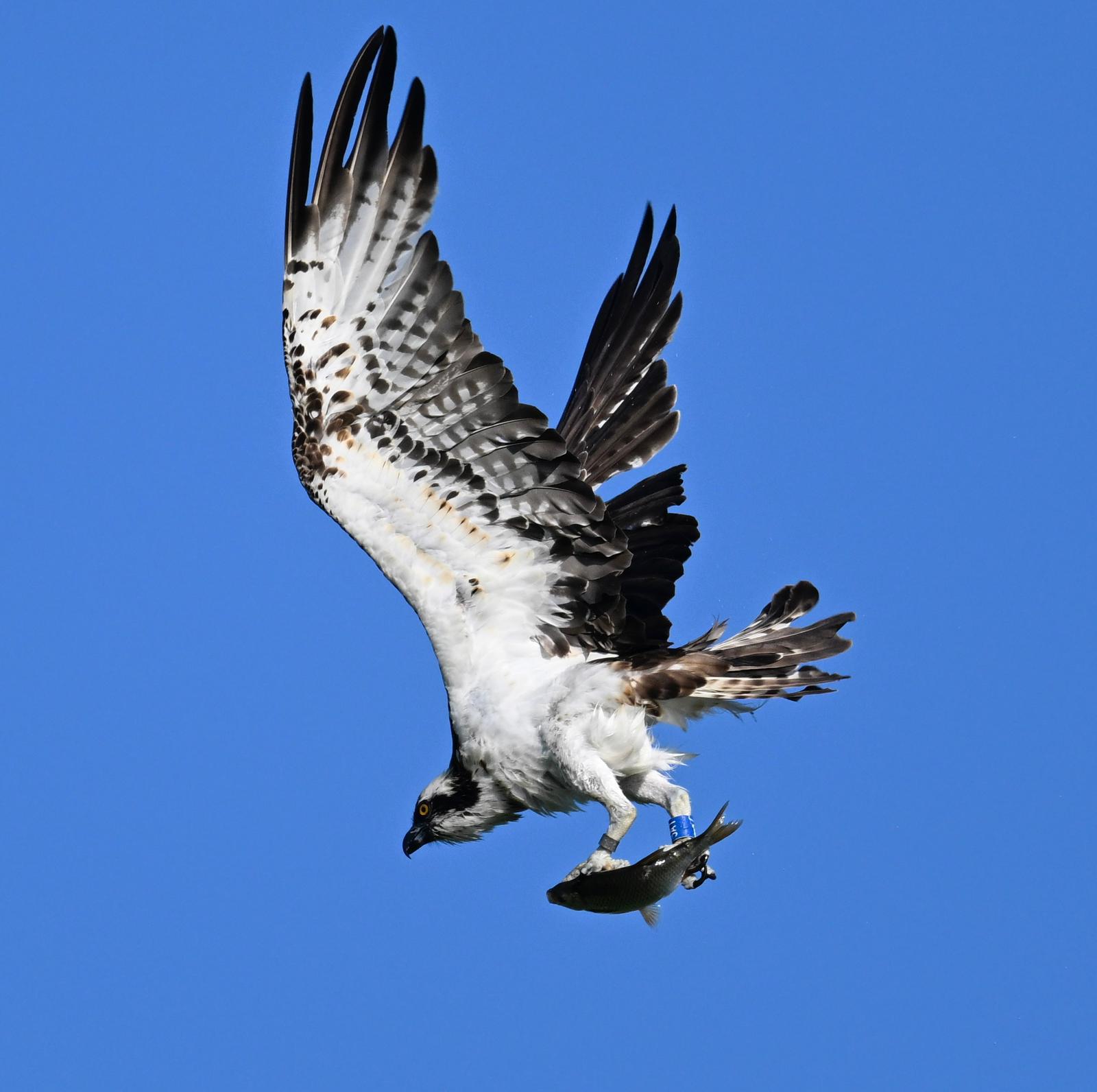
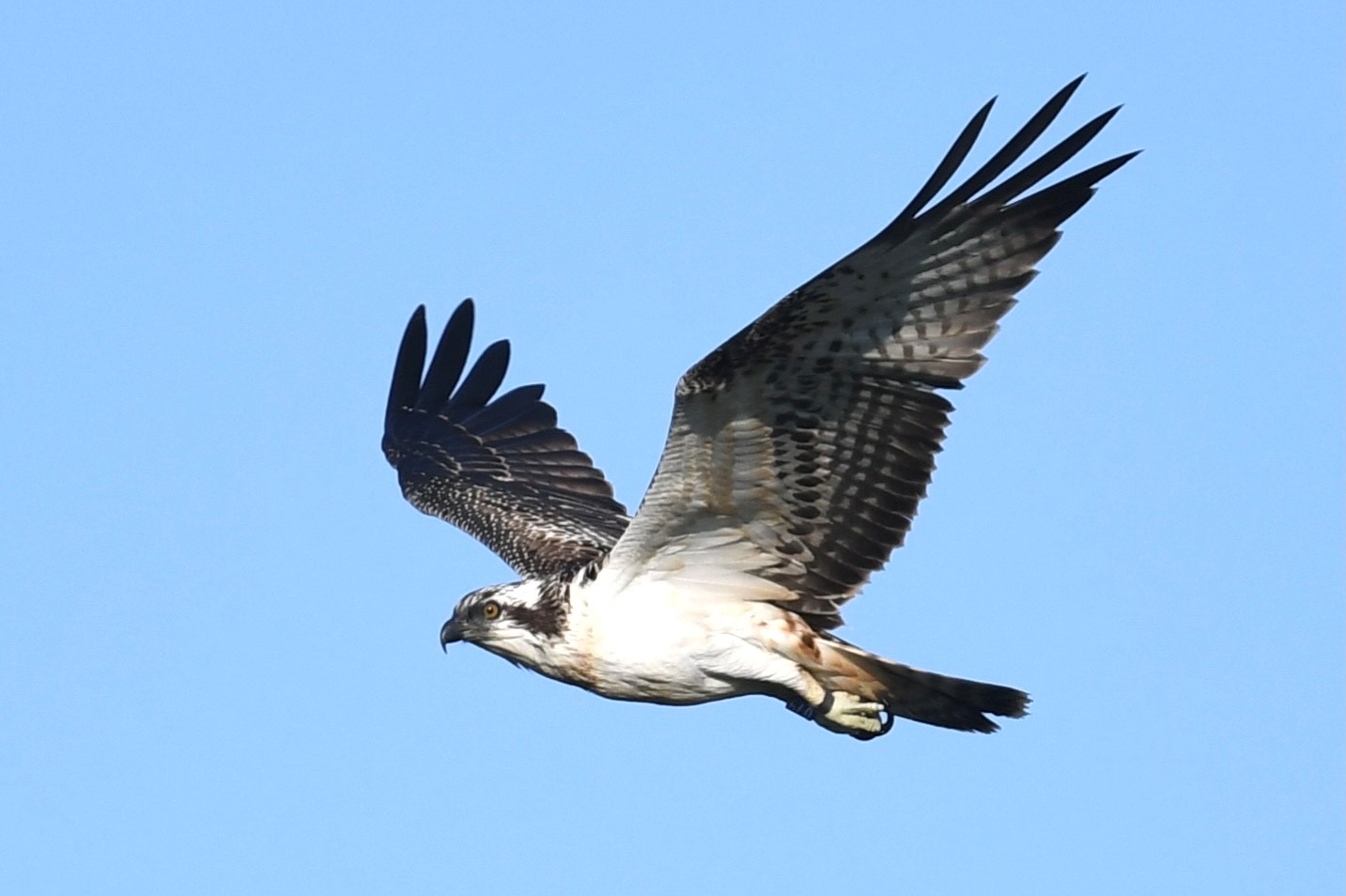
The period’s large raptor slot was again filled by Ospreys, singles of which were over both Earls Barton GP and Summer Leys on 11th, Stanford on 15th and Hollowell Res on 16th.

Another Hoopoe – the fourth to be found in the county this year – came to post-observational light this week when one was reportedly flushed from the roadside just north of Watford, on the road to West Haddon, in the early evening of 16th. Another one that got away, leaving birders short-changed once again. One found in an accessible locality, combined with timely reporting, would be most welcome …

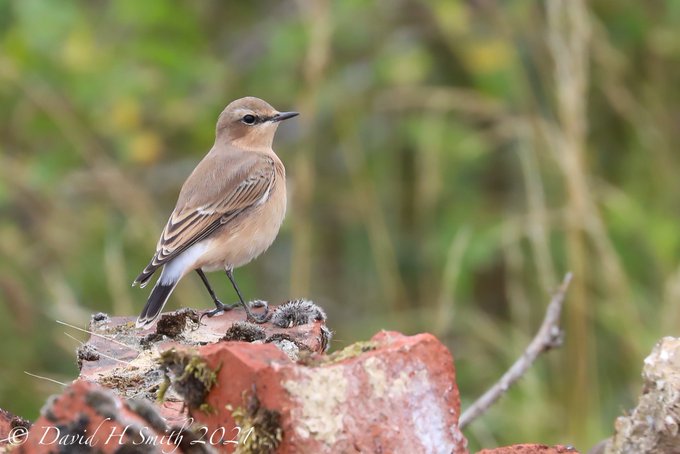
Late spring migrant passerines were restricted this week to 11th, when a Whinchat was in the Brampton Valley between Cottesbrooke and Hanging Houghton and a Northern Wheatear was found at Blueberry Farm, Maidwell.

Newsround – 26th April to 2nd May 2025

Another dry week, weatherwise, saw a largely southerly airflow across the UK – indeed in the last few days all four nations of the UK experienced their hottest temperatures of 2025 so far. On the penultimate day, we saw the UK’s highest ever 1st May temperature of 29.3°C at Kew Gardens, London, while Northamptonshire mustered a decent 26°C – all of which facilitated the continued passage of spring migrants and the arrival of more summer visitors …

Two new summer visitors were logged during the week, with Whinchat and Spotted Flycatcher making it onto the clock before April was out.

As the number of wildfowl continued to wane, a female Smew found at Thrapston GP’s Titchmarsh NR on 2nd was likely the first May record for the county and only the fourth for the year. A single drake Garganey in the Brampton Valley between Brixworth and Spratton, on 26th, was only the third this year in what has turned out to be a rather lacklustre spring for the species so far. Lest we should forget, the drake Red-crested Pochard remained on the River Nene in the Earls Barton GP’s New Workings (South) area throughout the period.

Avocets notwithstanding, the week’s waders comprised five species that were readily accessible and yielded no surprises. Five Whimbrels flew low east over Earls Barton’s New Workings on 28th, followed by singles over Stanford Res on the same date, at Titchmarsh NR on 29th, over Stanwick GP on 30th, at Clifford Hill GP on 1st and at Summer Leys LNR on 2nd. The latter site also produced single Black-tailed Godwits on 27th and 29th, as well as a run of Ruffs, with four on 26th, one on 28th, six on 29th and two on 30th, on which there was also one at Lilbourne Meadows NR and a remarkable fifteen at Titchmarsh NR.

That just leaves the period’s Tringas to deal with – this week’s in the form of Greenshanks and Wood Sandpipers. In the first instance, Summer Leys was the standout site, producing a respectable five on 29th, singles on 28th and 30th and two on 1st. Elsewhere, two were at Ditchford GP’s Irthlingborough Lakes & Meadows NR on 2nd and singles were at Earls Barton on 26th, 30th and 2nd and one lingered at Lilbourne Meadows from 30th until 2nd.

Summer Leys was also the prime site for Wood Sandpipers, holding two on 29th, three on 1st and two on 2nd while, way out west, one was present on floodwater by the canal at Braunston on 1st-2nd.

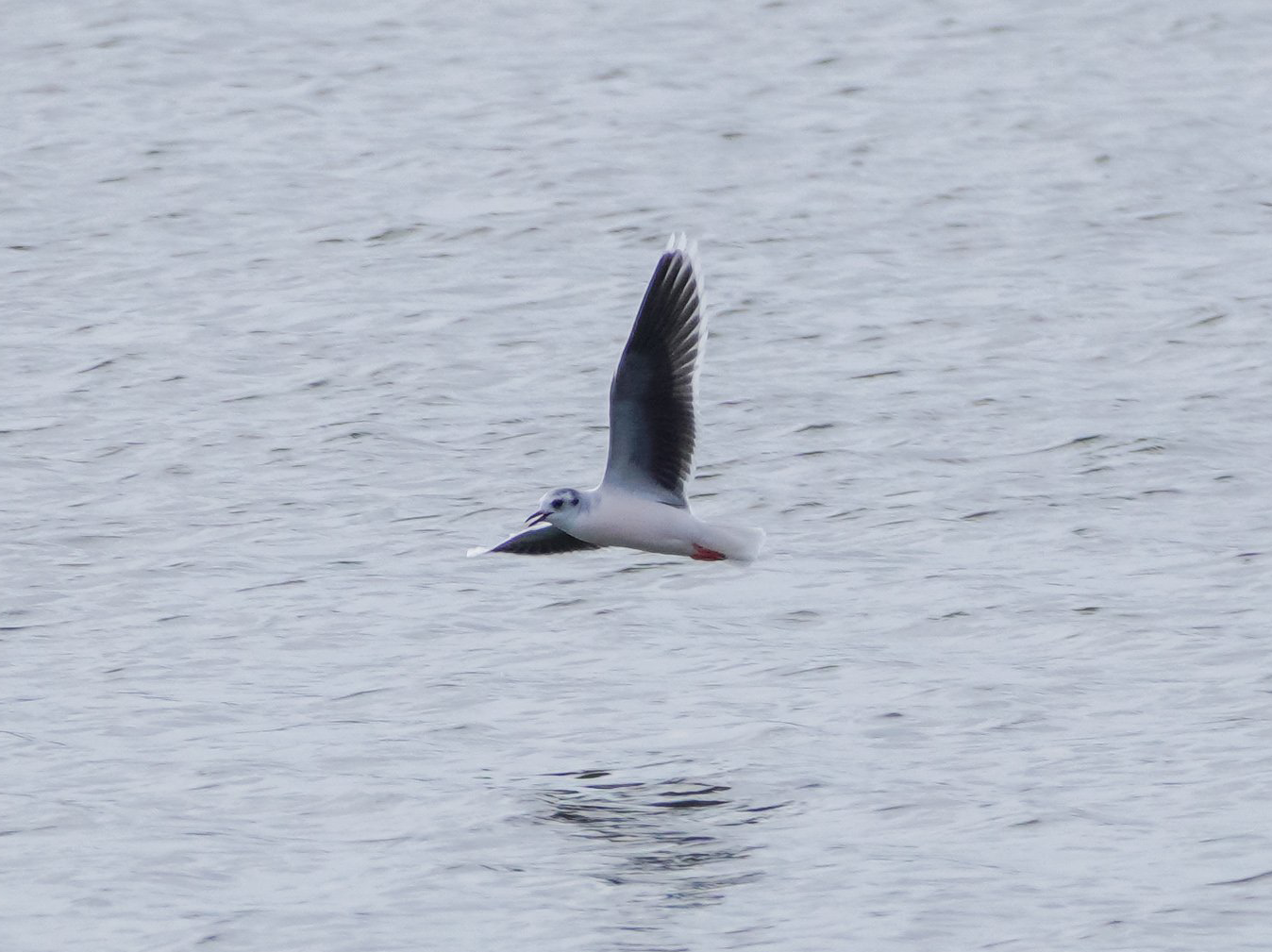
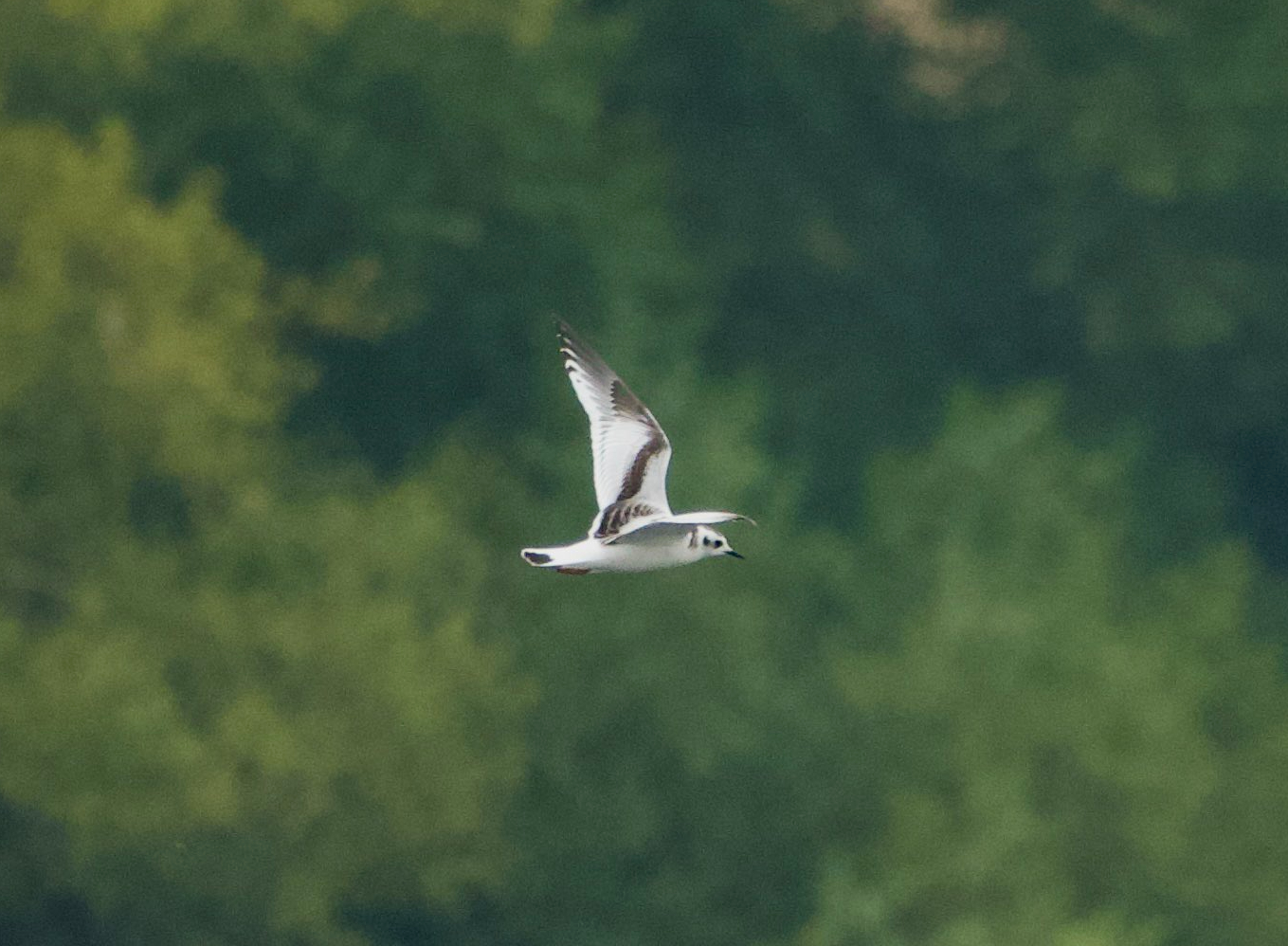
A minor resurgence of Little Gulls occurred mid-week, when a first-summer was mobile around Summer Leys and adjacent Mary’s Lake on 29th and 30th and three visited Clifford Hill on the first of these two dates.

And last week’s two adult Mediterranean Gulls managed another Nene Valley flypast when they cruised over Earls Barton GP’s New Workings before taking in the delights of Summer Leys and adjacent Mary’s Lake on 27th. Meanwhile, Yellow-legged Gulls were down to just the one at Ravensthorpe Res on 30th and three at Pitsford on the same day.

The week’s tern highlight was provided by two the Little Terns that stuck around at Earls Barton GP’s Hardwater Lake, putting on a decent show for most of the day on 29th, also commuting to, and from, Summer Leys Main Lake. One also paid a fleeting visit to Titchmarsh NR on the morning of the same date.

The busy proceedings of the 29th also extended to include three Black Terns at Summer Leys, followed by six at Stanford Res one the following day.

Meanwhile, Pitsford’s long-staying Great Northern Diver enjoyed a resurgence in popularity as it was flagged up as still being present in its much favoured area of The Narrows on 29th, remaining there until at least 1st.

After two flying high north-east over Summer Leys on 21st, the second Spoonbill sighting of the year was, this time, one on the ground at Stanwick in the early morning of 2nd. Nothing good lasts for ever, though, and it was up, up and away to the south-west only 35 minutes after its discovery. What was presumably the same bird was seen heading west over Summer Leys some 90 minutes later.

And while single Bitterns were again seen and heard around the Summer Leys/Earls Barton area during the period, they were undoubtedly totally overshadowed by a Purple Heron in flight over the reserve on 27th. It was believed likely to have landed in the vicinity and, adding credence to this, it was seen again briefly in flight before undeniably landing there on 1st. Interestingly, one was seen in flight over Pitsford during the intervening period, on 29th. This represent only the twenty-third Northamptonshire record, as well as being the third consecutive year that this scarce, slinky Ardea has been clocked in the county …

As far as raptors were concerned, Osprey was the sole representative of the tribe this week, with singles on 26th at Hollowell, Pitsford and Stanford Reservoirs, on 27th over Earls Barton and Glapthorn Cow Pasture, again at Pitsford on 29th and at both Hollowell and Ravensthorpe the following day.

Passerines were really rather thin on the ground during the period with the best being a female Ring Ouzel left over from last week at Harrington AF on 26th.

The same site produced the year’s first Whinchat, two days later, on 28th, followed by further singles in the Brampton Valley between Cottesbrooke and Hanging Houghton on 29th, Blueberry Farm, Maidwell on 1st and Hollowell on 2nd.

And in line with the maturity of the spring, the number of Northern Wheatears tailed off, with Harrington producing up to two between 26th and 28th and Summer Leys one on 1st. The same also applies to White Wagtail, just one of which was found at Summer Leys on 2nd. Back at Harrington, a flyover Corn Bunting was only the second of the year of this sadly declining species.

Newsround – 5th to 11th April 2025

Easterlies persisted until mid-week, after which a more northerly vector dominated, although temperatures managed to reach an unseasonally high 20°C by the end of the period. With the weather highly conducive to migration, it was unusually busy for the second week of April, which produced an uplift in migrants as well as some class birds, but getting to grips with the latter remained the preserve of the lucky few …

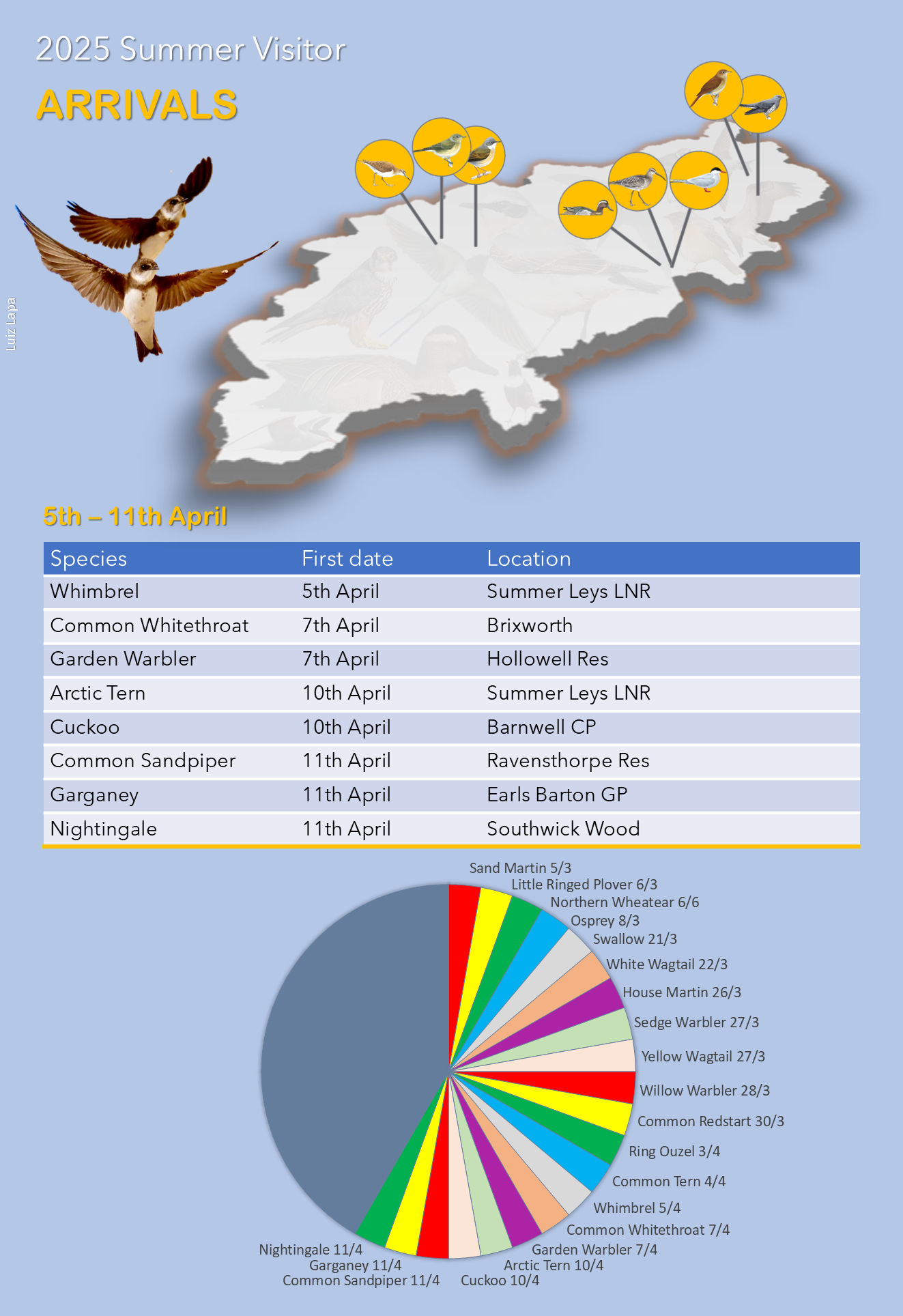
On the summer visitor front, new birds for the year appeared thick and fast this week with seven new species on the clock. One Common Sandpiper had already been logged, of course, although the latter was a rogue, overwintering individual at Earls Barton GP during February and March.

Wildfowl bounced back from last week, with the long-staying Pink-footed Goose still seeing the week out in the Earls Barton GP New Workings (South) area, where the year’s first Garganeys – a duck and drake – were found on the last day of the period.

The above site also held on to its drake Red-crested Pochard, favouring the River Nene until at least 9th, while further up the Nene Valley, two Common Scoters made a stopover at Clifford Hill GP on 10th.

Two Avocets visited Summer Leys LNR on 7th but waders of the week and, at this juncture, of the year, were the two Dotterels that dropped in at Harrington AF the following day. Completing little more than a two-hour stay, they moved on without so much as a by your leave … This apparently constitutes the 15th county record and first since one at Hemington in April 2022, as well as appearing to be the earliest-ever in the county and generally very early for the UK as a whole. To put things in context, there were others in Dorset on 27th-28th March, Cumbria on 2nd April and in Ayrshire on 8th April.

The number of other waders moving through ramped up appreciably and included the first, second and third records of Whimbrel this year, kicking off with one at Summer Leys LNR on 5th, followed by four at Thrapston GP’s Titchmarsh NR on 10th and one flying north over Ravensthorpe Res the following day.

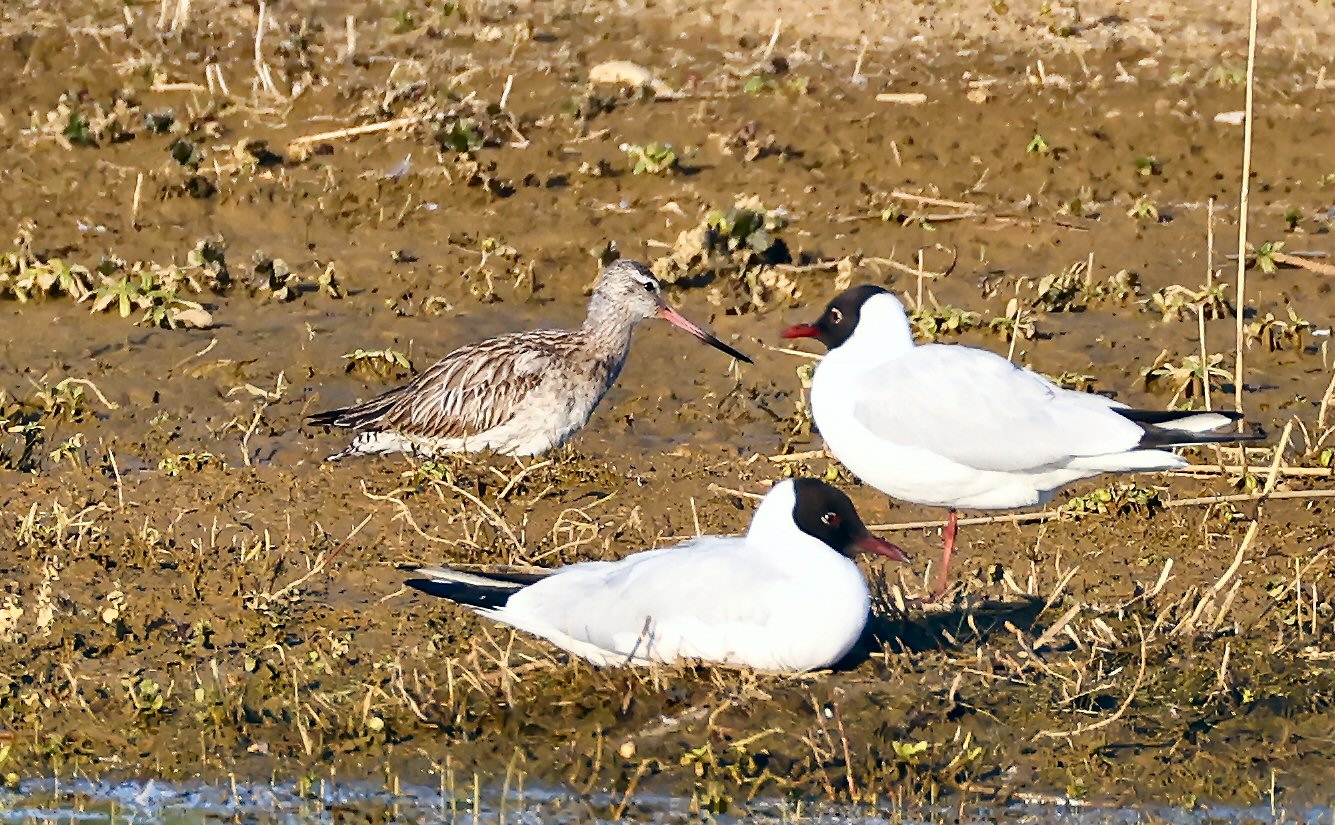
The first Bar-tailed Godwit of the year dropped into Summer Leys on 10th and was still to be found there on 11th, while four Black-tailed Godwits left over from last week also remained there on 5th-6th, dropping to three on 7th and one on 9th. One also visited Ditchford GP’s Irthlingborough Lakes & Meadows NR on 7th.

Single Ruffs visited the flooded meadow by the River Nene at Oundle’s Lower Barnwell Lock on 5th and one was at Titchmarsh NR two days later, on 7th. The first of these two sites produced an early spring record of no less than three Spotted Redshanks together on 5th, dropping to just one straggler there on 6th-7th. It has been a good few years since a ‘flock’ of Spotted Redshanks last visited the county …

Two Greenshanks at Summer Leys on 5th represented only the second record for the year after an exceptionally early one over Earls Barton GP in February. Up to two Jack Snipes remained at Hollowell Res throughout the period.

Clearly associated with the continuing easterly airflow, there was no let up in the number of Little Gulls moving through. The Nene Valley undoubtedly enjoyed the lion’s share, with fourteen at Clifford Hill GP, ten at Stanwick GP, 2 at Summer Leys and one at Thrapston GP – all on 5th, while five were at Ravensthorpe Res and one at Pitsford Res on the same date. The following day’s stragglers comprised twos at both Pitsford and Thrapston.

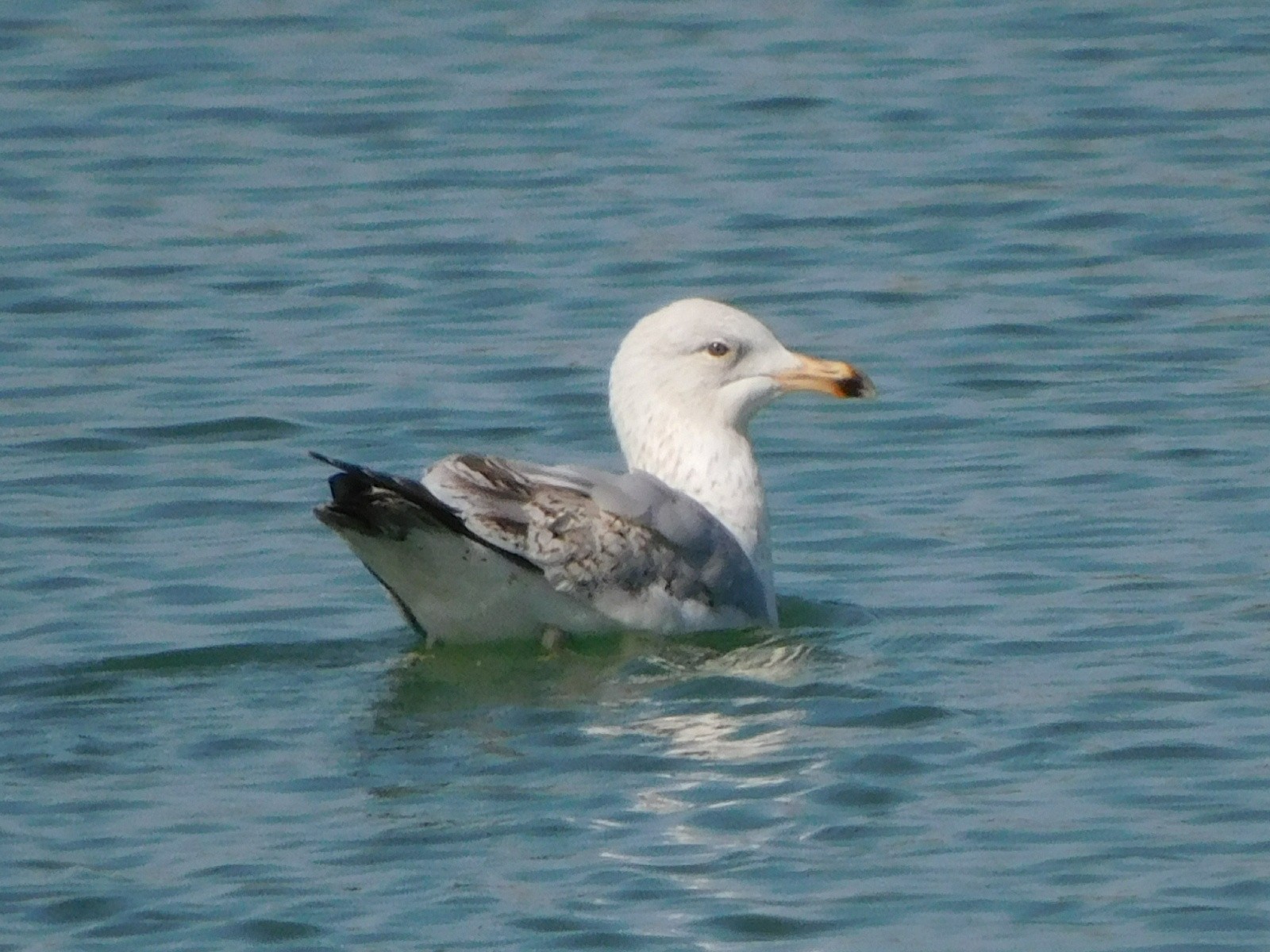
Larger gulls on the scarcity spectrum were a second-summer Caspian Gull at Priors Hall Quarry Lake on 11th, where there was also a second-summer Yellow-legged Gull on the same date. Pitsford continued to hold up to two Yellow-legged Gulls throughout.

An Arctic Tern at Summer Leys on 10th was new for the year.

Still to be had at Pitsford on 7th was the juvenile Great Northern Diver which has extended its winter occupancy well into spring.

Given its ongoing reintroduction project, perhaps only to be expected with increasing frequency in the county is White Stork, one of which flew over Warmington on 9th. Wild or not, a pulse-racer on a chance encounter.

Once again, the Summer Leys Glossy Ibis clocked up another week …

Cattle Egrets continued to maintain a low profile, with singles in the Nene Valley below Cogenhoe on 7th and at both Stanwick and Hollowell on 11th, the latter apparently a site first.

And so to raptors … and away from the Nene Valley it was, for Ospreys at least. Hollowell enjoyed a visit from the blue-ringed male, ‘3AY’ on 5th, which was the same individual that was photographed at Summer Leys last week. It originates from the Rutland project and was ringed as a pullus in 2019. So far, it remains unpaired. Up to two were also seen at Pitsford between 7th and 11th.

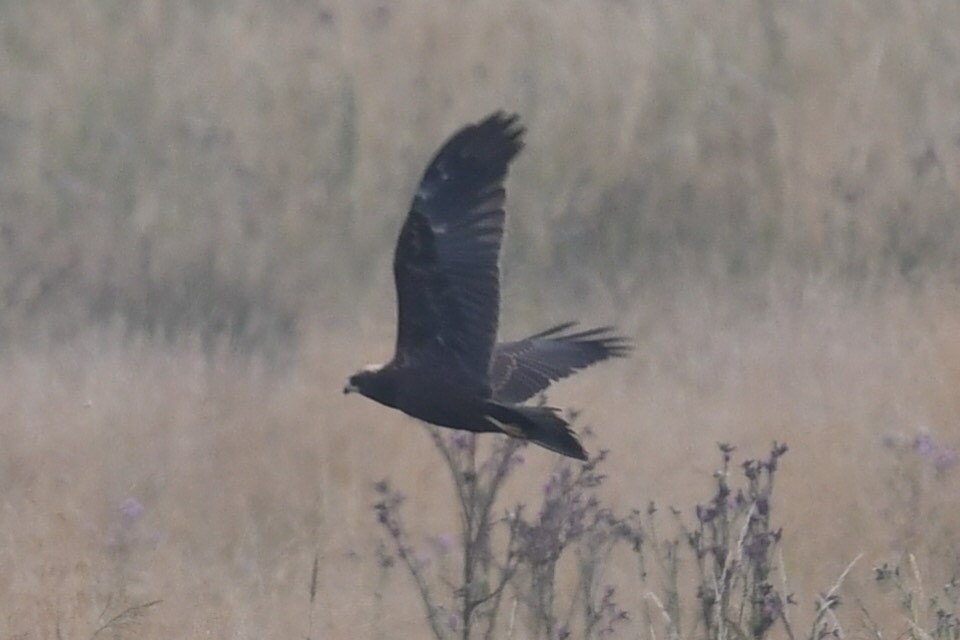
Back in the valley, though, Marsh Harriers were seen at Summer Leys on 5th, Stanwick on 5th and 11th and Titchmarsh NR on the latter date. Rather more upmarket, an adult male Hen Harrier was seen close to Everdon Stubbs on 5th.

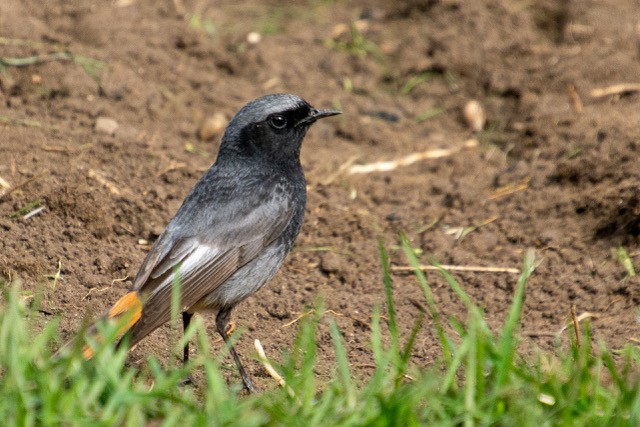
The week’s passerines were not to be outdone, though, and a male Ring Ouzel at Blueberry Farm, Maidwell on 5th was considered to be a different individual to the bird present there last week. A splendid male Black Redstart in a private garden in Old was pretty much off limits for any would-be observers on 8th. It’s the third one this year, the previous two having also been inaccessible. There will be more …

Common Redstarts continued to trickle through, with one trapped and ringed at Stanford Res on 8th, followed the next day by single birds at Blueberry Farm and on farmland north of Ashby St Ledgers.

Northern Wheatears were also low in numbers, this week’s birds being compressed into a small, localised region of north-central Northants that included Blueberry Farm, where there was one on 5th and three on 10th, Harrington AF, which held one on 6th-8th and in the Brampton Valley, where two were present on 10th.

A male Blue-headed Wagtail appeared at Clifford Hill on 7th, while Lower Barnwell Lock held a single White Wagtail on 5th, followed by two there on 7th.

Newsround – 29th March to 4th April 2025

After the driest March since 1961, April continued in the same vein, kicking in with a lingering spell of high pressure and a hearty dose of easterlies. These near-perfect conditions resulted in a decent number of migrants, including a hefty passage of Little Gulls and another dollop of firsts for the year.

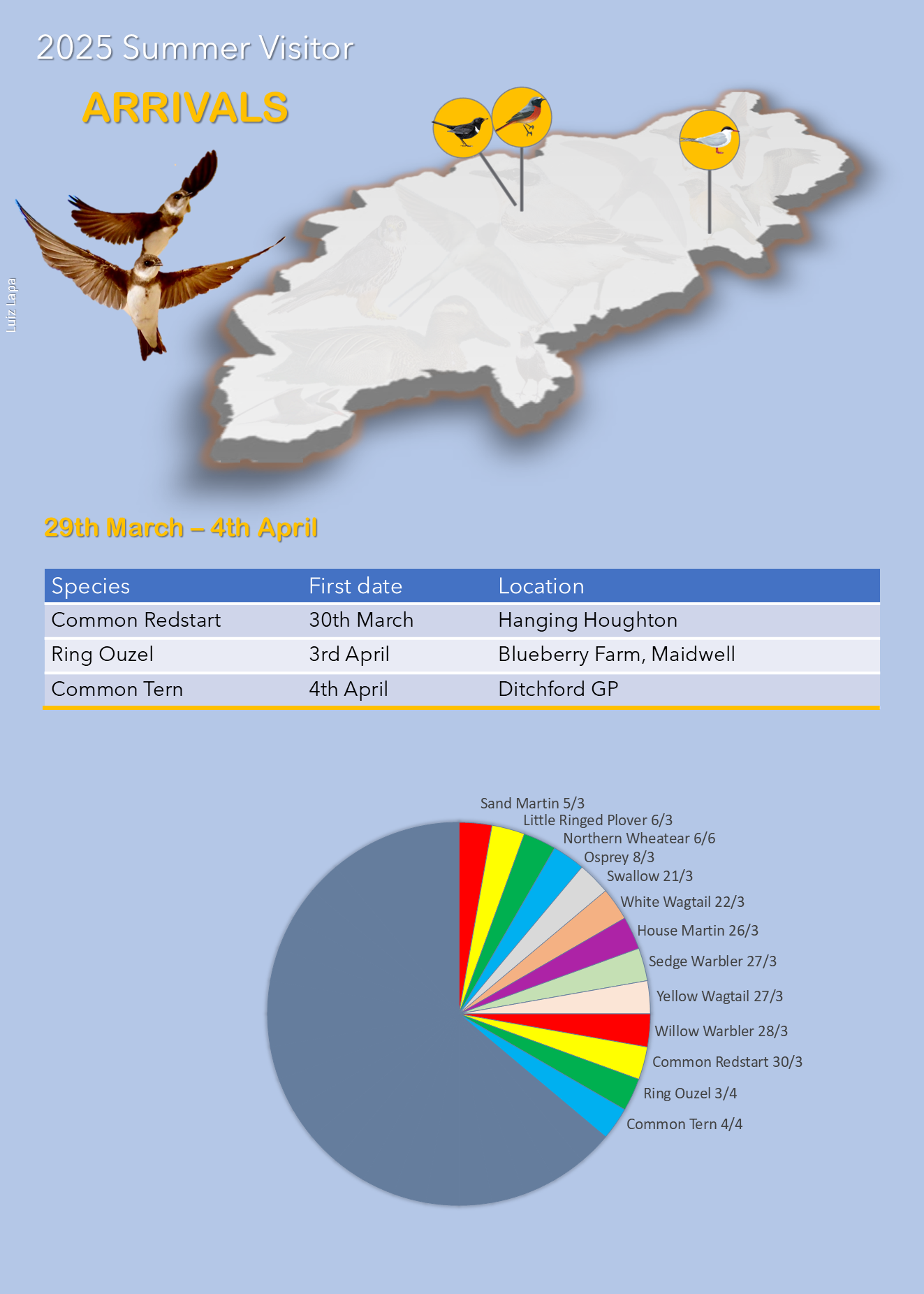
The week’s new-in summer visitors kicked off with a smart male Common Redstart on day 2, followed by a Ring Ouzel on day 6 and Common Tern on the final day of the week.

Otherwise, it was a week of unsurprisingly diminishing returns as far as wildfowl were concerned, with the long-staying Pink-footed Goose still in the Cogenhoe Mill/Earls Barton GP area until at least 3rd, the drake Red-crested Pochard still in the same vicinity on the River Nene until 1st and the first-winter female Greater Scaup hanging on at Blatherwycke Lake until at least 29th.

After two flyover records in the first half of March, Common Cranes were again on the radar this week as a group of four flew south over Whitfield, in the deep south of the county, on the last day of the period. One on the ground would surely prove itself extremely popular …

In terms of number of species, the week’s waders widened out to include the year’s first Grey Plover at Clifford Hill GP, for one day only, on 3rd. Avocets were again to be found at three Nene Valley localities, Thrapston GP’s Titchmarsh NR delivering two on 30th while, on 3rd, two visited Clifford Hill GP and Earls Barton GP dished up six.

Black-tailed Godwits were the sole preserve of Summer Leys LNR, where one lingered from last week until 30th, the number then swelling to four there from 31st until the week’s end on 4th.

Just one Jack Snipe made it into April, still on site at Hollowell Res on 1st.

Following the previous mini-run of Little Gulls on 21st-22nd March, two appeared at Thrapston GP’s Town Lake on 31st, ahead of three at Pitsford on 3rd, preceding a build-up of numbers across 8 localities the following day. The latter saw site maxima of at least thirty-four at Stanford Res, at least nineteen at Summer Leys, fourteen at Clifford Hill, thirteen at Earls Barton, nine at Stanwick GP, seven at Daventry CP, three at Pitsford and two flying north-east over Irthlingborough. All in all, a great start to April for this diminutive, much admired, pocket rocket of a gull.

Other gulls were, of course, available – only if you were at Pitsford, that is, where a third-winter Caspian Gull was present on 31st, as were up to two Yellow-legged Gulls throughout the period.

And another first for the year was inbound this week in the shape of Common Tern, four of which got themselves noticed at Ditchford GP on 4th.

Still hanging on in there was the juvenile Great Northern Diver, which saw another week out at Pitsford.

Copy that for the Summer Leys Glossy Ibis

Up to five Cattle Egrets were still to be found at Stanwick GP between 29th and 1st, while one put in an appearance by the River Nene at Cogenhoe Mill on the latter date.

The week’s Ospreys were to be seen at five localities and included two over Deene Lake on 29th, singles at Summer Leys on 29th and 4th and at Thrapston on 30th, Hollowell on 31st and Pitsford on 3rd.

The only Marsh Harriers, however, were at Summer Leys on 31st and 2nd.

The Northern Treecreeper, last photographed at Summer Leys on 20th, was reported there again on 30th-31st.

Returning once more to firsts for the year, a male Ring Ouzel was clearly ‘old hat’ for a local patch watcher at Blueberry Farm, Maidwell on 3rd and the first Common Redstart to break cover was a male at nearby Hanging Houghton on 30th, with the second one not far behind it at good old Blueberry Farm again the following day. These were followed by two more males – one in the Nene Valley near Great Doddington and the other at Harrington AF – both on 4th.

Other migrant passerines of note included single Northern Wheatears at Clifford Hill on 29th and 31st with two there on 30th, singles at Harrington on 29th and 31st with two there on 4th, one at Earls Barton on 29th and two at Blueberry Farm on 31st and one there on 3rd.

And in the grey area of the spectrum, two White Wagtails were found at Earls Barton GP on 29th, followed by singles at Lower Barnwell Lock on 30th and Hollowell on 31st.

Newsround – 15th to 21st March 2025

The week just gone saw a flip back to warmer conditions as a southerly airmass moved in from the continent, giving rise to the UK’s warmest day of the year so far, with local temperatures reaching 18°C, while the wind took on an easterly vector during the final two days. Perfect conditions for northbound migrants … and in they came.

There were, however, some winter visitors that were simply refusing to budge and we’re referring here to the Pink-footed Goose, still with the Nene Valley Greylags in the Cogenhoe Mill/Earls Barton GP area all week, although there were no further reports of the two at Thrapston GP/Titchmarsh NR beyond 15th.

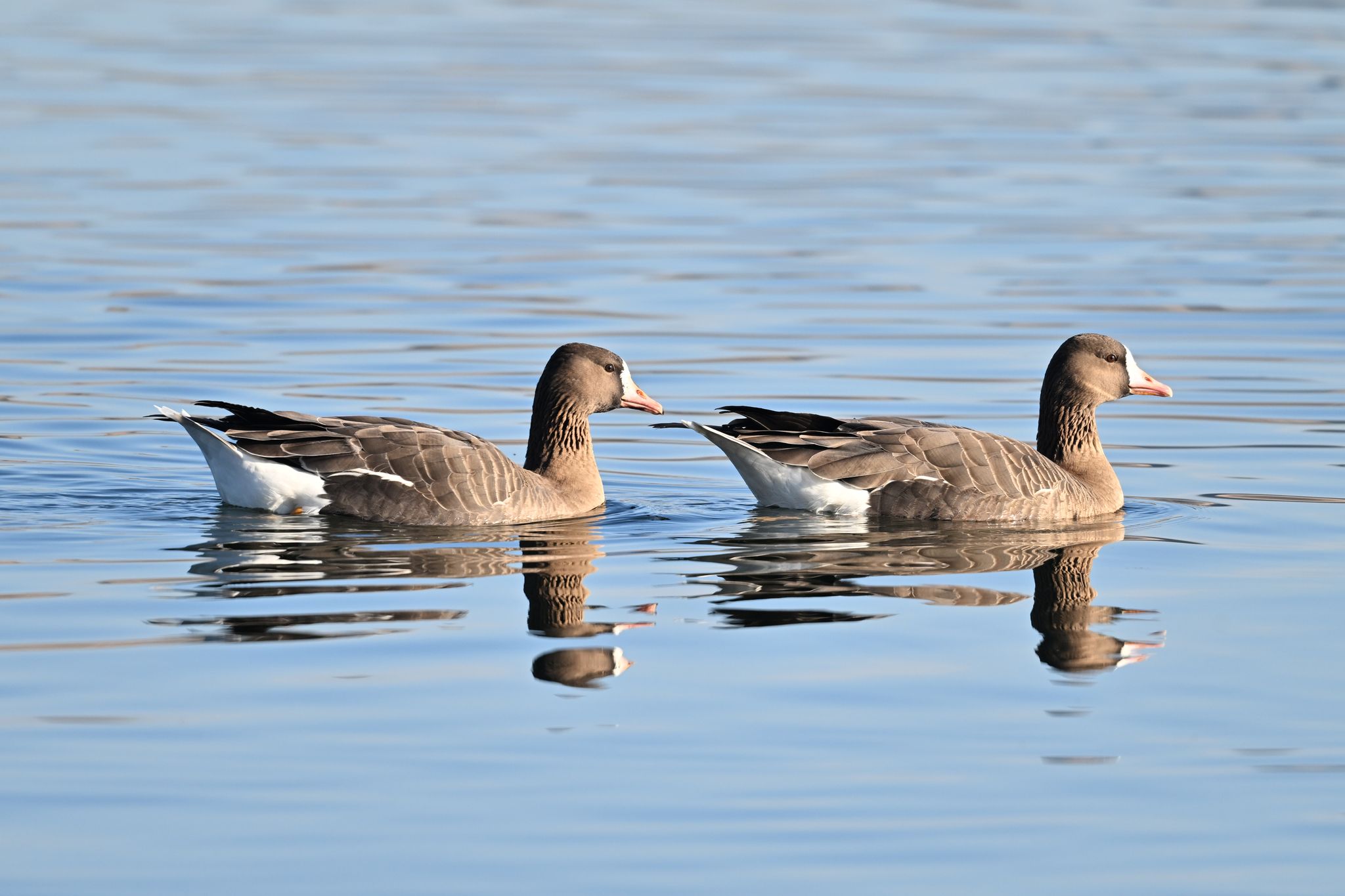
Also seeing the week out were the seven (eight on 18th) White-fronted Geese with the above Greylags, as did the two at Ravensthorpe Res, while last week’s three remained at Titchmarsh until at least 17th.

Seemingly settled, too, was the drake Red-crested Pochard at Earls Barton GP and on the River Nene between Cogenhoe and Whiston Lock, where it was still to be found at the period’s end.

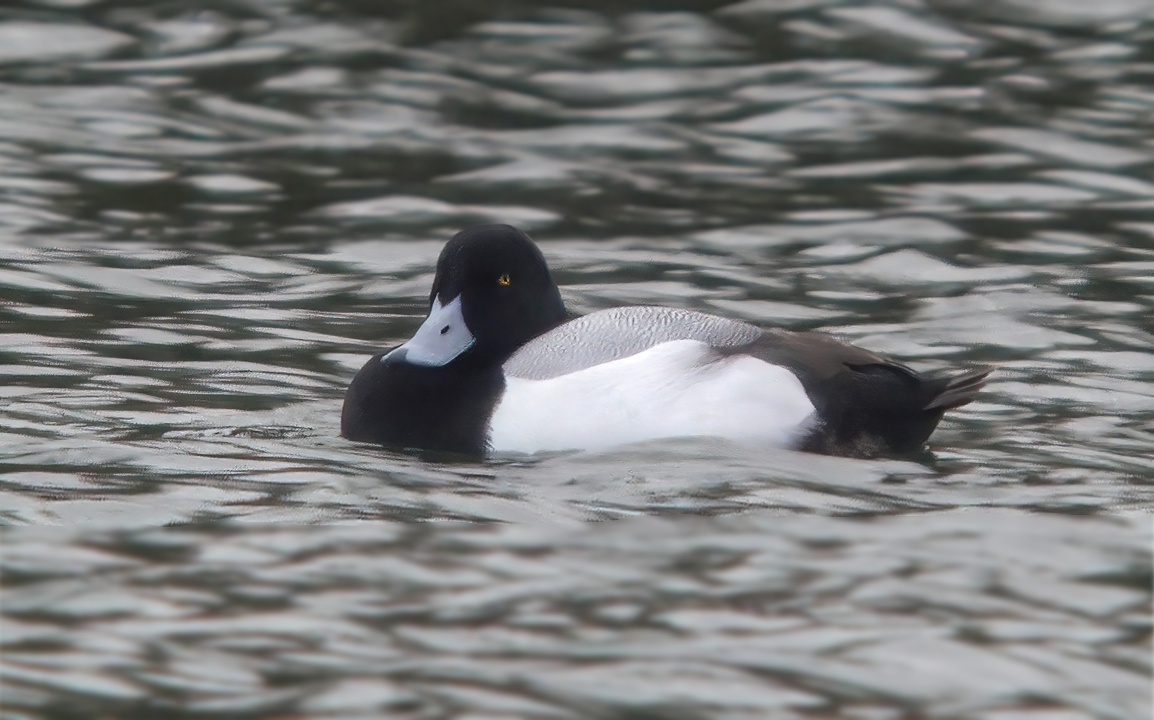
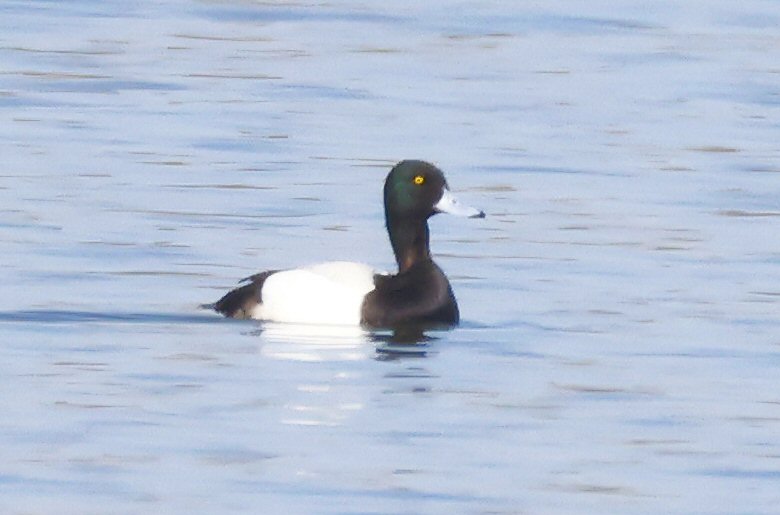
Greater Scaup was still on the radar this week, with the first-winter female remaining at Blatherwycke Lake until at least 15th and the drake continued to rub along with the Tufted Ducks on Mary’s Lake at Earls Barton throughout.

Perhaps having now vacated the area, the drake Smew was still to be seen at Clifford Hill GP until 19th, after which there were no further reports.

Following three in flight over Stanford Res the previous week, a Crane was reported flying west at Titchmarsh NR on 16th, although no further details were forthcoming.

However, the waders on offer during the period served to lift the spirits, underlining that spring is now firmly established, if not yet in full flow. Four Avocets dropped into Clifford Hill early in the morning of 18th before swiftly moving east, after which they also paid a brief visit to Summer Leys LNR, some fifteen minutes later. For those – and that’s nigh on everyone – unable to catch up with them, two more were found on floodwater at Lower Barnwell Lock, Oundle, where they spent at least two and a half hours on 20th. More were still to follow, two subsequently being located at Earls Barton GP’s New Workings (South), mid-afternoon on 21st, seeing the rest of the day out asleep and choosing to extend their roost there. These are, so far, only the second, third and fourth records of the year, following one at Summer Leys on the unusually early date of 26th February.

Other waders were, of course, available and three Black-tailed Godwits dropped in at Summer Leys for a brief spell on 20th, followed by two at Ditchford GP’s Irthlingborough Lakes & Meadows NR the next day.

Summer Leys also produced a couple of Ruffs – one on 17th-18th, joined by a second bird on 19th-20th.

Aside from up to three Jack Snipes seeing out the back end of winter at Hollowell this week, two additional localities produced further singles, these being at Pitsford Res on 16th and Summer Leys on 19th.

And we were to be treated to a new wave of Little Gulls as the week drew to a close on 21st. Ditchford produced at least three, while a respectable six turned up at Earls Barton GP’s New Workings (South), mid-afternoon, providing some prime viewing opportunities before choosing to roost there.

Though arguably less entertaining, other scarce larids showed up in the form of four transient adult Caspian Gulls – considered two be two pairs – at Ravensthorpe on 17th, followed by another adult at Summer Leys the following day. And aside from a first-summer at Hollowell on 21st, Yellow-legged Gulls were down to just the one adult at Pitsford between 17th and 20th.

Pitsford also continued to play host to the wintering Great Northern Diver, the latter clearly in no hurry to move on.

And the same applied to the Summer Leys Glossy Ibis … still there at the week’s end.

Bitterns are booming, or so it seems, with one heard on several days at an undisclosed locality and one was seen again at Hollowell Res, where it’s clearly keeping a low profile, on 17th. The same cannot be said for Cattle Egrets, numbers of which remain low in comparison to a couple of years ago. Aside from singles extending their stays at Blatherwycke and Clifford Hill, until at least 15th and 21st, respectively, up to four were seen exiting a roost site at Stanwick GP, early doors on 15th and on 19th-21st.

What was set to have been the county’s first Osprey of the year, at Pitsford on 17th, was superseded by belated news of an earlier one at Fawsley Park Lakes on 11th. One was also seen at Hollowell on 18th and on 20th-21st.

The period’s Marsh Harriers were limited to localities beginning with ‘S’, with one at Stortons GP on 15th, what was presumably last week’s individual continuing to put in appearances at Stanwick on 17th and 21st, and one also visiting Summer Leys on the last of these dates.

And another summer visitor crossed the line to become the first of its kind to enter the county this year in the shape of a Swallow at Hollowell on 21st.

The year’s second Northern Wheatear was also found on the same date at Earls Barton GP’s New Workings (South), a location which has more than proven itself attractive to wetland species of late and is becoming increasingly popular with birds and birders alike.

And in common with many of the winter visitors stubbornly refusing to up sticks and go, two Hawfinches remained in Cottesbrooke until at least 16th.

Newsround – 26th October to 1st November 2024

The week’s weather, being somewhat bland, appeared to have little influence on the birds turning up during the period but that’s not to say it was uneventful. Quite the contrary, in fact, with the first Red-throated Diver for sixteen years stealing the show, one or two more Yellow-browed Warblers – now seemingly attracting scant attention – and a trickle of Hawfinches beginning to elicit interest as a national ‘invasion’ appears to be well underway …

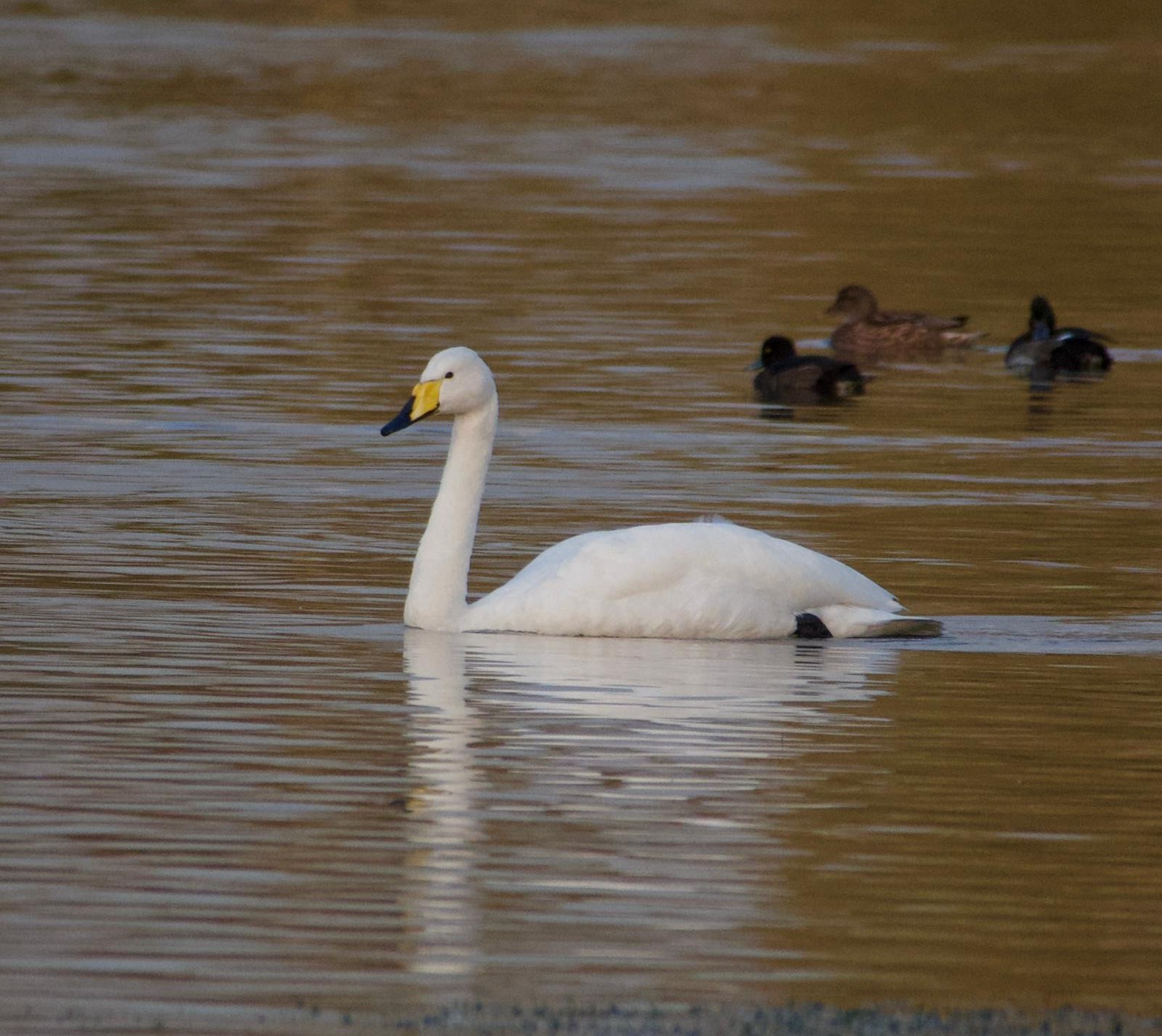
There was little new on the wildfowl front, however, with the Pink-footed Goose continuing to visit Stanford Res, where it was seen on 26th-27th and again on 30th. Last week’s adult Whooper Swan also remained there, visiting surrounding farmland, until 30th, while two more dropped in briefly on 27th. Pitsford Res also got in on the act, producing a single bird north of the causeway on 28th, followed by four flying north on 1st.
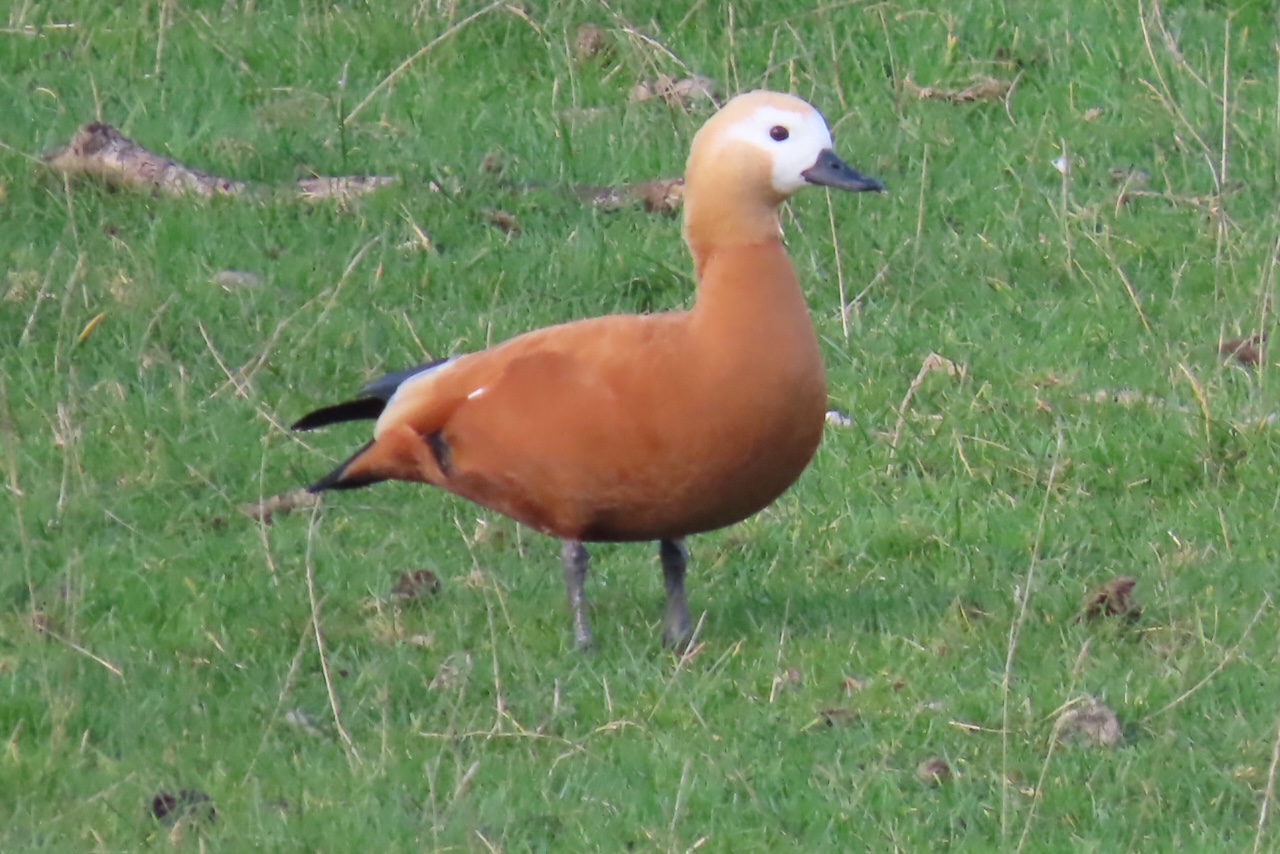
The Ruddy Shelduck also reappeared at Stanford on 26th before moving back to Winwick Pools on 28th-29th.

Stanford continued to produce the largest share of the period’s Red-crested Pochards, the week opening with seven and closing on six, while the first-winter drake remained at Boddington Res until at least 31st and two were found at Pitsford the next day, on 1st.

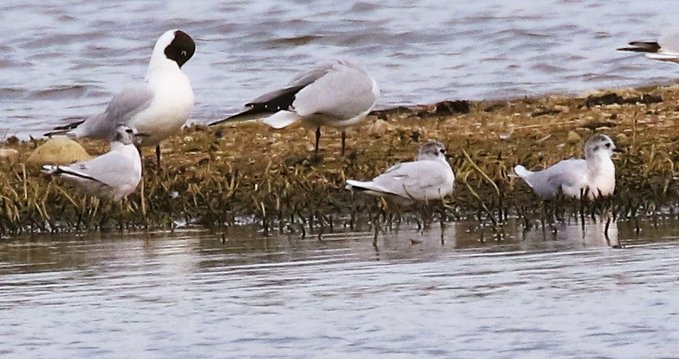
In the absence of any notable waders, numbers of the scarcer gulls were about par for the course, with an adult Mediterranean Gull in the roost at Boddington on 31st and a first-winter joining the Stanford roost on 1st. Caspian Gulls widened their reach to four reservoirs, the roost at Boddington holding an adult on 31st and two adults the following evening. Two adults were again at Hollowell on 31st, while single adults were found at both Pitsford and Stanford on 1st. Once again, Boddington produced the week’s highest numbers of Yellow-legged Gulls in its roost, seven on 31st rising to nine the following evening. Elsewhere, singles visited Clifford Hill GP and Summer Leys LNR on 26th and 27th, respectively, two were found at Winwick Pools on 29th, one was at Pitsford on 31st-1st and Stanford held one on 31st and two on 1st.

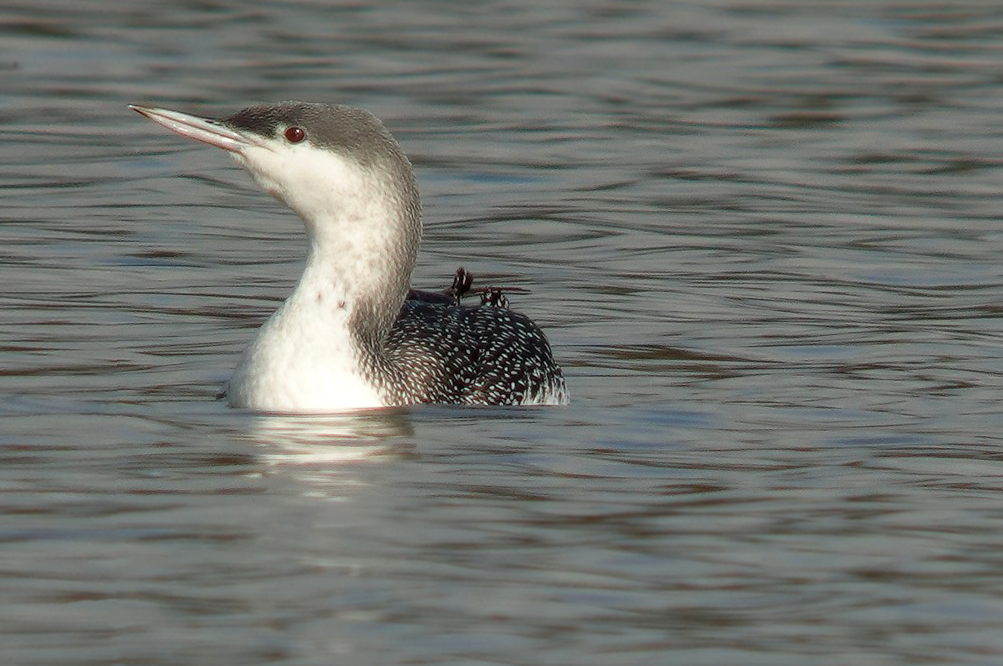
And just to prove that autumn is far from running out of steam, a smart juvenile Red-throated Diver surfaced at Boddington on the last day of October. It remained for barely five hours following its discovery, having upped sticks and left well before the afternoon was out. Being the first one in Northamptonshire for sixteen years, this species is now verging on mega status in the county, following a short-term run of records in 2002, 2005, 2006-07 and 2008.

Looking like it’s in for the long haul and continuing to offer interest and delight, the Summer Leys Glossy Ibis had notched up six full weeks by the end of the period.

Thrapston GP’s Titchmarsh LNR produced the week’s only Bittern on 26th and Stanwick GP the only Cattle Egrets, with eight there on 1st.

While single Marsh Harriers continued to be seen in the Nene Valley – at Titchmarsh LNR on 26th and at Earls Barton GP’s New Workings (South) on 30th, it was the latter locality that delivered a ‘ringtail’ Hen Harrier, seemingly having taken a liking to the area, being seen there on the afternoons of 28th, 30th and 1st. An adult male Hen Harrier was present briefly in the Brampton Valley, between Brixworth and Cottesbrooke, before flying north-west on 1st.

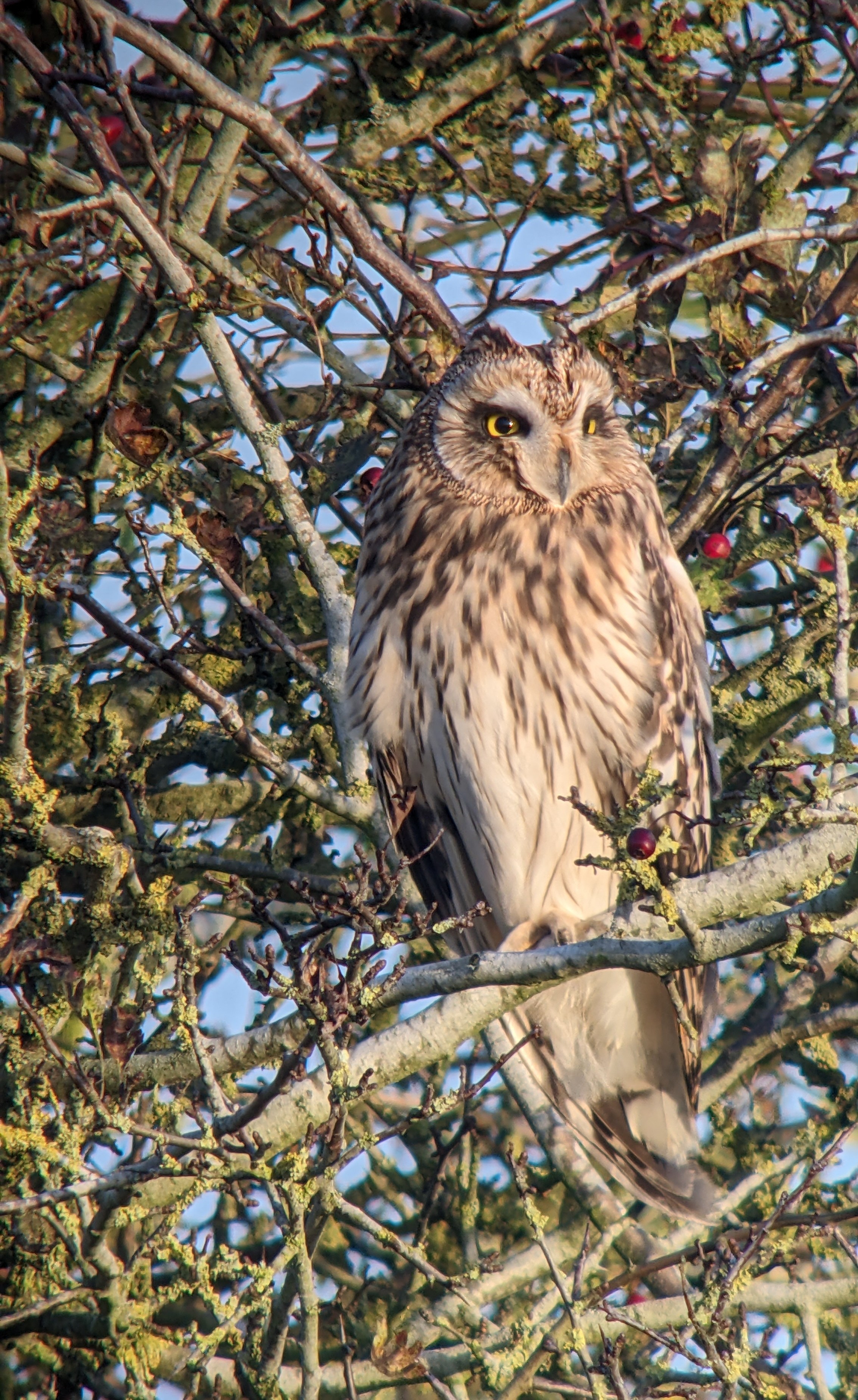
A Short-eared Owl was found at Blueberry Farm, Maidwell on 30th.

And records continue to be broken as far as Yellow-browed Warblers are concerned, with one reported again at Stanford Res on 26th, while another was found in an area of willows along the Grand Union Canal, between Grafton Regis and Bozenham Mill, on 30th-31st. Perhaps we will be in line for more wintering birds over the next few months …

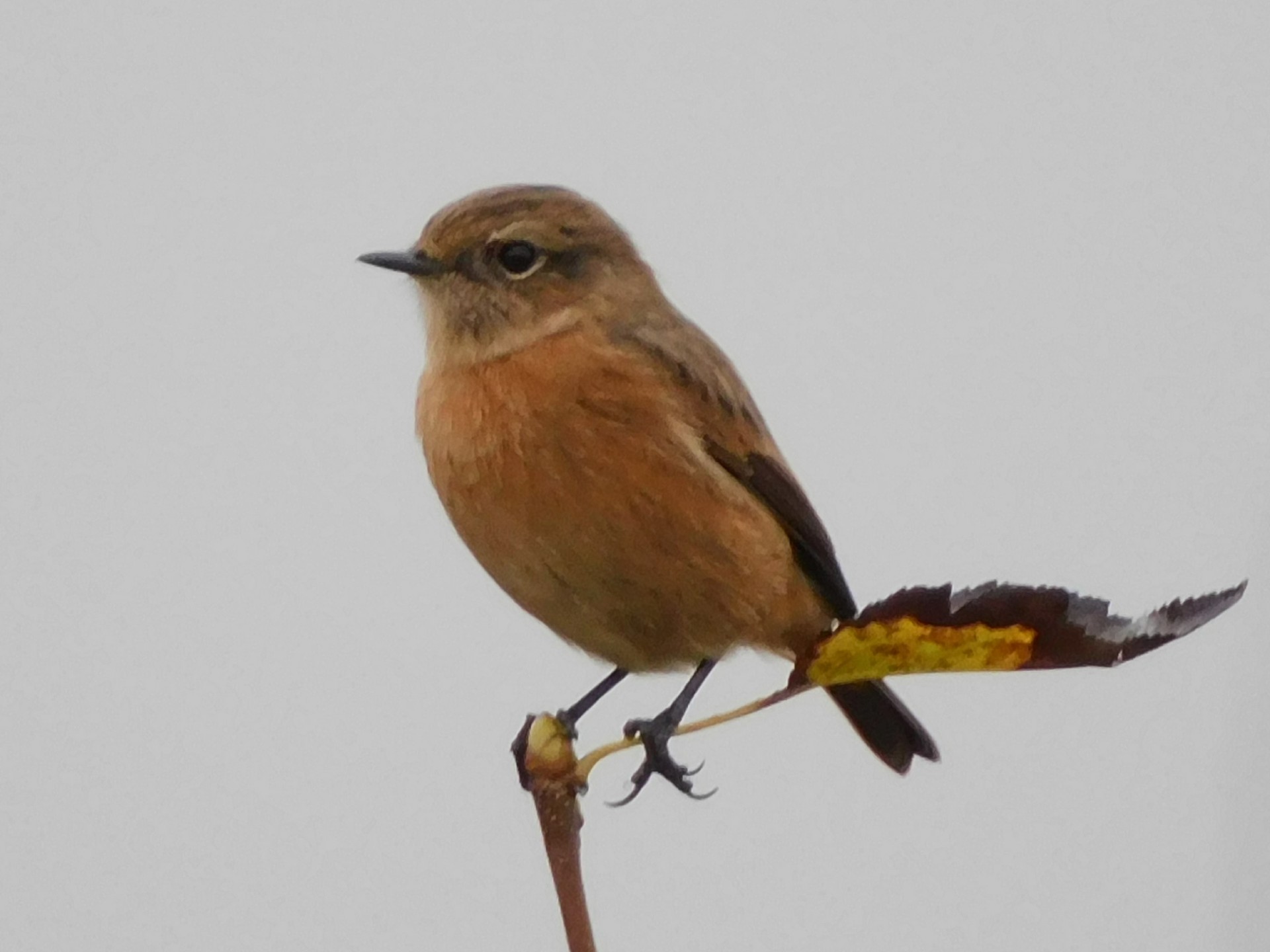
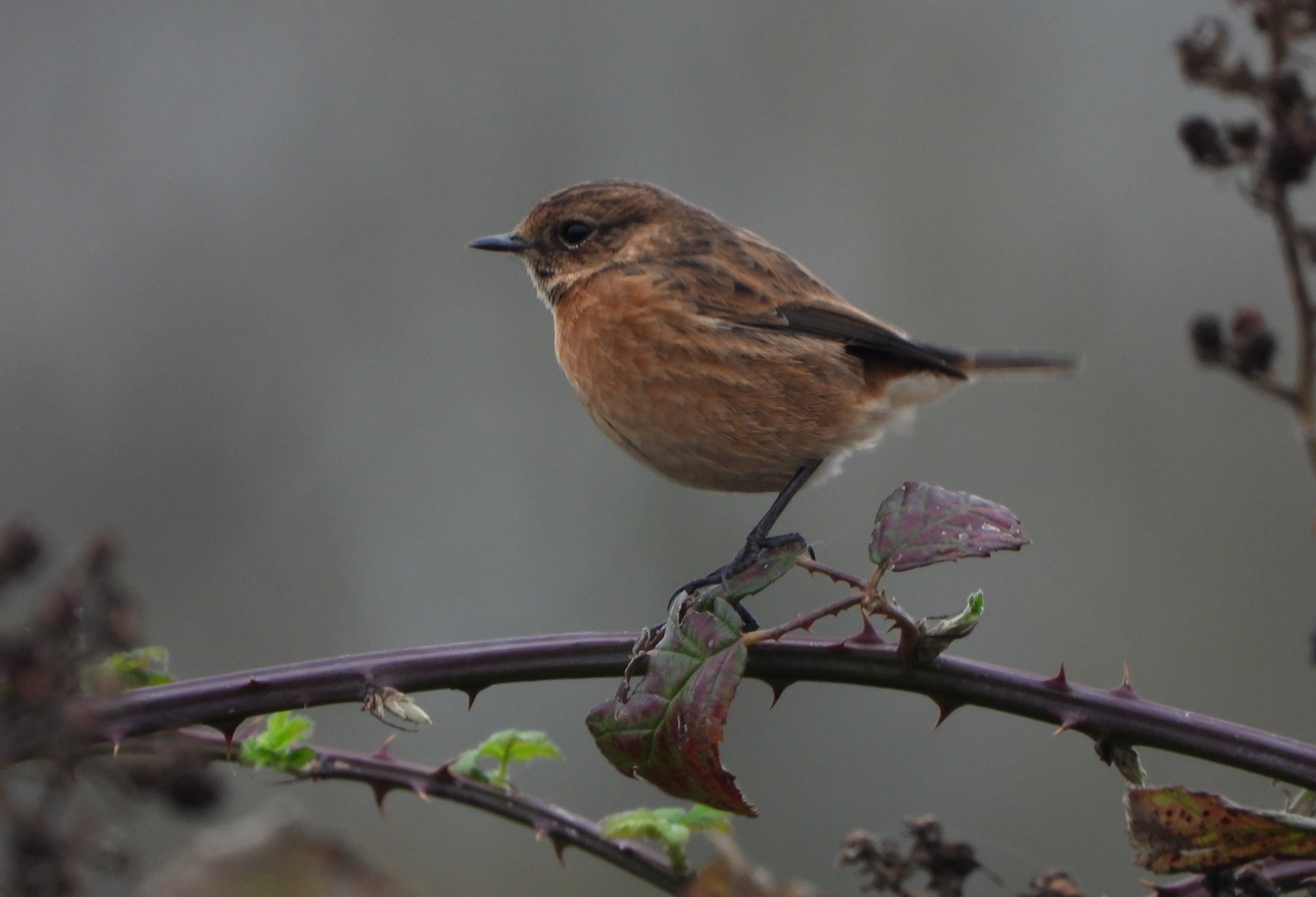
With no more than two at any one location, Stonechats continued to be seen across the county at Clifford Hill GP, Earls Barton GP, Grafton Regis, Pitsford, Stanford and Thrapston GP.

And as we leave October behind and thoughts turn to what the last month of autumn and the forthcoming winter may bring, it has been widely recognised that we are now well into an invasion of Hawfinches at a national level. Events now unfolding show a marked similarity to the historic influx of 2017-18, with records during the last half of October coming from nudging two hundred sites across England. Following one at Dallington Cemetery, Northampton on 5th October, the week just gone saw a trickle of birds with one flying over Byfield on 30th and, on 1st, five over Harrington AF, three in Thenford churchyard and two or three at Cottesbrooke. These last two sites proved reliable for connecting with long-stayers during the last influx.

So, when will the trickle develop into a torrent? Checking out a churchyard or two could prove fruitful if, as they so often are, planted with Yew trees, a favoured food source. As a heads up, here’s a list of locations they were seen at during the last autumn/winter invasion in 2017-18.

Not quite falling into the same iconic category as the above, but a smart finch, nonetheless, is Crossbill – some twenty of which flew over Brackmills Industrial Estate, Northampton on 30th, while three briefly visited Cottesbrooke churchyard on 1st.

A Corn Bunting – only the second of the year, following one in the Brampton Valley in August – was seen between Grafton Regis and Bozenham Mill on 30th.

Newsround – 19th to 25th October 2024

The week kicked off with Storm Ashley, of which we were on the periphery and, while hopes were high for a wrecked seabird or two, there was no such luck, with the short term occurrence of a Shag the day after seemingly coincidental. Otherwise, it was down to another Yellow-browed Warbler – amongst other fare – to keep the autumn pot bubbling …

Stanford Res was the locality for producing the majority of this week’s wildfowl with, once again, what was presumably the same bird as last week’s Pink-footed Goose dropping in on 19th-20th. A new adult Whooper Swan also appeared there on 21st remaining until 25th, although it was not seen on 23rd.

Following its absence from Stanford, where it was last seen on 9th September, the female Ruddy Shelduck was relocated at its recently favoured winter haunt, Winwick Pools on 24th, after having visited Ravensthorpe Res on 15th and 22nd September.

Aside from the first-winter drake at Boddington Res, where it remained until at least 24th and a drake at Pitsford Res on 21st, the period’s Red-crested Pochards had peaked at no more than five at Stanford by the week’s end.

After some absence, waders were back on the menu – albeit on a very short term basis – with a Black-tailed Godwit at Elton GP and a fleetingly late Wood Sandpiper at Summer Leys LNR, both on 23rd. Prime wader habitat remains at a premium, however.

More Mediterranean Gulls appeared on the scene during the period, doubling last week’s total (which wasn’t difficult). Boddington’s first-winter continued to appear there in the roost intermittently until 22nd, with an adult gracing the Stanford roost on the latter date, while Summer Leys delivered a second-winter on 23rd and a first-winter on 25th.

Numbers of Caspian Gulls were limited to an adult and a first-winter in the Boddington roost on 22nd-23rd and two adults at Hollowell Res on 24th. Yellow-legged Gulls fared better, pushing into double figures at Boddington where the roost produced up to twelve on 22nd-23rd. Elsewhere, three were at Summer Leys on 23rd, followed by two there on 25th, while single adults were seen at Pitsford Res on 21st and Clifford Hill GP on 24th.

Often turning up in remarkably calm conditions, so unlikely to be weather-related, new in for 2024 was a juvenile Shag at Ravensthorpe on 21st. Unfortunately, it failed to stick and show, being subjected to disturbance by fishing boats shortly after its discovery. Shag is a near-annual visitor having been recorded in fourteen out of the last twenty years.

The same cannot be said with regard to Glossy Ibis, for which the opposite applies in both instances. It’s still a local and national rarity but in the current circumstances the Summer Leys bird has further extended its stay by another seven days to five weeks, frequently showing well to all comers.

This week it was the turn of Thrapston GP’s Titchmarsh LNR to produce the period’s Bittern sightings, with one on 21st and 23rd and two on 24th. A cattle field adjacent to nearby Ringstead GP continued to prove attractive to Cattle Egrets, the week starting with two there on 19th, increasing to six on 20th and finishing with two again on 25th. Three were also found in a field west of Chacombe in south-west Northants on 19th.

Back at Titchmarsh, one of the week’s two Marsh Harriers was seen on 21st, Summer Leys enjoying one on the same date, while last week’s Hen Harrier at Stanford also made it into this week on 19th.

It’s been quiet at Harrington AF for some time now but, following the autumn’s first Short-eared Owl there on 3rd, another – or perhaps the same – was present this week on 19th. October is a prime month for the movement of this species through the UK.

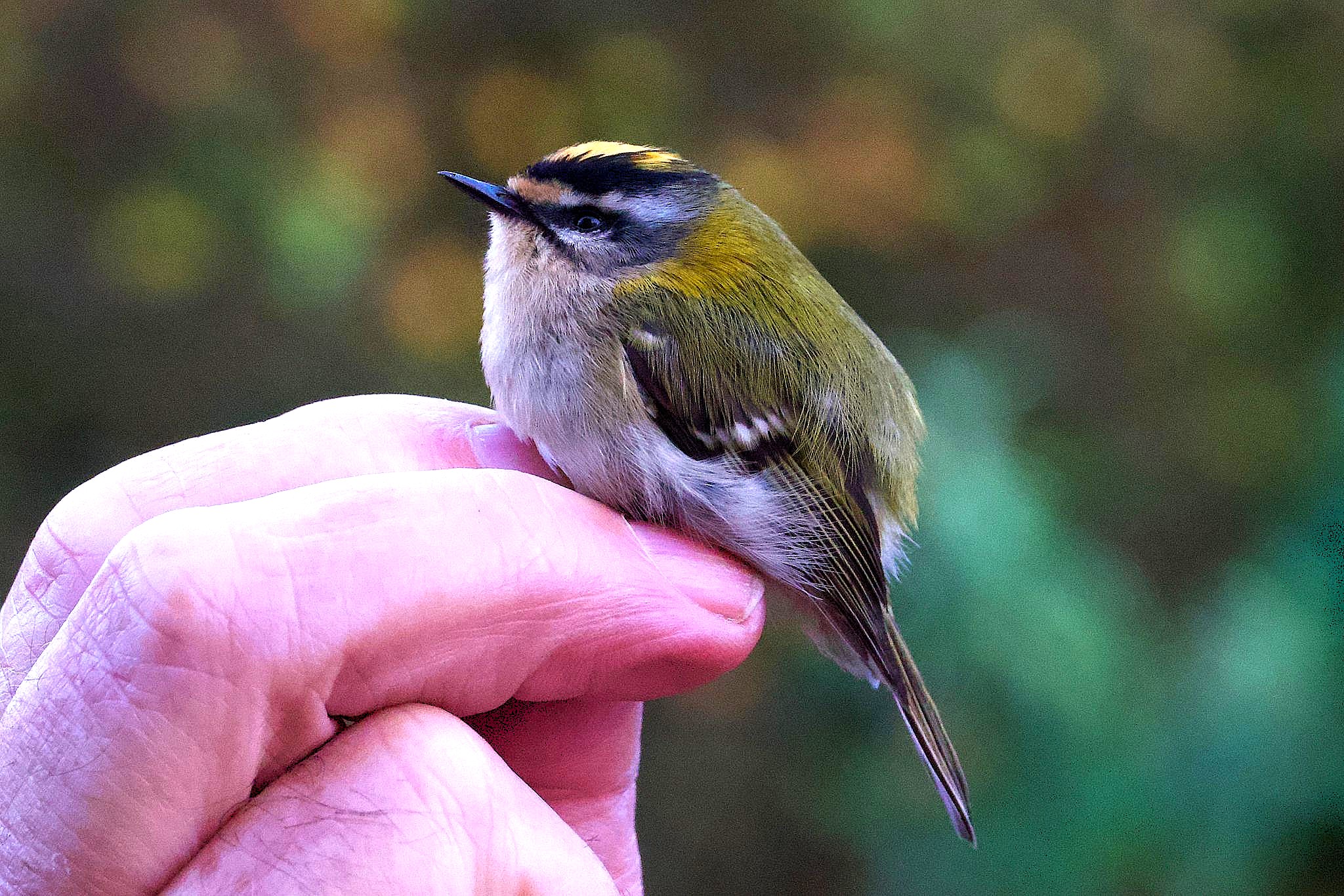
And as for passerines? Stanford, ever effervescent as Northamptonshire’s premier ringing site – and thank the gods it’s on our side of the county boundary – did it again this week with another Yellow-browed Warbler out of the nets on 23rd, quickly followed by a Firecrest the next day. What else might be in the offing there before the autumn’s out?

Stonechats continued to be seen across the county at Boddington, Earls Barton GP, Elton, Hollowell, Orlingbury, Stanford and Warmington with a maximum of four at Hollowell on 24th.

Newsround – 31st August to 6th September 2024

As we crossed the line into meteorological autumn, a humid week kicked off with a strong southerly airstream from the continent, swiftly being replaced by sustained north-easterlies out of Scandinavia. The weather’s influence on the birds occurring may have been difficult to gauge and while Stanford Res scored its, and the county’s, second Ferruginous Duck of the year, there was plenty afoot to keep local birders on their toes.

And in terms of locale, that’s precisely where we start, with the female Ruddy Shelduck keeping up appearances as the week duly unfolded. The only other dabbling duck to make it into the Newsround was Garganey, with up to three extending their stay, and still mobile, around Summer Leys LNR throughout.

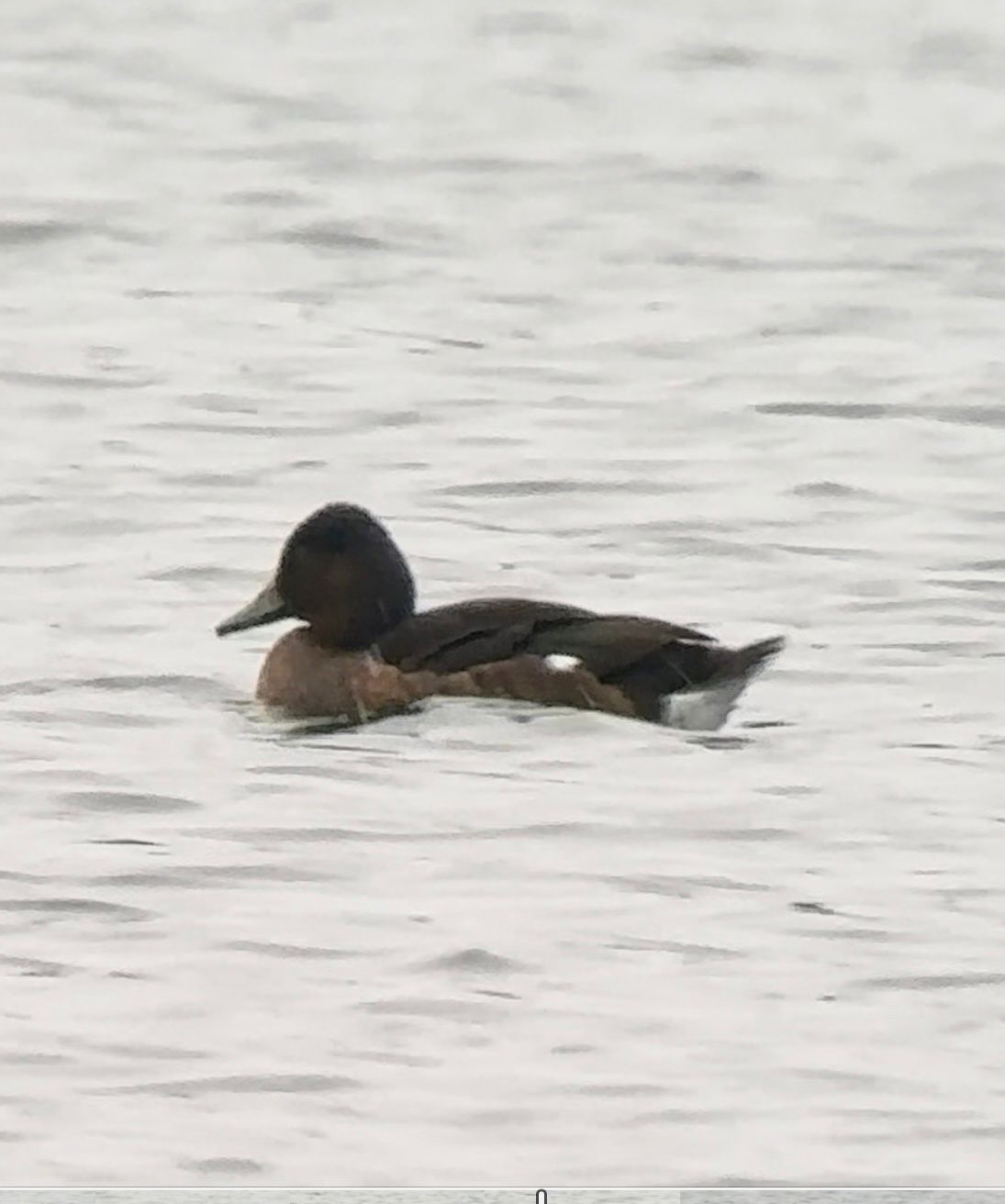
But the wildfowl of the week occurred when Stanford laid claim to its second Ferruginous Duck of the year – this time a female. Found during the morning of 3rd, it proved itself a slippery customer, evading further observation until putting in a brief reappearance during the evening. It was not seen subsequently …

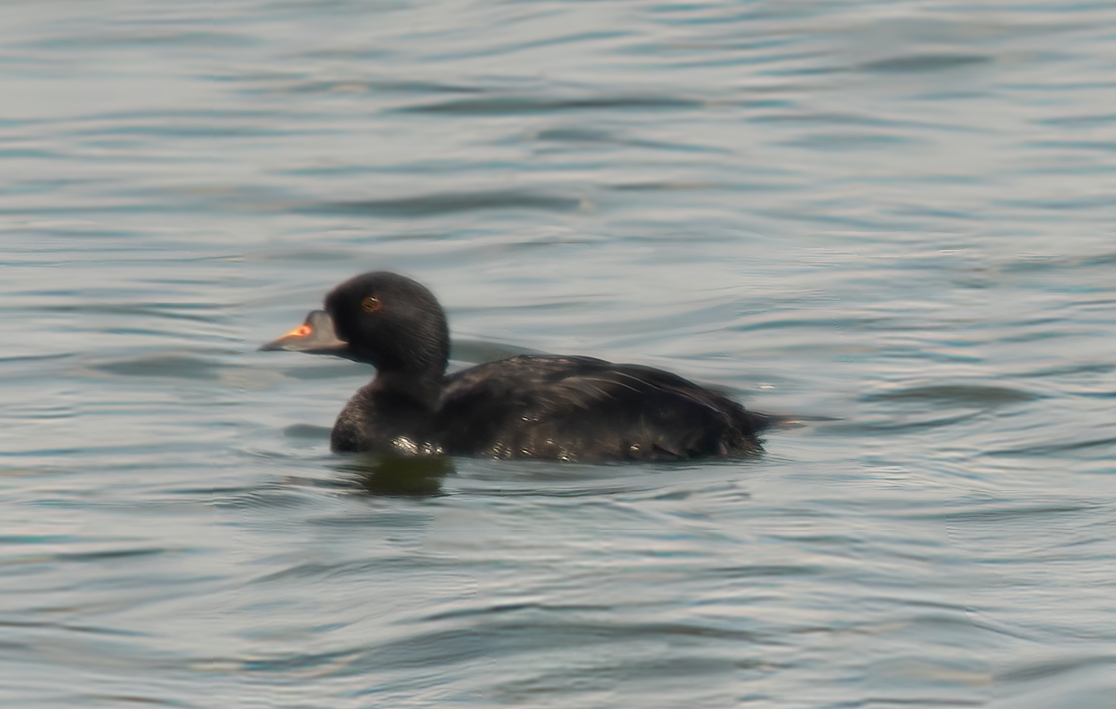
More usually associated with spring rather than autumn, Common Scoters were making news on the last day of the period when Stanford again delivered, producing two drakes, while a drake was also found at Clifford Hill GP. These formed part of a wider inland movement through Central England, from West Yorkshire to Surrey, with records from nineteen localities during the latter half of the week.

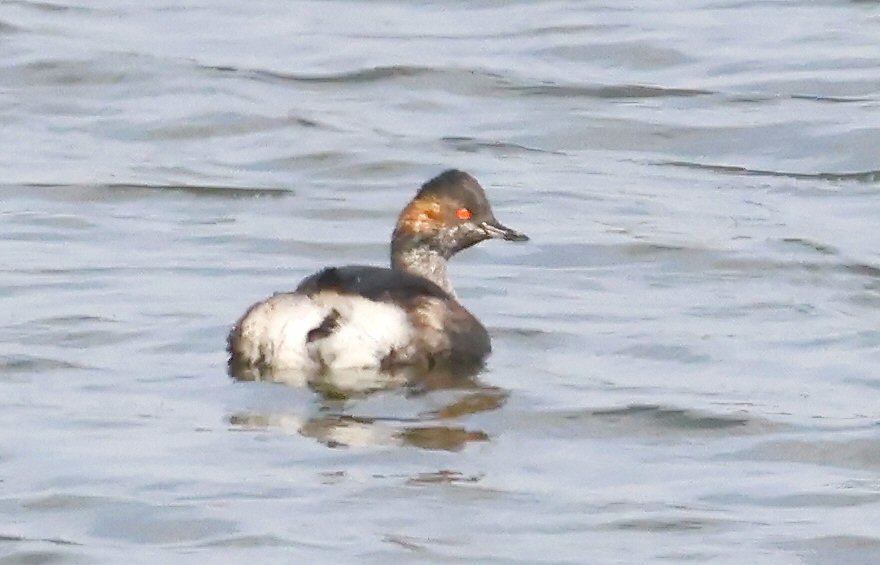
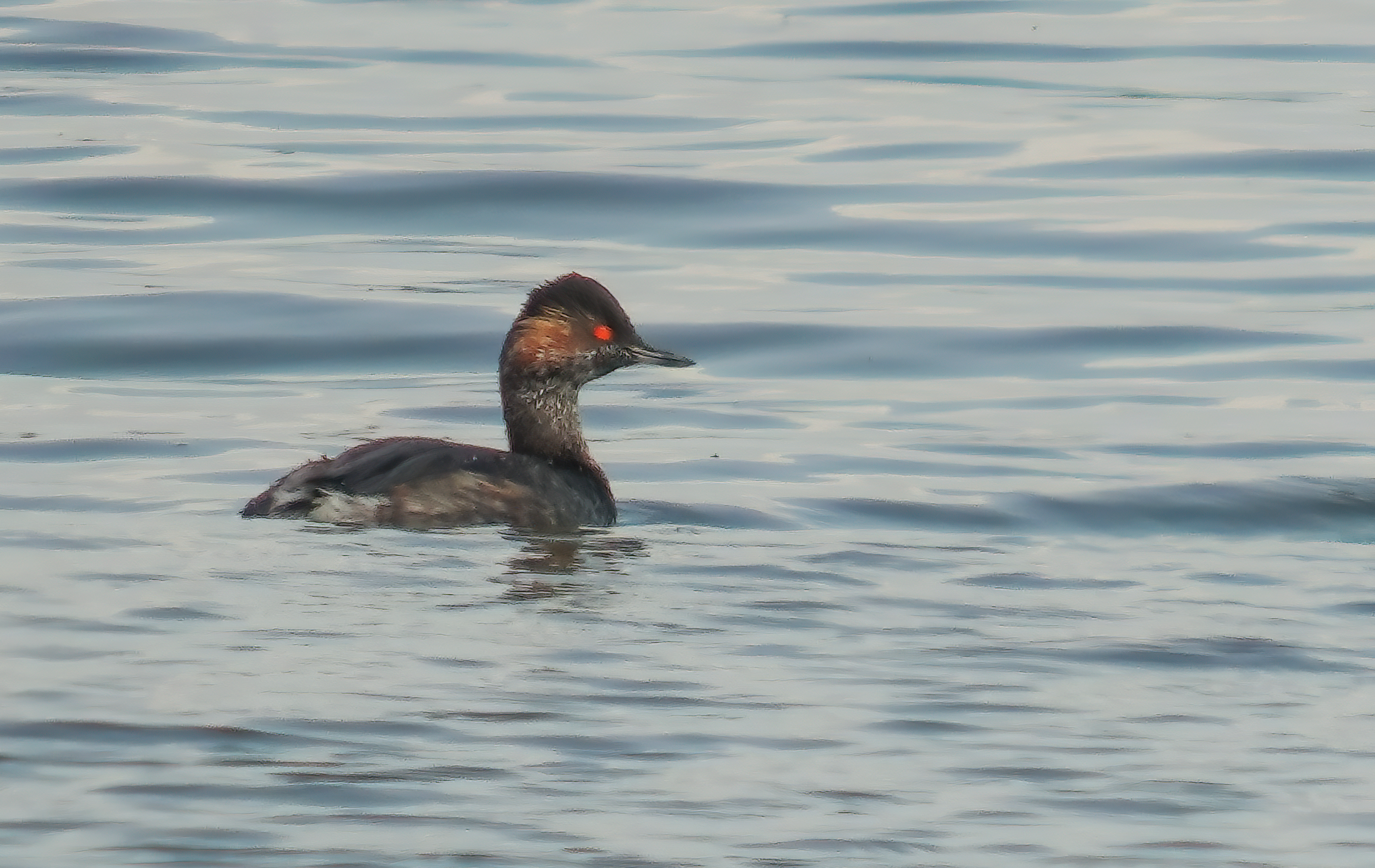
Also at Clifford Hill, the now long-staying Black-necked Grebe chalked up another week in residence, attracting a steady procession of observers – some apparently making a special trip from as far away as Luton …

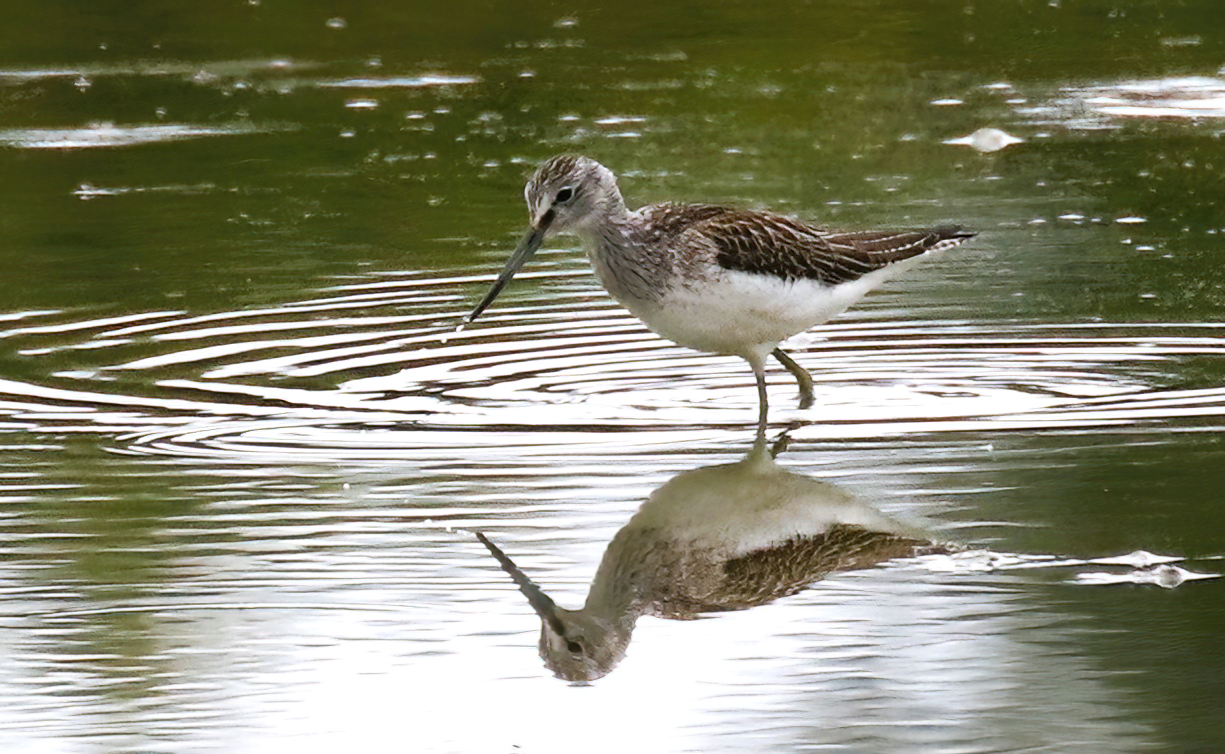
And as for waders it was down to just four species to keep the wheels turning, top of which was a single, short-staying Whimbrel on the dam at Pitsford Res on 2nd. With the peak passage period for Black-tailed Godwits long gone, this week’s stragglers were made up of three at Summer Leys on 31st, followed by one there on 6th, the latter date also seeing one at Wicksteed Park Lake, Kettering. Summer Leys also held on to last week’s juvenile Ruff throughout the period, while five were present there briefly on 1st. A juvenile female also visited Daventry CP on 3rd.

Also at Summer Leys, a Greenshank remained throughout and another was found at Thrapston GP’s Titchmarsh LNR on 5th.

The autumn’s first Little Gull – a first-winter – dropped in at Stanford on 5th.

Two more Mediterranean Gulls hopefully laid the ground for more to come – a juvenile at Ravensthorpe Res on 1st, followed by a first-winter at Boddington Res over the three days of 4th, 5th and 6th.

Boddington also produced three out of this period’s four Caspian Gulls with a juvenile on 2nd and two different second-year birds on 5th and 6th, while another juvenile was found at Daventry CP on 5th.

With reports from seven localities the number of Yellow-legged Gulls climbed this week, Pitsford producing the highest day total of seven on 1st. Three were present there on 3rd and four on 5th and 6th. The second highest total came from Boddington, where there were six on 5th, two on 2nd and three on 6th. Elsewhere, four were found at Ravensthorpe on 1st with the same number also at Wicksteed Park Lake the following day, the latter site again producing two on 4th. Single birds were also present at Hollowell Res on 2nd, Daventry on 3rd and Titchmarsh on 4th.

There were further appearances this week in the shape of Sandwich Terns, the surprising autumn run of which is clearly far from over, the last two days of the period delivering birds to three different sites. Single fly-overs were clocked at Stanford on 5th and 6th, the latter date also seeing another over Daventry and a respectable six at Summer Leys. Unlike last week’s obliging three at Clifford Hill, none saw fit to stick around. In common with the aforementioned scoters, these formed part of a wider inland movement through Central England, from South Yorkshire to Surrey, with records from at least twenty-five localities during the last two days of the week.

Not to be sniffed at, a notable supporting cast comprised three juvenile Arctic Terns at Stanford on 2nd-3rd and single Black Terns at Pitsford on 1st and Boddington on 2nd.

Following one on Summer Leys Scrape last week, a Bittern was seen at Titchmarsh on 4th. Long gone are the days when this was the standout site for this species during the winter months.

In stark contrast to last week, Cattle Egret numbers took a tumble to just seven at Ditchford GP’s Irthlingborough Lakes and Meadows LNR on 31st, one between Earls Barton and Ecton on 1st and at least one at Stanwick GP on 6th.

And for those in need of a showy raptor fix, Summer Leys again proved its worth –firstly for Ospreys, two of which were present on 3rd, one straying to adjacent Mary’s Lake at Earls Barton GP. Two were also reported from Titchmarsh on 2nd, followed by one there on 3rd and 6th, while singles visited Pitsford on 31st, 1st and 4th, Stanford on 1st and 5th and Hollowell on 4th.

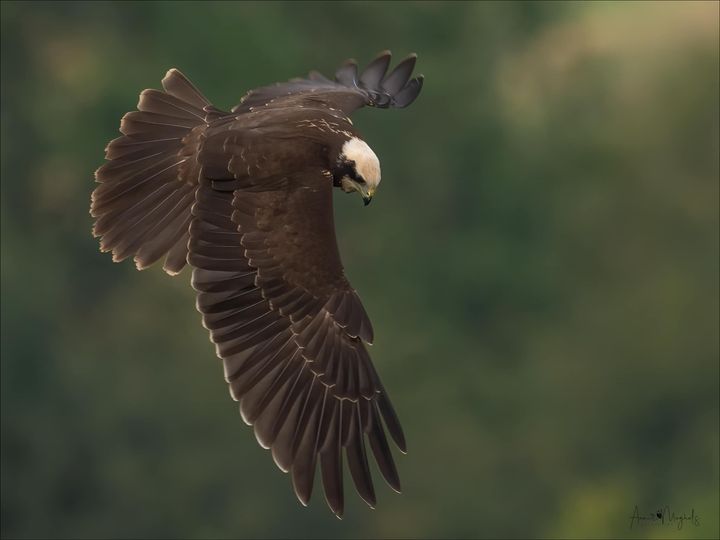
And secondly, with multiple daily sightings, Summer Leys simply oozed Marsh Harriers, three different birds having visited the reserve this week. Four other localities also produced singles, including the Brampton Valley between Cottesbrooke and Hanging Houghton on 1st and 6th, Boddington on 2nd, Harrington AF on 1st-2nd and Stanford on 1st.

Set against a backcloth of increasing numbers of common migrants, the week’s passerines saw the movement of Common Redstarts begin to fall. Three were trapped and ringed at Stanford on 31st and the same number was seen at Harrington on 2nd, followed by one there the next day. Elsewhere, singles were found at both Clifford Hill and Lamport on 1st and at Blueberry Farm, Maidwell on 2nd.
While Common Redstarts were on the wane, Whinchats were on the up, with birds seen daily across a collective eight localities. The highest numbers were six at both Stanford on 1st and Clifford Hill GP on 6th. Other site maxima were four in the Brampton Valley on 4th-6th, three at Hollowell on 31st, two at Harrington on 2nd and singles at Orlingbury on 4th and at both Boddington and Brackley on 6th.

A Stonechat remained at Hollowell on 1st-3rd and one was present at Harrington on 2nd, while Northern Wheatears again remained low in numbers with just singles at Harrington on 2nd-3rd, in the Brampton Valley on 3rd-5th, at Hollowell on 3rd and at both Clifford Hill and Pitsford on 4th.

Newsround – 13th to 19th July 2024

Mid-July is not renowned for its delivery of the rare and the scarce – this is, after all, Northamptonshire … But as the weather warmed up so, to some extent, did the birds with the county’s two scarcest – though regular – migrant terns appearing on the same day.

Now looking like a fixed feature of forthcoming weekly Newsrounds, the female Ruddy Shelduck took a break from its favoured location of Winwick Pools to visit Stanford Res on 15th but it was back at Winwick three days later.

The only other duck of note, though, was a female Common Scoter, which dropped into Thrapston GP’s Titchmarsh LNR on 16th.

This week’s passage of notable waders was again limited to the same three species as the week prior, with lower numbers of Black-tailed Godwits restricted to Stanwick GP, where there were eight on 16th and two on 17th. Stanwick also produced a Wood Sandpiper on 16th, while a single Greenshank remained at Lilbourne Meadows NR until at least 18th.

Pitsford Res held on to its regular adult Yellow-legged Gull all week, while 17th saw a Sandwich Tern pay the briefest of visits to Stanford and, following last week’s Clifford Hill duo, yet another Little Tern appeared fleetingly at Earls Barton GP’s Mary’s Lake on the same day. The largest of the two is only the fourth this year, while its diminutive cousin has six previous records in 2024 to date.

In the Nene Valley, the number of juvenile Cattle Egrets jumped from two to four at this year’s new breeding site on 13th.

Following a week with, surprisingly, no reports, Ospreys staged a bid for a comeback, with the reservoirs of Pitsford and Stanford producing the most sightings. Two were at the first of these localities on 14th, followed by singles there on 15th, 16th and 19th, while one visited the latter site on multiple occasions between 15th and 18th. Elsewhere, one was found at Ravensthorpe Res on 14th and one flew high east over Summer Leys LNR on 19th.

And on the passerine front, Common Redstarts continued to be seen in the usual hotspots for this species. Up to two were at Blueberry Farm, Maidwell between 13th and 18th, a male remained at Woodford Halse NR, where it was seen on 14th-15th, Lilbourne Meadows held on to a male between 14th and 19th and single females were found at Stanford on 14th and at Ramsden Corner Plantation NR near Upper Stowe on 17th.

The second Whinchat of the autumn put in an appearance at Pitsford Res on 15th.

Newsround – 31st July to 6th August 2021

With temperatures a touch below average, the week shaped up to be rather unsettled, with low pressure systems feeding cooler Atlantic air into the UK. Migrants continued to trickle through in small numbers but the period was otherwise uneventful.

The sole wildfowl representative of the week can be summed up in a single word: Garganey. One was on show at Stanwick GP from 31st until at least 5th and last week’s Daventry CP bird was still present on 1st.

Just one Cattle Egret was present at Stanwick GP on 2nd-3rd, while Pitsford Res produced a Great Egret on 31st plus two there on 4th and singles also visited Summer Leys LNR on 1st and Blatherwycke Lake on 5th.  

After no reports at all last week, Ospreys made a bit of a comeback, with single birds at Stanford Res on 2nd, over Cottesbrooke on 3rd, Pitsford on 4th and at both Deene Lake and Hollowell Res on 5th.

Juvenile Osprey, Hollowell Res, 5th August 2021 (Jon Cook)

Hollowell also produced an early morning Marsh Harrier on 3rd – they are rarely recorded from this site – and further individuals were seen briefly at Stanford on 2nd and Thrapston GP on 4th.

Juvenile Marsh Harrier, Hollowell Res, 3rd August 2021 (Jon Cook)

Last week’s Harris Hawk remained in Duston, Northampton on 1st, local intel revealing that it has escaped from a Daventry-based falconer and has been on the loose for the last twelve months!

On the wader front, Black-tailed Godwits dominated the week’s proceedings, with eight at Clifford Hill GP on 31st followed there by four on 6th. Elsewhere, six flew over Stanford on 31st and one was at Daventry CP on 1st. Curlews away from breeding sites were limited to two at DIRFT 3 A5 Pools on 31st and 3rd and a Ruff was also present there on 4th. Greenshank numbers were again surprisingly low, with just one at Stanford on 4th.

As we head into autumn proper, gull numbers are visibly on the up and, among them, the first juvenile Mediterranean Gull of the season appeared at Stanwick on 2nd. A count of thirty-two Yellow-legged Gulls at the latter site on 5th was considered to be conservative as prolific late summer vegetation on site considerably hampered viewing of some four to five hundred large gulls there at the time. Smaller numbers elsewhere throughout the period included up to eleven at DIRFT 3, up to three at Pitsford and one at Daventry. This week’s Caspian Gulls were equally divided between DIRFT 3 and Stanwick, the first of these two sites providing two different adults on 1st and 3rd – the latter bearing a German ring. Stanwick’s two consisted of a third- or fourth-summer from 3rd to 5th, joined by an adult there on the latter date.

Adult Caspian Gull, DIRFT 3, 1st August 2021 (Mike Alibone)
German-ringed adult Caspian Gull, DIRFT 3, 3rd August 2021 (Mike Alibone)

To passerines … and four sites produced Common Redstarts this week, starting off with the long-staying female remaining at Lilbourne Meadows LNR until at least 4th. Elsewhere, up to three were seen at Blueberry Farm throughout the period, as was the same number at Harrington AF, where three were trapped and ringed on 2nd, and two were at Lamport on 5th. Other passerines reported were two Whinchats in the Brampton Valley below Hanging Houghton, between 2nd and 4th and one at nearby Blueberry Farm on 5th and, hot on the heels of last week’s first, came more Northern Wheatears.

Northern Wheatear, Harrington AF, 3rd August 2021 (David Smith)

One was in the Brampton Valley on 2nd and 4th, one lingered at Harrington AF from 3rd to 6th and one was found at Blueberry Farm on 5th.