It is, of course, late May – historically the peak time for the cream of the spring crop to be produced and, with UK temperatures reaching a record-breaking 35.1°C for May, the heat was on, the week delivering big time with a bird not seen in Northamptonshire for thirty-four years …
But before all that, there is more standard fare – including a fine calibre rare – to go through. More Garganeys came our way, with a drake again at Stanford Res on 24th being quickly followed by a pair at Earls Barton GP’s New Workings (South) the next day, the latter site producing three Red-crested Pochards on 29th.
And following the first of the year last week, another Quail broke silence – this time in the Brampton Valley near Blueberry Farm on 23rd, with likely the same bird again between Cottesbrooke and Hanging Houghton on 29th.
After three records already this year, the fourth was to be added this week when two Common Cranes flew east from fields near Holcot on 25th. One on the ground would no doubt be much appreciated.
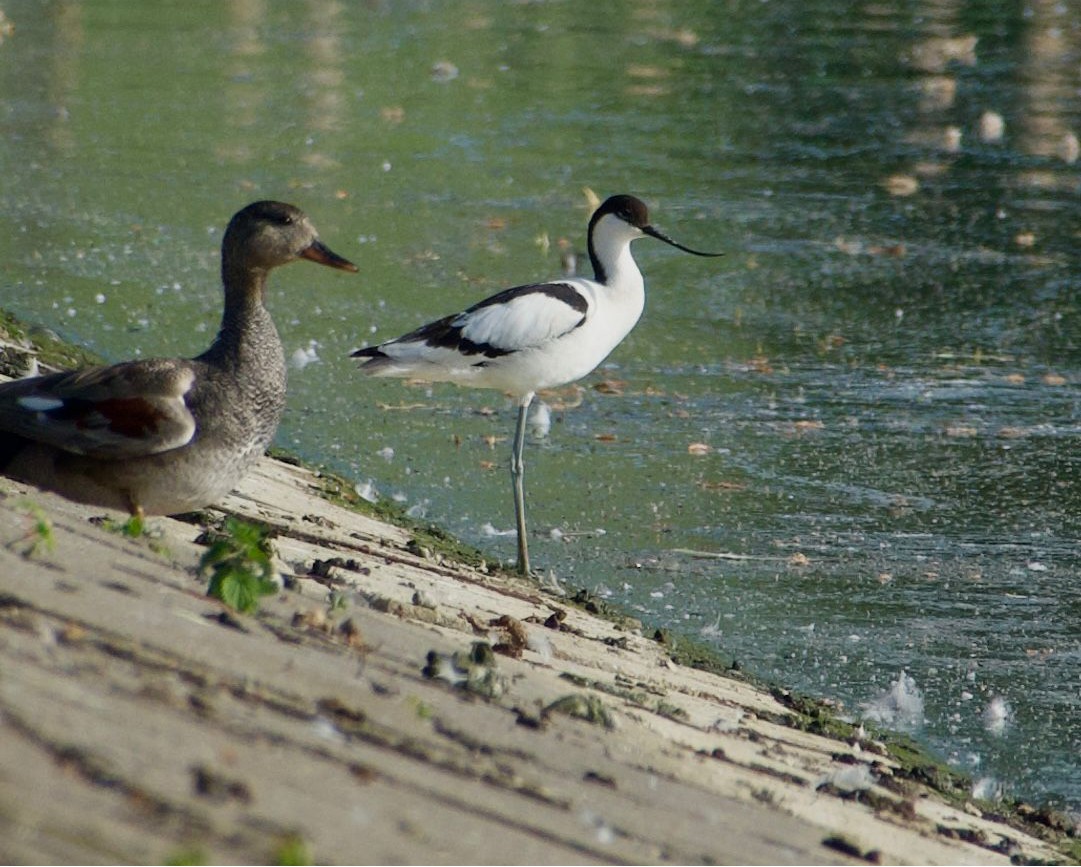
Unsurprisingly, given where we are on the calendar, the week’s waders were much reduced in numbers compared to those of previous weeks. Avocets were seen daily at Summer Leys LNR, peaking at four there on 28th, while one that turned up at Stanford Res on 26th was the first to be seen there since 2017.
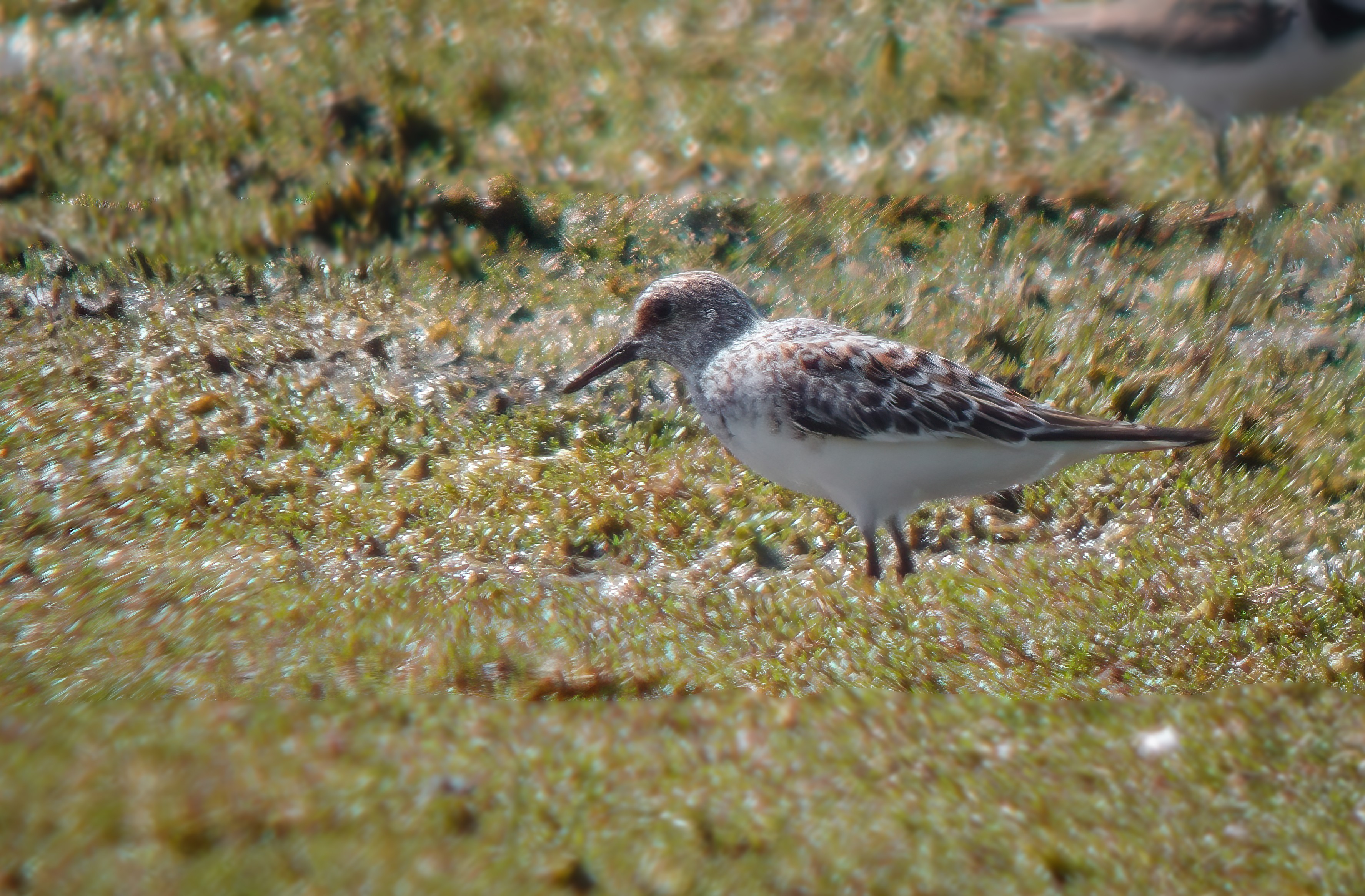
The only other noteworthy wader was a Sanderling at the now rapidly drying out Winter Flood Pools at Lilbourne Meadows NR on 25th.
A first-summer Little Gull arrived at Summer Leys on 28th, being joined there by another on the following day.
The latter locality also produced a batch of Bittern sightings with singles on 23rd, 25th and 29th, while one was also seen at Thrapston GP’s Titchmarsh NR on 23rd and 27th. Cattle Egrets were also in evidence with one in flight over the River Nene at Denford on 23rd, three in fields between Aynho and Clifton on 24th, and one at Clifford Hill GP on 29th.
Fishing or on the fly, the week’s Ospreys were to be seen at Thrapston GP’s Elinor Trout Lake on 23rd and 27th, at Pitsford Res on 24th-25th and at Hollowell Res on 29th and, once again, Marsh Harriers were restricted to a lone male over Stortons GP on 26th-27th.
It’s not often that the period’s passerines knock everything else into a cocked hat but that was clearly the case this week … but it wasn’t all plain sailing from an observer’s point of view. Early morning on 29th gave rise to the discovery of a female Red-backed Shrike at Summer Leys. Seen only briefly, it did not linger, much to the disappointment of the many ready to scramble if the news came through that it was still present. There have been only seven previous county records so far this century, the most recent of which were in 2022 and 2024 and, prior to that, in 2015.
As nice as it might have been, its rarity was totally eclipsed by an entirely different animal altogether. Another early morning discovery in the shape of a singing male Savi’s Warbler was made at Stortons GP on 26th. Initially heard reeling in the reedbed, brown and dandy it made its way close to the top of the reeds on a number of occasions, much to the delight of an appreciative gathering of those who were on site in time to see it before it decided to lay low after mid to late morning. There was a repeat performance the following day but it failed to show to anything like the same extent. And after that? Gone.
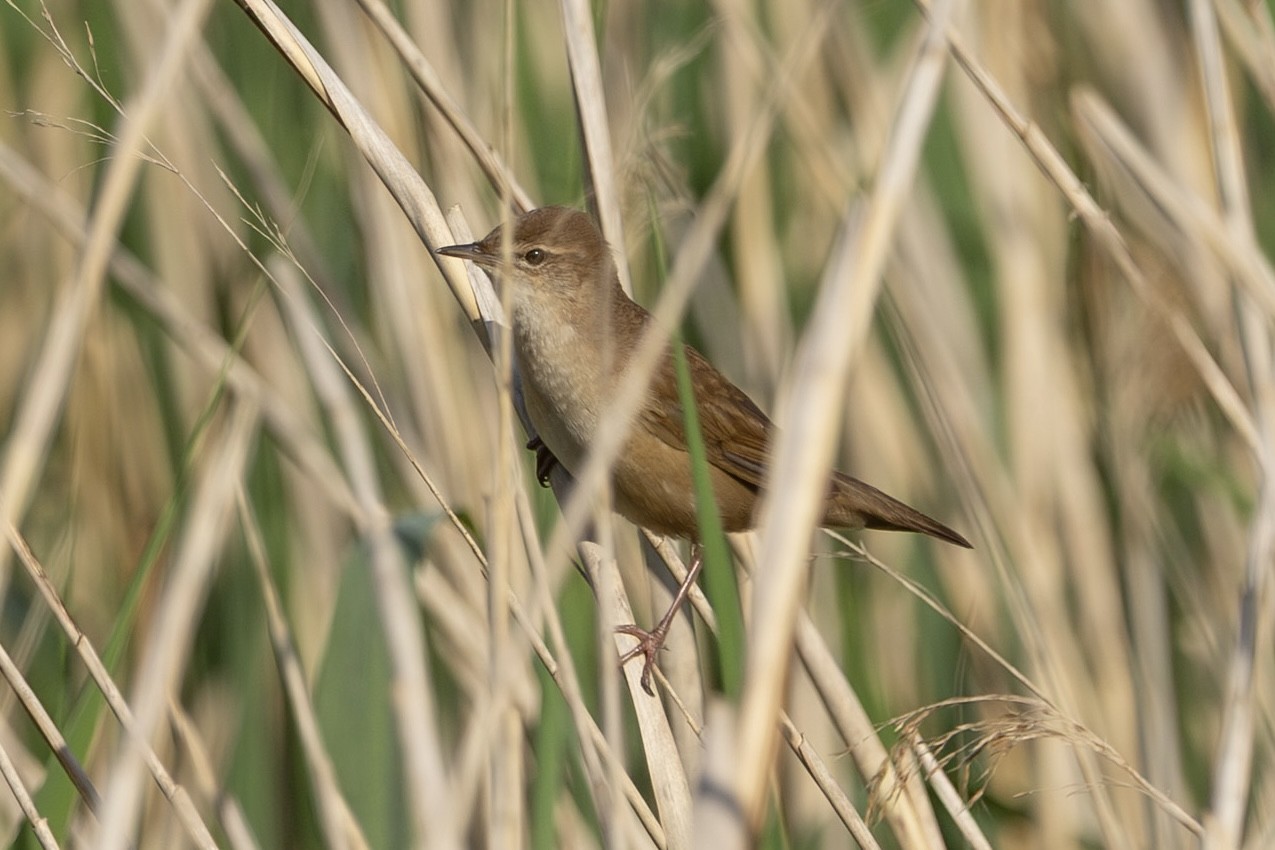
With only three previous records – including one present at two localities within the same area of the Nene Valley – this is only the fourth for Northamptonshire and the first for thirty-four years …
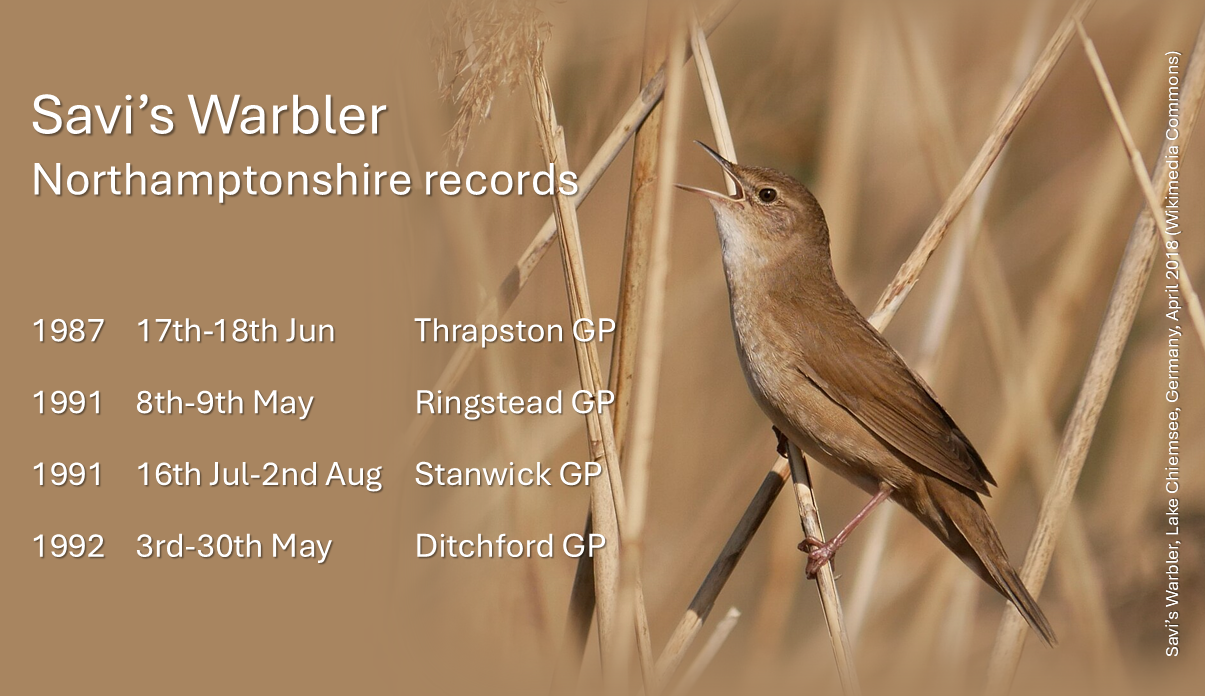
Numbers of breeding pairs of Savi’s Warblers in the UK hit thirty in the late 1970s but were running at possibly eight pairs in 2023 (British Birds Rare Breeding Birds Panel, 2024), while Keller et al (2020) showed how the range of Savi’s Warbler has shifted north and east in Europe since the 1980s, with considerable loss of range in western Europe, such as in France. What impact this will have for future records in Northamptonshire and the wider UK remains to be seen.


