
Author: Mike Alibone
Rarity Round-up, 14th to 27th July 2018
Unless you were particularly unlucky, over the past two weeks the rain has again held off and the southerly airstream has continued with its delivery of abnormally high summer temperatures. Perhaps surprisingly, local bodies of water remain at relatively high levels, with one source stating reservoirs are currently around 90% full – principally Hollowell (86.42%), Pitsford (90.78%) and Ravensthorpe (91.24%). Hollowell is traditionally the one to expose its mud first and so frequently becomes the initial autumn ‘go-to’ destination to find passage waders for local birders not faithful to a patch.
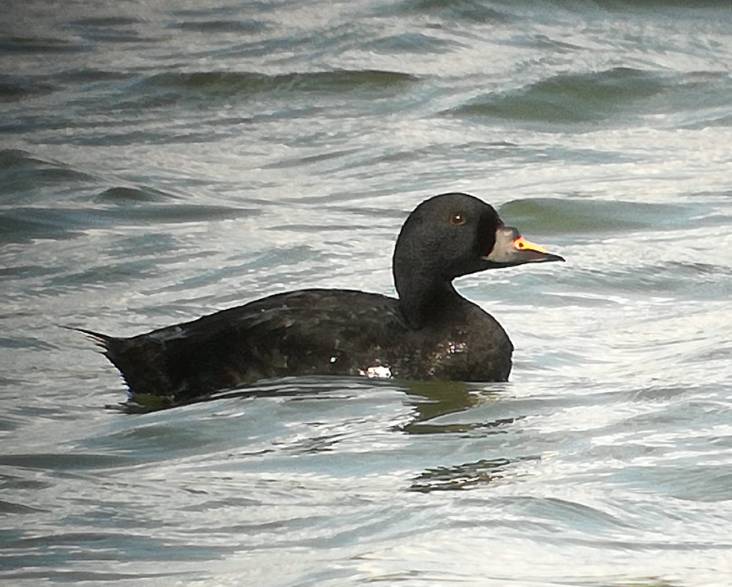
Somewhat seasonally skewed – or simply an escape – a Pink-footed Goose visited Clifford Hill GP on 17th, while the number of Red-crested Pochards at Pitsford Res climbed from two, through five on 18th-25th, to nine on 26th. Topping the bill for wildfowl, however, was a drake Common Scoter discovered at Boddington Res on 26th. This species undertakes a ‘moult migration’ in which many thousands congregate at favoured sites – principally in the eastern North Sea, the Baltic and off western France so inland records at this time of the year should not be considered unusual.
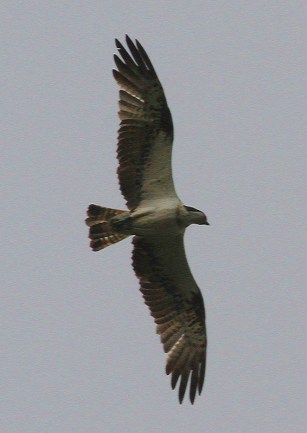
The two Great White Egrets at Thrapston GP remained throughout the period, favouring the northern end of Titchmarsh LNR’s Aldwincle Lake. The same site produced an Osprey on 17th and again three days later, on 20th, when two flew over. Two more fly-over Ospreys included singles at Towcester on 20th and Stanwick GP on 27th. The latter site also produced a Marsh Harrier, flying west, on 16th.
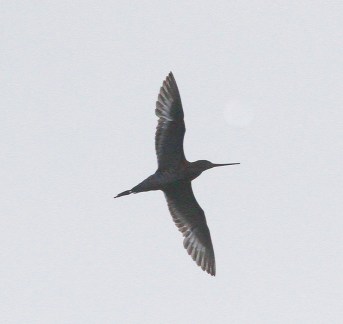
Sticking with Stanwick, the evening of 27th produced what is likely to be the largest autumn flock of Whimbrels in the County. Sixty-two flew west together, followed by two more shortly afterward. Numbers of Black-tailed Godwits ramped up during the period, with flocks of fifteen at Earls Barton GP on 17th, twenty at Clifford Hill GP on 20th, five over Thrapston GP on 26th and singles at both Stanwick and Summer Leys on 21st and 27th. Worthy of note also was a Ruff at Stanwick on 21st. Another milestone along the road to autumn was passed on 17th, when the first fresh, scaly, juvenile Mediterranean Gull appeared at Daventry CP. This was quickly followed by four different individuals there during 20th and 21st, plus another on 27th. Two more juveniles were also seen at Pitsford Res from 21st.

Daventry CP also briefly played host to what was potentially bird of the summer so far. A ‘black-backed gull’, present during the afternoon of 26th and early morning of 27th, showed all the characteristics you could ever wish to see if you were going to claim a Baltic Gull in the UK. From the observer’s photographs, it certainly looks the business and more will be published on this site in due course. More gull action at Daventry included the occurrence of a first-summer Caspian Gull on 26th and up to four Yellow-legged Gulls between 17th and 27th. Several were seen regularly at Pitsford Res and
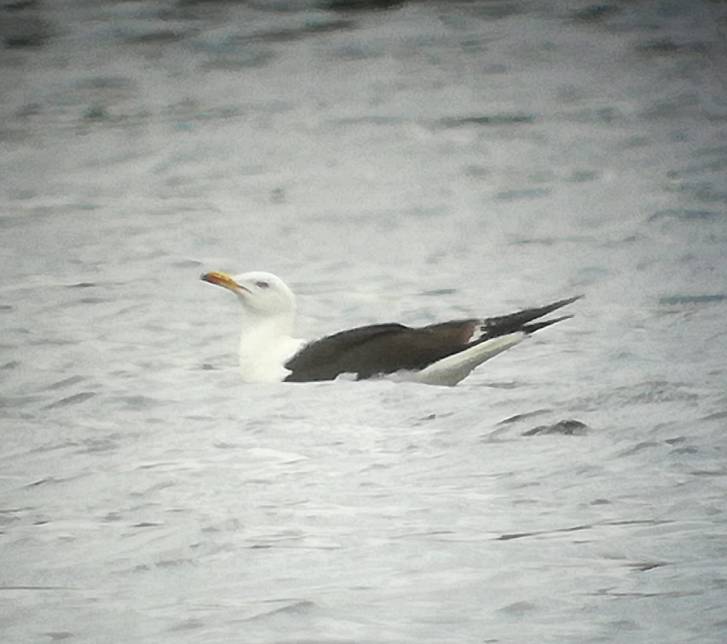
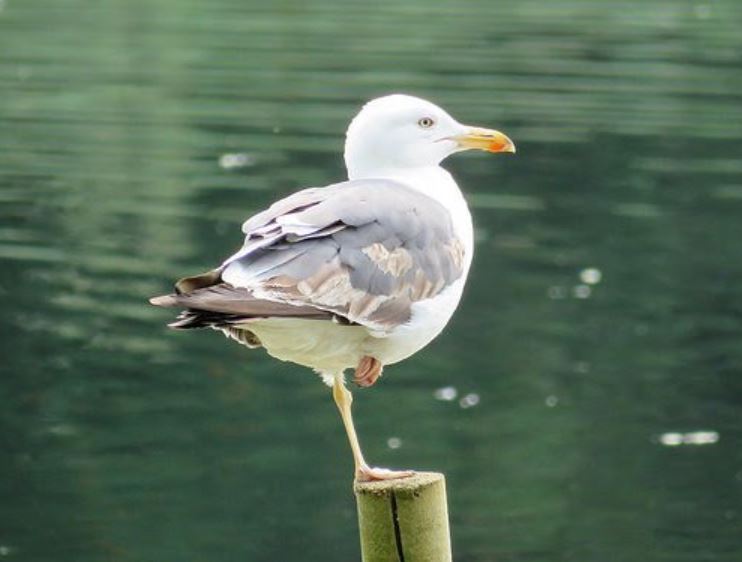
singles visited Wicksteed Park Lake on 19th and Thrapston GP on 25th but Stanwick accounted for the lion’s share with the highest counts of seventeen on 20th and thirty-three on 26th.
On the passerine front, a Common Redstart at Fawsley Park on stands decidedly lonely …
Rarity Round-up, 30th June to 13th July 2018
And so it continues – almost wall-to-wall sunshine and no sign of any rain. Water levels are indeed falling and some of the more outlying and lesser watched sites have begun to attract waders. Both Cransley and Welford Reservoirs produced Common Sandpipers and Dunlins appeared on pools at Priors Hall, while the autumn’s first Greenshank was found at Irthlingborough Lakes & Meadows on 30th June. Things can only get better …
The Summer Leys drake Garganey was joined by a female from 30th to 2nd, with only the female remaining until 3rd but the only other wildfowl of note were two drake Red-crested Pochards at Pitsford Res on 2nd.

Also doubling up, at Thrapston GP’s Titchmarsh LNR, the hide-and-seek Great White Egret was joined by a second individual on 12th, with both still present the following day. Stretching the doubles theme perhaps a bit too much, a singing male Quail was heard between Billing GP and Cogenhoe on 13th, constituting only the second record for the county this year.
Two Marsh Harriers were also found – one at Pitsford Res between 30th and 4th, while the other was seen flying east at Summer Leys LNR on 2nd but the only other species of raptor to be recorded during the period was, unsurprisingly, Osprey. Singles were at Thrapston GP on 2nd, flying over the A605 nearby on 3rd, at Stanford Res on 7th and 8th and in flight over the A605 near Oundle on the latter date, while two flew high south over Corby on 4th.
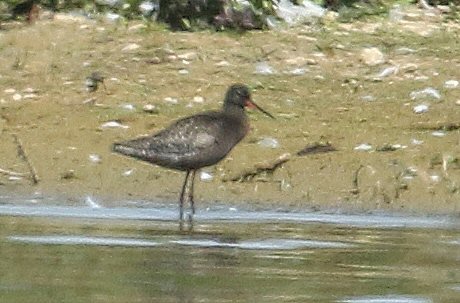
If football isn’t coming home, then waders certainly are. Against a backcloth of small numbers of commoner species, more Black-tailed Godwits were found, with seven at Earls Barton GP on 5th, three at Stanwick GP on 6th and the same number at Summer Leys the following day but the highlight of the early autumn wader passage, so far, is the fine, summer-plumaged Spotted Redshank, which graced Summer Leys for a full five days from 1st before moving on. And if waders are on their way back so too, it seems, are gulls. July is the month when Yellow-legged Gulls begin to reappear and, following one at Pitsford Res on 6th, two were at Stanwick GP on 10th and 13th.


Meanwhile, on the passerine front, the same two species featured in the last round-up again make an appearance in this one. The singing male Firecrest was still at Badby Wood on 3rd and a lone Crossbill flew over Wellingborough’s Westminster Estate on 10th.
Rarity Round-up, 16th to 29th June 2018
The calm and settled weather, established over the preceding two weeks, remained throughout the period, while temperatures continued to rise – some parts of the county hitting 27°C during the second week. Other parts of the country exceeded 30°C and with no rain in sight, rumours of a forthcoming drought, water shortages and hosepipe bans began to circulate in the media, as did the suggestion that we might be in for another ‘summer of ‘76’ scenario.
 Should this be the case, what might we look forward to during the remaining summer period? A look back at the 1976 Northamptonshire Bird Report reveals that while wildfowl suffered, extensive mud availability in July produced both Little and Temminck’s Stints, Sanderling and Avocets at Pitsford Res, Avocets at Ravensthorpe Res and the county’s fourth-ever Pectoral Sandpiper at Cransley Res … and that was before we hit autumn proper.
Moulting into eclipse, a drake Garganey appeared on the scrape at Summer Leys LNR on 26th, remaining until 29th, when it was joined by a female. Further down the valley, at Thrapston GP’s Titchmarsh LNR, the Great White Egret continued to put in sporadic appearances, being present on 18th-19th and 28th, as did an Osprey, which was seen on 22nd and 28th. Three pairs are currently feeding young at nests in Northamptonshire, so it is likely to have been a local visitor to the reserve. One also flew north-east over Byfield on 28th. At least three hundred pairs are now breeding in Scotland and with a new translocation scheme operating in Poole Harbour, plus the announcement of measures being taken to conserve this species on migration and in its west African winter quarters, we can surely look forward to more frequent encounters over the forthcoming years.

Titchmarsh LNR also produced a Marsh Harrier on 23rd and a male Hen Harrier was reported flying over the A43, close to Fineshade Wood the next day, on 24th. It would have been unusual if spring had passed by without at least one Honey Buzzard being recorded so, preserving its almost annual status in the county, one was seen flying north-west over Nether Heyford on the evening of 20th.
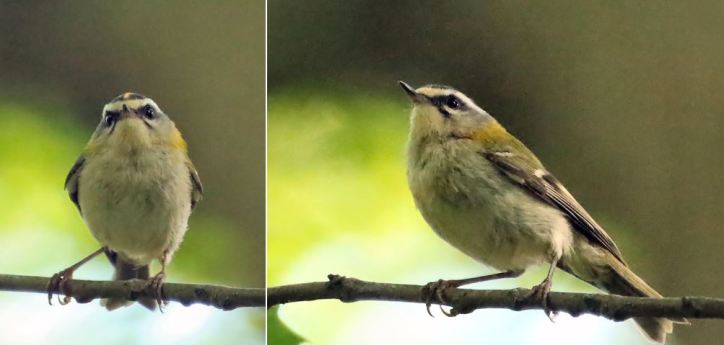
Rarely do raptors or even passerines outnumber waders in these reports but compared with the above and below in this instance, three Black-tailed Godwits at Summer Leys on 20th seem distinctly lonely. A singing male Firecrest at Badby Wood on 24th and 25th provided a summer jewel for those who went to see it and ten Crossbills in pines at the University of Northampton’s Park Campus, briefly on 19th, were a sure sign of post-breeding dispersal and perhaps an indication of more to come.
Rarity Round-up, 2nd to 15th June 2018
The local weather for this two-week period was largely calm and settled, remaining under the influence of an airstream from the near continent, despite the best efforts of ‘Storm Hector’ to disrupt on the penultimate day. The birding pace understandably slowed considerably, although the period gave rise to some bizarre birds, as well as the first southbound passage wader of the ‘autumn’ – a Common Sandpiper on the last day.
The drake Garganey remained at Stanwick GP until at least 5th, the year now having bottomed out as far as wildfowl numbers are concerned. A Quail singing at Harrington AF on 3rd did not linger, unlike the adult Gannet previously reported over both Earls Barton GP and the A6 near Rushden on 1st, which was relocated at Clifford Hill GP, where it remained for at least forty minutes on the morning of 2nd.
The almost resident – presumably first-summer – Great White Egret remained at Thrapston GP throughout and another was seen flying over Aston le Walls on 8th.

The biggest surprise of the period also came from the western part of the county, where three Greater Flamingos were seen flying north-west over Farthingstone on the evening of 14th. In a laudable effort of derring-do, the observer gave chase by car but ultimately lost them and a subsequent search at Daventry CP and DIRFT/Lilbourne Meadows proved fruitless. Greater Flamingo is always a difficult one to assess. There is a series of supposedly vagrant records from a broad swathe of European countries as far north as Lithuania (or Finland according to IUCN), while the European population is estimated at 45,000-62,400 pairs and is said to be increasing (IUCN). However, the escape/feral possibility remains high – although three together … go figure.
An increasingly common sight in summer nowadays, single Ospreys were seen at Thrapston GP on 7th, Weldon Quarry and Deene Lake on 9th and at Hollowell Res on 13th and 15th but arguably more unusual was the first-summer Caspian Gull observed with a small flock of loafing gulls at Rushton Landfill on 9th. The main part of the landfill here is currently being capped off while a new excavation has been opened up, further from the traditional observation point along Oakley Road.
Another surprise report involved a Golden Oriole singing in the eastern suburbs of Northampton during the early hours of 3rd, the day after a Wood Warbler was discovered singing at Fineshade Wood, where it remained until at least 9th.
Rarity Round-up, 26th May to 1st June 2018
The period’s weather comprised similar conditions to those of the previous week, with a variable easterly airflow and temperatures around, or above, the seasonal norm. Storms and heavy showers continued to work their way up and over from the continent during the first half of the week, giving rise to localised flooding in the county. Indeed, Northampton experienced 16 mm of rainfall in just two hours during the evening of 27th, jeopardising island-nesting birds at local water bodies, some of which had their nests flooded out. Migrant waders and Black Terns dominated the birdscape with, apart from a certain seabird, the week ending somewhat uneventfully on a quiet note.
After a first-summer paid a brief visit to Stanford Res on 12th, another Whooper Swan appeared two weeks later, at Lower Barnwell flood, on 26th. Its origins are perhaps suspect, as are those of the Pink-footed Goose found feeding with Canadas at Clifford Hill GP on 29th, with the same site continuing to host the roaming, presumed escaped female Bufflehead still, on 26th. Dodgy wildfowl notwithstanding, a pukka drake Garganey spent the week at Stanwick GP, while a drake and a female dropped in to Summer Leys LNR on 26th.
Indisputably ‘bird of the week’ – another Friday night special – was an adult Gannet, which was seen flying north over Mary’s Lake at Earls Barton GP and also north-west over the A6 near Rushden on 1st. It seems highly likely to have been the same bird reported in Bedfordshire, at Great Barford GP, earlier in the afternoon. A Great White Egret was again at Thrapston GP on 27th and 30th-31st, a different individual the one present on 25th and presumably a first-summer. The week’s only Osprey also lingered there on 30th but not too far away and dripping with intrigue, was the report of a ‘ringtail’ harrier sp. flying west over the A43, north of Hardwick Wood on the evening of 29th. At this time of the year we potentially have four species to choose from, so take your pick …
The fall-out from flood of water and waders at the end of last week resulted in more waders, which included twenty-nine, mainly ‘tundra’, Ringed Plovers at Stanwick on 27th (with smaller numbers elsewhere) and a continued run of Sanderlings, with one at Clifford Hill GP on 26th and two at both Summer Leys and Stanwick on 27th, plus two more visiting the latter site on 30th.
A bit of phonescoped video of the 2 sanderling this morning #northantsbirds pic.twitter.com/EUL8MRYCdl
— Steve Fisher (@stanwicktramp) May 30, 2018
These were shadowed by Turnstones – three at Summer Leys on 27th, dropping to two on 28th, also two at Stanwick on the same dates. The four Greenshanks remained at Lower Barnwell flood on 26th and one visited Summer Leys the following day.

The arrival of Black Terns continued with 26th producing singles at Daventry CP, Earls Barton GP and Stanwick plus seven at Summer Leys, followed the next day by singles at Clifford Hill GP and Pitsford Res, two at Boddington Res and three at each of Ditchford, Stanwick and Thrapston GPs. The last two of these sites also held two a piece on 30th. What would have been the rarest bird of the week, had it not been pipped to the post by the Gannet, was the Little Tern which visited Pitsford’s Scaldwell Bay during the afternoon of 30th. Beyond this, the adult Mediterranean Gull was again at Stanwick on 26th-27th.
Rarity Round-up, 19th to 25th May 2018
The fact that weather can be a massive influencer in what turns up where, and when, was aptly demonstrated during this week which, for the first half was clear, warm and sunny. A light easterly airflow predominated, bringing murky, wet and, for a time, windy conditions off the continent during the latter half – a classic scenario for grounding migrants. In stark contrast to the previous week, there was plenty to get excited about, topped dramatically during the last hours by the fourth Rose-coloured Starling for Northamptonshire.
Summer Leys LNR saw the reappearance of a drake Garganey on 19th, followed by a male and female there on 24th-25th, while Stanwick GP hung on to its two drakes from last week before a third drake appeared there from 21st to 24th. Back to provide some summertime entertainment, last year’s presumed escaped female Bufflehead returned to Clifford Hill GP on 25th, after visiting Nottinghamshire earlier in the year.
A Great White Egret continued to visit Thrapston GP, with sightings on 21st, 23rd and 25th although, based on bill colour, local observers have identified two different individuals there over the past two weeks. A Marsh Harrier was also hunting there again on 20th, while two days later, on 22nd, single Ospreys were seen at both Hollowell Res and flying west at Summer Leys.
And then the floodgates opened. After bemoaning the fact that this had been an exceptionally poor spring for waders (and for some species, it has), local birders were treated to a weather-induced rush of Arctic-bound lovelies at the week’s end. A Grey Plover – scarce this year – appeared at Stanwick GP on the 25th, the date on which wader passage was most evident. This day also saw up to forty Ringed Plovers, the majority of which appeared to be of the race tundrae, at Clifford Hill GP after three more tundrae had been identified at Stanwick GP the previous day. Just one Black-tailed Godwit arrived this week, staying a day at Summer Leys on 24th, while the same site hung on to its Turnstone from 18th until 19th.
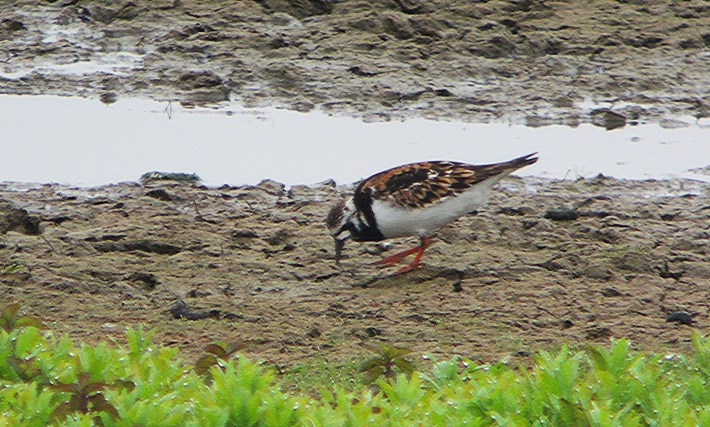
At least four more Turnstones appeared at Clifford Hill GP on 25th and a Knot made a stopover on a tern raft at Thrapston GP on 21st, while a brief and elusive evening visitor to Summer Leys on 23rd appeared in the shape of a fine summer-plumaged Curlew Sandpiper.

And so to Sanderlings … there had been three prior to this week but singles were found at Summer Leys on 23rd and 24th (two different individuals), Stanwick GP on the same dates with four (possibly six) there on 25th, two more at Summer Leys on 25th and twenty-three at Clifford Hill GP – comprising groups of eight, twelve and three – also on 25th. Single Wood Sandpipers visited Summer Leys and Stanwick on 23rd and 24th respectively, while a late flurry of Greenshanks included singles at Croughton Quarry on 23rd-24th, Stanford Res on 24th, Summer Leys and Ditchford GP on 25th with four at Lower Barnwell floods on the latter date.

The last two days of the month saw an arrival of Black Terns. On 24th, ten were at Summer Leys, nine at Boddington Res, seven at Stanford Res and six at Pitsford Res and on the following day, five visited Thrapston GP, two were at Clifford Hill GP and one was at Pitsford Res.

Meanwhile, late Arctic Terns included one at Stanwick on 24th, followed the next day by ten flying east there and two at Clifford Hill GP. The adult Mediterranean Gull was again at Stanwick on 23rd.

Which brings us neatly on to … Rose-coloured Starling. This ‘bird of the week’ or, more likely, ‘bird of the year’ in this instance, was discovered in a private garden in Wellingborough, late in the afternoon of 25th. It lingered long enough to be photographed and then promptly vanished, not being seen during the evening or subsequently. This is only the fourth record for Northamptonshire, having been seen previously in 1888, 1908 (both of which were shot) and 1998 – the latter an accommodating adult which frequented Woodford Halse between 11th and 22nd September. It appears that years ending in 8 may prove to be good for finding this species in future …
Kestrel does Qualcast
Kestrels. Frequently seen hovering above motorway verges and over open countryside, their behaviour normally associated with the search for mammalian prey. Kestrels’ diets are not restricted entirely to mammals, though, and as well as small birds, they frequently feed on insects. These are taken to varying extents, depending on range/location and food availability and they can form a considerable proportion of diet in some cases, with beetles, dragonflies, grasshoppers, moths recorded as frequently being taken. The implication, though, is that they are taken on the ground after being spotted through hovering, or from a stationary perch.

However, as Roland Bogush’s excellent sequence of shots, above, illustrates, insects are also taken and eaten in flight. This bird was observed aerial hunting last week at Sywell Country Park. It’s not a behaviour I have knowingly seen in this country by I have observed it in migrants in Israel. So, Kestrel clearly joins prolific aerial hunters, Lesser Kestrel, Red-footed Falcon and Hobby in capturing insects in mid-air. Cruising around, picking up insects? It must surely be a lot less bovver than a hover …
Rarity Round-up, 12th to 18th May 2018
The weather this week was again ‘too good’ although gusty north-easterlies provided a little wader action on 16th-17th.
Perhaps the biggest surprise of the week – largely due to its unseasonal occurrence, was a first-summer Whooper Swan, which appeared briefly at Stanford Res on 12th. Its age and the short duration of stay would suggest a late migrant, although small numbers of feral birds can be found not too far from our borders
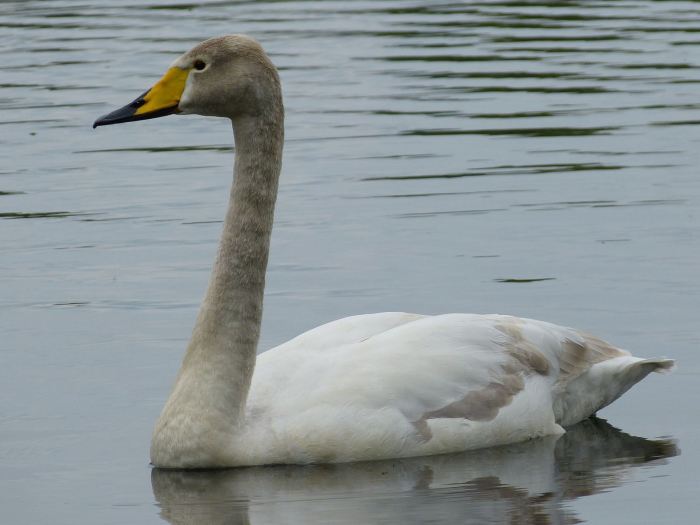
.Like last week, the only Garganeys during the period were a drake at Stanwick GP on 13th and two drakes there on 18th while, unsurprisingly, no other scarce wildfowl were reported from any location.A Great White Egret visited Thrapston GP on 16th-17th, where there was also a Marsh Harrier hunting on 13th but there was no sign this week of the previously oft encountered Osprey over Elinor Trout Lake. Hollowell Res produced one, though, on 12th and 14th and another was over Blatherwycke Lake on 17th.

Wader passage was again at a low ebb, although what was missing in quantity was made up for in quality by an Avocet at Stanwick GP on 16th, with another – or more likely the same one – visiting Summer Leys LNR later in the day. Back at Stanwick, the same date produced a ‘Tundra’ Ringed Plover and the spring’s third Sanderling while the following day saw a Turnstone at Summer Leys, staying until 18th.

Only the second Black Tern of a dire spring locally for this species was found at Stanford Res on 13th. It didn’t linger. The only other tern was an Arctic Tern at Pitsford Res on 16th, while the adult Mediterranean Gull remained at Stanwick all week.

Passerine migrants were again in short supply and, arguably predictable, was a male Wood Warbler singing at Borough Hill Plantation on 12th, although a concerted effort to find it from dawn the following day met with disappointment.

Northern Wheatear numbers fell this week to just three near Kentle Wood (Daventry) and two at Chelveston AF – all on 12th.
Rarity Round-up, 5th to 11th May 2018
In a week when the most exciting thing was the weather – a record early May bank holiday temperature of 25°C locally – birding fell flat in comparison to the previous seven days. The clear skies, lack of rainfall and an uplift in temperature, caused by a high pressure system importing warm air from south-east Europe, provided conditions conducive to non-stop migration, with few birds deciding to make landfall.
Most of this week’s action came from the Nene Valley, where the only Garganey during the period was a drake at Stanwick GP on 9th-10th and looking like a non-breeding, first-summer bird, the mobile Great White Egret was again at Summer Leys LNR on 5th and 7th.

Further down the valley, an Osprey was fishing at Thrapston GP’s Elinor Trout Lake on 6th and 8th and singles visited Hollowell Res on 7th and Pitsford Res on 11th.
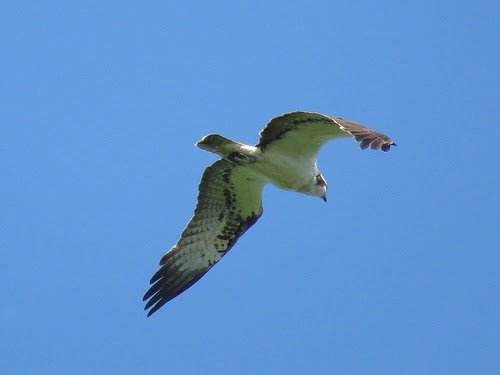

Following the high count of Black-tailed Godwits at Clifford Hill GP last week, numbers crashed to just two at Summer Leys on 5th, the latter site attracting four Wood Sandpipers on 6th, with two remaining the following day, while a Ruff was present there on 8th-9th. Clifford Hill, meanwhile, produced the second Sanderling of the spring with a one-day bird on 7th.
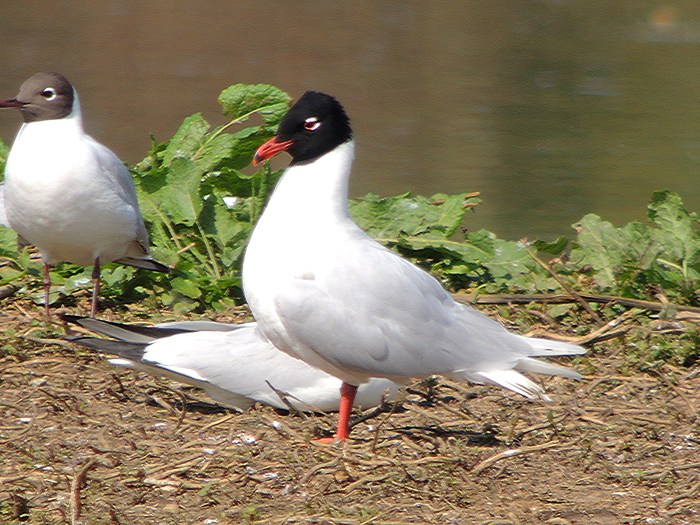
Narrowly making it on to the list this week was Arctic Tern, with singles flying west at Clifford Hill GP on 10th and at Pitsford Res the following day. A first-summer Little Gull lingered on Gull Island at Summer Leys on 5th and two adult Mediterranean Gulls again visited Stanwick on 7th, with one still there on 9th, while a first-summer Caspian Gull and an adult Yellow-legged Gull were at Daventry CP on 11th.
Passerine migrants were in short supply, with Northern Wheatear standing out as the only noteworthy species in this group. Clifford Hill GP was still the top venue at which last week’s double-figure collection of ‘Greenlanders’ fell to seven on 5th, two on 6th and one on 7th.

Elsewhere, up to three were at Chelveston AF on 5th-6th and singles were found at Polebrook AF and Summer Leys on 5th, in Kingsthorpe (Northampton) on 6th and near Horton on 7th.
 Northants birds