Found by Jack Douglas, this female Wood Duck has been present along an overgrown stretch of the River Nene, between B&Q and Carlsberg, Northampton, for approximately two weeks and is still present today.
Adult female Wood Duck, Northampton, January 2014 (Mike Alibone). The iridescent blue extending on to the third row of coverts ages this as an adult.
Although common in the USA, where it is also an east coast migrant south to Mexico, Wood Duck is kept commonly in captivity and the many documented records from UK counties refer overwhelmingly to escapes but with individuals appearing in Iceland, the Azores and Canary Islands the potential for transatlantic vagrancy should not be dismissed.
As with most presumed escapes there is always the nagging fear that this might actually be a wild bird 🙂
The week started mild and ended more or less on the same note, with a series of uneventful depressions bringing showers from the west intermittently throughout the period.
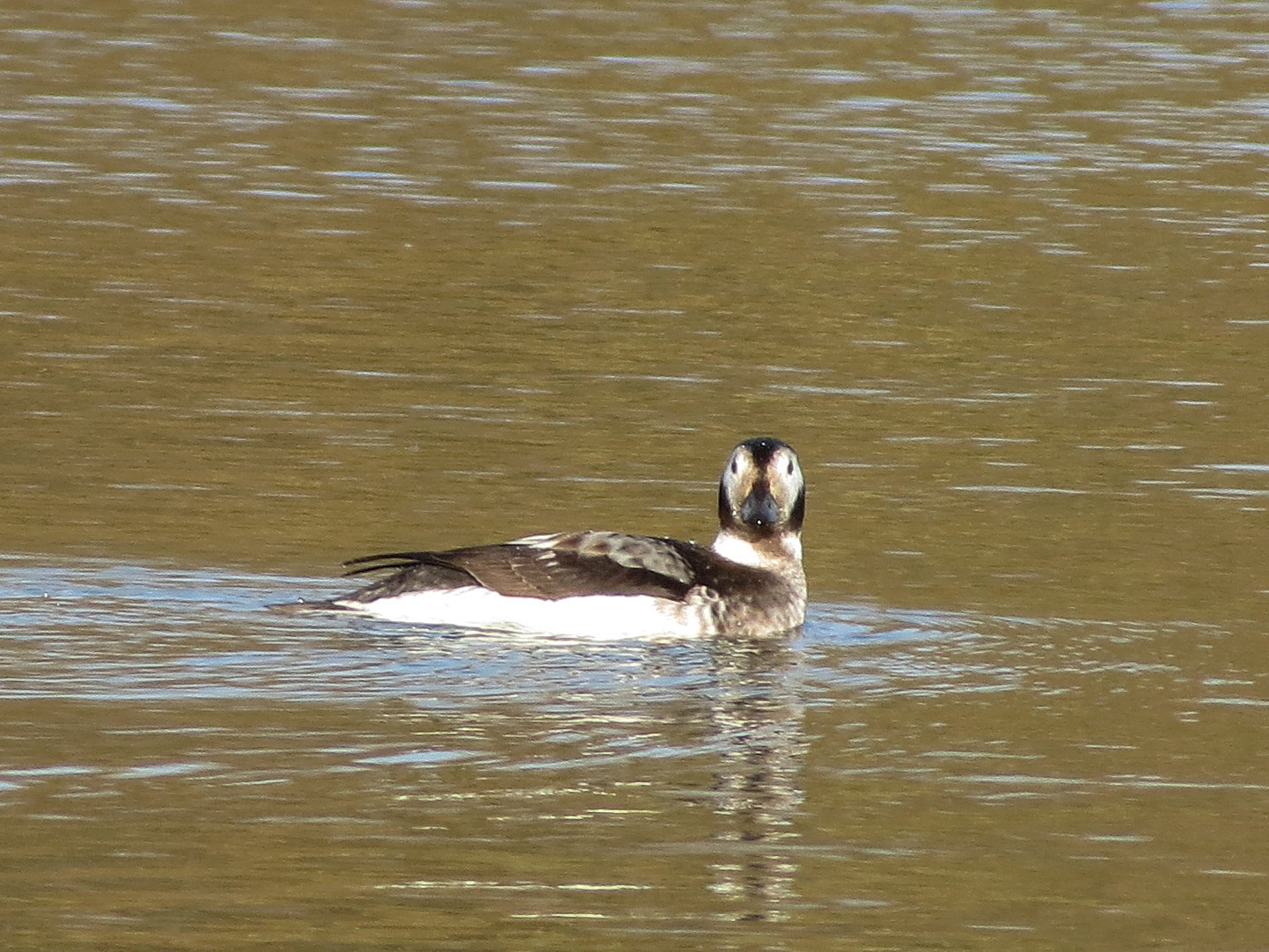
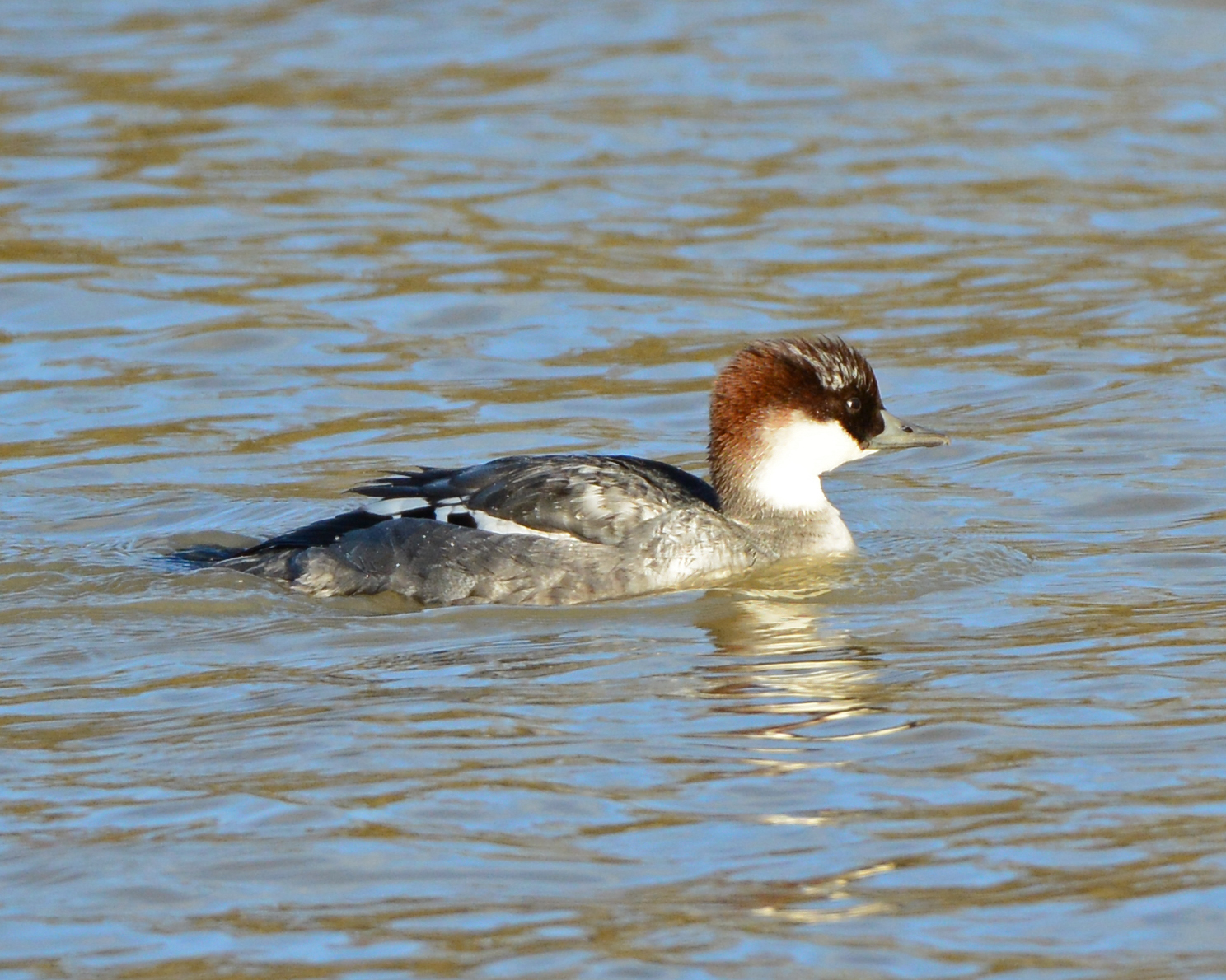
The wandering escaped Ross’s Goose visited Clifford Hill GP on 20th and nearby Hardingstone GP on 22nd, while two Egyptian Geese remained at Ditchford GP on the same date and another was at Barnwell CP on 19th, when the first three Shelducks of ‘spring’ returned to Summer Leys LNR. The only Pintail this week were two at Stanwick GP on 22nd and the same site produced a striking bird considered to be a hybrid drake Baikal Teal x Eurasian Teal on the same date.Four Red-crested Pochards visited Summer Leys on 20th, the drake Scaup remained at Ditchford GP until at least 22nd as did single Long-tailed Ducks at Thrapston GP until 19th and Earls Barton GP until 24th. The three reports of Smew this week consisted of five at Pitsford Res on 18th, one at Clifford Hill GP on 20th and two at Ditchford GP on 22nd and Goosanders were reported from six localities, with a maximum of seventeen at Hardingstone GP on 22nd.
The wintering juvenile Great Northern Diver was still at Pitsford Res on 22nd but it has now become difficult to assess how many Great White Egrets are now wintering in the county, with just one reported from Pitsford between 18th and 22nd, singles at Summer Leys LNR on 19th, 21st and 24th with two there on 20th and two at nearby Ditchford GP on 18th, 22nd and 24th with one there on 19th. Breaking the Peregrine monopoly, a Merlin was seen at Thrapston GP on 19th but Peregrinescontinued to outnumber with singles at Brixworth on 18th, Blueberry Farm, Maidwell on 20th, 22nd and 24th and at Ditchford GP on 22nd.
The week’s few waders included two Oystercatchers at Stanwick GP on 22nd, Golden Plovers at four sites, with a maximum exceeding five hundred at Summer Leys on 20th, a Green Sandpiper at Ditchford GP on 18th and 22nd and up to eleven Redshanks at Stanwick GP all week. A count of approximately one thousand Lapwings at Ditchford GP on 24th was noteworthy.
Scarce gulls were at a low ebb this week with an adult Mediterranean Gull visiting Daventry CP on 24th, single adult Caspian Gulls at Stanwick GP on 22nd and near Sidegate Landfill on 24th, a juvenile Glaucous Gull visited Broadholme Sewage Works (Ditchford GP) on 24th and adult Yellow-legged Gulls were in the same area on 22nd and 24th. A probable juvenile Kumlien’s Gull at Ditchford GP on 22nd will be only the second county record if it is eventually pinned down and the identification confirmed.
Great Grey Shrike, Lowick, 18th January 2014 (Alex Holt)
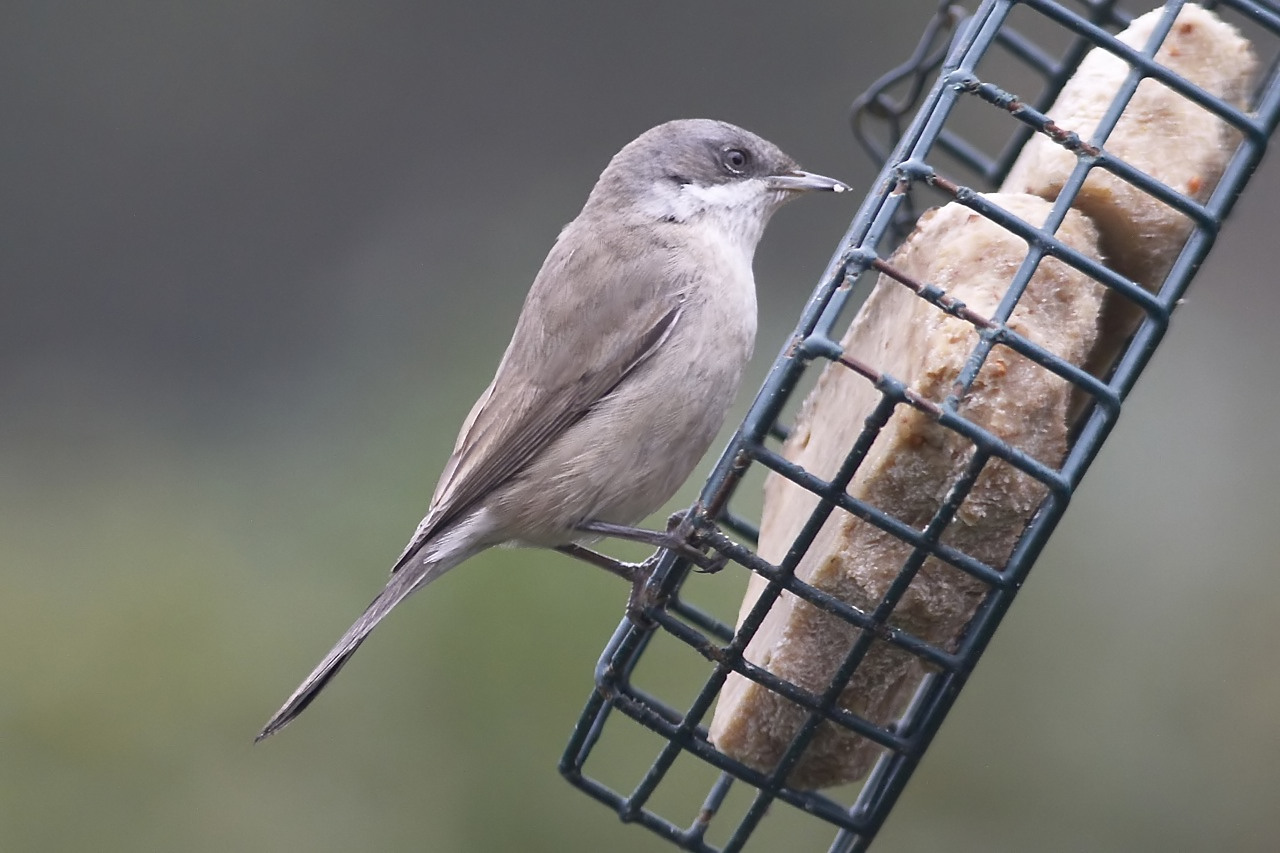
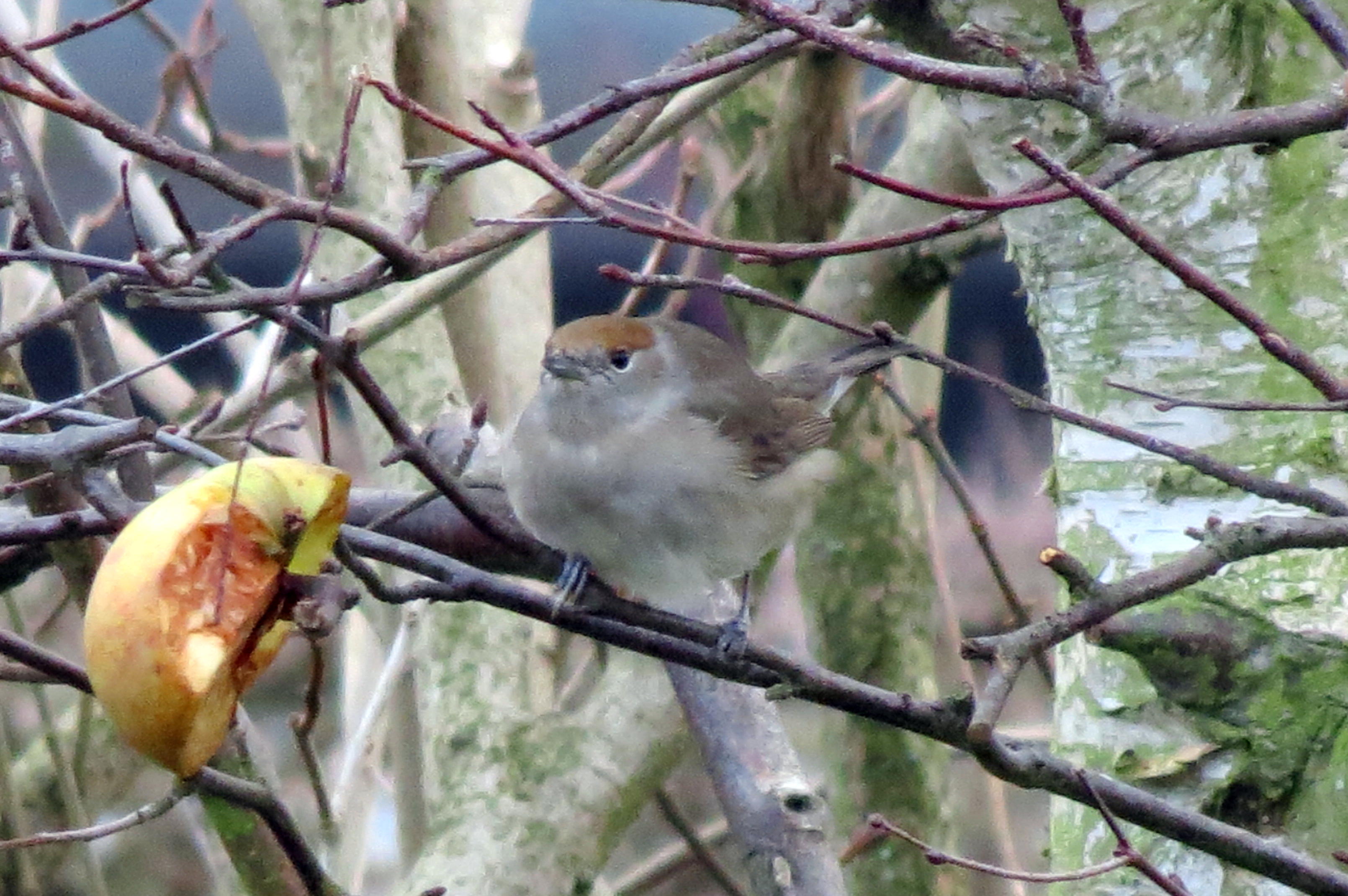
Last week’s Great Grey Shrike remained near Lowick until at least 23rd and ten Chiffchaffs were counted at Ditchford GP on 22nd, while wintering Central EuropeanBlackcaps included two in a Wellingborough garden and singles in Irthlingborough and Northampton all week. The ‘Eastern’ Lesser Whitethroat, discovered in a Northampton garden last week, continued to visit feeders there intermittently until 22nd. Its subspecific identity has yet to be resolved, with some authorities favouring Central Asian halimodendri while others suggesting blythi as a possible candidate.
Eastern Lesser Whitethroat, Northampton 18th January 2014 (Dave Jackson)
An unconfirmed report of two Waxwings in a car park on Northampton’s Lodge Farm Industrial Estate on 24th remains just that, while the two wintering Stonechats continued their winter residence at Blueberry Farm, Maidwell all week, a Water Pipit was again at Ditchford GP on 24th and six Bramblings were at Harrington AF on 19th with one at Hanging Houghton on 22nd.
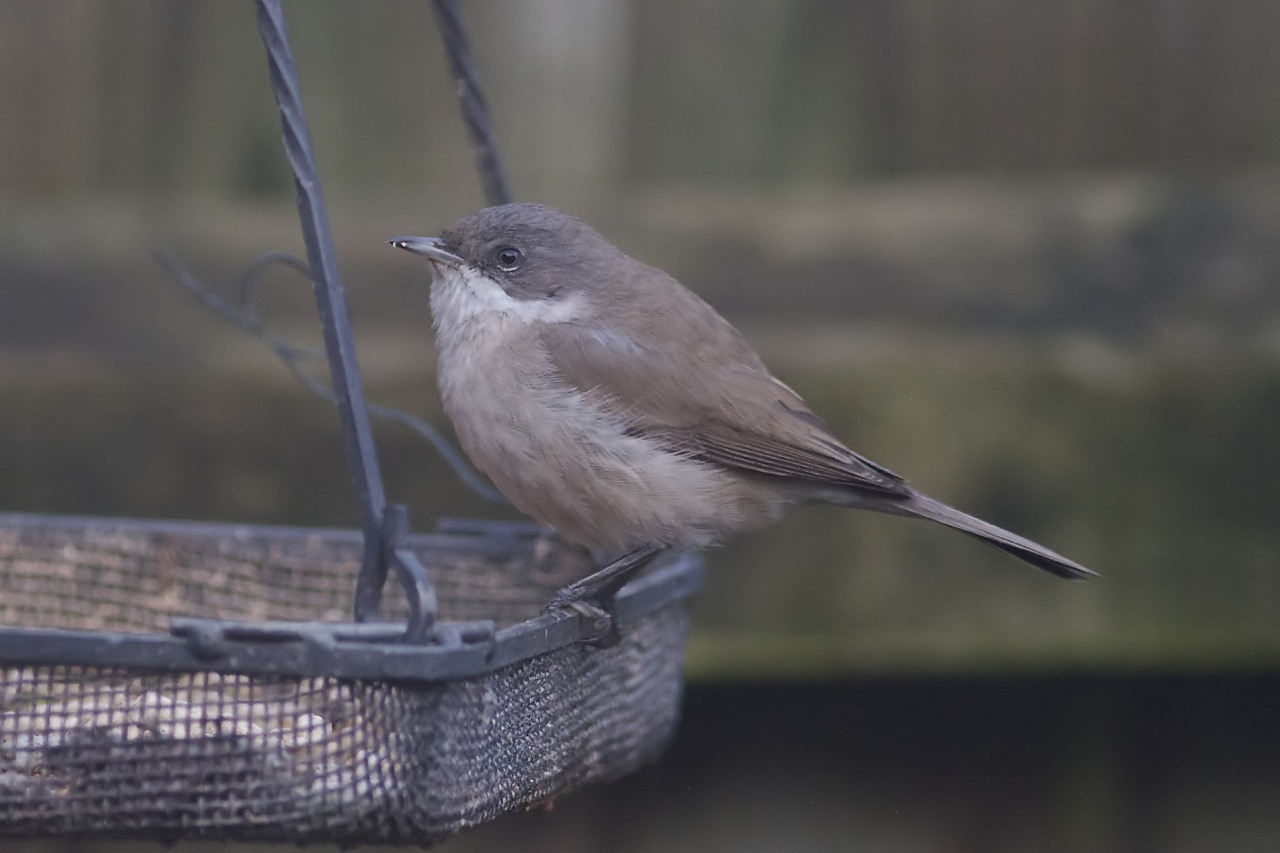
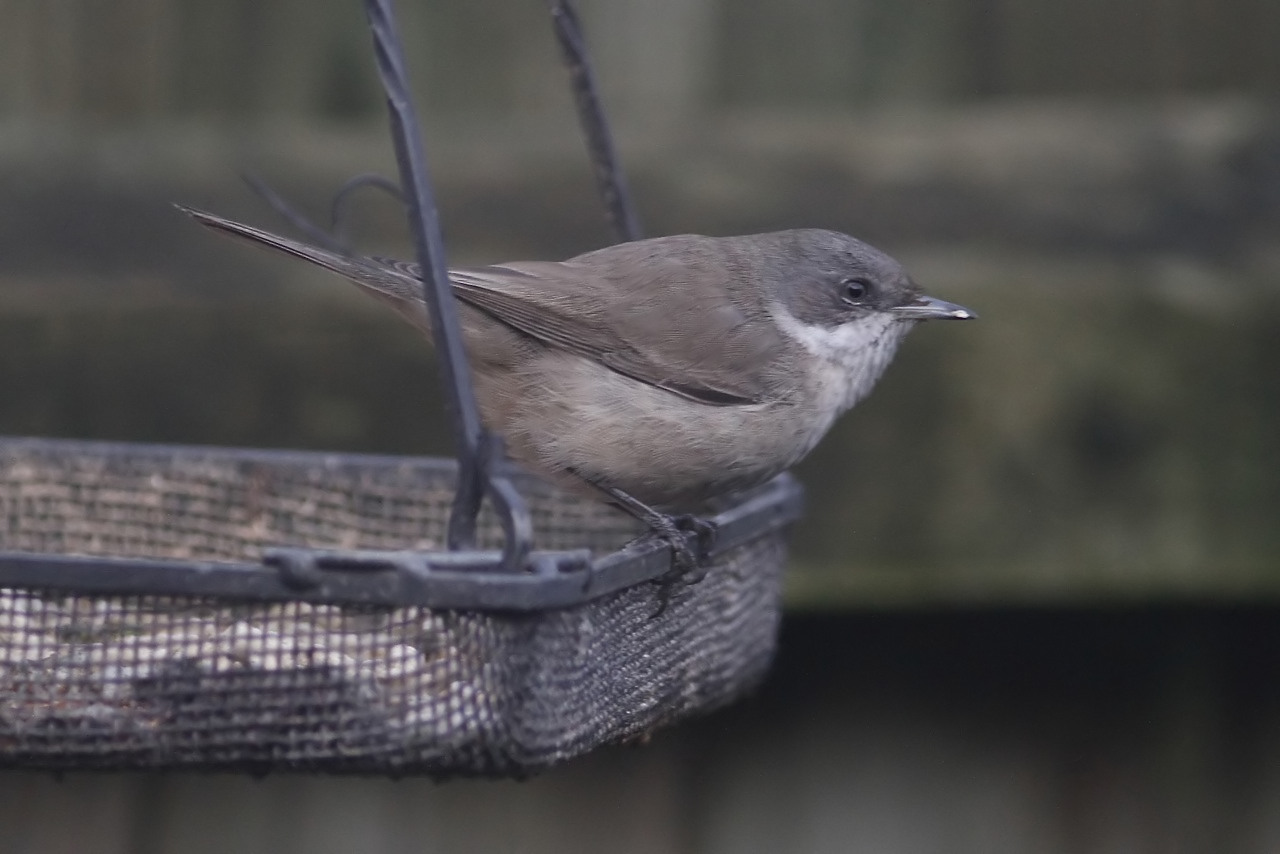
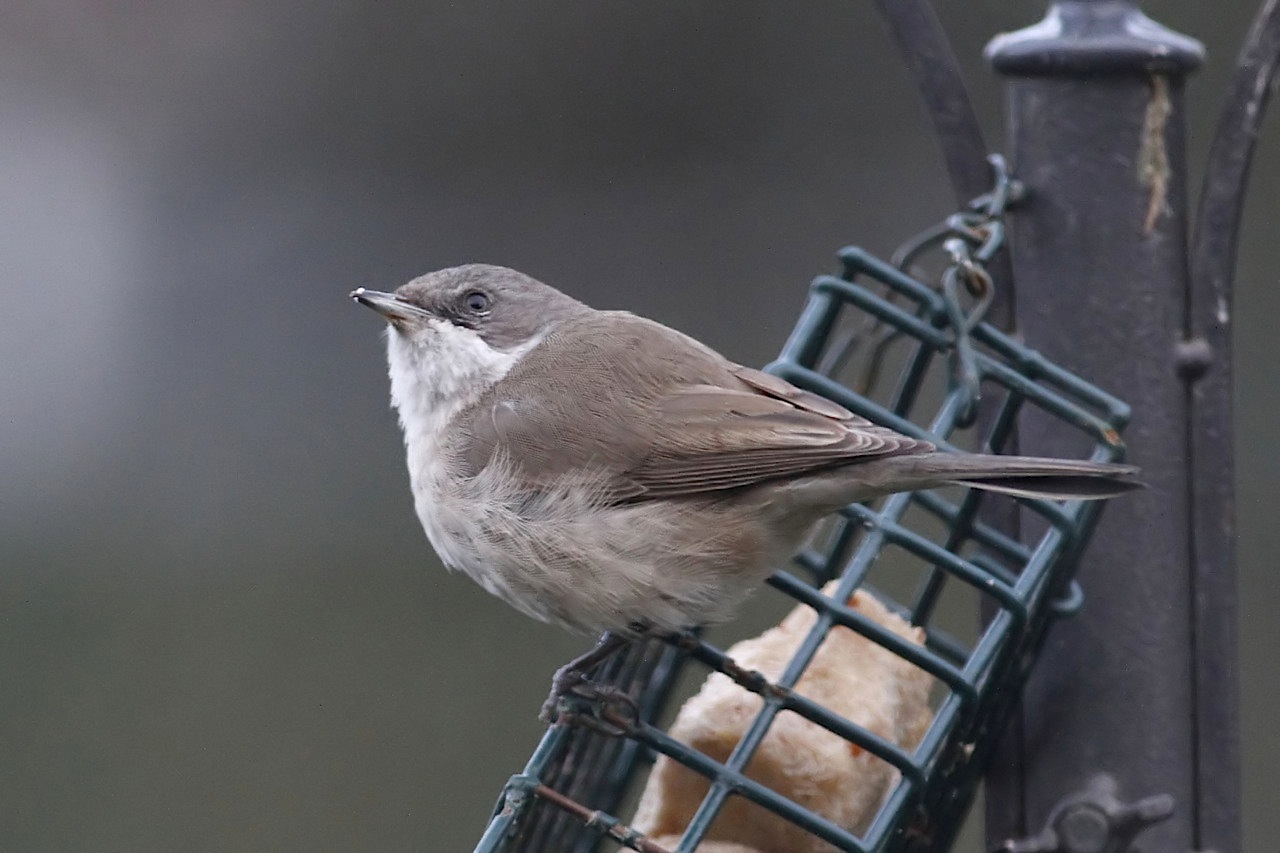
The wintering Lesser Whitethroat made sporadic appearances in Dave Jackson’s garden again today, being seen only briefly once in the early morning, again at 11.50 and then again at 15.10, after which it appeared on three more short occasions with the last at about 15.50, which was just long enough for Dave to capture some more images and for me to snatch some video.
Eastern Lesser Whitethroat, Northampton 18th January 2014 (Dave Jackson)
Eastern Lesser Whitethroat, Northampton 18th January 2014 (Dave Jackson)Eastern Lesser Whitethroat, Northampton 18th January 2014 (Dave Jackson)
Eastern Lesser Whitethroat, Northampton 18th January 2014 (Mike Alibone)
What a difference a day makes! The lighting was different today and the bird looked much, much browner – sandier even – than yesterday, adding weight to its likely eastern origin. Thinnish bill, very brown, almost ginger-toned, tertials and primary projection possibly on the short(ish) side. Still unable to get a view of the outer tail feathers to assess the extent of white. This bird could also appear quite long-tailed, a little pinched in toward the base, giving it almost spoon-like appearance at times.
After some research it’s now looking pretty good for halimodendri (Central Asian Lesser Whitethroat), a view forwarded by Gary Pullan, who also saw the bird today. Its pro-‘eastern’ features include brownish nape merging into grey of crown, sandy-brown upperparts, minimal dark mask, white throat contrasting with noticeably peachy-buff flanks and breast and apparently shortish wings, with the primary projection c.50% of the length of the tertials (nominate curruca said to be c.70%). But it could still be Siberian blythi …
Thanks once again to Dave Jackson for more images. I would welcome any comments or thoughts on the bird’s racial identification.
Great White Egret, Pitsford Res, 14th January 2014 (Glyn Dobbs)
The weather for the past week was largely dry with overnight frost at the beginning of the period, although temperatures lifted as the week progressed, so much so that two Peacock butterflies were on the wing at Thrapston Gravel Pits on 16th. Attracting a host of rare gulls, the Ditchford/Sidegate area was firmly back in the limelight this week and an unseasonal Lesser Whitethroat in a Northampton garden generated both interest and debate at the week’s end.
Static wildfowl included the (probably resident) Barnacle Goose at Blatherwycke Lake until at least 13th and the two Egyptian Geese at Ditchford GP on 15th, while up to eleven Mandarin Ducks were counted at Blatherwycke Lake. A probable Marbled Duck evaded positive identification – and, most likely, recapture – at Stanwick GP on 13th. The only Pintail were at Stanwick GP, with one there on 16th and three the following day, while the two Red-crested Pochards remained at Ringstead GP on 12th, the drake Scaup was at Ditchford GP all week with another at Pitsford Res on 11th and
Drake Scaup, Ditchford GP, 12th January 2014 (Bob Bullock)
single Long-tailed Ducks remained on Mary’s Lake at Earls Barton GP until 12th with the Thrapston GP bird reported again on Town Lake on 16th. Up to three Smew, including one drake, were present at Pitsford Res, while two (one drake) remained at Ravensthorpe Res all week and a ‘redhead’ was seen at Clifford Hill GP on 14th.
The wintering juvenile Great Northern Diver remained at Pitsford Res throughout the period and the Bittern at Stortons GP was seen only on 12th, while up to two Great White Egrets remained at Pitsford Res, two were also seen regularly at Earls Barton GP/Summer Leys LNR and one visited Ditchford GP on 12th.
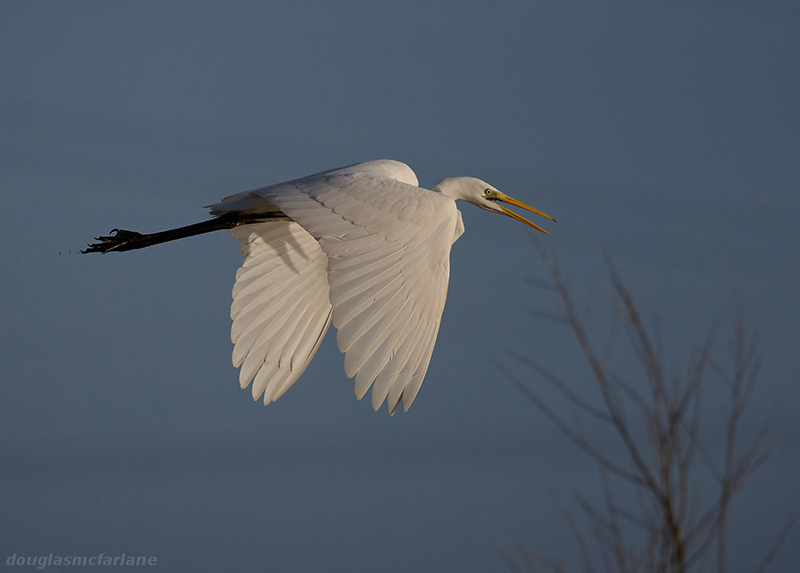
Great White Egret, Summer Leys LNR, 16th January 2014 (Douglas McFarlane)
As with last week, the only scarce raptors reported were all Peregrines with singles in the Barnes Meadow area of Northampton on 11th and 13th, Earls Barton GP on 11th, Ditchford GP on 14th, Summer Leys on 16th and Harrington AF on 17th.
On the wader front, the solitary, early returning Oystercatcher remained at Stanwick GP all week, while sizeable Golden Plover flocks were c.1000 at Stanwick GP on 17th, c.500 in the Welland Valley at Gretton on 13th and 241 on levelled building land at Pineham, Northampton also on 17th. Two Jack Snipes were found at Hollowell Res on 11th and another was at Pitsford Res on 13th, a Black-tailed Godwit put in an appearance at Stanwick GP on 15th, while up to thirteen Redshanks were there all week.
Laridophiles were on to a good thing this week with Ditchford GP and Sidegate Landfill finally producing good numbers of scarce gulls, many of which regularly visited a flooded field between Wellingborough and the landfill. Three Caspian Gulls (an adult, ringed fourth-winter and a second-winter) were there on 12th with two adults at nearby Stanwick GP on 11th, 13th and 17th, being joined by a second-winter on the latter date. Yellow-legged Gulls were thinly spread, with single adults at Stanwick GP on 11th, 13th and 17th, a near-adult at Pitsford Res on 12th and an adult at Rushton Landfill with another at Finedon and a second-winter near Wellingborough also on 12th and an adult at Ravensthorpe Res on 16th. A second-winter Iceland Gull visited Ditchford GP on 11th and a first-winter was found at Finedon the following day, being seen in the Wellingborough area throughout the week and at Stanwick GP on 17th. Three Glaucous Gulls (an adult, juvenile and second-winter) visited the flooded field near Wellingborough on 11th and 12th with just a juvenile there on 15th and an adult at Stanwick GP on 17th.
Adult Glaucous Gull, Wellingborough, 12th January 2014 (Martin Elliott)
No mass accumulation of gulls would be complete without the spectre of hybrids and the Wellingborough site attracted an adult Herring x Lesser Black-backed Gull hybrid on 11th-12th and examples of both juvenile and second-winter Herring x Glaucous Gull hybrids on the same dates. Elsewhere an adult gull considered to be a Yellow-legged x Lesser Black-backed Gull hybrid visited Pitsford Res on 12th.
A Great Grey Shrike was an unexpected find near Lowick on 17th while last week’s Bearded Tits were still at Stortons GP on 11th and 12th with the male – originally ringed there last autumn – being retrapped on the latter date. Single Chiffchaffs were present at Stanford Res on 11th, Ditchford GP on 12th and Pitsford Res on 13th, while at least two were at Stanwick GP on 16th and up to nine were at Ecton SF during the same period, the same site hosting a Siberian Chiffchaff on 11th-12th.
Siberian Chiffchaff, Ecton SF, 11th January 2014 (Bob Bullock)
Wintering Central EuropeanBlackcaps included two singles in gardens in Wellingborough on 15th and two in a Northampton garden all week
Central European Blackcap, Sywell, 11th January 2014 (Jim Dunkley)
but potentially more interesting was a Lesser Whitethroat discovered in a Northampton garden on 17th, possibly having been seen there two weeks previously. As well as this being likely to constitute the first winter record of this species in Northants its racial identity is yet to be resolved, with ‘Siberian’ blythibeing mooted as a possible candidate. The two wintering Stonechats were still in residence at Blueberry Farm, Maidwell on 16th and Bramblings were seen at just three localities, with a maximum of approximately thirty at East Carlton CP on 16th and a Hawfinch was reported at Fermyn Woods CP on 12th.
Dave Jackson forwarded these images he took of a Lesser Whitethroat in his Northampton garden today. A winter Lesser Whitethroat in the UK is exceptional and most – if not all – of these are likely to be birds of one of the eastern races.
Lesser Whitethroat, Northampton, 17th January 2014 (Dave Jackson)Lesser Whitethroat, Northampton, 17th January 2014 (Dave Jackson)Lesser Whitethroat, Northampton, 17th January 2014 (Dave Jackson)Lesser Whitethroat, Northampton, 17th January 2014 (Dave Jackson)
I was struggling to stretch the ID beyond nominate curruca – it’s not particularly brown above (although the 4th image in the above sequence depicts more brown), the primary projection is not particularly short and you can’t see the extent of white in the outer tail feathers.
However, Martin Garner, who saw saw the images late this afternoon, suggests the smart money is on blythi – Siberian Lesser Whitethroat. If the bird is trapped, biometrics, DNA analysis and outertail feather pattern will all play a cumulative role in assigning the bird to race, while sound recordings and sonograms of the bird’s call (Sardinian Warbler-like rattle vs. standard ‘tac’ call of nominate Lesser Whitethroat) will also add weight. We’ll see.
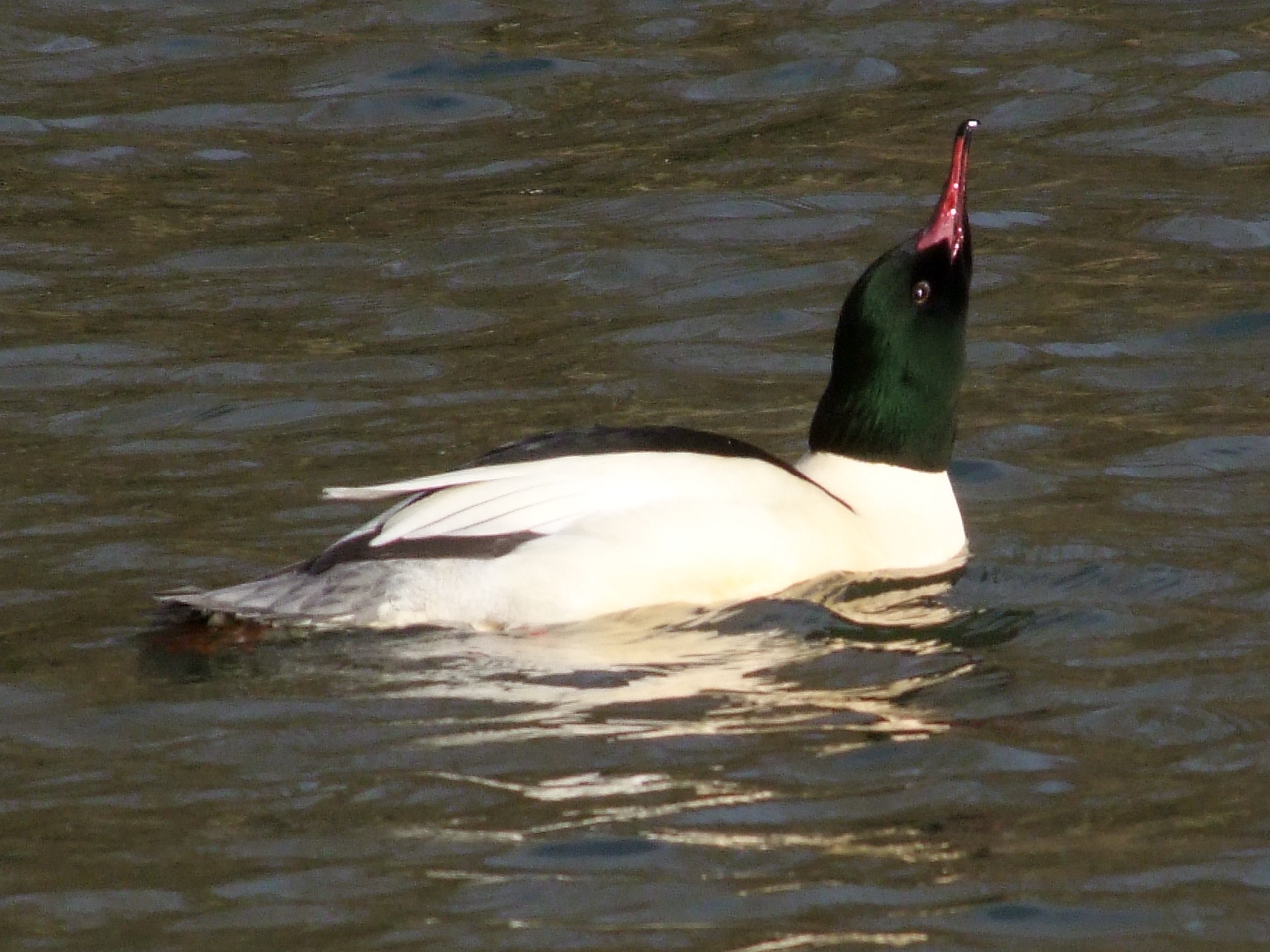
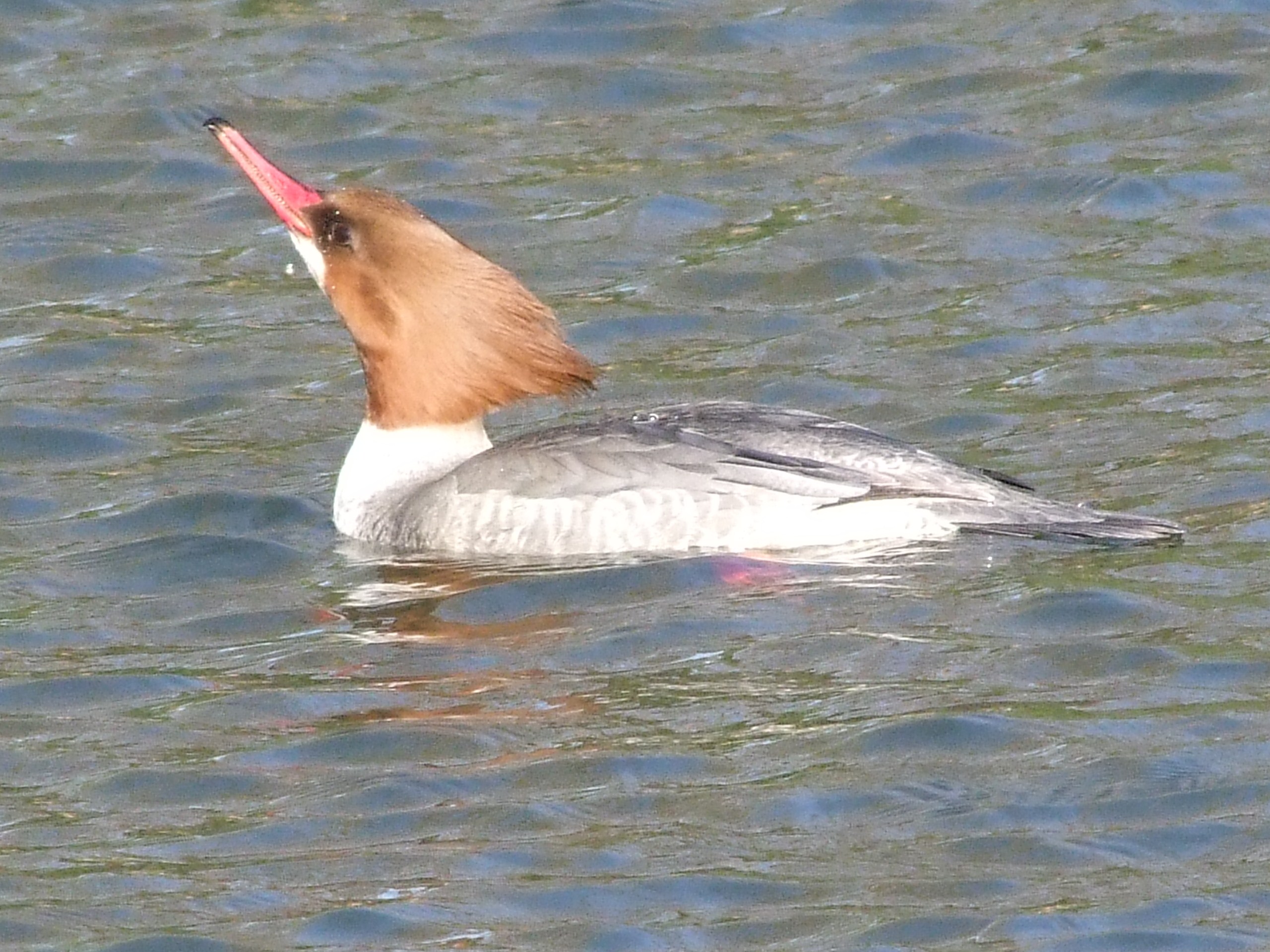
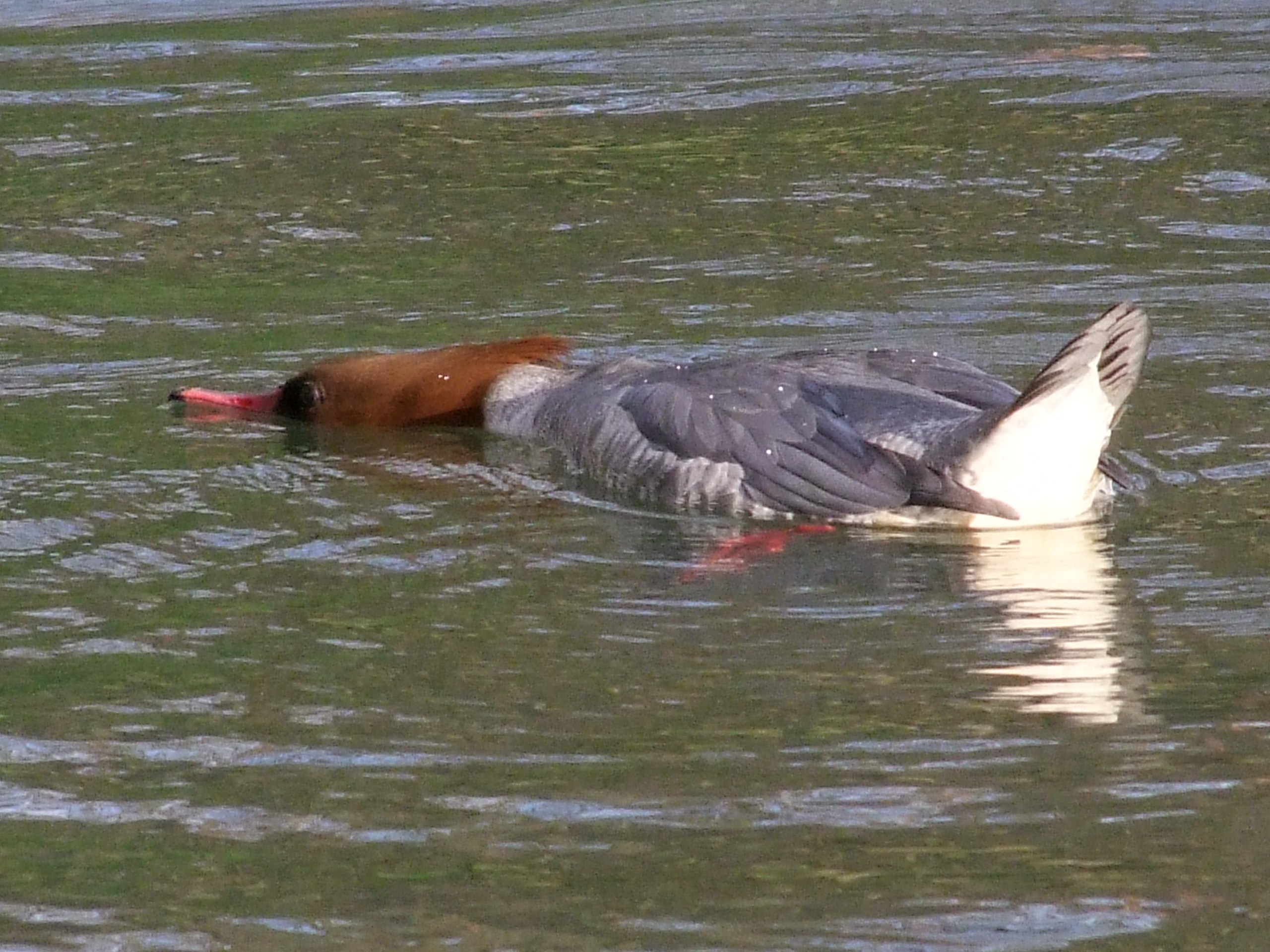
For the past few years Goosanders have become regular winter visitors to Abington Park Lakes in Northampton. The largest, middle lake is very shallow and provides opportunities for the Goosanders to catch fish with relative ease while offering birders the potential to capture fantastic images. In some winters more than twenty Goosanders have been present. They are a delight to watch and such close views are rarely matched elsewhere.
Pair formation can occur early in the winter with copulation taking place as early as December (for full details see BWP). Displaying males can adopt a partial neck-stretch with head feathers erected as below.
Goosanders, Abington Park Lake, Northampton, January 2014 (Dave Jackson)
Both sexes engage in pre-copulatory drinking, with heads tilted upwards before the female assumes the full prone posture inviting copulation.
Drake Goosander, Abington Park Lake, Northampton, January 2014 (Doug Goddard)Female Goosander, Abington Park Lake, Northampton, January 2014 (Doug Goddard)Female Goosander, Abington Park Lake, Northampton, January 2014 (Doug Goddard)Goosanders, Abington Park Lake, Northampton, January 2014 (Doug Goddard)
‘Redhead’ Goosanders are either females – this one showing her teeth – or first-winter
Female Goosander, Abington Park Lake, Northampton, January 2014 (Dave Jackson)
males like this one, where the generally duller brown head, indistinct whitish chin and broad blackish lower border to the brown upper neck is a clue to its sex.
First-winter male Goosander, Abington Park, 22 Dec 2011 (Keith J Smith)
Abington Park Lakes have also attracted Red-breasted Merganser and Shag in recent years – not bad for a small urban park habitat!
Many thanks to Keith J Smith, Doug Goddard and Dave Jackson for providing photos of these superb birds.
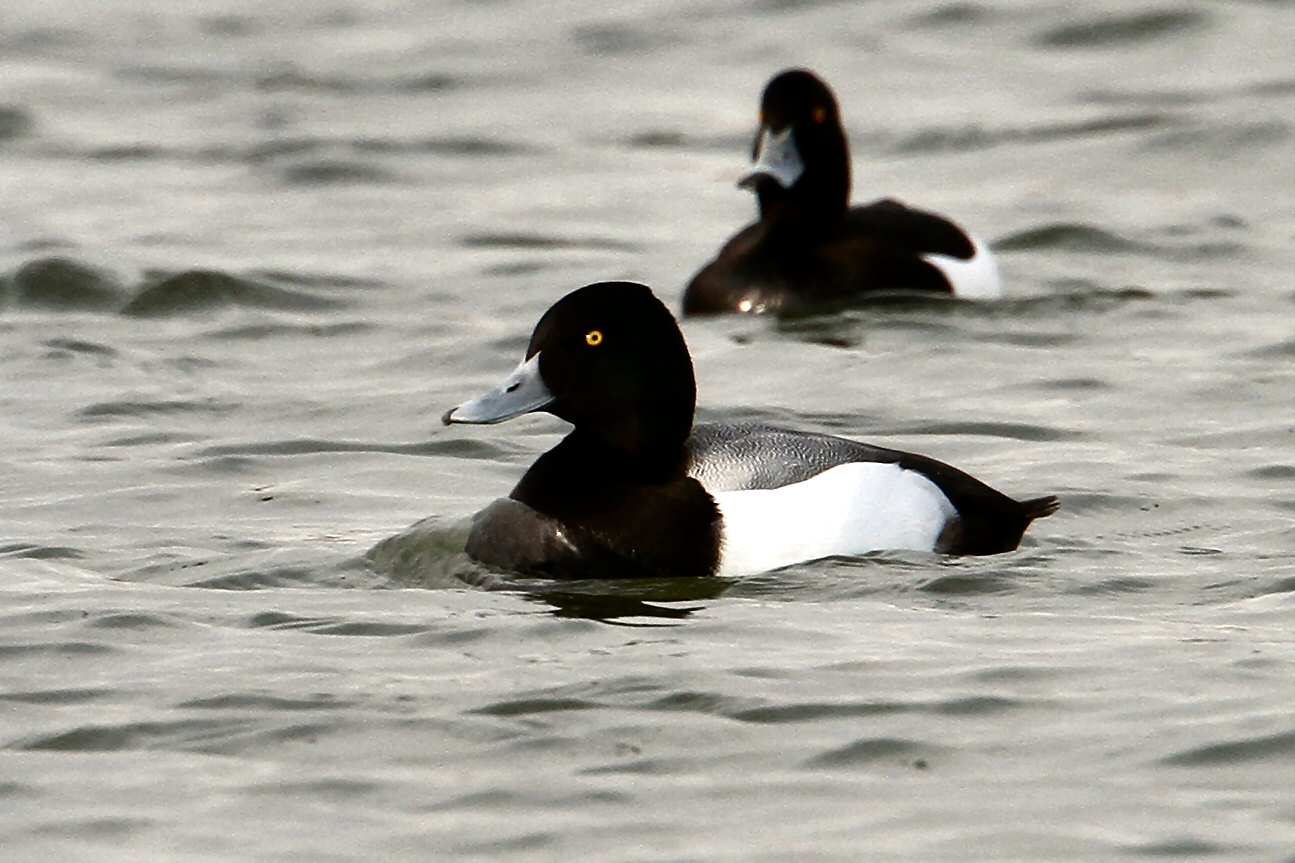
We all know what Lesser Scaup looks like, right? One of the key ID features is head shape, which shows a small peak at the rear of the crown. Well here’s a Greater Scaup which breaks the rules.
Drake Scaup, Ditchford GP, 12th January 2014 (Bob Bullock)
Photographed by Bob Bullock at Ditchford Gravel Pits yesterday, this adult drake clearly shows a peaked crown. But it’s still a Greater Scaup.
Drake Scaup, Ditchford GP, 12th January 2014 (Bob Bullock)
The head is still too bulbous and rounded, the vermiculations on the upperparts are uniformly even (coarser towards rear on Lesser Scaup) and there are no traces of faint vermiculations on the flanks, which Lesser Scaup shows to a varying degree.
Drake Scaup, Ditchford GP, 12th January 2014 (Bob Bullock)
In addition to this the bird just looks too broad and bulky. Here’s what a Lesser Scaup should look like.
Drake Lesser Scaup, in captivity, Slimbridge (Bob Bullock)
While the peak is visible it can appear equally subtle but it is often more pronounced. Note also head gloss – usually green in Scaup, purple in Lesser but it can vary with lighting.
Drake Lesser Scaup, Newquay, Cornwall, 19th February 2012 (Brian R Field)
Lesser Scaup has occurred in almost every British county except Northants, so the first record is up for grabs!
Many thanks to Bob and to Brian Field for the use of their excellent images.
Continuing on a theme, an established south-westerly airstream brought intermittent showers and occasional heavy rain throughout the week. Water levels rose at reservoirs and gravel pits and localised flooding occurred, particularly in the Nene Valley, although a significant amount had drained away by the week’s end. Northamptonshire again failed to attract any Glossy Ibises from the ongoing national influx, estimated to involve at least thirty-five mobile individuals, despite occurrences in the neighbouring counties of Lincolnshire, Bedfordshire and Oxfordshire. There is still time …
The blistering Barnacle Goose remained at Blatherwycke Lake until at least 7th, two Egyptian Geese visited Pitsford Res on 4th while the usual two were still mobile around Ditchford GP the following day. The only Pintail were one at Stanwick GP and two at Pitsford Res on 4th with just one at the latter locality again on 6th, where up to six Red-crested Pochards remained throughout the week with two more at Ringstead GP on 10th and the drake Scaup still at Ditchford GP on the same date. The three Long-tailed Ducks remained on Mary’s Lake at Earls Barton GP
Long-tailed Ducks, Earls Barton GP, January 2014 (Dave Jackson)
throughout the week, up to eight Smew, including three drakes, were present at Pitsford Res, while two visited Clifford Hill GP on 9th and Goosanders were reported from five localities with a maximum of eight at Abington Park Lakes, Northampton and Hardingstone GP on 6th.
Drake Smew, Pitsford Res, 10th January 2014 (Bob Bullock)Drake Smew, Pitsford Res, 10th Jan 2014 (Bob Bullock)
The wintering juvenile Great Northern Diver remained at Pitsford Res throughout the period and the elusive Bittern at Stortons GP was seen on 6th and 10th, while up to two Great White Egrets were still at Pitsford between 4th and 8th and one remained at Earls Barton GP all week with two present there on 5th. The only scarce raptors reported this week all happened to be Peregrines with singles at Earls Barton GP on 7th, Harrington AF on 7th-8th, Clifford Hill GP on 9th and Great Brington and Ditchford GP on 10th.
Bittern, Stortons GP, 10th January 2014 (Alan Coles)Great White Egret, Earls Barton GP, 6th January 2014 (Doug McFarlane)
Waders were similarly in short supply with Golden Plovers recorded at three localities, a Jack Snipe at Pitsford Res on 10th, Green Sandpiper at Ditchford GP on 10th and ten Redshanks at Stanwick GP on 4th was a reasonable total. Stanwick GP produced the majority of the rarest gulls – albeit in small numbers – with an adult Glaucous Gull and an adult Caspian Gull on 10th plus 3 Yellow-legged Gulls on 4th and 10th, while a Mediterranean Gull was at Ditchford GP on 8th and single Caspian Gulls there on 4th and 5th.
The only Chiffchaffs this week were three at Ecton SF on 5th and one at Pitsford Res on 10th, two female Central EuropeanBlackcaps were in a Sywell garden on 4th and males were in two Northampton gardens all week, while two or three Bearded Tits were still at Stortons GP on 5th-6th and 10th. The two wintering Stonechats were still in residence at Blueberry Farm, Maidwell on 10th and Bramblings were seen at five localities with a maximum of twenty to twenty-five near Badby Wood on 5th.
For two weeks Britain has been in the grip of a series of low pressure systems which raced across the Atlantic bringing with them periods of strong south-westerly winds and rain. The deepest of these, a near-record low, occurred on 23rd although it had little influence on local birding.
A Barnacle Goose was again at Blatherwycke Lake on 21st and two Egyptian Geese were at Ditchford GP the following day while the only Pintail recorded during the period were at Pitsford Res, where there were up to two between 22nd and 2nd. The same site continued to host a sizeable Red-crested Pochard flock, the highest count of which was thirteen on 22nd, while a drake was at Stanwick GP between 26th and 28th. ‘Horrible hybrids’ included a Red-crested Pochard x Mallard also at Pitsford Res on 22nd and a drake Pochard x Ferruginous Duck at Stortons GP on 30th-31st. The drake Scaup remained at Ditchford GP, west of Ditchford Lane, until at least 1st and a female was at the other end of the complex, west of the A6 road bridge, on 27th with another female at Stortons GP on 30th. The three Long-tailed Ducks remained on Mary’s Lake at Earls Barton GP throughout the period.
Long-tailed Duck, Earls Barton GP, 3rd January 2014 (Martin Dove)
Varying numbers of Smew were present at Pitsford Res, where the maximum was eight, including two drakes, on 27th, while single ‘redheads’ visited Stanford Res on 28th and Stortons GP on 30th and two ‘redheads’ were at Sywell CP on the latter date.
First-winter drake Smew, Pitsford Reservoir, 24th December 2013 (Clive Bowley). By late winter, ‘redheads’ become assignable to sex. This individual is just beginning to acquire the white crest feathers of a male.
The rarest sawbill of the period was, however, a drake Red-breasted Merganser in Walgrave Bay at Pitsford Res on 26th while Goosanders were reported from seven localities with a maximum of fifteen at Stortons GP on 28th and 30th.
The juvenile Great Northern Diver found at Pitsford Res on 15th December remained throughout the period, as did up to three Great White Egrets while others put in sporadic appearances at Summer Leys LNR on 22nd and 2nd and another visited Cransley Res on 27th. A first-winter Shag was seen briefly at Stanford Res on 24th.
Little and Large. Little and Great White Egrets, Pitsford Reservoir, 28th December 2013 (Alan Coles)
This week’s raptor round-up included a ‘ringtail’ Hen Harrier at Blueberry Farm, Maidwell on 29th, female Merlins at Stortons GP on the same date and at Blueberry Farm on 2nd, while a run of Peregrines included singles at Corby on 21st, Pitsford Res on 27th, Harrington AF on 31st and 2nd, Ditchford GP on 1st, Earls Barton GP, Edgcote, Kelmarsh and Stanwick GP on 2nd and Clifford Hill GP on 3rd.
The early returning Oystercatcher was stillat Stanwick GP on 1st, while Golden Plovers were recorded at five localities with a maximum of approximately two thousand at Clifford Hill GP on 3rd. Just one Dunlin was found during the period – at Pitsford Res on 22nd – two Jack Snipe were at Hollowell Res on 28th, up to three Redshanks were at Pitsford Res with eight at Stanwick GP, while a Green Sandpiper was at Pitsford Res on 22nd and 2nd-3rd and two were at Wicksteed Park Lake on 23rd.
The last two weeks have been surprisingly quiet for gulls with an adult Caspian Gull in the roost at Pitsford Res on 22nd and 26th, an adult at Stanwick GP on 31st and an adult plus a second-winter there on 1st. The rather dark juvenile Iceland Gull (image in last report)was again at Ditchford GP on 1st and the only Yellow-legged Gulls were all adults with two at Pitsford Res on 22nd and one on 26th and one at Stanwick GP on 1st.
Two Ring-necked Parakeets flew over Pitsford Res on 3rd, a ‘Nordic’ Jackdaw was seen at Hanging Houghton on 23rd and, not too far away, the Hume’s Warbler remained in residence on private land in north Northants until at least 22nd. Other warblers not shy of the (so far) mild British winter were Chiffchaffs,which were reported from Pitsford Res, Preston Deanery and Stanwick GP and Central EuropeanBlackcaps, which moved into gardens in Byfield, Northampton (East Hunsbury, Harlestone Road and Kingsthorpe) and Sywell.
Central European Blackcap, Sywell, 27th December 2013 (Jim Dunkley)
Three Bearded Tits appeared again at Stortons GP on 29th but potentially the rarest new bird to be found in the period was a Dipper, of which there was an unconfirmed report on the overflow at Sywell CP on 21st. The last record of Dipper in Northants was at Deanshanger on 20th April 1996 and another one staying for any length of time would no doubt be popular with local birders. The two Stonechats remained throughout the period at Blueberry Farm and a Water Pipit was again seen at Ditchford GP on 22nd and 1st, while Bramblings were seen only at Brixworth CP and Harrington AF, with a maximum of at least ten at the latter site on 2nd and a Snow Bunting put in a brief appearance at Pitsford Res on 22nd before quickly moving off south.
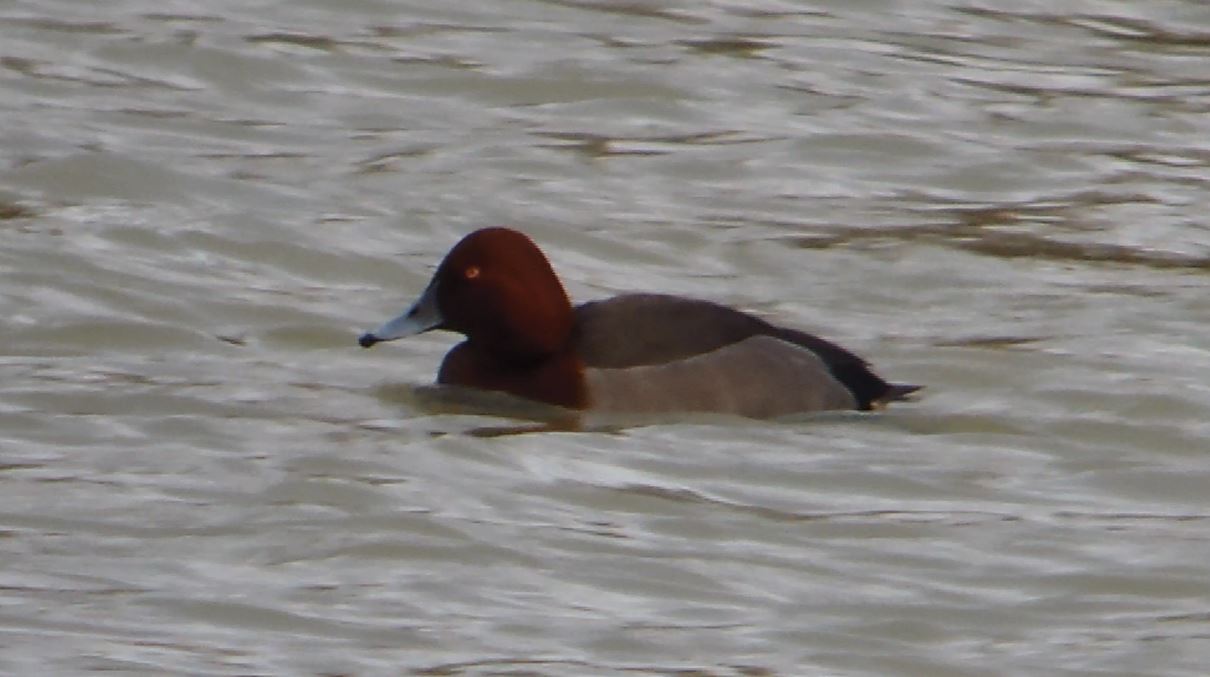
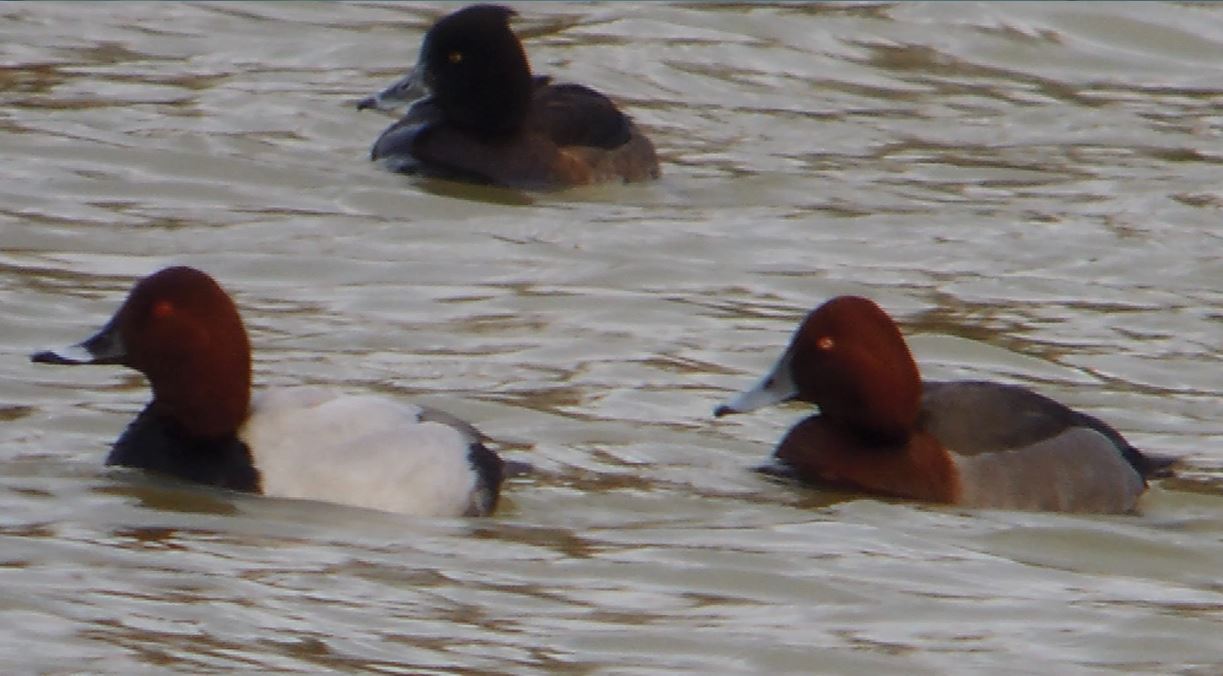
While searching for the female Scaup reported from Sixfields Lake at Stortons GP yesterday, I came across this interesting-looking duck. It was obvious among the Pochards on the lake by virtue of its overall darkness compared to ‘standard’ drake Pochard, to which it bore a passing resemblance.This individual exhibits characters associated with both Pochard and Ferruginous Duck. Approximately the same size and shape as Pochard, perhaps a fraction smaller. The head, neck and breast colours are close to, and are clearly ‘borrowed’ from, Ferruginous Duck, as is the head shape and, to some extent, the bill. The latter has a dirty wash across its basal third. The golden/orange eye colour is neither Pochard (= red) nor Ferruginous Duck (= creamy-white) and the white secondary bar and dirty white undertail coverts are also lent by Ferruginous Duck although they are not as extensive or as distinctive as in that species. The body and wings (apart from the secondaries) appear to be Pochard derivatives.
Hybrids of similar appearance have been recorded before, e.g. at Alexandra Park, London in 2010 here and at Slimbridge on 21st March 2013 here with the latter individual appearing almost, if not completely, identical to the Stortons bird.