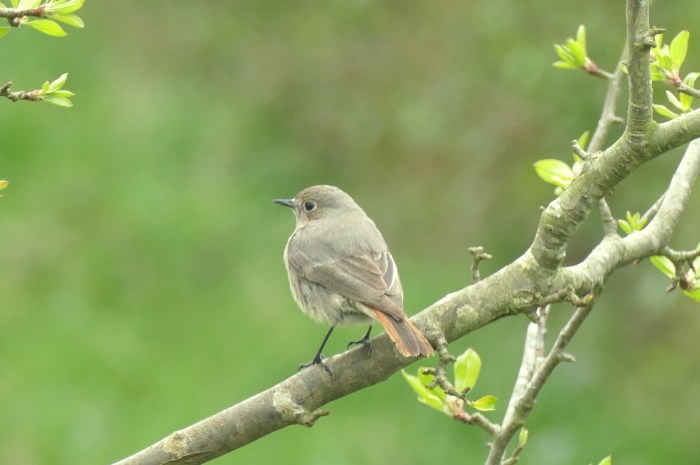
For one lucky person at least, ‘lockdown’ birding has delivered! At home in Spratton, David Arden was fortunate in having a Black Redstart visit his garden this afternoon. His excellent photos depict a very worn and faded bird, which appears likely to be a first-year female, based on appearance and feather wear. It has renewed a tertial on its right wing, the outer whitish edge of which would ordinarily contribute to the white patch on the closed wing, much abraded in this bird.
Black Redstart, Spratton, 2nd April 2020 (David Arden)Black Redstart, Spratton, 2nd April 2020 (David Arden)
During the lockdown, many of us are looking to our gardens to enjoy nature and be outdoors, to learn, and to improve our well-being. BTO Garden BirdWatch offers a great opportunity to learn more about garden birds and other wildlife, and to contribute directly to BTO’s important scientific research on the value of gardens for wildlife.
By understanding more about how wildlife uses our gardens, we’ll be able to make our cities, towns, villages and individual gardens better for nature.
To take part you simply keep a list of the birds you see visiting your garden over the course of a week, then enter this into our online recording system. If you want, you can also record other garden wildlife, such as butterflies and mammals.
Your sightings will help us to understand how and why populations of garden birds and other wildlife are changing, and how we can all help them.
This free offer includes access to our online recording system, a regular Garden BirdWatch e-newsletter with information on recording and identifying garden wildlife, and access to the BTO’s team of wildlife experts to answer your questions on garden wildlife.
To make it easy for local birders to submit records and keep their county lists up-to-date, a new page, offering four downloadable documents, has been created on this site under the heading Checklist & Recording
A brief overview of each document is given below. Please visit the Checklist & Recording page to download them.
Checklist (PDF)
Checklist of the Birds of Northamptonshire v.2020.1 is a basic, 8-page PDF file, which covers all 324 species officially recorded in Northamptonshire up to 31st December 2019. The checklist follows the systematic order, nomenclature and taxonomy of the IOC World Bird List. Both species and subspecies are denoted by letters indicating when a description is required to accompany records submitted to the annual Northamptonshire Bird Report Records Committee. This list is viewable online before opting to download it.
Checklist (Excel)
Checklist of the Birds of Northamptonshire (Excel) v.2020.1 is a simple Excel file, which takes the same format as the PDF file, minus the description requirement annotations. It is designed for a variety of uses, e.g. lifelist, yearlist, daylist, locality list, etc. This list is not viewable online and can be used only after downloading.
Recording sheet
Fully updated to include both the IOC British List and an additional new tab outlining all local recording requirements, plus red and amber list species, the Northamptonshire Bird Recording Spreadsheet v.2020.1 is an Excel file which allows easy data input prior to periodic submission. Based on the use of pre-formatted cells, instructions on its completion are part of the package. This sheet is not viewable online and can be used only after downloading.
Description form
Description form v.2020.1 is a slightly modified version of the one currently available and in use for record submission of all species requiring a description. Completion is self-explanatory. This form is not viewable online and can be used only after downloading.
The above checklists and recording requirements tab are based upon the list published in the 2018 Northamptonshire Bird Report and originally compiled by Bob Bullock.
Both the Recording sheet and Description form can be submitted via email to alibone.mike@gmail.com and they will be passed to the Northamptonshire Bird Report Committee for processing.
Sunshine and south-easterlies. With some rather nice weather conditions, conducive to migration, things took a turn for the worse halfway through the period as the coronavirus lockdown situation ensued, putting paid to most birders’ activities.
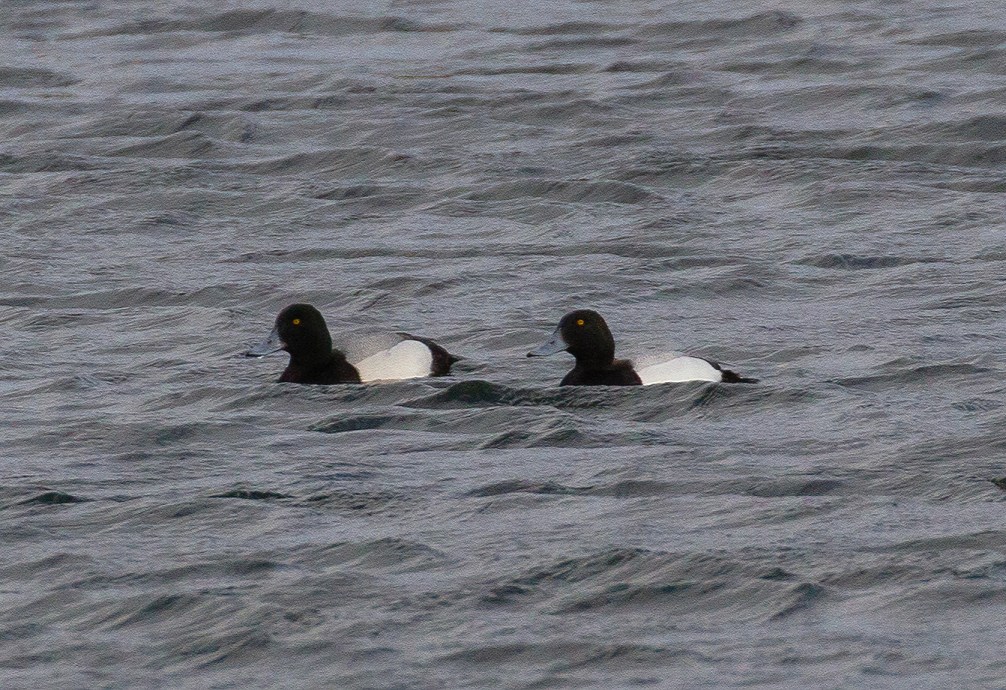
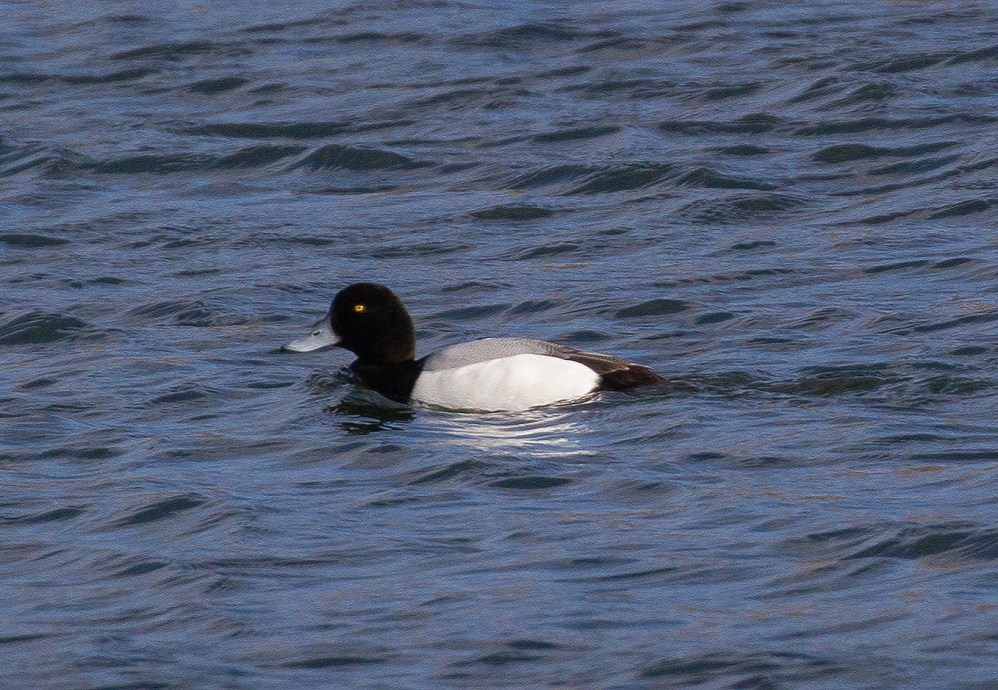
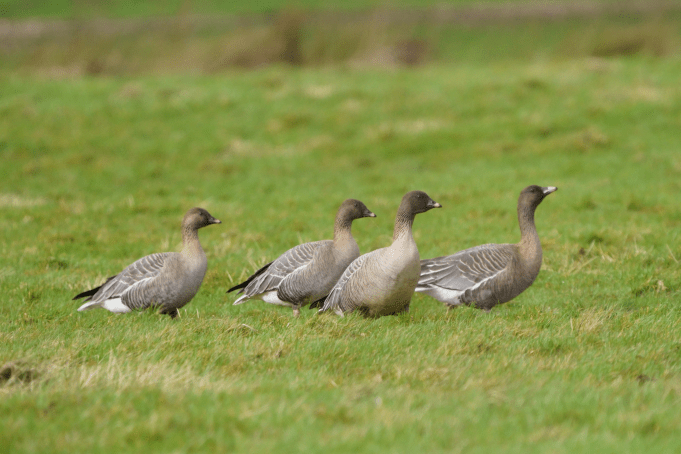
Hanging on in there until 22nd was Clifford Hill GP’s first-summer Dark-bellied Brent Goose, while Stanford Res’ nine Pink-footed Geese again entered Northamptonshire airspace briefly on 21st and 23rd. Back at Clifford Hill, the two drake Greater Scaups were still present on 23rd – at least one of which remained on 27th and the adult female was back at Stanwick GP on 22nd.
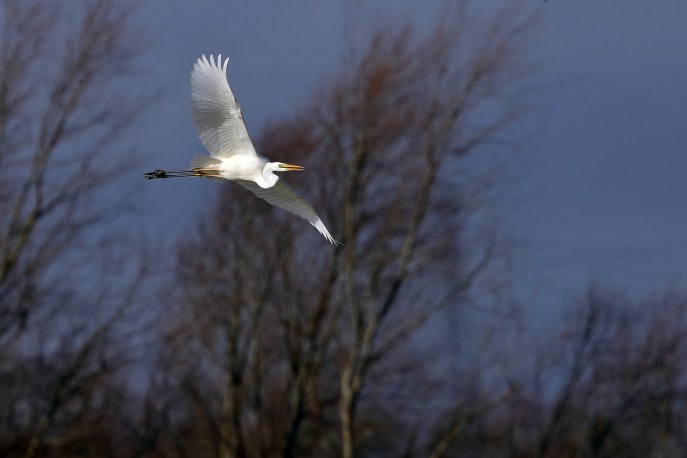
Clifford Hill also hung on to its two summer-plumaged Black-necked Grebes until at least 21st and on the same date, a Bittern was discovered at Stanford Res before quickly flying off into Leicestershire. Apart from two at Stanwick on 22nd, single Great Egrets were still to be found at Ditchford GP, Kislingbury GP, Pitsford Res, Stanford on Avon, Summer Leys LNR and Thrapston GP
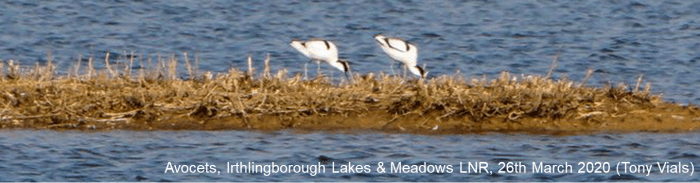
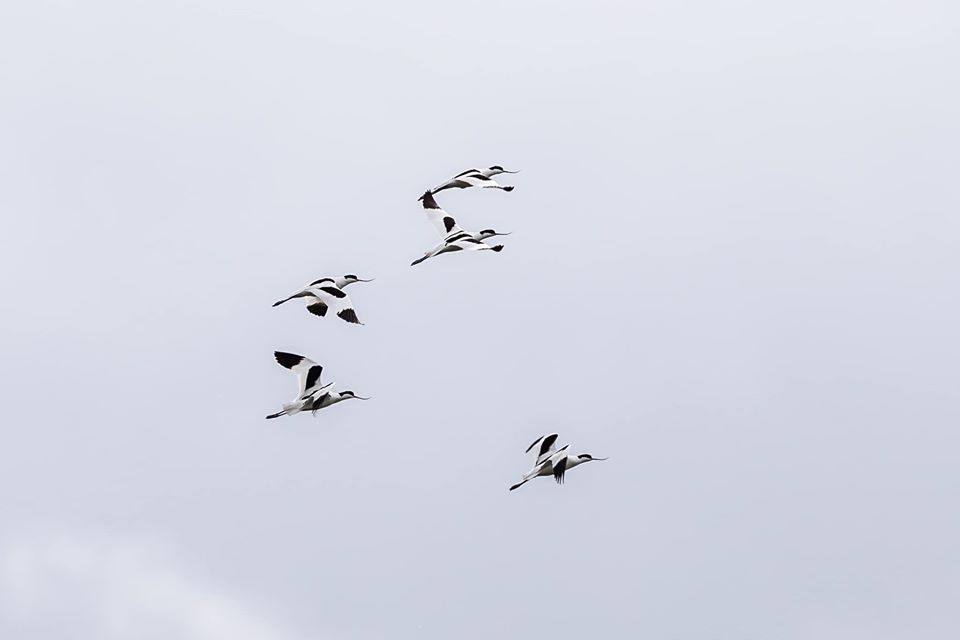
The year’s second Osprey was picked up heading over Bulwick on 21st and, for the second consecutive week, Avocets were again seen in the Nene Valley, when two were found at Irthlingborough Lakes & Meadows LNR on 26th. Initially present on Dragonfly Lake, they moved to Townholme Meadow, where they were visible from a bedroom window in Irthlingborough – now there’s lockdown birding for you! They were still present the next day. Other notable passage waders included a Black-tailed Godwit at the same locality, a Knot at Clifford Hill GP on 22nd and a Ruff for a short time at Summer Leys the following day, while a Jack Snipe was at Boddington Res on 26th.
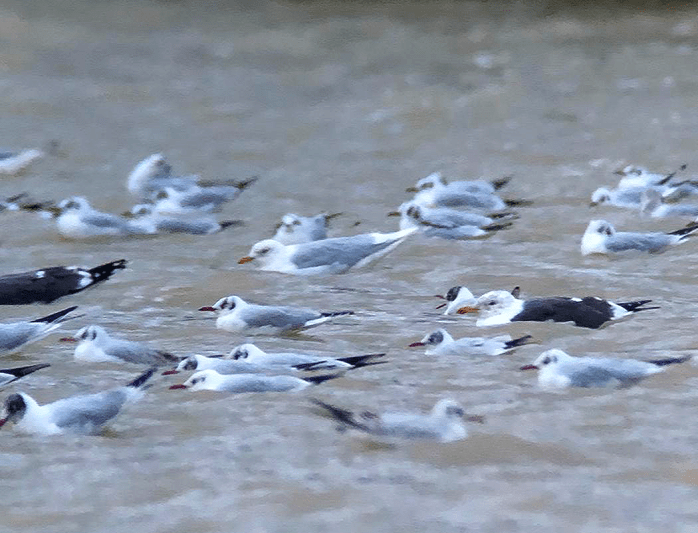
More Mediterranean Gulls this week were two adults on Mary’s Lake, Earls Barton GP on 25th but that was about it as far as gulls were concerned. Single Short-eared Owls were still in evidence at Borough Hill on 21st and near Stanford Res on 21st-23rd, while a Merlin flew north over Chipping Warden, early in the morning of 21st.
Bird of the week without a doubt, though, was a Hooded Crow seen in fields east of the track down to Elinor Trout Lake at Thrapston GP on the afternoon of 23rd. It didn’t linger, as is typical of local occurrences of this species and if accepted, it will be only the third in the county this century, the previous two being flyover singles at Alderton on 7th November 2018 and at Summer Leys on 28th March 2019.
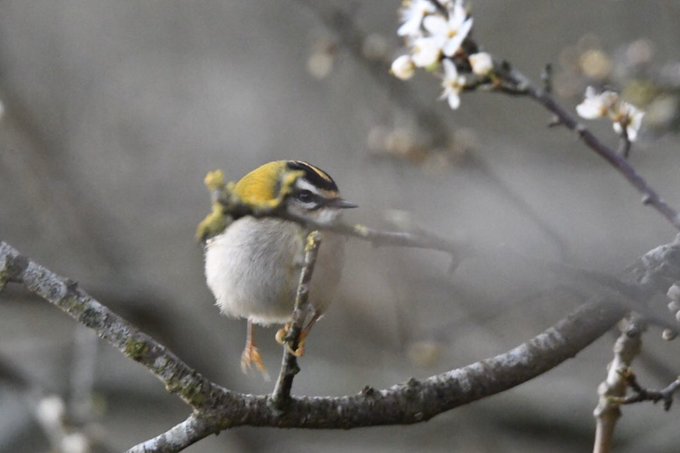
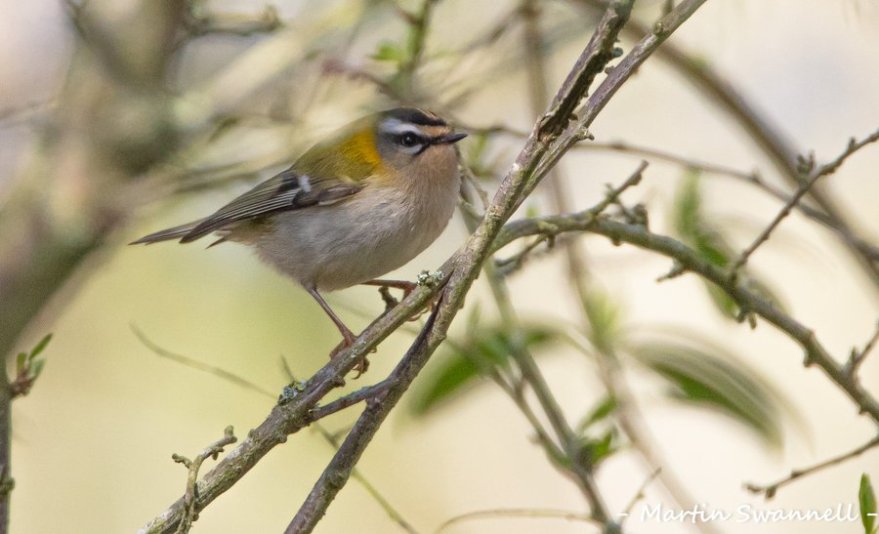
Another ‘first’ for the year this week was a singing male Willow Warbler at Stortons GP on 22nd but it was ‘outsung’ by a something smaller, with more pulling power – a male Firecrest at Ravensthorpe Res on 21st, which delighted all who turned up to admire it, pre-lockdown, on 22nd.
Male Firecrest, Ravensthorpe Res, 21st March 2020 (Jon Cook)Male Firecrest, Ravensthorpe Res, 22nd March 2020 (Angus Molyneux)Male Firecrest, Ravensthorpe Res, 22nd March 2020 (Martin Swannell)Male Firecrest, Ravensthorpe Res, 22nd March 2020 (Bob Bullock)
Meanwhile, following last week’s first, Northern Wheatears continued to pass through in small numbers with singles at both Borough Hill and Stanford Res on 21st, Clifford Hill GP on 21st-22nd and Wollaston STW on 23rd.
This is likely to be the last weekly report for some time – for obvious reasons – but for anyone able to travel safely, within government ruling, to local sites then please continue to share records.
A mild, south-westerly airstream ensured temperatures touched the higher side of seasonal average throughout the most part of the week, providing a much-needed boost for spring migrants. And it happened – migration with a capital ‘M’ – the county seeing the arrival of a decent number of ‘firsts’ for the year.
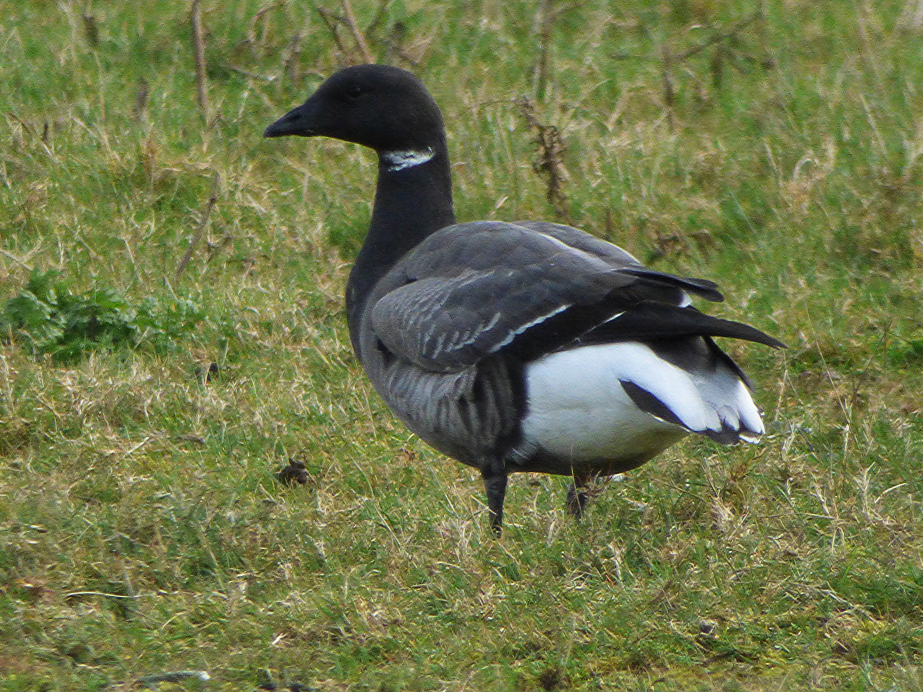
One of these, a Dark-bellied Brent Goose, was found at Clifford Hill GP on 17th, remaining there until the week’s end, while there was a surprising re-emergence, on 15th, of the nine Pink-footed Geese originally found at Stanford Res on 8th February but absent from there since 18th of the same month. Clearly they had been lurking undetected, somewhere in the vicinity and they were still present in the area on 19th.
Dark-bellied Brent Goose, Clifford Hill GP, 20th March 2020 (Doug Goddard). White fringes to upper wing coverts still present, though worn, and white tertial tips age this bird as a first-summer.Dark-bellied Brent Goose, Clifford Hill GP, 17th March 2020 (Mike Alibone). White tertial tip is still visible at longer range but worn pale tips to wing coverts are less conspicuous.
More long-stayers included the two drake Greater Scaups at Clifford Hill GP all week, while the adult female left Stanwick GP and returned to adjacent Irthlingborough Lakes & Meadows LNR, where it was still present on 18th.
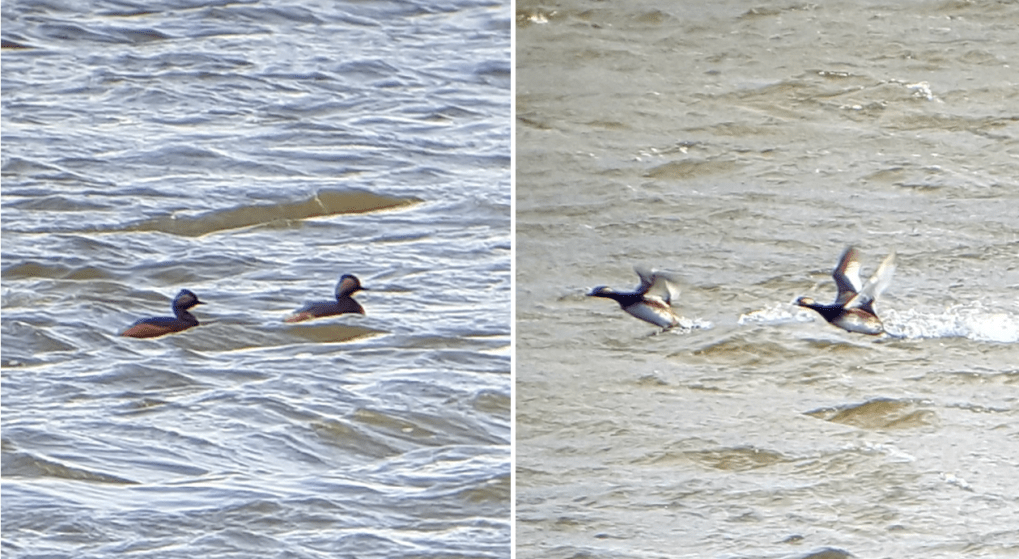
Staying with the Nene Valley, two summer-plumaged Black-necked Grebes were found on the Main Barrage Lake at Clifford Hill GP as the week drew to a close on the afternoon of 20th.
Black-necked Grebes, Clifford Hill GP, 20th March 2020 (Adrian Borley)
Some distance further downriver, the Stanwick Cattle Egrets went back to playing hard to get, with just two on show early in the day on 15th. Unsurprisingly, the opposite was true when it came to the distribution of Great Egrets, which were present at seven localities, Thrapston GP once again hosting the week’s maximum of four, also on 15th.
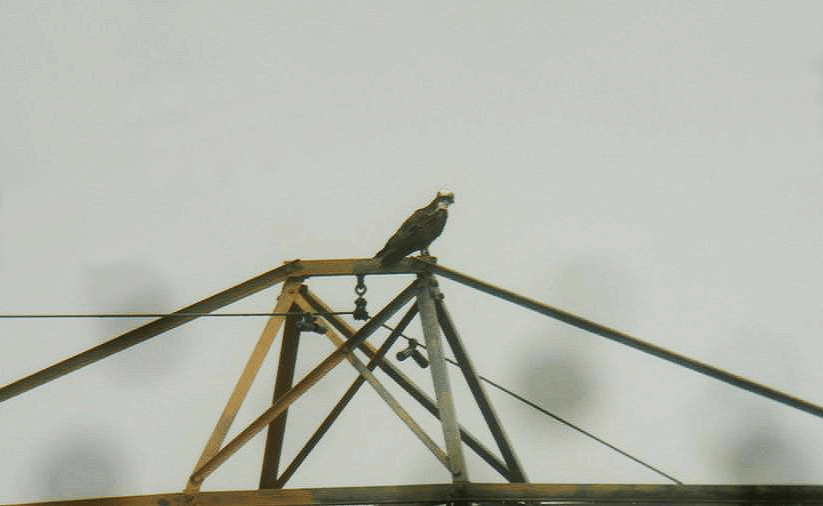
The same site packed a punch on 18th, when it delivered the year’s first Osprey, eying up Elinor Trout Lake from a strategically located pylon.
Osprey, Thrapston GP, 18th March 2020 (Nick Parker)
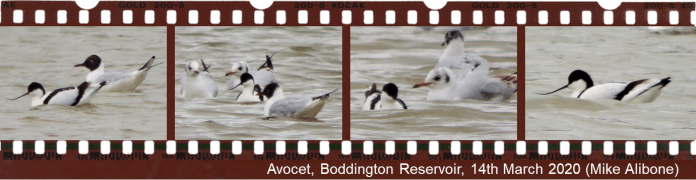
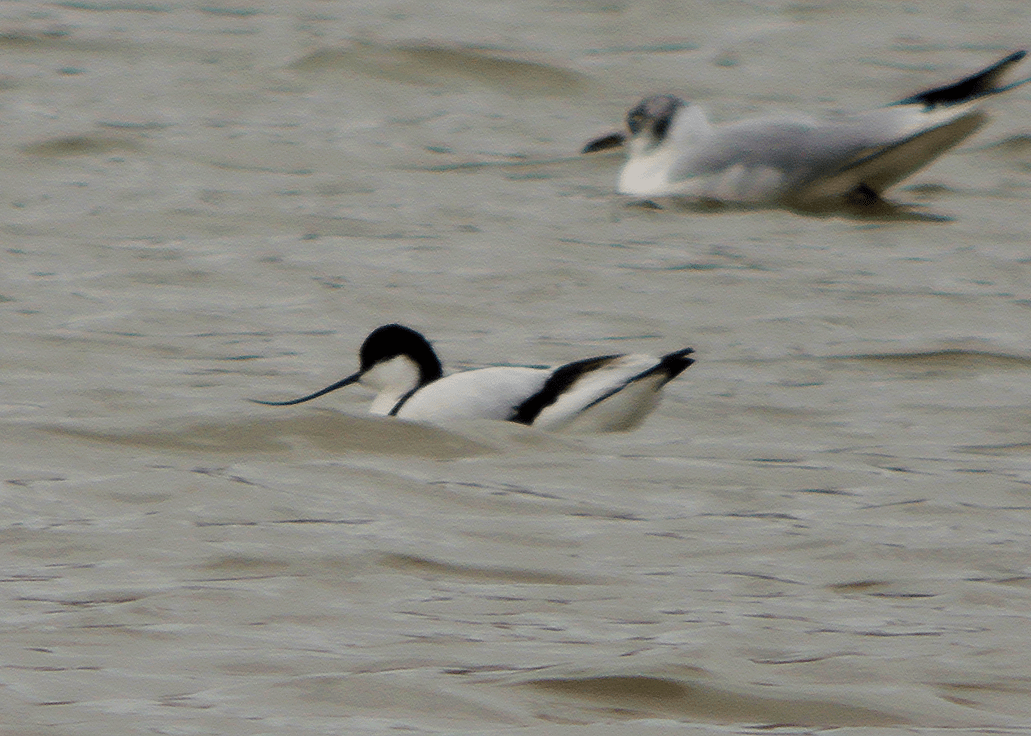
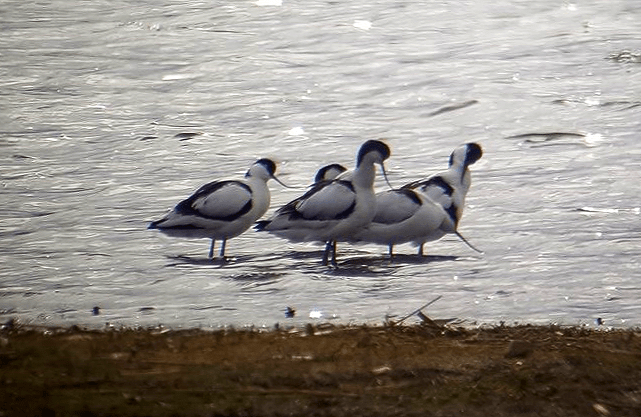
Wader passage picked up from the very start of the period, commencing with an Avocet at Boddington Res on 14th and five more during the day at Summer Leys LNR. Together, they formed part of a wider overland movement involving birds in Buckinghamshire, Leicestershire, London, Oxfordshire and Staffordshire on the same date. More will surely follow as spring advances.
Avocet, Boddington Res, 14th March 2020 (Mike Alibone)Avocets, Summer Leys LNR, 14th March 2020 (Adrian Borley)Avocets, Summer Leys LNR, 14th March 2020 (Ady Leybourne)
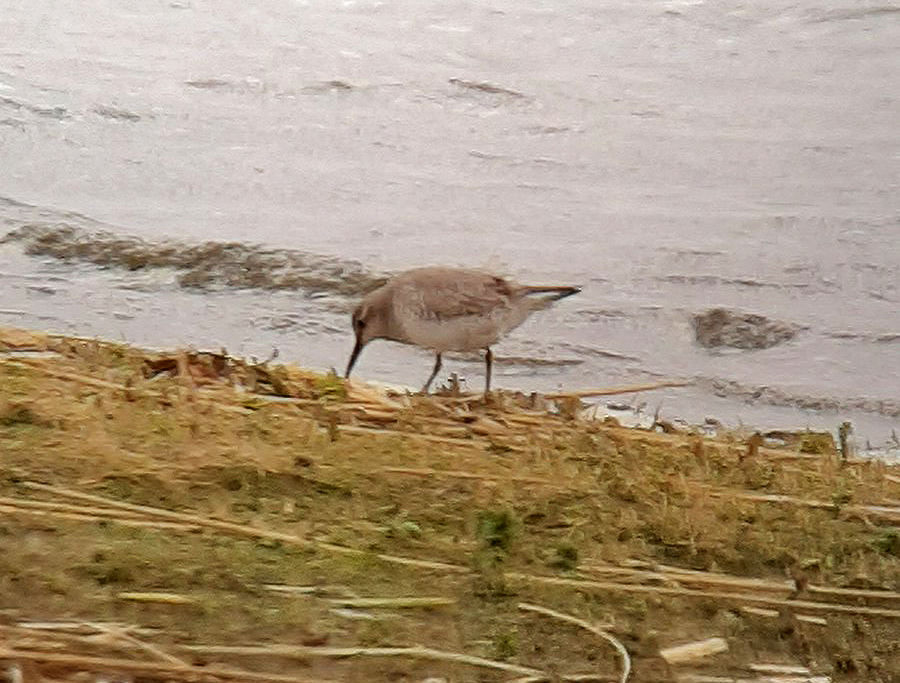
Summer Leys was also responsible for producing another ‘first’ for the year in the shape of a Little Ringed Plover on 19th and the same site also held on to a Knot from 16th until 19th, the same individual no doubt having been seen flying southwest from Stanwick on 15th. Remarkably, the Knot total swelled to five at Summer Leys, albeit briefly, on 18th.
Knot, Summer Leys LNR, 17th March 2020 (Nick Parker)
The same reserve pulled in seven Black-tailed Godwits early in the day on 20th. Rounding off the wader tally were four Jack Snipes still at Hollowell Res on 14th and an amazing total of nine together in one small flooded area behind the dam at Daventry CP on 18th – surely a record count for this species at the site.
After a dismal absence of gulls last week, evidence that Mediterranean Gull passage was underway appeared in the form of an adult at Stanwick on 16th, a first-winter at Daventry CP on 19th and one at Summer Leys the following day. Hollowell produced a first-winter Caspian Gull on 14th, while twos of Yellow-legged Gulls were logged at Summer Leys on 14th and Daventry CP on 18th.
Adult Mediterranean Gull, Stanwick GP, 16th March 2020 (Steve Fisher)Third-winter Yellow-legged Gull, Daventry CP, 18th March 2020 (Gary Pullan)
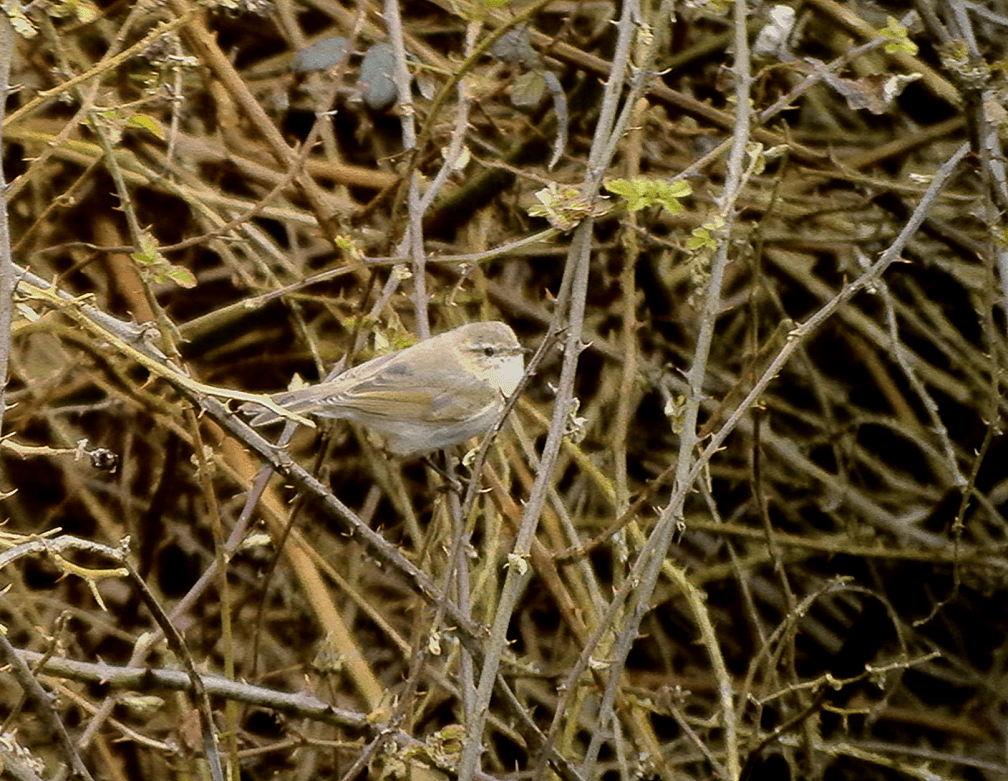
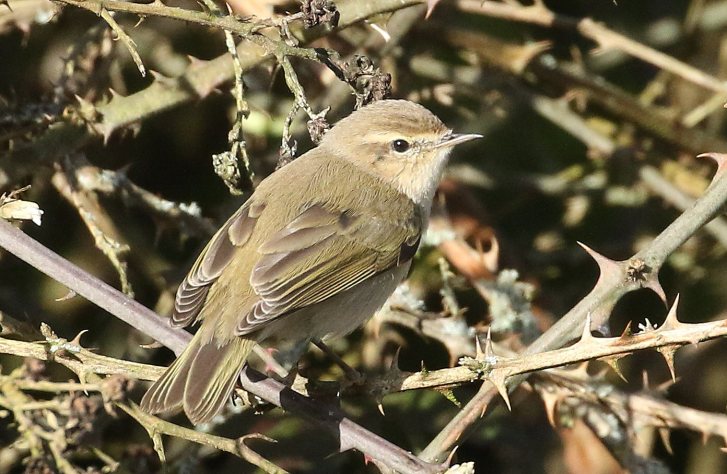
Merlins were also on the move, the week producing singles at Stanford Res and over the feeding station at Summer Leys – both on 20th, while Stanford was also the venue for the appearance of the year’s first Swallow, over the dam there, on 19th. Despite the obvious feeling of spring in the air, the wintering Siberian Chiffchaff along the outflow stream at Ecton SF was still in situ on 19th and, with British winterers sometimes staying into April, it may yet stick around for another week or two. The same may not be said for Stonechats, though. After being recorded at seven localities last week, there was only one report of three at Clifford Hill GP during the period, this site also producing a rather mobile and elusive male Black Redstart on 17th. But arguably, the most attractive and, therefore, popular harbinger of spring – Northern Wheatear – made its 2020 debut this week, on 16th, when one was trapped and ringed at Brixworth STW. Its appearance coincided with a large fall involving hundreds on the south coast, with Dorset, for example, logging more than two hundred and thirty on the same date. Others quickly followed, including singles at Upton CP (Northampton) on 18th, Summer Leys on 19th-20th and at Harrington AF, Hartwell and Maidwell – all on 20th. Surprisingly, none was photographed …
Against the continuing blustery – though relatively mild – conditions, the wheels of spring continued to turn this week, albeit slowly, with the arrival of the first Sand Martin on 7th. Beyond that, there were few surprises.
Although they have no doubt been there since the early part of the year, the two first-winter drake Scaups at Clifford Hill GP were back in the news this week, having moulted into their adult finery. They remained until at least 11th. Meanwhile, the female had returned to Stanwick GP on 8th, after last week’s visit to nearby Irthlingborough Lakes & Meadows LNR.
Greater Scaup, Clifford Hill GP, 8th March 2020 (Mark Williams)Greater Scaup, Clifford Hill GP, 8th March 2020 (Mark Williams)
Pleasingly, the Cattle Egrets mobile in the same area had regrouped, the famous five now all back together around Stanwick’s Roadside Lake, remaining there throughout the week. With some now sporting exquisite summer plumage, as well as having undergone a change in bare part colour, Great Egrets maintained their presence in the county, being logged at ten localities, with a maximum of three at Thrapston GP on 8th.
Great Egret, Summer Leys LNR, 13th March 2020 (Mark Tyrrell)
While a total absence of rare and scarce gulls this week may be welcome news to some, there was little to fill the gap, save the flock of ten Ruffs which dropped into Summer Leys unexpectedly for just thirty minutes on 7th and up to two Jack Snipes at Hollowell Res between 10th and 13th.
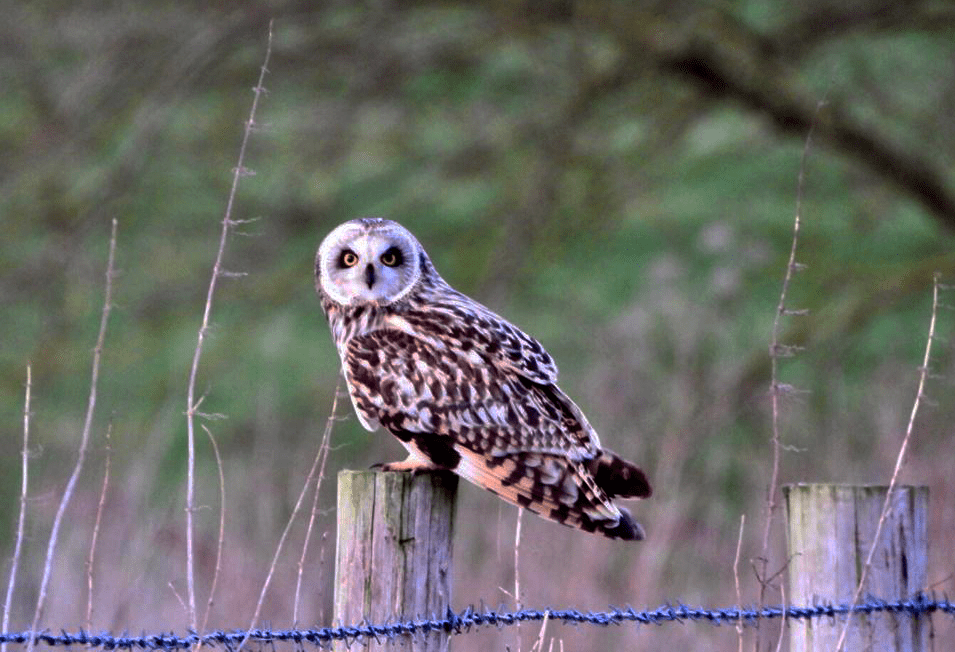
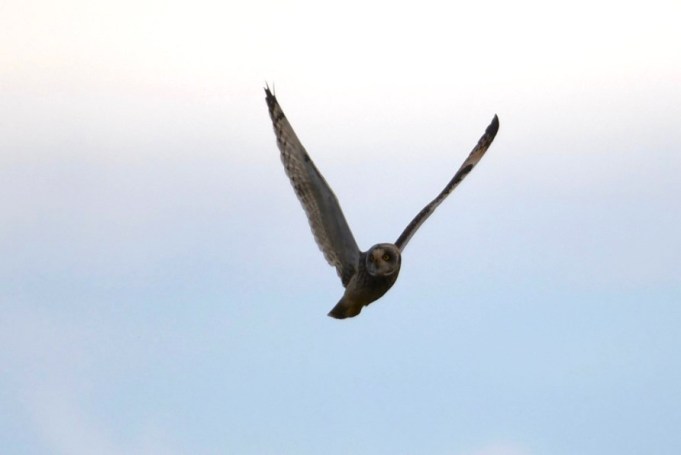
Short-eared Owl, Stanford Res, 8th March 2020 (Dan March)
Old faithfuls remaining from weeks gone by included one of Stanford’s Short-eared Owls, which was still performing well on 8th and the Siberian Chiffchaff along the outflow stream that is home to a high concentration of Chironomids at Ecton SF on 10th.
Siberian Chiffchaff, Ecton SF, 10th March 2020 (Mike Alibone)
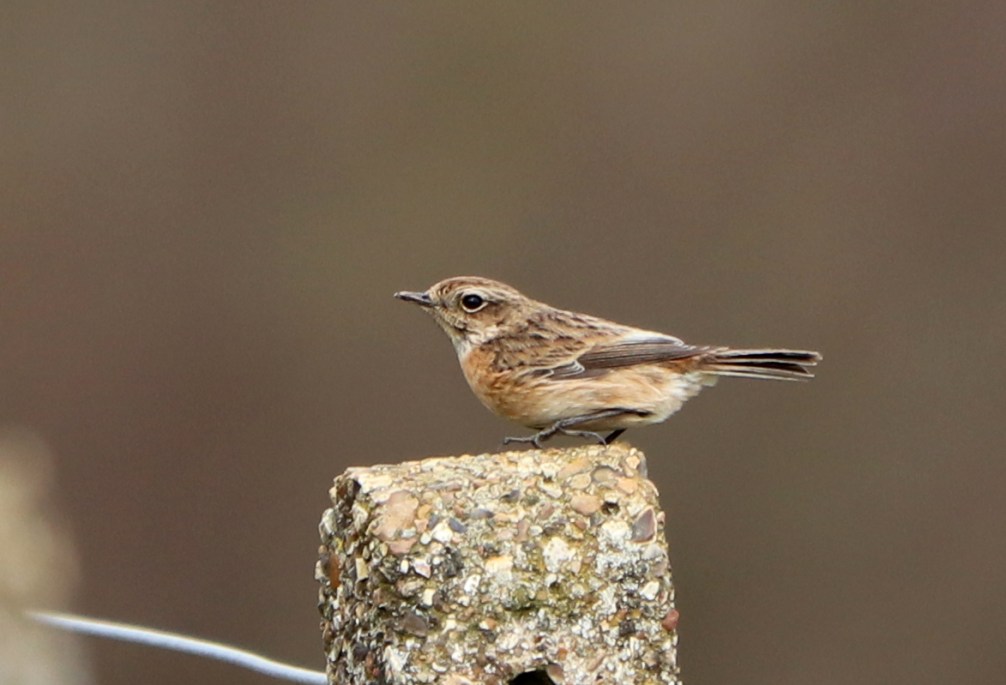
Remaining Stonechats is a sure sign that winter is still not quite over and done, so seven sites supporting between one and three birds apiece means there is a way to go yet. Winter 2019-20 has proven to be a good year for them.
Stonechat, Pitsford Res, 12th March 2020 (Tony Stanford)
But one species which we are now seeing in lower numbers of late is Water Pipit, one of which was located at the county’s previously foremost wintering site, Ditchford GP, on 13th. This, so far, is the only one to have been found in the county this winter.
In a nod to the arrival of meteorological spring this week, a singing Chiffchaff at a non-wintering locality provided a hint of many more migrants to come but it was the first Black-bellied Dipper for twenty-four years which drew the crowds during its three-day stay in the county.
A female Scaup at Ditchford GP’s Irthlingborough Lakes and Meadows on 5th was the sole representative of this week’s Anseriformes. Surely more is on the cards from this group over the next few weeks as things start to move throughout the early part of the spring. But just a hop, skip and a jump to the Watersports Pit, west of Ditchford Lane saw last week’s four Cattle Egrets now down to three on 6th, while Great Egrets continued to be found at eight localities, with no more than two at any one site. Further down the Nene Valley, the first Marsh Harrier of the year appeared at Thrapston GP’s Titchmarsh LNR on 5th.
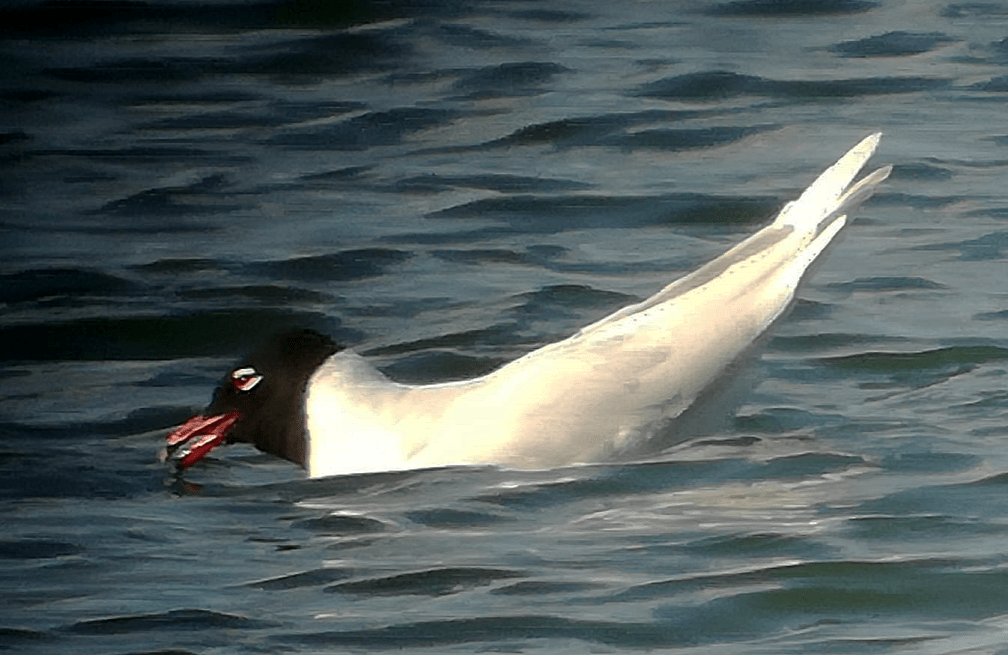
Things were looking up again for gulls, with March normally seeing a good deal of northward movement – particularly for Mediterranean Gulls, an adult of which was at Daventry CP on 5th-6th.
Adult Mediterranean Gull, Daventry CP, 6th March 2020 (Gary Pullan)
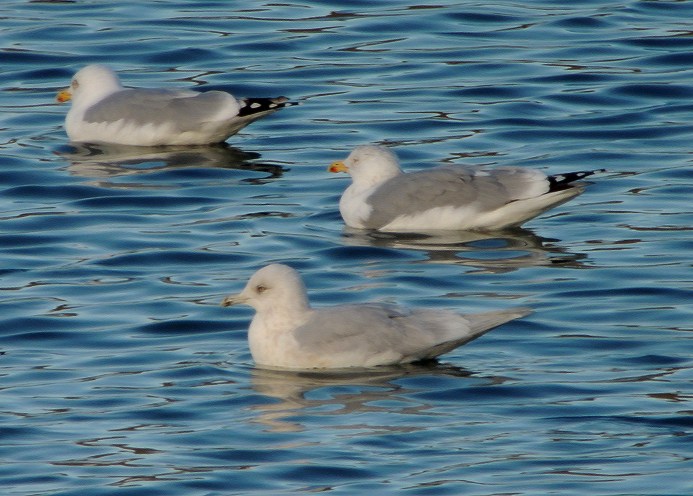
The year’s second Iceland Gull – again an adult – joined the throng at Rushton Landfill on 6th, the same site hosting a third-winter Caspian Gull on the same date, while a third-winter Yellow-legged Gull visited Daventry CP on 2nd, followed by a fourth-winter there the next day. Keep watching those gull roosts!
Adult Iceland Gull, Rushton Landfill, 6th March 2020 (Mike Alibone)
Harrington AF hung on to its Short-eared Owl until at least 29th, Borough Hill still had two on 6th and the Stanford Res bird notched up another week, still being present on 5th. Stonechats were still on station at Borough Hill (six), Hartwell, where there were five and Stanford, two, while singles at Harrington and Thrapston appeared to be new birds.
Short-eared Owl, Stanford Res, 3rd March 2020 (Matt Jackson)
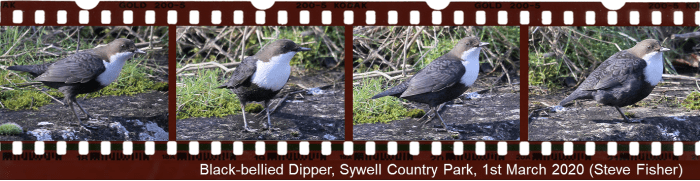
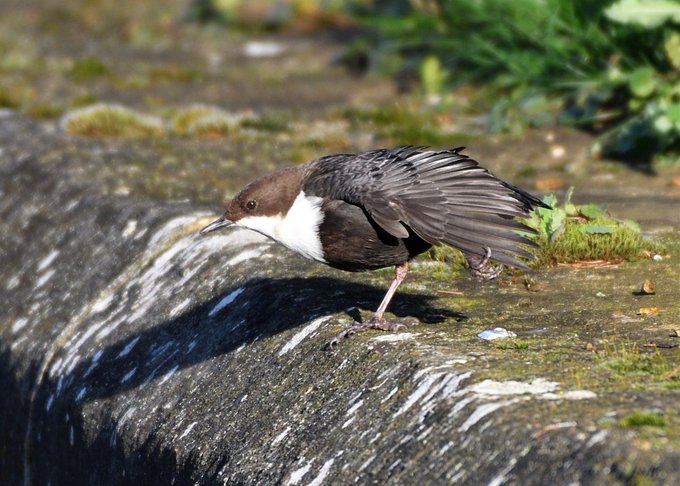
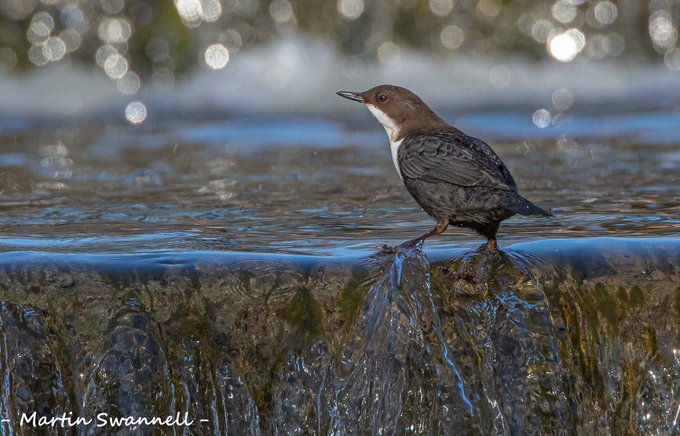
But bird of the week and, so far, the year was the first Northamptonshire Black-bellied Dipper – or any Dipper come to that – for almost a quarter of a century. Oh, yes. On display at Sywell CP for only two and a half days, it attracted the attention of more than just a steady procession of admiring birders, narrowly escaping the talons of a Sparrowhawk on two occasions, one of which was neatly captured on film by Graham Norris.
Black-bellied Dipper and Sparrowhawk, Sywell CP, 1st March 2020 (Graham Norris)Black-bellied Dipper and Sparrowhawk, Sywell CP, 1st March 2020 (Ant Hall)Black-bellied Dipper, Sywell CP, 1st March 2020 (Neil Bramwell)Black-bellied Dipper, Sywell CP, 1st March 2020 (Neil Bramwell)Black-bellied Dipper, Sywell CP, 2nd March 2020 (Chris James)Black-bellied Dipper, Sywell CP, 2nd March 2020 (Martin Swannell)Black-bellied Dipper, Sywell CP, 2nd March 2020 (Martin Swannell)
With Black-bellied Dipper now a national rarity, how long will we have to wait for the next one?
Found by Geoff Simons, Senior Countryside Ranger, Northamptonshire’s first Dipper for twenty-four years was identified at Sywell Country Park yesterday, on 29th February.
It’s still there today and what a great little bird it is! It was first located in the by-wash cascade – the overflow from the dam – where it flows through the visitor car park, at 13.35. It then flew up the overflow, under the bridge and on toward the dam. Geoff was kind enough to put the news out immediately but by the time the first birder arrived on site, little more than an hour later, it was nowhere to be seen, despite a search of the full length of the overflow system.
Subsequently relocated at 15.25, it appeared beyond the overflow, in the stream just outside the country park, about forty metres from the entrance gate. Due to the overgrown nature of the stream, it proved difficult to observe from the narrow road bridge but it was quickly identified as the nominate race cinclus i.e. Black-bellied Dipper from mainland Europe (principally Fenno-Scandia). A news update was put out, allowing many local birders to catch up with it before sunset.
Black-bellied Dipper, Sywell CP, 29th February 2020 (Stuart Mundy)Black-bellied Dipper, Sywell CP, 1st March 2020 (Steve Fisher)
Dipper is an extremely rare visitor to Northants and most of the previous occurrences have been in autumn and winter, with the notable exception of a one-off breeding record of an adult (British race gularis) feeding young in a nest at Edgcote on 19th July 1975.
Although the Sywell bird is only the third confirmed Black-bellied Dipper for the county, it seems highly likely that most of the previous records are of this race, as a result of their autumn/winter occurrence pattern.
Monthly distribution of records. Background image: Black-bellied Dipper, Sywell CP, 1st March 2020 (Mike Alibone)
However, an up-to-date summary from the British Birds Rarity Committeehere states subspecific identification is less than straightforward, especially as nominate cinclus may have some restricted chestnut on the belly and may therefore approach the appearance of hibernicus, gularis or aquaticus, while it appears that some birds within the presumed range of hibernicus in western Scotland (and potentially some gularis too) may lack any chestnut, therefore resembling nominate cinclus. The subspecies aquaticus (central Europe) is highly variable and it is not clear how a vagrant might be distinguished.
For the moment, BBRC is taking the pragmatic view that birds with little or no chestnut on the belly in eastern Britain (particularly in the Northern Isles and lowland south-east England away from the range of gularis) are likely to be nominate cinclus but other claims may have to await further investigations on the variation of plumage shown by all the races likely to occur in Britain.
Fortunately, our Sywell bird falls into the three categories of right time, right place, right appearance, so there is little doubt it is cinclus. How long it will remain there is anybody’s guess but one long-stayer was present in the vicinity of Desborough Water Mill from 21st January to 24th March 1979. Potential disturbance from the general public at Sywell could be instrumental in hastening its departure but more pointedly, today’s unfortunate, near-fatal attack by a Sparrowhawk may also have some influence …
Blinked and you’ll have missed it. A phrase equally applicable to two Northamptonshire winter firsts this week. We’re talking snow and Waxwings – bohemian in more ways than one.
And where were all the wildfowl? Ducking and diving, no doubt and not a rare goose or cygnus in sight. So it was left for long-legged wetland wanderers to fill the gap, this falling to at least four Cattle Egrets still on Ditchford GP’s Chester House Lake on 25th-26th and the usual scattering of Great Egrets, with threes at Thrapston GP and Summer Leys LNR, twos at Ditchford, Pitsford Res and Stanford Res and singles at Kislingbury GP and Stanwick GP.
Great Egret, Stanwick GP, 26th February 2020 (Steve Fisher)
Waders crept into the picture, literally, with three Jack Snipe at Hollowell Res on 22nd and one at Stanford the following day, while unseasonal Dunlins were found at Summer Leys on 24th and at Stanwick on 27th.
This week’s larid line-up was a little more down to earth compared to that of the last period, featuring single adult Mediterranean Gulls at Hollowell on 25th and Rushton Landfill on 26th. The same two sites produced the bulk of the week’s Caspian Gulls, with an adult at Hollowell on 22nd, an adult at Rushton on 25th and 26th, along with a third-winter there on the first of these two dates, while a first-winter was in the roost at Stanford on 28th.
A new site for Short-eared Owl emerged on 23rd, when one was found near Brixworth, while the Borough Hill three were still performing on the same date and one remained at Harrington AF throughout the period. The week’s token Merlin – a female – was hunting around the DIRFT 3 area, which had played host to the Great Grey Shrike earlier in the year, on 27th.
Short-eared Owl, Brixworth, 23rd February 2020 (Jon Cook)Short-eared Owl, Borough Hill, 26th February 2020 (Theo de Clermont)
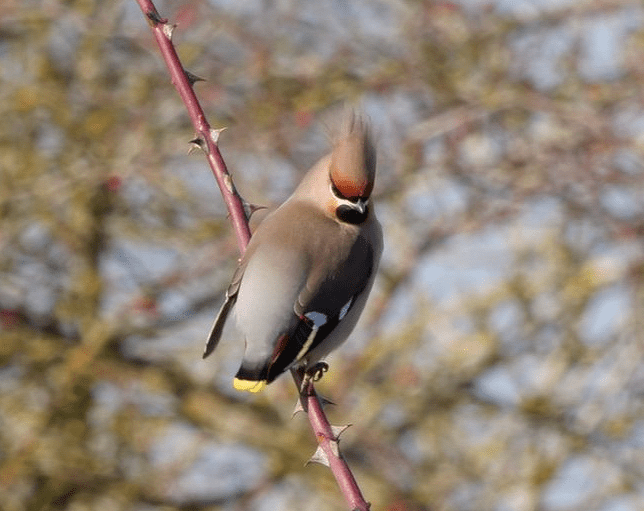
But the undoubted stars of the week were three Waxwings at Harrington AF on 17th. Their disappointingly short stay resulted in only a lucky trio of birders connecting with them before they quickly moved on.
Adult male Waxwing, Harrington AF, 26th February 2020 (Chris James). The broad, white inner webs to the primaries, forming a striking series of ‘V’ shapes age this bird as an adult, while the very long, red, waxy secondary tips, combined with broad yellow tail band and clear-cut throat patch sex it as a male.First-winter Waxwing, Harrington AF, 26th February 2020 (Nick Parker). Lack of white edges to inner webs of primaries (no ‘V’) indicate age, while few and short red tips to secondaries, along with narrow tail band point to female.First-winter Waxwing, Harrington AF, 26th February 2020 (Nick Parker)
Stonechats bounced back from a rather poor showing last week, although no more than two were on show at the nine localities which hosted them, including Borough Hill, Ditchford, Hartwell, Hollowell, Kettering, Kislingbury, Naseby, Pitsford and Polebrook AF.
Stonechat, Pitsford Res, 26th February 2020 (Tony Stanford)
Another week of wind and wuthering saw most of the action taking place in Northamptonshire’s northwest, which produced a second for the county – albeit briefly.
In a lean week for wildfowl, the nine Pink-footed Geese continued to be seen daily at Stanford, on the Northamptonshire side of the River Avon, until 18th.
Pink-footed Geese, Stanford on Avon, 17th February 2020 (John Moon)Pink-footed Geese, Stanford on Avon, 17th February 2020 (John Moon)
So far, proving unusually scarce this winter, a Bittern was seen in flight close to Stoke Bruerne on 16th but a search of suitable habitat in the vicinity turned out to be fruitless the following day. This was, of course, not the case with Great Egrets, which were found at six localities during the week, with a maximum of up to three at Thrapston GP on 16th.
Great Egret, Summer Leys LNR, 18th February 2020 (Mark Tyrrell)
Making an all too brief sortie into the county, from across the border in Leicestershire, was this winter’s first Iceland Gull, an adult, found in the roost at Stanford Res on 18th.
Adult Iceland Gull, Stanford Res, 18th February 2020 (Chris Hubbard)
As if that wasn’t enough, a third-winter Kumlien’s Gull from the same Leicestershire stable appeared in the same roost! A double whammy, a county second and more than ample reward for the time invested at this site by its single, relentlessly enthusiastic observer. “It’s only a ‘sub’, chap,” the cynics may say but a great bird, nonetheless. The first acceptable record was as recently as March 2016, at Daventry CP. The only Caspian Gulls this week also appeared in the Stanford roost – a first-winter on 17th and a third-winter on 21st.
Third-winter Kumlien’s Gull, Stanford Res, 18th February 2020 (Chris Hubbard)Third-winter Kumlien’s Gull, Shawell, Leics, 18th January 2020 (Mike Alibone). The same individual that visited Stanford on 18th February.
Just two reports of Short-eared Owls included the Borough Hill three on 17th and the one still at Harrington AF on 20th, the latter site also producing a Merlin on 17th.
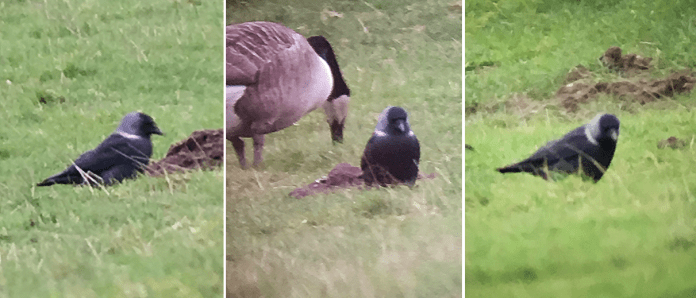
Nordic Jackdaw, Stanford on Avon, 21st February 2020 (Steve Nichols). A very well-marked individual, showing all the features normally associated with the race monedula, i.e. extremely broad and prominent white neck sides (almost forming a collar), paler grey nape and – from some angles – seemingly paler underparts than British spermologus. The above features are also not too far adrift from being associated with Russian Jackdaw soemmeringii and do not necessarily rule this race out.
Back up at Stanford, at the field with the Percy Pilcher Monument, last week’s cute corvid showing characteristics of Nordic Jackdaw was again on show on 21st, while Ecton SF’s Siberian Chiffchaff was also still in situ on 17th, along with at least ten Common Chiffchaffs.
Siberian Chiffchaff, Ecton SF, 17th February 2020 (Bob Bullock)Siberian Chiffchaff, Ecton SF, 17th February 2020 (Bob Bullock)
Stonechat numbers were down from last week, with singles only at Pitsford Res, Stanford and Wicksteed Water Meadows (Kettering). Now, if we can only lose those winds …